
What Do Japanese Beetles Eat in Gardens and Lawns?
Japanese beetles are not picky, but they are predictable. They favor certain flowers, fruits, and shrubs, and usually ignore others. Once you know what Japanese beetles eat, you can decide which plants to protect first and which can fend for themselves.
In most yards they pile onto plants like rose bushes, grapes, and beans while barely touching nearby herbs or evergreens. This guide breaks down their favorite menus by plant type, shows what their feeding damage looks like, and gives you simple priorities for control so you spend time where it matters.
How Japanese Beetles Feed and Cause Damage
Skeletonized leaves are the calling card of Japanese beetles. Adults chew between the veins, leaving a lacy, see‑through leaf that quickly dries and browns in sun.
Groups often cluster at the top of plants first, then work downward. They are most active on warm, sunny days from late morning through afternoon, especially on plants in full sun or along warm hardscapes.
They target soft tissue first, including flowers and new growth, then move to tougher leaves when options run out. On stressed plants, this can strip most foliage in just a few days.
Heavy feeding on already stressed plants is what kills them, not a single light flush of beetles. Healthy trees and shrubs usually refoliate, but repeated yearly defoliation weakens them over time.
Do not panic at the first holes. Focus control when leaves are being skeletonized over more than a quarter of the plant or when key crops are at bloom or fruit set.
That threshold keeps you from overreacting to cosmetic chewing while still moving fast on real stress.
- Prime activity: Warm, sunny days between late June and August
- Favorite parts: Flowers, tender leaves, and new shoots
- Typical damage: Skeletonized leaves, chewed petals, browning foliage
- High‑risk plants: Tender ornamentals and fruit crops under drought or heat stress
That pattern matters because it tells you when to intervene on the plant itself and when to let a healthy shrub recover on its own.
Ornamental Favorites: Flowers, Shrubs, and Vines
Rose bushes are the top item on the menu. Hybrid tea and shrub types like Knock Out roses often end up covered in beetles, with shredded blooms and skeletonized leaves by midseason if unprotected.
Other highly attractive flowers include hibiscus, climbing roses, and perennial favorites such as coneflower and black‑eyed Susans. Petals and central cones are chewed, which ruins cut‑flower quality even if the plant survives.
Among shrubs and vines, plants like crepe myrtle, rose of Sharon, and wisteria vines often show visible damage. Grape vines are especially vulnerable, with entire leaves eaten down to veins.
Many evergreens and thick‑leaved plants are less appealing. For example, beetles rarely bother boxwood hedges or tough shrubs like holly shrubs, so these can work as background structure while you protect more tender plants.
Prioritize control on high‑value ornamentals you planted for flowers, such as roses, hibiscus, and wisteria, before worrying about tougher shrubs.
Rank the targets before you decide where to handpick or cover plants.
- Very attractive: rose bushes, hibiscus, grape vines, wisteria, crepe myrtle
- Often damaged: Coneflower, black‑eyed Susan, daylilies, garden phlox
- Usually skipped: Boxwood, holly, arborvitae, many needled evergreens
Once you know that hierarchy, you can protect the bloom plants that matter most and let the tougher background shrubs absorb the occasional bite.
Vegetable Garden Targets: Beans, Corn, and More
In the vegetable patch, beans sit near the top of the list. Climbing and bush bean plants can be stripped of leaf tissue, which slows growth and reduces yields if damage hits early.
Sweet corn often shows shredded leaves in the upper canopy and silks nibbled during pollination. Moderate leaf feeding is usually cosmetic, but heavy silk feeding can reduce kernel fill on ears.
Japanese beetles also nibble on tomato foliage, pepper plants, and eggplant leaves, though these crops are typically secondary choices. Damage usually appears on upper leaves and occasionally on fruit skins, leaving shallow scars.
Root crops such as carrots, beets, and radishes are rarely targeted above ground. Their foliage is tougher and less appealing, so they often stay relatively untouched even in busy beetle years.
Protect beans and young corn tassels first, especially if you rely on those crops for fresh eating or freezing.
Check those crops first before spending time on tougher leaves.
- High-risk veggies: Beans, sweet corn, pole beans on trellises
- Moderate interest: Tomatoes, peppers, eggplant, zucchini plants
- Low interest: Carrots, beets, radishes, garlic and onions
- Priority timing: Early flowering and pod-set stages for beans and sweet corn
Fruits, Berries, and Your Lawn as Grub Food
Grapes and tree fruit bring beetles in like a dinner bell. Plants such as table grapes, apple trees and peach trees can have leaves skeletonized while fruit skins are scarred or pitted.
Berries are not safe either. Beetles feed on foliage and ripe fruit on raspberry canes, blueberry bushes, and strawberry beds, especially in sunny, open patches where beetles can easily land.
Below ground, the grub stage snacks on turf roots across cool‑ and warm‑season lawns. They especially like finer‑bladed grasses such as Kentucky bluegrass and fescue lawns, but will also feed in zoysia and bermuda turf.
Patches of lawn that suddenly wilt, turn brown, and peel back like carpet often hide a heavy grub load. Birds and skunks digging can be the first sign that grubs are present.
Do not treat the whole lawn for grubs unless you confirm counts; spot‑treat areas that show damage and verify by peeling back sod.
Separate adult feeding damage from grub damage before choosing a treatment.
- Fruit magnets: grapes, apples, peaches, plums, fig trees
- Berry targets: Raspberries, blueberries, strawberries, blackberries
- Grub hosts: Kentucky bluegrass, tall fescue, zoysia, bermuda and mixed turf
- Key warning sign: Sod that lifts easily with white C‑shaped grubs underneath
Timing: When Japanese Beetles Are Actively Feeding
Adult Japanese beetles only feed above ground for a short window, but they make the most of it. In most of North America, adults emerge from soil in late June and stay active through August.
Grubs in the soil feed much earlier. They chew on grass roots from late summer into fall, then again in early spring before pupating.
Warmth controls how fast they move through their life cycle. In zone 5, you might see adults a few weeks later than gardeners in zone 7.
If you know when adults emerge in your yard, you can protect favorite plants before damage starts.
In cooler areas like zone 4 gardens, peak adult feeding might land in July. In warmer spots such as zone 9 yards, you could see beetles by early June.
Adults prefer feeding during warm, sunny parts of the day. You will notice the worst leaf skeletonizing in late morning and midafternoon when they are most active.
Grub feeding on turf peaks in late summer. That timing lines up with summer drought stress, which makes brown patches from root damage stand out more.
Waiting to react until beetles are everywhere on your roses or lawn almost always means heavier long term damage.
By the time whole plants are shimmering with adults, you are already working from behind.
Use first sightings as the start of daily checks on favorite plants.
- Adult timing: Late June to early August in most regions
- Grub timing: Late summer, then early spring in cool soil
- Daily peak: Warm, sunny late morning and afternoon
- Watch point: First beetle sighting on favorite ornamentals
Plants They Rarely Touch (And How To Use Them)
Some ornamentals barely interest Japanese beetles, even when nearby plants are stripped. We can lean on these as “anchors” in beds that otherwise get hit hard.
Shrubs like compact boxwood hedges and broadleaf hollies usually show little to no feeding. Their thick, tough foliage is not what beetles prefer.
Many common perennials hold up well too. Think shade clumps of hosta, feathery astilbe, and tough yarrow for less snacking in mixed borders.
Flower choices matter a lot. Beetles hammer old fashioned roses, but tend to leave spring daffodils and bearded iris fans mostly alone once the flowers fade.
Turf type also changes how appetizing your lawn roots are. Some warm season grasses like dense zoysia lawns tolerate grub feeding better than cool season grasses such as fine Kentucky bluegrass.
Herb beds are a mixed bag. They may chew a bit on tender basil foliage.
Woody herbs like rosemary shrubs are usually ignored. Low thyme mats are usually ignored too.
No plant is completely safe in a huge outbreak, but resistant choices stay presentable while favorite targets recover.
Use those calmer plants to hold the bed together while you focus on the true magnets.
- Good shrub anchors: Boxwood, holly, evergreen azaleas
- Tough perennials: Hosta, astilbe, yarrow, purple coneflower
- Safer bulbs: Daffodils, iris, post bloom tulip foliage
- Stronger turf: Zoysia, some fescue mixes
Those anchor plants do not make the yard beetle-proof, but they keep the structure intact while your higher-value flowers recover.
Trap Cropping: Decoy Plants To Sacrifice
Japanese beetles are picky in a predictable way, which lets you use trap crops. You plant a few very tempting hosts to pull feeding away from plants you care about most.
Highly attractive shrubs like rose of Sharon and old style garden roses make good decoys. Place them away from patios and main viewing spots.
Some vines and perennials work too. Beetles flock to grape foliage and can cover a mature clematis trellis in midsummer if nothing tastier is nearby.
Trap crops only help if you actively remove beetles from them. Shake adults into soapy water daily during peak feeding so they do not simply disperse again.
Do not plant trap crops right next to what you are trying to protect, or you concentrate beetles on both targets.
That spacing is what makes a decoy useful instead of just expanding the buffet.
Space decoys 15 to 30 feet downwind of prized shrubs or mass planted hydrangeas. That way, adult beetles hit the trap first as they fly into the yard.
You can even combine trap cropping with covers. For example, leave decoy roses exposed while you protect a new flowering cherry under netting during its first few seasons.
- Best decoys: Heirloom roses, grape vines, rose of Sharon
- Placement: Downwind and away from patios or decks
- Maintenance: Shake beetles off into soapy water daily
- Goal: Concentrate feeding where damage matters least
A decoy only earns its keep if you are willing to manage it aggressively during the few weeks adults are flying.
Aftercare For Plants Chewed By Japanese Beetles
Plants can bounce back from heavy feeding if you help them recover. The goal after beetles leave is to reduce stress while new leaves grow.
Start with water. Provide consistent moisture for shrubs, trees, and perennials that lost significant foliage, especially in July and August heat.
Inspect trees like ornamental cherries and young river birch for snapped twigs and remove ragged tips. Clean cuts heal faster and reduce entry points for disease.
Avoid heavy fertilizer right after a feeding frenzy. A light, balanced feeding in early fall, timed with proper shrub fertilizing windows, is usually enough.
For perennials, cut back stems that are fully skeletonized. Plants such as repeat blooming daylilies and summer phlox often send up clean new foliage when trimmed.
Lawns hit by grubs need a different approach; the recovery plan is slower and root-focused. Water deeply and check thatch before following a seasonal lawn schedule that includes aeration where soil is compacted.
Houseplants are rarely targeted, but beetles can wander onto potted patio hibiscus shrubs. Rinse foliage and move containers a few feet away from heavily infested beds if you see damage.
- Watering focus: Steady moisture, no soggy soil
- Pruning: Remove shredded leaves and broken tips
- Fertilizer: Light, timed feeding after stress passes
- Lawn repair: Deep water, aerate, then reseed thin spots
Common Mistakes That Make Your Yard Beetle Heaven
Japanese beetles follow scent and sight cues to the best buffet. Some common choices in our yards accidentally roll out a welcome mat for them.
The biggest one is mass planting their favorite shrubs. A long row of Knock Out roses in full looks great but acts like a neon sign for adults in July.
Another issue is pairing many attractive species together. A bed that mixes fruit vine arbors, fragrant hybrid teas, and tropical hibiscus can host swarms all at once.
Leaving outdoor lights on all night near these beds pulls beetles off darker parts of the yard. They will rest on nearby foliage and start feeding as soon as morning warms up.
Bag traps often draw beetles from neighboring yards, so only use them well away from plants you care about.
That is why trap placement belongs on the edge of the property, not beside the plants you are trying to save.
Skipping grub management in the lawn lets populations build every year. Over time, more adults emerge to feed on shrubs, vines, and even small young apple trees in the same yard.
Relying only on broad spectrum insecticides is another trap. You may kill helpful predators and pollinators while missing later beetle waves that emerge after sprays wear off.
- Overplanted targets: Long rose hedges, mixed grape and rose beds
- Lighting: Bright porch or landscape lights beside host plants
- Traps: Bag traps hung too close to ornamentals
- Neglected grubs: Untreated lawns feeding next year’s outbreak
Pro Tips
- Walk the yard in late morning on sunny days when beetles are most active so you see real feeding pressure.
- Keep a bucket of soapy water handy and flick beetles in by hand from favored plants to cut numbers fast.
- Prioritize treatment on roses, grapes, and beans before lower‑value ornamentals that can tolerate more chewing.
- Mix plantings by adding less‑preferred shrubs like boxwood or holly around beetle magnets to dilute feeding.
- Check lawn edges, sunny slopes, and stressed turf first for grubs instead of treating the entire yard blindly.
- Time any preventative grub products carefully to target young larvae, not adults already flying and feeding.
- Avoid broad‑spectrum sprays on blooming plants during the day so you do not hammer visiting pollinators.
Frequently Asked Questions
Do Japanese beetles eat all types of roses?
They strongly prefer traditional hybrid tea and floribunda roses, especially in full sun. Rugosa and some shrub types, including many Knock Out style roses, often show less damage but are not completely ignored.
Will Japanese beetles kill my trees?
Healthy, established trees usually survive even heavy defoliation, though repeated yearly damage weakens them. Young trees or recently planted ornamentals are at higher risk and benefit from watering and light aftercare once beetles disappear.
Are certain lawn grasses less appealing to Japanese beetle grubs?
Yes. Warm season grasses like zoysia and bermuda often tolerate grub feeding better than fine cool season turf. Thick, deep rooted lawns also handle root loss better than thin, shallow rooted grass.
Do Japanese beetles eat herbs and vegetables heavily?
They can chew on beans, corn silks, soybeans, and some herbs like basil, but they usually prefer ornamentals and fruiting plants first. Mixed plantings and smart timing help reduce how much damage edible beds suffer.
Can Japanese beetles damage houseplants indoors?
They almost never move indoors on purpose. You might see a few on patio plants like hibiscus or citrus, but once containers are brought inside for fall, the beetles outside die off with cold weather.
Sources & References
Related Guides
Companion Planting Pest Control for Any Garden
Most gardens rely on sprays once bugs show up. Companion planting flips that around so the plants…
11 min read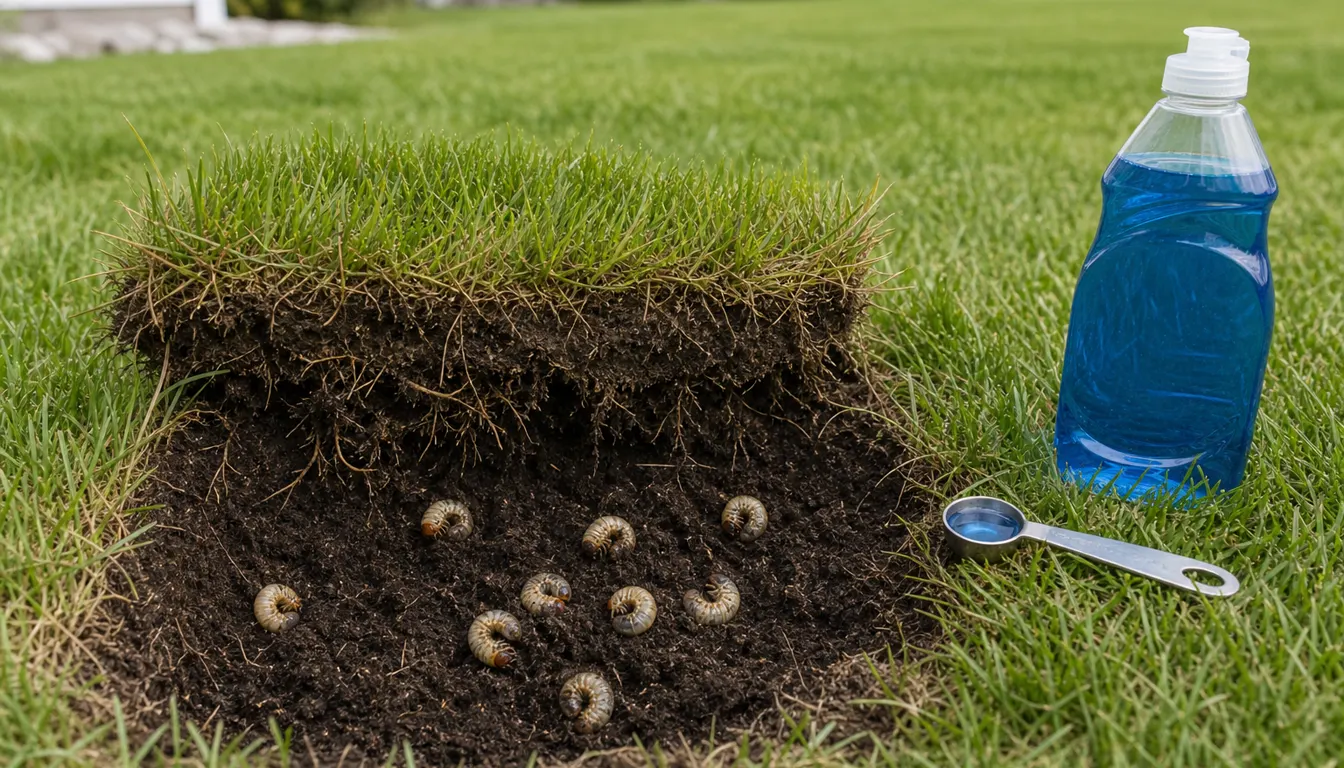
Dawn Dish Soap for Grubs: What Actually Works
Soap solutions can help you spot-check for grubs and knock back a few pests, but they are not…
10 min readDo Marigolds Keep Squirrels Away From Your Garden?
Squirrels can strip a bed of seedlings or freshly planted bulbs in a single morning. Plenty of…
11 min read