
Best Time to Aerate and Overseed for a Thicker Lawn
Most lawns never reach their potential because aeration and overseeding happen at the wrong time. Soil temp, grass type, and your USDA zone matter more than the calendar.
The best time to aerate and overseed shifts across zones 3–11 and between cool- and warm-season grasses, and it lines up with fertilizing, mowing, and watering rather than standing alone.
A few specific weeks each year call for waiting instead of working.
If you already follow a monthly plan like the year-round lawn calendar, this fills in the exact windows for the two jobs that thicken turf.
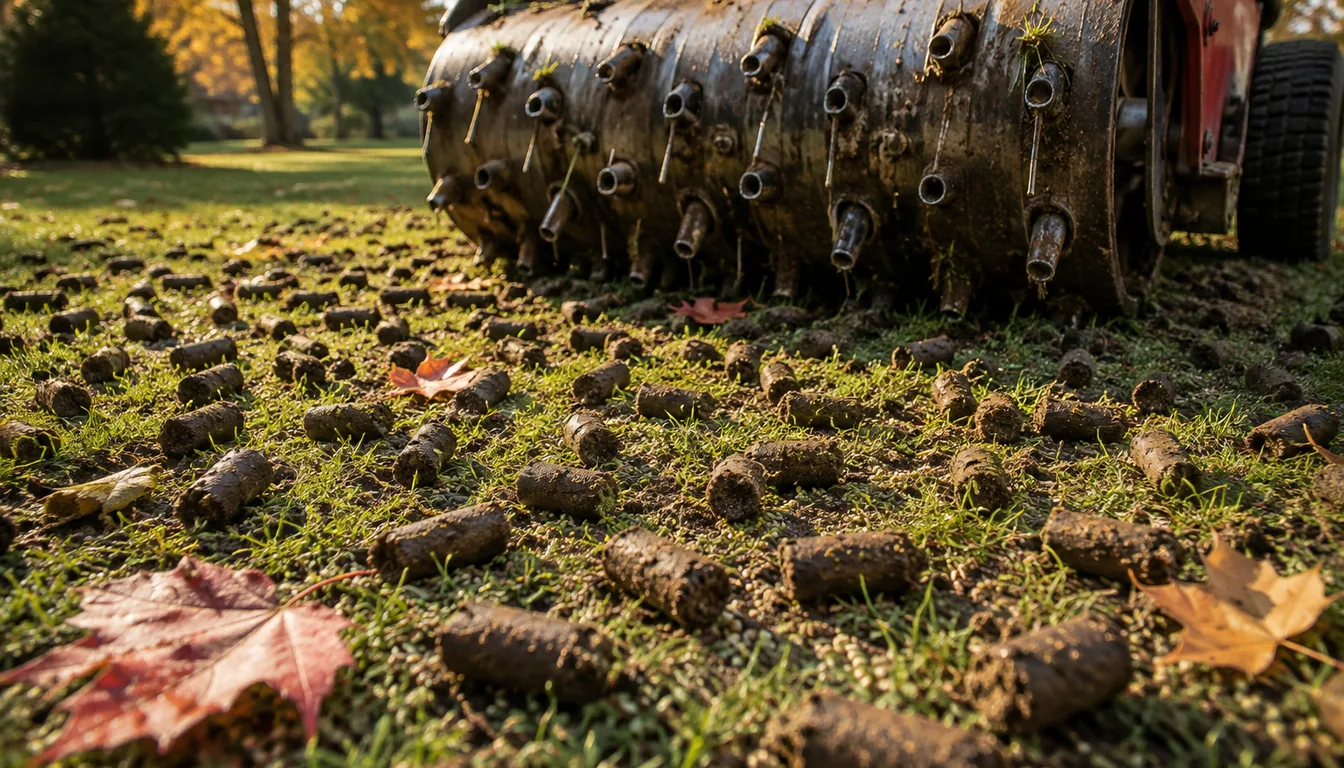
Know Your Grass Type And Zone First
The perfect timing hinges on what is growing under your feet. Cool-season lawns like fescue, Kentucky bluegrass, and perennial ryegrass thrive in the northern half of the U.S. Warm-season lawns like bermuda, zoysia, and St. Augustine rule the South.
Cool-season lawns in zones 3–7 grow hardest in early fall and early spring.
Warm-season lawns in zones 8–11 peak from late spring through summer heat.
You must schedule aeration and overseeding during your grass type’s strongest growth window so it can heal and fill in.
If you are not sure what you have, compare your turf to common types like tall fescue blades or low, running grasses such as bermuda stolons in sun. Your local zone page, such as zone 5 guidance, also tells you whether your region favors cool- or warm-season turf.
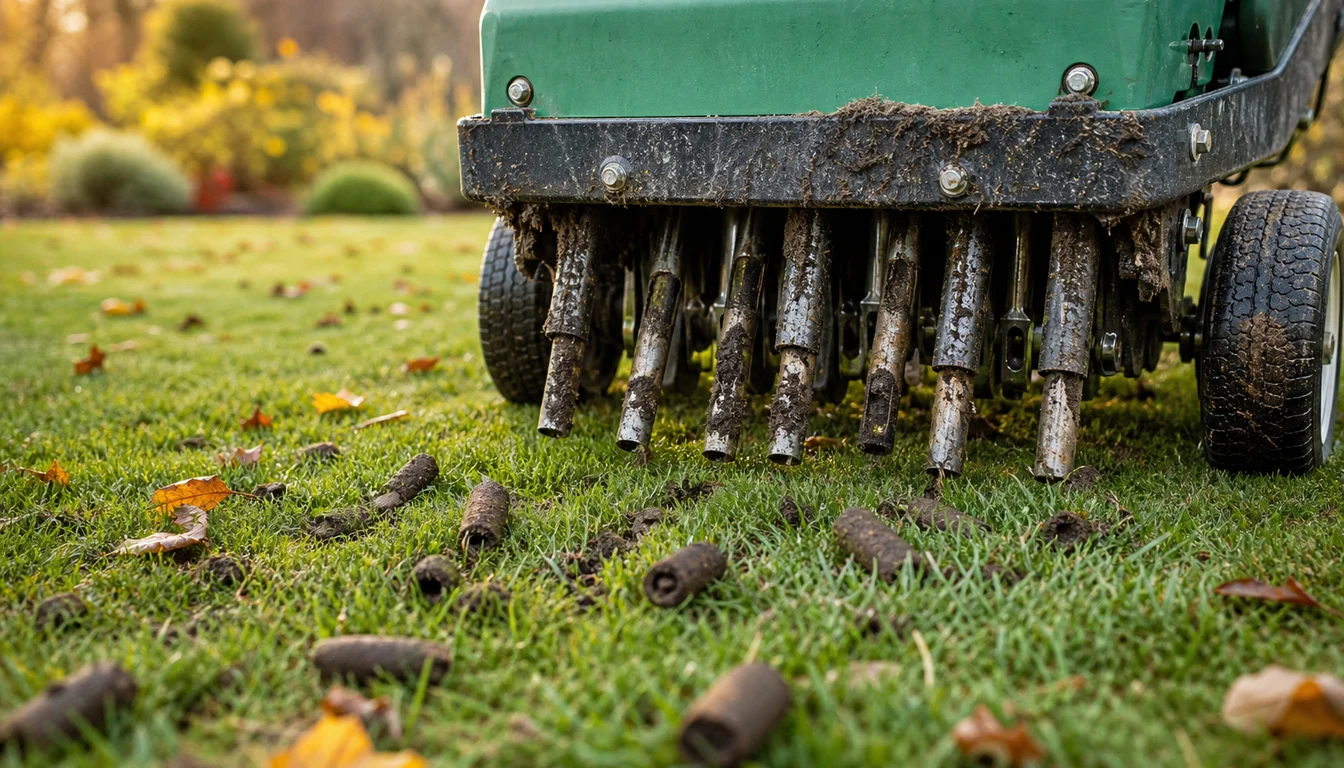
Use the grass family first, then refine the exact week by zone.
| Category | Grasses or zones |
|---|---|
| Cool-season examples | Fescue, Kentucky bluegrass, perennial ryegrass |
| Warm-season examples | Bermuda, zoysia, St. Augustine, centipede |
| Zone clue | Zones 3-5 almost always cool-season, zones 8-11 usually warm-season |
| Borderline areas | Zones 6-7 can support either type depending on neighborhood and sun |
Fall Timing For Cool-Season Lawns
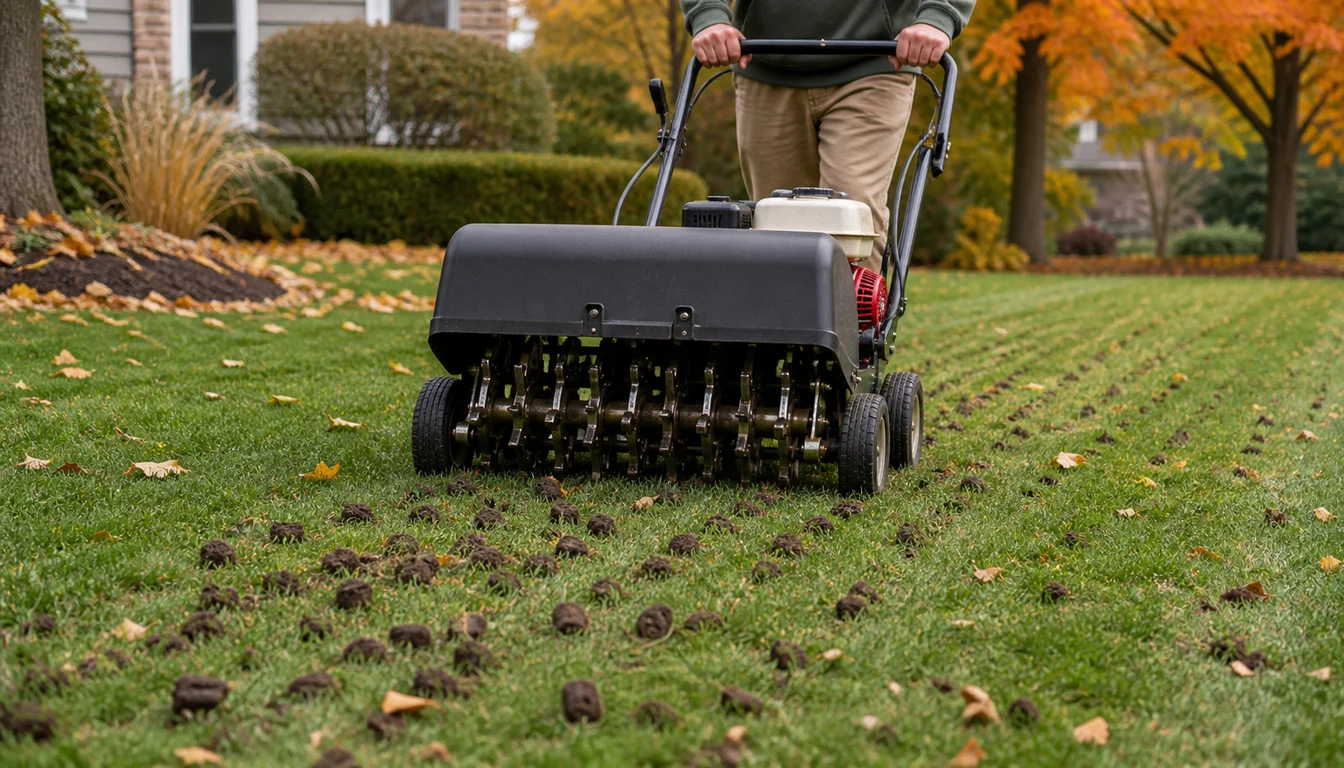
For cool-season grasses, fall is prime time. In zones 3–5, target aeration and overseeding from late August through mid-September.
In zones 6–7, you can usually push into late September or even early October if nights stay cool.
Soil temperature should be around 50–65°F at a depth of 2–3 inches. Air is cooler, weed pressure drops, and soil stays moist longer.
Seed germinates fast while roots dive deep before winter.
Think of it as the opposite of stressing out shade perennials like hosta in summer heat.
If your lawn is thin, you can aerate and overseed once each fall. Severely compacted yards or those with heavy foot traffic sometimes benefit from two passes, about 3–4 weeks apart, as long as you remain inside that fall window.
The common failure pattern is aerating and seeding too late. If you still see mostly bare soil when overnight lows start dipping below the mid-40s, seedlings will stall and winter kill rises.
Use these windows as the outside edge, not permission to seed into cold nights.
| Zone | Window |
|---|---|
| Zone 3-4 | Aerate and seed late August-early September |
| Zone 5 | Best window early-mid September |
| Zone 6 | Target mid-late September |
| Zone 7 (cool-season) | Late September-early October, but avoid first expected frost by 4 weeks |
Spring Timing For Cool-Season Lawns
Spring aeration and overseeding can work, but the window is narrower. You must sneak it in after the soil thaws and before summer heat, weeds, and crabgrass crowd out young seedlings.
In zones 3–5, that usually means late April to mid-May.
In zones 6–7, the window comes earlier, often March to early April, depending on how fast soil warms to 50–55°F.
Watch ground frost and mud, not the calendar. If the yard still feels spongey from freeze-thaw, wait.
Spring seeding competes with pre-emergent herbicides.
If you plan to overseed, skip crabgrass preventer or use a seed-safe product. Otherwise, the same chemistry that blocks crabgrass also blocks your good grass.
Spring is a repair window, so keep the checklist narrower than fall.
- Best use of spring
- Patch winter-damaged spots and high-traffic areas
- Fall vs spring
- Rely on fall as the main overseed, use spring for repairs
- Weed control conflict
- Delay pre-emergent 6-8 weeks after seeding
- Mowing rule
- Do not aerate until you have already mowed at least once that year
Best Window For Warm-Season Lawns
Warm-season grasses wake up slowly but love heat. Plan aeration and overseeding once the lawn is fully green and growing, not during the first few green tufts of spring.
In zones 8–9, the sweet spot is usually late April through May.
In zones 10–11, move that to March–April, when soil hits 65–70°F at 2 inches deep. This is similar to timing warm-weather crops like tomato transplants in garden beds, where soil rather than air controls success.
Many warm-season lawns are sprigged or plugged instead of seeded, but core aeration still matters. Aerate right before you topdress and spread seed or plugs so roots can dive into the open channels.
Warm-season turf needs active growth on both sides of the job.
| Zone | Window |
|---|---|
| Zone 8 | Aerate and overseed late April-May |
| Zone 9 | Target April, avoid deep summer heat if water is limited |
| Zones 10-11 | Best window March-early April, before extreme heat |
| Shady warm-season spots | Overseed with perennial rye only where shade keeps soil cooler |
Soil Prep And Equipment Before You Start
Good aeration and overseeding start with the soil surface. You want clean, short grass, not a shag carpet of clippings and sticks blocking seed.
Mow the lawn one or two days before aerating, dropping height about 25% lower than your normal setting. Bag or mulch, but do not scalp down to bare dirt.
If the yard is covered in leaves or sticks, rake or blow everything off.
Seed that lands on a mat of leaves dries out and never roots.
Clay and high-traffic yards benefit from a light watering the day before. The goal is moist soil that crumbles, not mud that smears.
Skip aerating when the soil sticks to your shoes, since that smear means cores will plug the machine instead of pulling cleanly.
Choose a core aerator that pulls plugs at least 2–3 inches deep. Spike shoes or solid tines just push compaction sideways and rarely help.
Rental plug aerators are heavy.
Plan your path so you can work across slopes safely and avoid tight turns around trees and boxwood edging shrubs.
Lay out flags over shallow irrigation lines, invisible dog fences, and new ornamental dogwood trees. Plug tines can snag or cut anything within the top few inches of soil.
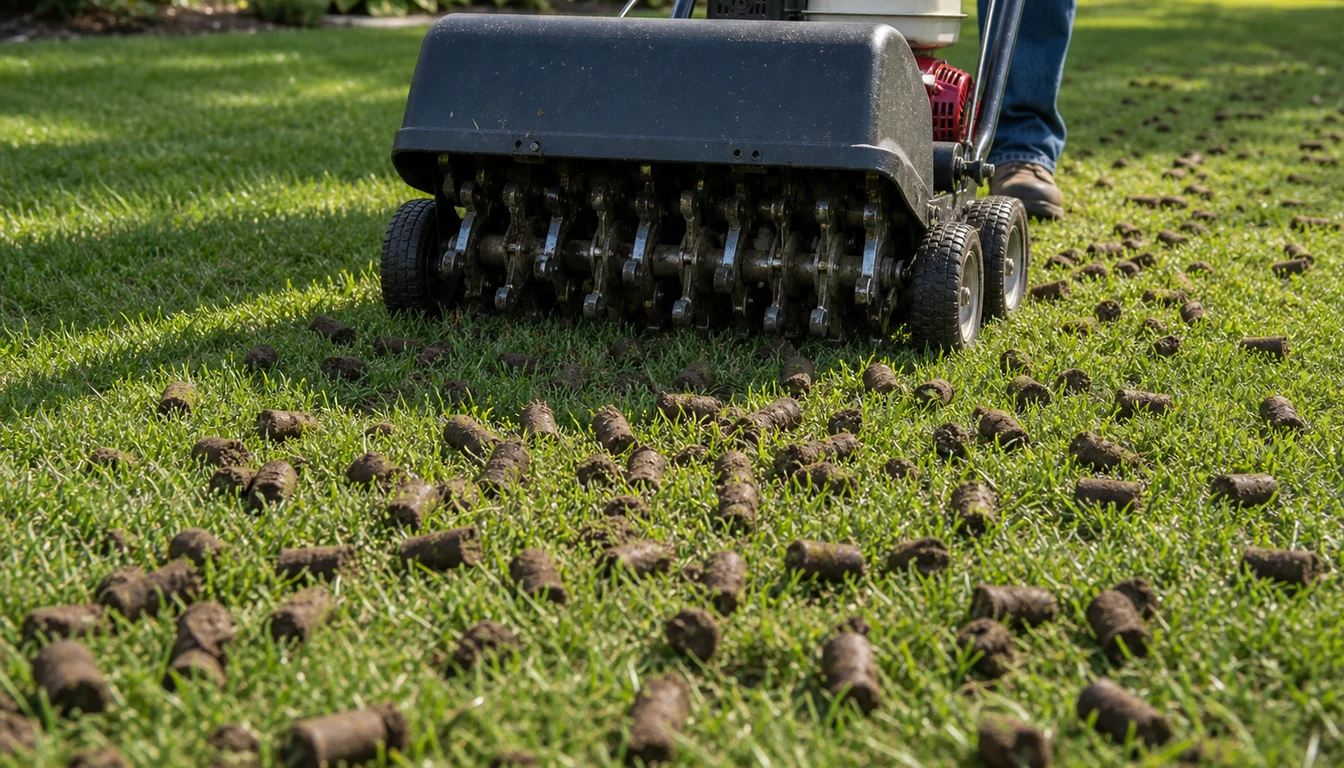
- Mow 25% shorter than usual, never to bare soil
- Remove leaves, sticks, and heavy thatch mats first
- Work when soil is damp enough to crumble, not sticky mud
- Use a core machine with 2-3 inch hollow tines
Watering And Mowing After Overseeding
New seed fails more from bad watering than bad timing. Think constant moisture in the top half inch, not daily puddles.
For the first 10–14 days, water lightly 2–4 times per day, just long enough to dampen the surface. Adjust so there is no standing water or seed flowing downhill.
Once most seed has sprouted and you see a faint green haze, switch to once per day and gradually increase run time. The goal shifts from germination to deeper roots.
After 3–4 weeks, move toward the same deep, infrequent schedule you use for mature turf, or follow the guidance in a deep watering guide like deep versus frequent watering.
Missed watering during hot, windy afternoons can dry seed in a few hours, which is why some spots never fill.
Mow when the new grass reaches 3–4 inches tall, even if some patches are shorter. Waiting too long lets blades fall over and shade seedlings.
Use a very sharp blade and take off no more than one-third of the height. Bag the first couple of mowings if there are heavy clippings sitting on top of baby grass.
Avoid tight turns and sudden stops with heavy mowers, especially on thin spots. Those areas are still fragile and can tear out under tires.
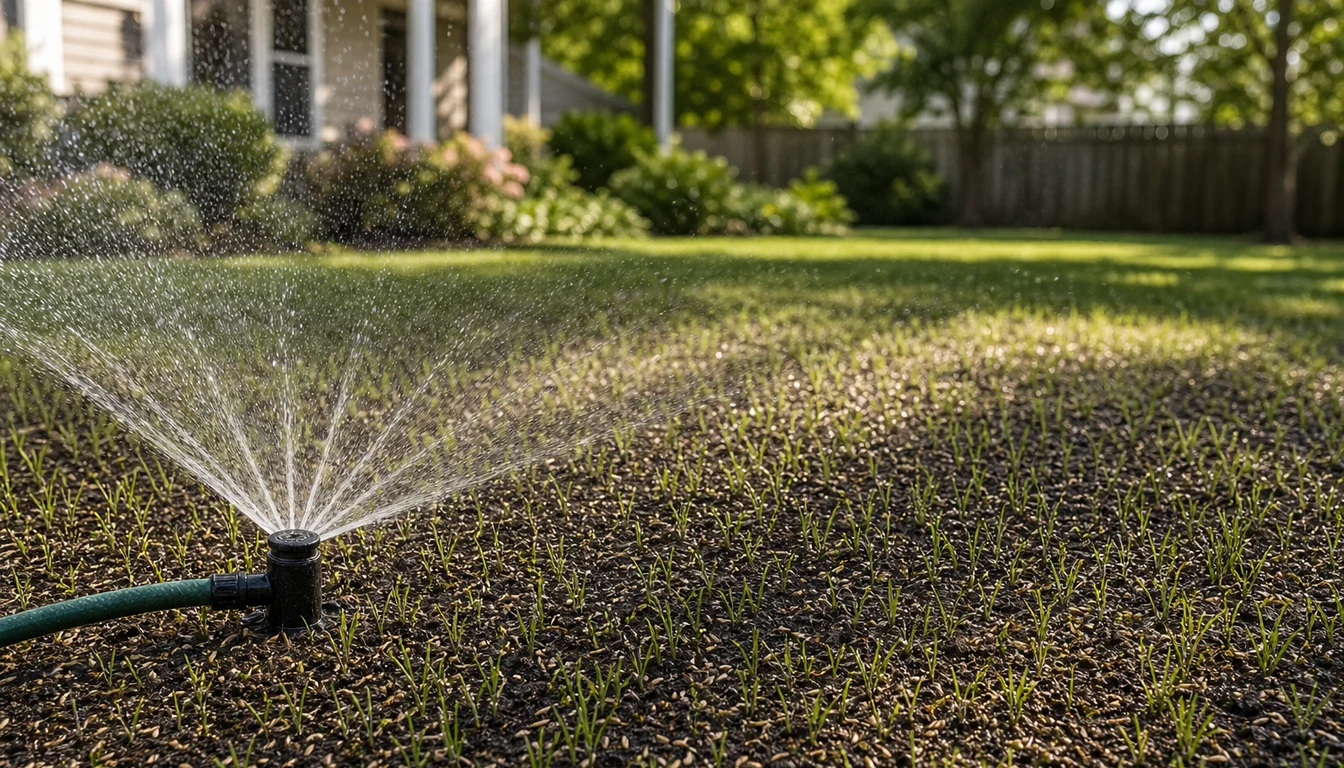
| Timeline | What to do |
|---|---|
| Days 1-14 | Light, frequent water to keep seed moist |
| Days 15-28 | Once daily, a bit deeper each time |
| After 4 weeks | Shift toward deep, infrequent watering |
| First mow | At 3-4 inches, with sharp blades and gentle turns |
Fertilizer, Weed Control And Timing Conflicts
Fertilizer timing around aeration and overseeding can help or hurt. Starter blends support roots, but some weed controls stop seed cold.
Starter fertilizer with higher phosphorus supports root growth, which helps new seedlings handle their first summer. Apply right before or right after seeding, following label rates.
If you already fed heavily this season, back off.
Too much nitrogen pushes top growth and can scorch tender seedlings, especially on heat-loving turf like bermuda fairways at home.
Pre-emergent crabgrass preventers are a common problem. Many of them block germination for both weeds and grass seed.
If you must overseed a yard that had spring pre-emergent, check the product label for how many weeks it remains active. You may need to delay seeding or skip pre-emergent that year.
Post-emergent broadleaf killers are safer, but still stressful.
Spray dandelions and clover 2–3 weeks before overseeding, not the same day.
Tender new lawns also should not get heavy summer feeding right away. Use the more gentle timing from a lawn feeding guide like avoiding fertilizer burn on turf, and keep nitrogen modest the first season.
- Apply starter fertilizer at seeding, following label rates on new lawns
- Avoid pre-emergent unless it is specifically labeled for seeding
- Finish broadleaf sprays 2-3 weeks before overseeding
- Delay heavy nitrogen until seedlings are well established
Common Mistakes That Ruin Timing
Most failed aeration and overseeding jobs trace back to the calendar or skipped steps, not bad seed. Catching these ahead of time saves a lot of frustration.
Aerating bone-dry or saturated soil is a big one.
Dry ground lets tines barely scratch the surface, while mud packs into tines and smears the walls of the holes.
If your hand trowel cannot cut a clean plug, your aerator will not either. Check soil by digging a small slice in several spots first.
Many of us also forget shade patterns change with the season.
Seed that thrives in May sun may cook in August when the sun is higher.
Walk the yard at the same time of day you plan to water in summer, and note which sections roast. Shade-tolerant blends work better around maple and oak shade trees than full-sun mixes.
Overseeding right before a heavy leaf drop is another problem.
A thick layer of leaves on top of seed stays wet and blocks light.
Aim to aerate and seed after the worst leaves are down, then plan for gentle raking or mulching passes that remove leaves without scalping new grass.
Finally, some homeowners run heavy dethatchers and core aerators back-to-back in one weekend. That much disturbance can damage existing turf and dry the soil quickly.
Soil condition
Never aerate bone dry or sloppy wet.
Sun changes
Adjust seed blend for new shade patterns.
Leaf timing
Avoid peak leaf drop when seeding.
Too many passes
Limit mechanical stress in one weekend.
Troubleshooting Thin Spots After Seeding
Even with good timing, some patches always underperform. Those thin strips tell you something about the site, not the seed.
If random footprints or mower turns are clearer than the rest of the yard, compaction is still an issue.
High-traffic corners by gates and mailboxes often need extra passes.
Run the core aerator over stubborn areas two to four times, crossing at different angles. In very tight clay you might also consider topdressing with quarter inch of compost.
Where entire bands along the driveway or sidewalk fail, heat and dryness usually win.
Concrete radiates heat and dries soil faster than the center of the yard.
Try widening the overseeded area by a foot and bump watering slightly along these edges during hot spells. Tall blends like tall fescue mixes often handle that stress better than bluegrass.
Shady spots under big oak canopy branches tell a different story.
Seedlings that sprout and then disappear usually lack light, not water.
Switch to a shade-tolerant mix and accept a more open look, or consider mulch and shade perennials from the shade groundcover category instead of fighting bare dirt.
If disease shows up as patches of yellow or brown in new grass, go straight to your local extension office for a diagnosis. Sending a photo or plug sample beats guessing at fungicides.
| Symptom | Fix |
|---|---|
| Traffic stripes | Add more aeration passes and limit turns |
| Hot edges | Water more along pavement and choose tougher species |
| Deep shade | Use shade mixes or plant beds instead |
| Disease patches | Get a firm ID before treating |
Pro Tips
- Base your timing on soil temperature at 2 inches, not just the month printed on your seed bag.
- Water the lawn deeply the day before aeration so the machine can pull full, clean cores.
- Mow slightly shorter than usual right before overseeding to help seed reach soil.
- Skip pre-emergent crabgrass control anywhere you plan to put down new seed that season.
- Keep seed consistently moist with light, frequent watering for the first 10–14 days.
- Schedule fertilizer at least two weeks after seeding so you do not burn tender sprouts.
- Avoid heavy foot traffic on newly seeded areas until you have mowed the new grass twice.
Frequently Asked Questions
Can I aerate and overseed in the middle of summer?
You can, but it is risky.
Hot, dry weather makes it hard to keep seed moist and cool-season seedlings struggle.
If summer seeding is your only option, water aggressively and choose heat-tolerant types like turf-type tall fescue.
Do I need to pick up the cores after aeration?
No, leave the cores on the lawn.
Rain and mowing break them down in a couple of weeks and they help topdress the surface.
Removing them wastes organic matter and does not improve seed contact.
How soon after aerating should I spread seed?
Spread seed the same day, ideally right after you finish aerating. Fresh holes give seed the best chance to fall into the loosened soil, which improves contact and keeps it moist longer.
Can I rent a spike aerator instead of a core aerator?
Spike tools are better than nothing on sandy soil but they do not truly relieve compaction. On clay or high-traffic yards, core machines that remove plugs are far more effective and worth seeking out.
How long before new grass can handle regular foot traffic?
Plan on at least 6–8 weeks before normal use. Light walking for mowing is fine earlier, but heavy play, parties, or dogs racing across new grass can rip out shallow roots and set it back.
Sources & References
Related Guides
Best Time to Overseed a Northeast Lawn for Thick Turf
Overseeding in the Northeast is all about catching that short window when soil is warm, air is…
11 min read
Can You Overseed a Lawn Without Aerating It First?
Thin turf and bare patches do not always mean you need to rent an aerator.
11 min read
Dethatching vs Aerating: Which Does Your Lawn Need?
Choose dethatching when a measured layer of thatch has become excessive.
16 min read
How Long After Planting Grass Seed Can You Walk On It Safely
Most new lawns fail not from bad seed, but from feet, paws, and mower wheels showing up too soon…
11 min read
How to Fertilize a Lawn Without Burning It
Those yellow stripes and crispy patches after fertilizing are almost always user error, not bad…
14 min read
How to Find Frost Dates by ZIP Code and Use Them Safely
A ZIP-code frost date is a planning estimate from a nearby weather station, not a forecast for your…
15 min read