
What's a Maple Tree? How to Choose the Right Species
Acer species Sapindaceae
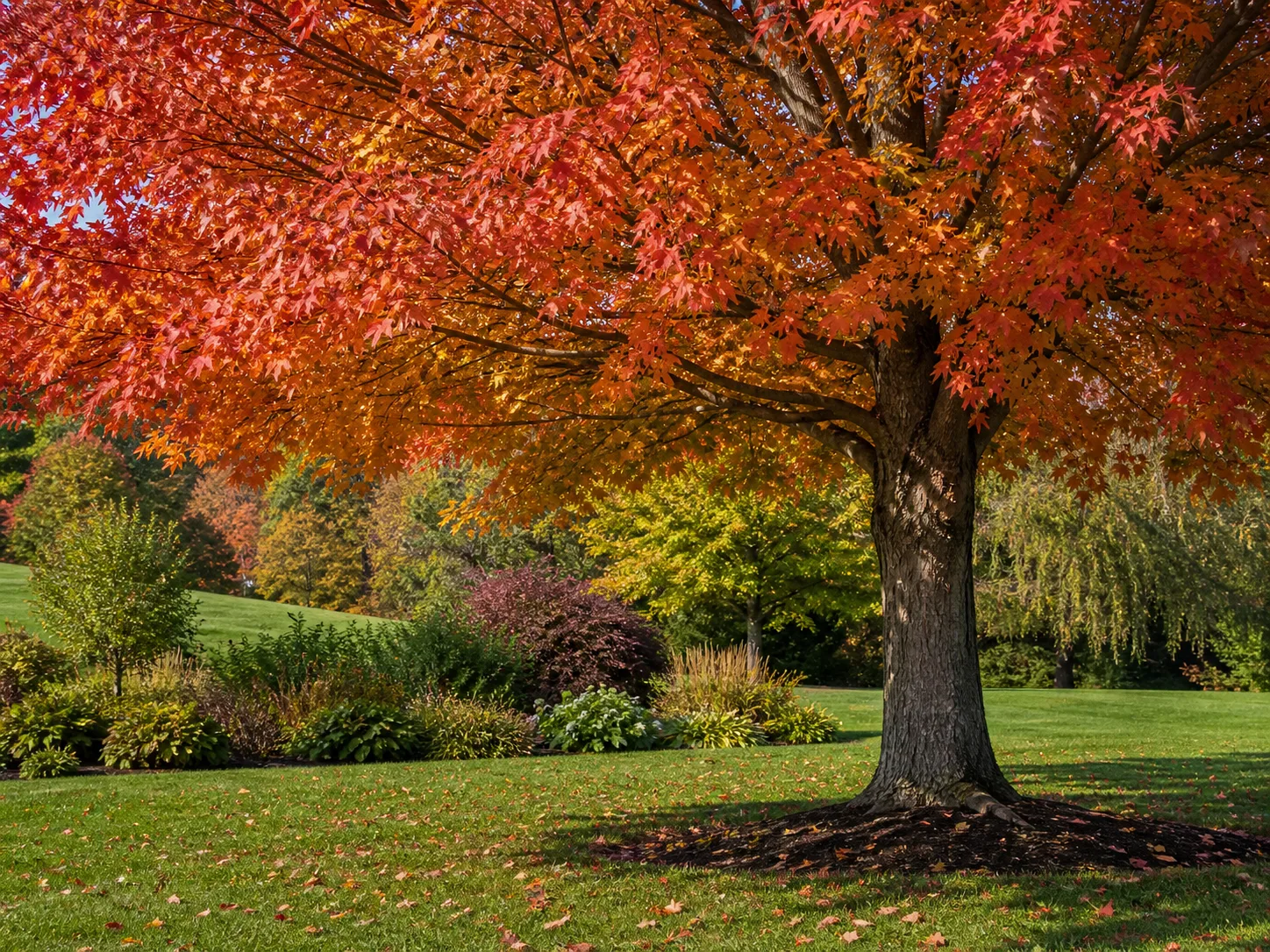
Maples range from compact ornamental shrubs to canopy trees that can dominate a residential lot. Choose a named Acer species for mature space, root conditions, climate, and branch structure before using fall color as the tiebreaker.
Care snapshot
What Is a Maple Tree, and Why Does the Species Matter?
The name Maple covers about 115 Acer species, including shrubs, small ornamentals, and broad deciduous canopy trees.
Opposite leaves and paired winged fruits called samaras help connect the group, but even the familiar lobed leaf changes dramatically among species. Bark can be smooth, furrowed, striped, or peeling, and fall color can range from yellow to orange, scarlet, or deep red.
A 6-foot tree at the nursery may mature into a compact courtyard specimen or a crown wider than part of your house, so the full botanical and cultivar name is the first useful fact on its tag.
Which Maple Fits the Space You Actually Have?
Begin with the job and the space at maturity. A small ornamental tree may frame an entry or give close-view foliage, while a shade tree must eventually hold a broad crown above the lawn without swallowing the house, street, or neighboring trees.
Measure the open width and vertical clearance against the exact cultivar's mature range because nursery height and growth-rate claims describe the early years without shrinking eventual root demand or branch spread.
Small ornamental maples earn their space through fine branching, leaf shape, and bark rather than heavy summer shade. The Japanese maple question deserves its own care decision because thinner leaves and protected siting differ from the needs of a lawn-sized canopy maple.
Paperbark maple offers peeling cinnamon-colored bark on a medium specimen form, while sugar and red maples become major long-term structures that need decades of room.
Silver maple grows fastest of the group and accepts wetter ground, and its shallow roots and weak branch unions make it a poor bargain anywhere near paving or buildings.
- Japanese maple group
- Small ornamental role with protected light and close detail
- Paperbark maple
- Medium specimen with peeling bark and restrained shade
- Sugar or red maple
- Large lawn canopy where climate and soil fit
- Silver maple
- Fast broad shade with shallow-root and structure tradeoffs
Where Will Maple Roots and the Crown Go in 30 Years?
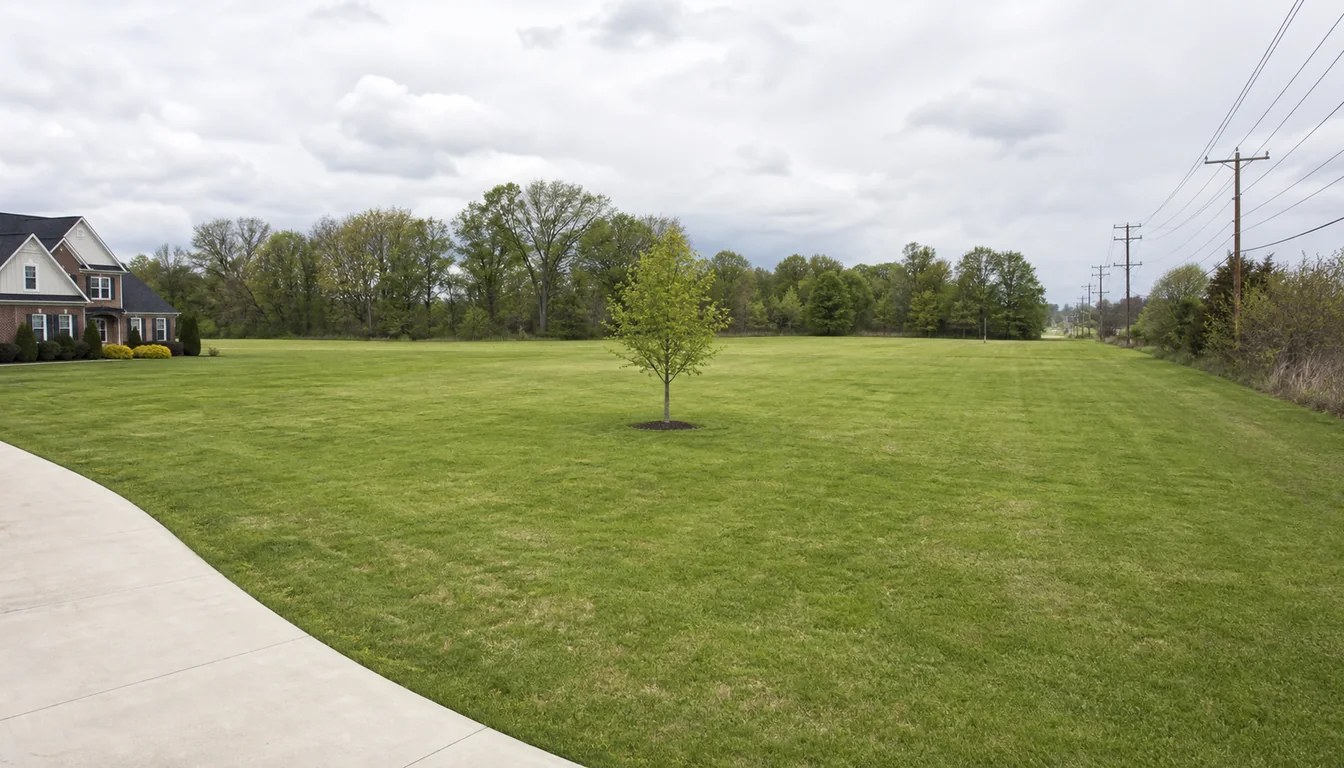
Draw the mature crown over the property before marking a hole so its full outline clears the roof, neighboring crowns, road sight lines, and places where low branches would block people or vehicles.
Look up for service drops and distribution lines, then contact the local utility-marking service before looking below ground. A tall maple under overhead lines will require repeated clearance cuts that deform the crown and can create a lasting safety problem.
Many maples concentrate roots in the upper soil where oxygen is available. Those roots compete with turf and become vulnerable to mower injury, drought, compaction, and pavement conflict when the tree is squeezed into a narrow strip.
Do not rely on roots politely stopping at the edge of a sidewalk. Give the selected tree a continuous soil area that matches its mature role, or choose a smaller tree before installation rather than fighting roots and branches for decades.
- Mark the cultivar's mature crown width around the proposed trunk.
- Reject positions where mature height conflicts with overhead utilities.
- Reserve unpaved soil for roots instead of a narrow lawn strip.
- Check doors, views, driveways, and neighboring property before digging.
Which Maple Handles Your Heat, Salt, Wind, or Wet Soil?
Let the hardest site condition eliminate species before fall color adds them back by checking summer heat, reflected pavement heat, winter salt, drainage, wind, soil volume, and local hardiness separately.
Sugar maple favors a cooler setting with moist, well-drained soil, and it struggles as a default street-pit tree under heat, salt, and compaction.
Red maple accepts a far broader moisture range, though cultivar selection and local trial performance still matter because the species spans many climates and forms.
Silver and red maple hybrids are sold for adaptable shade and useful fall color, yet hybrid parentage does not erase limited soil volume or poor branch placement. Ask for mature dimensions and local trial performance for the named cultivar rather than treating the word Freeman as a guarantee.
A maple that merely survives the site may never deliver the full crown or fall display you wanted. When every candidate conflicts with the limiting condition, a different tree group is the better answer.
Periodically wet soil
- Consider red or silver maple traits
- Confirm the site is not permanently waterlogged
- Leave room for broad surface roots
Hot reflected pavement
- Avoid a cool-forest choice by default
- Compare locally tested cultivars
- Increase usable soil and water access
Road salt exposure
- Treat salt as a primary exclusion
- Do not assume genus-wide tolerance
- Consider a non-maple street tree
Exposed windy site
- Expect delicate leaves to tear or scorch
- Protect ornamental forms
- Choose a sturdier canopy elsewhere
How Do You Plant a Maple at the Correct Root-Flare Depth?
Find the first structural roots before measuring hole depth because nursery soil may hide several inches of trunk. The trunk should widen visibly into the root flare at or slightly above the finished soil surface after settling.
Dig wider than the root ball but no deeper than the measured root system, then set the tree on firm undisturbed soil so watering cannot pull the flare below grade.
Amending only the hole with rich compost can keep roots circling in a soft pocket instead of entering the surrounding soil. Use the site's soil for backfill unless a local soil test or arborist identifies a reason for a broader site correction.
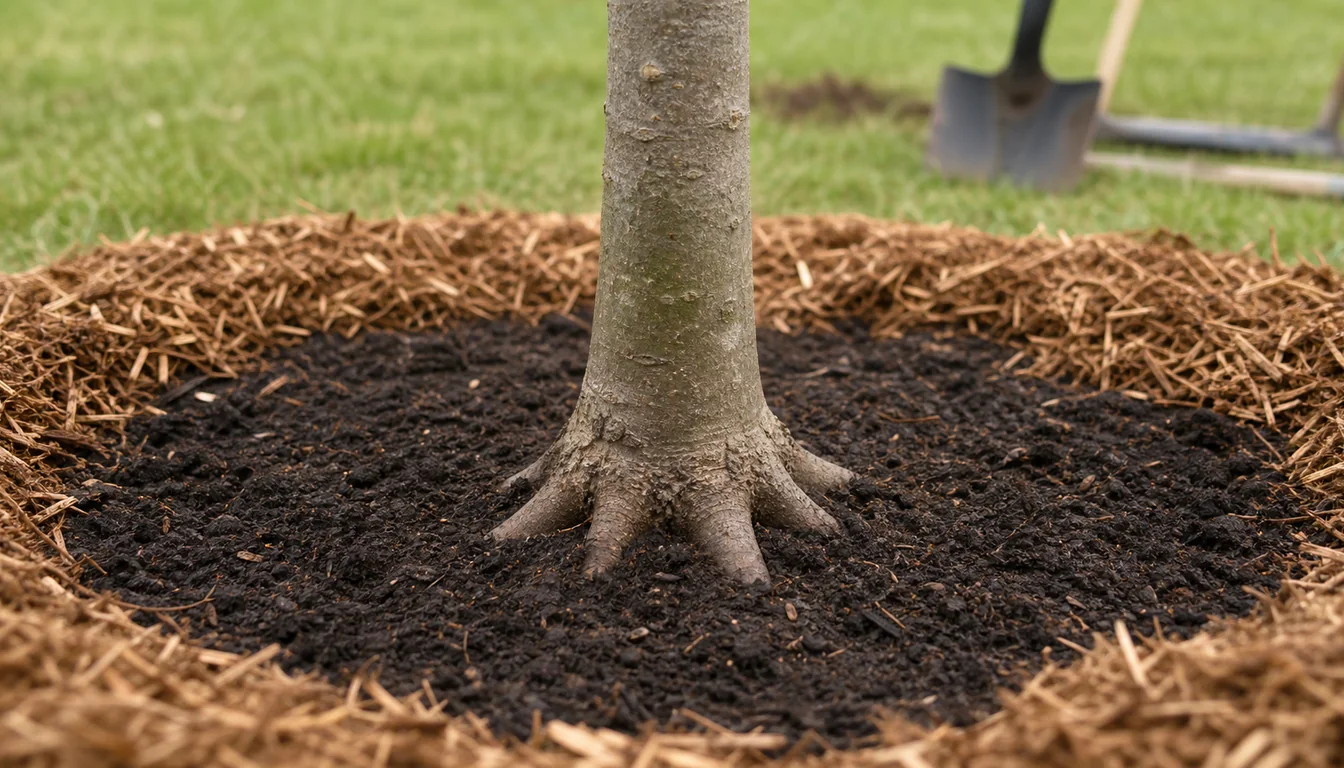
Two to 3 inches of coarse organic mulch can buffer soil temperature and protect roots from turf competition, but a mound against the trunk traps moisture where bark needs air. Spread the same material outward instead of stacking it upward.
- Expose the flare and remove soil that buries the first structural roots.
- Inspect container roots and correct circling roots before they thicken.
- Backfill with the excavated site soil and settle large air pockets with water.
- Spread mulch in a wide shallow ring while keeping bark and flare uncovered.
How Should You Water a Maple's Expanding Root Zone?
A new Maple needs consistent moisture through the original root ball and surrounding backfill, so check several inches down after meaningful rain and water when that zone is dry or only slightly damp.
Apply water slowly across the root ball so it penetrates instead of running over the surface. UMN Extension uses about 1 to 1.5 gallons per inch of trunk caliper at each watering as a starting amount, with frequency adjusted for soil, temperature, wind, and rainfall.
Expand the watered and mulched area as roots grow beyond the planting hole. Removing turf from that zone reduces competition and keeps mowers away from shallow roots and tender bark.
An established maple usually needs less intervention, but extended drought, compacted soil, or a hot paved edge can still empty the upper root zone. A slow broad soak during real drought supports the canopy better than frequent splashes at the trunk.
How Do You Build Strong Maple Branch Structure Early?
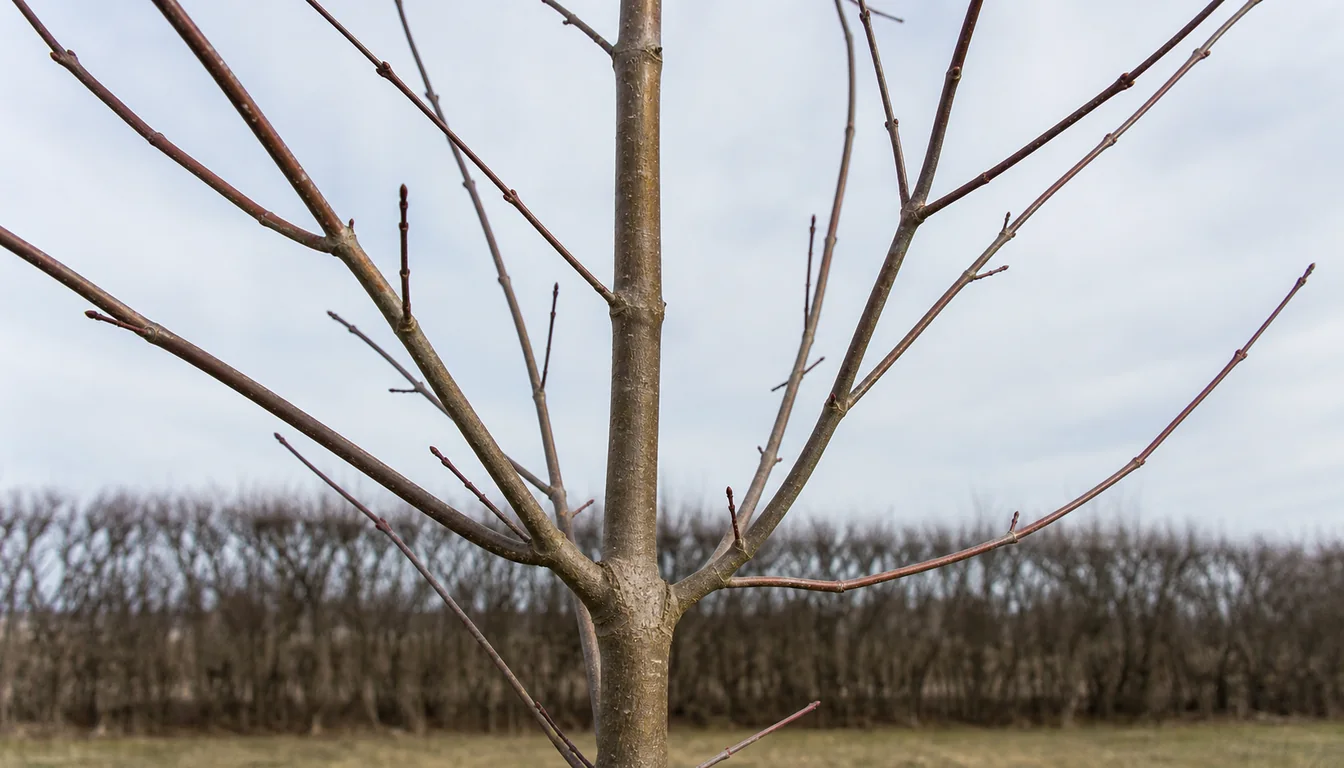
Select a nursery maple with a straight usable leader, good trunk taper, and branches distributed around the stem. Branches that are much smaller than the trunk and attach at broad angles have a better starting structure than several equal upright stems squeezed together.
A competing leader can form a tight union that traps bark as both stems thicken, so correct the competition gradually while cuts are small instead of removing a major half of the crown years later.
Make a small structural cut just outside the branch collar, leaving neither a long stub nor a flush wound into the trunk.
Never top a maple to control a species that was too large for the site, because the shoots that follow attach weakly and the size conflict is still there underneath them.
Mature branches near roofs, streets, or power lines belong to a qualified arborist. The goal of early work is a durable crown that needs fewer large interventions, not a tree trimmed into the same outline every year.
Why Is a Maple Turning Color Too Early?
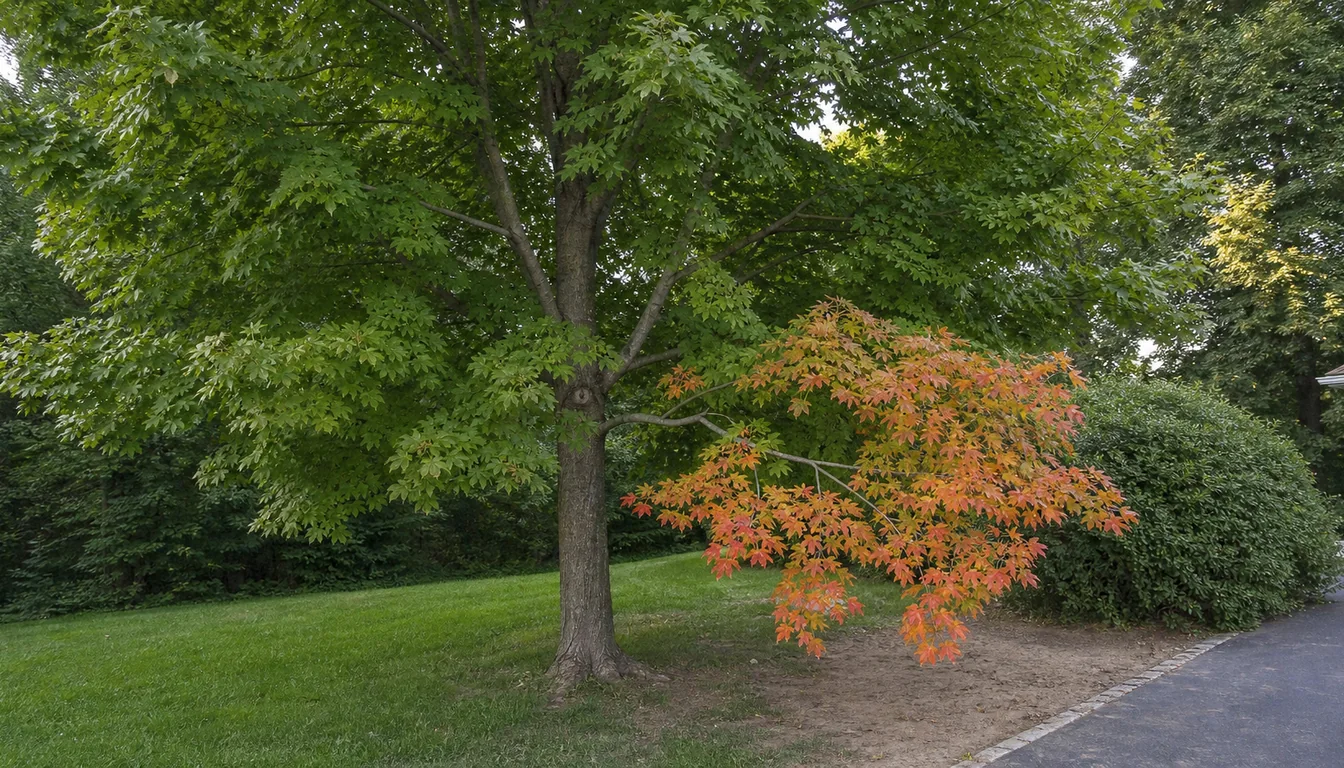
Color that arrives with the normal autumn season across a healthy crown can be the display you chose, though the exact shade still depends on species, cultivar, weather, and site. Red or yellow leaves appearing in midsummer need a closer look.
One colored sector often points toward the ground beneath it because compaction, trenching, pavement heat, drought, or standing water can injure part of the root system before the whole tree reacts.
Crisp margins after hot dry weather point at a water and heat problem worth checking first.
Pale foliage and dieback over saturated ground point the other way, at root oxygen, and maples stay sensitive to standing water even where the species accepts periodically moist soil.
Damaged leaves will not return to green, so judge the correction from bud survival, shoot growth, and a full crown in the following season. Progressive dieback, cracking, or large dead limbs warrants an arborist inspection rather than another fertilizer application.
Should You Avoid Norway Maple or Maples Near Horses?
Check Norway maple, Acer platanoides, against regional invasive guidance before buying and choose a locally suitable native or noninvasive tree where agencies warn that it escapes landscapes and suppresses woodland plants.
Horse properties need another filter because dried or wilted maple leaves can poison horses, including leaves dropped after storms, frost, pruning, or normal fall shed. Keep branches and leaf piles outside horse access and ask a veterinarian promptly after suspected ingestion.
Frequently Asked Questions
How big does a maple tree get?
Mature size depends on species and cultivar. Compact ornamentals may stay near 15 feet, while major shade maples can exceed 60 feet in height and develop broad crowns.
Which maple is best for a small yard?
Choose a genuinely small species or cultivar after checking its mature height and width. A Japanese maple or another compact ornamental usually fits better than a young canopy maple kept small by repeated pruning.
Do maple roots damage sidewalks?
Many maples develop shallow roots that conflict with paving when soil space is narrow or compacted. Give a large species broad unpaved root space or choose a smaller tree before planting.
Why is my maple turning red in summer?
Midsummer color can signal drought, standing water, compaction, root injury, or heat stress. Compare the colored part of the crown with the soil and recent disturbance beneath it.
Are maple trees safe around horses?
Wilted or dried maple leaves can poison horses. Keep storm debris, pruned branches, and concentrated fallen leaves outside horse access and call a veterinarian after suspected ingestion.
Sources & References
- Tree Planning, Selection, and Location — Arbor Day Foundation
- Developing a Tree Planting Plan — Penn State Extension
- Planting and Transplanting Trees and Shrubs — UMN Extension
- Watering Newly Planted Trees and Shrubs — UMN Extension
- Early Maple Color as a Stress Signal — UMN Extension
- Norway Maple — UMN Extension
- Are Maple Leaves Toxic to Horses? — UMN Extension
- How to Grow Larger Acers — Royal Horticultural Society
- Toxic and Non-toxic Plants: Red Maple | ASPCA
- Toxic and Non-toxic Plants: Amur Maple | ASPCA
Related Plants
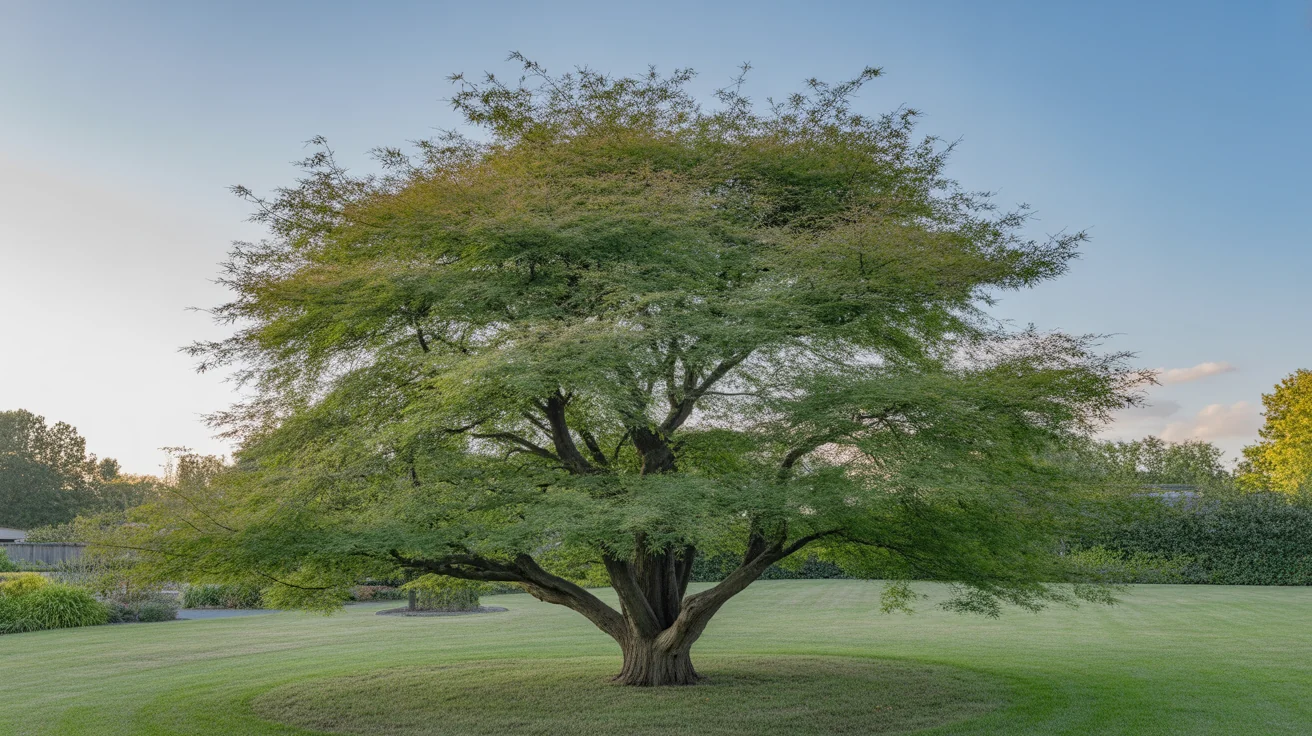
Japanese Maple
A compact ornamental maple for protected small gardens, courtyards, and close viewing.
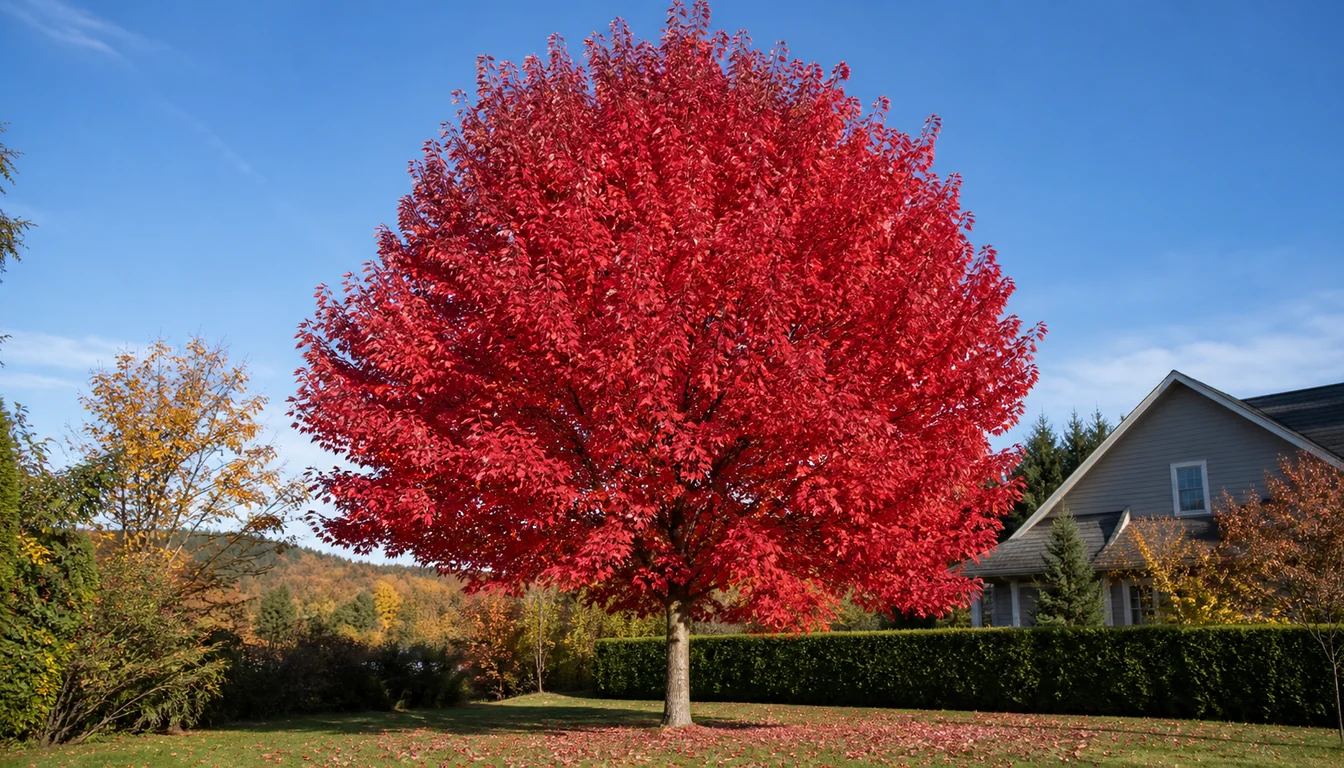
Red Maple
A North American shade maple with site-dependent red, orange, or yellow fall color.
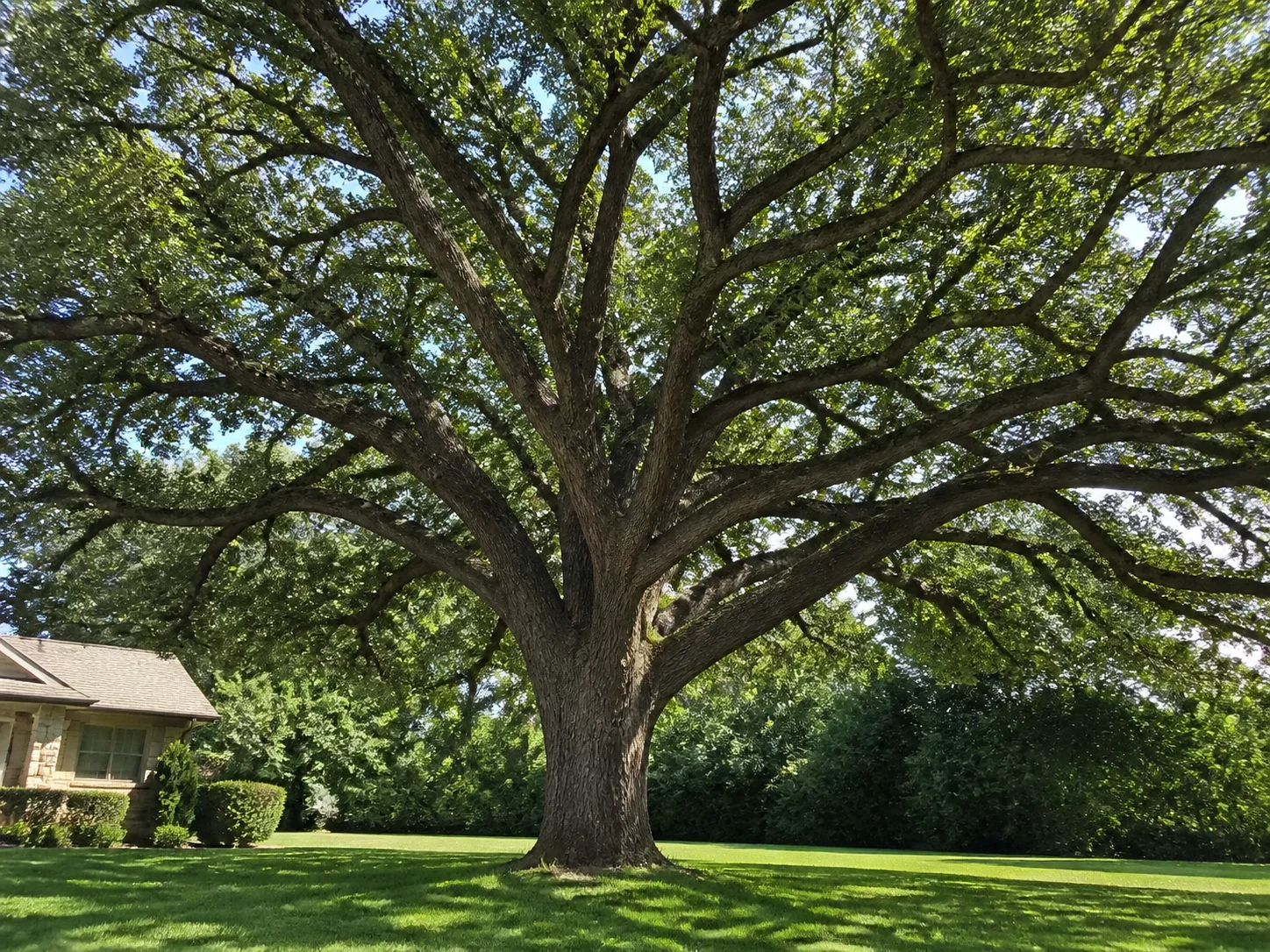
Oak Tree
A separate large-canopy choice for yards that prioritize durable shade and wildlife value.
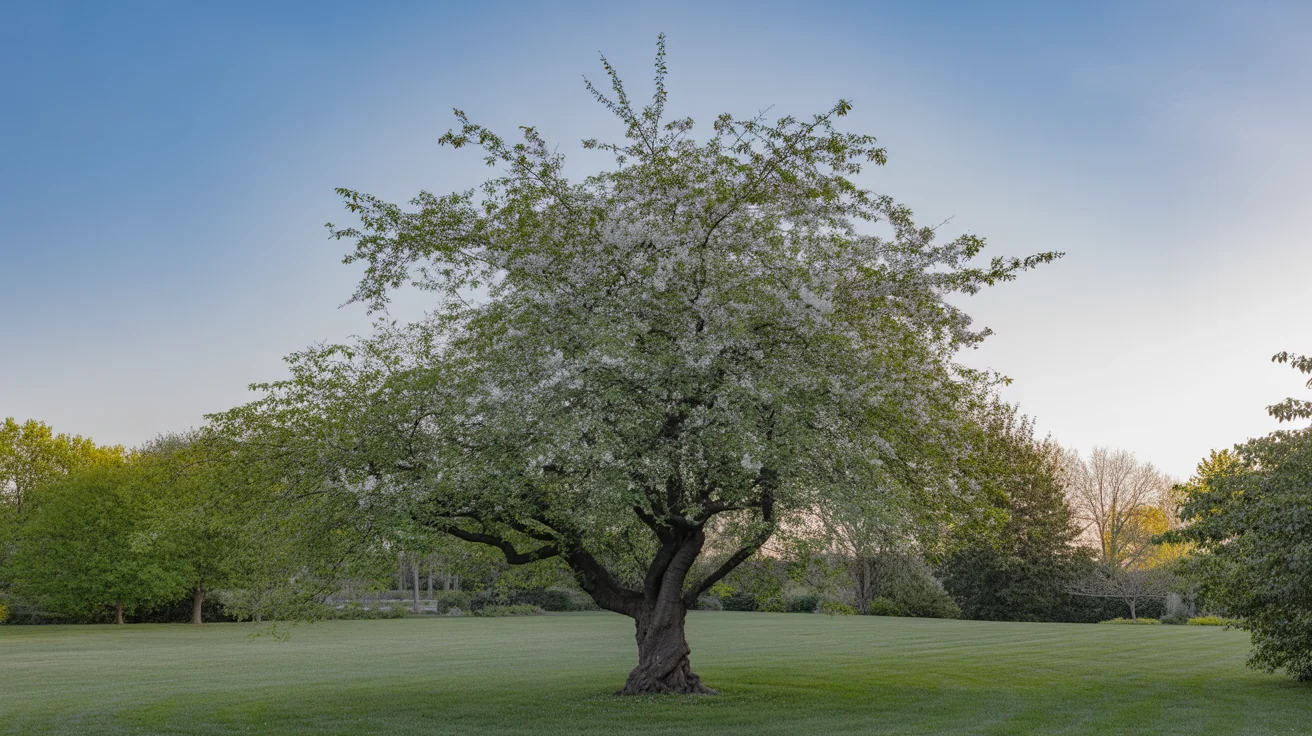
Cherry Blossom Tree
Cherry blossom tree is a common name for ornamental cherries grown for spring flowers rather than a useful fruit crop.
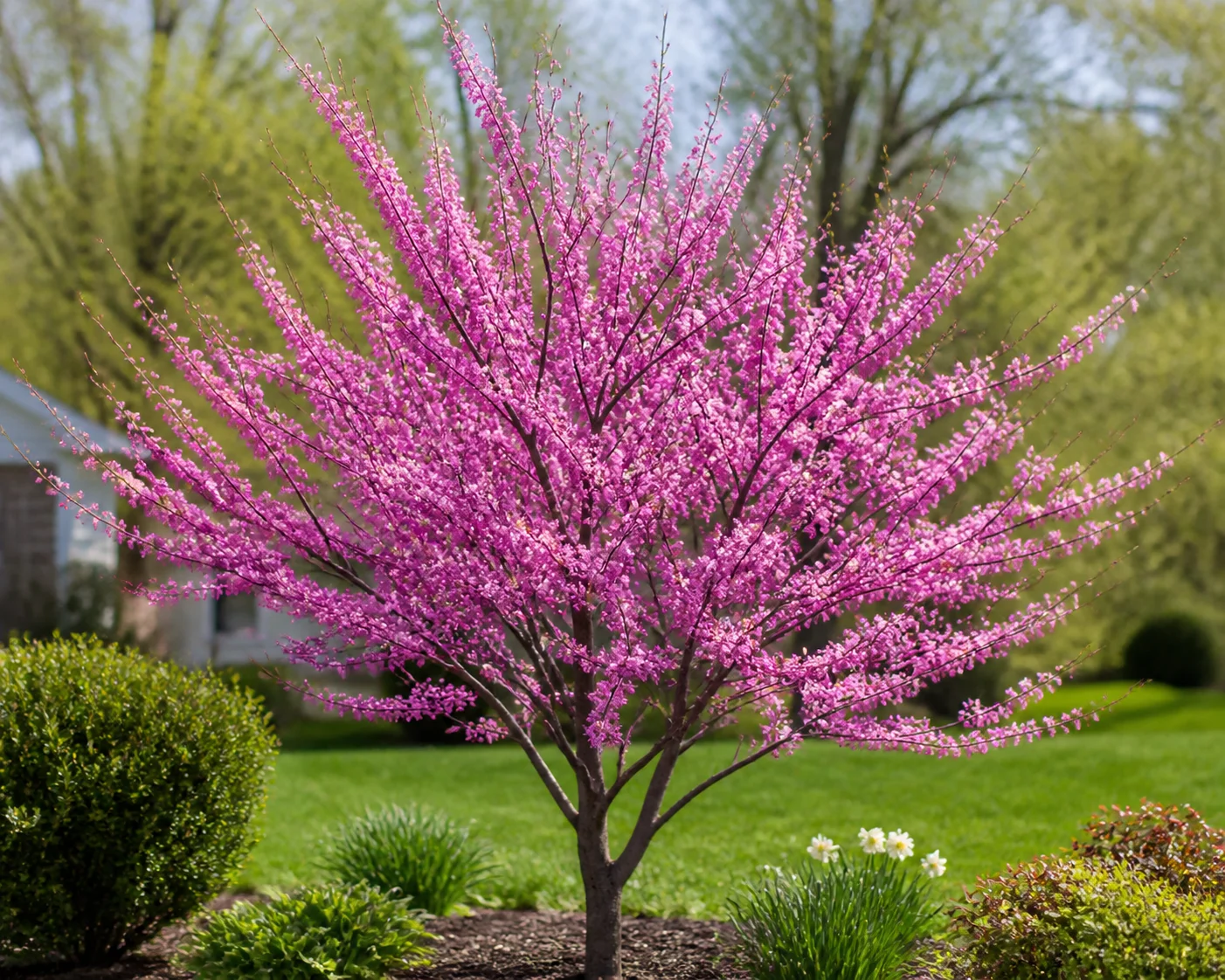
Eastern Redbud
Eastern redbud is a small North American tree with pea-like flowers that open on bare twigs and older wood.
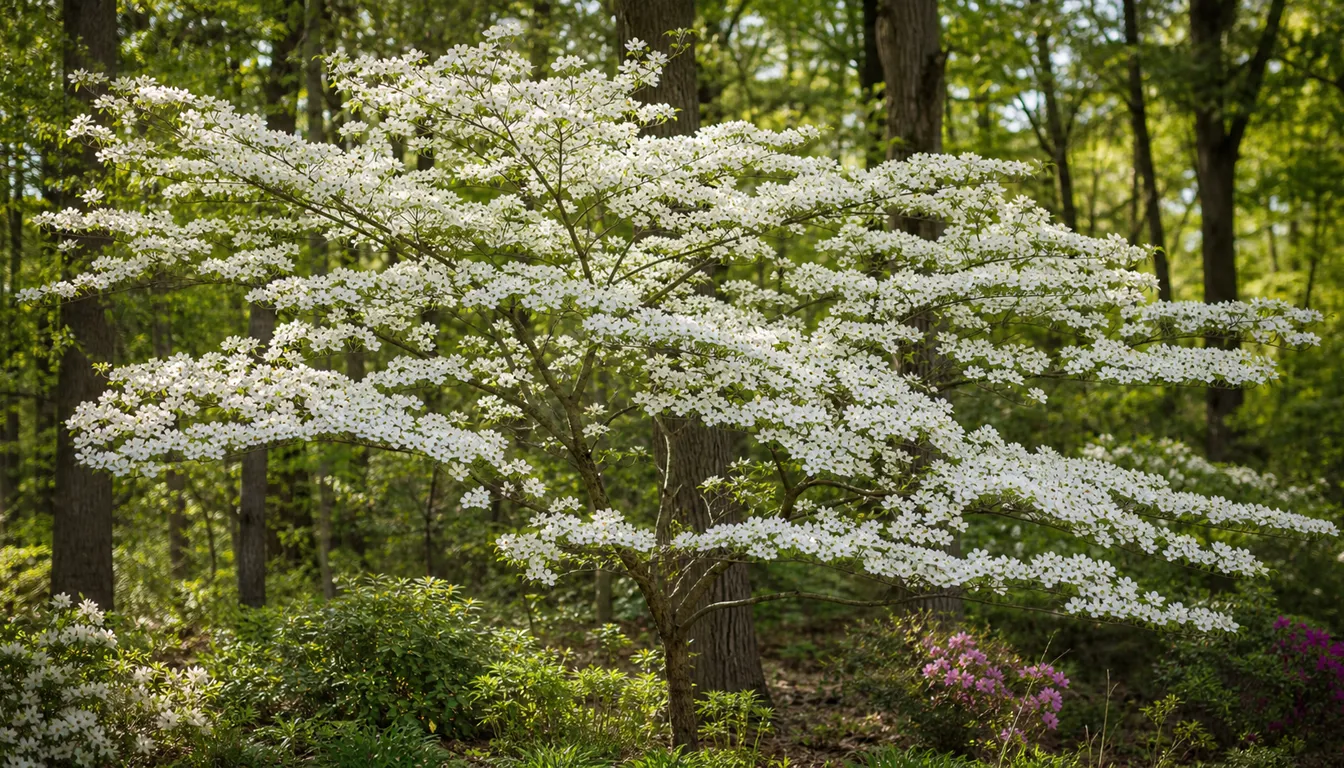
Flowering Dogwood
Flowering Dogwood is easiest to grow when you copy the place it wants to live.