
Best Fertilizer for Vegetables by Garden Type
Fertilizer only helps vegetables if it matches what your soil and crops need. Random products and guesswork usually mean weak growth, burnt roots, or lots of leaves and very few fruits.
This guide breaks down the best fertilizer types for raised beds, in-ground rows, and containers. We also match common crops like indeterminate tomatoes and fruiting peppers to the nutrients they use most, so you can feed with more precision and less waste.
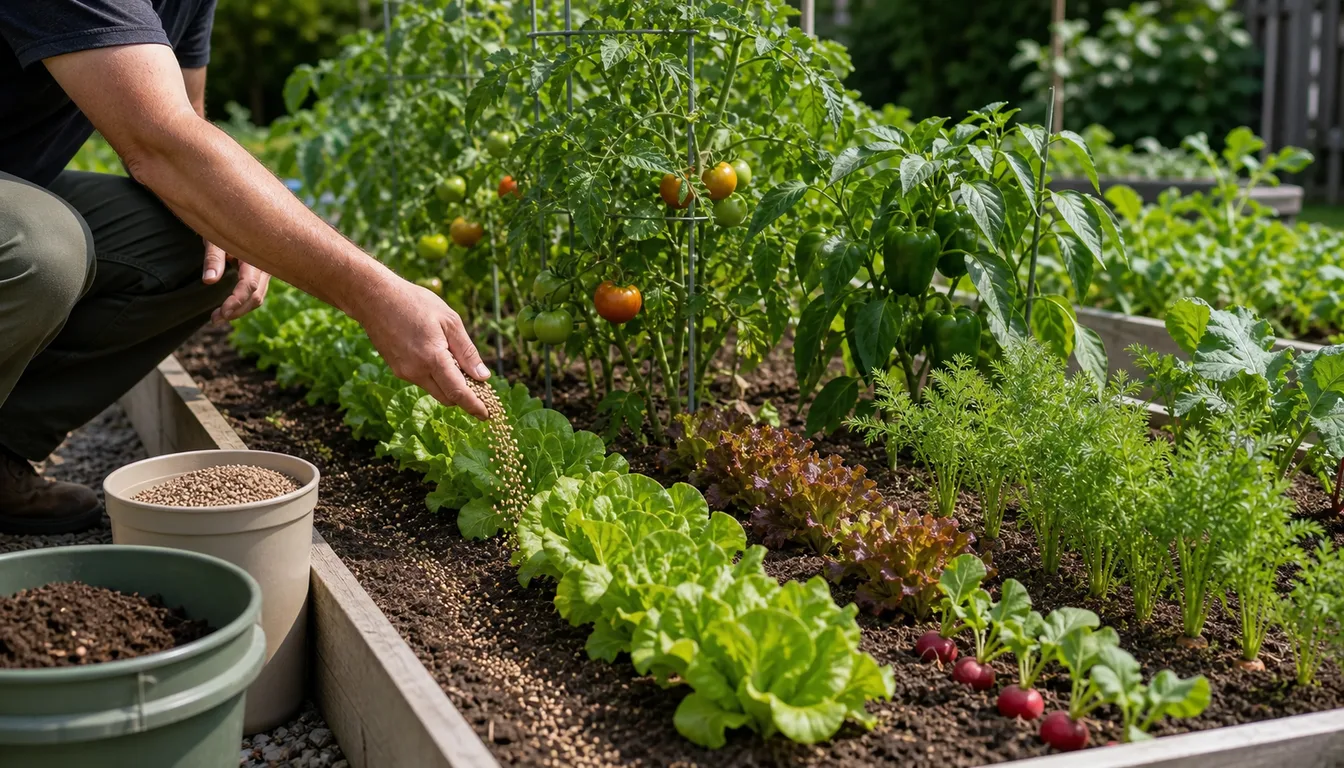
Understand NPK So You Buy the Right Bag
Those three bold numbers on a fertilizer bag, like 5-10-10, are not marketing fluff. They show the percentage of nitrogen (N), phosphorus (P), and potassium (K) in the product.
Nitrogen grows leaves and stems. Phosphorus supports roots and flowers. Potassium helps fruit quality, disease resistance, and overall toughness; vegetables pull a lot of all three, just not in the same proportions.
Leafy crops like cool-weather spinach and curly kale plants use more nitrogen because you harvest the foliage. Fruiting crops like backyard tomatoes and sweet peppers need steady nitrogen early; once flowering starts, they lean harder on phosphorus and potassium.
Root crops such as garden carrots, red beets, and quick radishes hate overly high nitrogen. Too much N gives you big tops and skinny roots.
Most disappointing harvests trace back to using the wrong NPK ratio, not a lack of fertilizer altogether. Matching NPK to crop type matters more than picking a fancy brand.
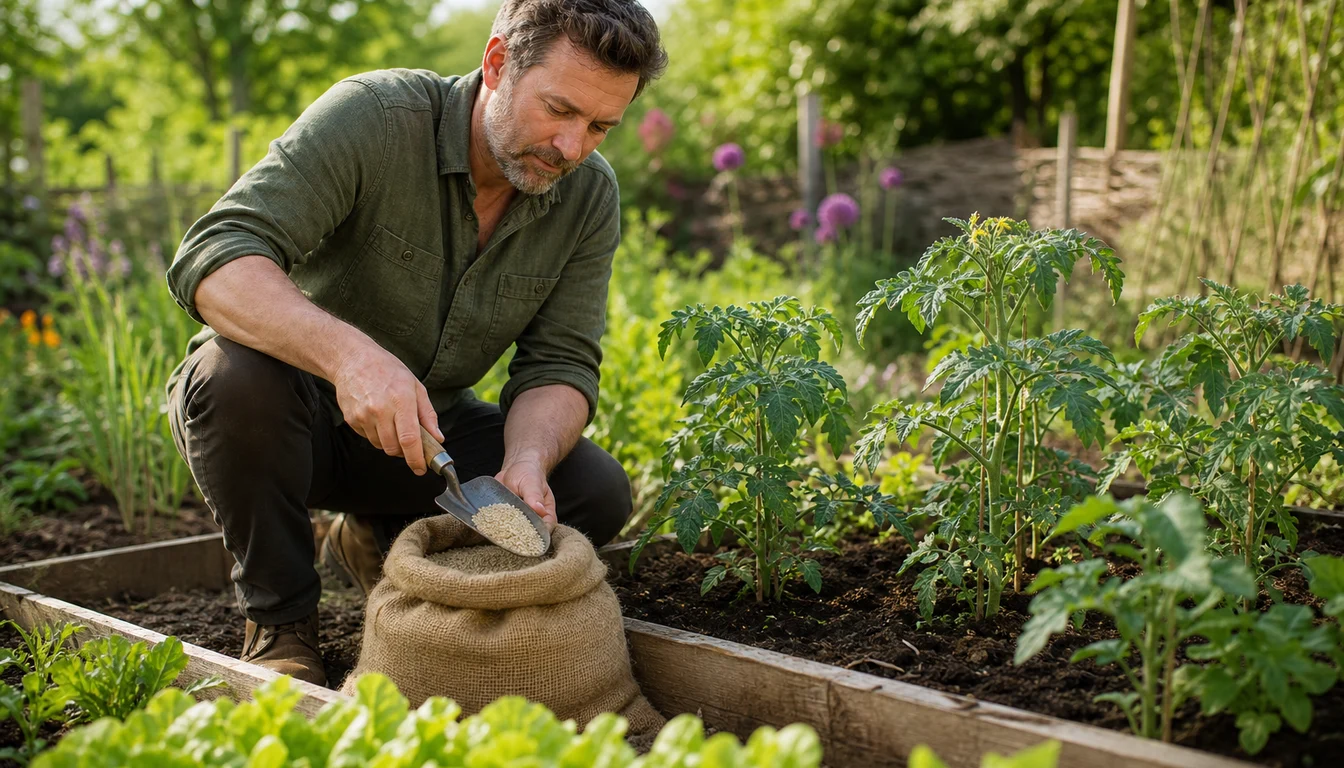
- High N (e.g., 10-5-5): Best for leafy greens and early growth phases
- Balanced (e.g., 5-5-5): Good all-purpose choice for mixed beds
- Higher P and K (e.g., 4-6-8): Strong option for fruiting and root crops
- Low or slow N: Safer around root vegetables and already rich soils
Organic vs Synthetic: Which Actually Works Better?
Bags labeled organic and synthetic both grow vegetables. The difference is how fast they act, how easy they are to misuse, and what they do to soil over time.
Organic fertilizers come from natural sources like composted manure, feather meal, and bone meal. They release nutrients slowly as soil life breaks them down; that makes them forgiving in raised beds and in-ground plots where you grow heavy feeders like indeterminate vines or trellised cucumbers all season.
Synthetic fertilizers are made from mineral salts. They dissolve fast and deliver nutrients quickly. You see a quicker response on hungry plants like sweet corn rows or container-grown bush zucchini, but they can burn roots if you overdo the rate or apply on dry soil.
Overapplying fast-acting synthetic fertilizer on dry soil is one of the quickest ways to burn young vegetable roots.
If you want the easiest path for a home garden, use a base of compost and organic fertilizer, then spot-treat with small amounts of synthetic when a crop looks pale or slow.
- Organic strengths: Improves soil, hard to burn plants, longer-lasting nutrition
- Organic drawbacks: Slower response in cold soil, heavier bags, sometimes pricier
- Synthetic strengths: Quick green-up, precise NPK choices, handy for containers
- Synthetic drawbacks: Easier to overapply, no improvement to soil structure
Best Fertilizer Types by Garden Setup
The best fertilizer for vegetables in a small raised bed is not the same product you want for a big tilled plot or balcony pots. How your garden holds water and drains changes what works.
Raised beds with loose soil and plenty of compost lose nutrients faster. A slow-release organic granular fertilizer scratched into the top few inches at planting works well; heavy feeders like cage tomatoes, compact peppers, and spring broccoli benefit from a second light side-dress halfway through the season.
Traditional in-ground rows often start with poorer soil but hold nutrients longer. Here, mix in compost and a balanced granular fertilizer before planting, then spot-feed crops that show pale growth or poor vigor. Long rows of pole beans usually need less nitrogen because they can fix some from the air. Spring peas usually follow the same pattern.
Container vegetables dry out quickly, and every watering flushes nutrients from the pot. A slow-release synthetic or organic coated fertilizer paired with weekly liquid feedings is simplest; patio cucumbers and cherry tomatoes in pots are much less forgiving if you skip feeding.
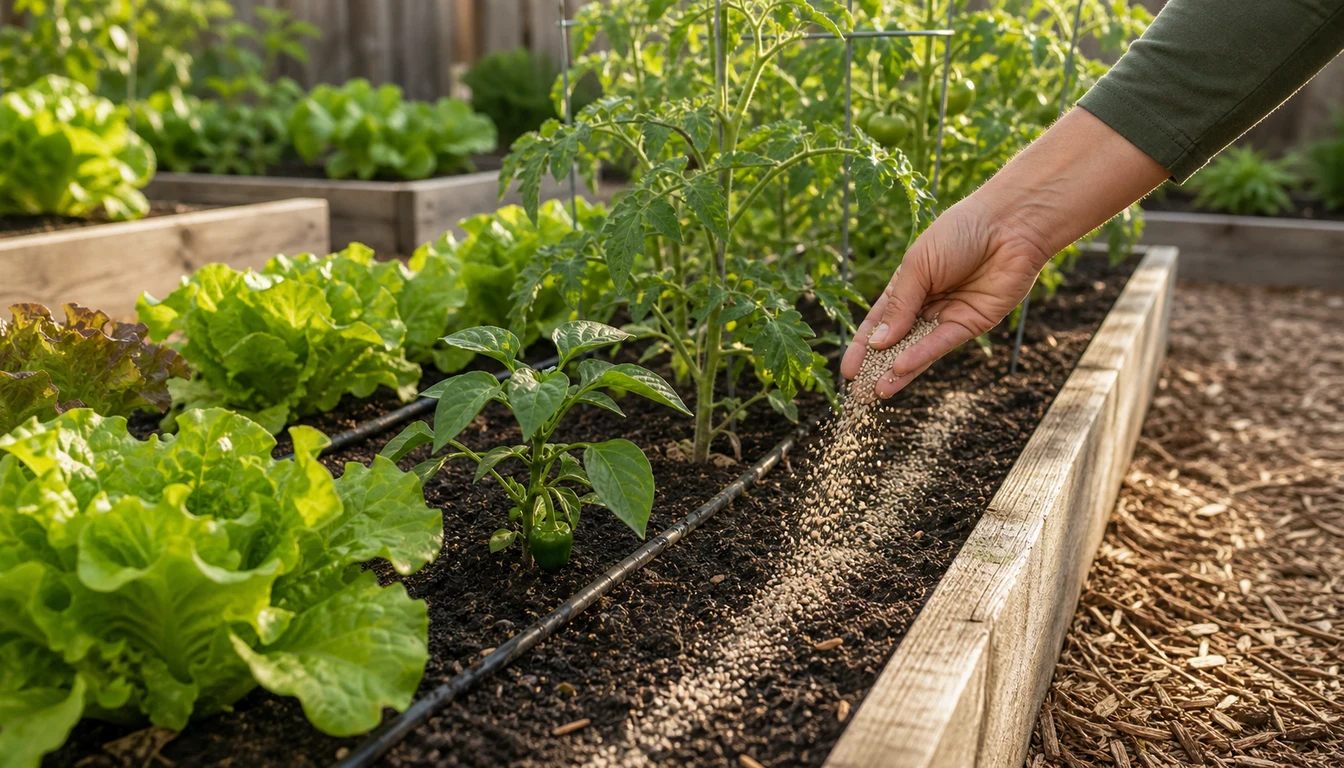
- Raised beds: Slow-release organic granules, light midseason top-up
- In-ground rows: Compost plus balanced granular, targeted extra feeding
- Containers: Slow-release pellets plus diluted liquid fertilizer
Match Fertilizer to Specific Vegetable Groups
Different vegetables react very differently to the same fertilizer. One product across the whole garden often means some crops thrive while others sulk.
Fruiting crops like beefsteak tomatoes, hot peppers, eggplant varieties, vining pumpkins, sweet cantaloupes, and watermelons like rich soil. Use a starter fertilizer with moderate nitrogen and good phosphorus at planting, then switch to something closer to 4-6-8 once flowers appear.
Leafy crops, including baby spinach, lacinato kale, and herbs like fresh basil, can handle higher nitrogen. Flat-leaf parsley usually responds the same way. A balanced or slightly higher-N fertilizer used lightly but often keeps greens tender without getting bitter.
Root crops like sweet carrots, gold beets, spring radishes, fall garlic, and storage onions prefer lower nitrogen plus steady phosphorus and potassium. Too much nitrogen causes forked roots and lots of top growth.
If you only change one habit, stop giving heavy nitrogen to root beds once seedlings are established. Add compost instead if plants look hungry.
- Fruiting vegetables: Start balanced, then shift to higher P and K at flowering
- Leafy vegetables and herbs: Use modest, regular doses of higher-nitrogen feeds
- Root vegetables: Stick with low nitrogen, higher P and K mixes, especially midseason
Timing Your Feeding Through the Season
Cool-season beds of lettuce, peas, and root crops wake up early, but their fertilizer needs stay modest. They like a small boost at planting and maybe one more light feeding midseason.
Warm-season feeders, especially indeterminate tomato vines and fruiting pepper plants, hit their stride when nights warm up. They respond best to steady, smaller doses rather than one big blast.
In cold climates you might fertilize once just after you prep new beds in spring, then again as fruits start to form. Warmer zone 8-11 gardens often squeeze in an extra light midseason feeding.
For long-season crops, think in stages; seedlings and transplants get a root-start dose, vegetative growth gets balanced feeding, and fruiting stage gets lower nitrogen.
- Cool-season start: Light fertilizer mixed into the top 2-3 inches of soil at planting
- Warm-season start: Balanced organic fertilizer under and around transplants, then water in well
- Midseason check: Inspect color and growth, side-dress only beds that look pale or stalled
- Fruiting switch: Move to lower nitrogen on heavy bearers once flowers and small fruits appear
How to Apply Fertilizer Without Burning Plants
Granular fertilizers are safest when they never touch stems or leaves. Always keep them a few inches away from the plant, then scratch them into the topsoil so they do not sit in dry clumps.
Water-soluble products work fast but can burn faster. Start at half the label rate on potted patio tomatoes or windowbox basil, then increase only if you do not see improvement after a couple of weeks.
Overfeeding in a single day causes more damage than slightly underfeeding all season.
Foliar sprays are useful for quick fixes on pale leafy greens, but leaves must be cool and out of direct sun. Spray in early morning; never mix stronger than the label recommends.
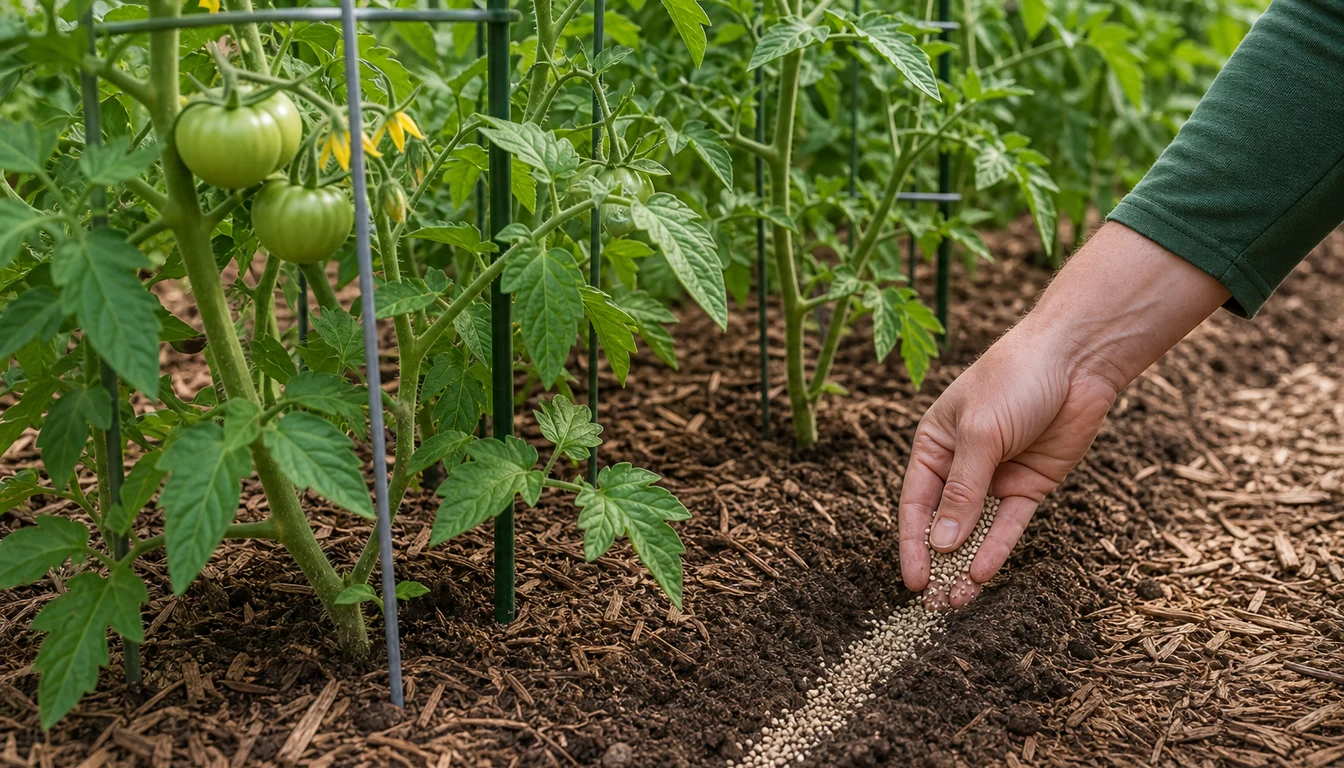
- Dry soil rule: Water the bed the day before fertilizing if the soil is dry and crumbly
- Buffer distance: Keep dry fertilizer 2-4 inches from stems for most vegetables
- Mixing depth: Scratch granules into the top 1-2 inches instead of burying them deep
- Rinse off leaves: If fertilizer hits foliage, rinse it off right away to prevent scorch
Reading Plant Signals So You Can Adjust
Vegetables complain with their leaves long before they stop producing. Pale yellow new growth often points to nitrogen or iron issues, while dark green plants with no flowers are usually overfed with nitrogen.
Tomato and pepper plants with purple-tinged leaves in cool soil can be short on available phosphorus. That is different from simple cold stress, so keep an eye on whether growth stalls along with the color shift.
Leafy crops like spinach and kale that yellow from the bottom up usually want more nitrogen. Root crops with huge tops and skinny roots often have the opposite problem; too much nitrogen and not enough patience.
Most mystery fertilizer problems trace back to feeding too often, not too little.
- Too much nitrogen: Very dark leaves, thick stems, few flowers, more sucking pests
- Too little nitrogen: Overall pale plants, slow growth, older leaves yellowing first
- Phosphorus issues: Purplish leaves, especially in cool spring beds, weak roots
- Potassium shortage: Yellow or brown leaf edges, poor disease resistance, weak stems
Fertilizing Containers, Raised Beds, and In-Ground Rows
Pots and grow bags leach nutrients every time you water. A slow-release granular mixed into your potting mix plus a weak liquid feed every 2-3 weeks keeps container cucumbers and patio squash producing.
Raised beds sit between pots and native soil. They usually need one strong baseline dose when you refresh the mix, then a midseason top-up around heavy feeders like sweet corn and big pumpkin vines.
Old in-ground gardens often hide a lot of phosphorus and potassium from past years. A soil test tells you whether you truly need a complete product or just nitrogen on beds of pole beans and carrots.
In small gardens it is cheaper to build rich soil with compost than to chase perfect NPK from bottles.
Match the feeding style to how quickly each setup loses nutrients.
- Containers: Mix slow-release into soil, then supplement with diluted liquid every few weeks
- Raised beds: Use organic fertilizer at bed prep, then side-dress heavy feeders midseason
- In-ground rows: Follow soil-test results; often only nitrogen is needed on established plots
- Perennial veggies: Long-lived crops like asparagus beds prefer a single spring feeding
Common Fertilizer Mistakes To Avoid
The most expensive best fertilizer for vegetables is wasted if it goes on at the wrong time. Dumping strong fertilizer on just-planted seeds is a classic mistake that can dry out the seed zone and reduce germination.
Bag directions assume average soil, which almost nobody has. Sandy gardens and raised beds often need a bit more than the bag says, while rich clay plots that you have composted for years might need far less.
Many gardeners see yellowing leaves and immediately add more fertilizer, but soggy soil and poor drainage cause similar symptoms. Check moisture, roots, and spacing before blaming your fertilizer choice.
If you already burned a patch of broccoli transplants or young cabbage seedlings, flood the area with plain water to dilute salts, then skip feeding there for a few weeks.
- Skipping soil tests: Guessing leads to overloading phosphorus or potassium in older gardens
- Chasing every product: Stick with one or two reliable fertilizers, not a shelf full of bottles
- Ignoring organic matter: Compost and mulches matter as much as NPK numbers
- No record keeping: Note what, when, and how much you fed each bed each season
Pro Tips
- Water the soil well before and after using synthetic fertilizer to avoid salt burn on roots.
- Use a simple soil test every couple of years so you are not blindly adding phosphorus that is already high.
- Feed container vegetables more often than bed grown plants, since every watering washes nutrients out.
- Keep granular fertilizer a few inches away from plant stems instead of piled against them.
- Switch from high nitrogen to more phosphorus and potassium when fruiting crops start to flower.
- Check the label against the crop group before you buy, so root crops do not get the same high-nitrogen feed as leafy greens.
- Pair fertilizer with 1 to 2 inches of compost mulch to slow nutrient loss and improve soil.
- Cut fertilizer rates in half when growing in very hot weather to avoid stressing shallow roots.
Frequently Asked Questions
How often should I fertilize my vegetable garden?
Most gardens do well with a baseline feeding at bed prep, then one or two lighter feedings during the season. Containers usually need fertilizer every 2–3 weeks, while in-ground beds with rich soil often need less.
Is organic fertilizer always better for vegetables?
Organic fertilizers are gentler and improve soil over time, which helps vegetables long term. Synthetic products act faster and are useful for quick fixes, but they do not build soil structure or microbial life.
What is the best fertilizer ratio for tomatoes and peppers?
Start with a balanced or slightly higher phosphorus blend at planting, such as 5-10-10. Once plants begin flowering and setting fruit, switch to a lower nitrogen option to avoid too much leafy growth and not enough fruit.
Can I use the same fertilizer on flowers and vegetables?
Yes, many balanced garden fertilizers work for both. Just follow vegetable label rates in food beds, and consider a bloom-boosting formula for hungry ornamentals like repeat-blooming roses or container flowers.
Should I fertilize vegetables right before harvest?
Heavy feeding right before harvest is not helpful and can leave extra salts in the soil. Focus fertilizer earlier in the season, then rely on steady watering and mulch as fruits and roots size up.
Sources & References
Related Guides
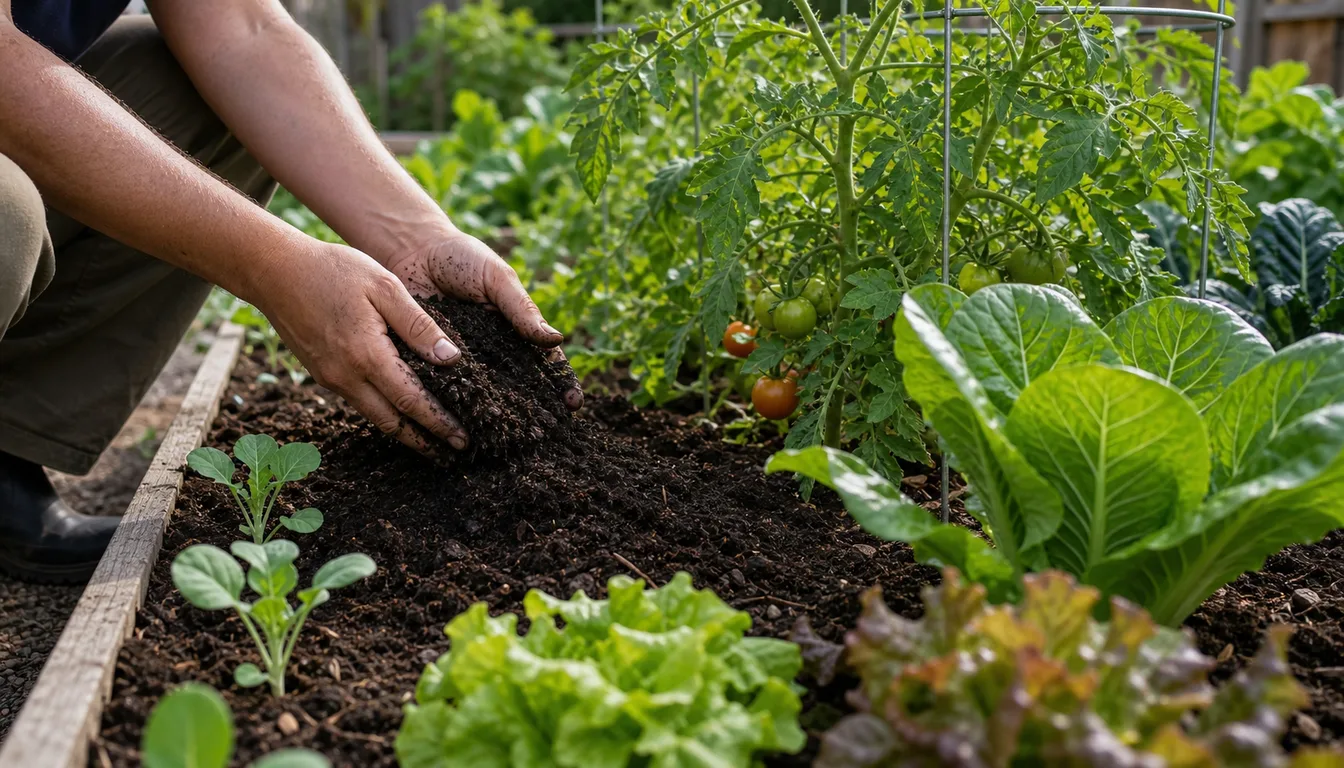
Benefits of Composting for Healthier Soil and Plants
Composting is basically free fertilizer that you make in your own yard. It turns kitchen scraps and…
12 min read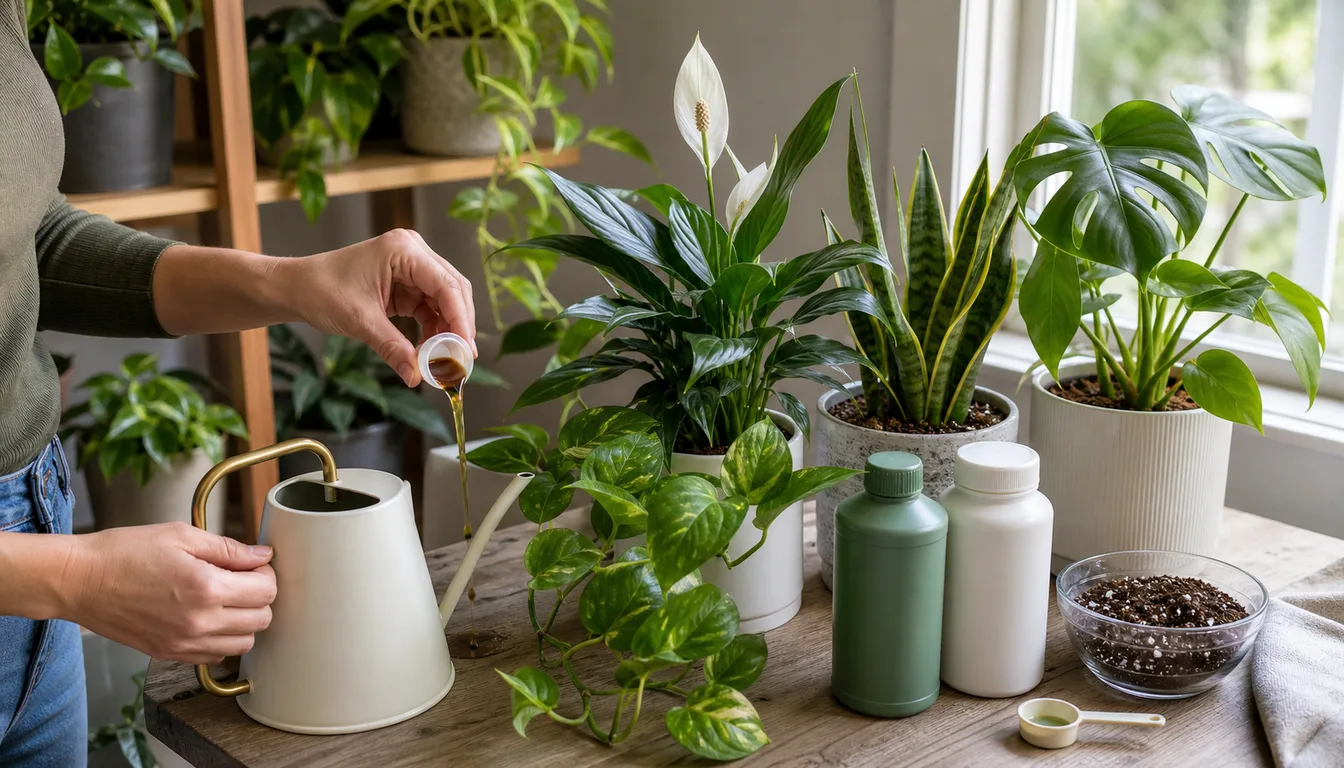
Best Fertilizer for Indoor Plants Depends on the Pot
Fertilizer is where a lot of indoor plant care goes sideways. Too weak and you get leggy, pale…
14 min read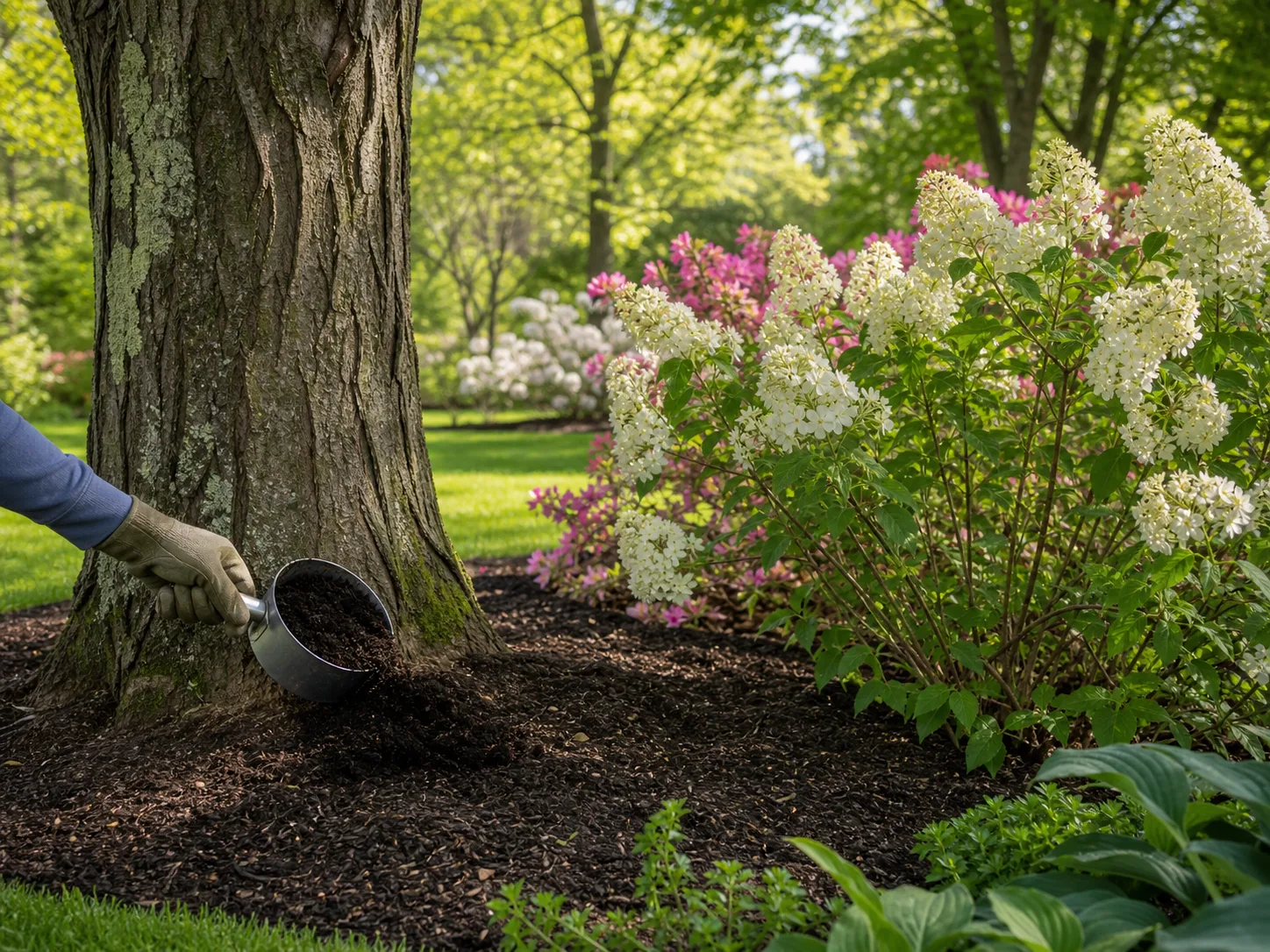
Best Time to Fertilize Trees and Shrubs for Healthy Growth
Trees and shrubs do not need fertilizer on the same clock as lawns or annual flowers. Most woody…
10 min read