
How to Grow Neon Pothos and Understand Its Changing Color
Epipremnum aureum 'Neon' Araceae
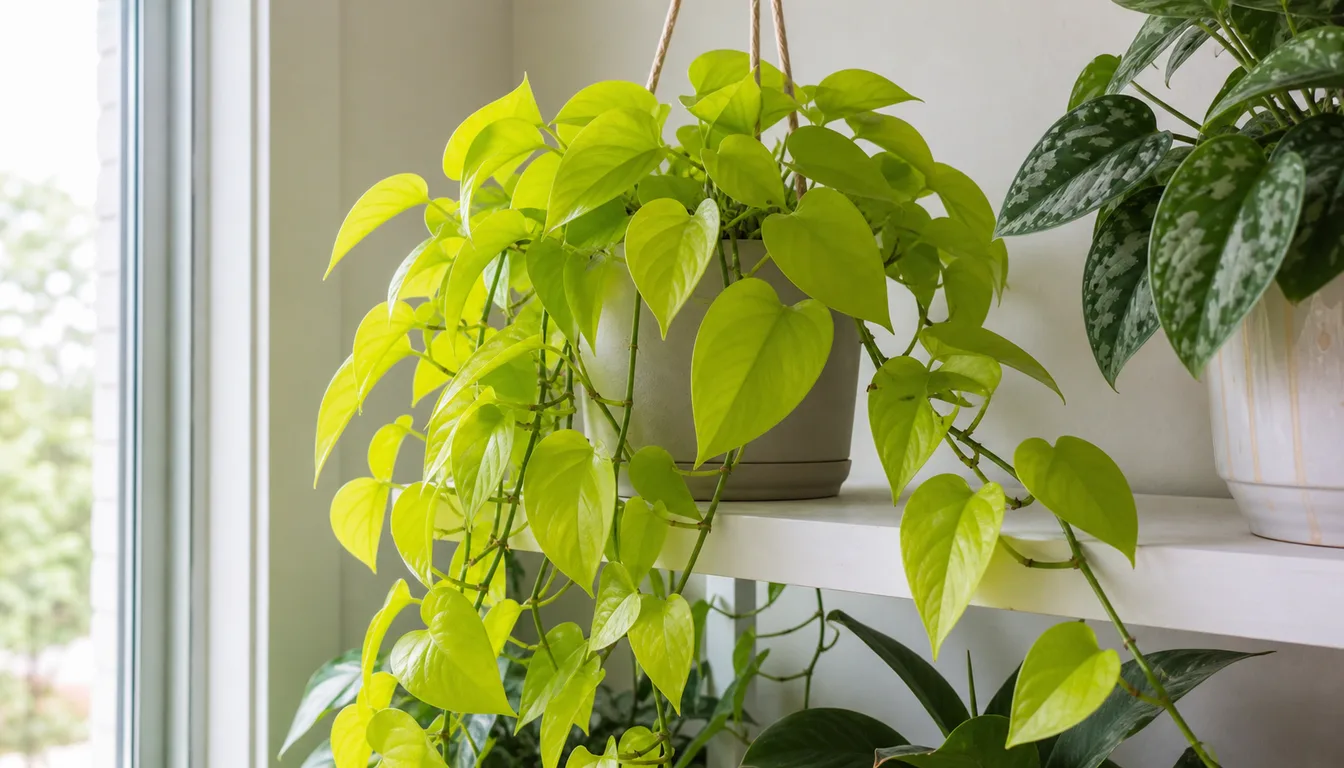
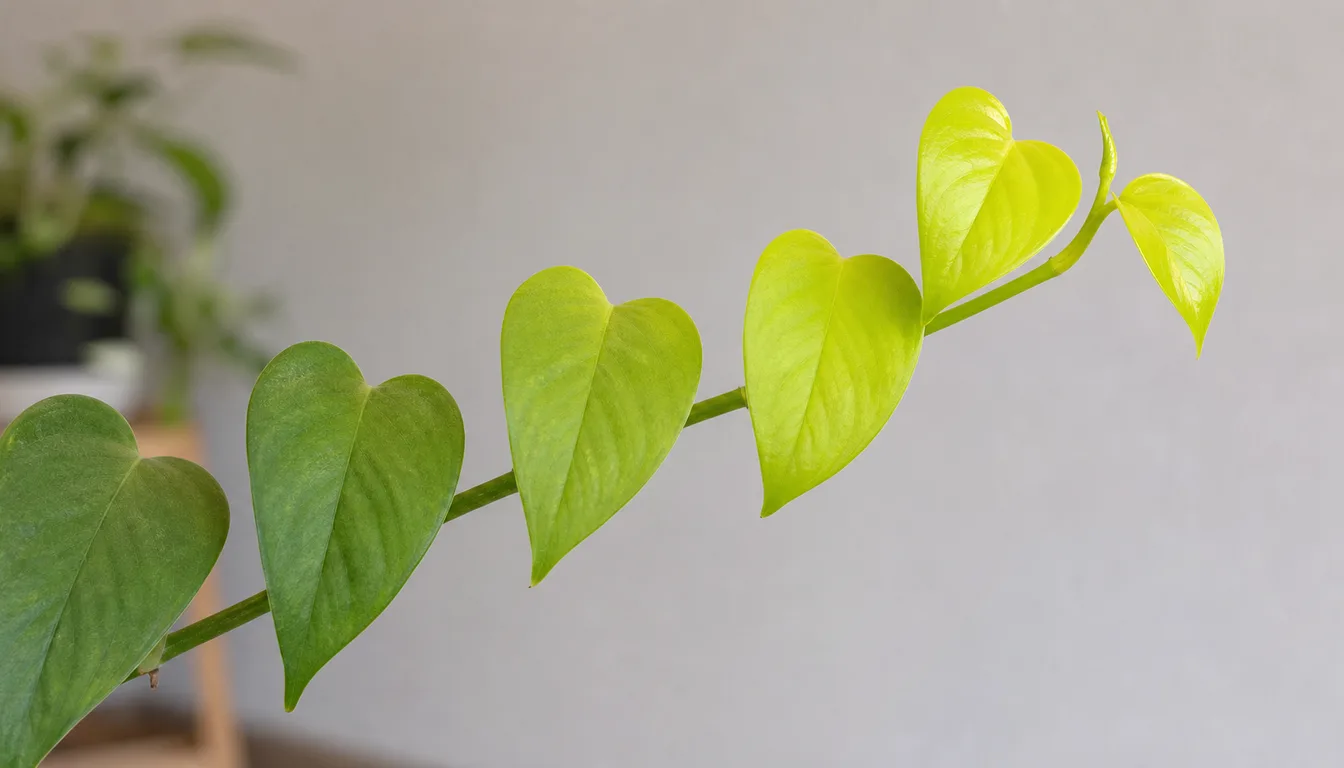
Neon pothos produces bright yellow-green new leaves that can become greener as they mature. That normal change is different from a leaf yellowing, softening, or developing damaged patches.
Bright indirect light, an airy root zone, and watering matched to the pot support healthy vines. Color helps identify the cultivar, but it cannot prove that its light, water, or roots are right.
Care snapshot
Greener Mature Leaves Can Be Normal
Neon pothos is Epipremnum aureum ‘Neon’, grown for largely solid yellow-green foliage. RHS describes its new leaves as bright gold, becoming unvariegated pale green as they age. A vine can therefore carry several shades while growing normally.
This is a different comparison from a leaf that was green and then turns yellow while losing firmness. The first compares leaves at different ages. The second follows a change in one leaf, which may need a root-zone or environmental check.
Golden pothos has irregular yellow markings on green leaves, while Marble Queen has white marbling. Neon’s usual solid color helps distinguish it from those patterned cultivars. It does not mean that the brightest leaf is always the healthiest or that a greener mature leaf needs removing.
Choosing a Plant Means Looking Beyond Bright Color
A healthy purchase has more to offer than a brightly lit top leaf. Firm stems, leaves without unexplained damage, and a root ball appropriate to the pot give useful evidence about its condition. The cultivar name on the label also matters when several pale-leaved vines are displayed together.
- Leaf age
- Brighter tips and greener older leaves can fit Neon’s normal appearance.
- Stems and joints
- Soft dark tissue, pest clusters, or unexplained damage need investigation.
- Root ball and pot
- Persistent saturation or a badly crowded, poorly wetting root mass can complicate care after purchase.
- Space for growth
- A shelf needs room for the vine and a pot that remains accessible for watering and inspection.
The fullness of the crown partly reflects how many rooted pieces were planted together. A small, sound cutting can be healthy without looking like a dense retail pot. Buying extra length also does not establish that the roots are in good condition.
Long gaps between leaves can support a low-light concern when they develop with smaller leaves and slowing growth. They do not reconstruct every condition at the nursery. A plant’s recent history is more informative than a promise that a compact-looking vine will always fill in faster.
Light Supports Growth, Not a Fixed Shade of Yellow
Bright indirect light is a useful starting position for Neon. Pothos can persist in lower light, but growth may slow. That matters for water use and the development of the vine even when the remaining leaves still look colorful.
A change in mature leaf color alone is not a reason to push the plant into stronger sun. Direct heat and intense light can scorch foliage, especially after a sudden move from shade. A curtain or a different position can reduce exposure when the window becomes hot.
The whole display needs attention. A pot hidden behind a shelf edge may receive different light from the vine hanging below it. Rotating a pot can distribute exposure, but cannot supply light to a room that lacks it.
Supplemental lighting can help where the window provides too little. Fixture output, distance, and coverage determine the usable light, so a fixed number of inches and hours cannot reproduce every windowsill. Improving placement is judged by sustained healthy growth and the absence of new damage, not by forcing older leaves to become gold again.
Water the Roots Before Leaves Become the Only Signal
An established Neon pothos can have a slightly dry surface between thorough waterings. Water then needs to soak the root ball and drain out, leaving no standing reservoir around the growing pot. Repeated small splashes can wet only the top while the center remains dry.
Pot weight and moisture below the surface help distinguish a drying root ball from one that remains wet. The interval changes with light, temperature, root mass, and container size. A fixed weekly schedule can be too frequent in one position and too sparse in another.
Waiting for every leaf to droop is unnecessary. Wilt can mean that roots lack water, but it can also occur when injured roots cannot take up water from wet medium. That is why a soft yellow leaf cannot decide whether the next step is more water.
Misting foliage does not water the root ball. If indoor air is unusually dry, humidity and root-zone moisture are separate questions. More water in an already wet pot does not correct dry air.
An Airy Mix Still Needs a Draining Container
A suitable houseplant potting mix holds enough moisture for roots while retaining air spaces. Peat, bark, and perlite are possible ingredients, but the mix’s behavior in the actual pot matters more than a fixed recipe. Perlite cannot drain a sealed outer container filled with runoff.
A growing pot with drainage holes can sit inside a decorative cachepot. Removing runoff after watering prevents the concealed base from remaining submerged. This arrangement also allows the root ball to be checked without breaking a decorative container.
Repotting becomes useful when roots densely occupy the container, the medium has degraded, or water no longer wets it properly. A modest increase in size suits a healthy root mass that needs room. A thin or damaged root system may need less wet medium around it rather than a larger pot.
A sparse crown has several possible histories, including few original cuttings, older leaf loss, pests, or poor growing conditions. Adjusting the soil alone cannot resolve them all. The stems, roots, and light at the top of the pot help determine whether renewal is appropriate.
Healthy Nodes Matter More Than the Brightest Tip
A Neon cutting needs main-stem tissue with a node and a viable growing point. A detached leaf stalk is not equivalent. A healthy stem tip or a suitable section lower on the vine can work, so older green leaves do not automatically disqualify the cutting.
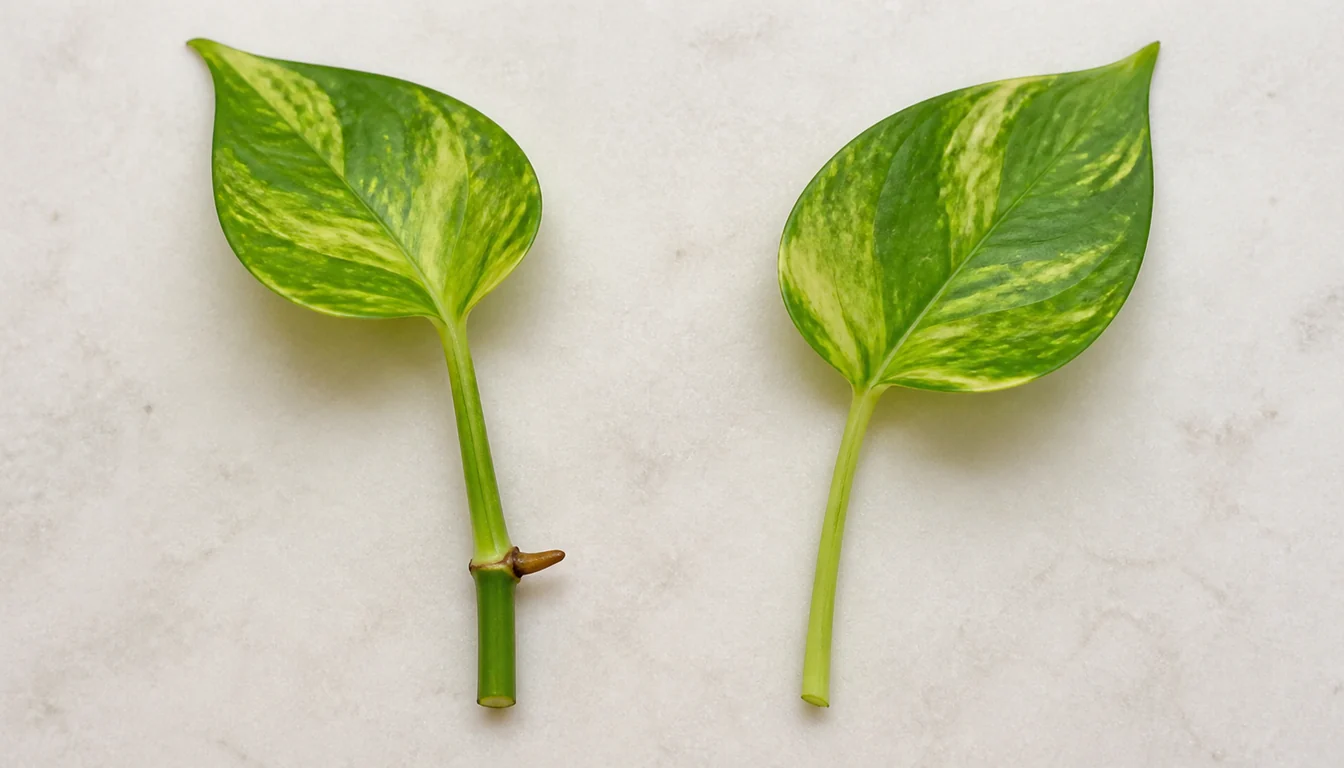
- Select firm, healthy stem tissue without visible pests or decay. Identify the node before making the cut with clean tools.
- Keep the needed node on the cutting and leaves above the water or rooting medium. Preserve the direction of growth when using a stem section.
- Maintain warm conditions and bright indirect light while keeping the rooting zone suitably moist. Watch for actual root development rather than treating a fresh leaf as proof of establishment.
- Pot a rooted cutting gently into an appropriate small container. A cutting added to the parent pot needs space for its roots and moisture that supports establishment without keeping the older root ball saturated.
Water rooting makes roots visible. An airy rooting medium holds them in a different environment and can reduce handling at potting. Softening or decaying stem tissue calls for checking the cutting and its moisture conditions before starting again.
Propagation retains plant material from the selected vine, but it is not a guarantee of an identical shade on every new leaf. Neon’s normal age-related color change still applies. A healthy cutting with greener mature leaves does not need to be discarded solely because the newest tip of another vine is brighter.
A Color Change Needs Its Plant Context
An old leaf gradually yellowing on an otherwise growing vine can be normal aging. Widespread yellowing, new loss of firmness, damaged patches, or continuing leaf drop give more reason to investigate. Neon’s usual bright foliage makes the change in each leaf more useful than an isolated color label.

- One older leaf changes while the rest grows normally
- Aging is possible. Check whether the change continues elsewhere before altering care.
- Several leaves decline above persistently wet medium
- Inspect drainage and roots. Wet conditions raise concern but do not name a disease.
- Drooping leaves above a dry, light root ball
- Restore moisture and drainage, then observe whether growth stabilizes.
- Brown patches after a hot-window or cold-draft exposure
- Review that exposure alongside moisture and other evidence. The patch alone is not conclusive.
- Stippling, webbing, cottony material, or attached bumps
- Inspect the leaves and stems closely for mites, mealybugs, or scale before treatment.
Pest inspection includes older leaves, their undersides, stems, and growing tips. Mealybugs and scale may hide away from the newest growth. A clean-looking node does not prove that the plant has no pests, and scarring alone cannot establish a particular insect.
Separation from nearby plants and physical removal can help with confirmed pests. Any pesticide must be labeled for the indoor site, plant, and target pest. Automatic alcohol swabbing or a stronger spray after a color change can damage foliage without addressing the cause.
Pruning Changes Shape, While Conditions Support Regrowth
Tip pruning can encourage branching and keep a trailing vine within its space. Active growth is a convenient time for renewal, but healthy mature green leaves can remain. Cutting them off to recover a uniform yellow display removes functioning foliage without reversing leaf age.
A cut above a retained node leaves a possible point of regrowth. How much to remove depends on the plant’s condition and the shape being retained, rather than a universal fraction of its vine length. A stressed plant benefits from resolving the stress before a major cosmetic pruning.
Nutrition supports growth that light and healthy roots can sustain. A houseplant fertilizer used according to its formulation and label can supply nutrients during growth. Feeding is not a way to force mature Neon leaves back to their juvenile color.
In darker winter conditions, the pot may dry more slowly and nutrient demand may fall. Plants under effective supplemental light can behave differently. Seasonal care follows those observed changes rather than a fixed date for cutting or feeding.
The Bright Leaves Are Still Toxic to Pets
Neon is a cultivar of Epipremnum aureum, the species ASPCA lists as toxic to dogs, cats, and horses. Chewing releases insoluble calcium oxalates that can irritate and swell mouth tissues. Its bright appearance does not reduce that risk.
Safe placement has to account for climbing, jumping, fallen leaves, and loose propagation pieces. A hanging basket does not reliably solve those access routes for every animal. Where separation cannot be maintained, a correctly identified plant with a non-toxic listing for that animal is a better choice.
Sap can irritate human skin, and children should not chew the plant. Gloves reduce contact during pruning. Non-toxic alternatives still are not food and do not make their fertilizer or pesticide residues safe to ingest.
Sources & References
- University of Wisconsin Horticulture: Pothos, Epipremnum aureum
- NC State Extension, Epipremnum aureum Plant Details
- ASPCA, Devils Ivy (Epipremnum aureum)
- ENH894/EP151: Cultural Guidelines for Commercial Production of Interiorscape Epipremnum
- Iowa State University Extension, How to Propagate Houseplants by Stem Tip Cuttings
- University of Minnesota Extension, Managing Insects on Indoor Plants
- ASPCA, What to Do if Your Pet Is Poisoned
- University of Georgia Extension, Growing Indoor Plants with Success, Bulletin 1318
- Royal Horticultural Society, Monsteras and More: At Home with Arums
Related Plants
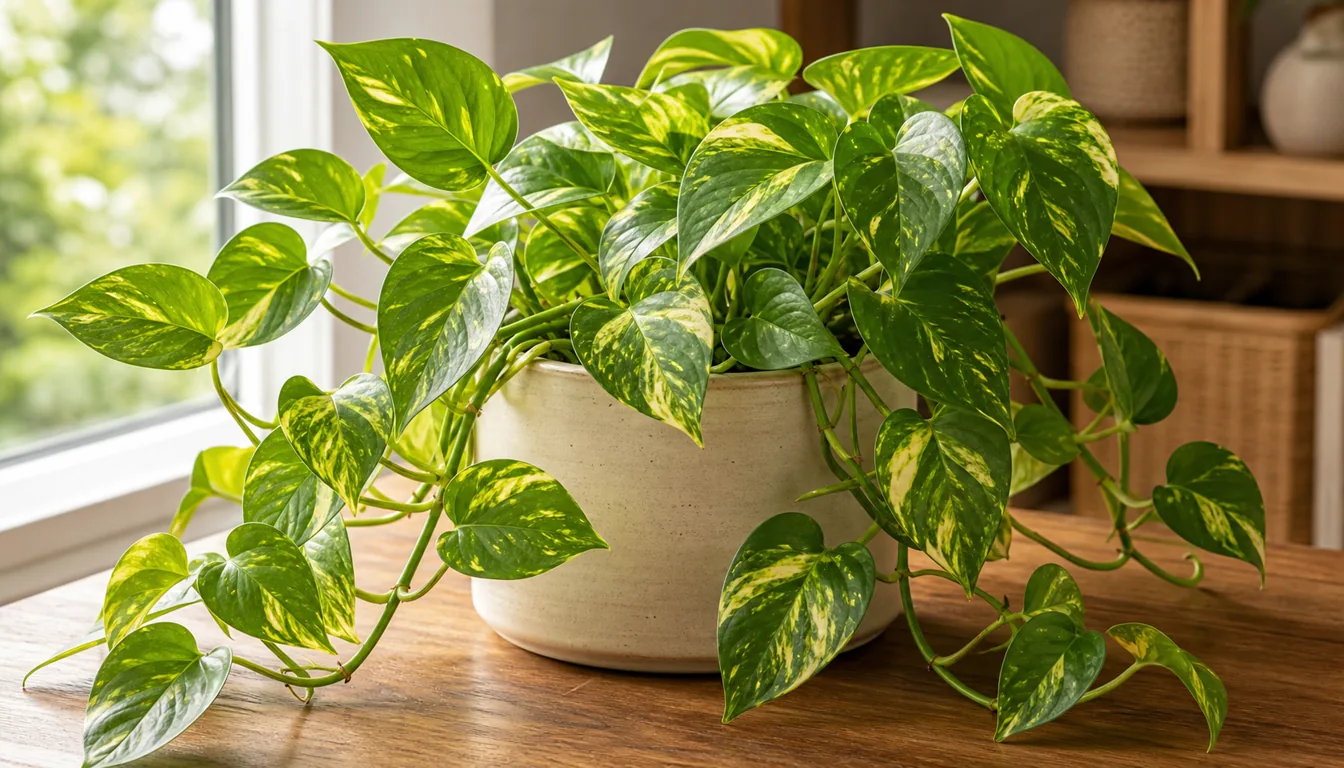
Golden Pothos
Golden pothos has yellow markings on green leaves rather than Neon’s predominantly solid color.
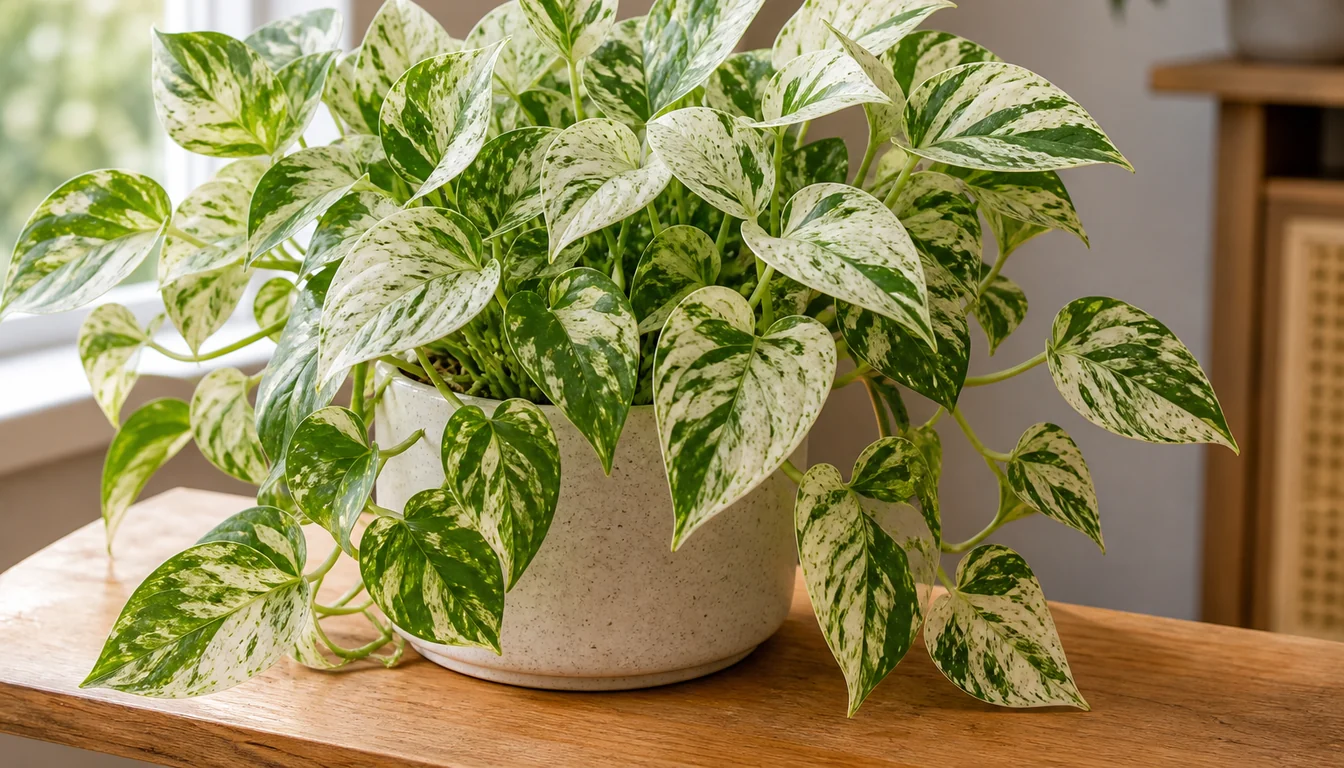
Marble Queen Pothos
A cultivar with cream-and-green marbling and its own pattern changes to assess.
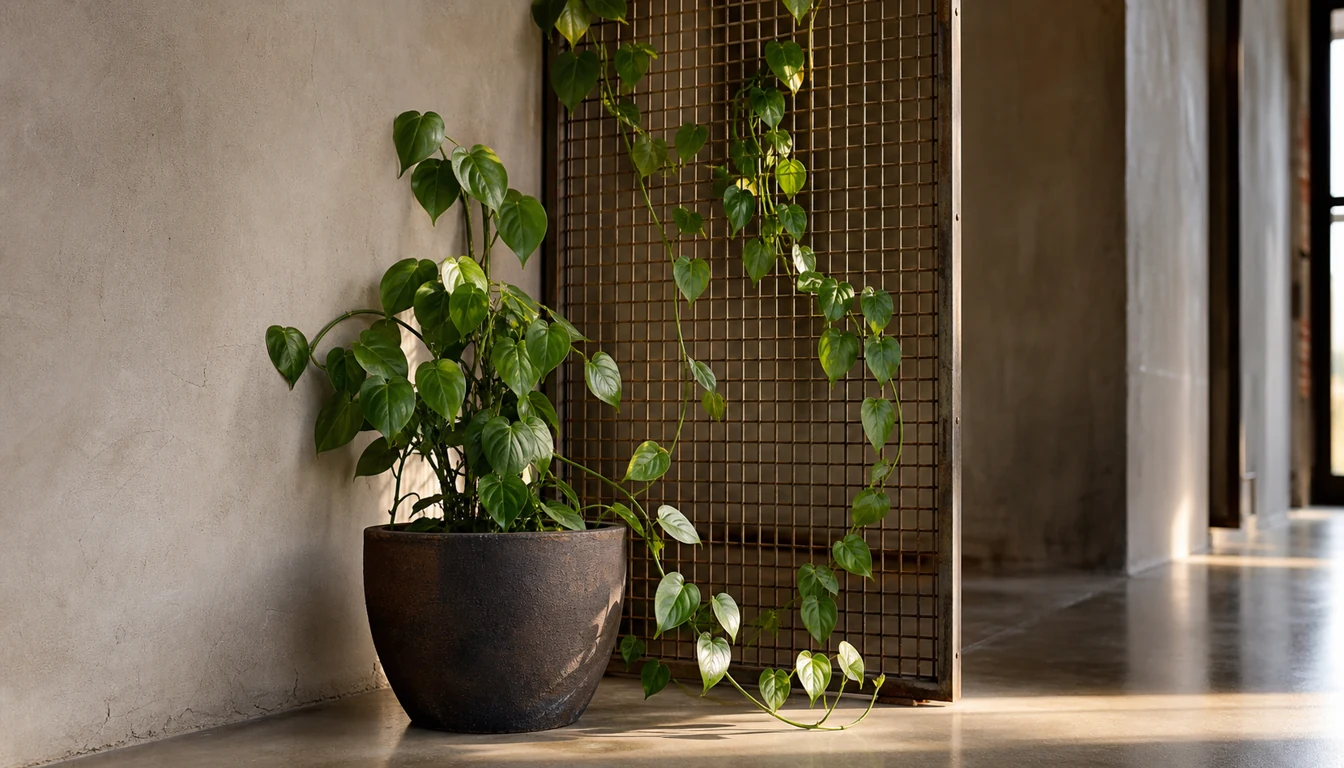
Heartleaf Philodendron
A different trailing aroid with heart-shaped green leaves and distinct new-growth sheaths.
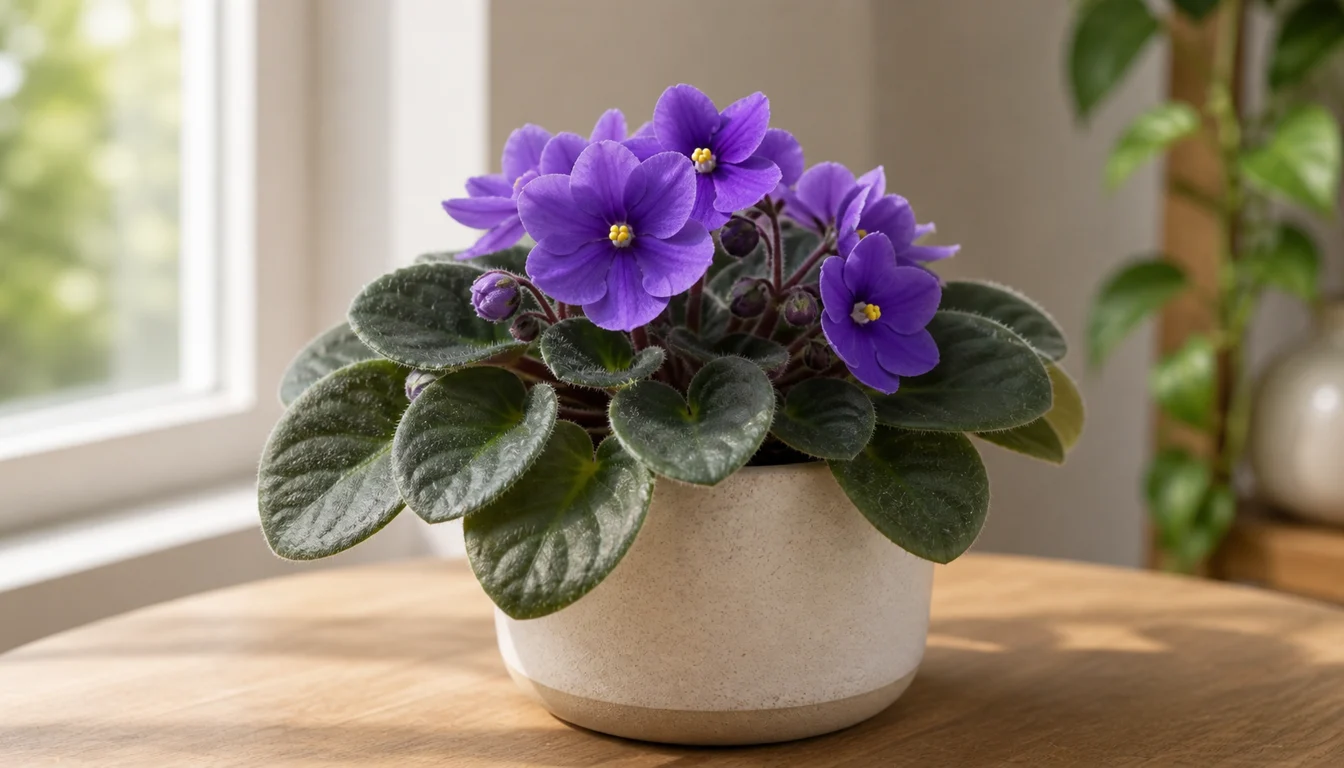
African Violet
African Violet is a windowsill bloomer that rewards steady, small-pot care.
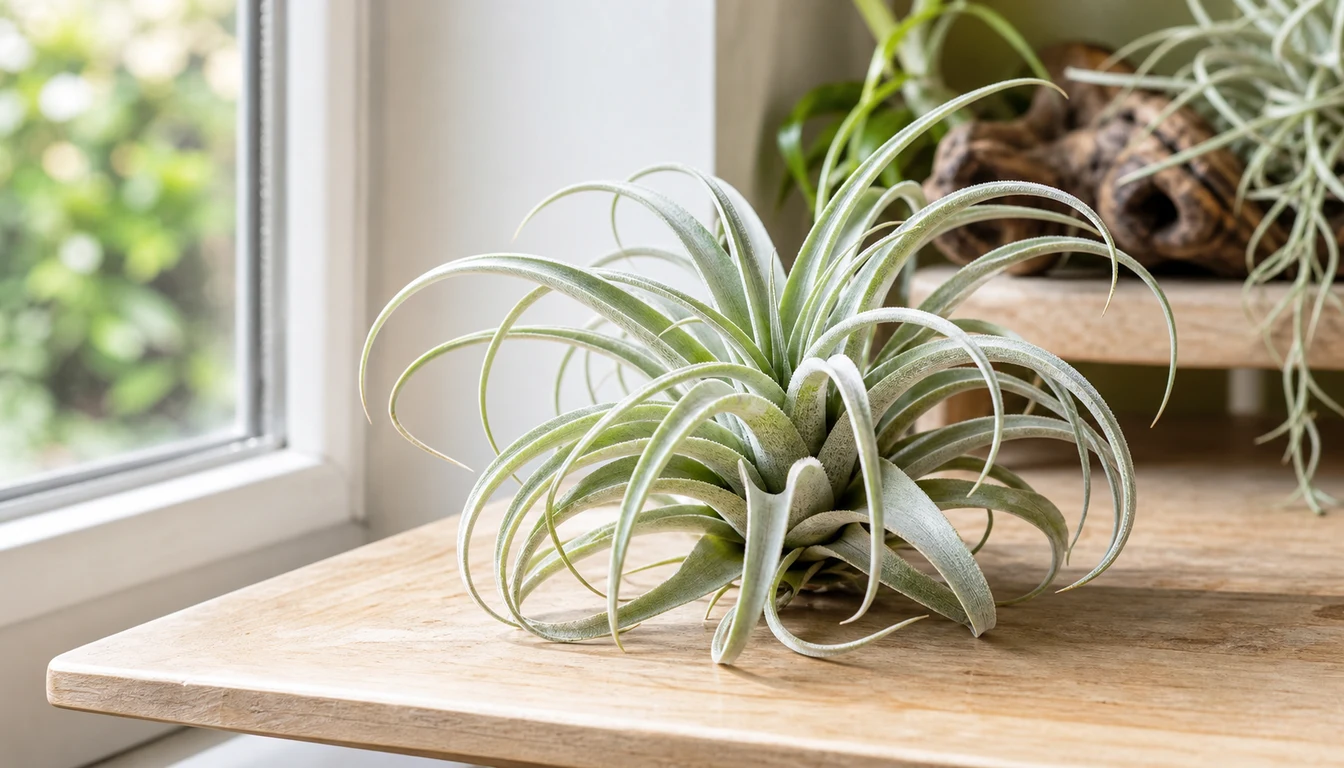
Air Plant
Air plants are living sculptures that thrive without soil, anchoring to driftwood, rocks, or shells while drawing…
Alocasia
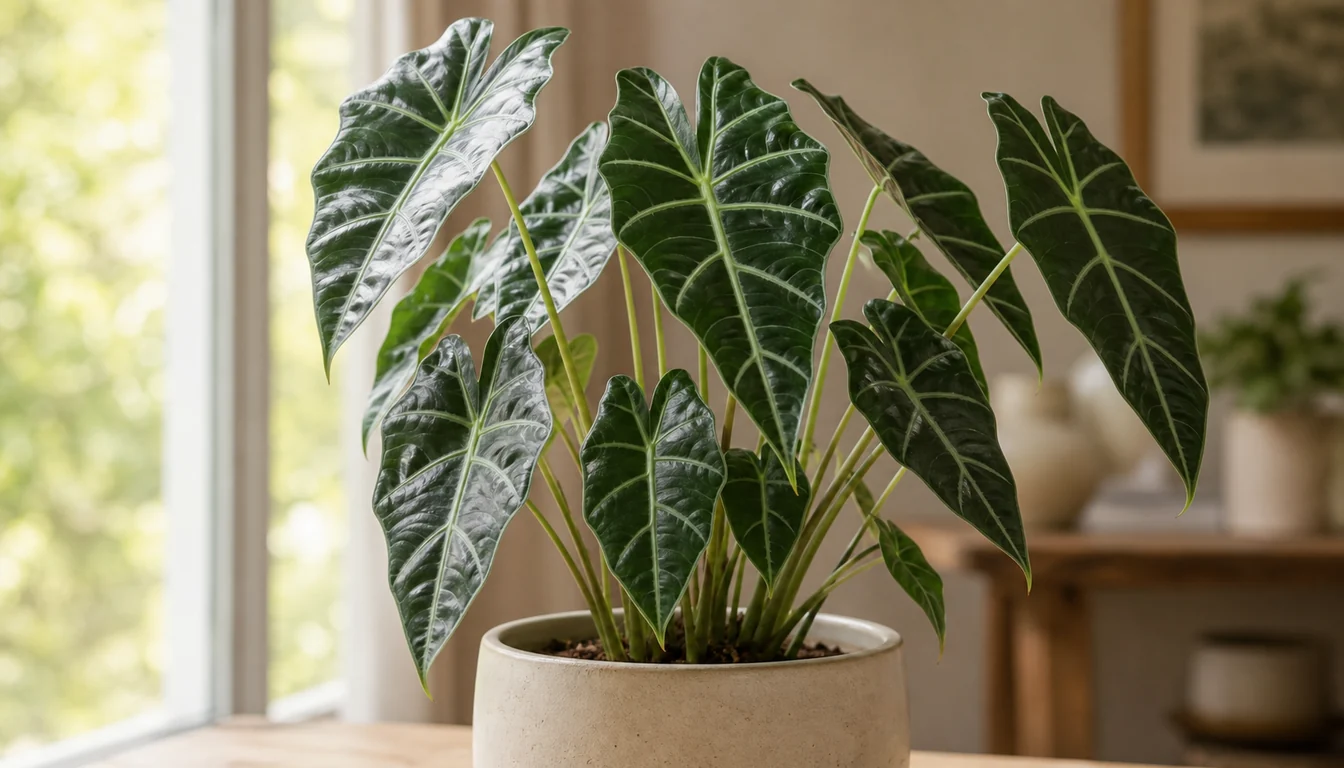
Alocasias include compact, textured houseplants and large elephant ears that need substantial floor space.