
What's a Watermelon? How to Grow One That Ripens Sweet
Citrullus lanatus Cucurbitaceae
Watermelon asks for more ground and more heat than almost anything else in a home bed, and the two decisions that settle the crop are protecting pollination and knowing exactly when to cut it.
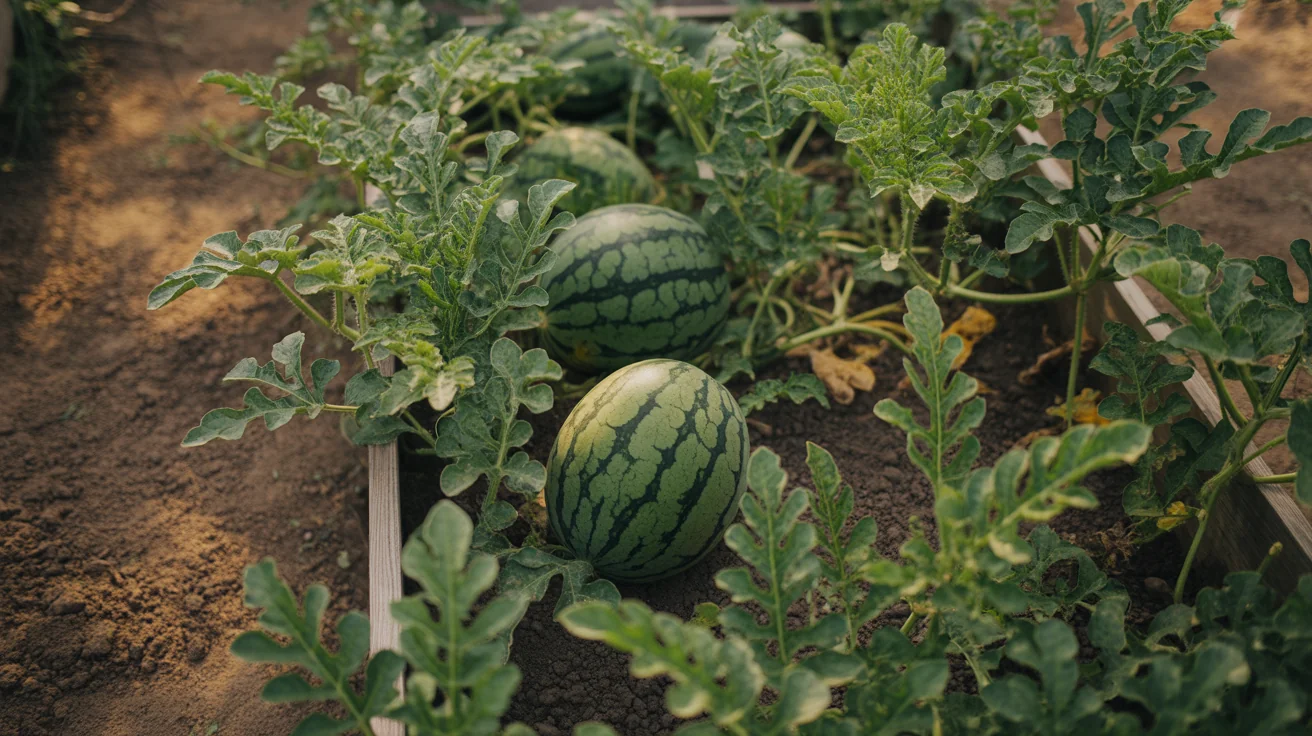
Care snapshot
What Kind of Plant Is a Watermelon?
Watermelon is Citrullus lanatus, an annual trailing vine in Cucurbitaceae, the gourd family it shares with Cucumber, Squash, and Pumpkin.
The fruit is botanically a pepo, a berry with a hard rind, which is why it keeps for weeks whole and spoils within days once cut.
What separates it from its cousins is when you eat it. A Cucumber or a zucchini is picked immature, while a melon has to reach full ripeness on the vine, and that single difference is why harvest timing is the hardest part of growing one.
The heat demand comes from where it started. Wild ancestors grew across hot dry parts of Africa, and buried seeds and tomb paintings show Egyptians cultivating the crop roughly 4,000 years ago.
Those wild melons were pale and bitter. Centuries of selection produced the dessert fruit, but nobody bred out the long hot season its relatives evolved for.
Each vine carries separate male and female flowers, so a bee has to move pollen between them before any fruit forms at all.
Plant profile
- Botanical name
- Citrullus lanatus
- Family
- Cucurbitaceae, the gourd family
- Plant type
- Warm-season annual trailing vine
- Grown for
- Ripe flesh, harvested at full maturity
- Native range
- Hot, dry regions of Africa
- Close relatives
- Cucumber, Squash, Pumpkin, Cantaloupe
How Much Space and Heat Does a Watermelon Need?
More ground than almost anything else in a home bed, and more heat than most gardeners budget for.
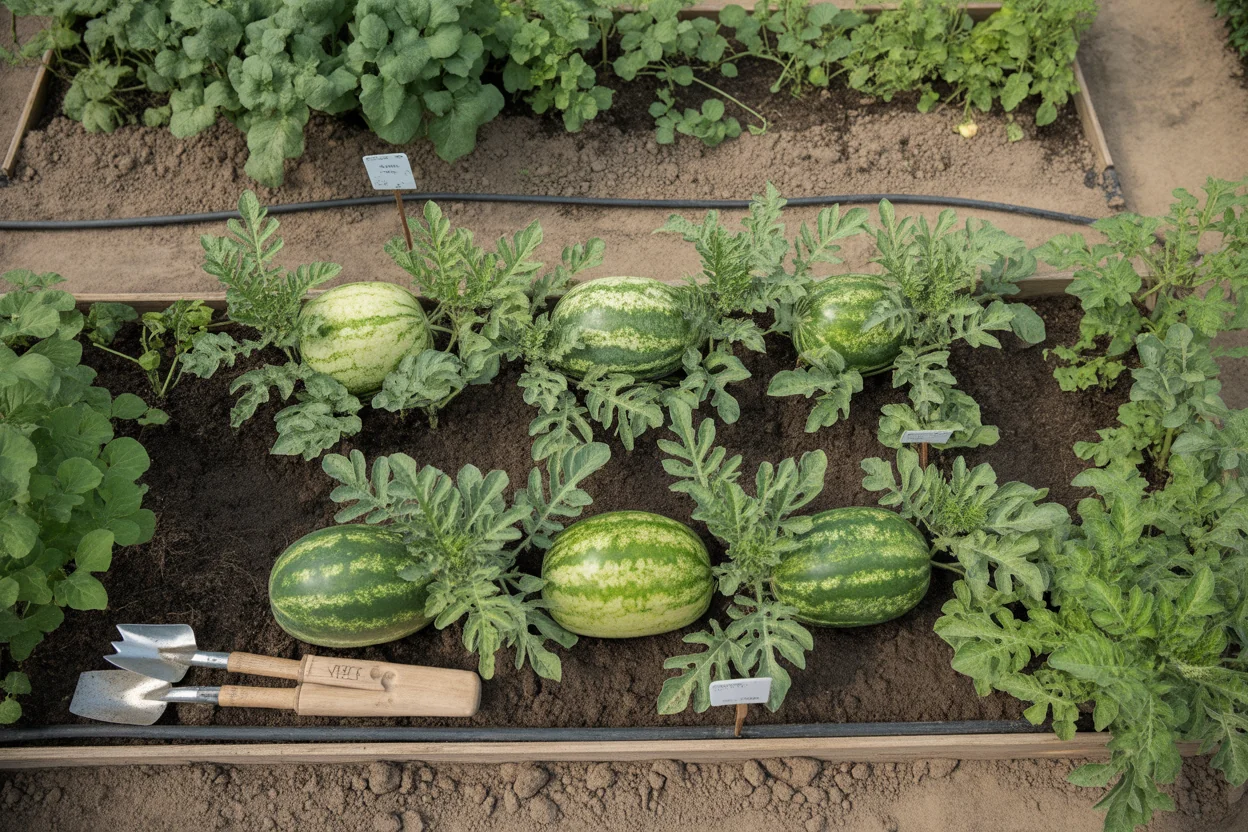
A standard vine runs 8 to 20 feet and wants 25 to 100 square feet to itself.
Plant them 3 to 5 feet apart in the row with 6 to 10 feet between rows, because crowding costs airflow and fruit size before it costs anything else.
The heat demand traces back to where the plant came from.
Wild ancestors of Watermelon grew across hot, dry parts of Africa, and buried seeds and tomb paintings show Egyptians were already cultivating the crop about 4,000 years ago.
Those wild melons were pale and bitter rather than sweet.
Centuries of selection produced the dessert fruit, but nobody bred out the long hot season its relatives evolved for.
Aim for eight hours of direct sun where you can. A shaded afternoon is a real cost on this crop rather than a minor one.
If the ground is not there, the variety has to give way instead.
Icebox types fit where picnic types cannot, and compact bush selections hold vines to roughly 2 to 4 feet, trading yield for a footprint a raised bed can actually carry.
Days to maturity on the packet assumes the heat the variety was bred for.
In a cool summer that number stretches, which is why a 90-day melon in a 100-day season is a gamble rather than a plan.
Work compost into the bed before planting rather than feeding hard later.
A mid-season nitrogen push at bloom is exactly what produces enormous vines carrying nothing.
A trellis only solves this for small-fruited types, and only with slings under each melon.
A picnic melon on a trellis is a structural problem, not a space-saving trick.
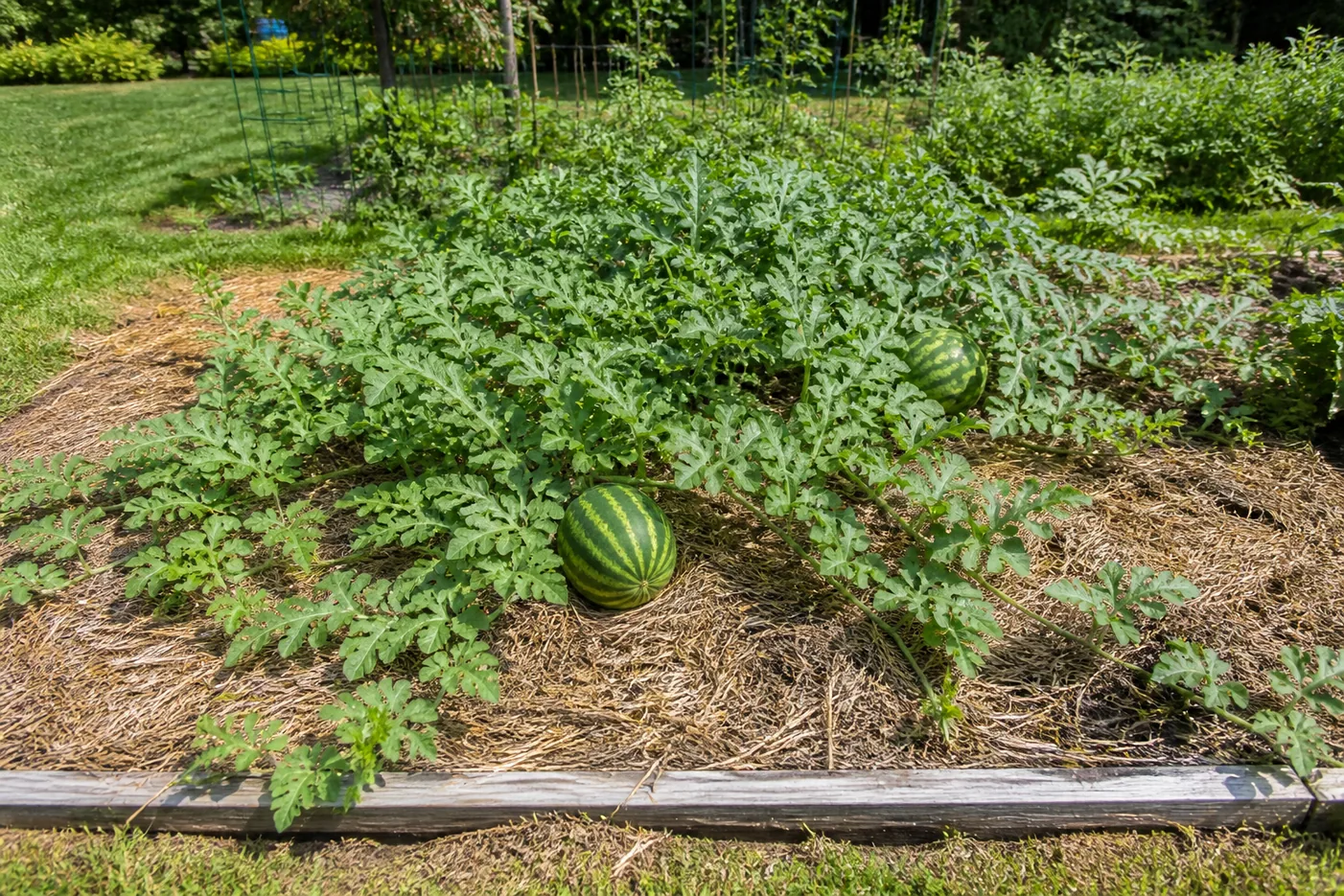
- Standard vine
- 8 to 20 ft of runner, 25 to 100 sq ft per plant
- Bush or compact type
- Vines near 2 to 4 ft, fits a raised bed or large container
- Row spacing
- 3 to 5 ft in the row, 6 to 10 ft between rows
- The space mistake
- Planting a picnic melon where only an icebox melon fits
Which Watermelon Type Fits Your Season, Icebox or Picnic?
A variety choice is really a season-length promise.
A long-season picnic melon in a short summer grows beautiful vines and never finishes sweet fruit.
Icebox types such as Sugar Baby suit small beds and short seasons.
Crimson Sweet is a dependable mid-size seeded standard, and Charleston Gray is the classic picnic type for growers with the heat and the ground.
Seedless melons carry an extra requirement most packets underplay.
They are triploid, bred by crossing a tetraploid parent carrying four chromosome sets with an ordinary diploid, and the resulting odd count cannot divide into viable seed. The flowers still need real pollen to trigger fruit growth, so a seeded pollenizer variety has to be growing nearby.
Triploid seed also has a thicker seed coat than ordinary seed, which makes germination less reliable when soil is cool.
Sow it with the pointed end angled slightly upward, into soil closer to 85F, and it comes up far more evenly.
Do not plant several types just because the packets look exciting.
A few well-spaced vines beat a mixed tangle nobody can pollinate, water, or harvest accurately.
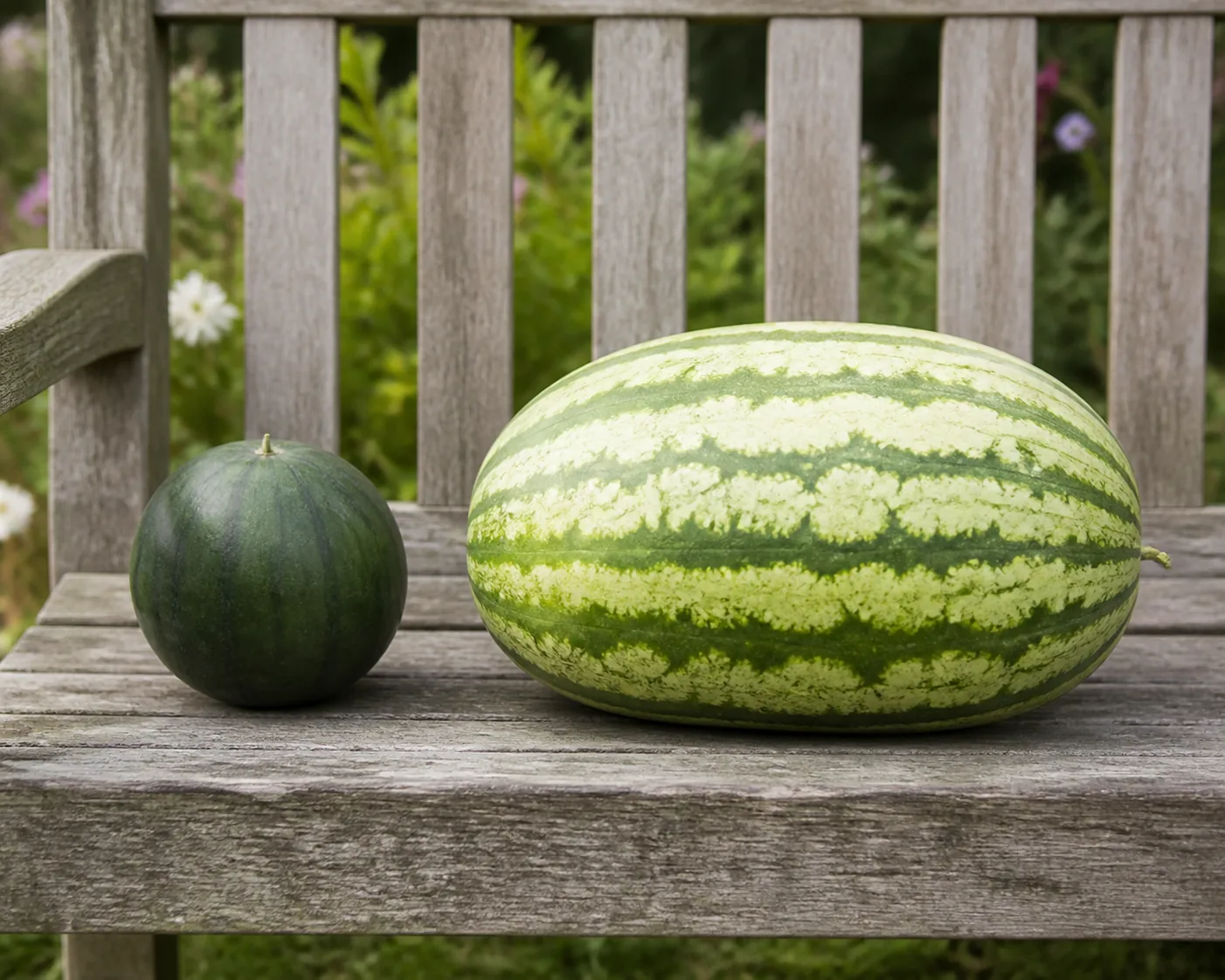
- Icebox when space is tight or the season is short.
- Seeded standard when you want simple pollination and dependable set.
- Seedless only when you can plant a pollenizer and track which vine is which.
- Picnic when you have long heat, open ground, and healthy leaves.
When Is the Soil Warm Enough to Plant Watermelon?
Wait for soil that holds at 65F or above, and prefer 70F.
Roots stall in cold ground, and a stalled seedling loses more days than the early planting was ever going to save.
Push a soil thermometer about 4 inches down and read it first thing in the morning.
Later in the day the sun has warmed only the surface layer, which gives a falsely encouraging number.
Black plastic, low tunnels, or fabric buy real warmth in Zones 3-5, and none of them buy warm nights.
Take covers off as soon as flowers open, because a covered vine is a vine no bee can reach.
Set transplants gently. Cucurbit roots resent disturbance, and a melon seedling that sulks for two weeks after transplanting has spent the head start you paid for.
Should You Plant Watermelon on a Mound or a Flat Bed?
Raise the planting spot into a low mound about 6 inches high before you sow or transplant.
Mounded soil drains faster and warms several degrees ahead of the flat bed around it.
Put two or three seeds in each hill, then thin to the strongest single plant once true leaves appear.
Mulch the ground around the hill rather than over it, so the crown stays dry while the run of the vine stays covered.
- Mound the planting spot about 6 inches above the surrounding bed.
- Sow two or three seeds per hill, then thin to one plant.
- Mulch around the hill, not over the crown.
Why Is My Watermelon Flowering but Not Setting Fruit?
Because flowering and fruit set are two different events, and most failed vines cleared the first and lost the second.
Male flowers open first, often a week or more before any female flower appears.
A vine covered in blossoms with nothing swelling behind them is usually just early, not broken.
Telling them apart takes one look at the stem.
A female flower sits on top of a tiny swollen bulge, the unpollinated melon in miniature, while a male flower sits on a plain straight stalk.
The window is shorter than people expect. A female flower opens in the morning and closes for good by afternoon, so one missed morning of bee activity means that flower never sets at all.
Cool mornings, rain during bloom, heavy pesticide use, and a missing pollenizer for seedless types all cut fruit set measurably. Work through those one at a time on the watermelon poor fruit set page once you have confirmed female flowers are actually opening.
Hand-pollination is worth doing in a small garden. Move pollen from a fresh male flower to an open female flower early in the morning, then mark the date so you can count days to ripeness later.
Borage, zinnia, and alyssum planted near the vines pull in more pollinator traffic through the bloom window. That matters most in a yard with few bees to begin with, where every extra visit is another real chance for a flower that will be closed by lunchtime.
A vine will also set more melons than it can actually finish. Thinning to two or three fruit on a standard vine gives you full-size sweet melons instead of five undersized disappointments.
Seedless vines make one further demand at planting. Put the pollenizer where bees will visit both varieties, which usually means alternating plants rather than parking the seeded type at the end of the row.
Do not spray insecticide through the bloom window, organic products included. The morning you knock down foraging bees is the morning a whole day of female flowers closes unpollinated.
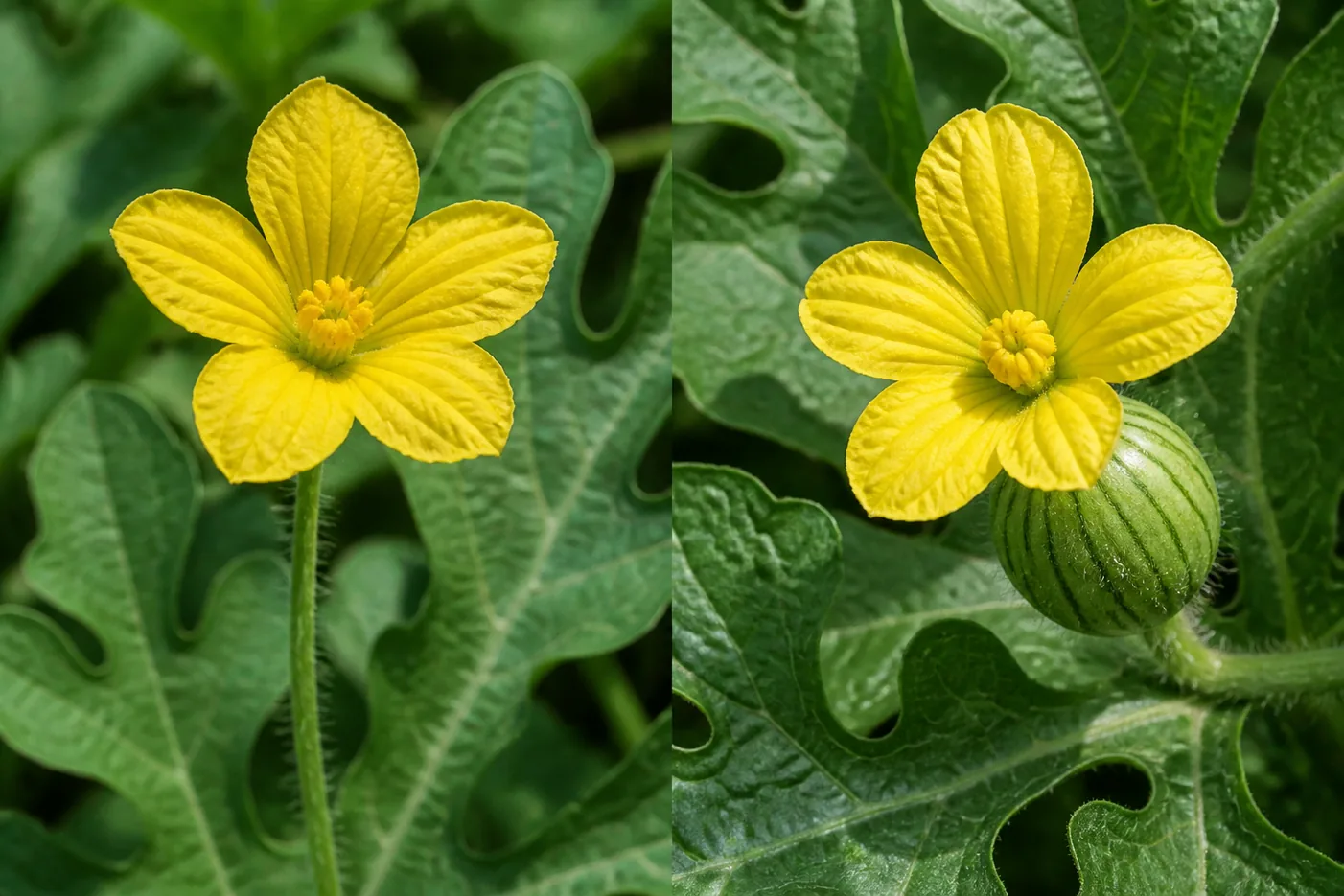
Pollination clue
- Tiny fruit yellows and drops off
- Almost no bee traffic in the morning
- Seedless vine with no pollenizer nearby
Nitrogen clue
- Huge dark vines with few flowers
- Soft rapid leafy growth
- Fruiting keeps getting later
Weather clue
- Cool nights through bloom
- Rain during the morning opening
- Extreme heat while flowers open
How Much Water Does a Watermelon Need, and When Do You Ease Off?
Water hard while the vine is building and the fruit is filling, then hold it steady rather than heavy as the melon finishes.
A dry spell during fruit expansion is what produces small melons, poor texture, and sunken blossom ends. That stage is not the place to economize.
Deep soaking beats frequent surface splashing every time. The habits in deep watering keep roots working below the hot top inch instead of crowding into it.
Mulch does more here than weed control.
A few inches of straw or shredded leaves slows evaporation between waterings and flattens exactly the wet-then-dry swing that splits fruit later.
As the melon nears maturity, stop pushing new growth with water and nitrogen. The plant's job has shifted from making leaves to finishing sugar.
What you must not do is swing from drought to flood in the last stretch. That shock splits fruit and dilutes flavor at the one moment the vine should be quietly finishing.
What Actually Makes a Watermelon Sweet?
Every gram of sugar in the melon was made in a leaf and moved into the fruit. Whatever shortens the life of the canopy shortens the sugar supply.
That is why stripping leaves to expose melons to the sun backfires. It sunburns the rind and removes the machinery that was sweetening the fruit.
Feeding follows the same logic. Once fruit has set, a lower-nitrogen, higher-potassium fertilizer supports leaf health and fruit filling without pushing the leafy surge that crowded out flowering earlier.
Striped and spotted cucumber beetles are the main early threat. They chew ragged holes and spread bacterial wilt while feeding, and row covers over young plants stop most of it as long as the covers come off at bloom.
Powdery mildew shows as a white coating that spreads upward from old lower leaves. Use the watermelon powdery mildew guide when it moves beyond normal aging into the working canopy.
Gummy stem blight is worth learning as a separate thing. It produces dark water-soaked leaf spots and cracked oozing stem lesions rather than a powdery film, and it likes the same crowded humid conditions.
Water at soil level rather than over the canopy. Wet leaves going into the evening hand mildew and blight the overnight hours they need to establish.
Rotate melons and other cucurbits out of the bed for two or three seasons after a bad mildew or blight year. Both fungi overwinter on debris left lying in place.
Do not work among wet vines either. Handling foliage while it is still wet moves bacterial and fungal problems along a row faster than any insect manages.
Generous spacing at planting is the cheapest defense against all of it, because leaves that dry quickly after dew infect far less readily.
- Keep enough foliage to shade the fruit from sunscald.
- Avoid heavy leaf pruning after fruit set.
- Remove dead leaves only when they block airflow or hold disease.
How Do You Know When a Watermelon Is Ripe?
By reading several signals together, because every single one of them lies on its own.
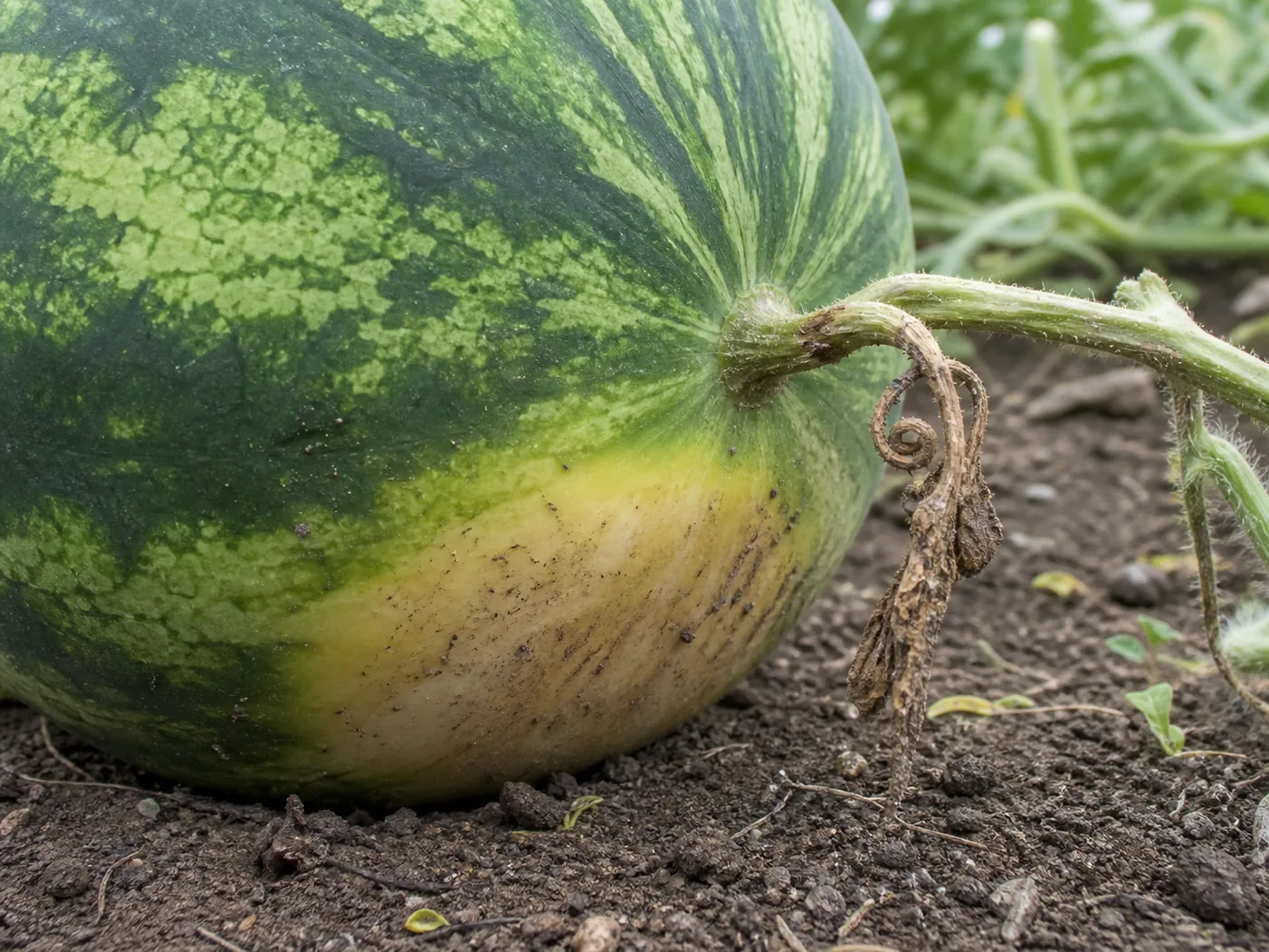
The tendril nearest the fruit drying brown is the most quoted clue and the least reliable alone.
Heat, drought, or vine stress dry tendrils early on fruit that is nowhere near finished.
The ground spot is the steadier read.
Where the melon rests on soil, ripe fruit turns creamy yellow, while a white or pale green patch means it needs more time.
Rind finish backs both of them up.
A ripe melon looks duller and feels tougher than the glossy immature fruit beside it.
Then count days from the female flower you marked. Icebox types often finish 30 to 35 days after pollination, seeded standards 35 to 42, and large picnic types 42 to 50 or more in a cool season.
Thumping is the worst first tool because varieties genuinely sound different. Use it to confirm a decision the physical signs already made.
One bonus clue sits on top of the fruit. Rough corky brown patches near the stem, sometimes called webbing or sugar spots, come from bee traffic scarring the surface at pollination, and heavier webbing tends to track with sweeter flesh.
Get this call right the first time, because Watermelon does not keep sweetening off the vine. Unlike a tomato or a peach, the harvest decision is the final quality decision.
One habit separates this crop from its cousins at the last step. Watermelon never slips from the vine the way a cantaloupe does, so cut the stem with shears an inch or two above the fruit instead of waiting for a release that will not come.
When the signals disagree, wait two days rather than cutting. Two more days on the vine costs almost nothing, and a melon cut early cannot be put back.
- Nearest tendril
- Drying brown helps, but never decides on its own
- Ground spot
- Creamy yellow beats white or pale green
- Rind finish
- Duller and tougher than immature glossy fruit
- Days from pollination
- 30 to 35 icebox, 35 to 42 standard, 42 to 50 picnic
Why Is My Watermelon Not Sweet?
Usually because it was picked early, and the second most common reason is that the leaves failed before the fruit finished.
Sugar accumulates over weeks.
A melon cut three days short tastes watery in a way no amount of chilling or salt fixes.
A short, cool, or cloudy summer produces this same complaint even when every care step went right. The plant simply never banked the heat it needed, which is the argument for early varieties in cool zones rather than better technique.
Late watering gets blamed more than it deserves, though a heavy soaking in the final week does dilute flavor. Steady moisture through fruit fill matters far more than restriction at the end.
Once cut, treat the melon as perishable. A whole uncut melon holds about a week at room temperature and up to two weeks refrigerated, while cut fruit needs the refrigerator immediately and is best inside three to five days.
Cover cut surfaces tightly, since exposed flesh dries and picks up refrigerator odors fast. Cubing and freezing works for smoothies if a batch will outlast that window, though the texture will not come back for fresh eating.
What Causes Rotten Bottoms and Cracked Melons?
Different Watermelon failures start at different stages, so the fix depends on which part of the fruit went wrong.
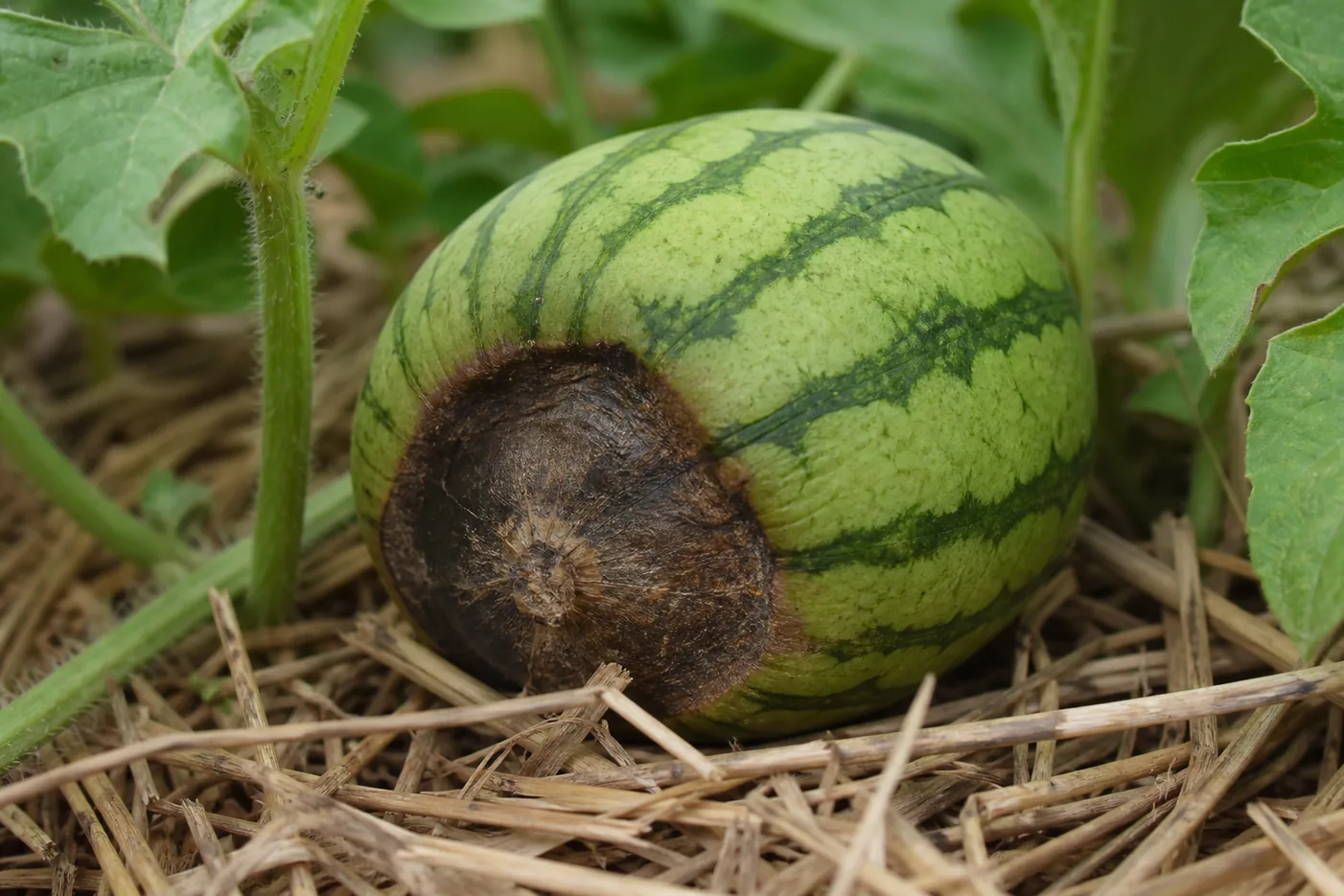
A dark sunken patch at the blossom end is blossom end rot, and it is a calcium delivery problem rather than a calcium shortage. Water moves calcium, so a vine that swings between dry and drenched cannot get it to the fruit no matter how much sits in the soil.
This is why the same watering schedule can cause it in one bed and not another. Sandy soil swings far faster than clay, so mulch depth and watering frequency have to match your actual soil rather than a generic calendar.
Reach for the watermelon blossom end rot page before you reach for a calcium product, because the bag almost never turns out to be the missing piece.
Splits and cracks are the same mechanism read from the other end. The rind sets its size during steady growth and then cannot stretch when a downpour or a heavy watering pushes a sudden surge of water into the fruit.
Rot on the underside where the melon touches wet ground is a third thing entirely. Slide a board, tile, or thick pad of straw under each fruit once it reaches softball size and the problem stops.
Hollow heart is a fourth pattern worth naming, since it looks alarming and is not a disease. A crack running through otherwise clean flesh comes from an uneven growth rate rather than infection, the melon is perfectly edible, and steadier water through fruit fill prevents the next one.
Sunscald is the fifth pattern and the easiest to cause by accident. A pale leathery patch on the fruit's upper surface is where the canopy thinned and left it in direct afternoon sun, which is the bill for stripping leaves to see the melons better.
Few melons at all
- Check bee access at bloom
- Check the pollenizer for seedless types
- Cut back high nitrogen
Sunken dark bottom
- Steady the watering rhythm
- Match mulch depth to your soil type
- Stop the drought to flood swing
Split or cracked rind
- Avoid heavy watering after a dry spell
- Harvest promptly once ripe
- Mulch to buffer sudden rain
Can You Grow Watermelon in a Container?
Only with a bush or icebox variety, and only in a pot far larger than most people reach for.
Give one plant at least a 5 gallon container, and prefer 10 gallons or more, because the root system has to support fruit that weighs several pounds.
Expect to water daily through fruit fill. A pot swings between wet and dry faster than any bed, and that swing is exactly what causes the sunken blossom ends and split rinds described above.
Frequently Asked Questions
How long does a watermelon take to grow?
Roughly 70 to 100 days from sowing depending on type, with icebox varieties at the short end and large picnic melons at the long end. Count from the pollinated flower rather than the planting date once fruit has set.
Do you need two watermelon plants to get fruit?
Not for ordinary seeded varieties, because each vine carries both male and female flowers. Seedless types are the exception, since they need a seeded pollenizer variety growing nearby to supply viable pollen.
Should I stop watering watermelon before harvest?
Ease off rather than stop. Keep the vine from wilting through the last week, but skip heavy soakings that split the rind or thin the flavor.
Why did my watermelon vine wilt suddenly?
A vine that collapses over a day or two, usually with healthy-looking leaves, points to bacterial wilt spread by cucumber beetles. There is no cure once a plant is infected, which is why row covers on young plants matter.
Can I save seed from a watermelon I bought?
Only from a seeded open-pollinated variety, and even then the parent plant may have crossed with a neighbor. Seed from a seedless melon will not grow, and seed from a hybrid will not come true.
Sources & References
- Watermelon in the Garden, Utah State University Extension
- Growing melons in home gardens, University of Minnesota Extension
- Watermelon Production, UC Davis Vegetable Research and Information Center
- Watermelon, Clemson Cooperative Extension Home and Garden Information Center
- Blossom-End Rot, Missouri Botanical Garden Integrated Pest Management
- Citrullus lanatus (Watermelon, Watermelons) | North Carolina Extension Gardener Plant Toolbox
Related Plants
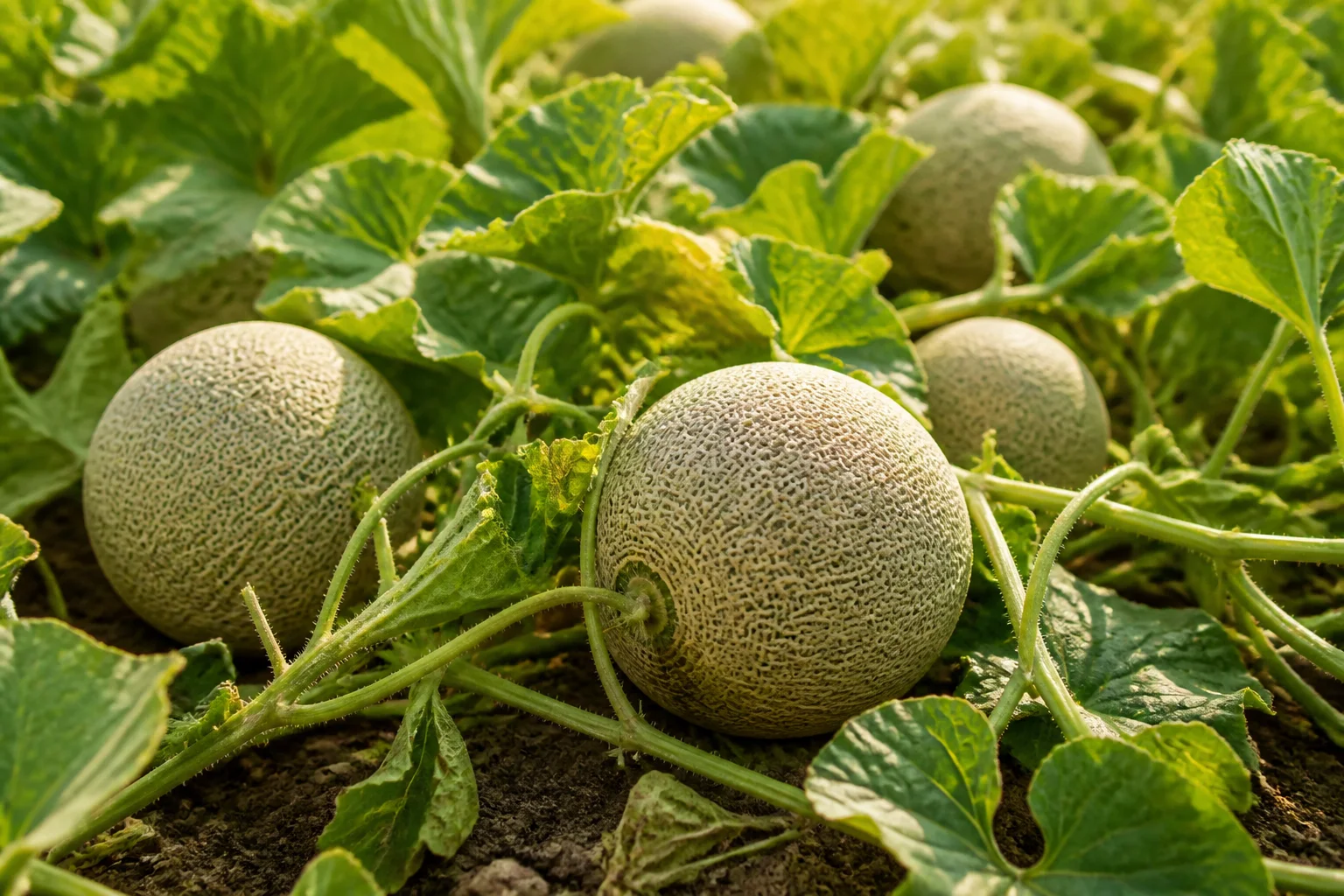
Cantaloupe
The other summer melon, usually earlier and judged ripe by scent and slip instead of a ground spot.
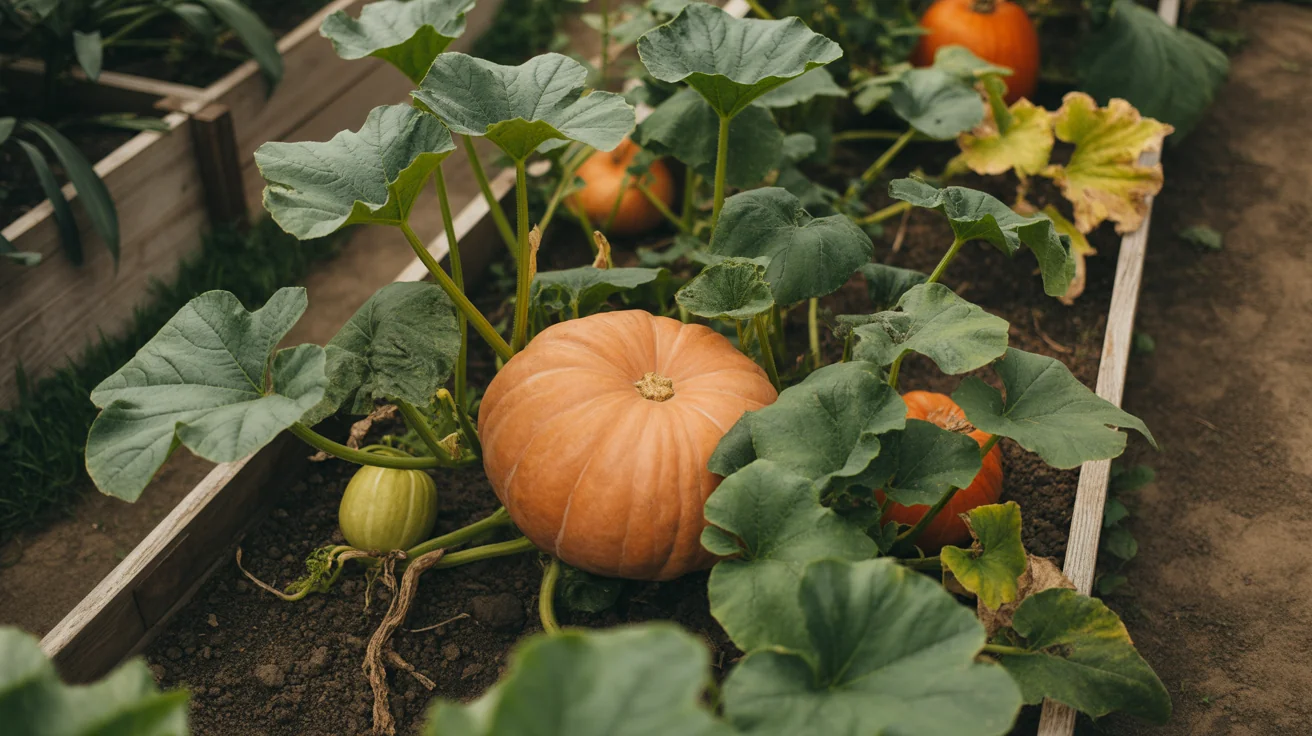
Pumpkin
A sprawling cucurbit harvested on rind hardness and cured for storage rather than eaten ripe.
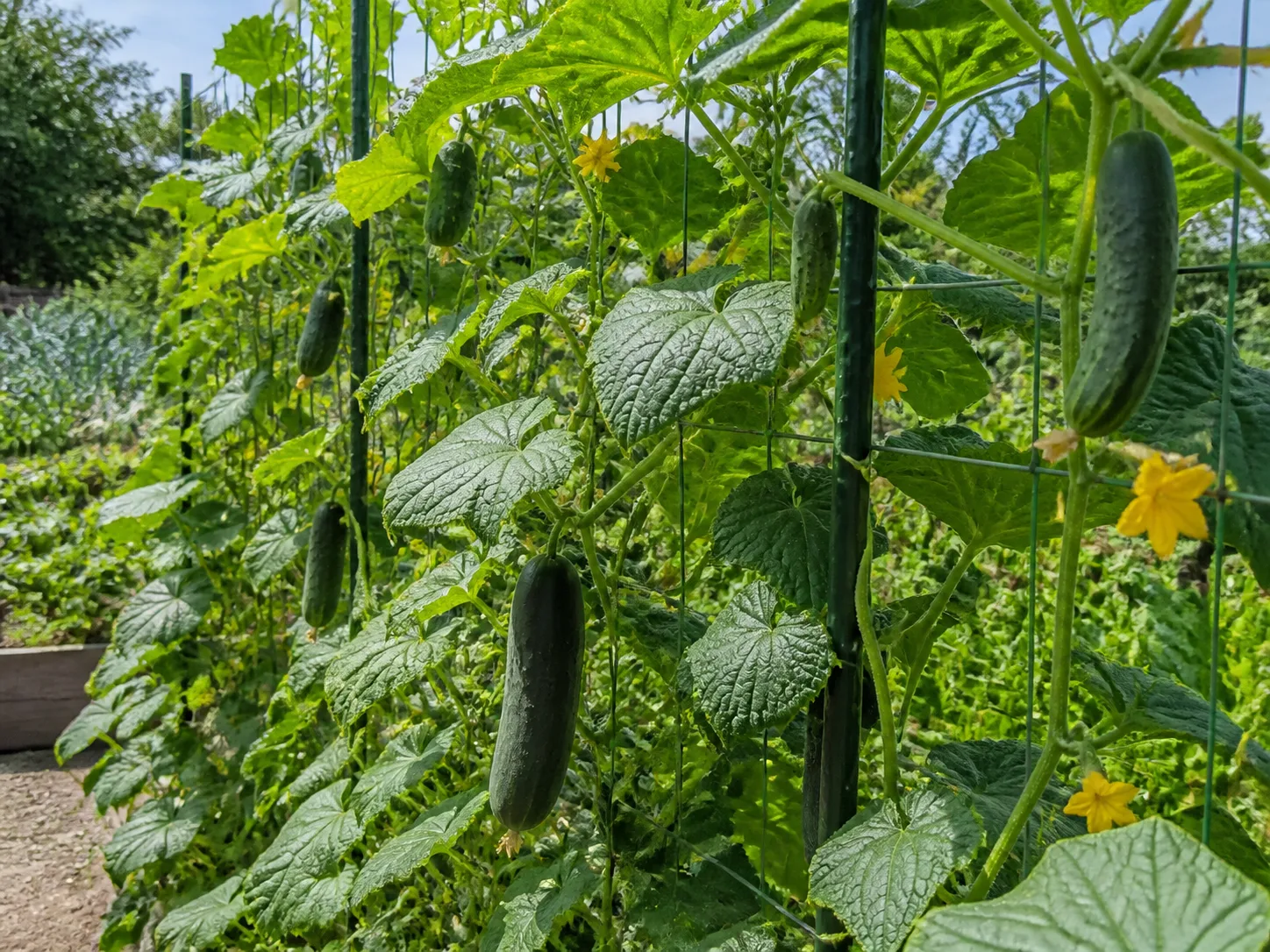
Cucumber
A smaller cucurbit with the same beetle and mildew pressure in a fraction of the ground.
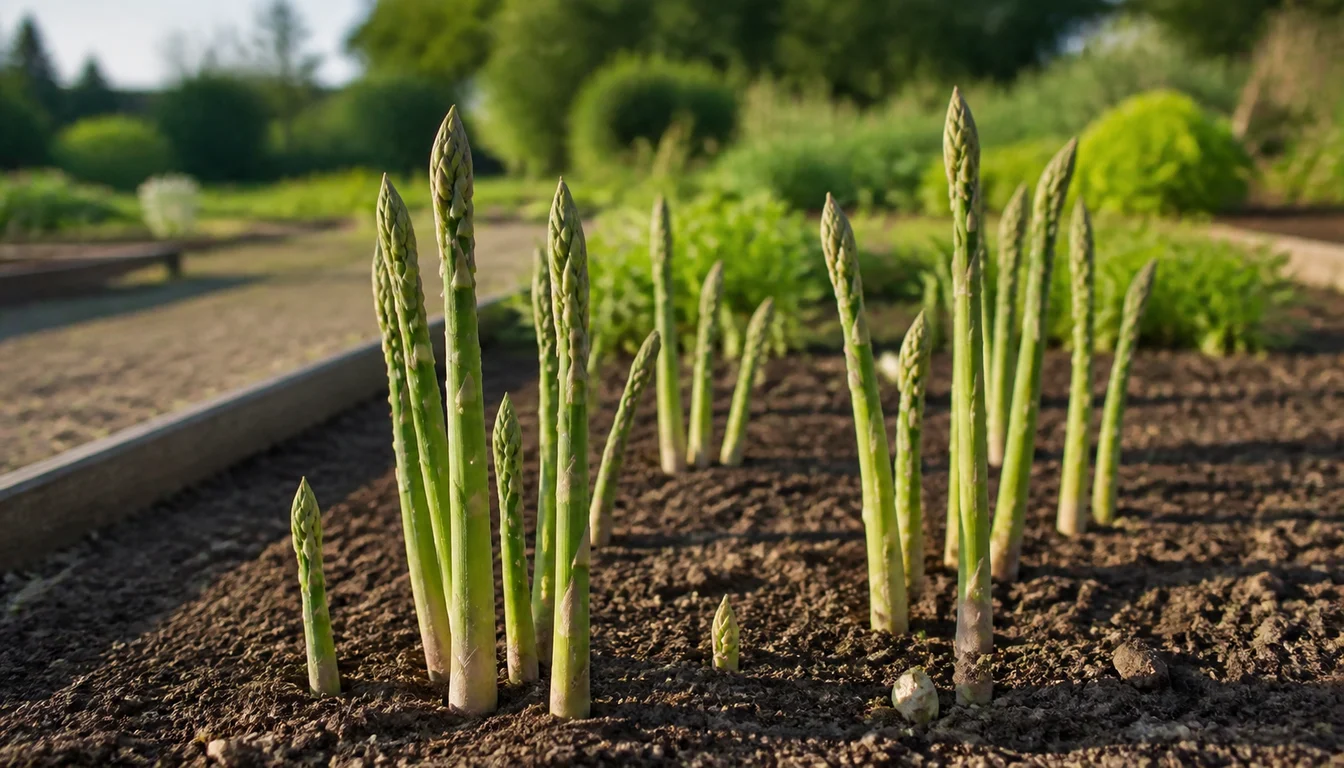
Asparagus
Asparagus rewards careful establishment with spring harvests for many years.
Beans
Two different plants share the name bean, one that stays knee-high and gives most of its crop inside two or three…
Beet
Beet care starts with one unusual fact. Each seed ball can make several seedlings, so the crop needs early thinning…