
Why Watermelon Flowers Fall Without Making Fruit
A flowering watermelon vine may be behaving normally, missing effective pollination, or aborting a newly pollinated ovary under stress.
Start by finding female flowers with a tiny melon behind the petals, then watch one morning before deciding whether to hand-pollinate or change vine care.
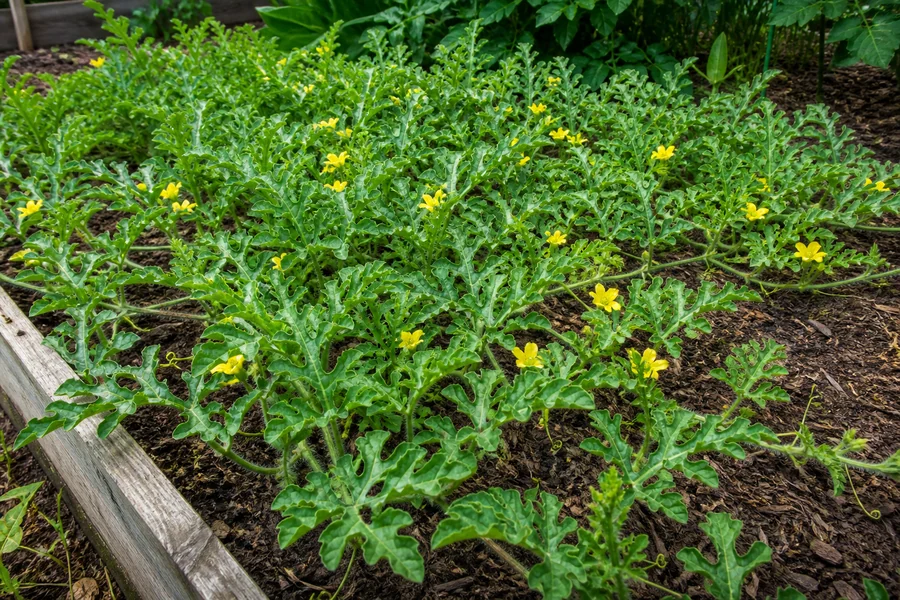
Quick diagnosis
Count female flowers, not all fallen blossoms
Male watermelon flowers have a slim stem directly behind the petals and naturally drop after releasing pollen. Only a female flower has a fuzzy miniature melon at its base.
If that ovary never enlarges, audit pollination. If it swells and later yellows, inspect heat, water, roots, and vine load.
Open the full diagnosisWhat You Are Seeing
Watermelon produces separate male and female flowers on the same vine. Male flowers often open first and in greater numbers, so an early flush that falls without fruit is preparation for pollination rather than crop failure.
A female blossom usually opens for a short morning window. Bees must bring pollen from a freshly open male flower to its stigma during that window, and several effective contacts are more useful than one insect merely passing through the patch.
Fruit set and fruit retention are two different checkpoints. A female ovary that never begins sustained growth points toward pollination, while a small melon that enlarges and then yellows or shrivels can reflect incomplete pollination or stress after set.
Once an enlarging melon develops a dry dark lesion centered opposite the stem, the question has changed. Use the watermelon blossom-end rot diagnosis rather than repeating pollination work.
Common Causes
01 Very common early
The first flowers are male
Watermelon vines commonly begin with male flowers, then add female flowers as the plant matures. Those male blooms open, shed pollen, and fall without ever having an ovary to enlarge.
How to identify it
- Every open blossom sits on a narrow stem with no miniature melon behind it.
- The vine is still extending and female flowers have not appeared farther along the runners.
- Fallen blooms have slim bases rather than a yellowing swollen ovary.
- New flowers continue to form and the canopy otherwise looks active.
What to do
- Wait for female flowers while keeping the vine evenly watered and growing steadily.
- Check new bloom each morning at the flower base instead of counting petals on the ground.
- Avoid a strong nitrogen feed meant to force flowering because lush vine growth can delay the balance you want.
- Follow the watermelon growing guide for space, warmth, and season-long care.
02 Most likely once females open
Female flowers receive too little effective pollen
A watermelon flower needs pollen from a male bloom carried onto the female stigma during the same short opening period. Sparse bee activity, pesticide exposure, or too few repeated visits can leave the ovary partly or completely unpollinated.
How to identify it
- Female flowers open but few bees enter the blossoms during calm morning observation.
- The miniature ovary remains the same size after the petals close, then yellows and detaches.
- Male and female flowers overlap, yet stigma surfaces show little loose yellow pollen.
- Hand-pollinated flowers begin enlarging while unassisted flowers from the same mornings fail.
- Nearby flowering plants also receive little insect activity.
What to do
- Observe first so you know whether the gap is flower overlap, visitor activity, or pollen transfer.
- Hand-pollinate a newly opened female flower with a fresh male bloom during the morning.
- Avoid spraying insecticides on open flowers and follow every product label around pollinators.
- Provide season-long forage with pollinator-friendly flowers rather than placing a temporary attractant beside one bloom.
- Remove protective row cover when flowering begins unless you are opening it daily for pollinators.
03 Weather-dependent
Weather closes the useful pollination window
Rain can wash or clump pollen and keep bees grounded, strong wind reduces visits, and extreme heat can shorten flower life or reduce pollen and stigma performance.
The failure follows the bloom mornings that experienced the conditions, not necessarily the weather seen when an ovary drops later.
How to identify it
- Female blossoms opened during rain, persistent wind, or unusual heat and received little morning activity.
- A later group opening in calmer weather sets normally on the same vine.
- Male flowers were open but their pollen was wet, clumped, or sparse.
- Petals wilted early on very hot mornings before visits increased.
- Several vines show the same cohort pattern across the patch.
What to do
- Hand-pollinate fresh flowers early on a marginal weather day when viable male blooms are available.
- Keep the root zone evenly moist before heat without flooding it during rain.
- Do not shade the flowers so heavily that pollinators cannot find or enter them.
- Record the opening morning of marked female flowers and compare results with actual weather.
- Plan future sowing so peak flowering has the best chance of avoiding the harshest local period.
04 Possible after initial swelling
The vine aborts a newly set fruit under stress
An ovary that begins expanding has crossed the first pollination checkpoint, but drought, saturated roots, severe heat, root injury, disease, or an excessive fruit load can still stop it. This pattern calls for vine and root-zone evidence instead of repeating pollen transfer after the flower has closed.
How to identify it
- The ovary enlarged for several days before growth stopped and the rind yellowed.
- Leaves wilt beyond the normal midday response or remain limp while soil is wet.
- Several fruit are already growing strongly and the weakest new ovary aborts.
- The bed dried below mulch, flooded, or was cultivated near roots during early enlargement.
- The vine shows pest, disease, or root injury in addition to poor retention.
What to do
- Check moisture below mulch and use the vegetable-garden watering method to respond to soil and weather.
- Correct runoff, standing water, or a narrow irrigation pattern before adding fertilizer.
- Protect established roots from hoeing and repeated vine movement.
- Inspect visible chewing, wilt, and beetle activity rather than treating an unseen pest.
- Judge the next female flower after the stress is corrected instead of trying to reopen a spent bloom.
05 Less common
Excess nitrogen favors vines over female bloom
A heavily fed vine can produce long dark green runners and many leaves while female flowering lags. Nitrogen does not explain every pollination failure, but recent feeding plus unusually lush growth makes it a credible contributor.
How to identify it
- Long vigorous runners and large dark leaves dominate while female flowers stay scarce.
- A high-nitrogen fertilizer or rich manure was added shortly before the growth surge.
- Neighboring vines with lighter feeding produce female blooms sooner.
- The soil stays moist and pollinators are present, yet the main shortage is female flowers.
- No root decline or severe weather explains the delayed reproductive growth.
What to do
- Stop extra nitrogen and let the vine use the nutrients already present.
- Do not add phosphorus or bloom booster without soil evidence.
- Keep moisture steady while new nodes mature rather than stressing the vine to force flowers.
- Use a soil-test-led feeding plan in the next crop and record what was applied.
- Continue checking flower bases because a normal male-heavy phase can overlap with lush growth.
Separate No Set From Early Fruit Abortion
Mark a female flower on the morning it opens without tying anything tightly around its stem. If the ovary stays static and soon yellows, pollen transfer was absent or incomplete, while clear enlargement shows that pollination initiated fruit development.
A partly pollinated ovary may begin uneven growth and then fail, so initial swelling is useful but not absolute proof that pollination was adequate.
Compare several marked flowers from different mornings rather than diagnosing the crop from one blossom.
Once the petals close, touching pollen to them later cannot restart the event. Continued loss after clearly successful hand pollination moves the investigation toward root-zone moisture, heat, vine health, and fruit load.
Male flower drop remains normal throughout the season. The miniature ovary behind the petals is the feature that separates a fruit-set attempt from a pollen-producing flower completing its job.
Find the Flowers That Can Become Melons
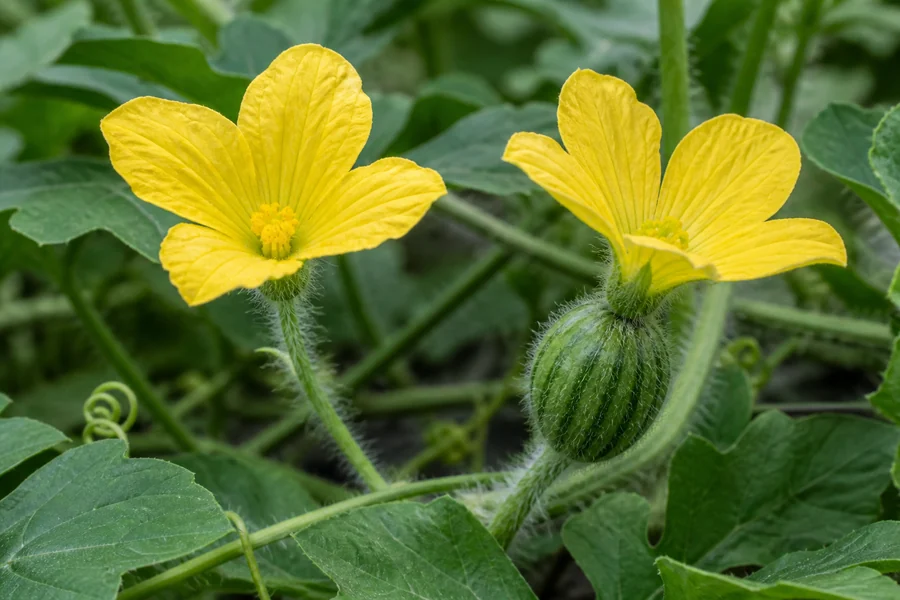
Inspect the flower from the side without removing it. The female ovary resembles a tiny fuzzy watermelon directly behind the petals, while a male bloom joins its stem without that swelling.
Male flowers usually outnumber females and may lead the season. Their drop supplies no evidence of failed fruit set because they never carried fruit tissue.
- Male flower base
- Slim stem behind petals, no miniature melon, produces pollen.
- Female flower base
- Swollen fuzzy ovary behind petals, receives pollen, can become a melon.
- Spent male flower
- Falls after opening and pollen release as part of normal bloom.
- Failed female flower
- Ovary stays still or yellows after petals close.
For three mornings, count newly open female flowers and note whether matching fresh male flowers are present. That small record separates a lack of candidates from a transfer problem.
Audit One Morning of Pollination
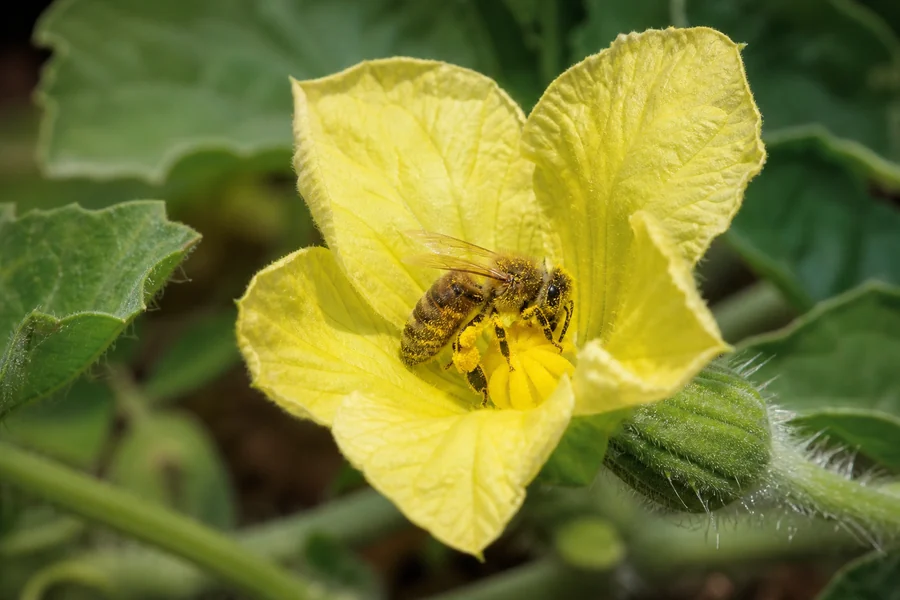
Choose a calm morning when male and female flowers are freshly open. Watch the patch rather than one blossom so you can see whether visitors move between flower types and contact the reproductive centers.
- Confirm that at least one fresh male and one fresh female flower are open together.
- Observe several short periods through the morning instead of relying on one glance.
- Note whether bees enter flower centers and emerge carrying visible yellow pollen.
- Check the female stigma for pollen without rubbing or damaging it.
- Record rain, wind, unusual heat, row cover, and any pesticide used around the bloom.
- Mark the observed female loosely and check whether its ovary begins sustained enlargement.
One bee in the garden is encouraging but cannot measure transfer by itself.
Movement between male and female flowers and later ovary growth complete the evidence.
If a cover excludes insects, open or remove it at bloom according to the crop protection plan. If cucumber beetles are present, use the visible cucumber beetle signs to choose a targeted response that still protects pollinators.
Hand-Pollinate the Flower That Opened Today
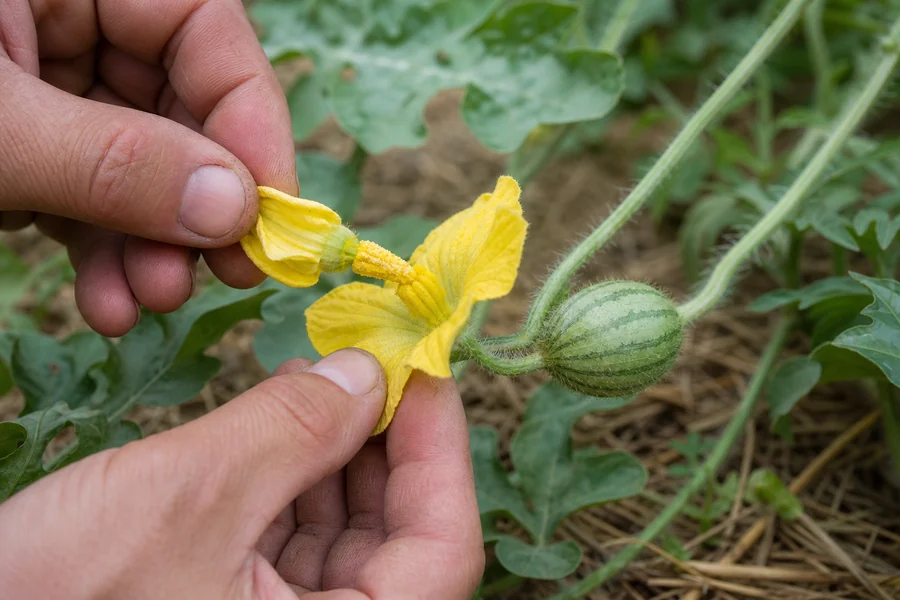
Use a newly opened male bloom that sheds visible pollen and a female flower that opened the same morning. Leave the female attached because the ovary and its stem must remain intact.
- Identify the female by the miniature melon behind its petals.
- Pick one fresh male flower and remove or fold back its petals to expose the pollen-bearing center.
- Touch that center gently across the female stigma so pollen reaches all lobes.
- Use another fresh male if the first carries little visible pollen.
- Mark the female loosely with the date without constricting its stem.
- Leave the flower undisturbed and compare ovary size over the following days.
Hand pollination is a diagnostic intervention as well as a backup. If marked flowers grow while nearby unassisted flowers repeatedly fail, pollen transfer is the likely bottleneck.
If both groups enlarge and then abort, stop repeating the method. Examine heat, root-zone moisture, vine health, and existing fruit load instead.
Recovery Plan
Observe or transfer pollen
Identify a fresh female and overlapping male flower. Audit visits or hand-pollinate while the flowers are open, then mark the female without tightening anything around its stem.
Look for sustained ovary growth
A successfully setting ovary becomes visibly larger and stays green. Static, yellowing, or shriveling ovaries indicate that pollination was incomplete or the young fruit met immediate stress.
Test the diagnosis again
Repeat the observation on new female flowers after weather, water, cover, or pollinator conditions improve.
Continued abortion after confirmed pollen transfer shifts the diagnosis to vine and root-zone stress.
Keep a sequence rather than reacting to fallen petals. Identify flower sex, preserve pollinators, remove insect-excluding cover at bloom, maintain steady root-zone moisture, and avoid excess nitrogen.
Nearby flowers that support pollinators help across the season, but a bloom-morning observation still tells you whether watermelon flowers received effective visits.