
How to Fix Cabbage Heads That Split or Stay Loose
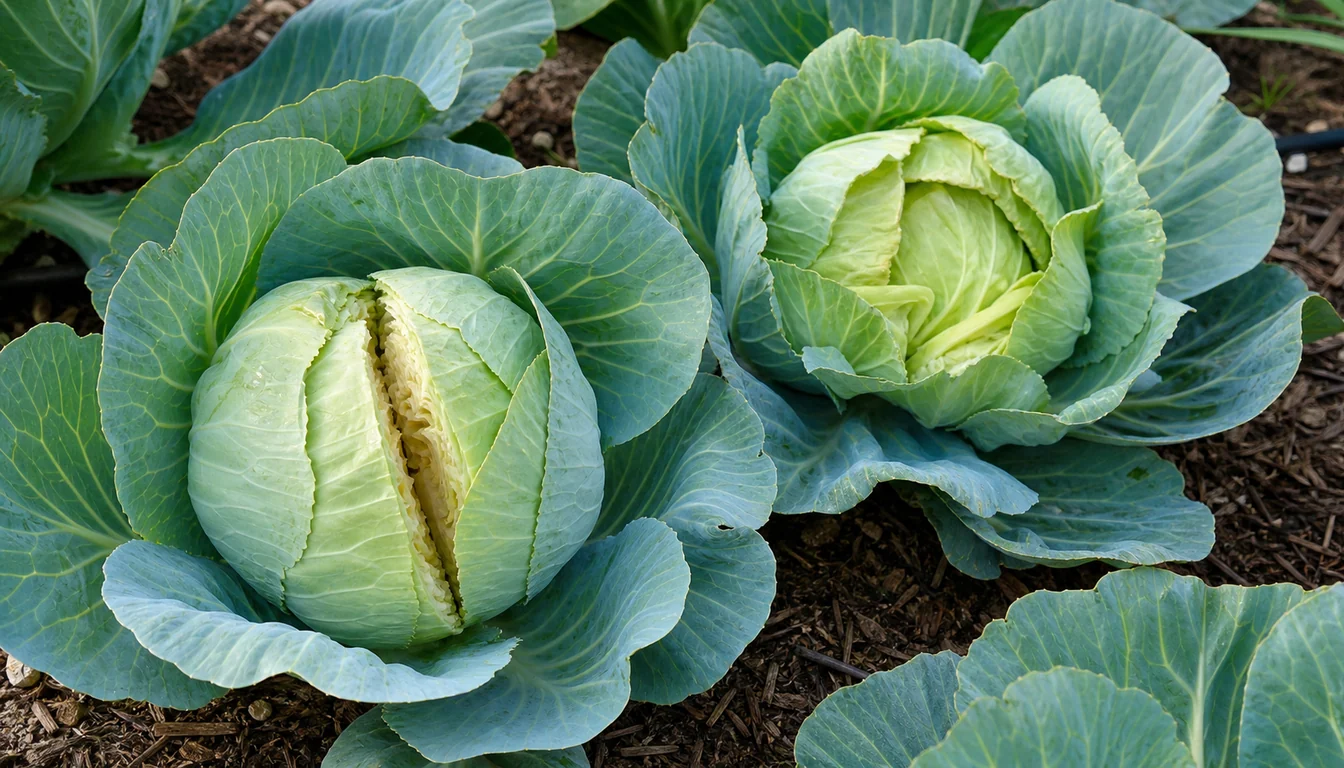
Loose and split cabbage heads come from different stages of growth. Check whether a compact inner head is still forming, whether the central growing point was damaged, or whether a mature firm head cracked after a dry-to-wet moisture swing before deciding to wait or harvest.
Quick diagnosis
Inconsistent soil moisture causing rapid head growth followed by swelling or splitting
Press the inner head gently rather than judging loose wrapper leaves. A small compact center can still be immature, while a soft open center with no tightening after favorable weather points to stress or growing-point damage.
A firm mature head with a fresh crack has already split and should be harvested because it cannot close again.
Open the full diagnosisWhat You Are Seeing
Cabbage forms its head by folding new leaves tightly around the central growing point. The broad outer wrapper leaves remain open, so assess the smaller inner head for density, size, and an intact center before calling the plant loose.
A loose head develops gradually under heat, water stress, crowding, excess nitrogen, or central-bud injury. A split appears after the head has become firm, often when heavy rain or irrigation follows dry soil and rapidly expands the inner leaves.
Keep moisture even through head development and inspect firmness as harvest approaches. Vegetable-bed irrigation timing helps avoid dry-to-soaked swings, but mature heads still need prompt harvest when storms are forecast.
Common Causes
01 High likelihood
Inconsistent soil moisture
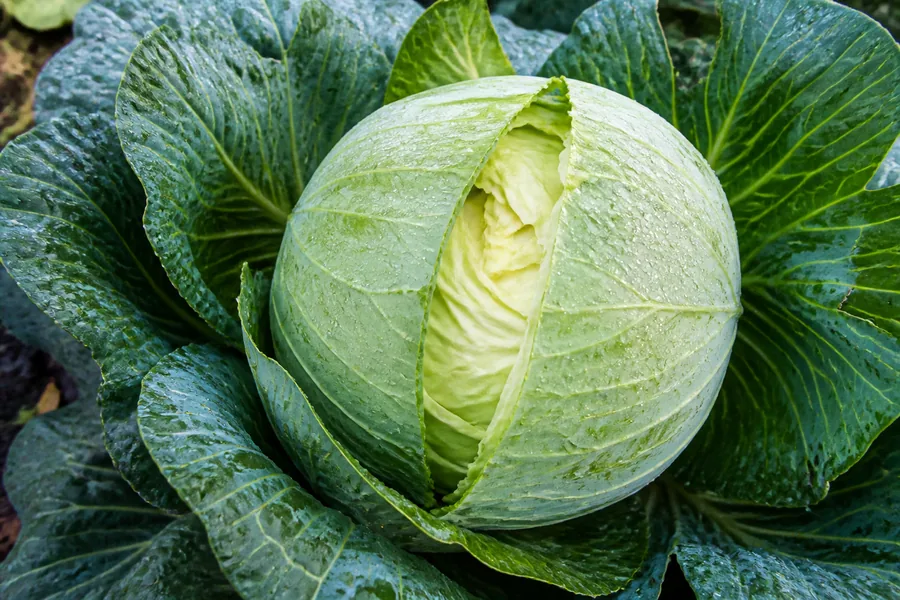
After a dry stretch, heavy rain or irrigation can expand the inner leaves faster than a firm mature head can accommodate. The resulting crack is a late-stage pressure injury, not the same process as a head that never tightened.
How to identify it
- Heads split within a few days of heavy rain, deep watering, or a storm after dry weather.
- Soil was dry below the surface before the head started cracking.
- A vertical crack opens through the head while outer leaves still look mostly intact.
- Several plants in the same row split at the same time after a moisture change.
What to do
- Switch to even, deep watering; soak beds to 6-8 inches every 4-7 days depending on weather, rather than light frequent sprays.
- Add a 2-3 inch layer of organic mulch to buffer soil from sudden wet-dry swings.
- Use drip irrigation or soaker hoses where possible so moisture stays steady around the shallow roots.
- Harvest heads that are already cracked; they will not tighten back up in storage.
- For nearly mature heads, twist each plant a quarter turn to break a few roots and slow water uptake before a forecasted storm.
02 Medium likelihood
Rapid growth from warm weather or high nitrogen
Warm weather slows cool-season head quality, while excess nitrogen keeps leaf growth lush and open. Large wrapper leaves with a soft center across equally watered plants support this cause more than one sudden crack after rain.
How to identify it
- Recent fertilizer or fresh compost was applied as heads began forming.
- Outer leaves look oversized and lush while the center stays open or springy.
- Heads push apart at the center without obvious pest chewing or rot.
- Rapid growth occurred during a warm 7-14 day stretch.
What to do
- Stop high-nitrogen feeding once heads begin to form; avoid quick-release side dressing during the last 3-4 weeks.
- If plants are pale and truly need food, use a light balanced vegetable fertilizer rather than a lawn-style nitrogen product.
- Keep watering steady after reducing feed so the plant does not swing from lush growth to stress.
- Harvest loose heads when they are usable instead of waiting for them to become perfectly tight.
- Choose firm-heading or split-resistant varieties for seasons when warm spells arrive early.
03 Low likelihood
Variety choice or delayed harvest
Cultivars differ in head density and ability to hold in the field. A mature firm head left through extra rain is more likely to split, especially in early varieties, while savoy and other types may never feel like a dense storage cabbage.
How to identify it
- Loose heads are limited to one variety while nearby plants stay tight.
- Seed packet or transplant tag describes a savoy, loose-leaf, or early type rather than a dense storage type.
- Heads were already mature and firm before splitting after extra days in the bed.
- Fall or spring timing pushed head formation into heat above the crop's preferred cool window.
What to do
- Harvest mature heads promptly when they feel firm and full-sized.
- Plant smaller succession blocks so every head does not mature during the same stormy week.
- Use split-resistant or storage-type cultivars where wet finishing weather is common.
- Shift planting dates so head fill happens in cool weather rather than summer heat.
- Compare symptoms with cabbage worm damage before blaming variety if leaves are chewed or full of frass.
04 High likelihood
An inner head that is still immature
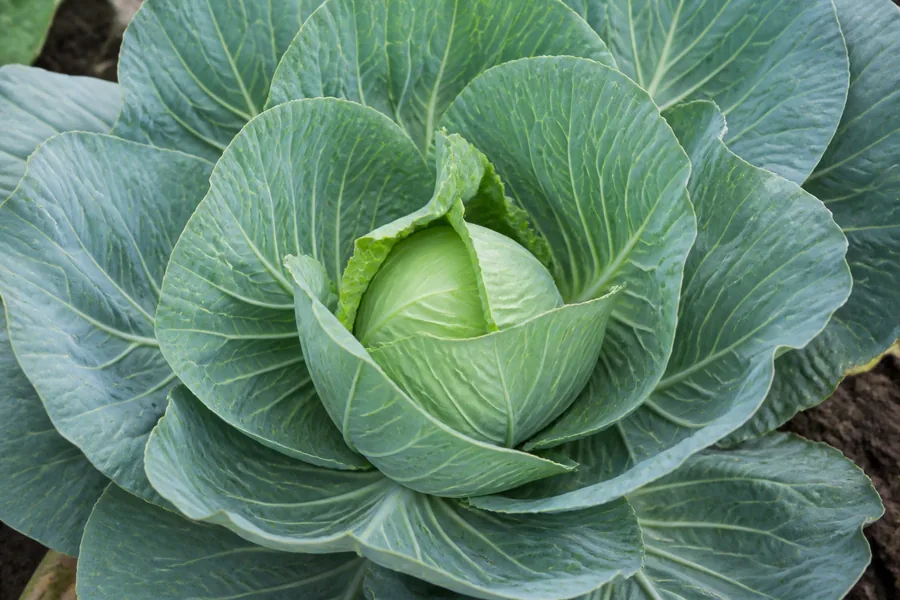
Loose wrapper leaves are normal and protect the forming center. If the inner leaves are beginning to overlap and the plant is still within its expected season, the head may need time rather than fertilizer or tighter watering.
How to identify it
- A smaller central head is visible inside broad open wrapper leaves
- The center feels denser than it did a week earlier without any crack
- Growth remains steady in cool weather and leaves look healthy
- The cultivar has not reached its expected maturity window
What to do
- Mark the plant and compare inner firmness again in seven to ten days.
- Keep soil moisture even and avoid a late fertilizer application.
- Protect the center from caterpillar feeding and rough handling.
- Harvest when the inner head is compact and useful rather than waiting for one universal size.
05 Medium likelihood
Damage to the central growing point
Cold, rough transplant handling, or insect feeding can kill or divide the central bud while the outer leaves continue growing. The plant may remain an open rosette or form several small centers instead of one normal head.
How to identify it
- The center is scarred, missing, chewed, or divided into multiple growing points
- Outer leaves are large and tough but no single overlapping center develops
- Damage dates back to transplanting, cold exposure, or early insect feeding
- Nearby undamaged plants of the same cultivar head normally
What to do
- Inspect for active insects and protect unaffected plants rather than expecting the dead bud to return.
- Harvest usable leaves or small secondary heads when appropriate.
- Replace a young blind plant if the season still allows a new transplant.
- Handle future transplants by the root ball and delay planting through severe cold.
06 Low likelihood
Crowding or insufficient sun
Closely spaced or shaded plants compete for light and root resources, producing broad stretched leaves without enough sustained growth to build a compact center. The pattern follows spacing or a shade edge rather than a rainfall event.
How to identify it
- The most crowded plants form the loosest or smallest centers
- Leaves overlap heavily between plants and lower foliage stays shaded
- Plants near the sunny row edge head better than those inside shade
- Moisture and central buds are otherwise normal
What to do
- Remove competing weeds and avoid crowding the remaining roots with deep cultivation.
- Harvest alternate undersized plants if that can improve spacing without damaging neighbors.
- Use cultivar-specific spacing for the next planting.
- Move the next crop so head formation receives adequate direct light.
Why heads loosen, split, and still might be usable
Cabbage heads are compressed leaf buds.
When the inner leaves expand evenly, the head feels firm; when water, heat, or nitrogen pushes growth too fast, the inner leaves separate and the head opens.
A clean split down the head is different from cabbage worm damage.
Splitting exposes pale inner leaves but does not leave frass, ragged holes, or caterpillars.
A physical split exposes inner leaves and removes long-storage quality.
Harvest promptly, inspect the tissue, and discard any head with decay or uncertain food-safety signs.
Loose, immature, and split are different stages
Open wrapper leaves are normal around a forming cabbage. Press the smaller inner head gently with a flat hand, because a compact center can be developing even when the outside still looks loose.
An immature head gains density over time without a crack. A truly loose head stays soft or open through its expected cool growing period, while a split head was already firm before an outer seam tore.
Choose the first action from that stage. Leave a progressing immature center, diagnose a stalled loose center, and harvest a freshly split mature head before exposed tissue deteriorates.
Why a head stays loose
Review weather during the weeks when inner leaves should have folded. Sustained heat, dry soil, or repeated stress can slow compact head formation even when outer leaves remain large.
Compare leaf growth across the row. Dark lush leaves after heavy feeding suggest excess nitrogen and call for a crop-specific fertilizer check, while smaller stretched plants at a shade edge or in tight spacing suggest competition.
Inspect the exact center for one healthy growing point. A missing, scarred, chewed, or divided bud cannot build one normal head, so more fertilizer and water will only enlarge the remaining leaves.
Why a firm head suddenly splits
Splitting usually requires a mature firm head and a rapid moisture increase. Inner leaves expand after rain or heavy irrigation, but the tight outer layers cannot stretch enough and tear along a seam.
Overmaturity raises the risk because a full head has little room left. Early or less field-holding cultivars may split first even when every plant received the same rain.
The crack will not knit closed. Harvest promptly, and when a mature crop must remain briefly before forecast rain, use local extension guidance before disrupting a portion of the roots to slow water uptake.
Harvest, salvage, or discard
Harvest a clean fresh split as soon as practical and cool it promptly. Exposed inner leaves lose storage quality, so plan immediate preparation rather than long storage.
Trim visibly damaged or dried edges during preparation and inspect deeper tissue. A simple physical split differs from soft decay, slime, foul odor, extensive discoloration, or disease lesions.
Discard heads with decay or uncertain safety signs and follow local food-safety guidance. This article can identify a growth disorder, but it cannot guarantee edibility from an image or a garden history alone.
Keep the next crop even through heading
Choose a cultivar for the season and desired harvest window, then use its spacing rather than squeezing extra plants into the row. A succession schedule and good field-holding description help when harvest weather is often wet.
Keep moisture consistent with mulch and irrigation adjusted to soil and weather. Avoid letting the root zone dry hard and then applying a large catch-up watering as firm heads near maturity.
Check firmness every few days as heads reach usable size and watch the forecast. Harvest mature heads before prolonged rain instead of waiting for a fixed calendar date or maximum possible size.
Recovery Plan
Harvest what is already split
Cut heads with open cracks and use them quickly. Do not wait for split tissue to heal; exposed inner leaves dry, rot, or invite pests once the head opens.
Stabilize heads still forming
Even out watering, mulch exposed soil, and stop late nitrogen.
Heads that are only loose may tighten somewhat, but fully split heads will not close again.
Prevent the repeat pattern
Adjust planting dates, choose split-resistant varieties, and keep moisture consistent from transplanting through head fill. The prevention work happens before the final swelling stage.
Prevent loose heads with correct spacing, an intact central bud, moderate feeding, and cool-season timing.
Prevent splits by keeping moisture even and harvesting firm mature heads before a major rain, using deep-watering principles without allowing a severe dry-to-soaked swing.