Mulch vs Compost
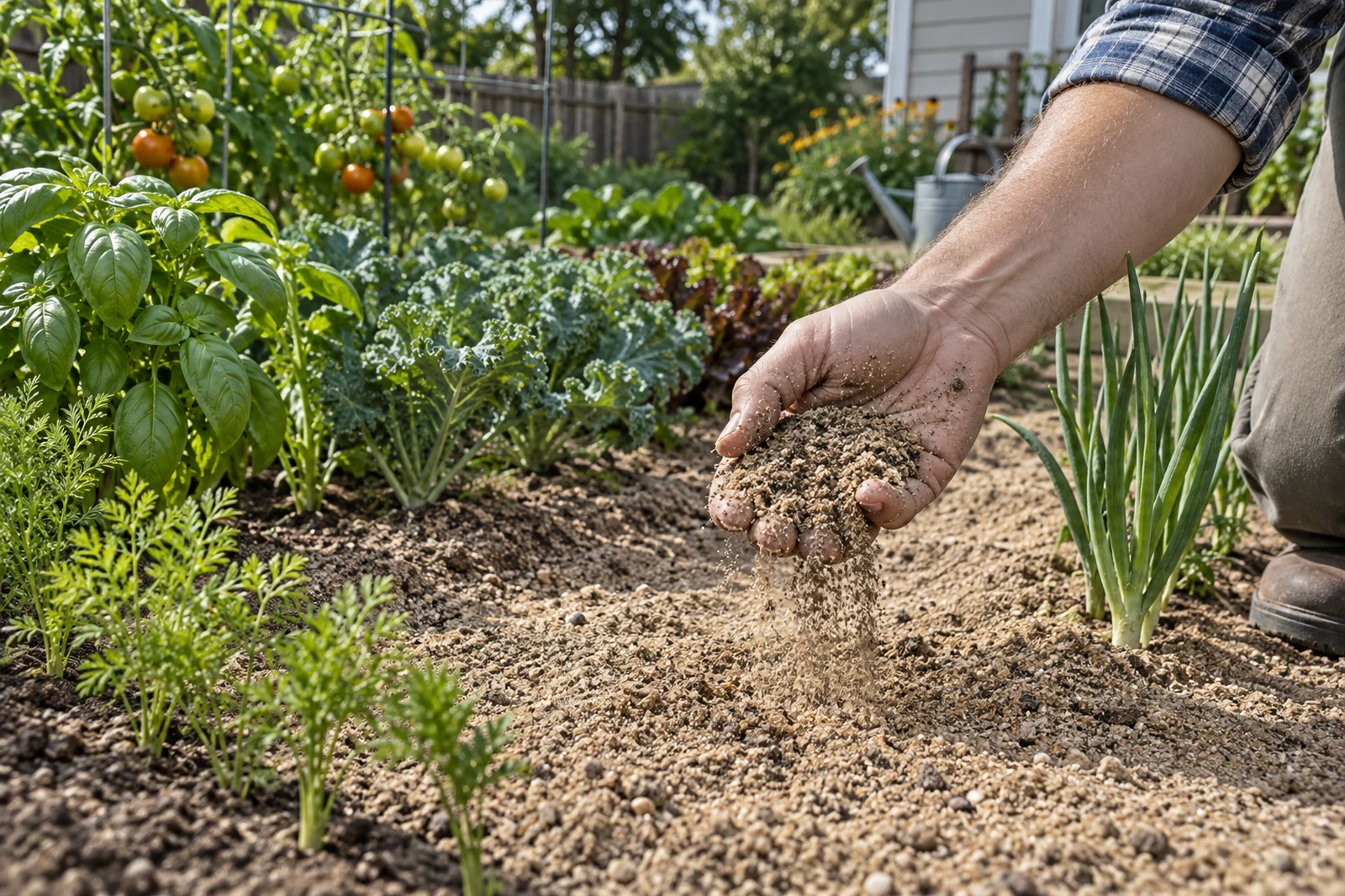
Choose mulch when bare soil needs a protective surface layer. Choose compost when the soil needs stable organic matter, or use finished compost as a thin topdressing beneath a coarser mulch.
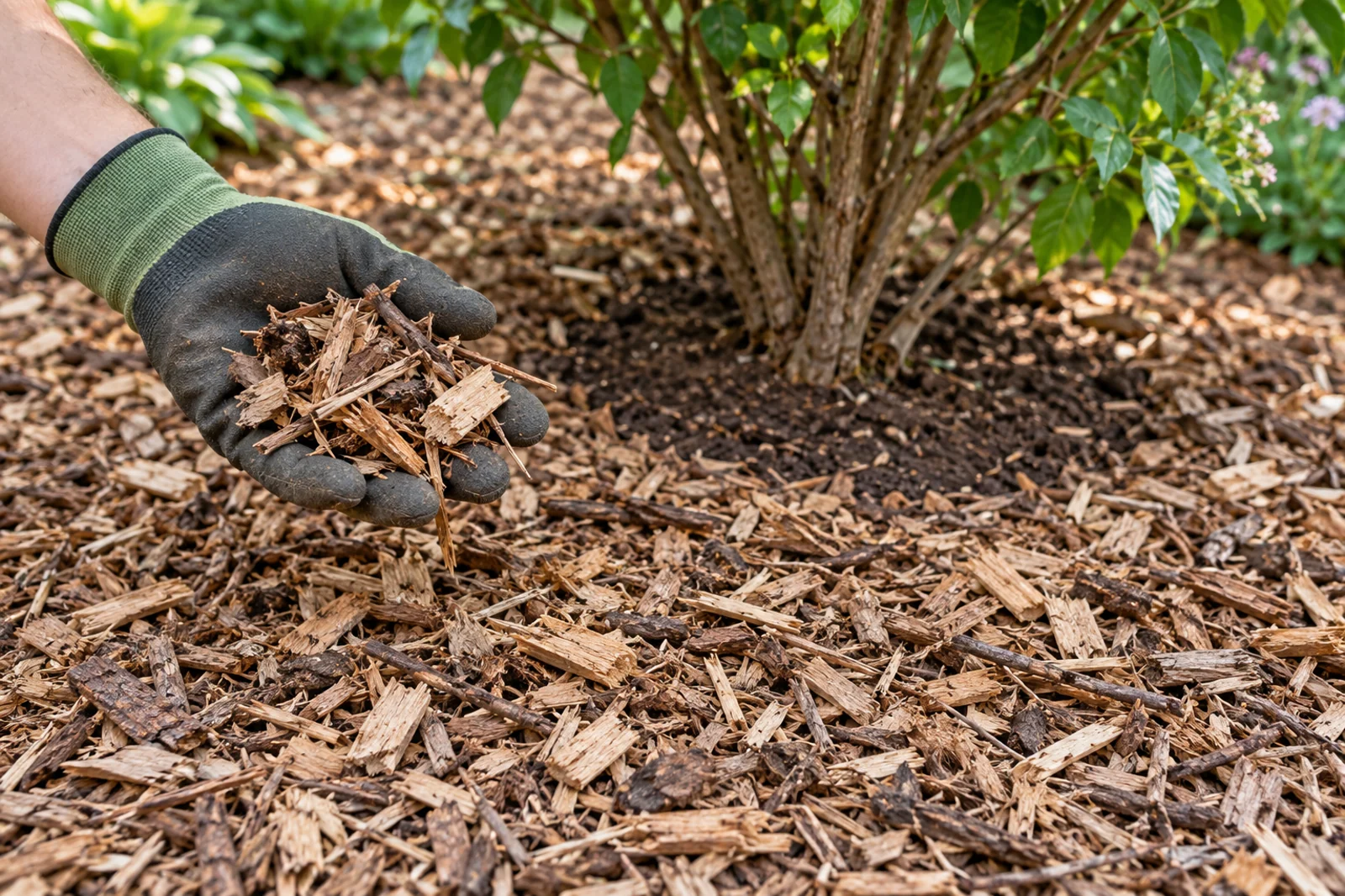
Mulch
A surface layer, not one material
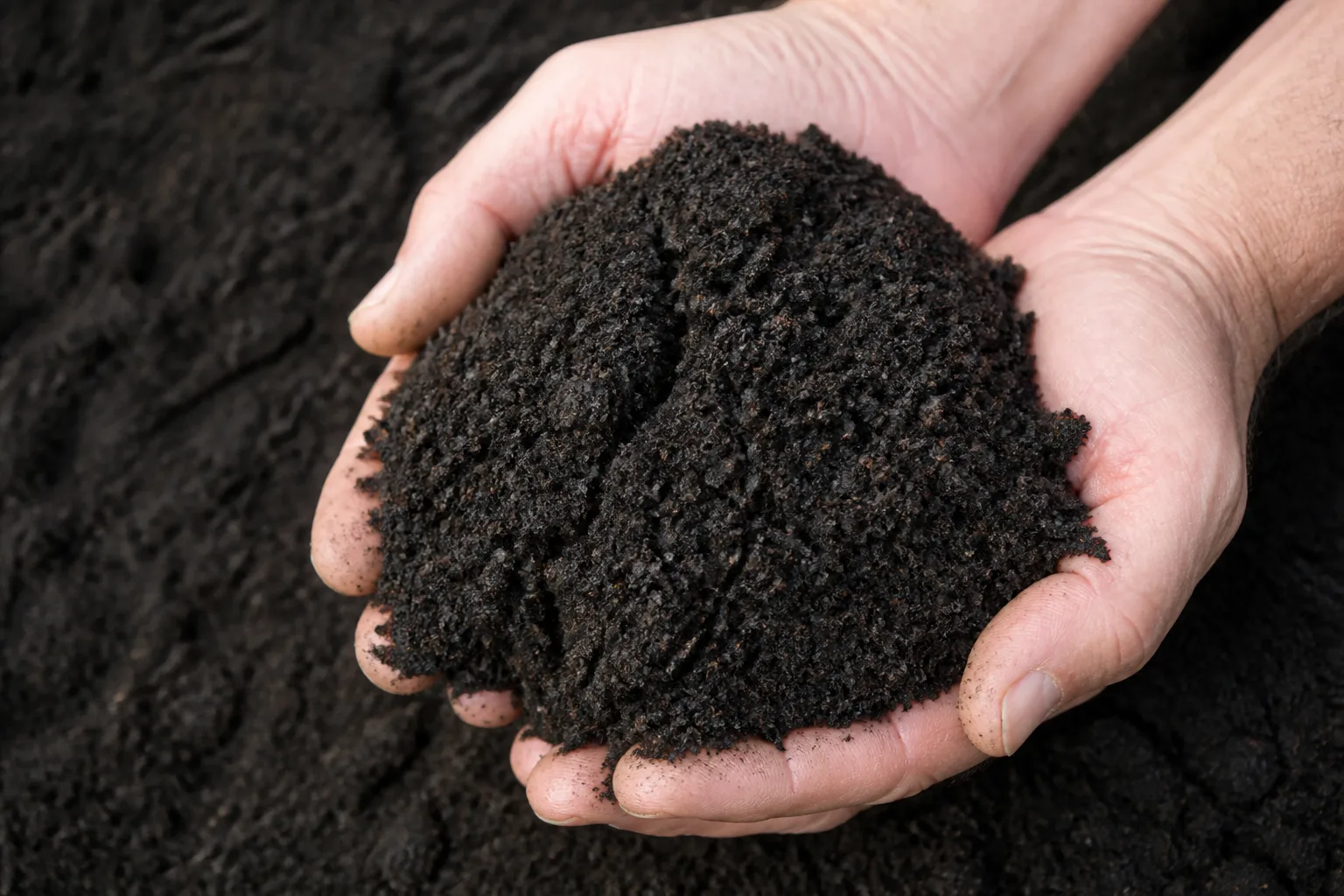
Compost
Decomposed organic material
Mulch and compost overlap, so this is not a strict either-or choice. Mulch describes a job and placement by covering the soil surface, while compost describes decomposed organic material that can be mixed into soil, spread as a topdressing, or used as a fine mulch.
For weed suppression and slower surface drying, coarse wood chips, shredded leaves, straw, or another suitable mulch usually does the better job. For a new bed with low organic matter or poor water storage, tested finished compost can improve the root zone.
Many established beds need both materials in different layers. Start with the need for surface protection, soil improvement, or both, then check whether the product suits that site.
Specifications
Compare what each material does once it is on or in the soil.
| Feature | Mulch | Compost |
|---|---|---|
| What the word means | Any material used as a surface cover | Decomposed organic material |
| Normal placement | On the soil surface | Mixed in, topdressed, or used as mulch |
| Main strength | Surface protection | Soil organic matter |
| Weed suppression | Good with continuous coarse cover | Limited when applied thinly |
| Water effect | Slows loss from the surface | Helps soil accept and store water |
| Nutrient role | Depends on the material and decay | Usually modest and slow |
| Best quality check | Clean source and suitable particle size | Mature, earthy, tested when possible |
| Common misuse | Too deep or piled on stems | Excess rate or unfinished product |
Mulch is defined by where it goes, so bark, wood chips, leaves, straw, gravel, and even compost may all serve as mulch in different settings. Compost is defined by what it has become after decomposition.
The two materials can complement each other. Compost changes soil properties over time, while a coarse surface layer keeps sun, rain, and weed seedlings from acting directly on bare soil.
Best Use Cases
Choose by the job the bed needs done.
Bare soil that dries quickly
Protect the surface first
A continuous coarse layer shades soil, reduces evaporation, and softens rain impact.
Compost improves water storage in soil but a thin application gives less surface cover.
New bed with low organic matter
Improve the planting zone
Mulch protects the finished bed but does not quickly change the soil beneath it.
A measured amount of finished compost can improve aggregation and water handling before planting.
Established trees and shrubs
Avoid digging through roots
Coarse organic mulch protects a broad root zone when it stays off trunks and stems.
Compost can be topdressed when needed, but routinely digging it in can damage established roots.
Productive vegetable bed
Soil care plus surface cover
Straw, leaves, or chips between plants reduce bare-soil drying and splashing.
Finished compost can amend or topdress the bed, but its nutrients may not replace fertilizer.
Why are mulch and compost not true opposites?
Mulch is any material placed over soil to influence conditions at the surface. Organic choices include bark, arborist chips, leaves, straw, and compost, while gravel and some landscape fabrics are inorganic mulches.
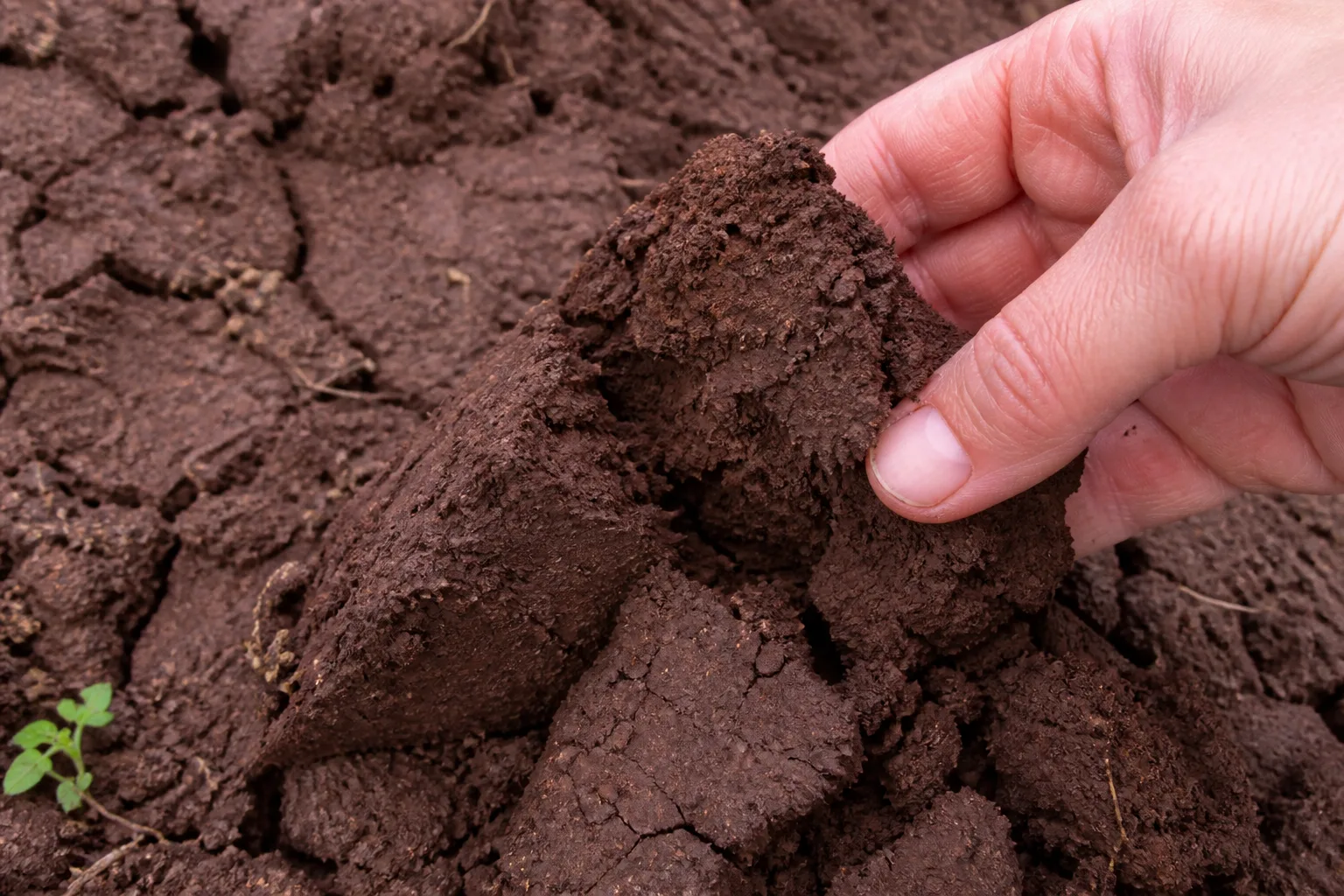
Compost is plant and food residue that microorganisms have broken down into a more stable material. Its dark, crumbly texture suits soil amendment and topdressing, yet a layer on the surface also meets the definition of mulch.
Particle size helps explain why the jobs differ. Coarse chips create an airy, persistent cover that blocks light and shields soil, while fine compost settles into the surface and decomposes more quickly.
That difference does not make every wood product a good mulch or every dark material good compost. Source, maturity, particle size, salt level, contamination, and the plants in the bed all affect the choice.
Which material solves your garden problem?
Choose from the condition you can observe rather than from a general claim that one material is healthier.
- Bare soil, frequent weeds, or fast surface drying: apply a suitable mulch after removing established weeds and watering the root zone.
- A new bed with low organic matter: use a soil test and local guidance to select a measured compost application before planting.
- Sandy soil that drains too quickly: finished compost can improve water and nutrient holding, then mulch can slow surface loss.
- Heavy soil with poor structure: compost may improve aggregation and aeration, but it cannot correct drainage caused by a low site or compacted subsoil on its own.
- Established trees or shrubs: preserve roots by using surface treatments rather than routinely tilling compost into the bed.
- Vegetable beds used every season: add compost only when the soil and crop plan call for it, then use a crop-safe mulch where bare soil remains.
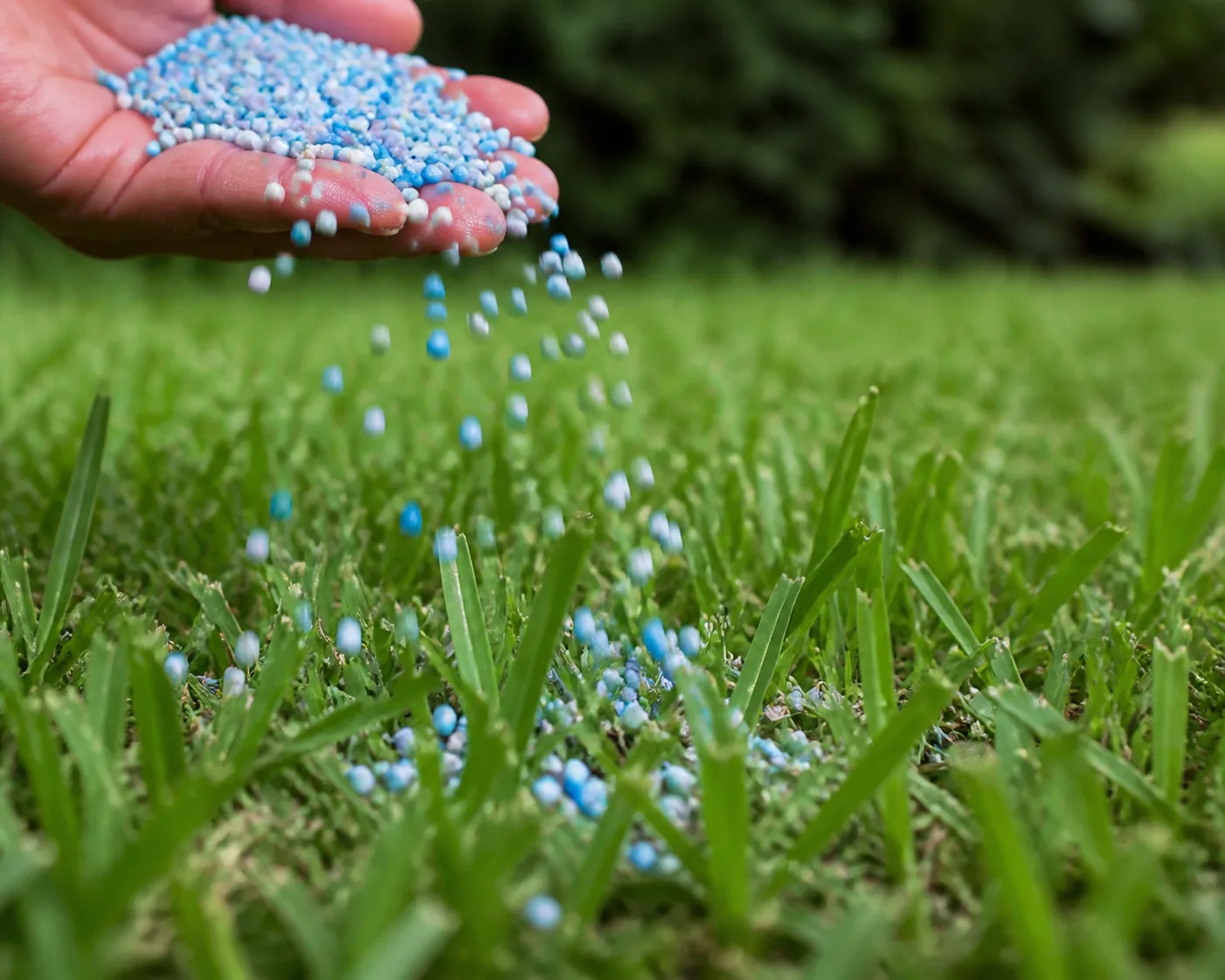
Compost has low fertilizer value compared with concentrated fertilizers, according to Oregon State and Colorado State Extension. A soil amendment can improve the place roots grow without supplying enough nitrogen for a hungry crop.
Use a vegetable fertilizer plan when a soil test or crop symptoms show a nutrient need. Adding more compost every year without checking the soil can accumulate phosphorus, potassium, salts, or organic matter beyond what plants need.
How do you choose and apply compost safely?
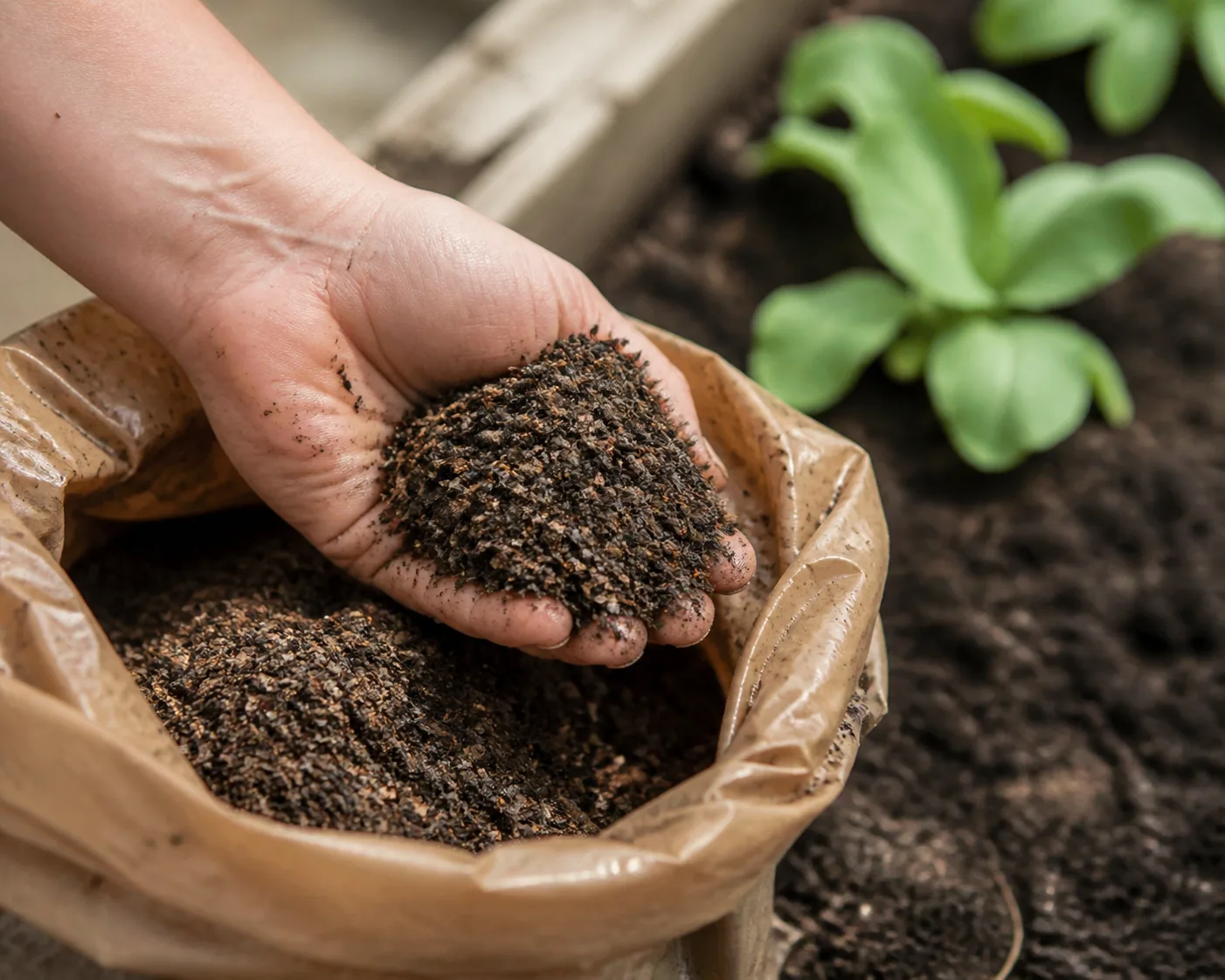
Finished compost should be dark, crumbly, and earthy-smelling, with little resemblance to its starting materials. Avoid a product with a strong ammonia, sulfur, sewage, or rotten odor because those clues can signal incomplete processing or poor storage.
Ask a bulk supplier what went into the pile and whether the product has recent laboratory results. Useful information includes soluble salts, pH, organic matter, carbon-to-nitrogen ratio, maturity, and testing for persistent herbicide residues.
Feedstock matters. Manure- and mushroom-based products can carry more soluble salts, while compost made from contaminated hay or grass can injure broadleaf crops even after the pile looks finished.
For a small purchase, inspect these traits.
- An even, crumbly texture suited to the intended bed.
- No visible trash, glass, rocks, or large undecomposed clumps.
- An earthy odor rather than ammonia or sulfur.
- A source statement and analysis when the use is sensitive or the volume is large.
- Storage that limits windblown weed seed and excess saturation.
Application rates must match the site. Oregon State gives 3 to 4 inches incorporated into 8 to 12 inches of soil for a new vegetable bed, but only one-quarter to 1 inch per year for an existing vegetable bed.
Those are regional guidance values rather than universal annual targets.
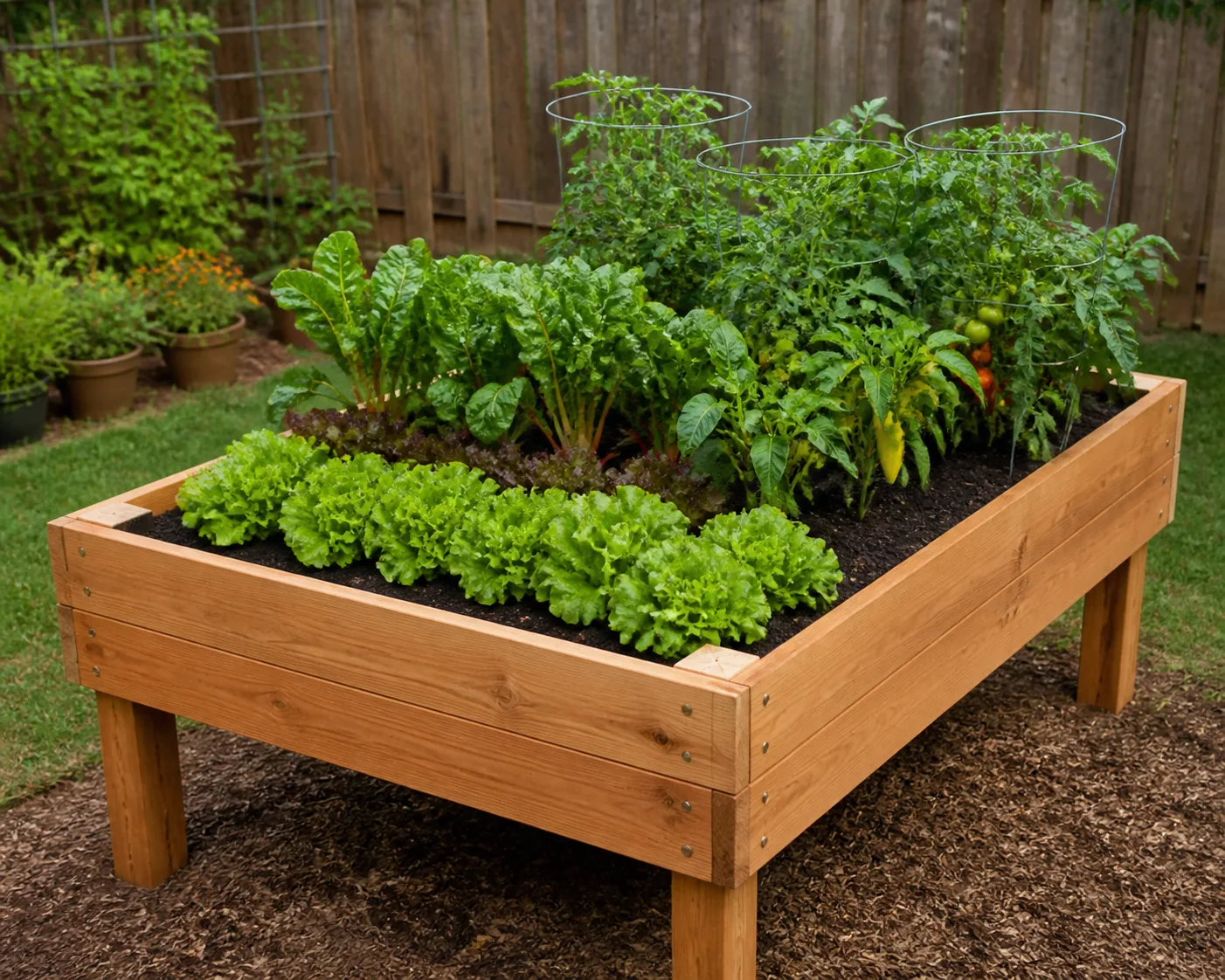
Do not fill a raised bed with compost alone. Mineral soil or a suitable soil mix provides the lasting body that pure organic material lacks as it decomposes and settles.
A soil test keeps repeated applications honest. The broader benefits of composting still depend on using a mature product at a rate the soil can accept.
How should mulch sit around plants?
Remove or cut down existing weeds before spreading mulch because a new layer is more dependable against germinating seedlings than established perennial roots. Water dry soil first if the bed needs irrigation, then spread an even layer instead of building isolated mounds.
Depth changes with material and site. Penn State recommends roughly 2 to 4 inches around landscape trees, while Oregon State commonly recommends 3 to 4 inches for coarse woody mulch in ornamental beds.
Finer material usually needs a thinner layer because it holds less air.
Those numbers are starting points. Wet clay, shallow-rooted plants, fine shredded material, and an existing layer that has not decomposed all argue for less additional mulch.
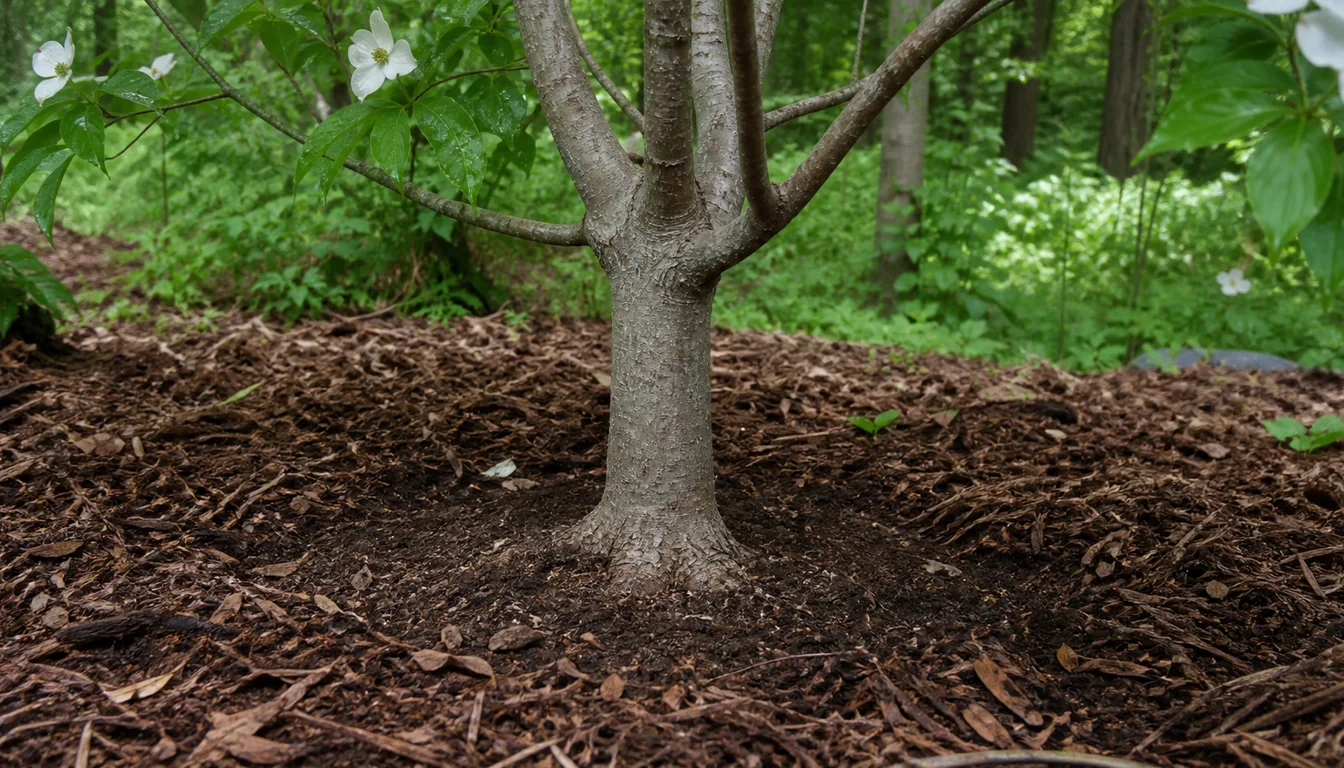
Keep mulch away from trunks, woody crowns, and tender stems. A volcano-shaped mound holds moisture against bark, hides the root flare, shelters rodents, and may encourage roots to grow into the mulch instead of the surrounding soil.
For a tree, use this checklist.
- Find the root flare where the trunk widens into the first structural roots.
- Remove old mulch that already covers the flare or touches the trunk.
- Extend the new layer broadly across the root zone when space allows.
- Keep the layer level or gently tapered, with a visible gap at the trunk.
- Check depth before adding more next season. Refresh only what has been lost.
The photograph shows the shape to preserve. The trunk rises from visible soil, while the mulch begins farther out as a broad ring.
Can you use compost and mulch in the same bed?
Yes. A thin compost treatment can serve the soil while a coarser mulch remains on top to protect the surface.
In a new bed, incorporate the recommended amount of compost before planting when the soil test and local guidance support it. Plant into the amended mineral soil, water the root zone, and add mulch after the soil has settled.
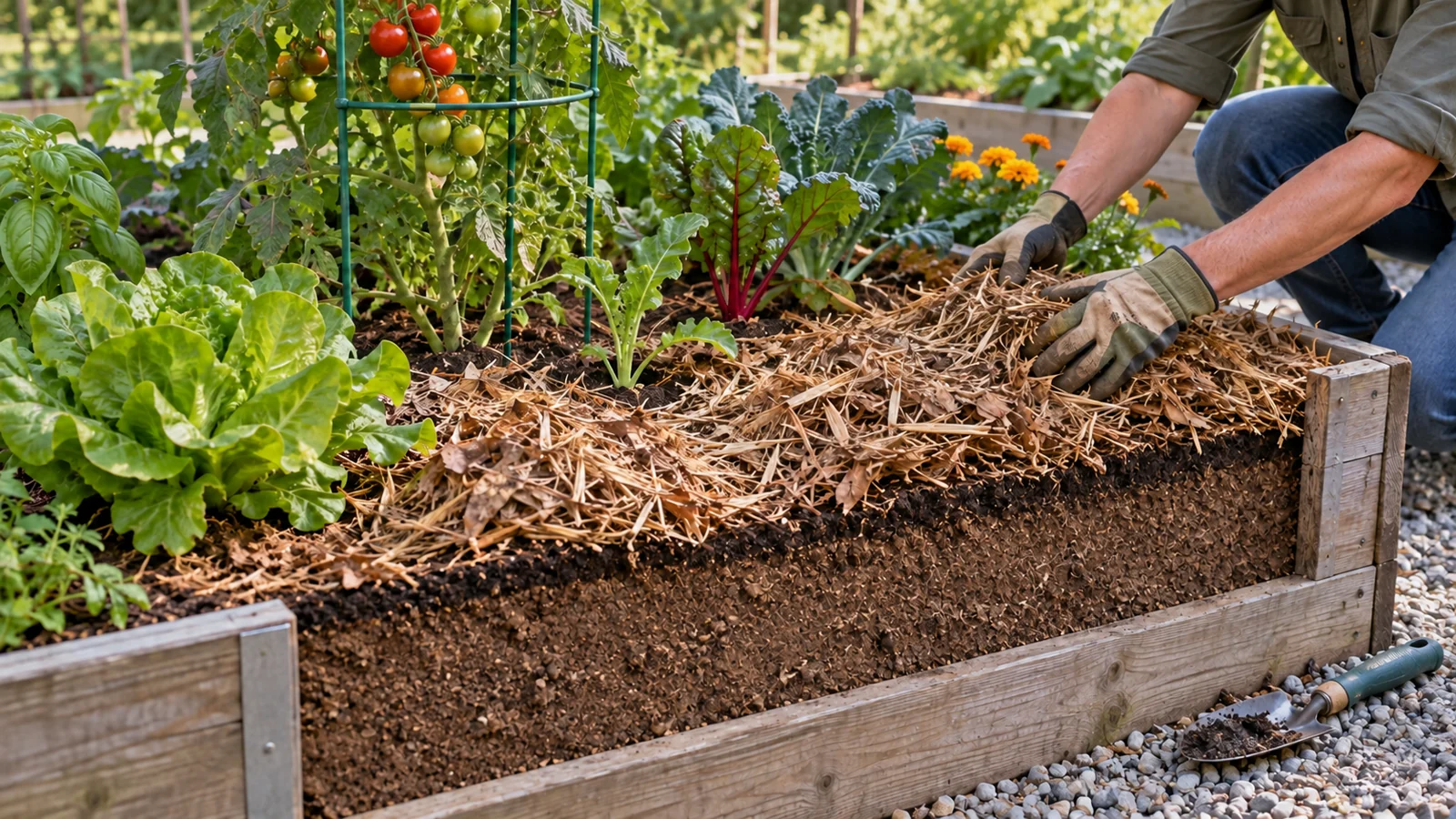
In an established vegetable or perennial bed, avoid unnecessary cultivation. Pull back the old mulch, topdress with an appropriate amount of finished compost, replace usable mulch, and add only enough new material to restore the intended depth.
Use this order.
- Remove weeds and inspect the existing soil and mulch depth.
- Apply compost only if the bed needs it and the product is suitable.
- Keep compost and mulch clear of stems and crowns.
- Water if the root zone is dry.
- Add a coarse surface cover where weed control or moisture protection is still needed.
- Recheck after settling and after heavy rain.
The practical sequence is compost first, mulch second because fine material belongs near the soil and coarse material performs best at the surface. The layers should remain modest, with the original soil making up most of the root zone.
For a new food bed, finish the soil and layout decisions in the vegetable garden setup process before ordering bulk material. Bed area and intended depth determine cubic feet or cubic yards, which prevents a bargain delivery from becoming an excessive application.
What mistakes make mulch or compost harmful?
Most failures come from excess, a poor source, or putting the material in the wrong place. More organic material does not guarantee better soil.
Watch for these patterns.
- Plants look burned or stunted after compost: high soluble salts or an excessive rate may be involved, especially with manure-based products.
- New leaves are twisted or cupped: stop using the batch and investigate persistent herbicide contamination.
- A tree trunk stays damp under a mound: pull mulch away and expose the root flare rather than letting bark remain buried.
- Water runs off or the bed stays saturated: check the actual depth and particle size, since a thick fine layer can restrict air and water movement.
- Small plants yellow beneath fresh wood products: fine woody material mixed into soil can compete for nitrogen more strongly than coarse chips left on top.
- Weeds emerge through fresh mulch: remove rooted perennials and repair thin gaps instead of covering the whole bed more deeply.
Surface wood chips are different from wood incorporated into soil. Oregon State advises leaving chips on top because mixing fine, high-carbon particles into the root zone increases the risk of temporary nitrogen tie-up.
If compost caused a suspected salt or nutrient problem, stop adding it and obtain a soil test before applying fertilizer or another amendment. Correcting an unknown excess with another unknown product can make the imbalance harder to reverse.
Mulch and compost both work gradually, so monitor the bed rather than following a calendar refill. Dig a small inspection hole, measure the remaining layer, smell and feel the compost, check soil moisture below the surface, and let those observations decide the next action.
Sources & References
- How to Use Compost in Gardens and Landscapes — Oregon State University Extension
- Composting Yard Waste — Colorado State University Extension
- Wood Chips for Mulch — Oregon State University Extension
- Mulching Woody Ornamentals with Organic Materials — Oregon State University Extension
- How to Correct Problems Caused by Too Much Compost and Manure — University of Minnesota Extension
- Planting for the Future: Why Technique Matters for Trees — University of Minnesota Extension
- Mulching Landscape Trees — Penn State Extension