
How to Grow a Japanese Cherry Tree for Spring Flowers
Prunus serrulata Rosaceae
Japanese Cherry is a short-season show tree with real structural limits.
The best care is not chasing bigger growth. It is choosing a cultivar that suits the view, keeping bark and roots out of stress, then pruning and watering in ways that protect bloom without shortening the tree's useful life.
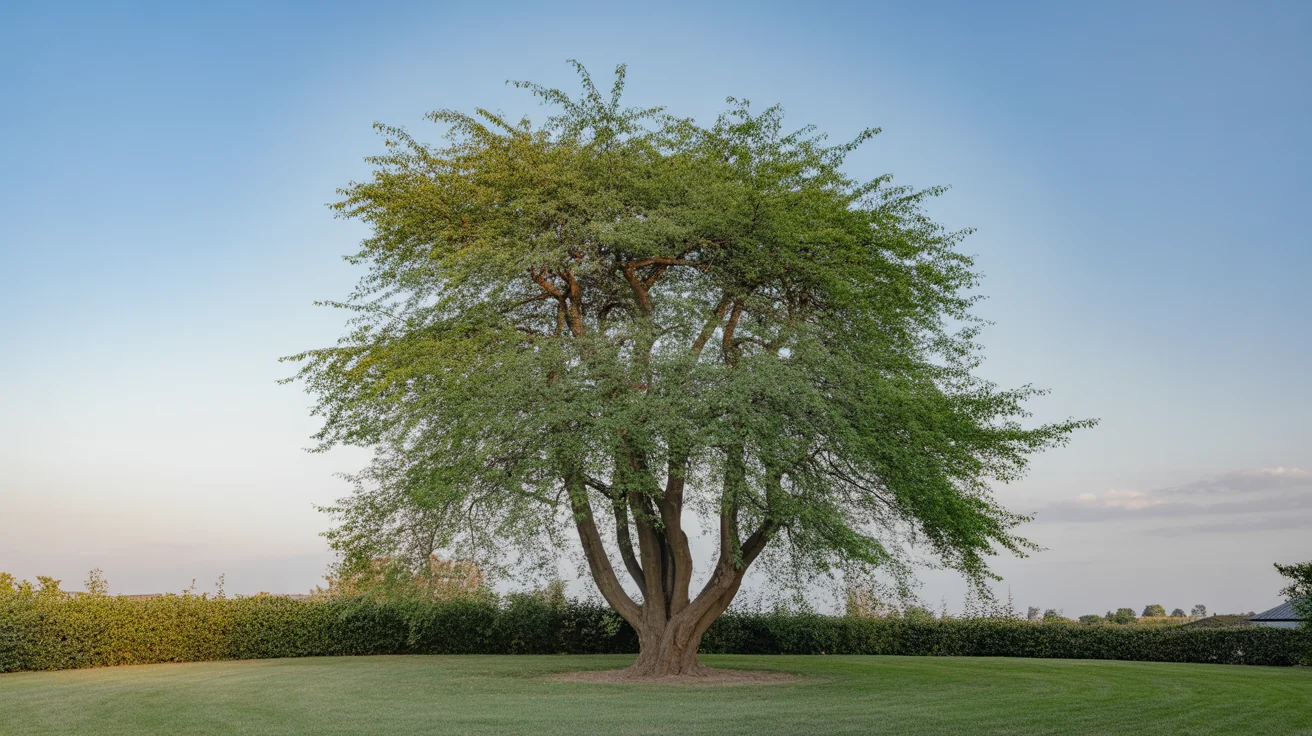
Care snapshot
What Is a Japanese Cherry Tree, and Which Form Should You Buy?
Japanese cherry (Prunus serrulata) is a deciduous ornamental tree in the rose family, grown for its spring flowers and deliberate branch silhouette. Its mature habit drives the clearance, pruning, and placement decisions that follow.
This distinction matters when you care about the exact habit, grafted form, and shorter useful life of Japanese cherry. If you only want the broader spring display, cherry blossom trees cover more ornamental Prunus species.
Double-flowered sato-zakura cultivars, the puffy pink types sold at most nurseries, are usually sterile hybrids bred purely for bloom, while single-flowered wild-type forms set more fruit and often prove hardier over time.
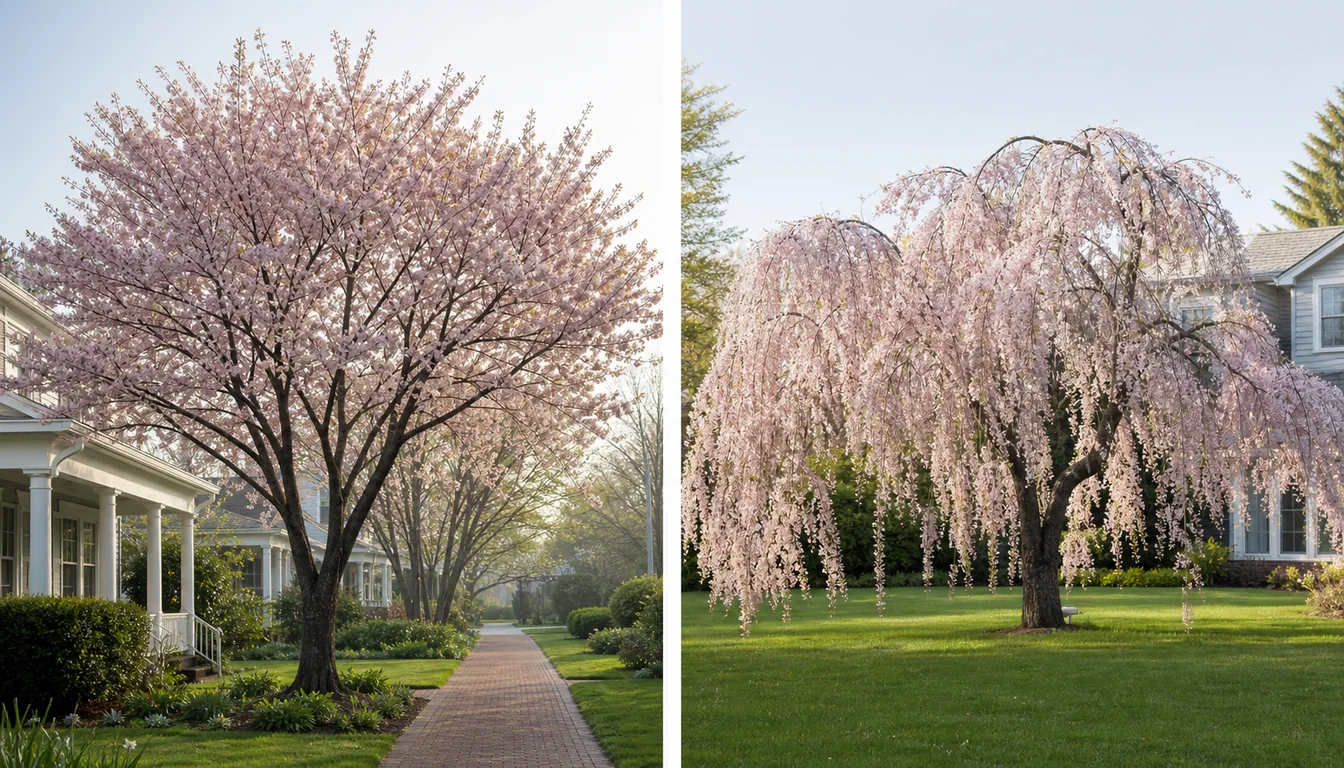
That is why bloom color alone is a weak buying filter. A pale pink vase-shaped tree over a walk and a weeping form near a pond create completely different maintenance problems after the petals are gone.
One may need canopy clearance and cleaner trunk structure. The other may need skirt room and less foot traffic under the branch tips.
Many home disappointments start with a good-looking nursery tree that was never matched to the viewing distance. Japanese Cherry works best where people can see the flower framework from a porch, walk, or front window, since it loses most of its magic when it becomes one more blurry lawn tree in the distance.
The point is to buy the branch habit that already fits the scene instead of hoping later pruning will make a mismatched tree behave.
- Upright or vase forms
- Best when you want bloom above a path, lawn edge, or drive without low branches dragging into the walking line
- Rounded forms
- Best for a centered front-yard specimen where the canopy can read as one flowering dome
- Weeping forms
- Best only when you have skirt space, back-up viewing distance, and less need to walk or mow under the canopy
Choose the maple if your real goal is refined foliage and smaller-scale four-season structure.
Choose the dogwood if the site is softer, a little shadier, and you want spring bloom without the same ornamental-cherry bark pressure.
It offers blossom plus edible fruit and bird value when the yard wants a looser native look instead of a formal Prunus outline.
Where Should You Plant a Japanese Cherry Tree?
Japanese Cherry earns its keep in open light. It wants full sun and fast morning drying so bloom stays dense and spring moisture does not sit on twigs and bark any longer than it has to.
This is not the tree to wedge into a damp corner between a fence and a hedge just because the blossom photo looks romantic. A tight airless pocket often leads to more spotting, more dead twigs, and a bark that never quite looks relaxed.
In the same yard, dogwood may forgive that softer site more easily.
Wet spring conditions that keep bark damp for long stretches are also the exact weather that favors brown rot blossom blight, a fungal disease that can turn a promising bloom season into browned, collapsed flower clusters within days.
The lower trunk matters as much as the canopy. Splash from lawn irrigation, mulch piled high, and dense grass right against the bark all raise the stress load on a tree that already has ornamental Prunus weaknesses.
If the base stays damp, the canopy usually pays later.
In hot inland areas, a little afternoon relief can help the flowers and foliage hold longer, but do not trade away all the sun. If the only available spot is deep shade, you are forcing the wrong tree into the wrong job.
A tougher specimen such as red maple fits exposed or difficult ground better than ornamental cherry.
If you want still more tolerance for hard sites and low drama, plain trees like ginkgo usually forgive exposure better than a flowering Prunus does.
Good Site Signals
- Morning sun reaches the trunk and lower limbs
- Air can move around the canopy after spring rain
- There is room for the mature outline without yearly cutting back
Poor Site Signals
- Fence corners or narrow side yards that trap humidity
- Automatic sprinklers soaking the bark every morning
- Driveway heat on one side and dense shrubs pressing on the other
How Should You Plant a Grafted Japanese Cherry?
Most Japanese Cherry trees fail from the bottom up long before the owner admits it. The combination of shallow roots, a graft union, and bark that dislikes long-term wetness means planting depth is not a small detail here.
Most grafted Japanese cherries are budded onto Prunus avium or similar rootstock, and an incompatible union between scion and rootstock can fail years later even if the tree looked healthy through its early seasons.
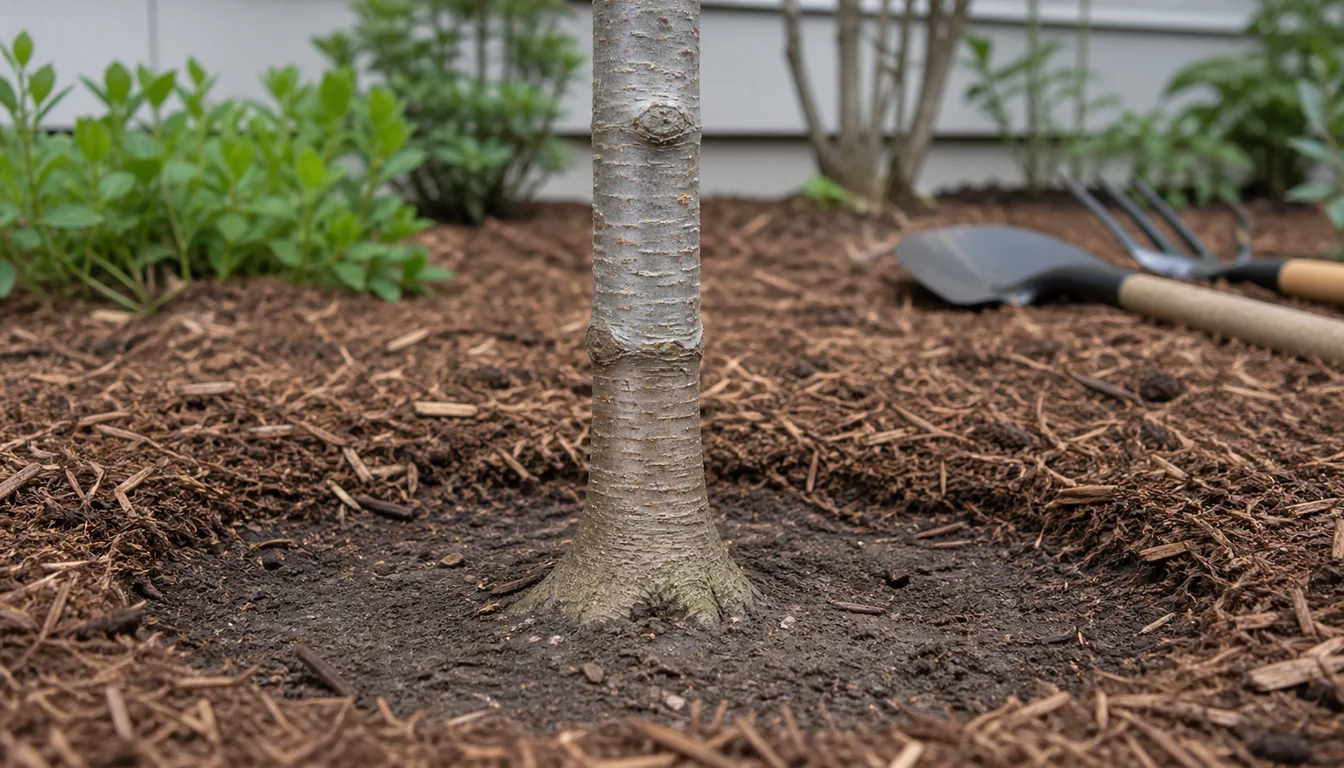
Set the tree so the root flare stays visible and the graft never disappears into soil or mulch. If you cannot see where the trunk starts widening into roots after planting, the tree is probably too low.
That one mistake can quietly shorten the life of the whole planting.
A wide mulch ring helps more than people think because it cools the shallow roots and stops mower damage. Grass right up to the trunk looks neat for one season and then starts stealing water, bumping bark, and keeping the base wetter after irrigation.
If the native soil stays hard and sealed after rain, fix that before planting instead of hoping roots will solve it later. The same upstream thinking used in fixing compacted soil applies here because the best cherry care cannot undo a suffocating planting pit.
How Often Should You Water and Feed a Japanese Cherry?
Newly planted Japanese Cherry needs even moisture while roots spread, but the goal is balanced wood and flower bud formation, not a rush of long soft shoots. A tree pushed too hard often looks vigorous for a year or two and then starts showing the cost as weak bloom, gumming, or twig loss.
Next year's flower buds are actually set in mid to late summer, not spring, so drought or stress during that quiet-looking summer window can quietly shrink the following spring's display.
Deep soaking across the root zone works better than daily surface water. The same rule behind deep watering fits this tree because shallow wetting encourages roots to linger where heat, turf competition, and dry spells hit first.
A steady mulch ring smooths out the moisture swings a shallow root zone otherwise feels first, which matters as much for bloom quality as any single watering session.
Go easy on fertilizer unless the tree truly lacks vigor in otherwise good soil. Ornamental cherries are not fruit trees that need to be driven toward heavy crop production.
If the canopy is already lush but bloom is light, more nitrogen usually pushes the wrong direction.
- Young tree priority
- Root establishment and a calm branch framework
- Best watering style
- Deep soaking over a broad mulch ring, then time for the surface to dry a little
- Most common overcare mistake
- Frequent light irrigation plus extra fertilizer to chase fast top growth
When and How Should You Prune a Japanese Cherry?
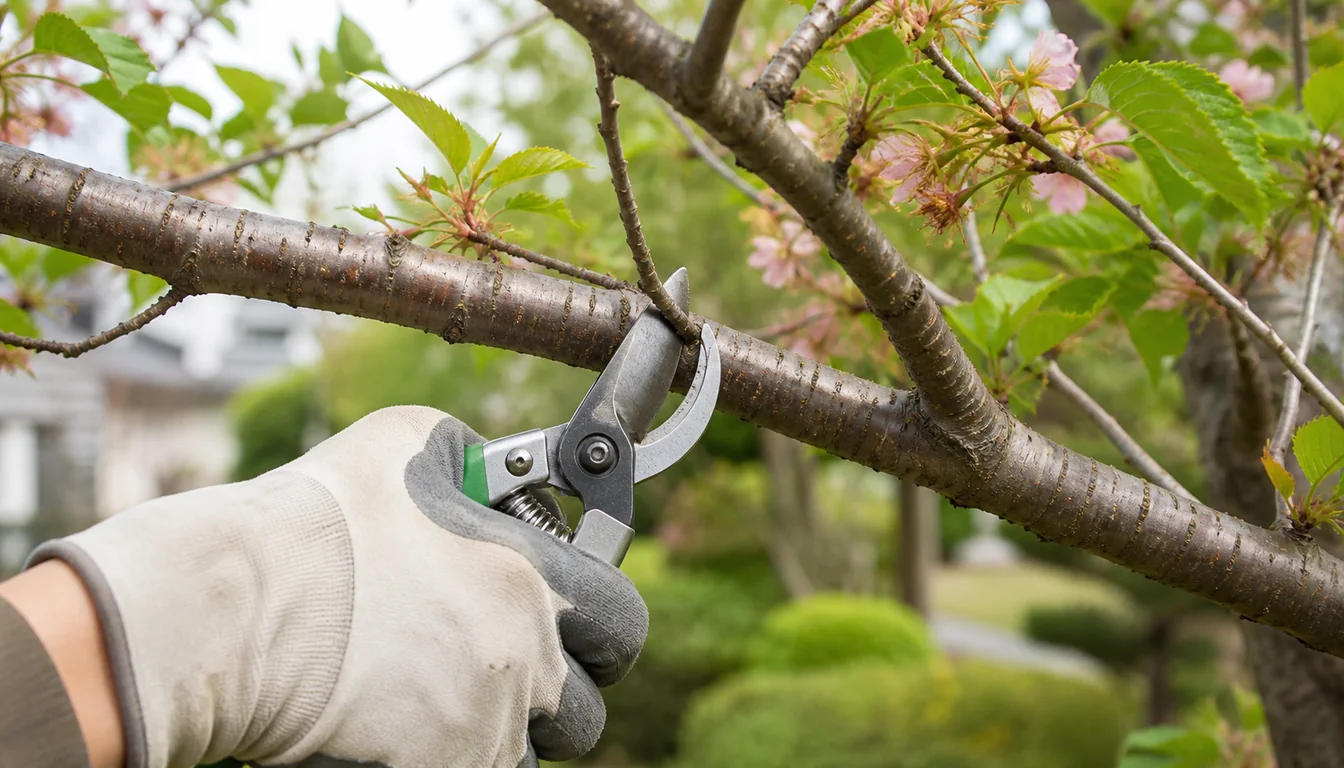
The right pruning mindset for Japanese Cherry is preservation, not correction. You are keeping a graceful ornamental framework open and readable, not trying to force a stubborn tree back into a shape it never should have had.
Prune just after bloom when the flower structure is still clear and before warm wet weather pushes problem pressure higher. That timing lets you thin crossing wood, remove dead tips, and clean awkward upright shoots without sacrificing next year's display as badly as a late heavy cut can.
Winter pruning cuts on Prunus stay open and cool longer than cuts made after bloom, giving diseases like silver leaf more time to enter before the wound can seal, which is the practical reason behind the after-bloom timing rule.
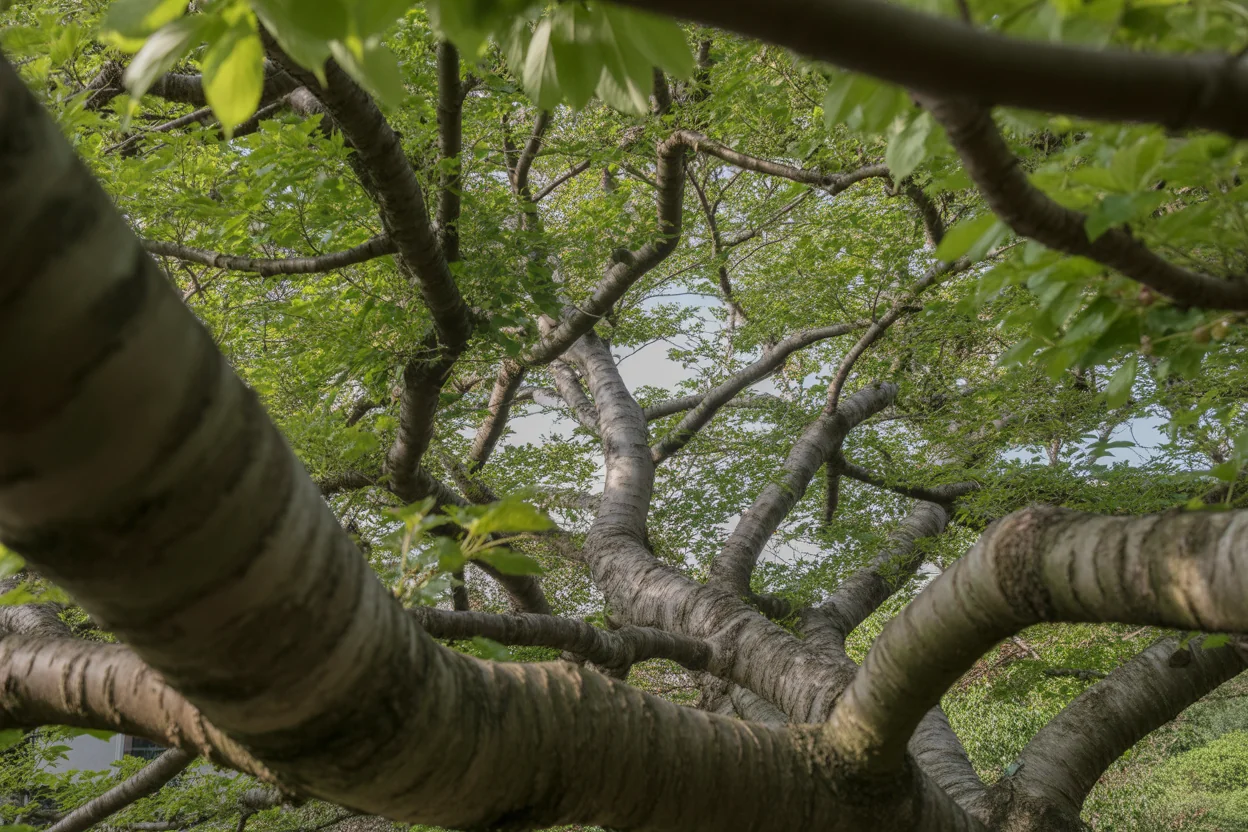
Think in layers, keeping the best scaffold branches, preserving branch spacing, and removing the stems that rub, crowd, or spoil the outline. If you keep needing to cut back for clearance, the buying decision was wrong.
A tree that needs constant size control near a walk was usually the wrong form for that space.
This is one place where Japanese Cherry and smoke tree behave very differently. A smoke tree can be pruned to chase a display choice.
Ornamental cherry usually punishes that kind of experimentation.
- Remove dead, broken, or rubbing wood first.
- Thin crowded interior shoots before shortening healthy outer growth.
- Protect the natural outline instead of shearing the whole canopy tighter.
- Stop and reassess if the job feels like major reconstruction rather than light structural editing.
Why Is Your Japanese Cherry Gumming or Dying Back?
When Japanese Cherry starts slipping, the tree usually tells you in pieces rather than all at once. Gum on bark, a branch that blooms weakly, and leaves that spot or drop early do not all mean the same thing.
The fix depends on where the signal started.
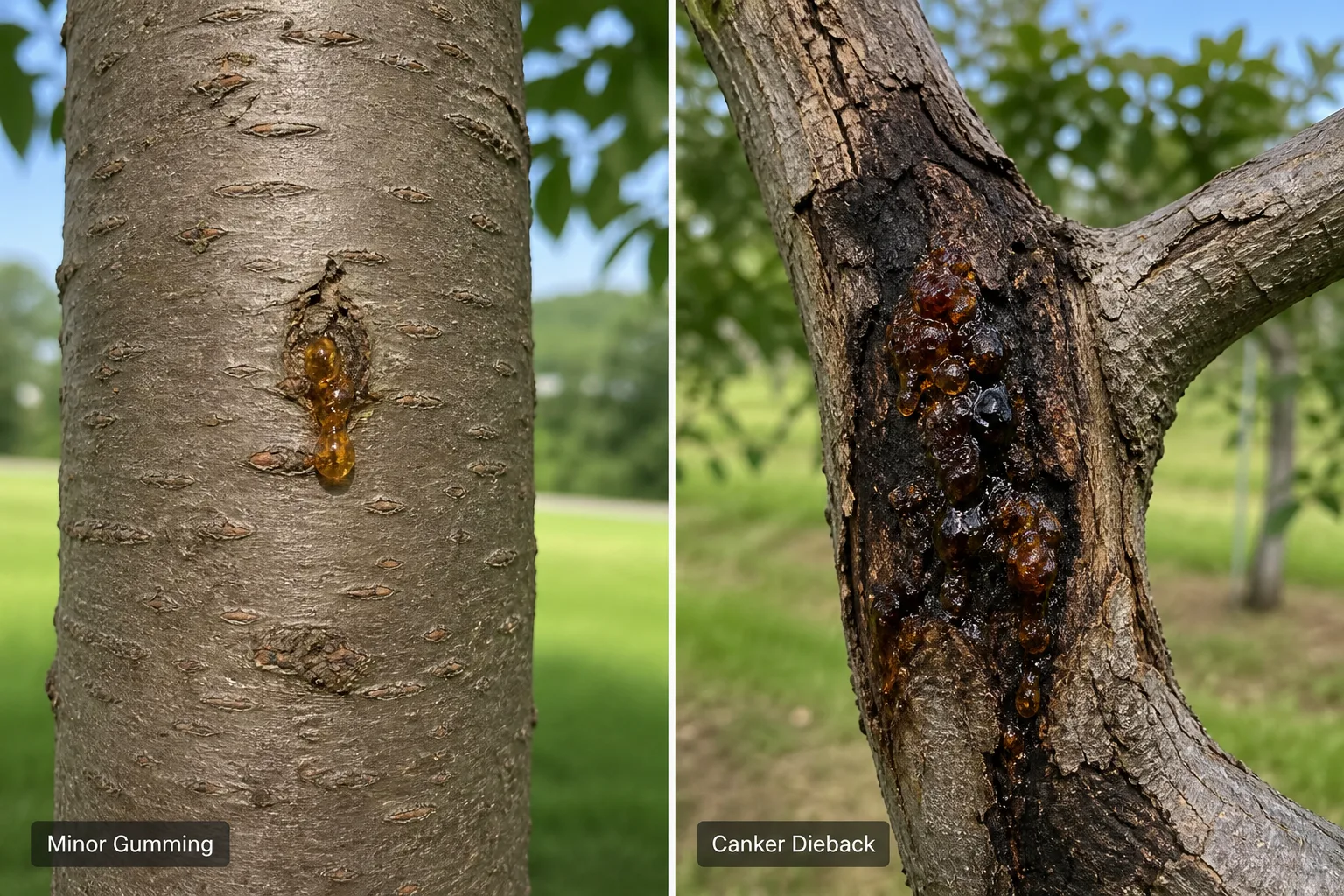
Gumming often points to bark injury, canker pressure, or a tree already stressed by poor siting. Sparse bloom may come from shade, a pruning mistake, or a tree that put too much energy into soft leafy growth the year before.
Gumming with visible sawdust-like frass or a small entry hole nearby usually points to a boring insect rather than simple stress, a distinction that changes the fix from site correction to pest-specific treatment.
Dead twig tips usually tell you airflow or branch health is already off.
The useful rule is to fix the site and structure first. Improve air movement, stop bark splash, protect the flare, and prune out dead wood cleanly.
Sprays and rescue feeding rarely rebuild a weak ornamental Prunus if the tree is still sitting in the same bad conditions.
That lower tolerance is part of what separates Japanese Cherry from a tougher urban tree like ginkgo. You are buying beauty with less forgiveness.
Usually Upstream Stress
- Light gumming after trunk injury or wet bark
- Leaf spotting that worsens in crowded damp canopies
- Weak bloom after heavy feeding or wrong pruning timing
Needs Fast Attention
- Repeated dieback on the same scaffold branch
- Sunken bark or oozing spots on major limbs
- Whole sections failing while the rest of the canopy still grows
How Long Does a Japanese Cherry Tree Live?
Japanese Cherry can be worth it even though it is not a forever tree in the way bigger shade species sometimes are. The right expectation is a highly visible bloom season, elegant branch structure, and a careful owner who understands that the tree may not outlast the house.
A well-sited ornamental cherry often lives about 15 to 25 years, noticeably shorter than the 50-plus years many people expect from a typical shade tree, which is the real number behind the front-yard-show-tree framing.
That makes placement and replacement planning part of the care job. Put it where the spring show truly matters.
A tree with a shorter useful life belongs near a door, window, patio edge, or arrival view where you will actually notice every good year it gives you.
Leaves, pits, and other Prunus parts are toxic to pets and livestock. ASPCA lists cherry as toxic to dogs, cats, and horses, and wilting leaves after storms or pruning are the most dangerous, so clear fallen branches, and if an animal eats them, contact a veterinarian or ASPCA Animal Poison Control. If you need a low-drama long-haul specimen in an exposed yard, red maple or another sturdier tree may be the smarter anchor.
Frequently Asked Questions
Do Japanese cherry trees make edible cherries?
Some ornamental forms set small fruit, but Japanese Cherry is grown for blossom and structure, not for a useful kitchen crop. If edible harvest matters, this is the wrong type of cherry tree for your yard.
Can a Japanese cherry tree grow in part shade?
It can survive light part shade, but bloom usually thins out and bark stays wetter longer. Japanese Cherry performs best when the canopy gets strong sun and the trunk dries quickly after rain.
Why is sap or gum coming out of my Japanese cherry tree?
Gum often shows bark stress, injury, or canker pressure rather than a simple watering issue. Check the lower trunk, branch wounds, planting depth, and any spots that stay wet from sprinklers.
When should I prune Japanese cherry?
Prune right after bloom for light structural work. That timing protects the ornamental framework better and avoids some of the problems that come with heavy late cuts.
How long do Japanese cherry trees usually live?
Japanese Cherry is usually shorter lived than tougher shade trees, especially in crowded or wet sites. Good siting and calmer growth habits help, but they do not turn it into a permanent anchor tree.
Sources & References
- Prunus serrulata, Japanese Flowering Cherry
- Japanese Flowering Cherry Trees, University of Arkansas Extension
- Flowering Cherries for Gardens, Royal Horticultural Society
- Flowering Cherry Trees for Home Landscapes
- Prunus, Ornamental Cherries Profile
- UW Extension, Growing Cherries in the Home Garden
- Prunus serrulata, Japanese Flowering Cherry
- Toxic and Non-toxic Plants: Cherry | ASPCA
Related Plants
Cherry Blossom Tree
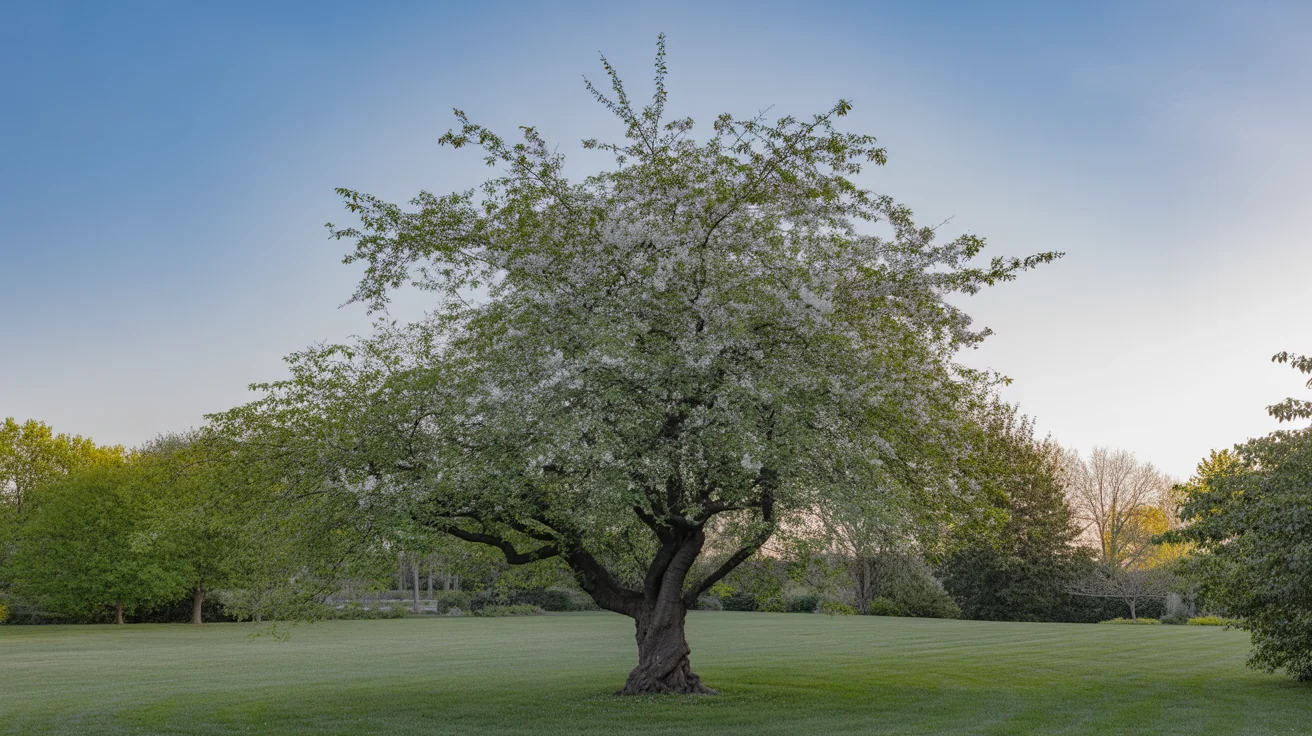
Broader ornamental blossom-tree guide focused on spring display rather than cultivar-specific Prunus care.
Japanese Maple
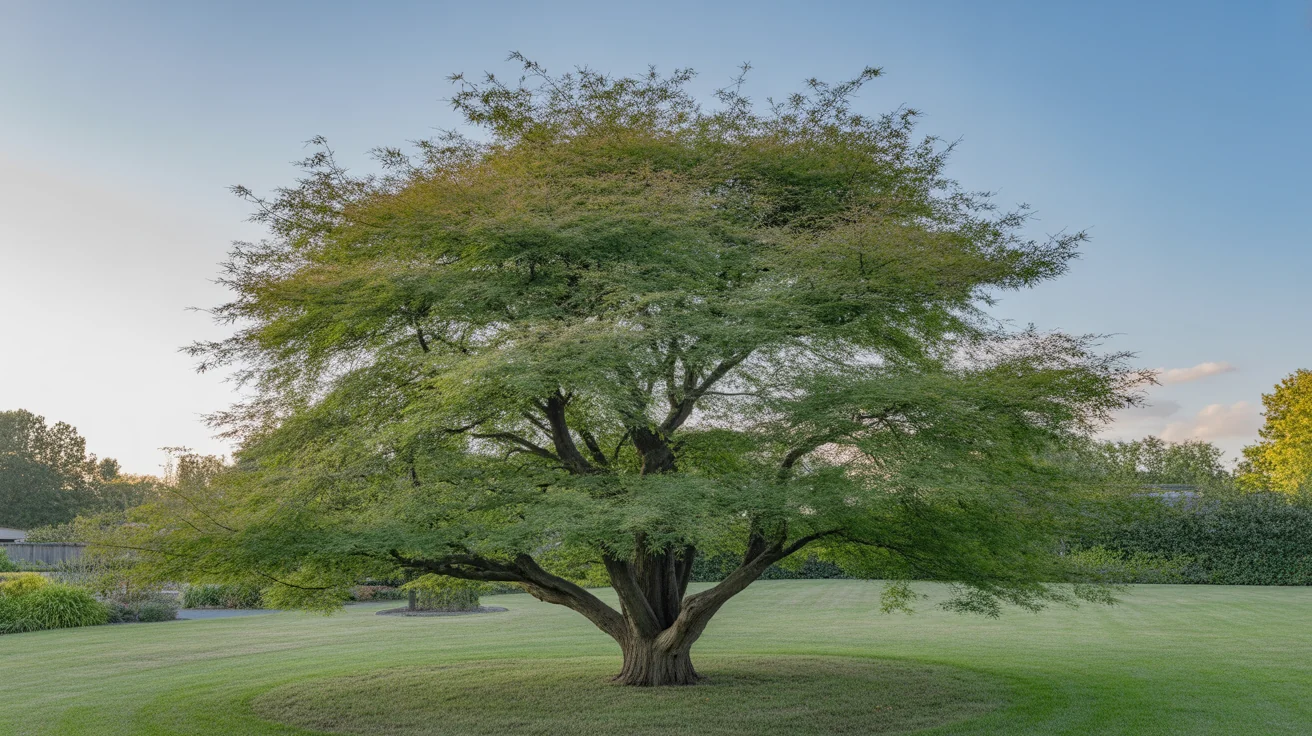
Better for long-season foliage value and smaller spaces, with less spring bloom drama than Japanese cherry.
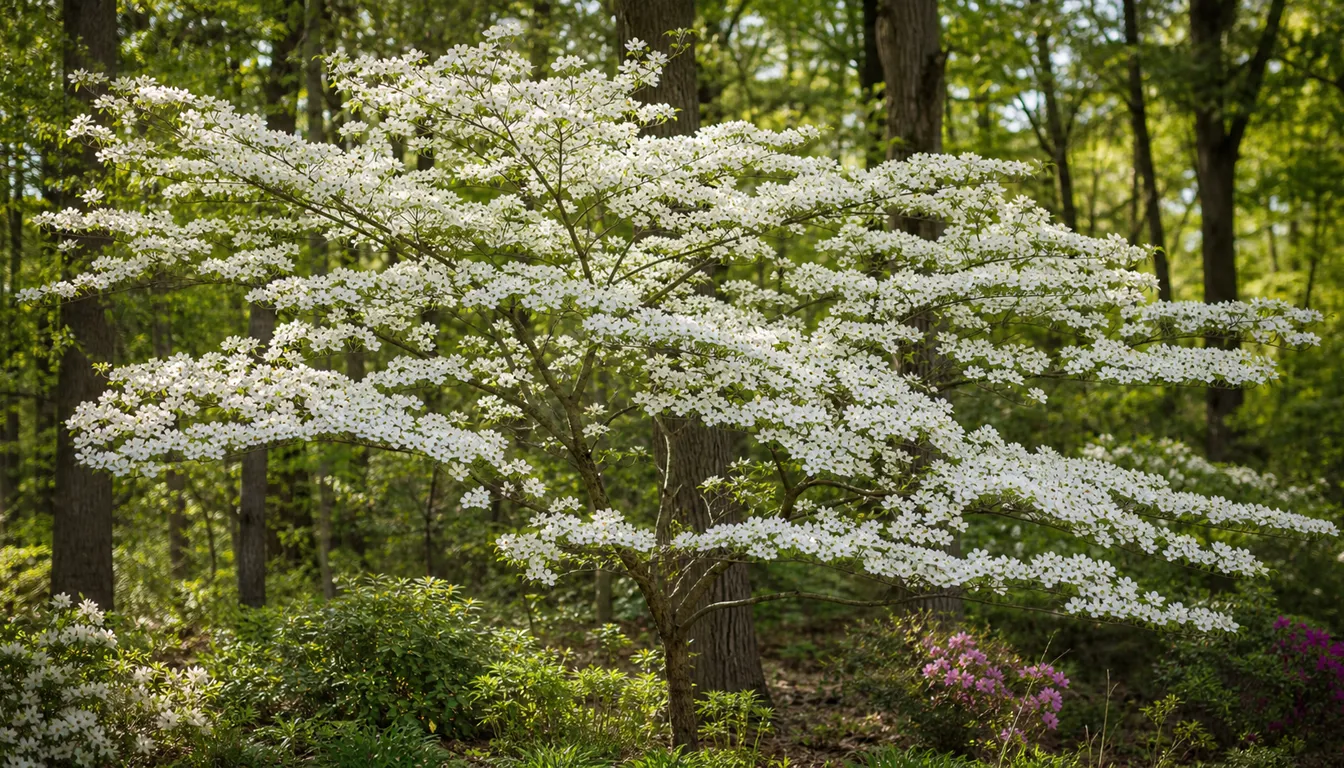
Flowering Dogwood
Another spring-flowering small tree, but one with different shade tolerance and a less disease-prone bark habit.
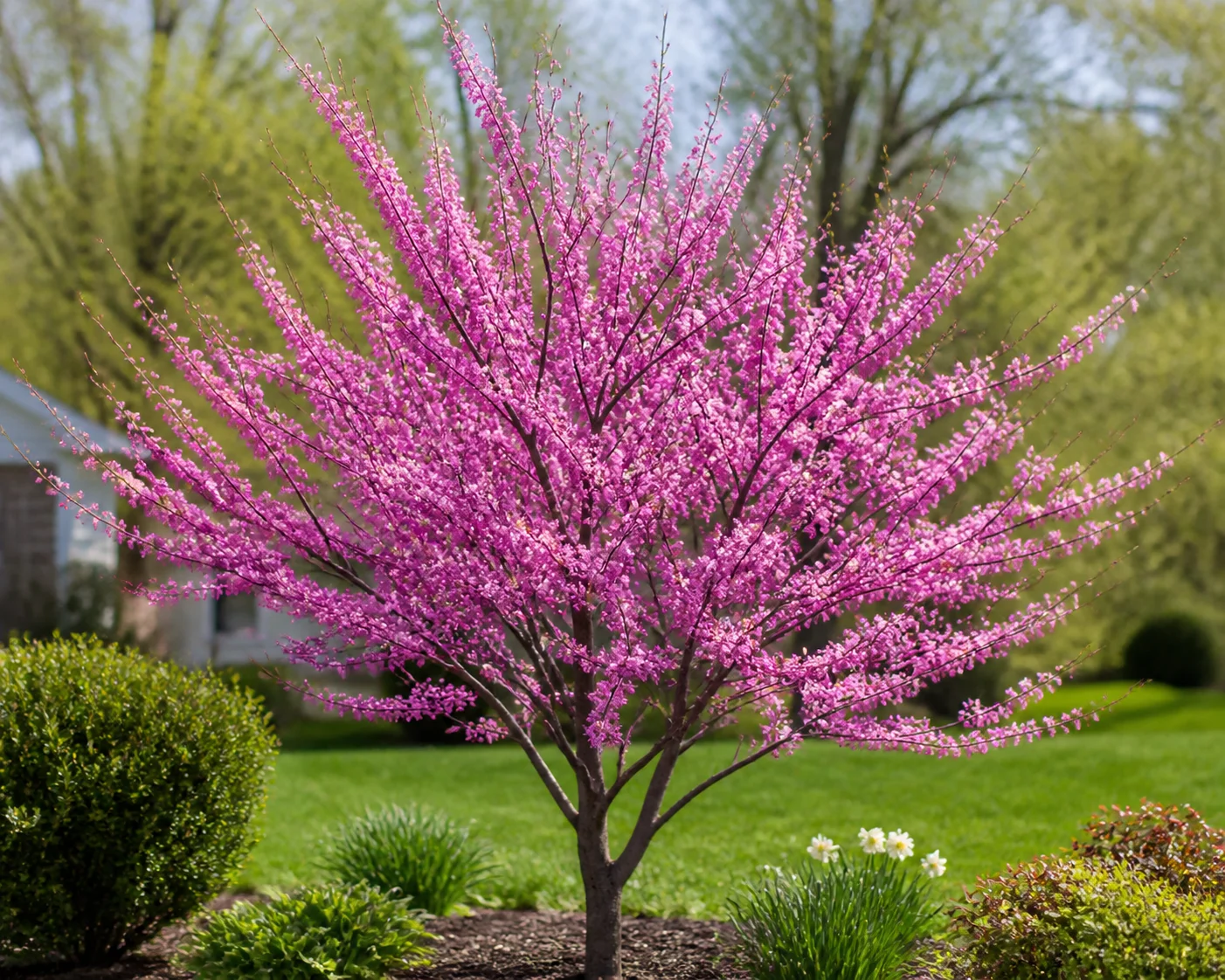
Eastern Redbud
Eastern redbud is a small North American tree with pea-like flowers that open on bare twigs and older wood.
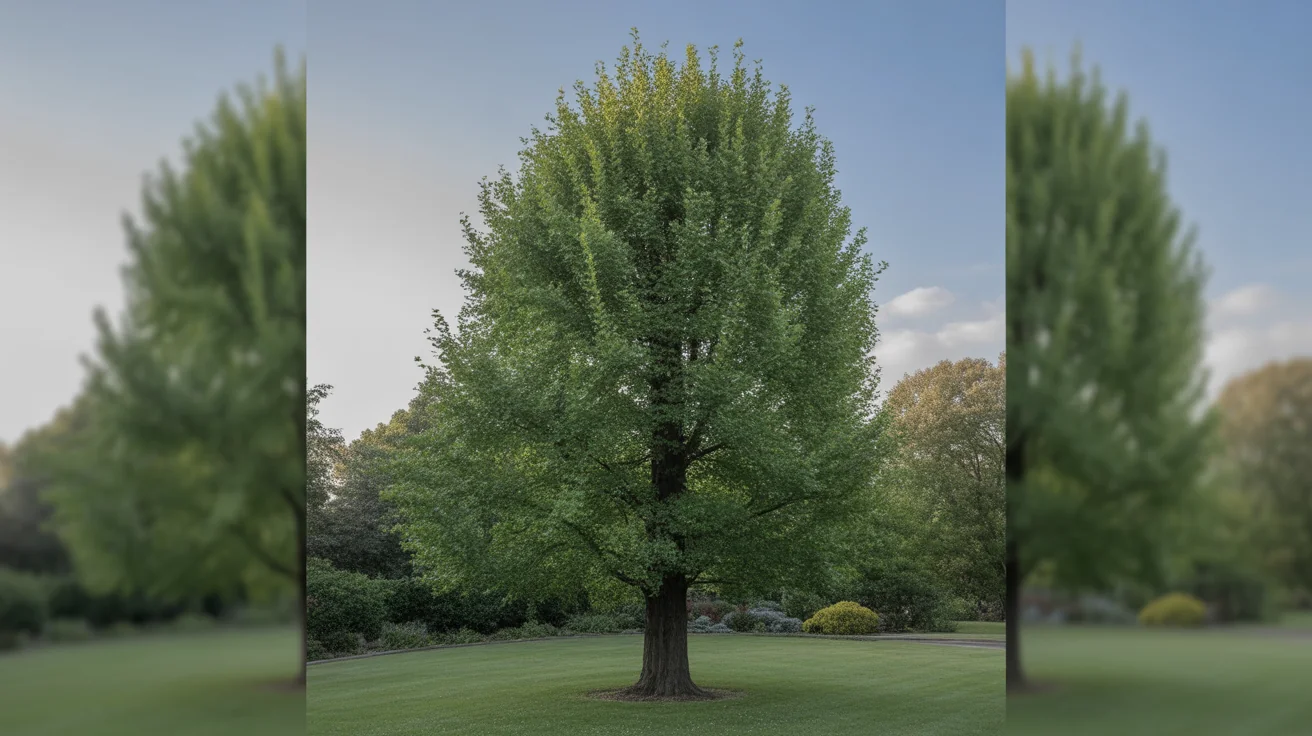
Ginkgo Tree
Ginkgo is not a plant for instant gratification. It is a patient tree that rewards the right buyer decision up front…
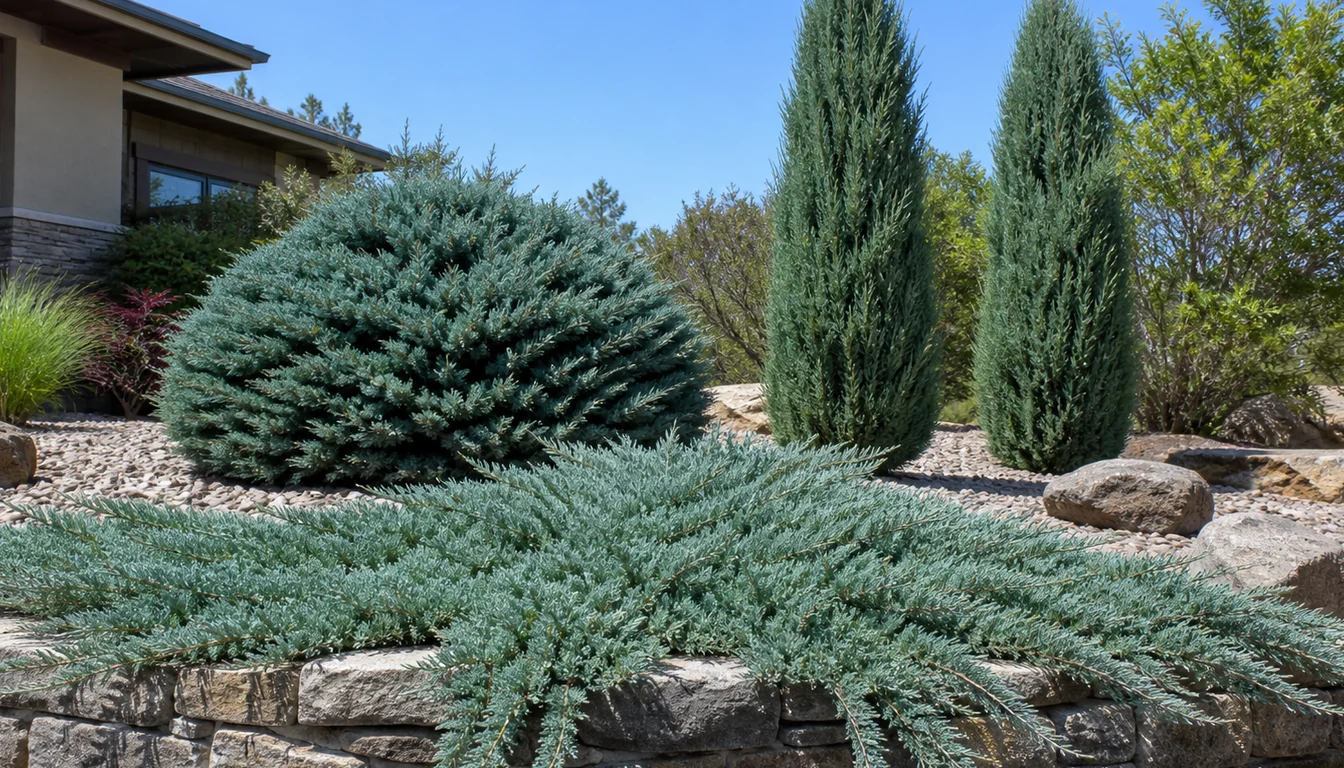
Juniper
Juniper covers dozens of evergreen conifers that range from a 4 inch mat to a 60 ft tree, so the form on the label…