
What Dulls Japanese Maple Fall Color Before Leaves Drop?
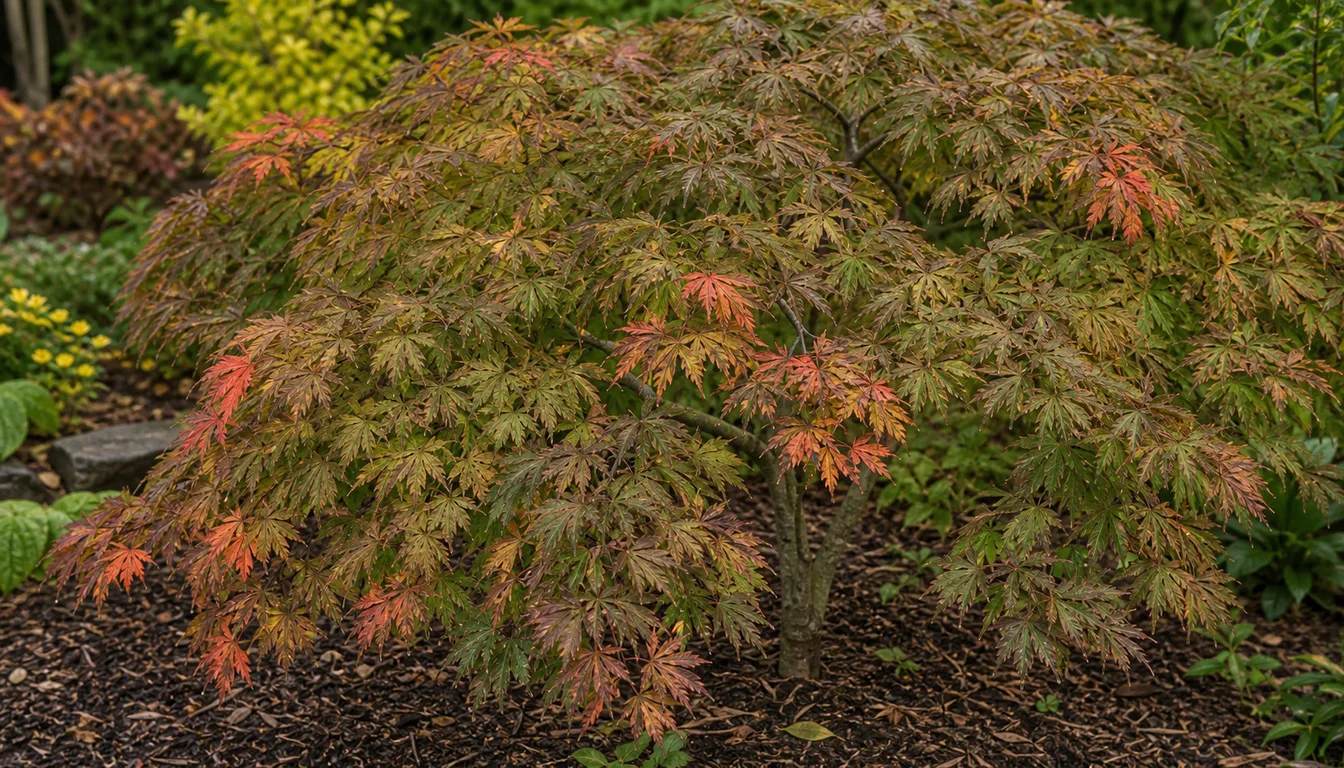
Weak Japanese Maple fall color means different things depending on timing and leaf condition. Intact leaves that stay green or turn muted bronze usually point to autumn weather, cultivar genetics, or shade, while crisp leaves that drop early point back to summer stress and one branch coloring early with weak growth calls for a root and trunk inspection.
Quick diagnosis
First decide whether the leaves are late, damaged, or early
If healthy flexible leaves are merely later or duller than expected, compare this autumn's nights, the cultivar's normal finish, and the bright and shaded sides of the canopy. If margins crisped in summer or leaves fell early, protect next year's leaf quality, but if one branch or one side colored weeks early with small leaves or dieback, inspect the root flare and trunk instead of trying to intensify pigment.
Open the full diagnosisWhat You Are Seeing
Start with the calendar. A Japanese Maple that is still green while the same cultivar nearby has begun to change may be sitting in a warmer pocket, receiving less sun, or simply running later because of that year's weather.
Then look at the tissue rather than the color name. Supple green, bronze, orange, or red leaves are still participating in normal autumn senescence, while crisp margins, curled lobes, spots, wilting, or premature leaf loss show that leaf health failed before the display.
Map the pattern across the tree because a whole healthy canopy, the sunward edge, and one isolated branch tell three different stories.
Good care supports the display but does not select its exact shade. Shorter days start chlorophyll breakdown, cultivar genetics set the available palette, and the season's light, temperature, and moisture decide how strongly those colors appear.
Common Causes
01 High likelihood
Autumn weather and normal timing
Shorter days begin the seasonal shutdown, but weather controls much of what the eye sees. As green chlorophyll breaks down, yellow and orange carotenoids become visible, while red and purple anthocyanins form best when sunny days are followed by cool nights.
Warm nights allow sugars to leave the leaf instead of accumulating there, so a warm or cloudy fall can keep foliage greener longer and produce less red.
A sudden hard frost can end pigment production and turn leaf tissue brown, while heavy wind or rain can shorten an otherwise good display. One dull year on a healthy tree therefore says more about that season than it does about the soil.
Compare the sequence, not one calendar date.
Intact leaves that remain green through a warm spell and then change after cooler nights are delayed, not failing. Leaves that turn brown immediately after a hard freeze or drop after wind reached a later stage for a different reason, even if the final photograph looks equally dull.
How to identify it
- Leaves remain flexible and evenly distributed even though the color is late or muted.
- Other deciduous trees in the neighborhood are also running late or showing weak red color.
- The tree colored well in previous years without any major site or care change.
- Warm nights and cloudy or wet days continued well into the normal color period.
- A hard freeze, strong wind, or heavy rain arrived just as color began and leaves browned or dropped soon afterward.
What to do
- Wait while the leaves remain intact because a later cool spell may still bring out color.
- Do not fertilize, prune healthy branches, or alter the soil to correct one disappointing autumn.
- Record the week of color change and compare it with the same tree next year rather than with a different maple species.
- Water only when the root zone is actually dry because saturated soil will not compensate for warm autumn nights.
02 High likelihood
Cultivar genetics set a different finish
Hundreds of Japanese Maple cultivars differ in summer foliage, fall color, and the timing of leaf drop. One may finish scarlet, another orange or gold, and a healthy green-leaved or laceleaf selection may pass through bronze without ever matching the red tree on a nursery tag.
Genetics become the leading explanation when the tree has repeated the same muted but even display through several healthy seasons. Check the tree's identity before comparing color, because a seed-grown Japanese maple does not have a guaranteed cultivar finish and a rootstock shoot below a graft can color differently from the named top.
A stable pattern matters more than a single photograph. If the canopy has normal leaf size, good twig extension, and the same orderly bronze-to-gold change each year, fertilizer, soil acidifiers, and extra watering cannot rewrite that inherited sequence.
Inspect the trunk for a graft and trace differently colored shoots to their point of origin.
Growth from below a graft may belong to the rootstock and carry a different leaf shape, vigor, and autumn finish. That localized difference is not evidence that the soil supplied two nutrient levels to the same tree.
How to identify it
- Leaves are full-sized and intact, twigs made normal growth, and the whole canopy changes evenly.
- The tree has produced a similar bronze, gold, orange, purple, or muted-red finish in several years.
- A plant label, purchase record, or nursery description names a cultivar whose listed fall color matches what you see.
- The comparison tree is a different cultivar, a seed-grown plant, or a different maple species.
- There is no early leaf drop, one-sided dieback, trunk injury, or sudden decline to explain the color.
What to do
- Find the original label or nursery record before treating bronze or orange foliage as a deficiency.
- Compare photographs of the same named cultivar in a similar climate, not photographs of Japanese maples as a group.
- Keep the existing tree if its growth and leaf condition are healthy because amendments cannot change its genetic color range.
- Choose a named cultivar with documented autumn color if a specific scarlet or orange finish matters for a future planting.
03 High likelihood after a hot or dry summer
Summer stress damaged the leaves before autumn
A Japanese Maple cannot produce a full autumn display from leaves that were already scorched, thin, or ready to drop after weeks of heat and water stress.
Japanese maples have shallow roots and moderate drought sensitivity. Dry soil, hot wind, reflected heat, or a missed watering period can brown the lobes and trigger early abscission, especially on a young tree or a container specimen.
The decisive clue is chronology.
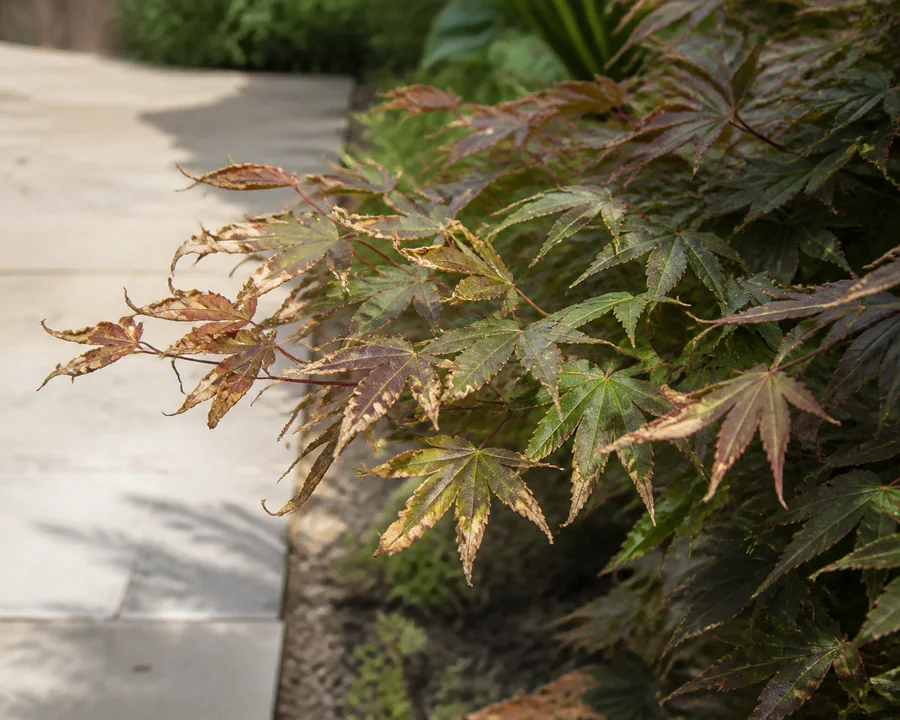
Brown edges or faded patches appeared during summer, before neighboring healthy trees began normal fall change. A leaf with dead margins has less living tissue available to make and retain pigment, and a tree that sheds those leaves early loses the display entirely.
Autumn watering can protect still-living tissue, but it cannot restore the portions that died in July or August.
Map the heat load as well as soil moisture.
The side facing pavement, a light wall, gravel, or late-day sun may scorch while the sheltered side remains intact. That directional pattern supports exposure stress and helps place shade or a container next year without reducing light across the whole canopy.
How to identify it
- Leaf tips and margins became crisp tan or brown during hot weather.
- The exposed side near pavement, gravel, a wall, or hot afternoon sun was damaged first.
- Leaves curled, faded, or dropped during late summer rather than remaining intact into autumn.
- Soil below the mulch dried during heat, or a container became light between waterings.
- New twigs remain alive and buds are present even though the current leaves cannot make a strong display.
What to do
- Accept that dead margins and fallen leaves will not recolor during the same season.
- Check moisture several inches below the surface and water slowly across the root zone when that soil is dry.
- Keep a two- to three-inch mulch layer over the root area while leaving the trunk flare uncovered.
- Reduce reflected heat or move a container before the next hot season rather than making a sudden light change in autumn.
- Use the dedicated leaf-scorch diagnosis when crisp margins are the main symptom because that injury needs its own prevention plan.
04 Medium likelihood
The canopy receives too little useful light
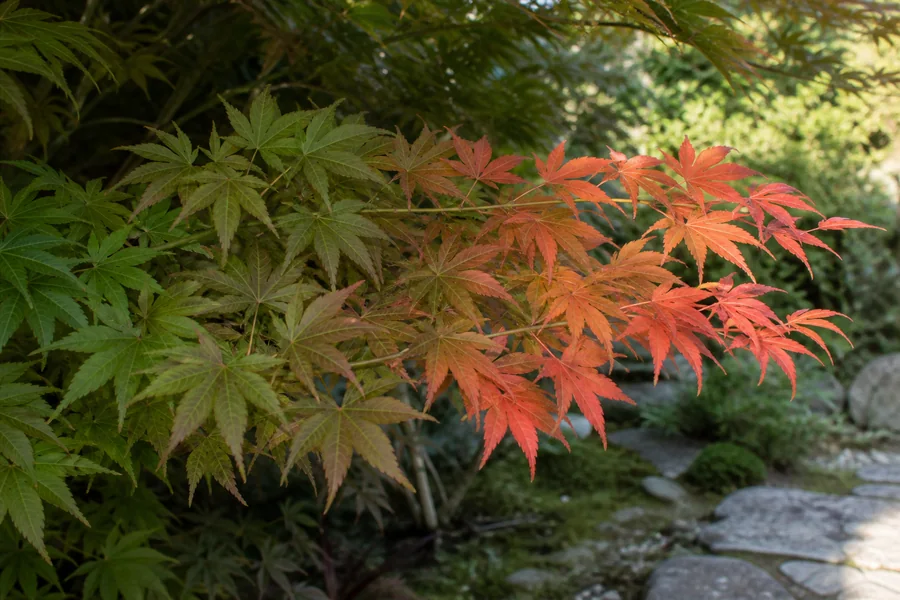
Red anthocyanin depends partly on sugars made in light, so the shaded interior of a canopy may remain green or yellow while brighter outer leaves become orange-red. Deep shade can mute the entire tree even when its leaves look healthy.
Use variation within the same canopy as the test.
A gradual shift from green-bronze leaves near a wall or evergreen to stronger orange-red leaves at the bright edge supports a light explanation. A sharp boundary that follows wilt, bark damage, or a declining branch does not.
More sun is not automatically better because Japanese maple foliage can scorch in hot afternoon exposure.
The useful target is enough gentle light to support healthy leaves without sacrificing them before autumn. Observe when direct sun reaches the tree before removing branches or moving a pot, because cool morning sun and reflected late-day heat create very different leaf temperatures.
Record the pattern before pruning a neighboring tree.
If intact color improves continuously from shade to the bright edge, a modest seasonal adjustment may help. If the brighter edge already has crisp margins, opening more afternoon exposure would trade muted living leaves for dead tissue and shorten the display.
How to identify it
- Intact outer leaves color more strongly than intact leaves inside the same canopy.
- One side that receives morning light turns orange or red while the building-facing or overhung side stays green-bronze.
- A nearby evergreen, maturing shade tree, fence, or new structure reduced light during recent growing seasons.
- The shaded shoots are longer and softer, but there are no crisp margins or heat-facing brown patches.
- Color improves in brighter years or after normal seasonal thinning of the tree overhead.
What to do
- Photograph the canopy from the same positions now so next year's pattern can be compared accurately.
- Thin a small amount from the competing plant during its proper pruning season instead of opening the Japanese maple canopy itself.
- Move a container gradually before summer begins if a nearby wall or tree keeps it in deep shade.
- Keep afternoon protection in hot climates because trading shade for scorched leaves does not improve fall color.
05 Lower but important
Root-zone or trunk stress is forcing early color
Color that arrives weeks early is different from color that is merely dull at the normal time. When one branch, one side, or a weak whole canopy turns early and also has small leaves, short shoots, early drop, or dieback, the tree may be shutting down tissue that roots or trunk can no longer support.
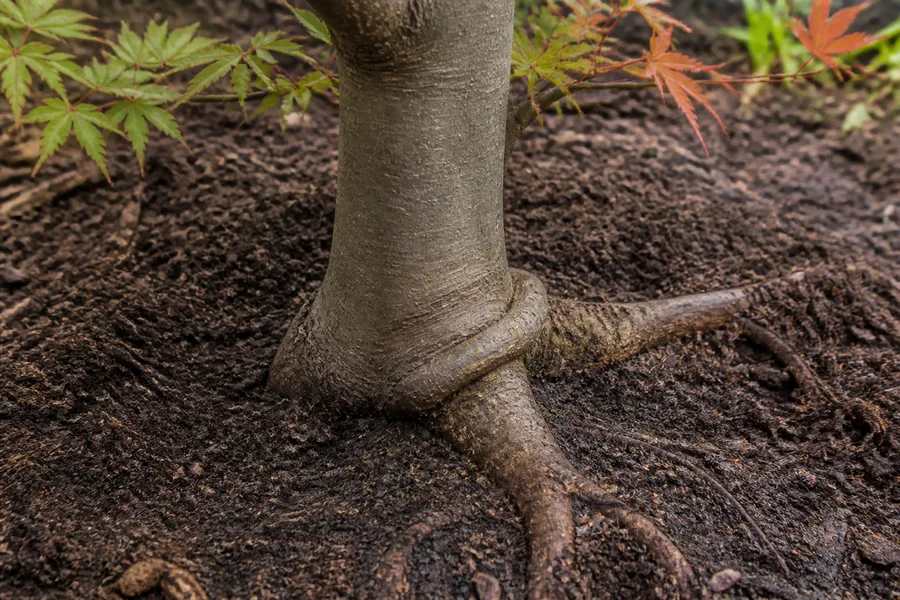
Look for a buried root flare, a woody root pressing across the trunk base, mower injury, damaged bark, recent trenching, added soil, compaction, or a drainage change.
These conditions restrict water, oxygen, or vascular flow and can appear in the canopy long after the original disturbance. Match the stressed canopy sector to the trunk and ground below it rather than assuming every early red branch has the same cause.
Standing water deserves the same attention as drought because maples are sensitive to poorly aerated roots.
Check several points under the canopy after rain. Soil that stays slick and saturated near a downspout while the rest of the bed drains points to a local root problem, while uniformly dry soil during heat supports drought stress.
Do not expose or cut a large root merely to test the theory. A root that is fused to the trunk, a wound that crosses a substantial part of the stem, or progressive dieback changes the tree's structural and survival outlook and belongs with a qualified arborist.
Track the same canopy sector into spring.
Delayed bud break, short shoots, sparse leaves, or twig death in the sector that colored early confirms a continuing supply problem. Normal bud break and full shoots after an isolated early-color year lowers the urgency and returns weather to the top of the list.
How to identify it
- One branch or one side changes color and drops leaves well before the rest of the tree.
- Leaves are smaller or paler than in earlier years, and annual twig growth has shortened.
- The trunk enters the soil like a straight pole instead of widening into a visible root flare.
- A circling root presses against one side of the trunk, or bark is flattened where root and trunk meet.
- Construction, trenching, vehicle traffic, deep mulch, added soil, flooding, or transplanting preceded the decline.
- Twigs are dying back or the canopy is thinning in addition to changing color early.
What to do
- Pull loose mulch away from the trunk and locate the first structural roots without cutting into bark or major roots.
- Stop traffic, digging, grade changes, and repeated saturation over the affected root zone.
- Water slowly beyond the branch tips during genuine drought so moisture reaches roots outside turf competition.
- Ask a certified arborist to assess a large girdling root, trunk wound, progressive dieback, or construction damage before anything is cut.
- Treat a healthy newly planted tree with steady establishment care, but investigate when weak growth and early color continue or worsen.
Can You Improve the Color After It Starts?
You cannot turn a scorched, senescing, or genetically bronze leaf scarlet with fertilizer or an amendment.
Pigment reflects processes already underway in that leaf, so a last-minute treatment adds stress more easily than color. Late nitrogen can also delay hardening and create tender growth without changing the inherited palette.
First place the tree in one of three groups.
Intact leaves changing at the normal local time point to weather, genetics, or light. Damaged leaves that browned during summer point to leaf protection for next year.
A branch or tree that colors early while growth weakens calls for a root, trunk, and site inspection.
Steady moisture still matters when autumn is dry, but use the soil as the trigger.
Check below loose surface mulch in more than one location, then water the broad root zone slowly only when that layer is dry. A wet root zone needs drainage and restraint rather than another scheduled soaking.
Compare like with like.
The same named cultivar in a similar exposure is useful; a red-leaved cultivar across the street or a red maple is not. Photographs from the same side of your own tree over several autumns provide the clearest record of timing, canopy pattern, and leaf condition.
Pair each photograph with the week, recent night temperatures, and leaf condition.
A visual record without timing can make a late healthy tree look like an early stressed one. The combination shows whether the tree kept intact leaves until normal senescence and whether the same sector repeatedly led or lagged.
Keep fallen leaves as evidence long enough to note whether they were flexible, crisp-edged, spotted, or unusually small.
Also look at current-season twig length and formed buds. Normal shoots and plump buds support a seasonal color explanation, while short shoots, sparse buds, and twig death strengthen the case for chronic stress.
An isolated dull year with full leaves and normal growth needs patience.
Repeated early color with weak growth, one-sided change, or dieback needs a tree-health inspection. The useful result is not a guaranteed shade next fall; it is a canopy that keeps healthy leaves until normal senescence.
Read the Leaf Condition Before You Judge the Color
Start with the leaf itself, then map the pattern across the canopy. Intact leaves, crisp summer damage, and an early weak sector lead to different next checks even when all three trees look dull from a distance.
Use the tree's own timing and growth as the comparison. A late but intact canopy can still be seasonal, while repeated early color with short shoots or twig loss calls for a root, trunk, and site inspection.
Intact Leaves, Late Color
- Leaves remain flexible and attached across the canopy
- Compare local timing and recent night temperatures
- Confirm cultivar identity and light before changing care
Crisp Margins From Summer
- Tan edges or curled lobes began during heat
- Protect the living tissue that remains
- Plan moisture or heat protection for next summer
One Sector Changes Early
- Early color follows one limb or side
- Check whether shoots and buds there are weak
- Inspect the root flare trunk and soil changes
Recovery Plan
Record the pattern before leaves drop
Photograph the whole canopy and each side, note when color began, and inspect leaf margins, twig growth, trunk bark, and the root flare.
Compare the sunward and shaded portions of the same branches. Keep watering tied to actual soil dryness and skip fertilizer or hard pruning because neither can change pigment already forming in the leaves.
Check the site without disturbing roots
Pull excess mulch away from the trunk, look for a visible flare and circling roots, and review any construction, drainage, or light change. Arrange an arborist assessment if a large root, trunk wound, or progressive dieback is involved.
Protect the next set of leaves
Watch bud break and shoot length, maintain a broad mulch layer away from the trunk, and water deeply when the root zone dries. Reduce hot reflected exposure or deep competing shade gradually rather than moving the tree during stress.
Separate recovery from genetics
Stronger intact leaves and later normal timing show that summer or root-zone care helped, even if the final color is bronze or orange instead of scarlet.
The same even muted finish on an otherwise vigorous tree points back to cultivar genetics or that year's weather. Earlier color, smaller leaves, shorter shoots, or a widening dead sector means the underlying stress remains and needs investigation.
Protect the leaves that will color next year by keeping the shallow root zone evenly moist through dry weather and covering it with two to three inches of organic mulch that stops short of the trunk.
Give Japanese Maple bright filtered light or morning sun with afternoon protection where summers are hot. Keep digging, vehicle traffic, deep soil, and mulch piles away from the root flare, and avoid late nitrogen that pushes tender growth when the tree should be hardening.
Healthy leaves improve the odds of a good display, but cultivar genetics and autumn weather still choose the timing and final color.
Sources
- Japanese Maple, The Morton Arboretum
- Japanese Maple, NC State Extension Gardener Plant Toolbox
- Maple, Japanese, Utah State University TreeBrowser
- Why Leaves Change Color, USDA Forest Service
- How Trees Get Their Fall Colors, Illinois Extension
- Early Fall Color Could Be a Sign of Tree Stress, Illinois Extension
- Decline in Trees and Shrubs, The Morton Arboretum
- Red in August? What Your Maple Tree Is Trying to Tell You, University of Minnesota Extension