
What's a Euonymus? How to Keep a Dense Hedge Free of Scale
Euonymus japonicus Celastraceae
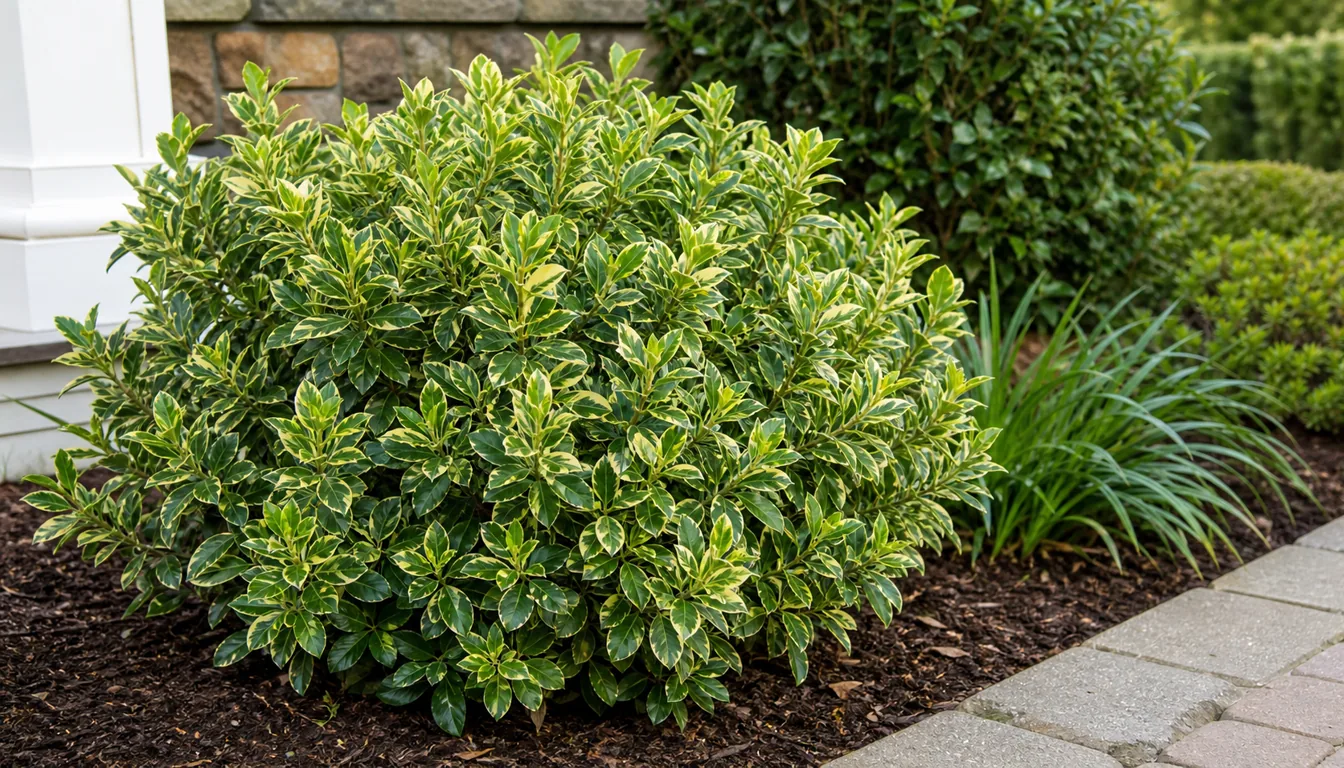
Japanese euonymus (Euonymus japonicus) is an evergreen hedge shrub that tolerates salt, drought, and heavy pruning, but NC State calls euonymus scale a significant threat to it, and Clemson names it among the euonymus most susceptible to powdery mildew. A hedge stays healthy when it gets sun, moving air, and a spring check for euonymus scale before the yellow spotting spreads.
Care snapshot
Which Euonymus Is a Hedge Euonymus?
The name euonymus covers several shrubs with different habits and different legal status. The hedge shrub sold as Japanese euonymus is Euonymus japonicus, a glossy evergreen that NC State Extension lists at 10 to 15 feet tall and 5 to 8 feet wide, hardy in Zones 6 through 9, and widely used for hedges because it takes pruning, drought, and salt.
Two relatives are easy to confuse with it, and both are regulated in places. Burning bush (E. alatus) is the deciduous shrub with corky stems and red fall leaves, and wintercreeper (E. fortunei) is a trailing or climbing evergreen. Maine's prohibited-sale list names both of those species. E. japonicus is not on that list, although NC State notes it can become weedy in disturbed areas near buildings.
- Japanese euonymus (E. japonicus)
- Upright evergreen hedge shrub, 10-15 ft unpruned. The common hedge euonymus.
- Burning bush (E. alatus)
- Deciduous, winged stems, red fall color. Banned from sale in several states.
- Wintercreeper (E. fortunei)
- Trailing or climbing evergreen. On Maine's prohibited-sale list.
Which Japanese Euonymus Cultivar Fits the Hedge?
The species grows taller than most foundation hedges need, so the cultivar decides how much pruning the hedge will take. NC State lists three forms that cover the common jobs.
- 'Microphyllus'
- Dwarf, small-leaved form about 2-3 ft tall, used for low borders and edging.
- 'Green Spire'
- Columnar form to about 8 ft with dense foliage, for narrow spaces.
- 'Aureomarginatus'
- Variegated form with yellow-edged leaves.
Variegated forms bring one extra job. The RHS advises removing plain green shoots as soon as they appear, because those shoots grow more strongly than the variegated ones and can take over the plant. Following a green shoot back to where it starts and cutting it there removes it, while trimming just its tip leaves the vigorous stem in place.
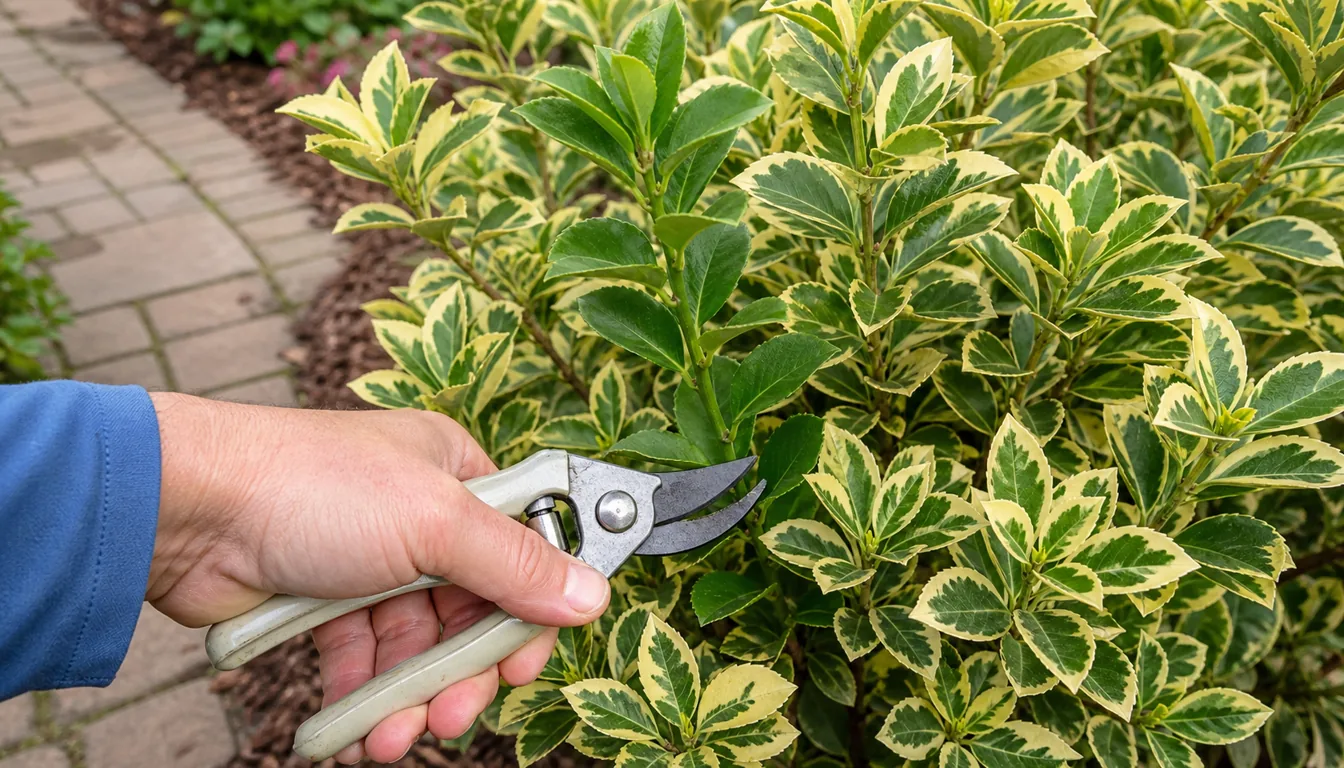
Variegation also changes the disease picture. Clemson's euonymus pest guide notes that anthracnose, a brown leaf spot with a light center, is more severe on variegated plants. A solid green form is the lower-maintenance choice for a long hedge in a humid area.
What Site Keeps Euonymus Healthy?
NC State describes Japanese euonymus as adaptable to full sun or heavy shade, at its best in dappled light with afternoon shade in hot climates, and tolerant of clay or loam and a wide pH range. The one condition it handles badly is wet soil, and phytophthora root rot is among the problems the RHS lists.
Air movement matters more than the light label suggests. Clemson ties powdery mildew on Japanese euonymus to poor air circulation and overhead watering, and the Texas Plant Disease Handbook lists planting in a sunny area and not crowding plants as the main cultural controls. A hedge squeezed against a wall, watered by a lawn sprinkler, and sheared into a solid block has all three risk factors at once.
- Plant where water drains within a day after rain.
- Leave a gap between the hedge and a wall or fence so air reaches the back face.
- Water at the base rather than with overhead sprinklers.
- Expect deer damage, which NC State notes is frequent.
Salt tolerance makes it useful along drives and coastal properties, and NC State also lists it as tolerant of black walnut, which rules out many other hedge shrubs near those trees.
How Do You Find and Control Euonymus Scale?
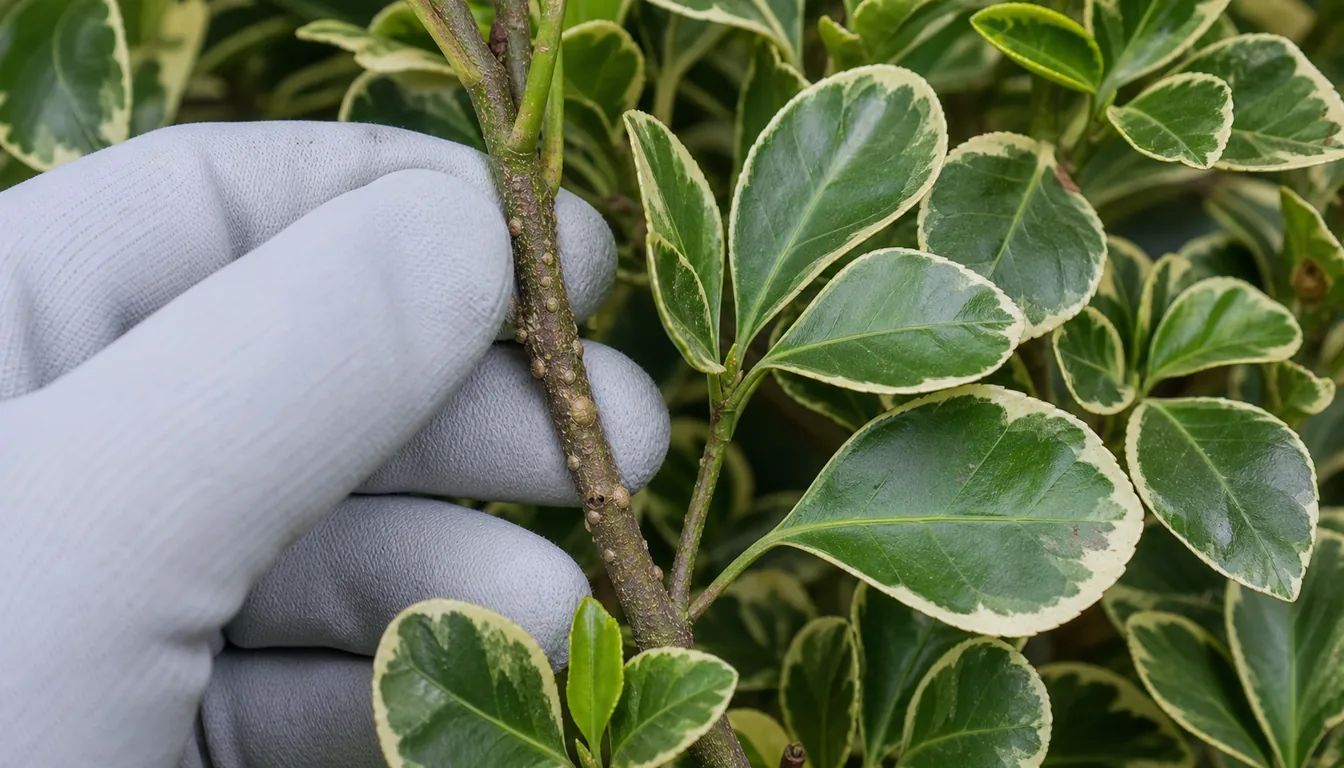
Euonymus scale is the problem that decides whether a Japanese euonymus hedge lasts. NC State calls it a significant threat to the species, and Clemson describes what to look for. The females sit under dark, oyster-shaped shells about 1/16 inch long, the males under small white coverings that often cluster on leaf undersides, and the leaves above them show yellow spotting.
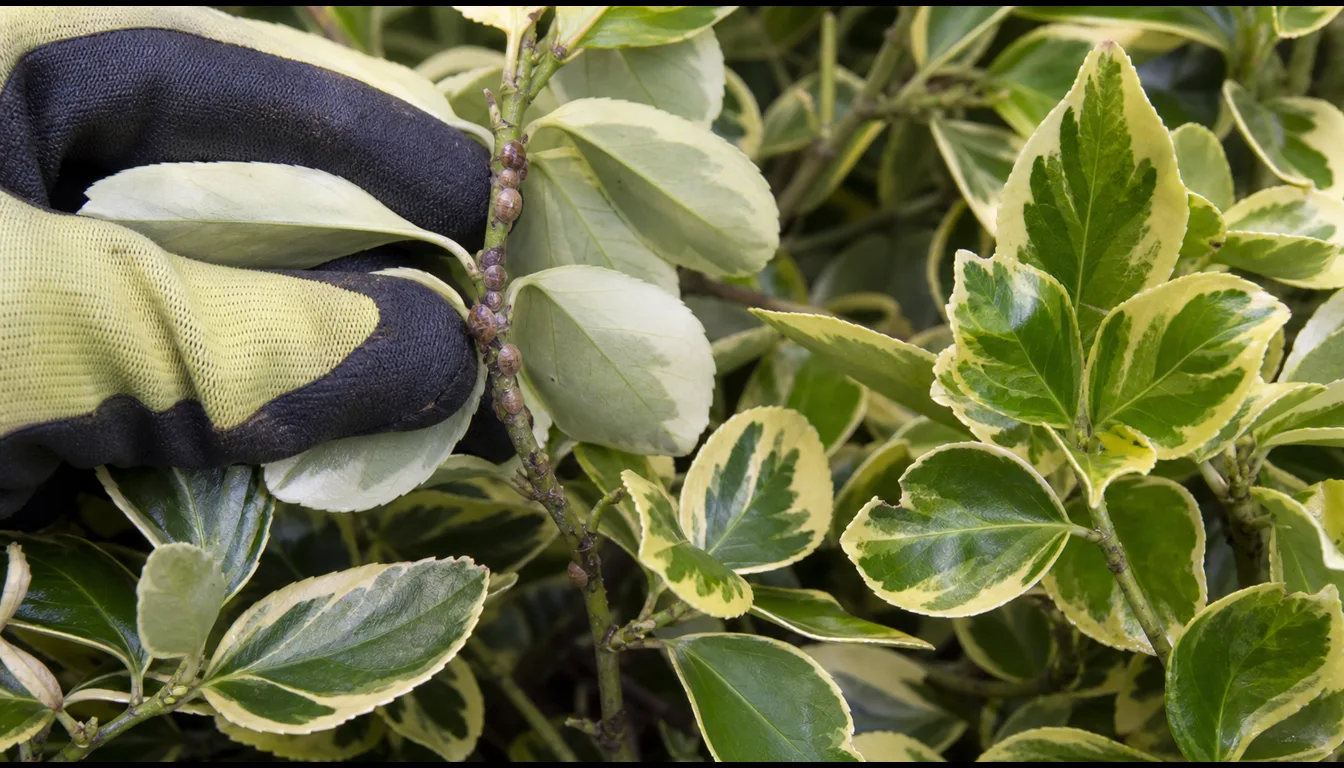
A light infestation causes yellow mottling. The RHS notes that a heavy one leads to leaf drop and even dieback. The inner stems of a dense hedge are the hardest place to see it starting, so a spring check means parting the branches rather than looking at the outer face.
Timing is what makes control work. Clemson notes that crawlers, the mobile young scale, emerge with the spring flush of new growth, and that stage is the one sprays can reach, because the shells protect adults.
- Winter or early spring
- Horticultural oil at a 3-4 percent solution, before growth starts (Clemson).
- Late spring, when crawlers appear
- Horticultural oil at a 2 percent solution (Clemson).
- Any time
- Cut out and dispose of heavily infested branches promptly (Clemson).
The product label gives the exact dilution and the temperature limits for oil sprays. Pruning a few interior stems before spraying lets the spray reach the inner branches where scale hides, which a dense sheared surface blocks.
Why Are the Leaves Coated in White Powder?
Clemson names Japanese euonymus and wintercreeper as especially susceptible to powdery mildew, which appears as a flat, white to gray growth on the upper leaf surfaces, sometimes with yellowing and curling on young leaves. The Texas Plant Disease Handbook notes that the fungus lives only in the outer leaf cells, so it rarely causes heavy leaf drop.
The RHS says treatment is usually not needed, which fits a mild case on an otherwise healthy plant. For a hedge that is coated every year, the controls are cultural. Clemson recommends pruning out diseased branches, spacing plants for airflow, and avoiding overhead irrigation, and the Texas handbook adds that any fungicide has to go on before new leaves are infected to do any good.
Two other problems can look like general decline. Crown gall, a bacterial disease, forms rough, corky galls at the base and on roots, and Clemson notes there is no cure and that susceptible plants should not go back into the same soil for two to three years. Vine weevils, according to the RHS, leave irregular notches in leaf edges during summer.
How Do You Prune a Euonymus Hedge?
Japanese euonymus tolerates pruning, which is why it is used for hedges. The RHS recommends pruning evergreen euonymus hedges in mid to late spring and suggests hand pruners rather than hedge trimmers, because leaves cut through by a trimmer tend to brown along the cut edge.
A hedge shaped slightly wider at the base than at the top keeps the lower leaves in light. A vertical or top-heavy face shades its own base, and the lower stems lose their leaves first.
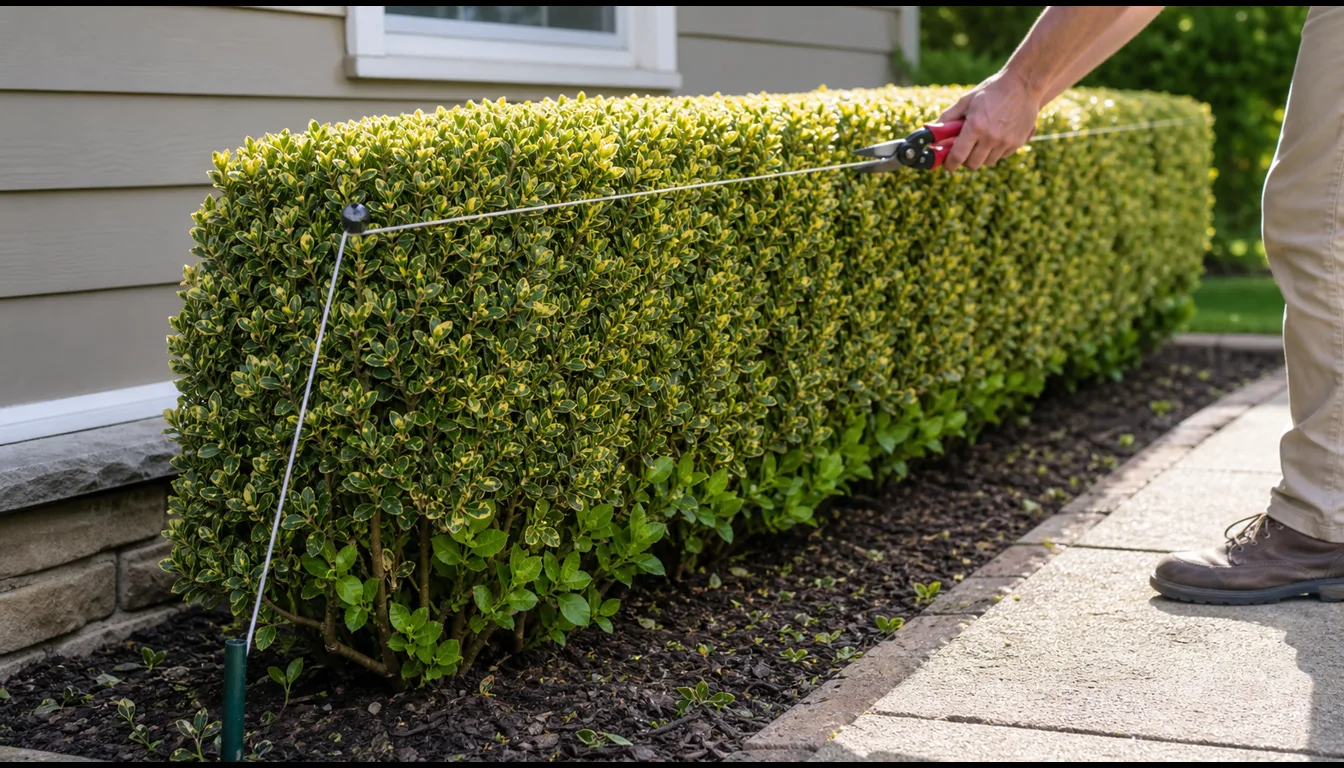
The University of Delaware's guide to pruning evergreens adds two rules that apply here. Cuts go back to a side shoot rather than leaving a stub, and broadleaf evergreens should not be cut too far into old wood, since new growth comes less readily from it. Regular light pruning avoids the hard rescue cut that leaves bare stems.
Pruning also supports the scale program. Thinning a few stems each spring opens the interior so inspections and oil sprays can reach it, and removing a badly infested branch takes out the scale on it at once.
Is Euonymus Safe Around Pets, and When Is Another Hedge Better?
Its toxicity to pets is not documented for this species. NC State's toolbox lists all parts of Euonymus japonicus as poisonous to people at low severity, with vomiting, diarrhea, and weakness, and convulsions possible, when large amounts are eaten. The ASPCA has no entry for this species, but it lists a close relative, the native wahoo (E. atropurpureus), as toxic to dogs, cats, and horses. Those records together are a reason to keep clippings and fruit away from pets that chew plants.
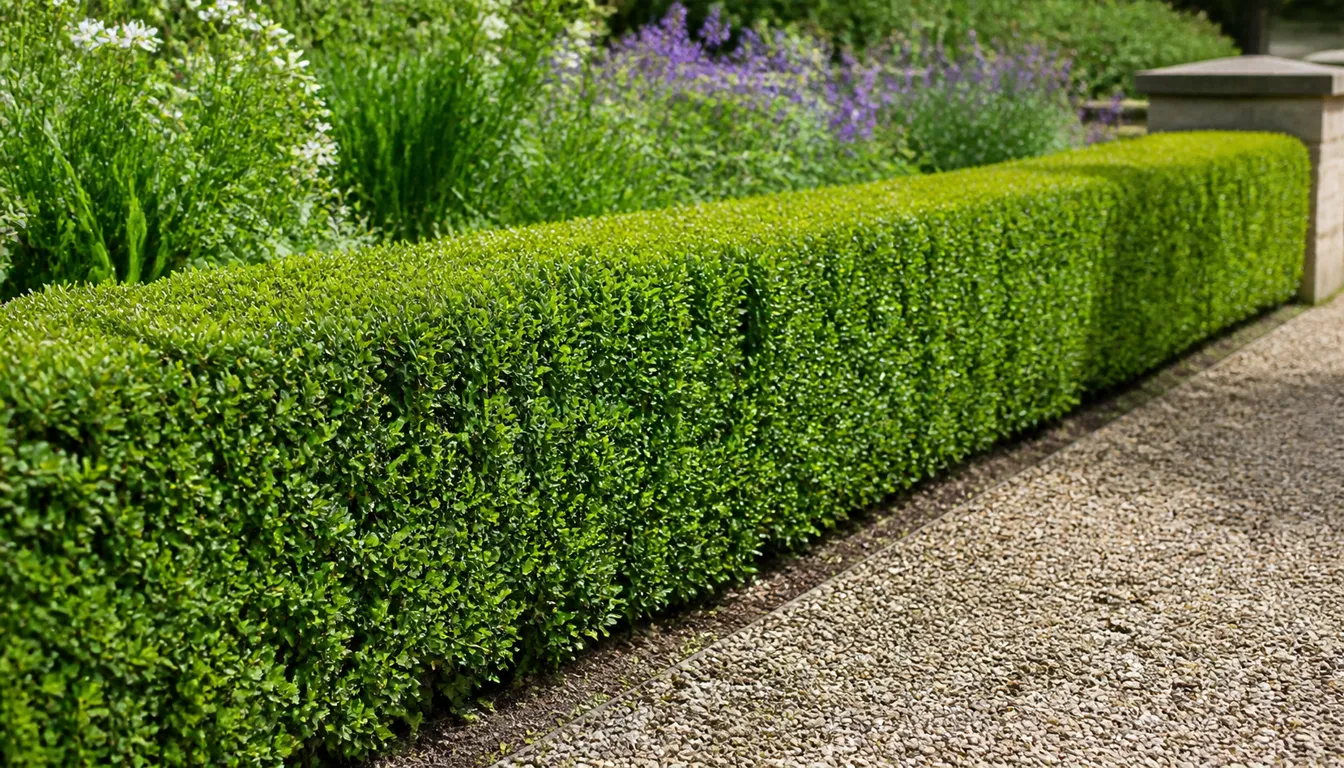
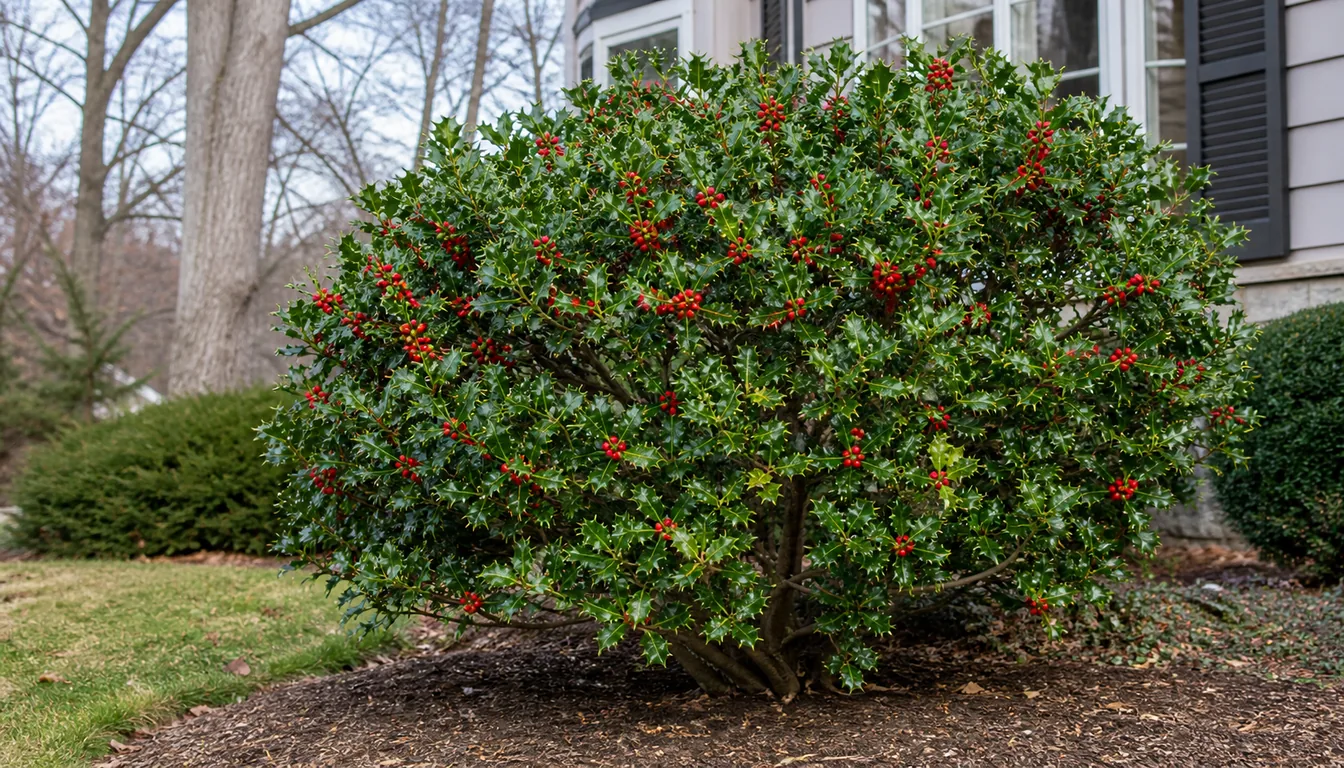
A different shrub makes sense when the hedge will not get a spring scale check, the site stays wet, or the planting is long enough that one pest could take out the whole row. For a fine-textured clipped edge, boxwood is the usual comparison, and for a prickly evergreen screen, holly fills the role. The evergreen shrubs guide compares more options by zone.
Frequently Asked Questions
What are the white specks on my euonymus leaves?
Clusters of small white coverings on leaf undersides are usually male euonymus scale. Look for dark oyster-shaped females on stems and yellow spotting on the leaves.
When should I spray euonymus scale?
Clemson Extension recommends horticultural oil at 3-4 percent in winter or early spring and 2 percent in late spring when the crawlers appear with new growth. Follow the product label.
Why is my variegated euonymus turning green?
Plain green shoots grow more strongly than variegated ones. The RHS advises removing them as soon as they appear.
When should I prune a euonymus hedge?
The RHS recommends mid to late spring, using hand pruners rather than hedge trimmers to avoid browned leaf edges.
Is euonymus toxic to dogs?
There is no ASPCA record for Japanese euonymus. ASPCA lists a related euonymus as toxic to dogs, cats, and horses, and NC State lists all parts of this species as poisonous to people at low severity.
Sources & References
- Euonymus japonicus, NC State Extension Gardener Plant Toolbox
- Euonymus Diseases and Insect Pests (HGIC 2054), Clemson Cooperative Extension
- Euonymous, Texas Plant Disease Handbook
- How to grow euonymus, RHS
- Pruning Evergreens, University of Delaware Cooperative Extension
- Invasive Plants Prohibited from Sale or Import in Maine, Maine Department of Agriculture, Conservation and Forestry
- Burning Bush (Euonymus atropurpurea), ASPCA Toxic and Non-Toxic Plants
Related Plants
Boxwood
Classic formal hedge shrub that fills a similar role to Euonymus japonicus but grows slower.
Holly
Evergreen shrub with glossy leaves and berries, often swapped in where euonymus scale is a concern.
Spirea
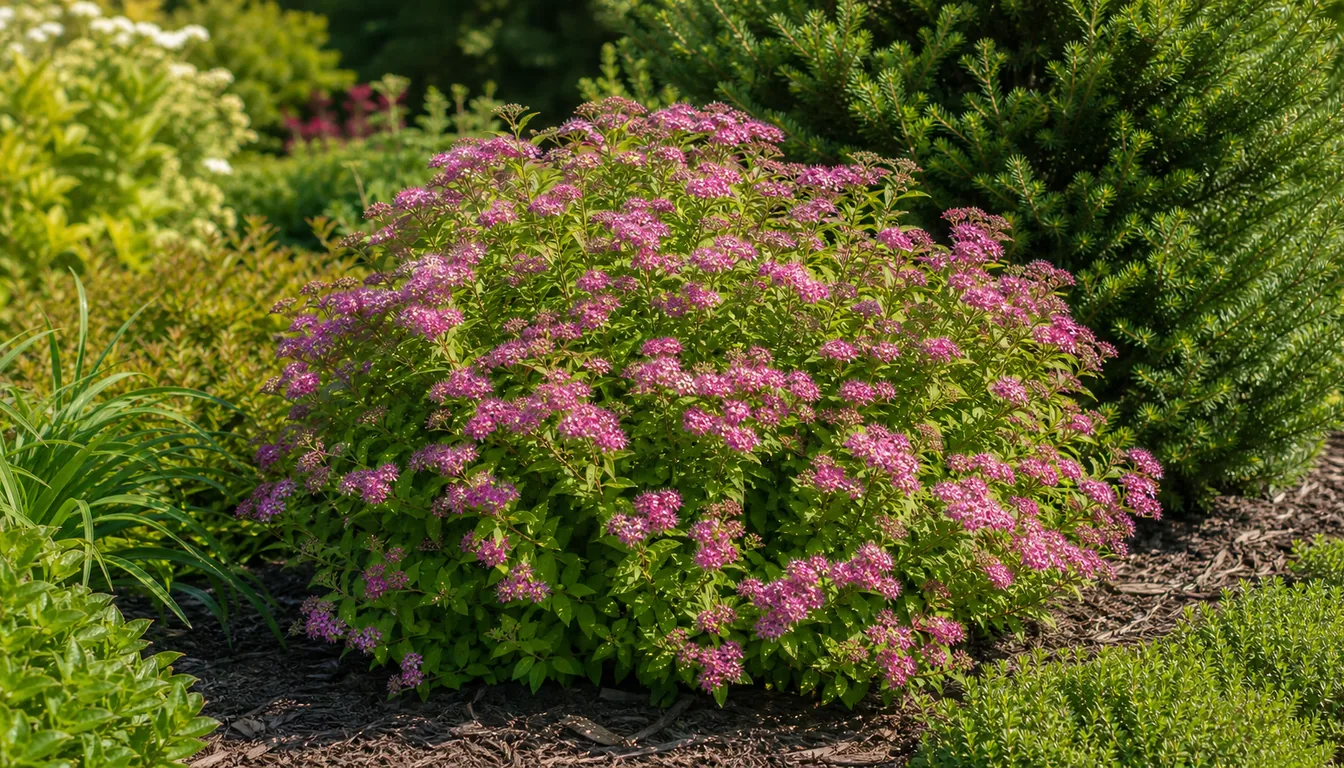
Deciduous flowering shrub that pairs well with euonymus for mixed shrub borders.
Arborvitae
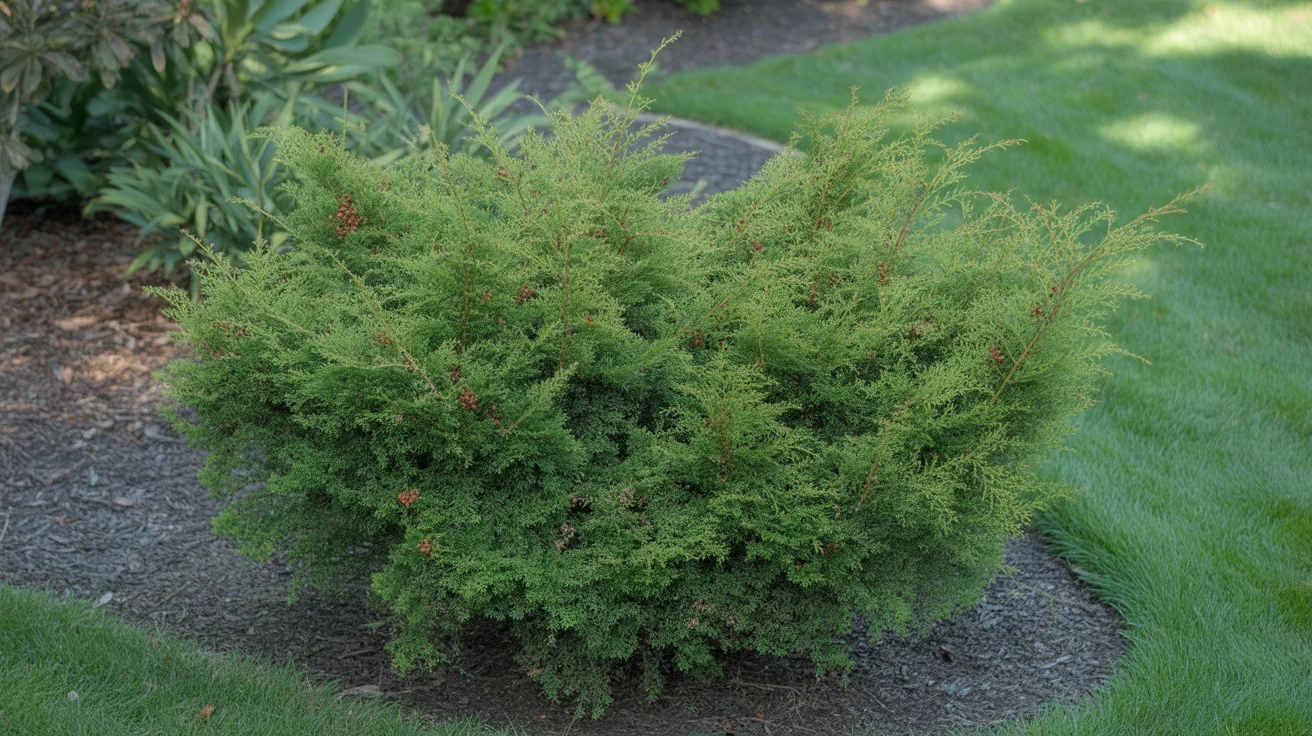
Arborvitae can form a dense living screen where its mature width, exposure, and water needs fit the site.
Aucuba
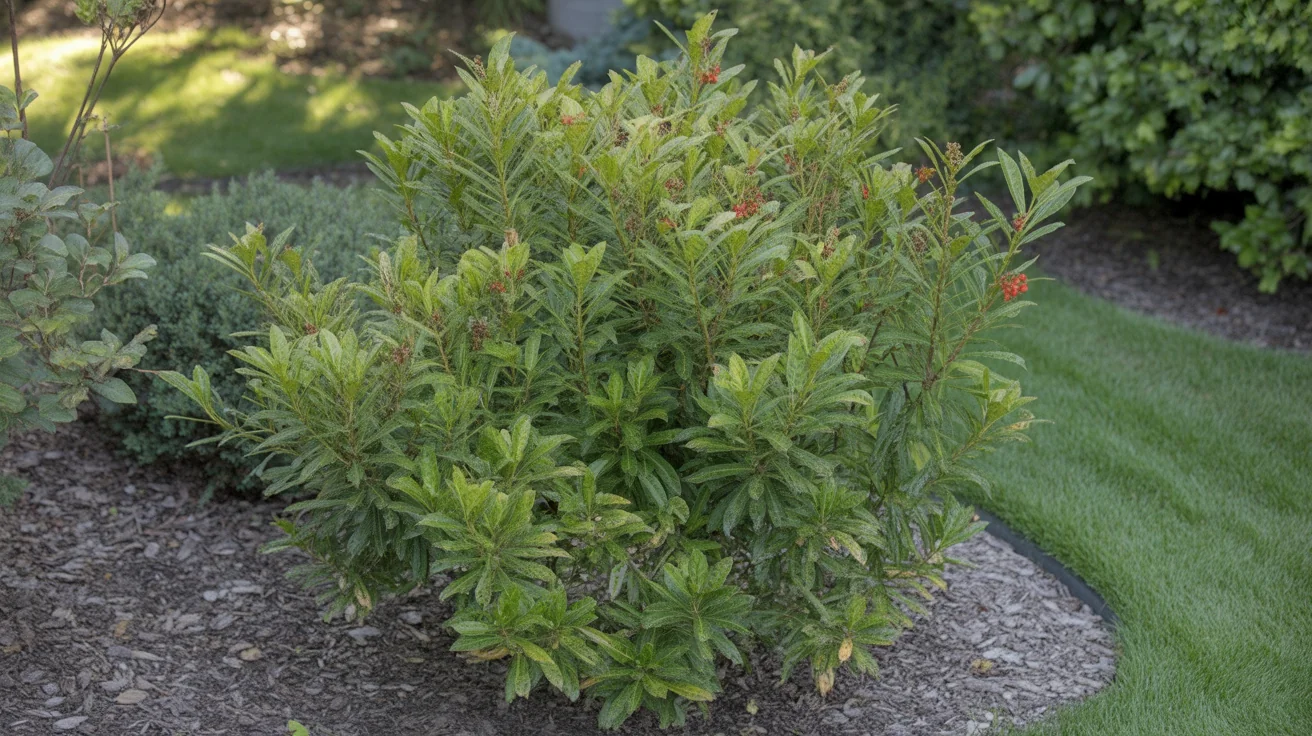
Aucuba is the shrub for bright shade with dry root competition. It keeps evergreen structure near north walls, porches…
Azalea
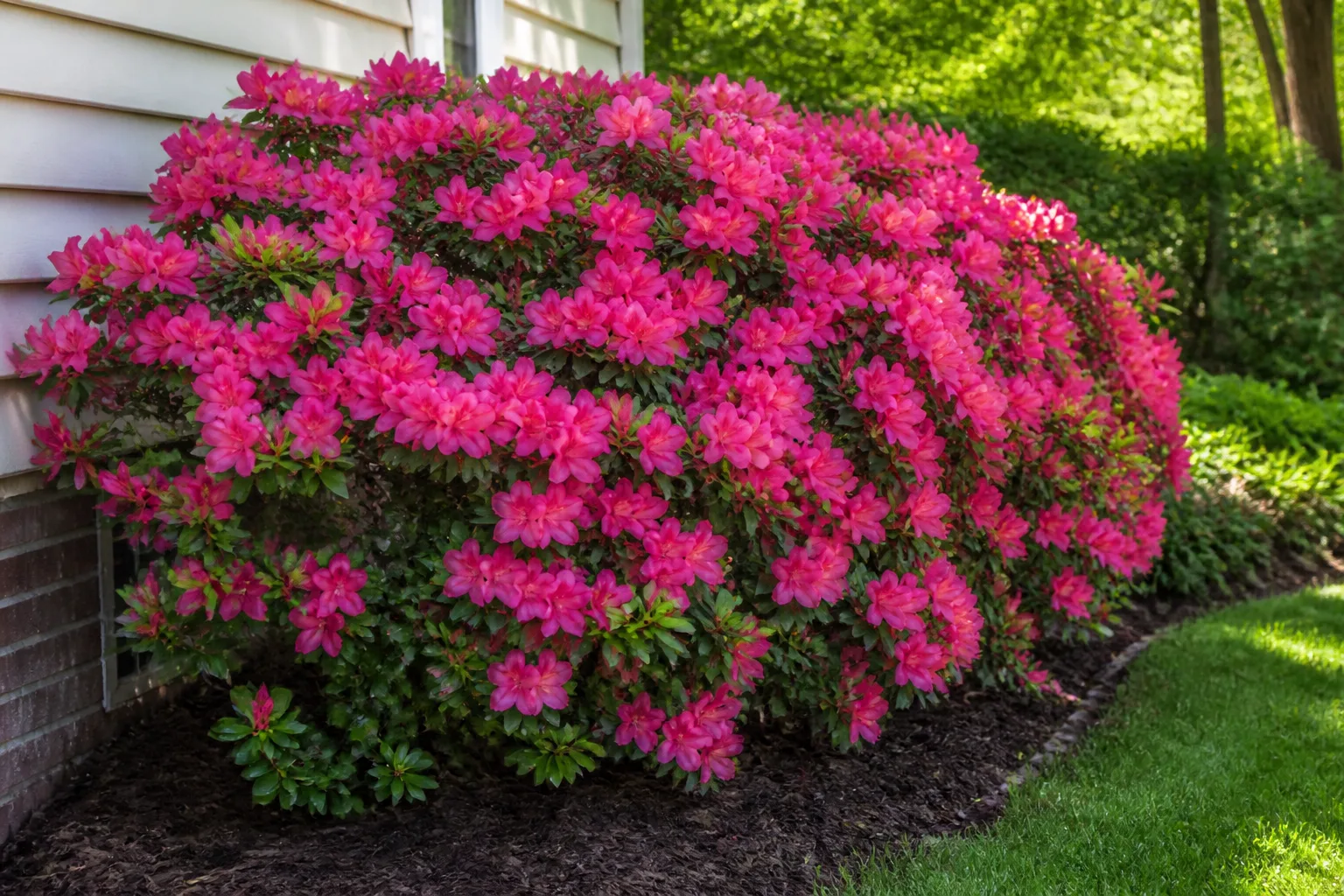
Azaleas bring spring flowers, and some cultivars bloom again later in the year.