Care snapshot
- Light
- Full sun to part shade
- Water
- Drought tolerant once rooted
- Height
- 3 to 4 ft
- Zone
- Zones 3 to 9
- Spread
- 2 to 4 ft wide (3 to 4 ft for B. alba and B. australis, Clemson)
- Temperature
- Zones 3 to 9 (NC State)
What Is Baptisia, and How Big Does It Get?
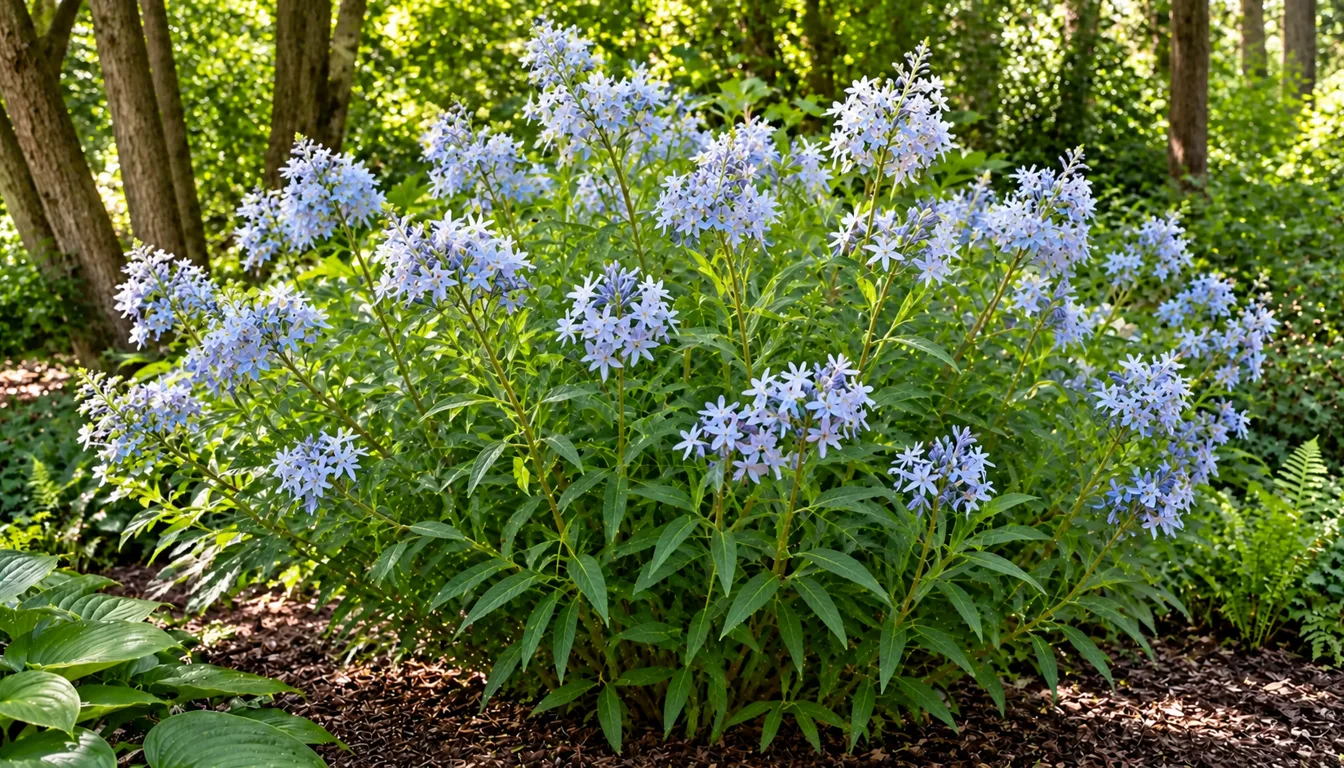
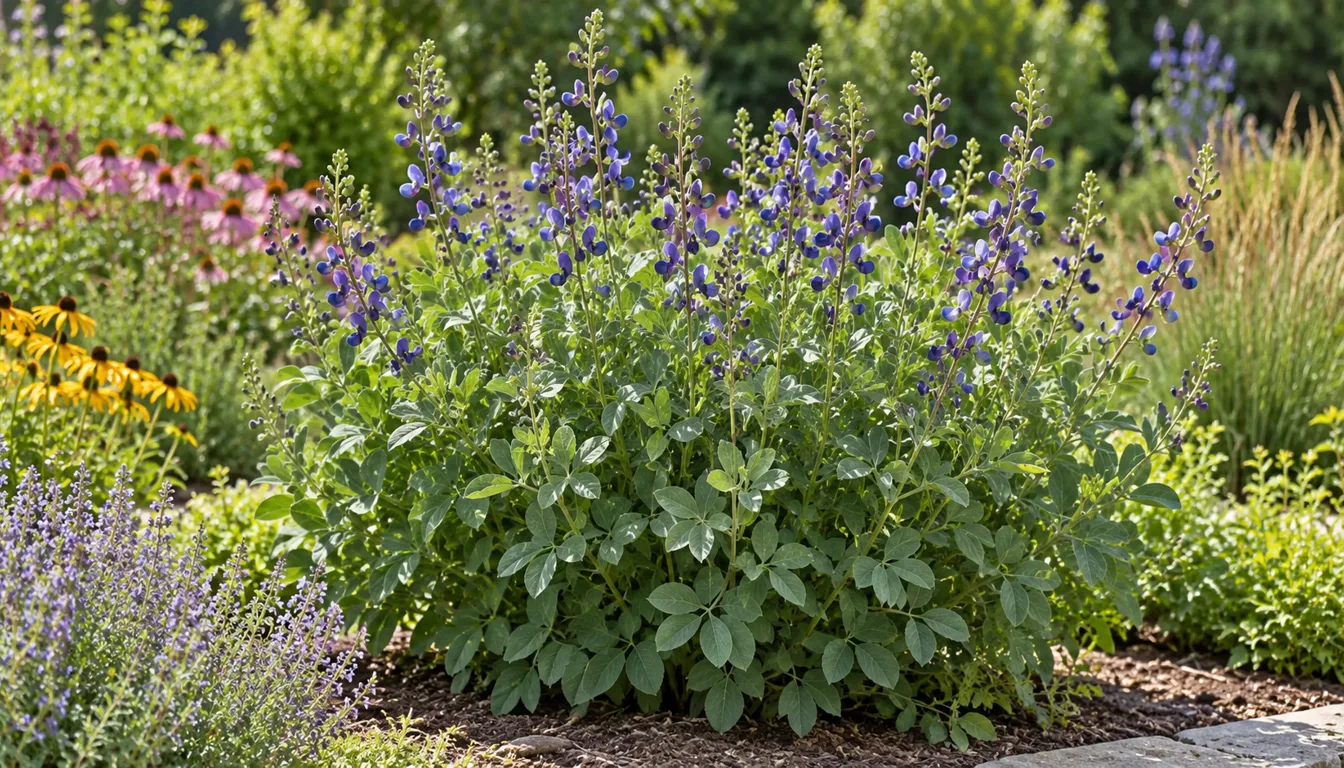
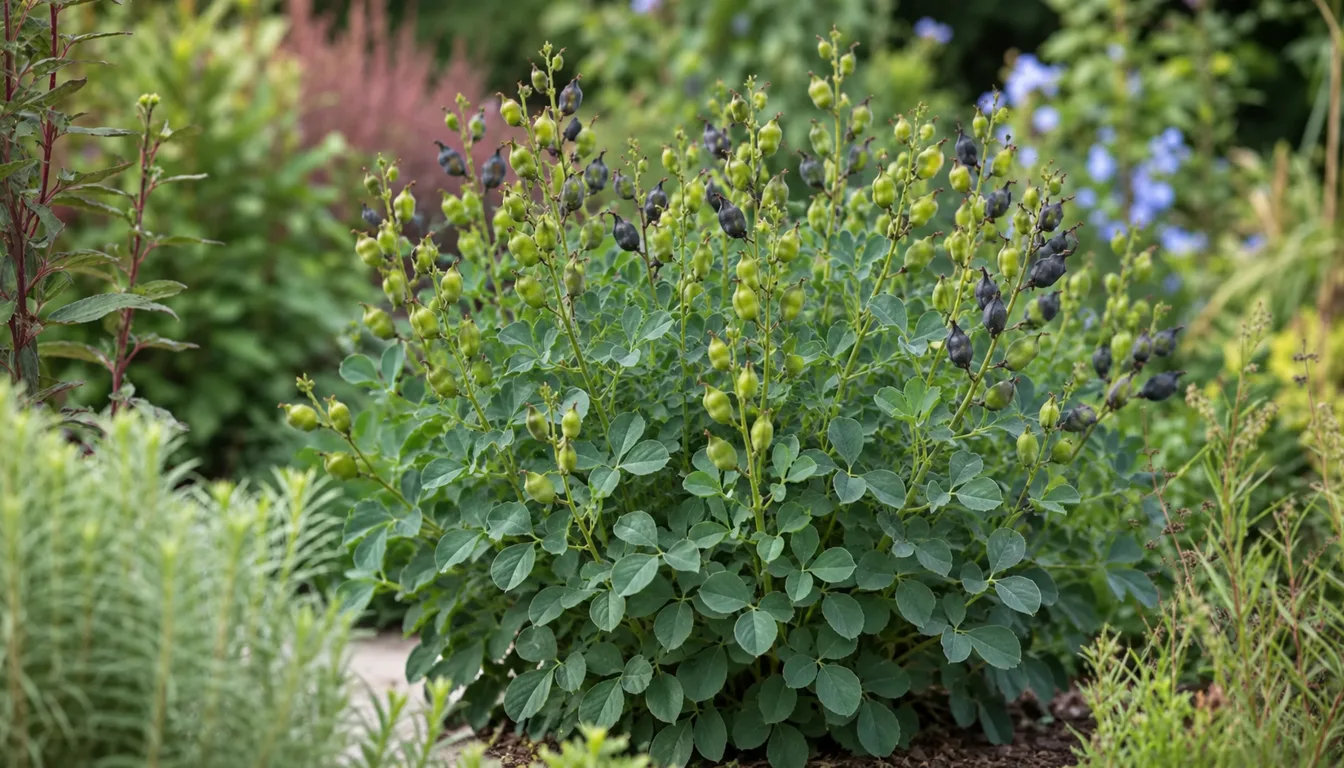
Blue false indigo (Baptisia australis) is a native perennial in the bean family that grows across central and eastern North America. NC State gives the clump as 3 to 4 feet tall and 2 to 4 feet wide, and Clemson, describing the two most common species, gives 3 to 4 feet in width as well, so the plant ends up about as wide as it is tall. Its blue-green leaves are made of three leaflets and look similar to clover.
The species name australis means southern, from an earlier belief that the plant grew only in the Southeast, although it ranges throughout the eastern U.S. NC State also notes that it was the 1992 North Carolina Wildflower of the Year.
In spring the indigo blue flowers, about three-quarters of an inch long, open on racemes that NC State puts at 16 inches tall, while Clemson gives 12 to 24 inches for the genus. Bloom lasts between 3 and 6 weeks, and the flowers on each spike open from the base of the stalk to the tip.
Inflated pods follow, pale green while they develop and black once they ripen in mid to late summer. NC State measures them at up to 2.5 inches long and Clemson at usually 1 to 3 inches.
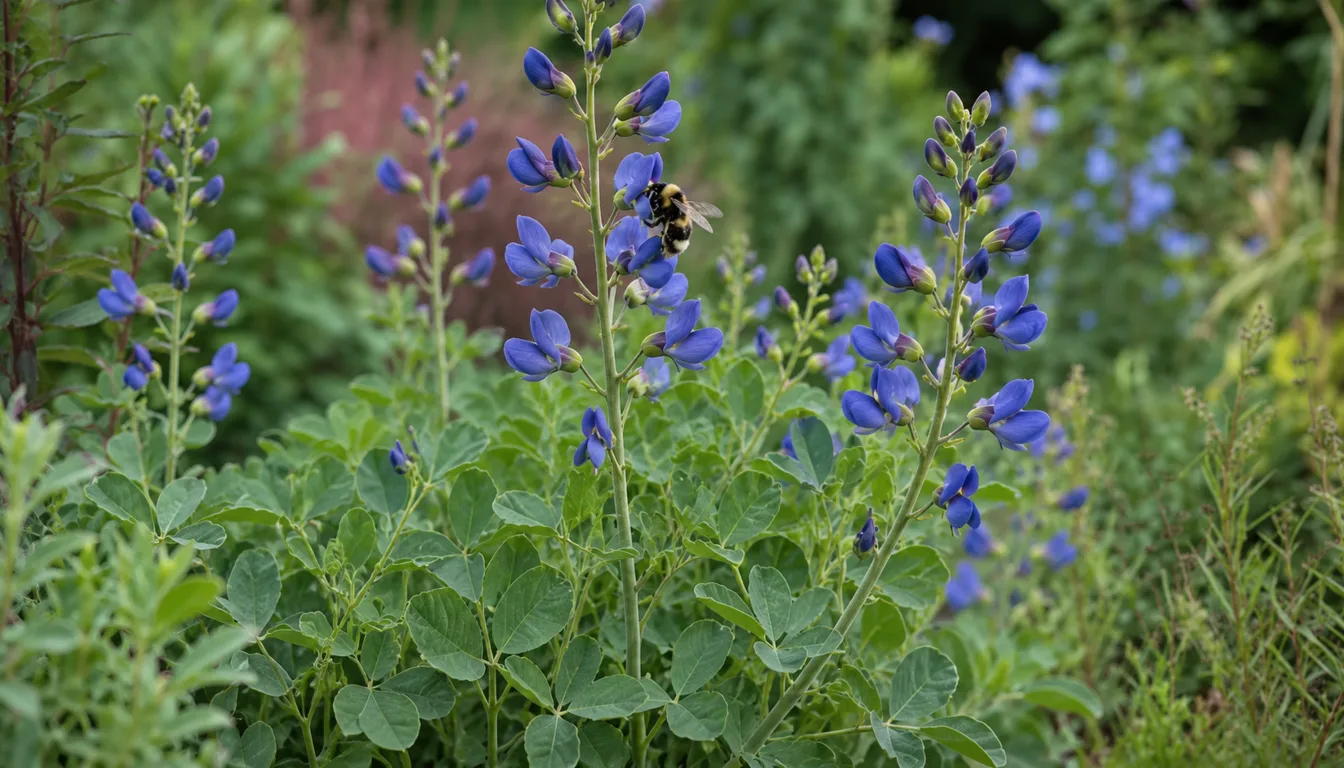
There are around 20 Baptisia species, all native to eastern or midwestern North America, and as a group they are heat and humidity tolerant and drought tolerant once established. A planted baptisia grows to its full height each year after the first or second season and then keeps widening, and Clemson calls it unusually long-lived, able to bloom in the same spot for decades.
- Habit
- Shrub-like clump that dies to the ground each winter (Clemson)
- Butterflies
- Larval host for orange sulfur, clouded sulfur, frosted elfin, eastern tailed blue, hoary edge, and wild indigo duskywing (Clemson)
- Deer and rabbits
- Resistant to both (NC State)
- Fire risk
- Medium flammability rating (NC State)
Where Should You Plant Baptisia, Given That You Can't Move It?
Choose the spot before you buy, because baptisia cannot be moved later. NC State says the deep taproot that makes it drought tolerant also makes it difficult to transplant, and Clemson adds that the root system is brittle as well as deep. The practical rule is to plant for the clump's ultimate size and then leave it where it is.
Full sun is the better choice. NC State says blooming is best there, and in shade the plant tends to get leggy and droop over. Clemson agrees that shade brings leggy growth and fewer flowers, and notes that baptisias growing wild in partly shaded places are never as showy as those grown in sun.
Soil advice differs a little between the two extension sources. NC State says average, well-drained soil suits it and lists clay, dry and poor soils among those it tolerates, while Clemson says most baptisias grow best in deep, rich, moist but well-drained soil and become quite drought tolerant once established because of their very deep roots. That drought tolerance suits drought-tolerant gardens, and NC State also recommends the plant as a specimen or border plant in native and pollinator gardens.
- Allow for a mature clump 3 to 4 ft wide for blue and white false indigo (Clemson), since the roots are deep and brittle and the plant stays where you put it.
- Plant in fall or early spring, set the crown even with the soil surface, and water thoroughly afterward (Clemson's general perennial guidance).
- Expect a slow start from seed, since seedlings may not bloom until their second or third season (Clemson).
- A wooden fence makes a good backdrop, because NC State says the tall clumps are especially attractive next to one.
Which Baptisia Species and Hybrid Colors Should You Grow?
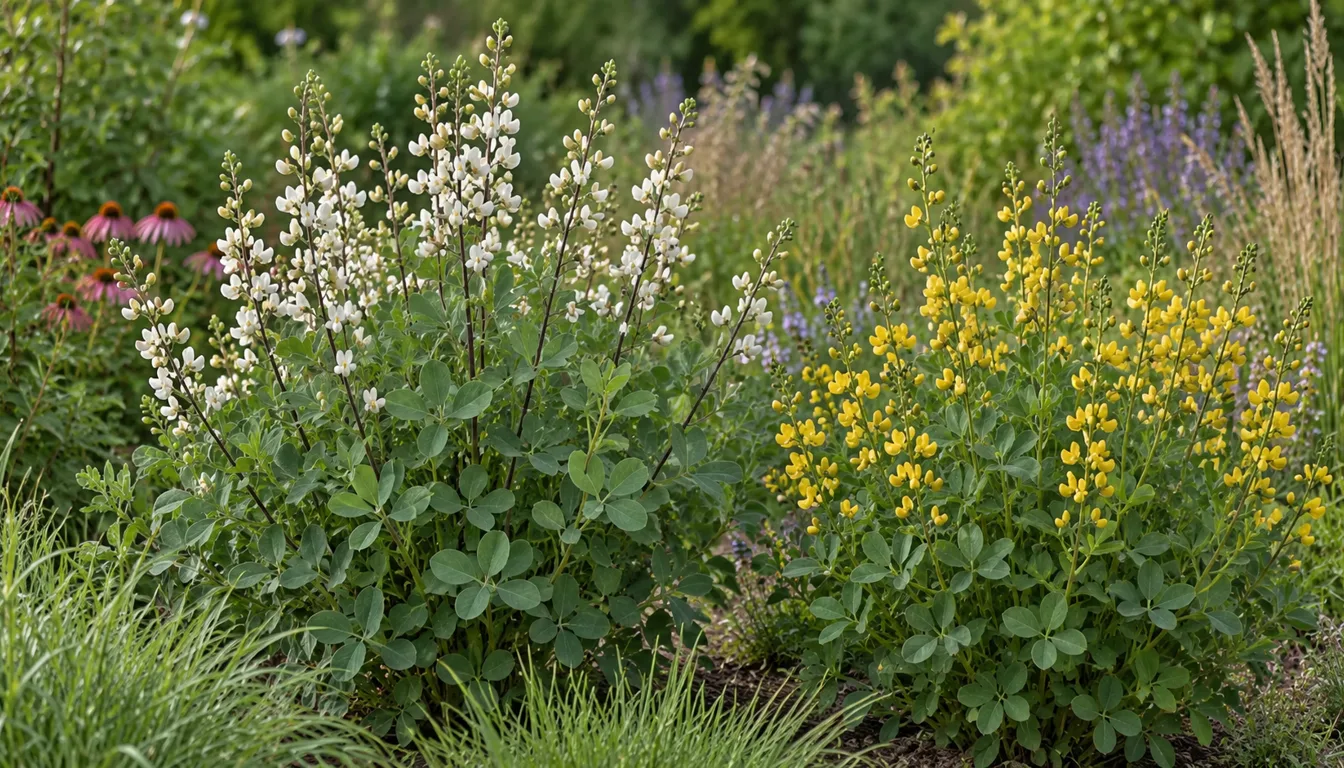
The species B. australis is indigo blue, and its relatives and hybrids add white, cream, yellow, and purple. Bloom time varies as well. Clemson says cream false indigo (B. bracteata) is the first Baptisia to bloom, beginning in early March to early April depending on location, and yellow wild indigo (B. tinctoria) flowers later than the others, in late spring to early summer.
- Blue false indigo (B. australis)
- Indigo blue, 3 to 4 ft and as wide or wider, 2010 Perennial Plant of the Year, blooms up to 6 weeks (Clemson)
- B. australis var. minor
- Native west of the Mississippi, 18 to 24 in, more drought tolerant (Clemson)
- White false indigo (B. alba)
- White racemes 12 to 18 in on charcoal gray stems, 2 to 4 ft, blooms 4 to 6 weeks (Clemson)
- Cream false indigo (B. bracteata)
- First to bloom, pale yellow sprays, 18 to 24 in mound (Clemson)
- Yellow false indigo (B. sphaerocarpa)
- Bright yellow, 2 to 3 ft, lower Midwest and Gulf states (Clemson)
- ‘Screamin’ Yellow’
- Compact B. sphaerocarpa selection that becomes a rounded mound about 3 ft high and 5 ft wide, with heavy bloom (Clemson)
- Yellow wild indigo (B. tinctoria)
- Bright yellow to cream, later bloom, 2 to 3 ft, once used for blue dye (Clemson)
- ‘Purple Smoke’
- Dusty purple on charcoal stems, B. australis var. aberrans x B. alba, from the North Carolina Botanical Garden (Clemson)
- ‘Carolina Moonlight’
- Butter yellow on 18 in spikes, 3 by 3 ft, B. sphaerocarpa x B. alba (Clemson, NC State)
- Twilite Prairieblues
- Violet-purple with lemon keels, spikes to 32 in, 3 to 5 ft (Clemson)
- Starlite Prairieblues
- Periwinkle blue with cream keels, 3 by 3 ft (Clemson)
- Solar Flare Prairieblues
- Yellow aging to apricot then plum, 3 to 4 ft (Clemson)
The Prairieblues hybrids were developed by Dr. Jim Ault at the Chicago Botanic Garden and are patented, while ‘Purple Smoke’ and ‘Carolina Moonlight’ came from the North Carolina Botanical Garden. In a 2012 to 2015 Mt. Cuba Center trial of 46 selections, the Center's top 10 for the mid-Atlantic (USDA zone 7a/7b) were ‘Screamin’ Yellow’, ‘Lemon Meringue’, ‘Ivory Towers’, ‘Blue Towers’, ‘Purple Smoke’, ‘Cherries Jubilee’, ‘Sunny Morning’, ‘Blueberry Sundae’, ‘Dutch Chocolate’, and ‘Crème de Menthe’.
The indigo flowers look attractive combined with yellow or white flowering perennials, according to NC State.
When Do You Prune Baptisia, and How Do You Propagate It?
Baptisia needs little pruning, and Clemson says no pruning or training is necessary. The one decision comes when the flowers fade. If you do not enjoy the seed pods, trim the old bloom spikes back after flowering, and if you do, leave them, since stems with pods are used in dried arrangements.
The foliage turns black rapidly in fall. Clemson says some gardeners leave the stems for winter interest and wait to cut old foliage in late winter or early spring, while others cut it in fall after frost if the old foliage looks untidy.
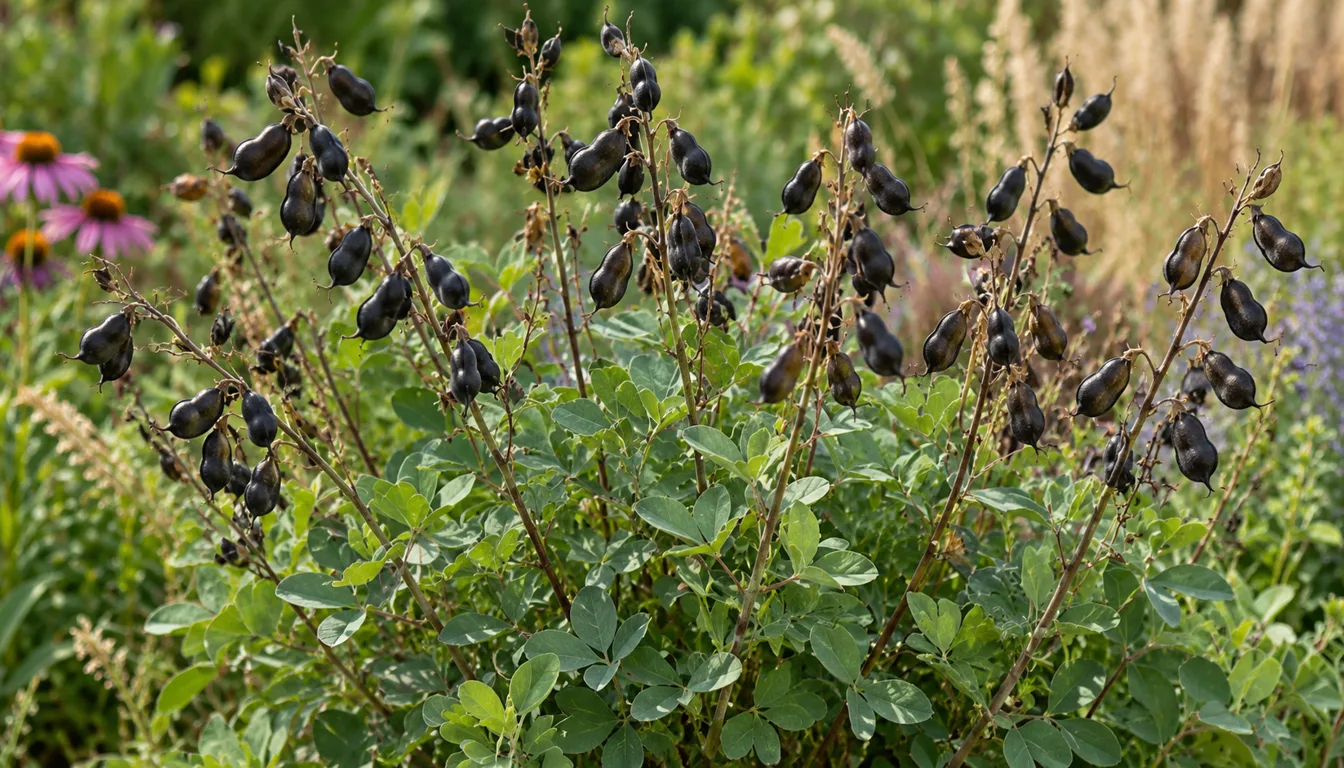
Seed is the usual way to start new plants, and NC State lists seeds and stem cuttings. Clemson says division is difficult because of the deep woody root system and should be avoided unless absolutely necessary.
- Fresh seed. Collect it when the pods darken and begin to split, discard any seed with weevil holes, and sow fresh seed a quarter inch deep, where it usually germinates within 2 weeks.
- Stored seed. It needs 6 to 12 weeks of cold stratification in the refrigerator, then scarifying and a 24-hour soak. Seedlings grow slowly and will not bloom for at least 2 to 3 years.
- Stem cuttings. They root most easily in spring while growth is soft, generally late April to early May, and take about 8 weeks. Many newer cultivars are patented and cannot legally be propagated by cuttings.
- Division. If you must, divide in spring and take care not to break new shoots. Dig deeply to get as much of the root system as possible, trim broken roots with sharp pruners, cut the clump apart with a sharp saw or a sturdy serrated knife, and replant as soon as possible without letting the roots dry.
Does Baptisia Have Pest Problems, and Is It Safe for Pets?
Major disease or insect problems are rare, and NC State lists none. Clemson adds that a weevil commonly damages the seed without affecting the plant's appearance, that alkaloids in baptisia are toxic to many insects although it hosts several butterfly larvae, and that some fungal problems may occur in crowded, moist conditions.
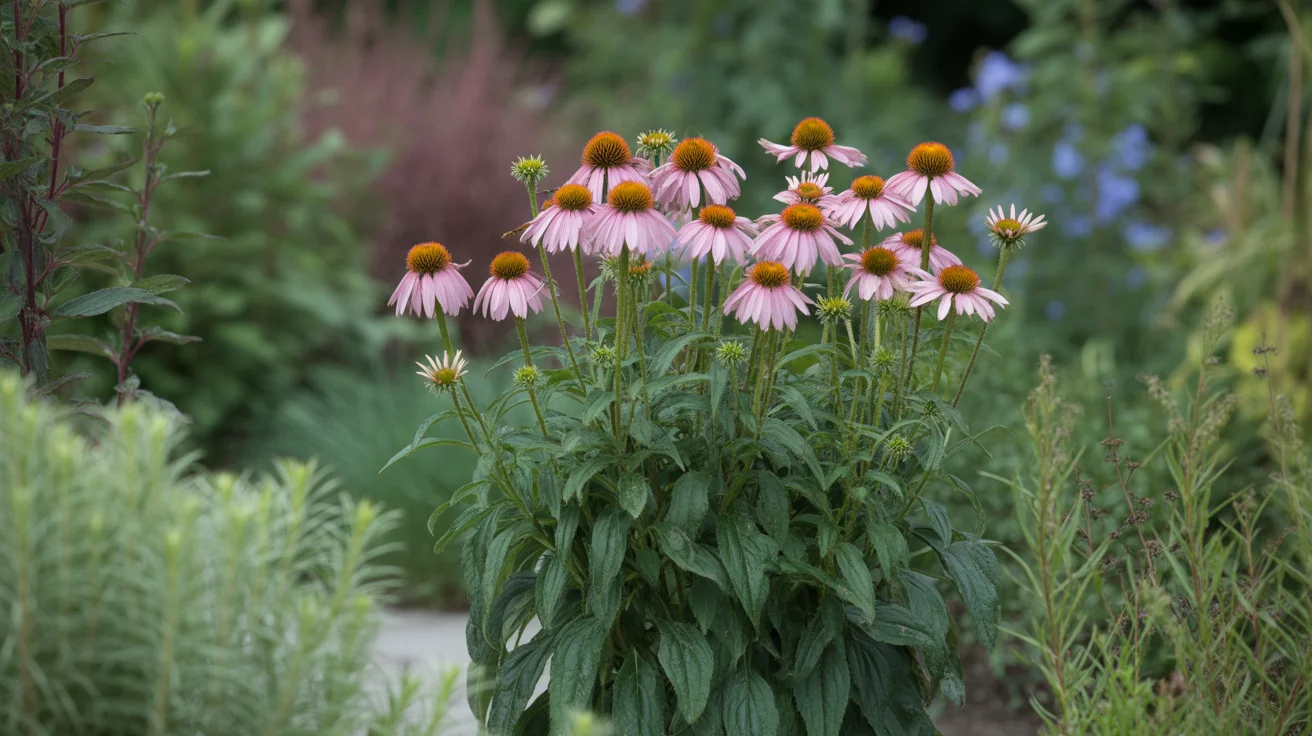
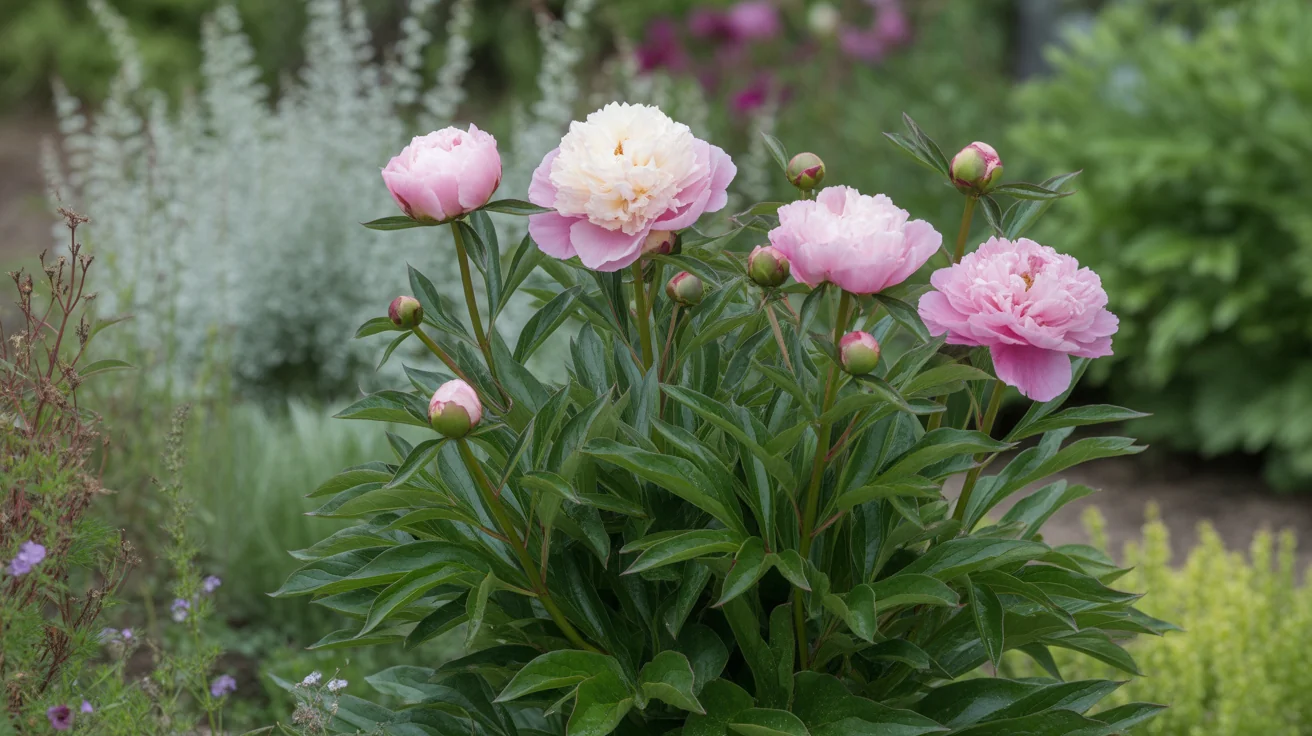
Coneflower is another native perennial for pollinator gardens, and black-eyed Susan fits the same border. For a long-lived, clump-forming perennial there, compare peony.
Frequently Asked Questions
How big does baptisia get?
NC State gives 3 to 4 feet tall and 2 to 4 feet wide, with flowers on racemes 16 inches tall.
Can you transplant baptisia?
It is difficult, because the deep taproot that makes baptisia drought tolerant also makes it hard to transplant, so pick a permanent spot.
Should I cut back baptisia after it blooms?
Prune after flowering if you do not want seed pods or want to shape the plant. Leave it uncut if you want the black pods.
Is baptisia toxic to cats?
NC State lists blue false indigo as a problem for cats, with low poison severity, and says it causes low toxicity only if eaten in quantity.
What soil does baptisia need?
NC State says average, well-drained soil suits it, and it tolerates clay, poor soil, and dry soil. Clemson says most baptisias grow best in deep, rich, moist but well-drained soil.
Why is my baptisia flopping open?
It tends to get leggy and droop over in shade, and blooms best in full sun.
How long does baptisia take to bloom from seed?
Seedlings grow slowly and will not bloom for at least 2 to 3 years. Plants reach full height each year after the first or second season.
What colors does baptisia come in?
Blue, white, cream, yellow, and purple. Options include white B. alba, cream B. bracteata, yellow B. sphaerocarpa and B. tinctoria, and hybrids such as dusty purple ‘Purple Smoke’ and yellow-to-plum ‘Solar Flare’.