
String of Pearls Mushy Stems: Find the Last Firm Node
Mushy, translucent pearls and dark soft stems usually mean water has remained around String of Pearls long enough for tissue to collapse. Trace the damage through vines, crown, and shallow roots, then keep only firm material and rebuild a draining surface-rooting pot.
Start diagnosis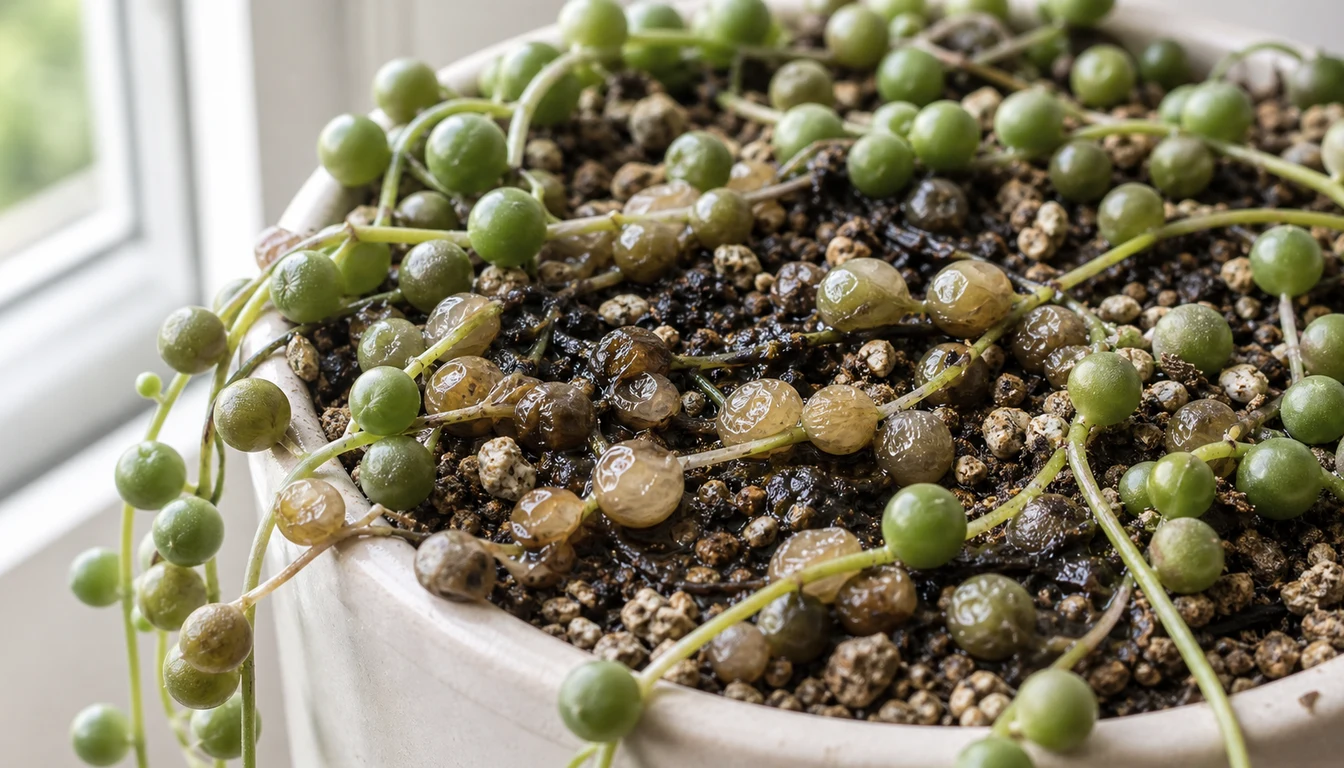
What You Are Seeing
String of Pearls care begins with its shallow surface-rooting habit. This Curio rowleyanus stores water in spherical leaves and forms roots where trailing nodes touch soil, which suits a shallow free-draining pot but makes a wet crown and buried stems especially vulnerable.
The rescue boundary is the last firm green node, not a fixed number of inches from the pot. A plant can have a failed crown and several clean upper vines, or a wet pot can still contain a sound crown that only needs rotten roots removed, so inspect both before deciding what survives.
Keep this diagnosis focused on soft wet tissue. Wrinkled pearls in dry mix belong to the pending shriveled-pearls question, while tan dry patches after a sudden light increase suggest scorch and translucent exposed tissue after cold suggests an exposure event rather than rot beginning at the crown.
Common Causes
Watering again while the shallow root zone is still wet
Repeated watering fills the air spaces around shallow roots and crown junctions. Cooler temperatures, lower seasonal light, and reduced growth slow water use, so an interval that worked earlier can leave the same pot saturated.
- The pot remains heavy and cool below the surface when the next watering arrives.
- Pearls near the soil become translucent or olive and feel soft rather than merely smaller.
- Darkness travels along stems resting against damp mix.
- The problem began after a seasonal light change, cooler room conditions, or continued calendar watering.
- Stop watering and move the plant out of any standing runoff.
- Keep it in bright appropriate light with gentle air movement while you map every soft segment.
- Unpot promptly when the crown is dark, an odor develops, or deep mix stays saturated.
- After salvage, let the actual shallow root zone and plant firmness set the next watering rather than a calendar.
Runoff is trapped beneath the inner pot
A nursery pot may have holes but still wick water from a decorative outer pot or deep saucer. Fine roots and stems at the surface then remain above a wet reservoir that the gardener cannot see.
- Water stands in the cachepot when the nursery pot is lifted.
- The drainage hole is blocked by compact mix or a flat surface.
- The lower pot remains wet after the visible top layer begins to lighten.
- Rot is strongest where vines touch the moist crown or pot surface.
- Empty the outer pot and let the nursery pot drain completely outside it.
- Clear blocked outlets without pushing contaminated wet mix back into sound roots.
- Use a raised inner base or leave the cover pot off until recovery is established.
- Replace a sealed decorative container rather than compensating with tiny frequent sips.
A deep pot holds unused wet mix below shallow roots
String of Pearls has a shallow root system and naturally roots along surface nodes. A deep or oversized container can stay wet below that active layer long after the surface looks ready for more water.
- Most roots form a thin mat near the surface while the lower half of the pot remains rootless and damp.
- A wooden probe emerges wet from below the roots after the upper mix appears dry.
- The pot stays heavy for many days despite an open hole.
- The decline began after moving a small plant into a much larger hanging container.
- Choose a shallow stable container only modestly wider than the cleaned root mat.
- Fill it consistently with fresh free-draining cactus mix amended with mineral particles such as pumice or perlite.
- Do not hide a layer of fine old mix beneath a coarse topping.
- Keep crown junctions and pearls at the surface instead of burying them.
Rot has reached the crown and roots
Once crown junctions become dark, pinched, or soft, drying the pot alone may not stop decay. The original plant survives only if firm crown tissue and viable roots remain after every rotten section is removed.
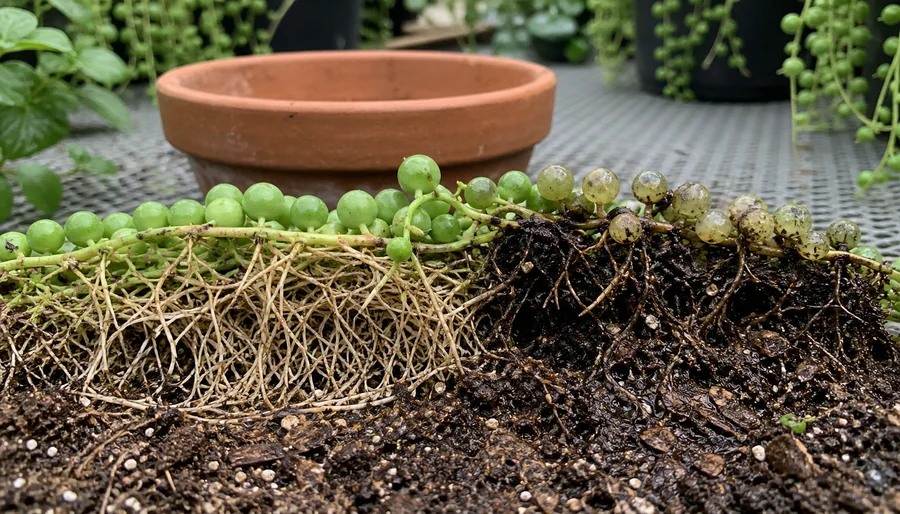
- Roots are brown and soft or lose their outer layer with a gentle pull.
- The point where several vines meet is dark, translucent, or easily crushed.
- A sour odor comes from wet mix or crown tissue.
- Softness continues into several vines above the pot rim.
- Lift the shallow root mat and remove loose saturated mix so every junction is visible.
- Cut away soft roots and crown tissue with a clean blade until retained surfaces are firm and evenly colored.
- Discard the original crown when no firm connected junction remains.
- Save separate upper vines only after cutting them above every trace of discoloration.
Lower light or cool conditions slowed drying
Too little light can make growth sparse, but it does not directly create mushy tissue. Its important role here is reducing growth and evaporation so the existing mix stays wet longer after the same dose of water.
- The pot moved farther from useful light or days became shorter before the decline.
- Drying time lengthened even though pot size and water volume stayed the same.
- New vines also show wider gaps or smaller pearls without direct scorch.
- Wet crown evidence is present, so low light explains retention rather than replacing the rot diagnosis.
- Move the recovering plant to bright indirect light that reaches the top of the pot.
- Increase sun gradually because weakly lit tissue can scorch after an abrupt move.
- Recheck drying time in the new location before watering again.
- Do not use stronger light as a substitute for removing a rotten crown or saturated mix.
Wet stem and crown rot is moving through waterlogged tissue
Stop watering and touch every affected vine from the soft section toward the healthy end. Rot is likely when pearls feel soft or burst easily, stems look dark or translucent, and the mix remains damp. Dry stress produces smaller wrinkled pearls on a dry firm stem, which requires a different response and should not be confused with mushy collapse.
Open full diagnosisTrace softness through pearls, stems, crown, and roots
Start at each obviously mushy pearl and follow its stem toward both ends. A clean salvage boundary feels firm, stays green inside when cut, and connects to firm pearls. If the cut surface remains glassy, brown, or wet, clean the blade and move farther into healthy tissue.
Judge the original crown separately from the trailing vines. Firm crown junctions with some viable roots may be repotted after rotten material is removed, but a crown that crushes under gentle pressure cannot be restored by drying and may recontaminate fresh mix.
String of Pearls sap can irritate skin, and the plant is toxic if ingested. Wear gloves while cutting, keep fragments away from children and pets, and clean the tool between rotten and healthy sections.
Follow One Vine From Pearl to Crown
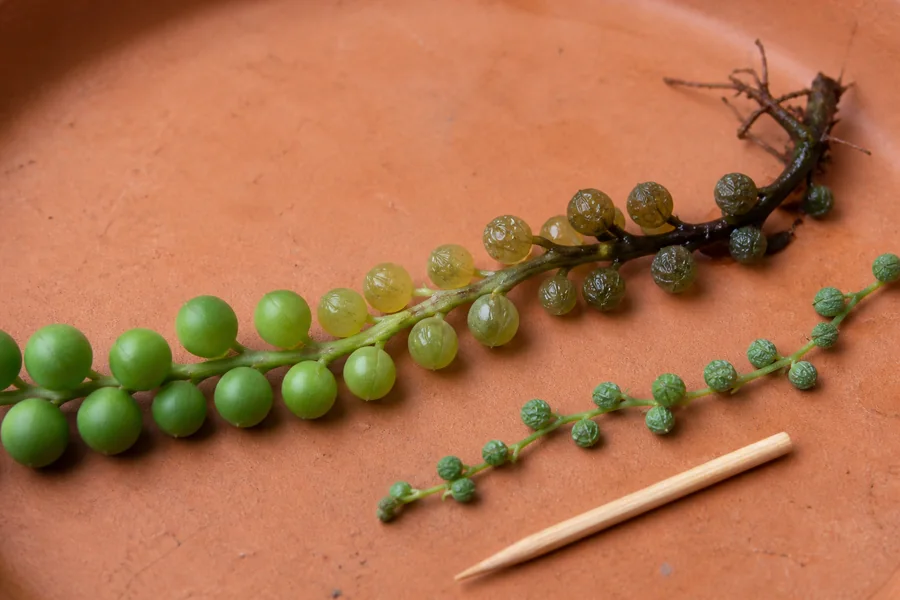
Choose one affected pearl and follow its attached stem in both directions instead of comparing loose leaves from different vines. A wet-collapse path usually becomes more translucent and softer as it approaches a dark damp stem or crown junction, while healthy tissue away from that boundary remains green and firm.
The clear stripe on a sound pearl is a normal epidermal window, so translucence matters only when the whole pearl also feels soft, swollen, or easy to crush. Continue along the stem: a firm green connection argues against rot at that point, whereas a glassy olive pearl beside brown-green wet stem tissue keeps the wet boundary moving toward the crown.
Dry stress belongs on a different path: shriveled String of Pearls become smaller and wrinkled but remain relatively firm on a green stem, and the shallow root zone is light and dry. Tan crisp patches confined to the exposed side after stronger sun, or translucence limited to tissue that touched cold glass, also lack the connected wet progression from stem to crown.
When one vine has wrinkled upper pearls but a soft dark base, let the crown and root-zone moisture break the tie. Oxygen-damaged roots can leave upper pearls looking thirsty while their remaining roots still sit in wet mix, so adding water before tracing the stem can accelerate the loss.
Decide Whether the Original Crown Can Stay
Support the trailing vines, slide the shallow root mat from the pot, and use a root-first overwatering check while removing only loose wet mix. This preserves viable surface roots while exposing the junctions where several vines enter the crown.
Firm roots may be pale, tan, or stained by the mix, so color alone is not decisive. Keep roots that bend without collapsing, and remove roots that feel slimy, hollow, or shed their outer layer.
Press each crown junction and trace any dark pinched tissue into the attached vine. Repot the original plant only when a connected firm crown and useful roots remain, otherwise discard it and continue with clean upper cuttings.
Keep Only Nodes Beyond the Wet Boundary
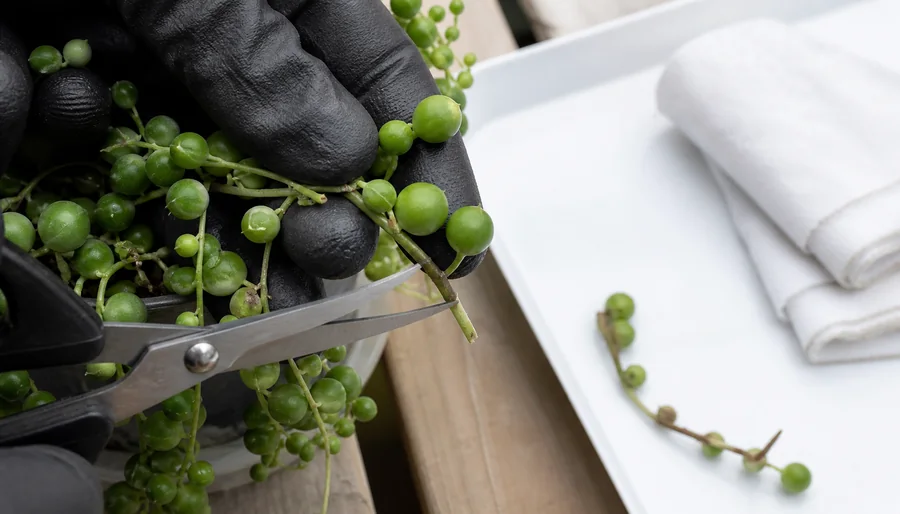
Set the cleanest vines apart before handling the rotten crown, then select a cut point beyond the last pearl or stem segment that feels soft. A useful cutting has several firm pearls and nodes connected to an interior that looks evenly green and dry rather than glassy, brown, or wet.
- Mark the direction of the crown, every soft pearl, and each dark or pinched stem segment before making the first cut.
- Clean the blade and cut through firm green stem beyond the visible wet boundary, keeping several sound nodes on the salvage piece.
- Inspect the cut interior immediately. Clean the blade and move farther into the healthy vine whenever brown, translucent, or tacky tissue remains.
- Place cuttings with an evenly green dry interior on a separate airy tray before returning to the crown or discarded material.
- Discard any vine when the wet boundary reaches its last usable node; a longer cutting is not safer when hidden discoloration remains.
The safe endpoint is a clean cutting whose final surface dries rather than a fixed cutting length or callusing clock. If the surface darkens again while it rests, recut with a clean blade before any node touches propagation mix.
Give Clean Nodes a Surface to Root On
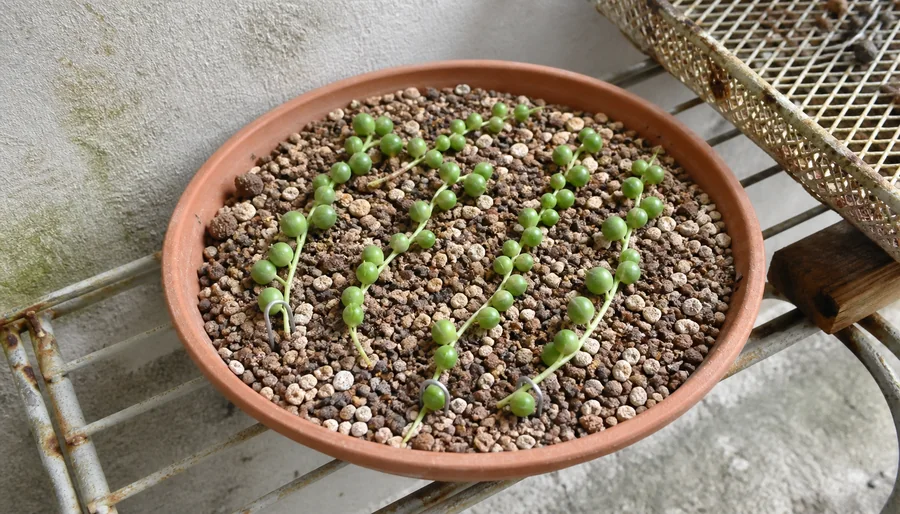
String of Pearls naturally roots where stem nodes rest against the ground, so the rescue pot should support surface contact rather than bury the remaining pearls. Choose a shallow container with an open drainage hole and avoid a deep unused reservoir below the future root mat.
Fill the pot with one consistent fresh cactus mix containing enough mineral material to drain promptly. Remove one or two pearls from selected nodes, then use a stem-cutting propagation method that pins those bare nodes against the surface while intact pearls stay above it.
Several short clean cuttings create several rooting points and make it easier to keep every questionable stem out of the nursery. Begin with the mix dry to barely moist while cut surfaces are fresh, then base later water on node contact, root development, pot weight, and how quickly the shallow layer dries.
Keep the dish in bright indirect light and test progress through gentle resistance rather than lifting vines from the mix. Firm new pearls and anchored nodes show that the shallow root system is working; only then return gradually to thorough watering followed by a real dry interval.
Recovery Plan
Softness should stop at the clean boundary
Sound cuttings stay firm and their cut surfaces remain dry. Any darkening or softness moving above a cut means decay remains, so clean the blade and cut again into firm tissue.
Nodes should begin to anchor
Rooting vines resist a very gentle nudge and keep their pearls firm before obvious new length appears. Repeated lifting tears new roots, while soaking an unrooted shallow pot recreates the original risk.
New pearls confirm the setup works
Firm new pearls and extending vines show that roots can support growth. Old damaged pearls do not become sound again, and a retained crown that develops renewed softness should be discarded rather than watered or fertilized.
Use a shallow draining pot, keep pearls and crown junctions at the surface, follow a wet-and-dry succulent watering cycle, and empty every saucer or cachepot. Reduce watering when light, temperature, or growth falls, and inspect the crown whenever drying time lengthens because correcting pot depth, blocked drainage, or retained runoff prevents more rot than extending a calendar interval alone.