
How to Grow String of Bananas and Fill a Trailing Basket
Curio radicans Asteraceae
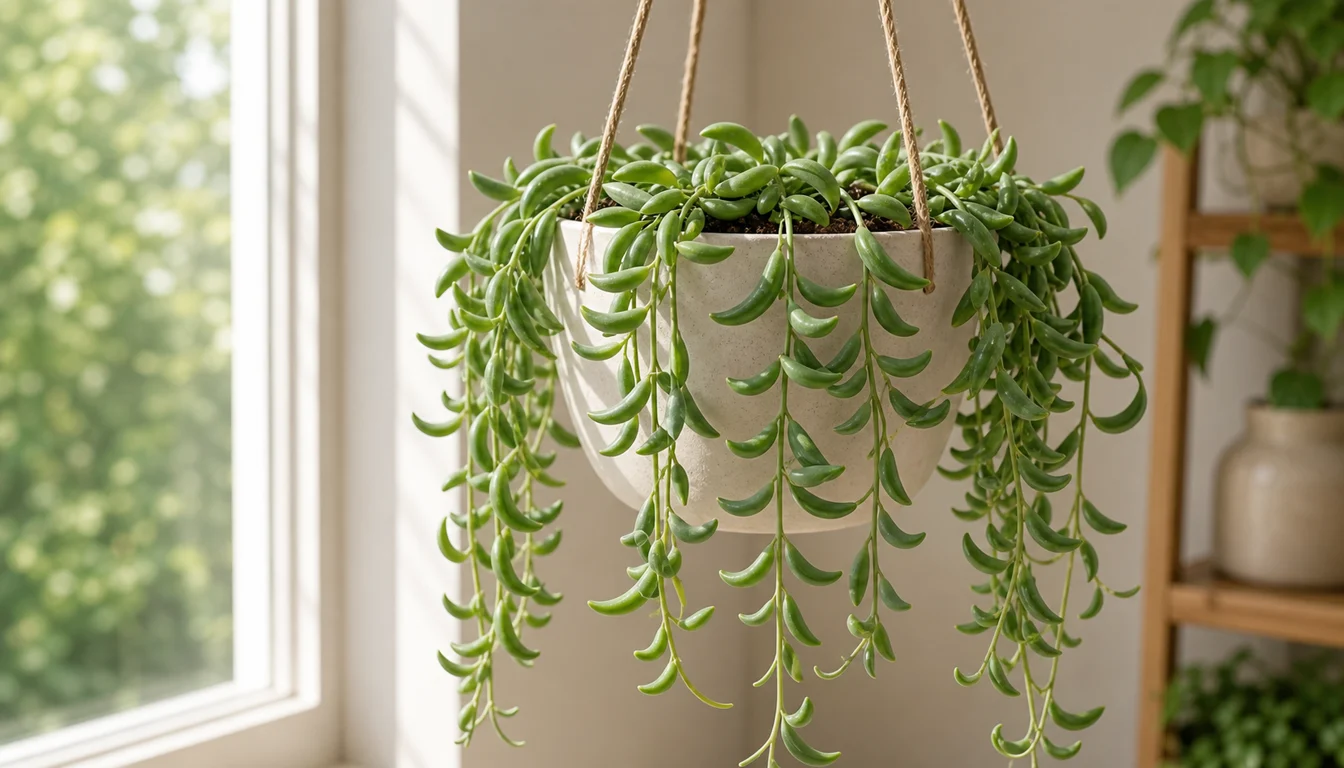
String of Bananas has curved, water-storing leaves on flexible trailing stems. Bright filtered light reaching the top and sides of the basket, a draining pot, and watering guided by the mix support a fuller display. Leaf softness alone cannot tell you whether the roots need water.
Care snapshot
Curved Leaves With a Window for Light
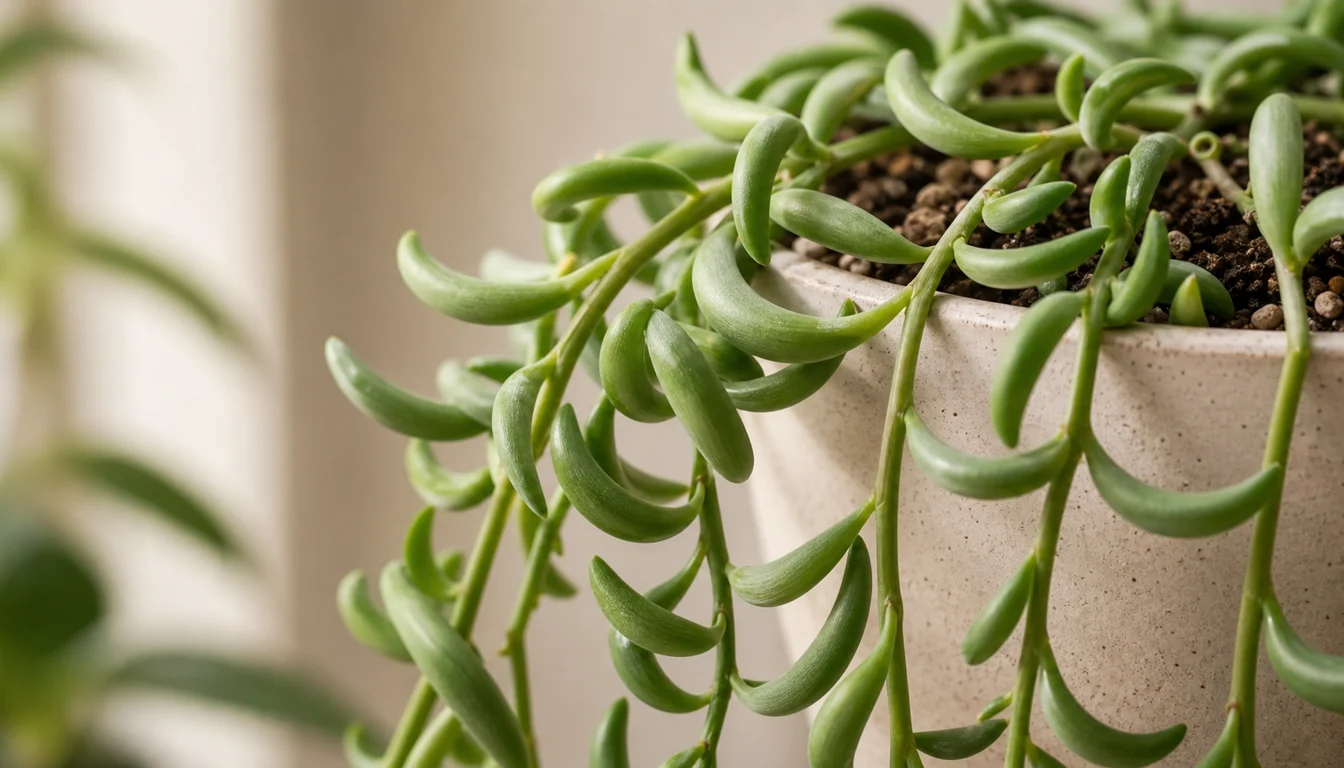
Curio radicans, often sold as Senecio radicans, is a trailing succulent in the daisy family. Its curved leaves explain the common name String of Bananas. It is an ornamental vine, not a banana crop or an edible plant.
The fleshy leaves store water, and a narrow translucent line allows light into the leaf interior. This leaf window is part of its normal structure. A darker line along a leaf is therefore different from a new soft or discolored patch spreading through the tissue.
NC State describes flexible stems that can trail about 1 to 3 feet and root where they contact suitable growing medium. In southern Africa the plant can form mats near the base of trees. Hanging baskets turn that creeping habit into a downward display.
A useful nursery inspection includes the top of the pot as well as its hanging ends. Extensive bare areas, soft stems or a saturated cover pot deserve attention even when the longest strands look attractive. Leaf firmness gives information about appearance, but it does not certify the condition of hidden roots.
The fine white or pale mauve flowers appear in small clusters and can have a cinnamon-like scent. Their presence is part of the plant’s growth, not a signal to increase watering or fertilizer automatically.
Choosing Among Similar Trailing Plants
String of Bananas suits a bright basket where flexible strands can hang without being caught by passing hands. NC State describes its stems as thicker and less delicate than those of String of Pearls. That is a handling difference, not evidence that it tolerates saturated soil or recovers from disease faster.
- String of Bananas
- Curved fleshy leaves on flexible trailing stems
- String of Pearls
- Nearly round leaves on finer stems
- String of Dolphins
- Leaves with lateral points that give a dolphin-like outline
- String of Turtles
- A different genus with small patterned leaves and more moisture-oriented care
The choice can follow the shape you want and the room available for the stems. A long trail needs clearance below its container, while the roots and upper growth still need an accessible place for watering and inspection.
Similar nicknames do not make these plants interchangeable. Keeping them in separate pots makes it possible to respond to each root ball instead of giving an entire mixed arrangement the same watering schedule.
Light for the Top and the Trails
NC State specifies bright indirect light reaching all parts of the plant. A high basket can leave its top in shadow even while the ends hang in front of the window. That difference matters when the rim looks sparse but the dangling strands continue toward the light.
An east- or west-facing position can work when the actual exposure is suitable. Nearby buildings, trees and the season alter what reaches the plant, so a window direction is not a guarantee. Filtered light avoids abruptly exposing indoor-grown foliage to strong midday sun.
Weak, stretched growth can support a concern about insufficient light, but missing leaves also call for a check of stems, moisture and damage. Fertilizer cannot replace light, and moving a plant into harsh sun can create a second problem before the first is understood.
Occasional rotation can expose different sides of a basket when growth is leaning toward one direction. The need follows the actual unevenness rather than a fixed weekly rotation rule.
Pot Moisture Comes Before Leaf Firmness
For String of Bananas, NC State recommends watering when the top half of the soil feels dry. This is a depth relative to the pot, not a fixed inch measurement for every container. The lower mix can still hold moisture when the exposed surface looks dusty.
Pot weight helps you compare a recently watered container with the same pot as it dries. A leaf beginning to wrinkle adds context, but it cannot replace that moisture assessment. Damaged roots may fail to supply a leaf even when the surrounding mix is wet.
- Check moisture below the exposed surface without forcing a finger through tangled stems. Compare the weight with the same pot after watering.
- When enough of the mix has dried, wet the root ball evenly and let excess water escape through the drainage holes.
- Empty water caught in an outer pot or saucer before returning the basket to its position.
- Recheck the mix as it dries. Light, heat, pot material and root volume can change the interval.
A root ball that has shrunk away from the pot can shed water down its sides. Runoff alone then gives an incomplete picture of whether the center was wetted. The aim is to reach the roots without leaving the basket standing in water afterward.
Continued collapse, spreading discoloration or deteriorating stems may need a closer root inspection and help from a local Extension service. A firm tip taken from that plant is not automatically disease-free propagation material.
A Draining Mix and a Pot That Fits the Roots
A coarse, well-drained cactus or succulent potting mix suits the species. Ingredients and container conditions vary, so a commercial mix still needs to drain properly in the pot you use. A layer of grit on the surface cannot correct saturated material below it.
Drainage holes allow excess water to escape. A decorative outer pot can remain part of the display if the inner pot drains and collected runoff is removed. Without that outlet, a gritty-looking surface can hide a wet root zone.
A pot only slightly larger than the root ball limits the excess mix that remains wet after watering. Container depth follows the roots and the stability needed for a hanging plant. A shallow basket is not automatically drier or safer merely because it is shallow.
Terracotta loses moisture through its walls, whereas plastic and glazed pots usually retain it longer in comparable conditions. That affects how often the mix needs checking, not whether the plant needs water on a particular day.
Repotting is useful when roots fill the container, the mix has deteriorated or it no longer wets and drains effectively. Supporting the trailing stems during the move reduces pulling at their attachment points. A larger basket alone will not correct lost leaves caused by poor light or declining stems.
Rooting Stems and Refilling a Sparse Basket
String of Bananas roots along its stems, which makes nodes useful places to inspect before propagation. A node is a leaf attachment on the main stem. The curve of a detached leaf is not a substitute for a stem section with the parts needed for the method described here.
RHS describes both cuttings and layering for this group of trailing succulents. A cutting is detached before it roots. A layered stem remains attached to the parent while a portion rests on moist growing medium, and it is separated after roots develop.
- Select a stem without visible infestation, collapse or spreading damage. Use a clean tool to take a cutting, or leave the stem attached for layering.
- Set the lower nodes against moist, well-drained rooting mix, keeping leaves above the surface.
- Hold a laid stem gently against the mix if necessary. A pin should not crush the stem.
- Keep the rooting area moist without saturating the pot. Bright filtered light reduces exposure stress while roots develop.
- Move or separate the new plant only when roots have formed and can remain attached during handling.
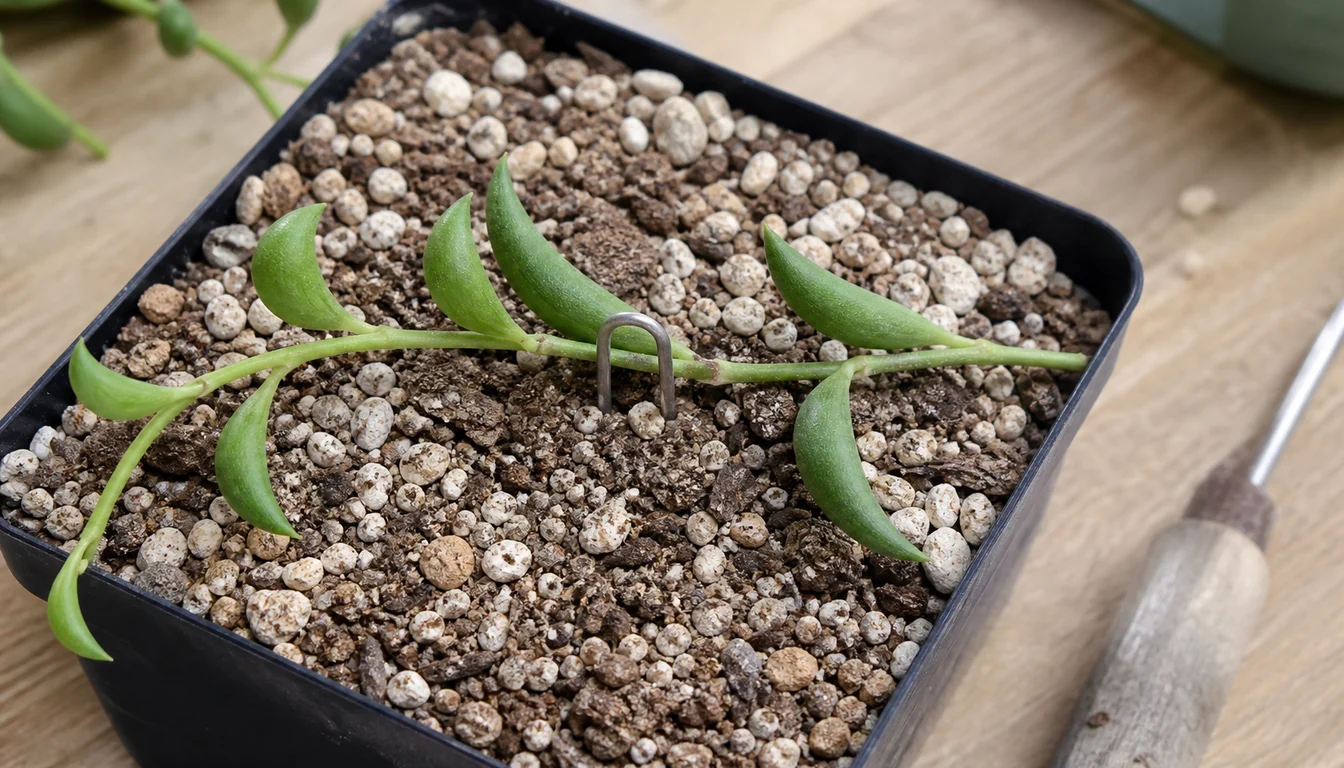
Looping an attached strand onto the top of its own pot can fill a gap once it roots. That works best after the cause of the gap has been addressed. Adding cuttings to a persistently wet or poorly lit basket does not remove the condition that caused the original decline.
A green cutting is not proof that roots have formed. Rooting time varies with the material and its conditions, so the plant’s development is more useful than a promise tied to a particular week.
Wrinkles, Stem Damage and Pests Need Different Checks
Wrinkling describes a change in the leaf’s water content or condition, but it does not reveal the cause by itself. The useful distinction is between a dry root ball, persistently wet conditions and actual damage or infestation.
- Wrinkled leaves with dry mix
- Assess water shortage and whether a previous watering reached the root ball.
- Wrinkled leaves with wet mix
- Check runoff, drainage and stem condition before adding more water.
- Cottony deposits at a joint
- Look closely for mealybugs and separate a suspected infestation while identifying it.
- Fine webbing or stippling
- Inspect undersides and joints for mites rather than treating wrinkles alone.
- New gaps or missing leaves
- Review light at the rim, physical damage and root conditions together.
NC State lists aphids, mealybugs, scale and spider mites among possible pests. An identified organism supports a treatment choice more strongly than a general decline in appearance. Products must be labeled for the plant and intended indoor use.
Pest treatment can injure foliage, and one wipe or spray may leave hidden stages behind. Follow-up inspection depends on the identified pest and the treatment label. New growth alone does not prove that every insect has gone.
A red or brown area appearing after stronger sun makes exposure relevant, especially on the illuminated side. Softening, spread or additional symptoms still need consideration.
Seasonal Changes Follow the Growing Conditions
More light and suitable warmth often bring faster growth and water use. NC State recommends spring or summer pruning to manage growth and encourage branching. Indoors, grow lights and room conditions can shift when the plant is actively growing.
Trimming stems that catch on furniture can make a display easier to maintain. It also produces possible cutting material, provided the plant is healthy enough for propagation.
RHS recommends modest feeding during active growth for these trailing succulents. A succulent fertilizer used according to its label, with nutrients already present in the mix taken into account, avoids adding fertilizer solely because a strand looks thin.
Water use often slows in dimmer or cooler conditions. The same moisture observations still apply, and a winter leaf that shrivels deserves attention rather than an automatic decision to withhold water until spring.
NC State lists outdoor hardiness in Zones 10a through 11b and notes frost intolerance. A zone describes outdoor winter climate, not indoor humidity or the exact temperature at a window. An outdoor basket needs protection from cold and a gradual adjustment to brighter exposure.
Toxicity and a Reachable Trailing Plant
Curio radicans is toxic if ingested. NC State identifies a risk to humans, pets and livestock, with dogs, cats and horses named on the species record. It also notes that sap can cause skin irritation or a rash.
The source lists pyrrolizidine alkaloids and warns of liver injury after large ingestions. That does not let a plant-care article determine a safe amount or predict the outcome for an individual animal. Do not wait for a large bite or visible symptoms before seeking advice about a suspected ingestion.
A hanging hook is useful only when the vines remain out of reach. Cats may reach a shelf from nearby furniture, and falling cuttings can undo the benefit of height. A stable hanger and removal of dropped pieces reduce access while retaining light at the top of the pot.
Gloves reduce sap contact during pruning. For a household where every suitable bright location remains accessible to a chewing pet, a species with an applicable non-toxic listing, such as Spider Plant, offers a different choice. That listing still does not make a plant a food or guarantee that chewing causes no upset.
Sources & References
Related Plants
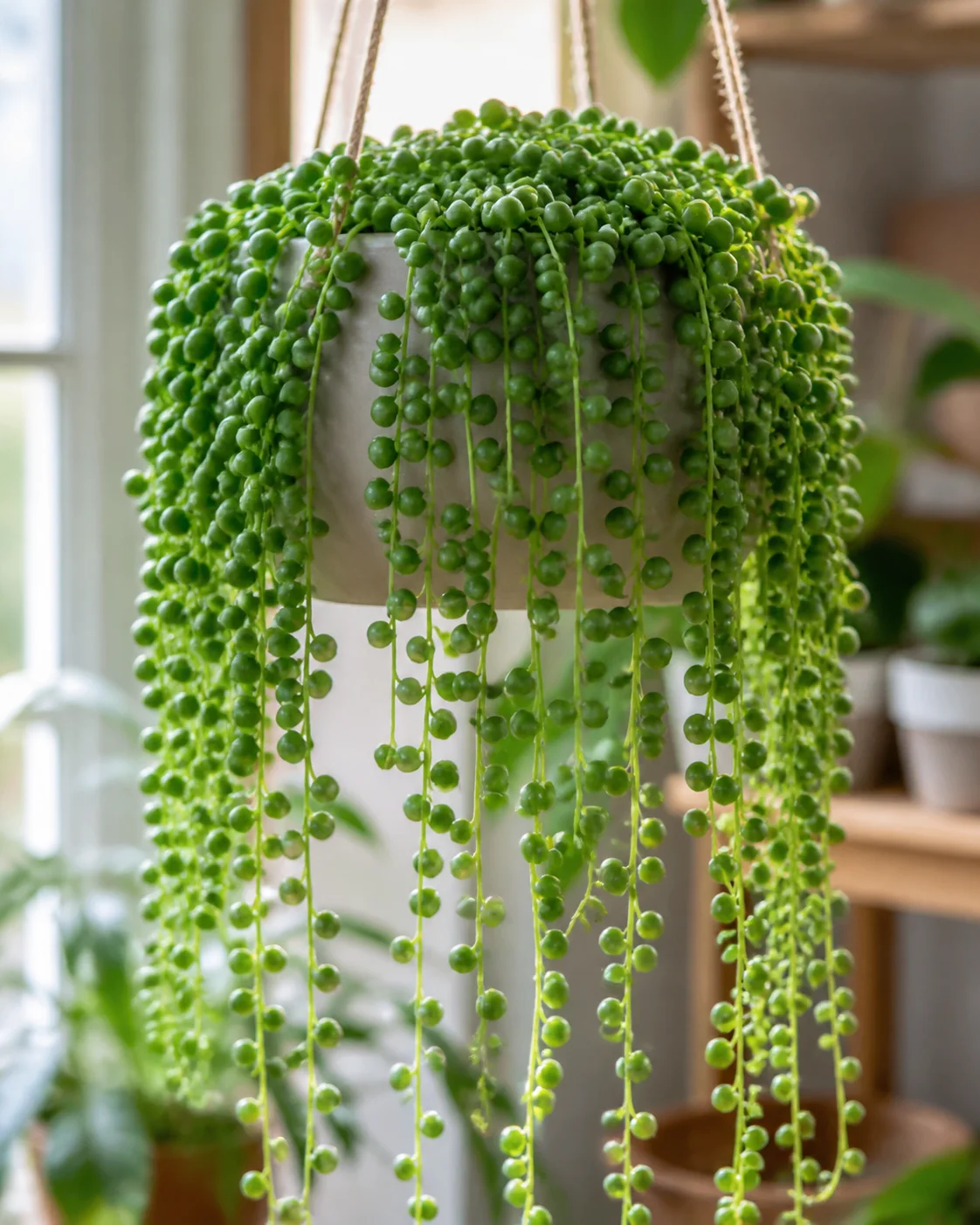
String of Pearls
Round bead-like leaves create a different trailing texture from the curved leaves here.
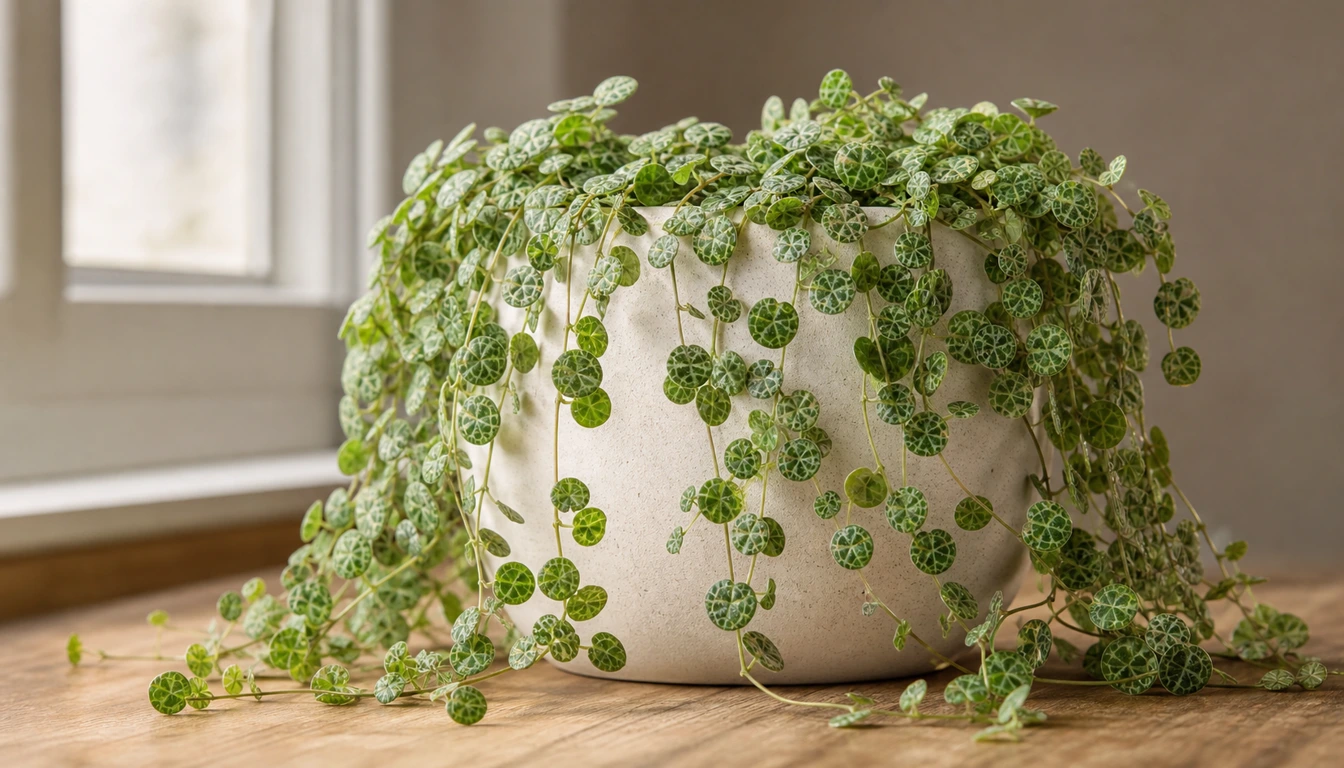
String of Turtles
Small patterned leaves grow on fine Peperomia stems with different moisture needs.
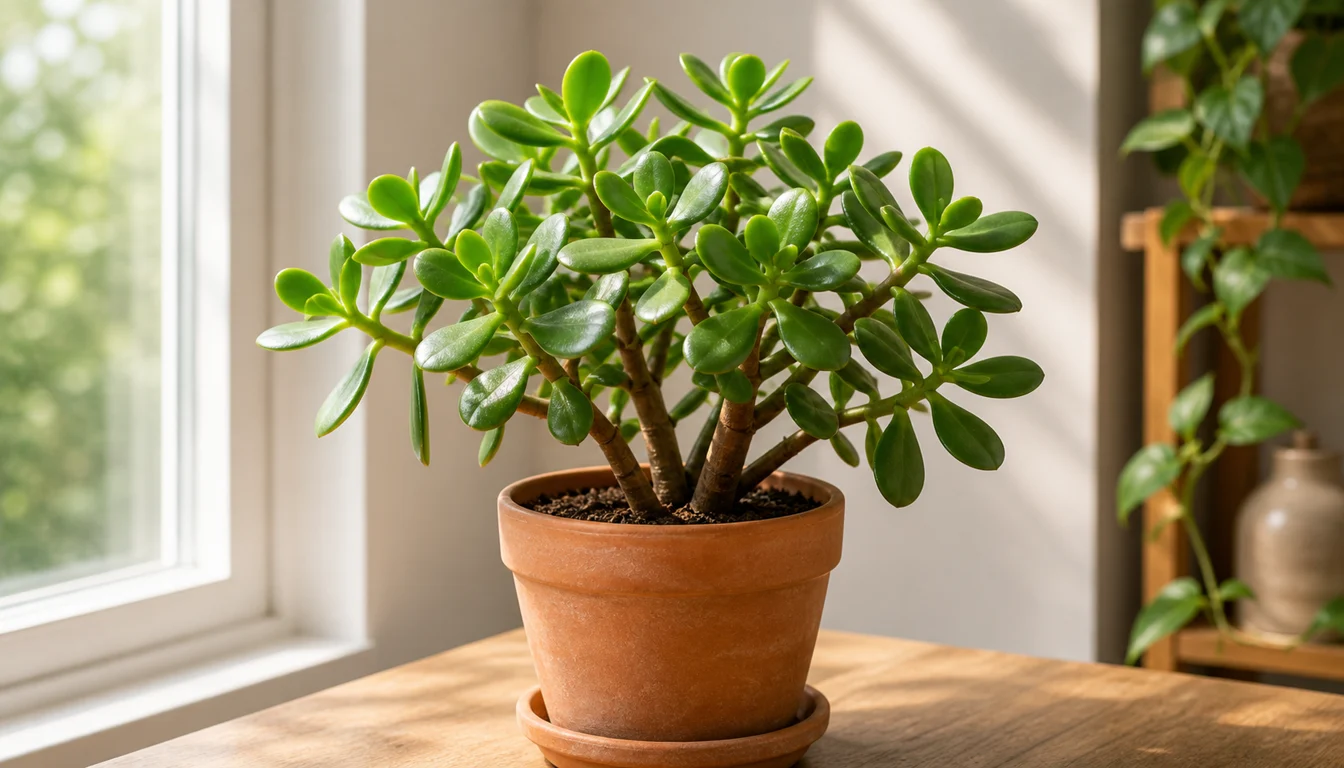
Jade Plant
An upright succulent with thick leaves and a steadier tabletop shape.
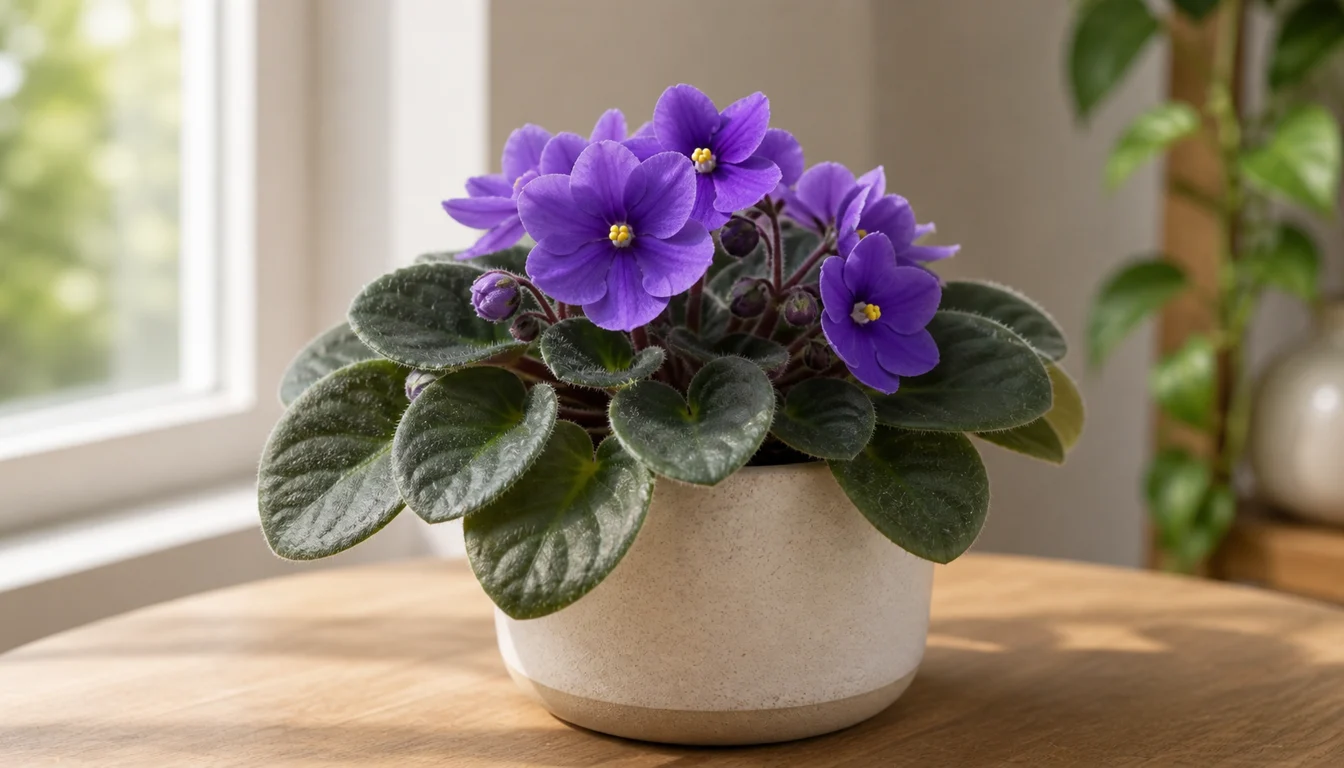
African Violet
African Violet is a windowsill bloomer that rewards steady, small-pot care.
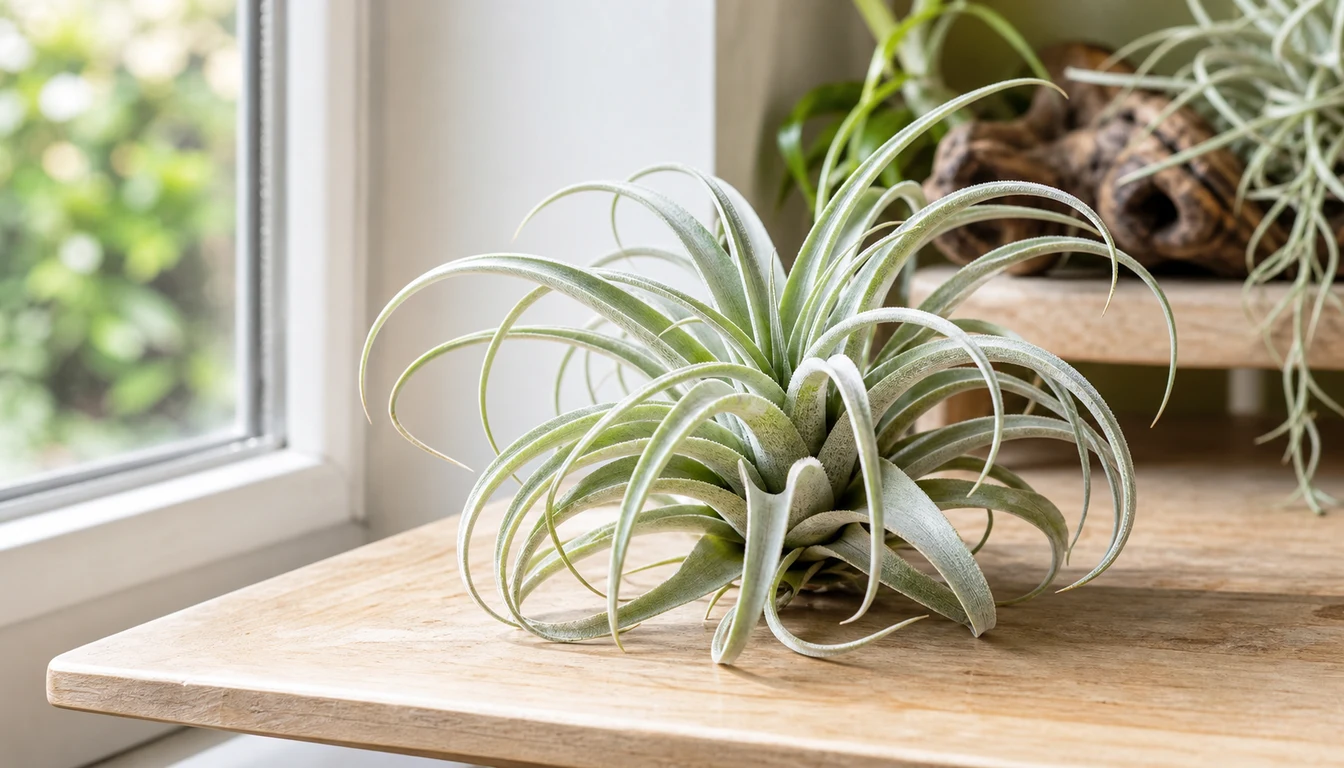
Air Plant
Air plants are living sculptures that thrive without soil, anchoring to driftwood, rocks, or shells while drawing…
Alocasia
Alocasias include compact, textured houseplants and large elephant ears that need substantial floor space.