verifiedSource Reviewed
Pink Princess Philodendron
Philodendron erubescens 'Pink Princess'
Family: Araceae
wb_sunnyLight
Bright indirect; 6–10 hours daily to maintain pink variegation
water_dropWater
Moderate; let top 1–2 inches dry between waterings
heightHeight
Climbs 6–10 ft indoors on a moss pole
publicZone
Outdoors in Zone 10–12; indoors anywhere
Native Region
Colombia (cultivar of a Colombian species)
paletteThe Pink Has to Share the Leaf
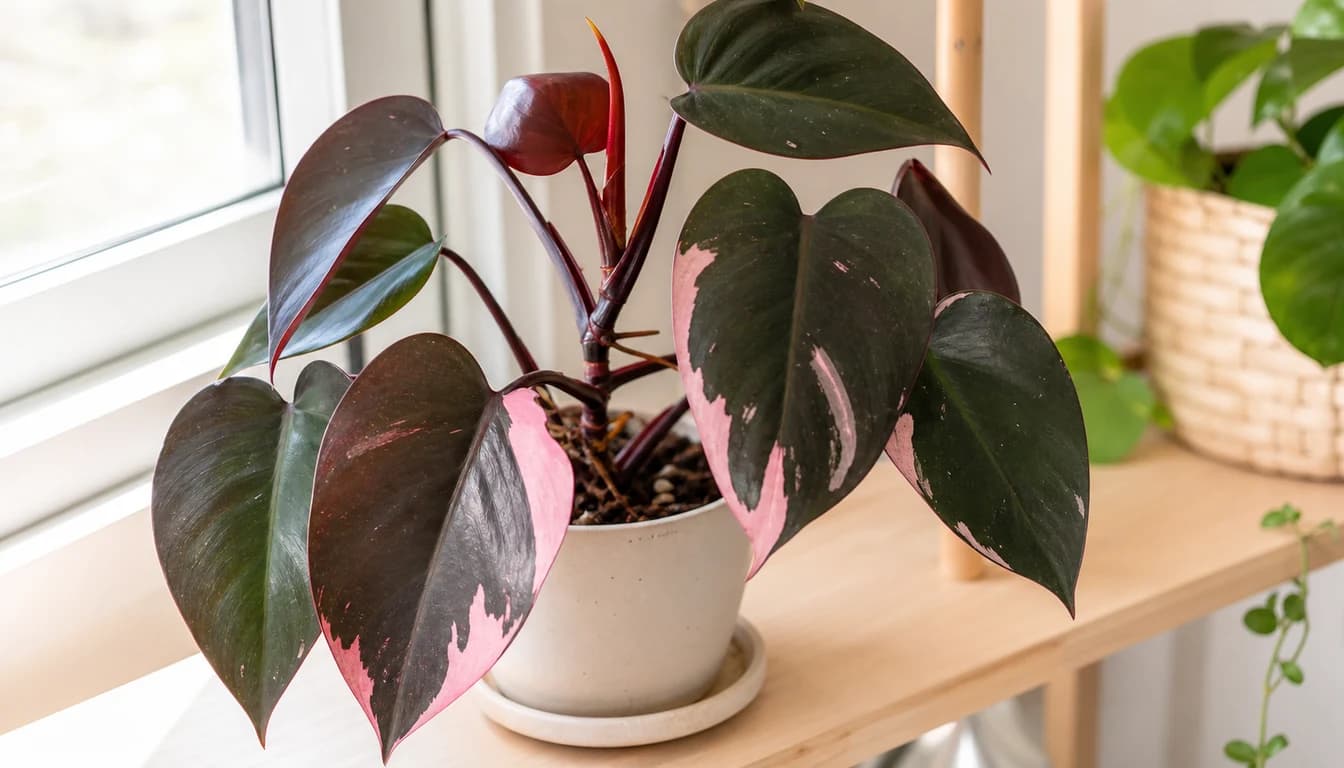
The first care decision is visual, not technical. A useful Pink Princess Philodendron leaf has dark green or burgundy tissue beside the pink, because green tissue feeds the vine while the pink areas mainly give color.
That is why the most expensive-looking leaf can be the weakest long-term signal. A plant with one nearly all-pink leaf and several pale new leaves may stall faster than a marbled plant that looks less dramatic on the shelf.
lightbulbBuy balanced variegation
Choose a plant with pink on more than one node, dark green tissue on most leaves, and a firm climbing stem. That combination gives you color without asking the plant to grow on decoration alone.
Use this as a shelf check before you compare prices. The cheapest plant with repeated balanced nodes often beats the showiest single-leaf listing.
- check_circleLook for pink streaks on the stem, not just one painted-looking leaf.
- check_circleAvoid vines with mushy petioles, collapsed new leaves, or only white-pink growth.
- check_circlePick a pot with at least three healthy leaves below the newest growth point.
This page stays focused on the variegation problem. For a simpler trailing philodendron with lime streaks, Philodendron Brasil is the sibling that asks less of your light setup.
manage_searchChoose the Plant by Stem History
A single pink leaf can be a lucky accident; repeated color from the same growth point tells you the vine may keep producing useful variegation. Turn the pot and inspect the stem before you pay for the plant.
infoReversion is a stem story
One or two greener leaves can happen after low light, but a long run of plain green nodes means that part of the vine may keep acting green.
Use the table after you have looked at the stem, because the leaf pattern alone can mislead you.
Best buyMarbled leaves, dark green tissue, visible pink on several nodes
Risky buyOne splashy leaf, weak newest leaf, or no color on the next node
Skip for beginnersAll-pink growth with slow extension and browning edges
Collectors may chase rare color, but most indoor growers want a plant that can recover from pruning. If you want the philodendron look without the variegation gamble, heartleaf philodendron is the easier baseline.
Guide — See AlsoAir Purifying Plants for Cleaner Indoor AirLearn how to pick, place, and care for air purifying plants so they help your indoor air instead of just looking pretty.
chevron_rightwb_sunnyPut Bright Light on the Next Node
New leaves decide their color while they are forming, so the useful light target is the active growth point, not the old pink leaf you are admiring. Give the vine bright indirect light for most of the day and protect it from harsh midday glass heat.
If the newest leaf opens mostly green, move the plant closer to the window or add a grow light before you blame fertilizer. If pink areas bleach beige or crisp, the light is too direct or the leaf is drying faster than roots can supply water.
Rotate only enough to keep the climbing stem straight. Constant spinning gives every node a slightly different light story, which makes color decisions harder to read.
warningDo not chase sunburn
Direct afternoon sun can damage the pink tissue first. More light helps color only when the leaf stays cool and hydrated.
This is the main difference from Neon Pothos, where color fades more evenly. Pink Princess Philodendron can keep one dramatic leaf while the next node quietly reverts.
Email Updates
Join the KnowTheYard update list
Zone-specific advice, seasonal reminders, and new plant guides — no filler.
water_dropWater for Roots, Not for Color
Pink color does not mean the plant wants extra water. Water when the top 1-2 inches of mix feel dry and the pot feels lighter, then soak the whole root ball until water drains out.
Small sips create a wet top layer and a dry lower root zone. That pattern can yellow older leaves while the newest leaf still looks fine, so it gets misread as a variegation issue.
- fiber_manual_recordDroopy leaves plus a light pot: water deeply.
- fiber_manual_recordYellow lower leaf plus a heavy pot: wait and check drainage.
- fiber_manual_recordBrown pink patches plus dry mix: raise moisture consistency before moving the plant.
For timing habits, the houseplant watering frequency guide is more useful than a calendar. This vine changes speed with light, pot size, and support.
Guide — See AlsoBest Herbs to Grow Indoors for Real Harvests, Not Spindly PotsChoose indoor herbs that can actually produce in your light, temperature, and container setup, then match each one to th
chevron_right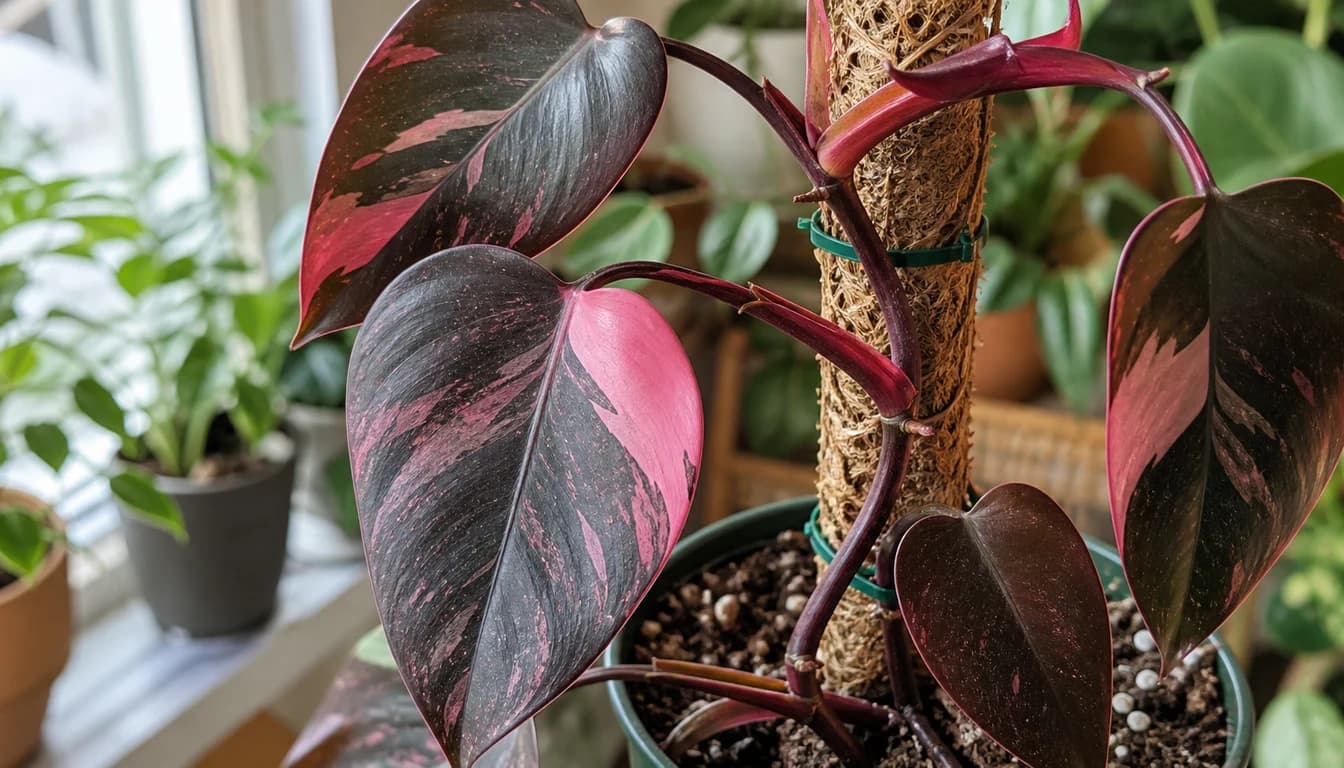
compostBuild an Aroid Mix That Holds the Stem Up
The roots need air around them because this vine climbs and anchors as it grows. A dense peat-only mix can stay wet near the stem base, which is exactly where a slow variegated cutting cannot afford rot.
Use a chunky aroid mix with potting soil, orchid bark, perlite, and a little coco coir or fine compost. The goal is a mix that wets fully, drains fast, and still holds enough moisture between waterings.
Install the pole when you pot the plant, not after the stem is already leaning. A late pole forces you to bend a slow-growing vine into shape.
Repot only one size up. A big decorative pot keeps extra wet mix around a small root system, and the plant responds with slower leaves rather than bigger pink patches.
Mix jobAir around roots, steady moisture, fast drainage
Pot jobDrainage holes, stable weight, room for a pole
Repot signalRoots circling tightly or water running through too fast
content_cutCut Only Nodes That Can Repeat the Color
Propagation is not a leaf-copy trick. A cutting needs a node, and the node has to carry the variegation pattern you want to continue.
Cuttings from a plain green stretch often root well but grow plain. Cuttings from very pink sections may root slowly because they have less working leaf tissue.
lightbulbAim for one useful leaf and one strong node
The best cutting has a firm node, an aerial root bump, and a leaf with both green and pink. That gives the cutting food and a chance at color.
Root in damp sphagnum or a very airy mix, then wait for active root growth before potting. If you want fast, forgiving cuttings, Golden Pothos is a better practice plant.
- 1Pick a node with visible pink striping on the stem.
- 2Cut with a clean blade below the node.
- 3Keep the medium barely moist and warm.
- 4Pot up after roots branch, not after the first white nub.
Guide — See AlsoBest Indoor Plants for Every Room and Light LevelA practical guide to choosing the best indoor plants for your home, covering beginner-friendly picks, low light champion
chevron_rightbug_reportSeparate Color Loss From Trouble
A greener new leaf is usually a light or node-history problem. Stippled leaves, sticky spots, and distorted new growth point to pests or stress on the leaf surface.
Spider mites show as fine speckling first, especially on tender new leaves. Mealybugs hide at petiole joints and make a slow plant even slower.
Root trouble has a different pattern: yellowing starts low, the pot stays heavy, and the stem base may feel soft. Do not prune for color while the root system is failing.
- check_circleCheck the underside of the newest leaf with a flashlight.
- check_circleWipe dust from dark leaves so mites cannot hide in the shine.
- check_circleQuarantine new purchases before placing them near Monstera or other aroids.
calendar_monthPrune in Growth, Leave Winter Quiet
Warm, bright months are the only good time to correct a reverted vine. Cut back to the last node that showed pink, then give the new shoot enough light to prove itself.
In winter, the smarter move is restraint. Short days slow the vine, so heavy pruning can leave you staring at a bare stem while the plant waits for better light.
infoSeasonal rule
Use spring and summer for pruning, staking, feeding, and repotting. Use winter for cleaning leaves, checking pests, and keeping water modest.
A light feeding schedule from indoor plant fertilizer helps active growth, but fertilizer cannot create pink from a green node.
petsKeep the Expensive Vine Out of Reach
The pet issue is simple: philodendrons contain calcium oxalate crystals, so Pink Princess Philodendron is not a chew-safe plant for cats or dogs.
Set the pot where the pole can stand firm and where falling leaves will not tempt pets. For a safer foliage plant, compare this with Prayer Plant, which is usually the better pet-home choice.
eco
Keep Exploring
Related Plants
 Houseplants
Chinese Money Plant
Chinese Money Plant is a compact Pilea grown for round coin leaves, a balanced saucer-like crown, and pups that can be shared once they have ==**their own r
 Houseplants
Alocasia Polly
Alocasia Polly is the arrow-shaped showpiece that looks like it was designed by a graphic artist — dark, glossy leaves with thick, white veins in a pattern
 Houseplants
Monstera
Monstera Deliciosa is not just a big-leaf houseplant. It is a climbing vine that makes larger, split leaves only when light, support, and node growth all wo
quiz
Frequently Asked Questions
Why is my Pink Princess Philodendron turning green?expand_more
Low light can cause greener new leaves, but node history matters too. Move the active growth point into brighter indirect light first; if several nodes stay plain green, prune back to the last node that carried pink.
Are all-pink leaves good?expand_more
They look special, but they are weak growth. Keep leaves that mix pink with green, because the green tissue feeds the vine.
Does Pink Princess Philodendron need a moss pole?expand_more
It grows better with support. A pole keeps the stem upright, exposes nodes to steadier light, and helps the plant make larger leaves.
Can I propagate a pink leaf by itself?expand_more
No. A leaf without a node will not become a new vine. Use a cutting with a node that shows pink on the stem.
Is Pink Princess Philodendron pet safe?expand_more
No. Keep it away from pets because philodendron sap can irritate the mouth and stomach when chewed.