
Can a Majesty Palm Thrive in Your Home? Space and Care
Ravenea rivularis Arecaceae
Majesty palm needs bright filtered light, consistent root moisture, and humid air. Its arching fronds need room, and brown tips call for a check of moisture, airflow, salts, and pests rather than an automatic extra watering.
Care snapshot
A Riverbank Palm in an Indoor Pot
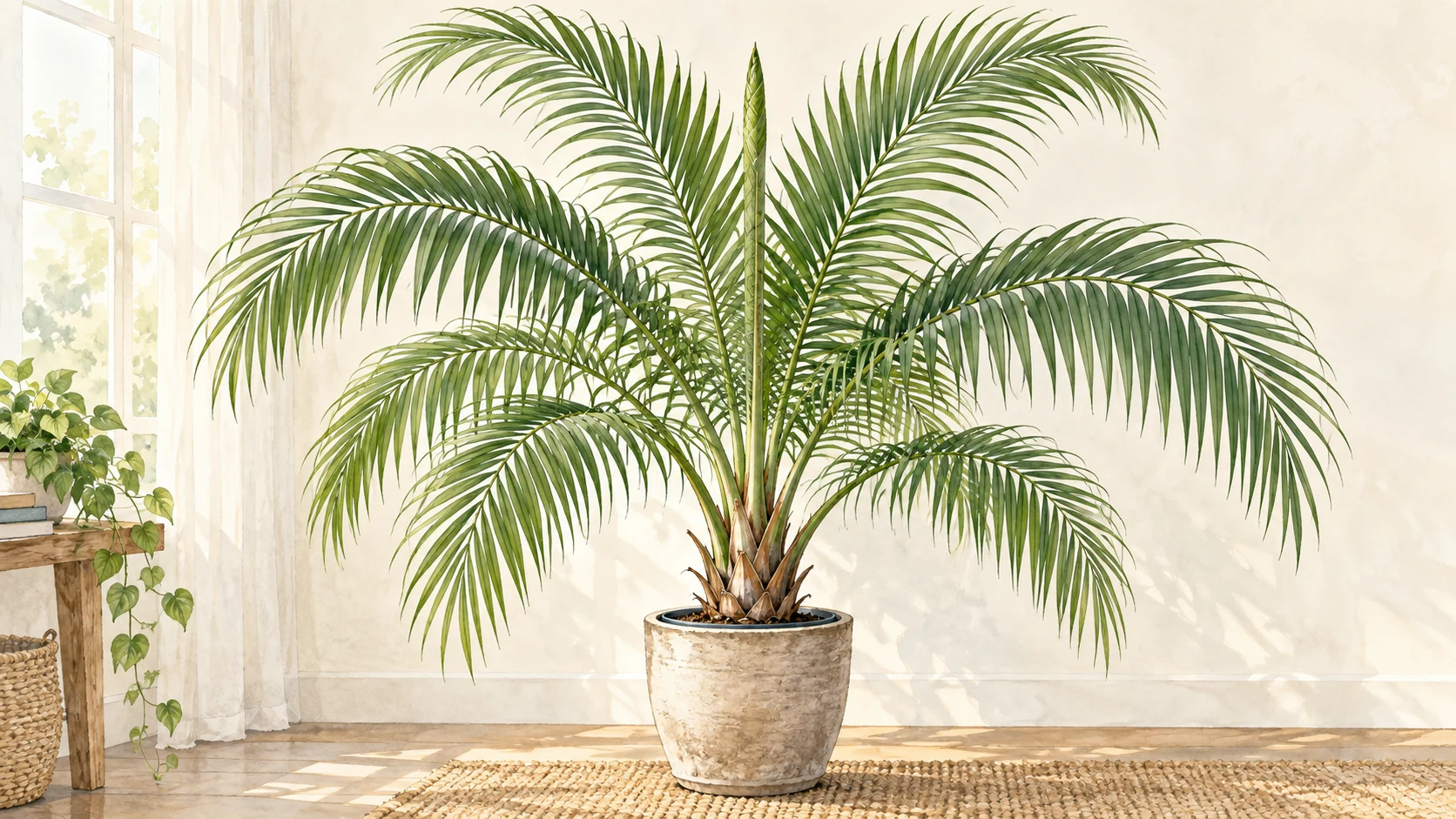
Majesty palm, Ravenea rivularis, comes from Madagascar, including river and stream margins. It is a solitary palm even when several young plants share a nursery pot. Long, feather-shaped fronds emerge around a central growing point.
That origin helps explain its need for consistent moisture, but riverbank conditions are not a recipe for leaving a container in standing water. In a pot, water has to reach the roots and then drain so air can return to the mix.
NC State describes indoor plants around 5–10 feet tall, compared with much larger mature palms in their native habitat. A young palm may fit on a bench, but the eventual spread of its fronds can make a floor position necessary.
A bright room with space beside the window and access for watering is a better match than a dim, crowded corner. Parlor palm offers a different scale for a smaller room, although it still needs suitable light and care.
The Majesty palm illustrations show plant form and separate rooted crowns. They were created with AI and do not document a growing trial or an actual root inspection.
Space and Condition Matter More Than Height
Stores commonly sell Majesty palms by container size. The visible canopy matters as much as pot width because the fronds need clearance from furniture, doors, and walkways. A smaller healthy plant can be easier to place beside useful light.
A developing green spear and intact leaflets are useful observations when buying. Clipped brown ends show past damage, but they cannot reveal whether the cause was dry air, watering, salts, or another problem. The stem bases, root-zone odor, and leaf undersides deserve attention too.
- Majesty Palm
- Broad arching fronds with a need for consistent moisture, humid air, and bright filtered light.
- Areca palm
- A naturally clumping palm with multiple stems and a different canopy form.
- Parlor palm
- Slower and smaller palm for lower light and tighter spaces.
- Bird of paradise
- Broad tropical leaves for very bright rooms with more floor space.
Light Reaches the Fronds, Not Just the Pot
Bright, indirect light is a useful indoor starting point. The upper and outer fronds need exposure, so a pot near a window can still be poorly placed if most of its canopy is above or beside the daylight.
An east-facing window may provide gentler morning exposure. Strong south or west sun can need filtering, depending on nearby buildings, trees, season, and the distance from the glass. Window direction alone does not establish a safe position.
A dim position can slow growth and water use. Smaller new fronds or yellowing are reasons to review light, but roots, nutrients, temperature, and pests can also affect growth. Moving the plant into stronger light is not proof that those other causes are absent.
A change in placement also changes how quickly the pot dries. Moisture checks continue during the move, while exposure increases gradually enough to avoid suddenly putting shaded foliage in hot sun.
Humidity Helps, but a Brown Tip Has Several Possible Causes
Majesty palm prefers humid air. Heating, air conditioning, and a nearby vent can create a difficult position even when the root ball contains moisture. A room humidity reading provides better context than assuming every brown edge means the air is dry.
A humidifier can raise room humidity, while grouping plants and keeping a pebble tray below the pot base can provide local support. Their effect varies with the room and airflow. Water beneath the tray must not reach the drainage holes.
Iowa State explains that misting has little lasting effect because droplets dry quickly. A wet leaf surface is not the same as sustained humidity, and repeated spraying does not repair a waterlogged root ball.
Distance from direct heating and cooling airflow can help with placement. Humidity changes do not establish pest control, so leaf undersides and the central growth still need inspection if damage continues.
Moisture at Depth Sets the Watering Decision
The aim is an evenly moist root zone with drainage. As the upper mix begins to dry, compare it with moisture deeper in the pot and the change in container weight. A cool surface or a single dry inch does not by itself describe the whole root ball.
Pour enough water to moisten the whole root ball, then empty the saucer. Small sips leave dry pockets, while standing water keeps lower roots short on air.
Dry, light mix supports investigating inadequate water, while continuing yellowing above persistently wet mix calls for a drainage and root assessment. These are clues to check, not diagnoses established by leaf color. An old lower frond can also age while new foliage grows.
If the whole plant yellows while the pot is still heavy, compare the pattern with Majesty Palm yellow leaves before watering again. If the damage stays mostly at the tips, use Majesty Palm brown tips to separate dry air, minerals, and missed watering.
Fertilizer cannot substitute for functioning roots. A dry root ball, trapped water, or confirmed pests needs the relevant correction before feeding can be evaluated.
Stability, Drainage, and Potting Mix Work Together
A tall Majesty Palm needs a stable base, but a heavy pot is not useful if water collects around the roots. A nursery pot inside a ceramic cover pot can work when the inner pot has usable drainage holes and the cachepot is checked after watering.
A container potting mix needs to retain useful moisture while allowing drainage and air around the roots. UF guidance for container palms describes durable, well-aerated blends rather than one mandatory recipe. Dense garden soil behaves differently in a container.
Water running around the edge can leave the center dry when mix has shrunk from the pot. Slow rewetting and a check of the center help distinguish that problem from blocked drainage or overcrowding. Water leaving the pot quickly is not, by itself, evidence that the roots were watered.
Roots filling the container or deteriorated mix can justify repotting. Root disturbance needs restraint, especially where separate young palms have become intertwined. The existing planting depth and the base where roots emerge need protection.
A bigger pot used too early can hold wet unused mix around the lower roots.
- Pot weight
- Heavy enough to hold tall fronds upright.
- Drainage
- Open holes plus a saucer or cachepot you empty.
- Mix texture
- Moisture-retentive indoor mix loosened with bark or perlite.
- Repot timing
- Roots fill the container or deteriorated mix no longer provides suitable moisture and drainage.
Feeding Follows Growth and the Product Label
A palm growing in suitable light and a functioning root zone can benefit from a fertilizer labeled for indoor container plants. The label sets dilution and frequency, and fertilizer already present in fresh mix counts toward the supply.
Products sold for landscape palms are not automatically suitable for a nursery pot. UF distinguishes container nutrition from field and landscape use, where the rooting volume and application rates differ. A yellow frond does not identify a particular missing nutrient.
White deposits on the mix or pot call for a review of water quality and feeding. Soluble salts can affect roots, but visible residue is not a measurement of the concentration around them. Flushing is appropriate only when water can drain freely and the root zone can tolerate watering.
Repotting addresses roots, container fit, or failing mix. A modestly larger container avoids adding a large volume of wet, unrooted material. There is no fixed recovery week in which every palm needs the same combination of shade, water, and fertilizer.
Separate Plants in One Pot Are Different From Stem Cuttings
Each Majesty palm has its own crown. Growers often plant several seedlings together for a fuller pot, so a cluster of leaves does not necessarily mean one naturally clumping plant.
NC State describes separating those neighboring plants into their own pots. That means preserving each individual crown and its roots, rather than cutting one crown into pieces. Tangled roots can make separation difficult, and UF advises minimizing disturbance to palm seedling roots.
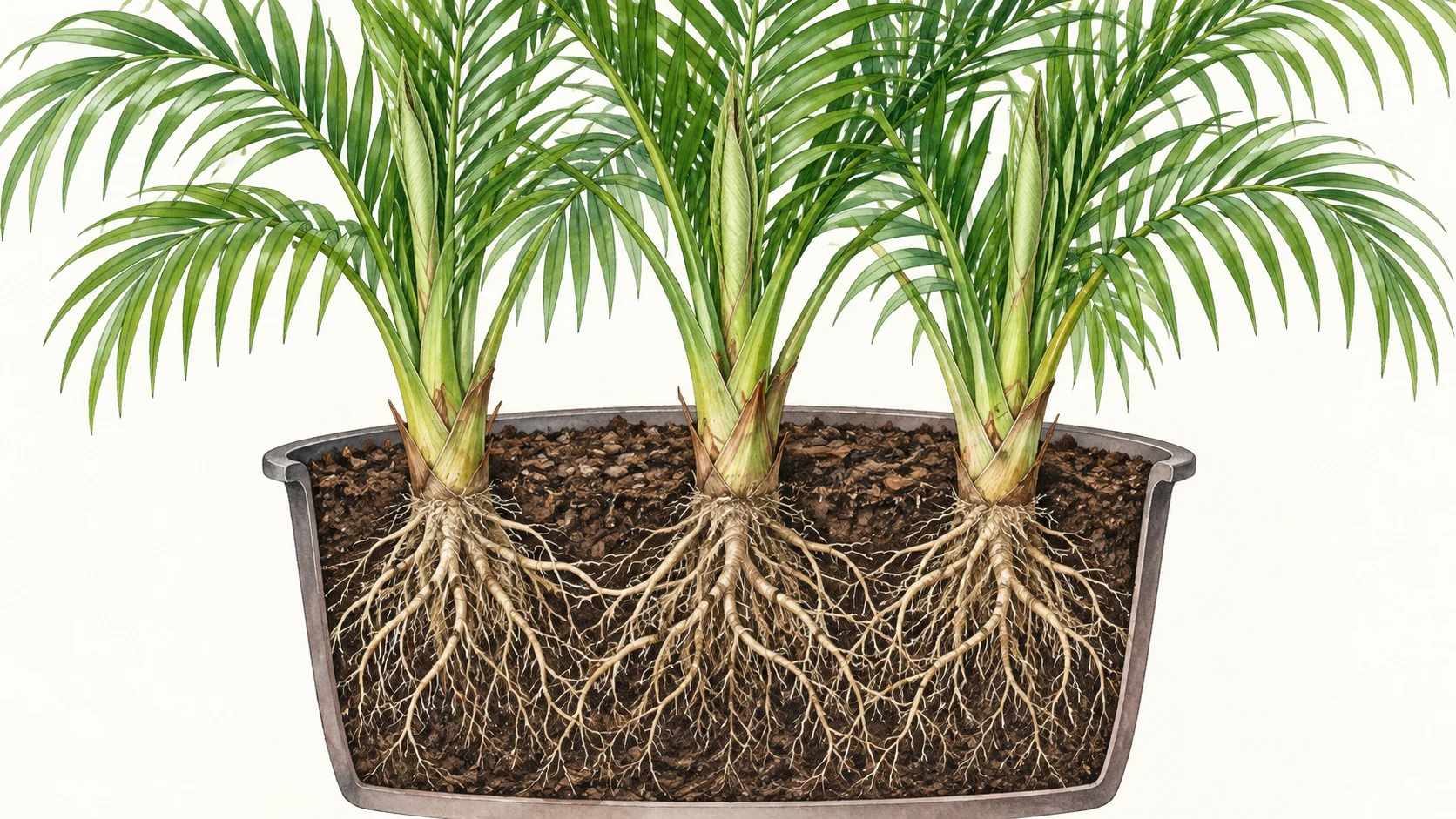
Separation is optional. A healthy group can remain together if its container and growing space are suitable. If individual root systems cannot be preserved without major damage, leaving the group intact avoids turning a routine repot into a risky propagation attempt.
A cut frond or severed palm top is not a substitute for a rooted plant. Protect the central growing point during pruning and repotting. Plants such as spider plant provide a different propagation method through attached plantlets.
Brown Tips Need Supporting Evidence
Brown tips are dead tissue with several possible causes. Dry roots, dry airflow, accumulated salts, pests, and root damage can overlap. The useful question is what else changed while the tips developed.
Fine stippling or webbing calls for a closer spider-mite inspection. A flashlight and magnification can help distinguish small pests from dust or old scars. Brown tips alone are not a reason to spray.
Container weight, moisture at depth, drainage, residue, and recent exposure belong in the same assessment. A foul smell or soft, deteriorating roots makes continuing decline more serious, while firm tissue alone cannot rule out disease.
Remove standing water or an obvious damaging exposure promptly. For an otherwise stable palm, a record of symptoms helps assess a nonurgent change without stacking several treatments. Widespread collapse, a soft central spear, or spreading lesions warrants local extension help.
- Crisp tips and a light, dry root ball
- Check whether water has reached the center, then rewet and drain when needed.
- Dry room or direct vent airflow
- Review placement and humidity while also checking root moisture.
- White residue on mix or pot
- Review water and fertilizer inputs; residue does not measure root-zone salts.
- Stippling or webbing
- Inspect for mites before selecting a labeled treatment.
- Yellowing with a persistently wet pot
- Remove trapped water and assess drainage, root condition, and the pace of decline.
Seasonal Moves Change Light and Water Use
A shaded outdoor position can provide stronger summer light than an indoor corner. A sheltered move made gradually reduces exposure shock, but outdoor heat, wind, and rainfall also change water use and pest exposure.
NC State gives 65–85°F as a growing range. Its USDA zones 10–11 describe outdoor winter climate, not a room-temperature target or a guarantee for a container during an unusually cold night. A summer visitor belongs indoors before cold conditions develop.
In winter, shorter days can reduce water use while heating dries the air. The pot may need water less often even though the fronds benefit from humidity support. Feeding follows actual growth and label directions rather than the calendar alone.
Animal Safety and Frond Clearance
ASPCA lists Ravenea rivularis as non-toxic to dogs, cats, and horses. This listing does not make foliage edible or establish the safety of fertilizers, pesticides, or potting materials. Discourage chewing and contact a veterinarian if a pet becomes unwell after exposure.
A stable pot and enough clearance help keep people and animals from pulling or breaking the arching fronds. The plant still needs a position where the foliage receives useful light and the container can be reached for watering.
Green fronds continue supplying the palm even if their ends are marked. Dead ends can be trimmed without cutting into green tissue. A fully dead frond can be removed carefully, while the central spear and neighboring leaf bases remain protected.
A palm that has outgrown a room cannot be shortened like a branching indoor fig. Choosing a smaller specimen or moving it to a suitable space preserves the growing point instead of cutting off the top.
Sources & References
- Ravenea rivularis — NC State Extension Gardener Plant Toolbox
- Majesty Palm — ASPCA
- Container Production of Palms — UF/IFAS CN010
- Raising Indoor Humidity for Houseplants — Iowa State University Extension
- Indoor Plant Care — Purdue Extension HO-39-W
- Diagnose Indoor Plant Problems — University of Maryland Extension
- Insects on Indoor Plants — University of Minnesota Extension
Related Plants
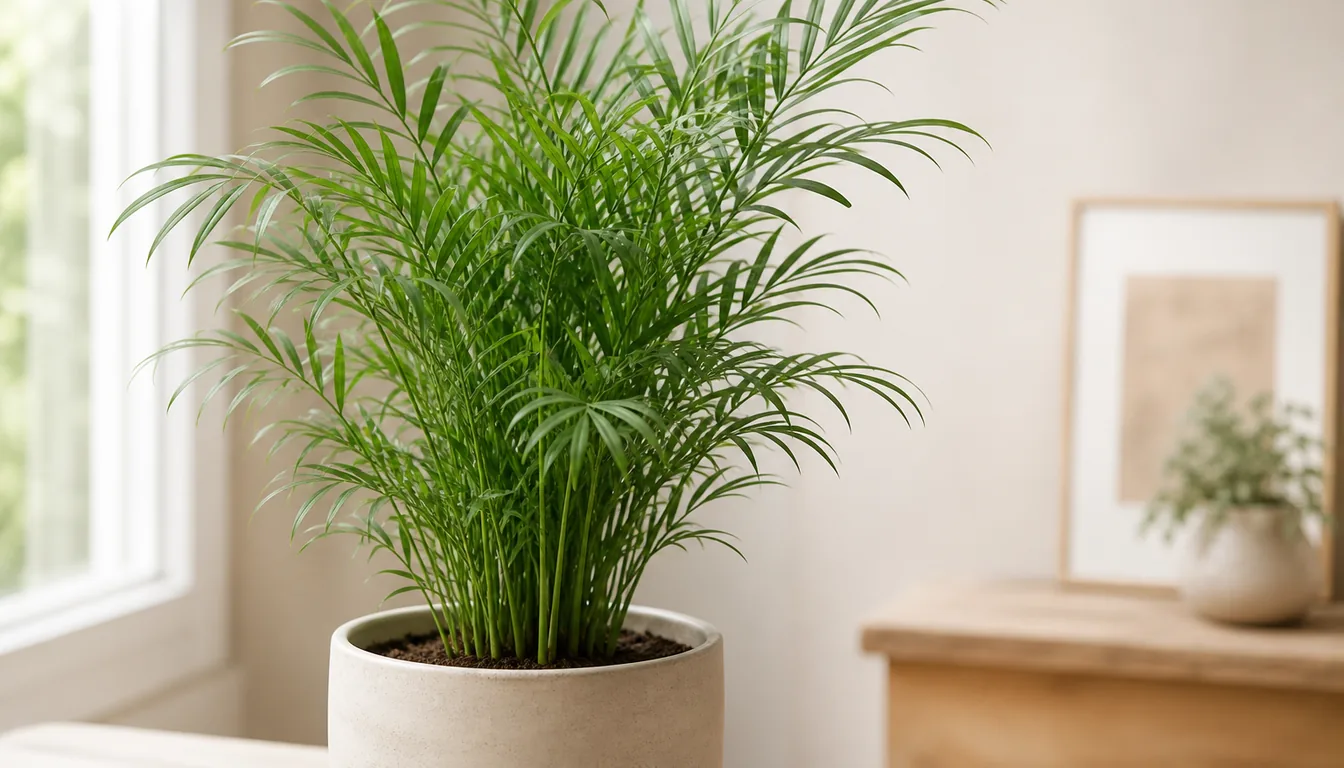
Parlor Palm
A smaller palm with different space and light requirements.
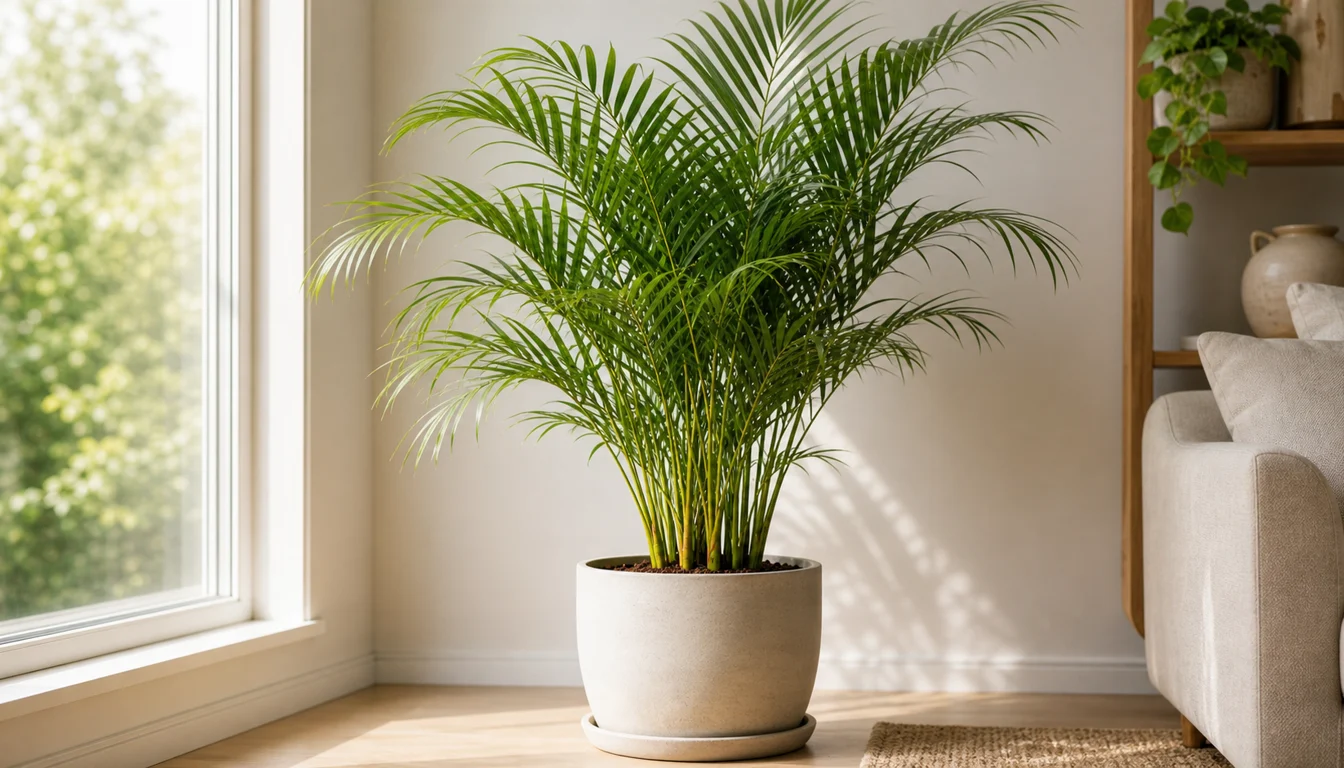
Areca Palm
Soft clumping palm for bright rooms with less single-trunk scale.
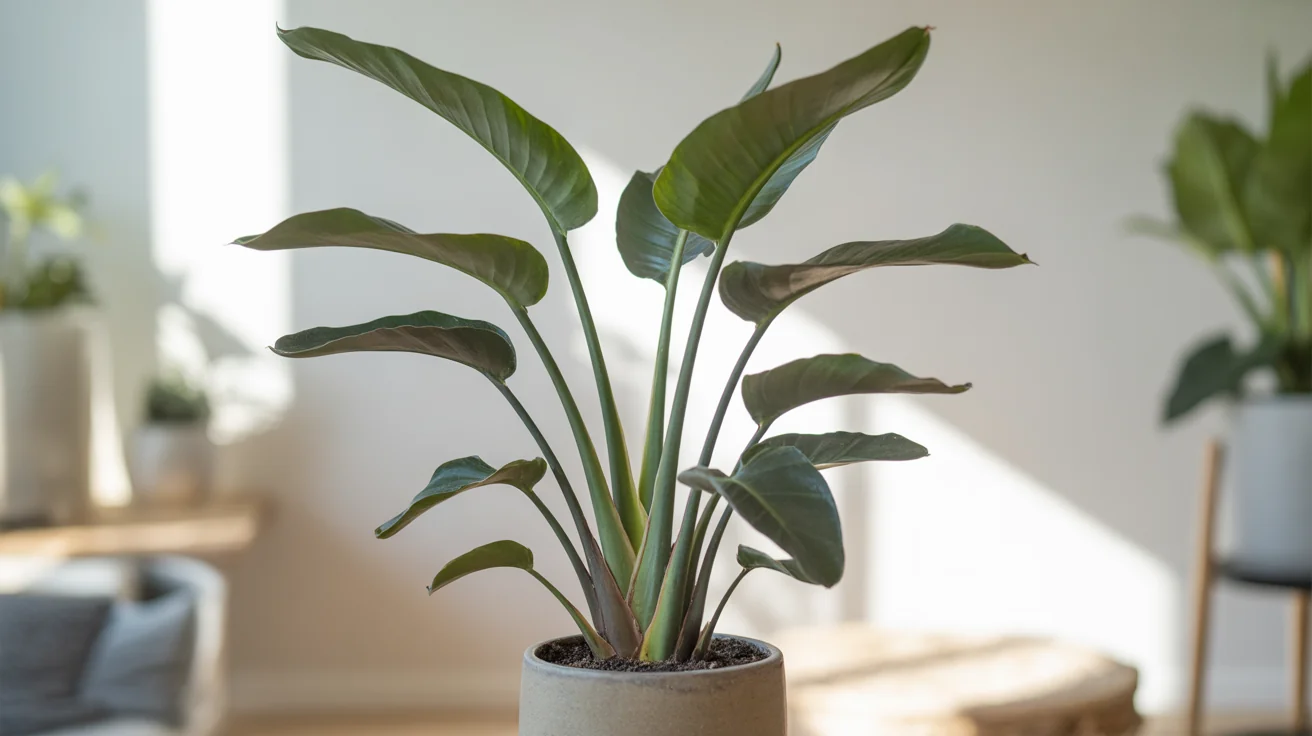
Bird of Paradise
Broad tropical foliage plant for very bright indoor rooms.
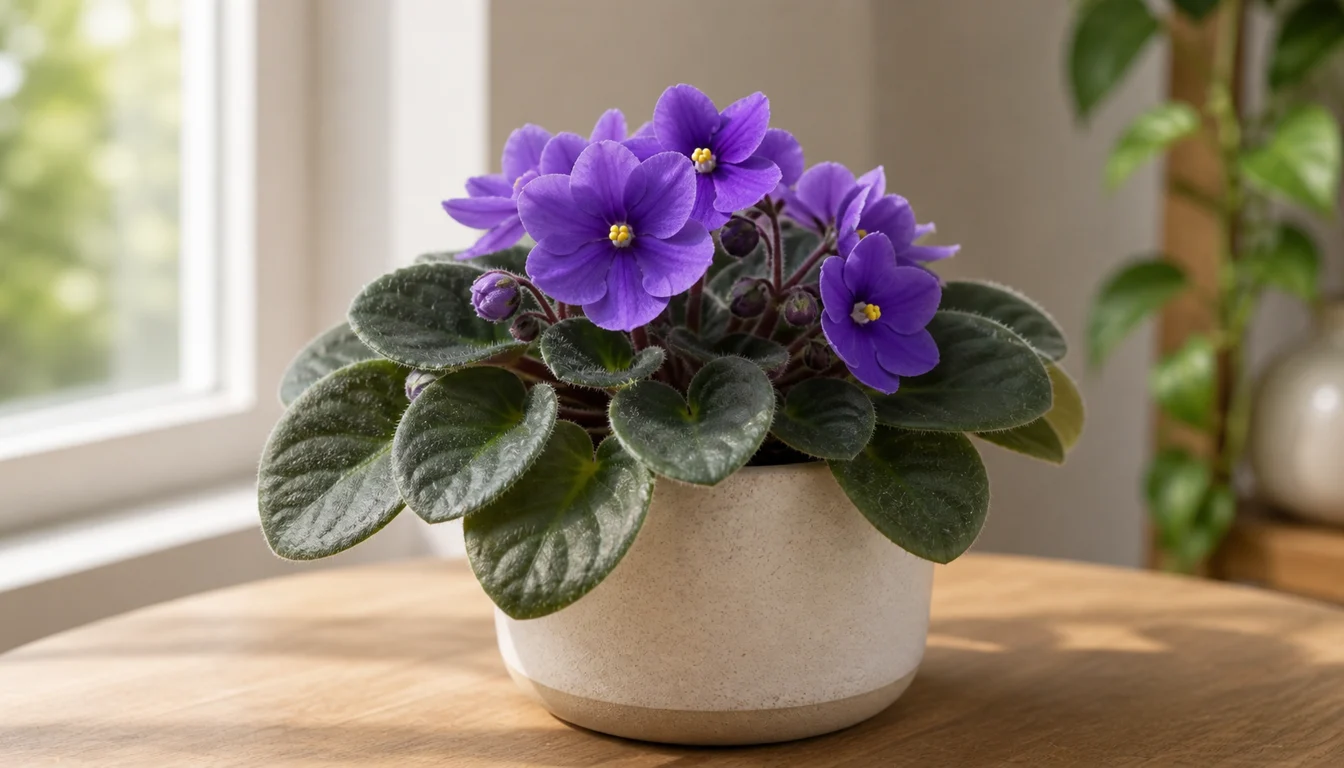
African Violet
African Violet is a windowsill bloomer that rewards steady, small-pot care.
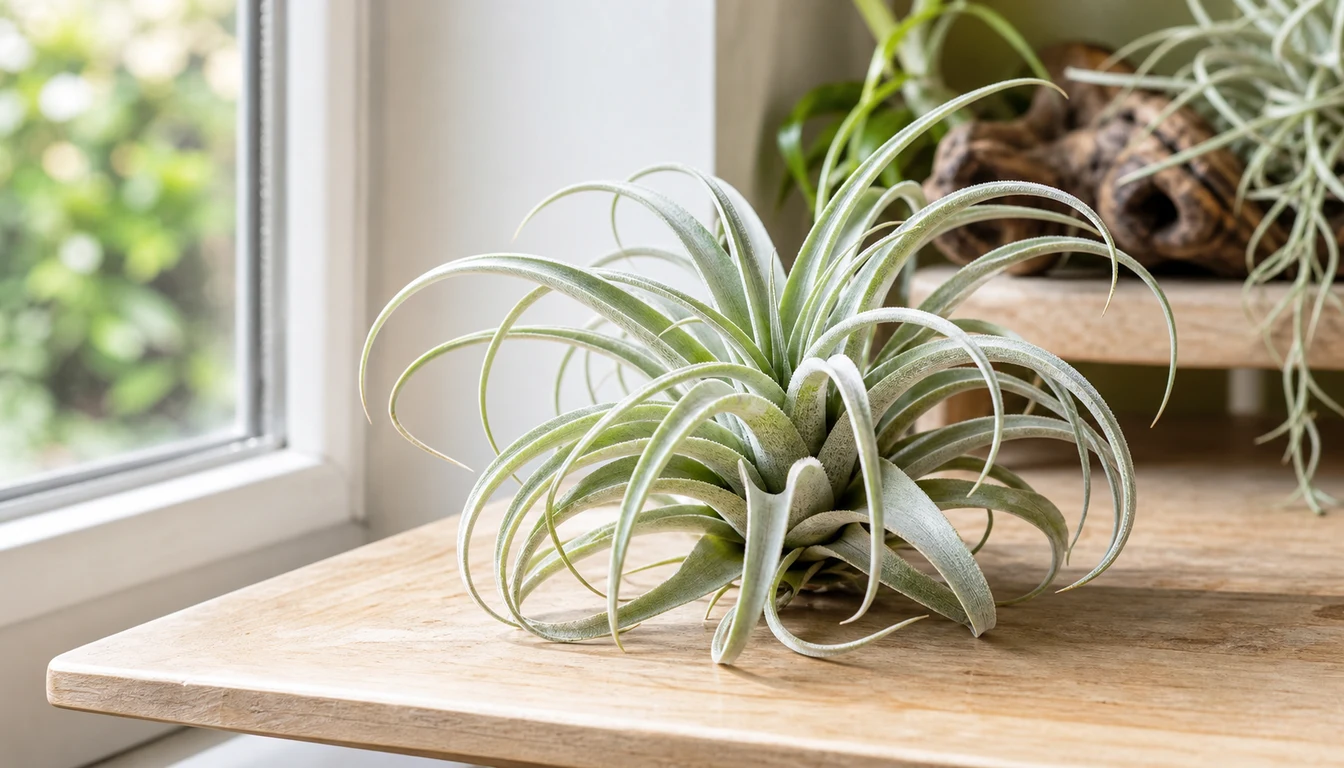
Air Plant
Air plants are living sculptures that thrive without soil, anchoring to driftwood, rocks, or shells while drawing…
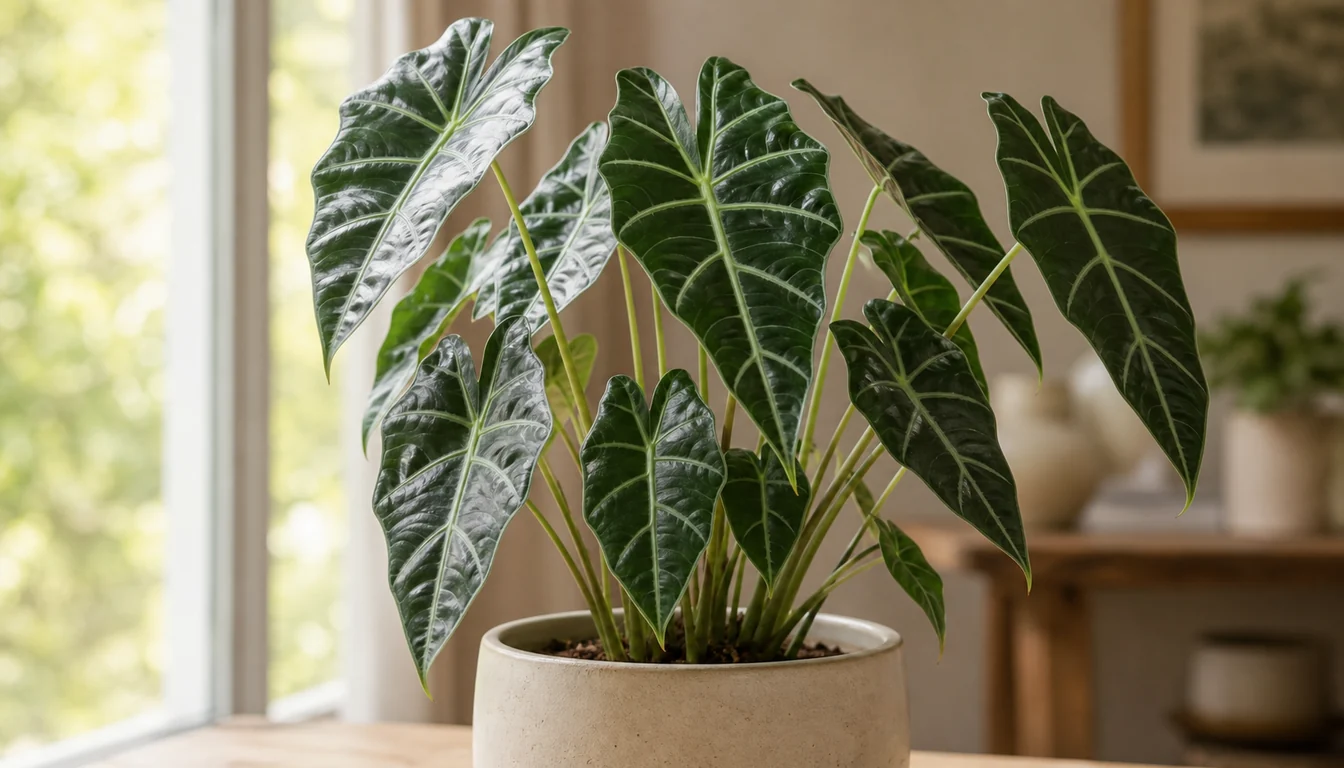
Alocasia
Alocasias include compact, textured houseplants and large elephant ears that need substantial floor space.