
Read a Phalaenopsis Orchid's Roots, Not the Calendar
Phalaenopsis spp. Orchidaceae
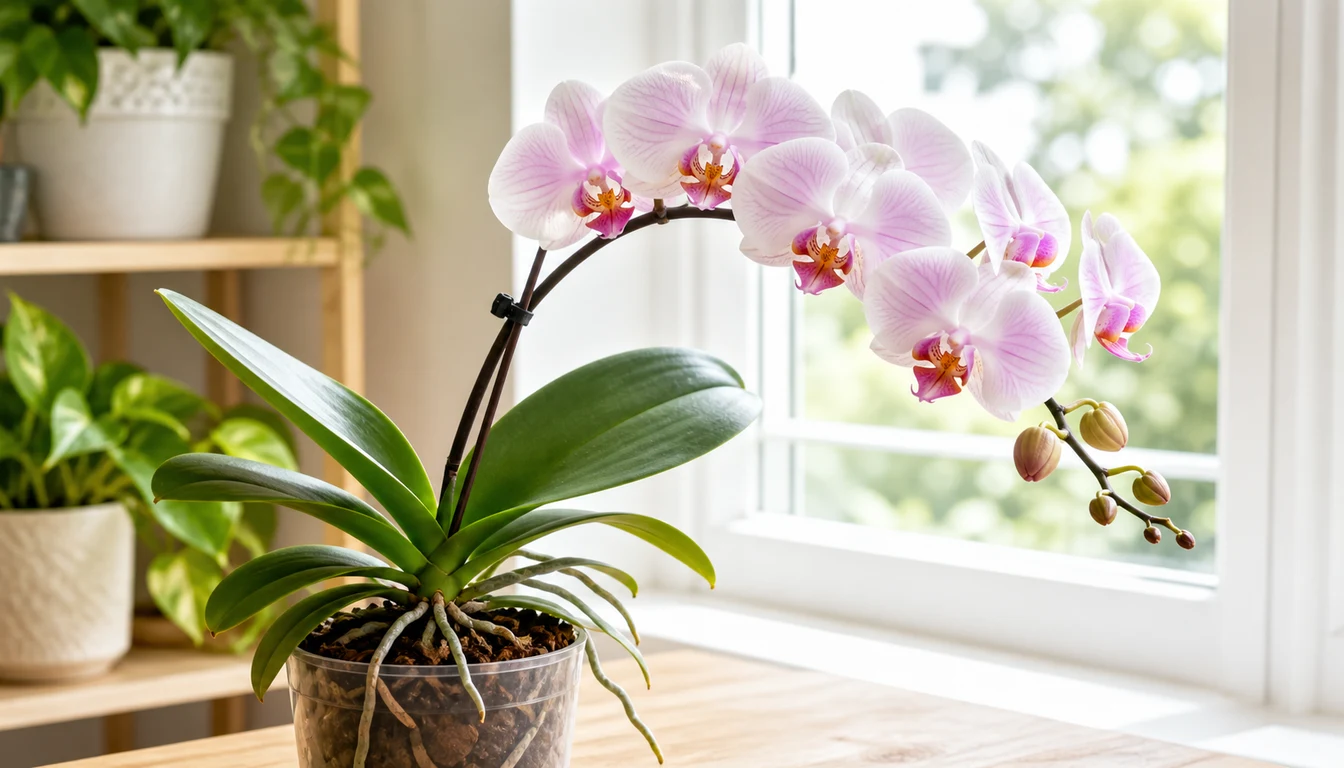
A Phalaenopsis orchid stays healthy when you read its roots instead of following a calendar.
Give it filtered light, soak airy bark as the roots turn silver, drain the pot fully, and protect the crown so the plant has enough strength to flower again.
Care snapshot
Why Phalaenopsis Roots Live in Bark, Not Soil
A Phalaenopsis orchid, often called a moth orchid, is a tropical epiphyte that grows upward from one crown rather than spreading through potting soil. Its broad leaves form a low fan, and flower spikes emerge from the joints between those leaves.
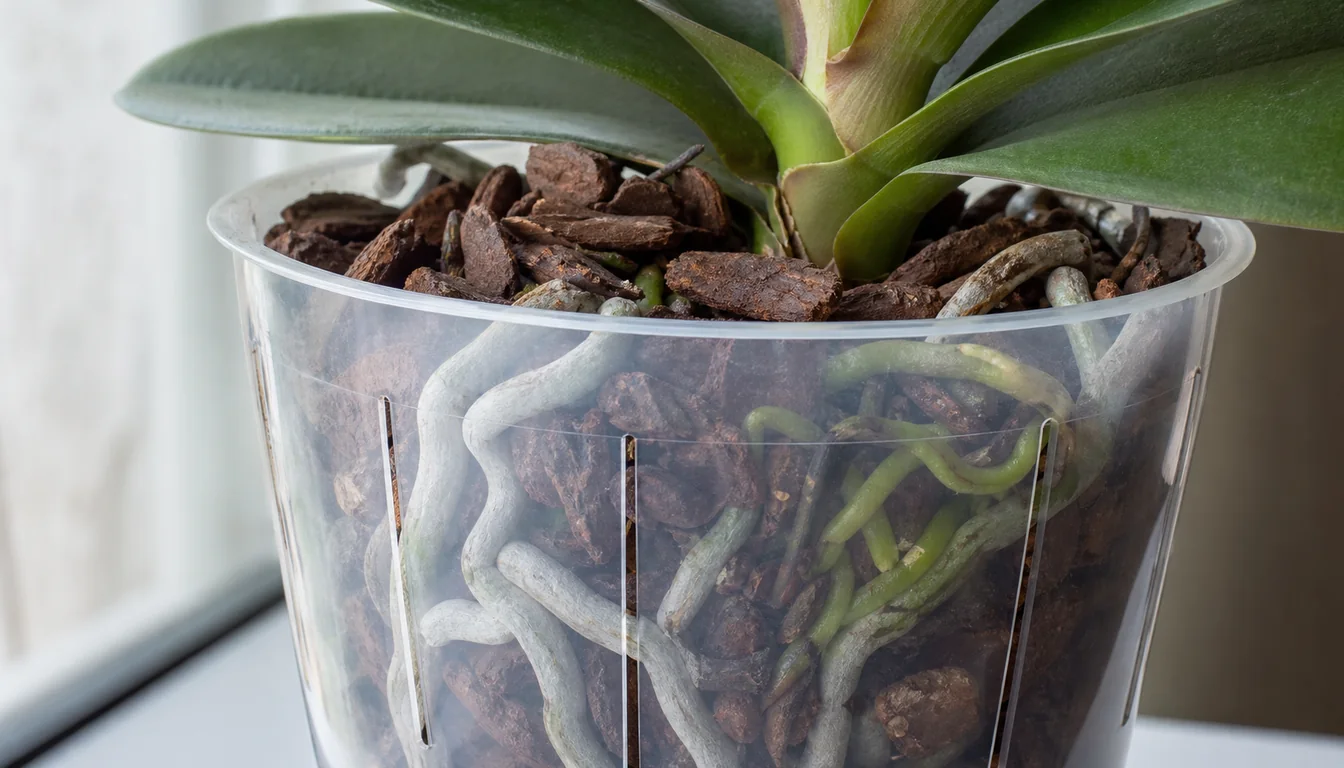
Thick roots anchor the plant and help supply water because this orchid has no pseudobulbs for storage. A spongy outer layer called velamen looks silver when dry and turns green as it absorbs water, which makes a clear pot useful rather than merely decorative.
Chunky bark leaves air spaces around those roots while still holding some moisture. Dense houseplant soil closes the air spaces, stays wet around the center of the pot, and can suffocate roots before the leaves show an obvious warning.
Wild Phalaenopsis species come from warm Asian and Australian forests where roots cling to branches under filtered light. Indoors, that history translates into warm rooms, gentle airflow, bright shade, and a small draining container that never buries the crown.
- Firm leaves that hold their shape show useful stored water.
- Plump silver or green roots are alive, while hollow brown roots are not.
- A clean firm crown has no dark wet tissue between the newest leaves.
- A spike with unopened buds offers more display time than one with every flower open.
Use Root Color and Pot Weight to Choose Watering Day
Water a Phalaenopsis orchid when most visible roots have turned silvery, the bark near the center is approaching dry, and the pot feels lighter than it did after the last soak. Green roots or a heavy pot mean enough moisture remains, which is why a fixed watering calendar cannot make the final decision.
Drying time changes as the room and pot change.
A miniature orchid in fresh coarse bark may dry quickly, while an older bark mix inside a snug decorative sleeve can stay wet long after the outer pieces look dry.
Carry the inner pot to a sink and run tepid water through the bark until every part is wet. Let the water drain completely, empty the saucer or outer pot, and return the orchid only when it has stopped dripping.
Wrinkled leaves do not automatically call for a second watering. Check the roots first because firm silver roots suggest prolonged dryness, while soft brown roots mean the plant cannot take up water even though the bark is wet.
Ice cubes wet only a small patch and chill roots that evolved in warm conditions. A complete room-temperature soak followed by full drainage reaches the root ball evenly and gives you a clear wet-to-dry cycle to observe.
Set the Window for Leaves Now and Flowers Later
An east window is a reliable starting place for a Phalaenopsis orchid because it provides bright morning light without intense afternoon heat. A south or west window can work behind a sheer curtain or with the plant set far enough back that direct summer sun never heats the leaves.
Leaf response tells you whether the position works.
Persistently dark green new leaves can accompany light that supports foliage but not flowers, while pale yellow patches or dry tan areas on the window side point to excess sun rather than a fertilizer shortage.
Keep a budded plant away from exterior-door drafts, heating vents, and abrupt moves because a fast temperature or moisture change can trigger bud drop. A healthy mature plant may start a new spike after several weeks with nights roughly 8°F cooler than its days, but the cue works only when roots and light are already adequate.
Many standard white and pink hybrids initiate spikes after several weeks of cooler fall conditions, often with nights between 55°F and the low 60s°F while days remain below the low 80s°F. Novelty hybrids can flower under warmer stable conditions, so use cooling as a cue for a healthy mature plant rather than a rescue for weak roots or poor light.
After the Last Flower, Choose a Side Branch or a Full Reset
Wait until the final flower falls, then judge the whole Phalaenopsis orchid before cutting its spike. A firm plant with healthy roots can spend energy on a side branch, while a plant with root loss, limp leaves, or a small crown benefits from a clean rest.
A green spike may branch from a dormant node if you cut about half an inch above that node. Cutting the spike close to its base removes the shortcut, but it lets the plant direct energy into roots and leaves before building a completely new spike.
- Green spike, strong plant
- Cut above a lower node for a possible smaller side branch.
- Green spike, weak plant
- Cut near the base and rebuild leaves and roots first.
- Brown dry spike
- Remove it near the base because the dead tissue cannot branch.
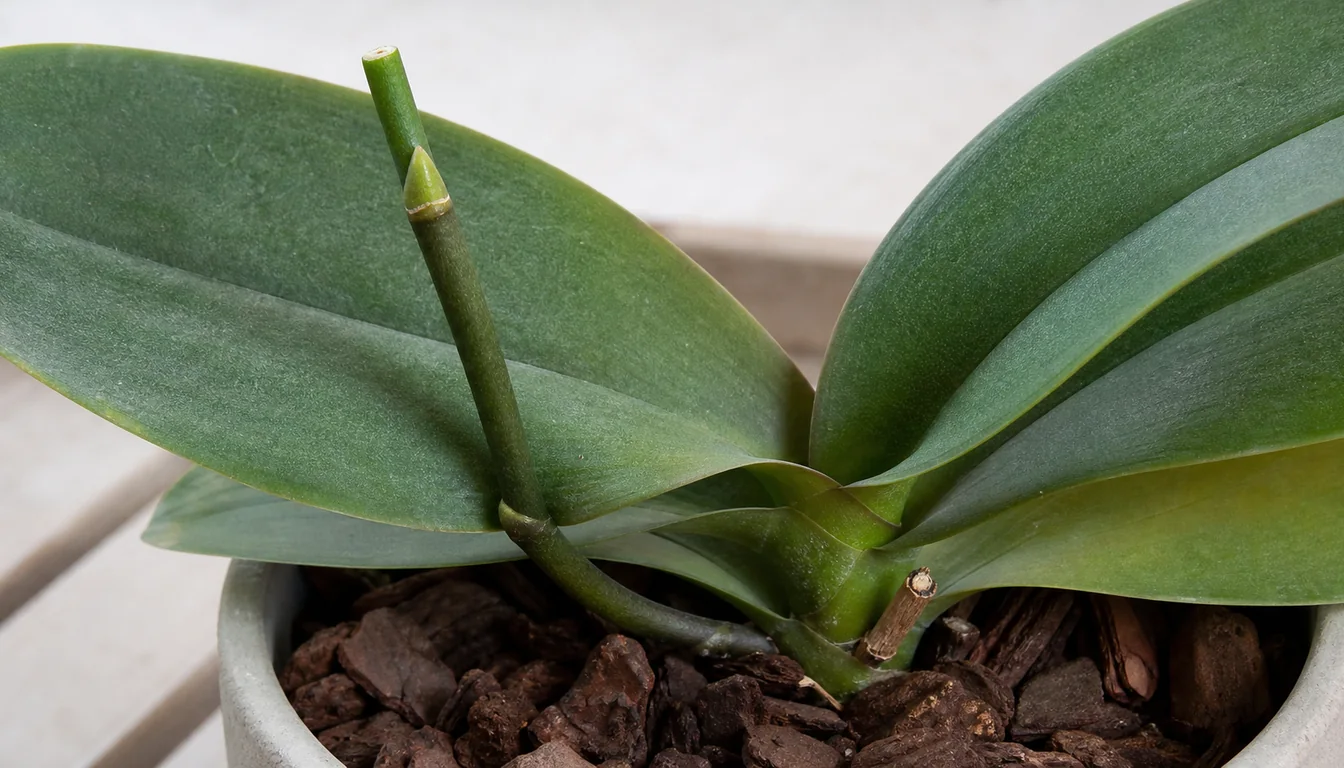
Fresh root tips and a new leaf show that the plant has returned to active growth. That progress matters more than an empty calendar date because a leaf added under good light becomes part of the energy reserve for the next flowering cycle.
Feed during active growth with an orchid fertilizer mixed at the label's lower rate, then use plain water periodically to rinse accumulated salts from the bark. More fertilizer cannot replace light, and strong feed around damaged roots can make recovery harder.
Once a new spike appears, keep the pot facing the same general direction so the arch develops predictably, and add a support before buds become heavy. The buds still need stable warmth and moisture, while the open flowers can last for many weeks if they avoid hot sun and cold drafts.
Repot When Bark Collapses, Not When Aerial Roots Wander
Roots that rise over the rim are normal for an epiphytic Phalaenopsis orchid and do not prove that it needs a larger pot. Repot when bark has become dark and crumbly, smells sour, drains slowly, or stays wet much longer than it did when fresh.
The calmest time is usually after flowering as new root tips begin to grow, since the plant can settle into fresh media without supporting a full display.
Active rot should not wait for that ideal moment because each extra wet day can take more living root tissue.
- Keep a firm silver, green, or cream root even when its direction looks awkward.
- Trim a root that is mushy, hollow, or papery with a clean cutting tool.
- Leave sound aerial roots outside the mix instead of forcing them below wet bark.
Remove old bark gently, make the necessary root cuts, and choose the smallest pot that holds the remaining root mass without crushing it. Work fresh orchid bark around the roots while keeping the crown and the bases of the lowest leaves above the mix.
A clear slotted pot lets you see moisture and gives air another route into the mix. You can place it inside a decorative pot for display, but take it out for watering and never allow drained water to collect against the inner pot.
Read Buds, Leaves, and Roots Before Treating a Problem
Falling buds
- Check for a recent move or cold draft
- Compare current light and drying time
- Keep the remaining buds stable
Wrinkled leaves
- Inspect roots before adding water
- Firm silver roots point toward dryness
- Soft brown roots point toward root loss
Yellowing leaves
- One bottom leaf may be normal aging
- Several soft leaves require a crown check
- A window-side patch suggests sun injury
Sticky insects
- Inspect leaf bases and spike joints
- Cottony clusters suggest mealybugs
- Fixed brown bumps suggest scale
Buds that yellow and fall soon after a plant comes home often reflect a sharp change in temperature, light, or root moisture. Stabilize the location and watering method first because moving the pot from place to place adds another change while the remaining buds are still developing.
Wrinkled leaves report that water is not reaching the foliage, but they do not identify the reason. A dry light pot with firm roots calls for a soak, while wet bark around soft roots requires drainage and root inspection rather than more water.
The oldest bottom leaf can yellow and drop as a healthy Phalaenopsis orchid replaces it, especially after flowering. Yellowing that spreads through several leaves, begins beside a soft crown, or accompanies a foul smell is a different pattern that deserves immediate inspection.
Mealybugs collect as white cottony patches around leaf bases, buds, and spike joints, while scale insects remain attached as flat brown bumps.
Isolate the plant, remove visible insects, and inspect weekly so a small population does not hide through another bloom cycle.
A wet soft pocket around the newest leaf threatens the orchid's single growing point.
Stop overhead watering, remove only tissue that is already loose, and keep the center dry while you check whether the base and roots remain firm.
The damaged center cannot rebuild a missing growing point, so continued growth depends on viable basal tissue producing a new growth and remains slow and uncertain.
Choose a Moth Orchid That Fits the Space After Bloom
Choose a Phalaenopsis orchid by its firm leaves, clean crown, living roots, and remaining buds before comparing flower patterns. A plant with several firm unopened buds gives you more display time, while wrinkles, a loose crown, or water pooled inside the outer pot turn a bargain into a recovery project.
Standard hybrids can spread 12 to 18 inches across and carry a spike up to 3 feet tall, while a labeled miniature fits a narrow sill but dries faster in its smaller pot. Multiflora types carry more smaller blooms, and a dyed blue orchid usually flowers white next time because injected color never changes the plant's genes.
Propagation Waits for a Keiki With Roots of Its Own
A leaf or flower-spike cutting does not grow into a normal new Phalaenopsis orchid at home. Propagation becomes practical only when the mother plant produces a keiki, which is a small plantlet with its own leaves and roots growing from a spike or the plant's base.
Phalaenopsis orchids are listed among pet-safe houseplants, but non-toxic does not mean that bark, fertilizer residue, or chewed plant tissue belongs in an animal's diet. Place the pot where pets, sleeves, and door traffic cannot catch the arching stem or tip the heavy outer pot.
Keep the plant indoors when nights approach 60°F, and acclimate it gradually to filtered outdoor shade so one bright afternoon does not scorch the leaves. Inspect the crown, leaf joints, and pot for hitchhiking pests before bringing it back inside, then return to the same four checks of root color, airy bark, stable light, and a dry crown.
Frequently Asked Questions
How often should I water a Phalaenopsis orchid?
Use the roots and pot weight instead of a fixed interval. Water when most visible roots are silver, the inner bark is approaching dry, and the pot feels light, then soak and drain it completely.
Should I cut a Phalaenopsis spike after the flowers fall?
Cut a healthy green spike above a lower node only when the plant has firm leaves and good roots and you want a possible side branch. Cut a brown spike or any spike on a weak plant near the base so the orchid can rebuild.
Why will my Phalaenopsis orchid not rebloom?
Low light is a common reason when leaves remain healthy but no spike appears. Give the plant bright filtered light, healthy roots, active growth, and a modest difference between day and night temperatures before expecting a new spike.
Can I put a Phalaenopsis orchid in regular potting soil?
No. Dense soil stays wet and excludes air from the thick epiphytic roots, so use a loose orchid mix based on bark and a pot with excellent drainage.
Are Phalaenopsis orchids toxic to cats and dogs?
The ASPCA lists Phalaenopsis orchids as non-toxic to cats and dogs. Keep pets from chewing the plant anyway because broken roots and spikes harm the orchid, and swallowed plant material can still upset an individual animal.
Sources & References
Related Plants
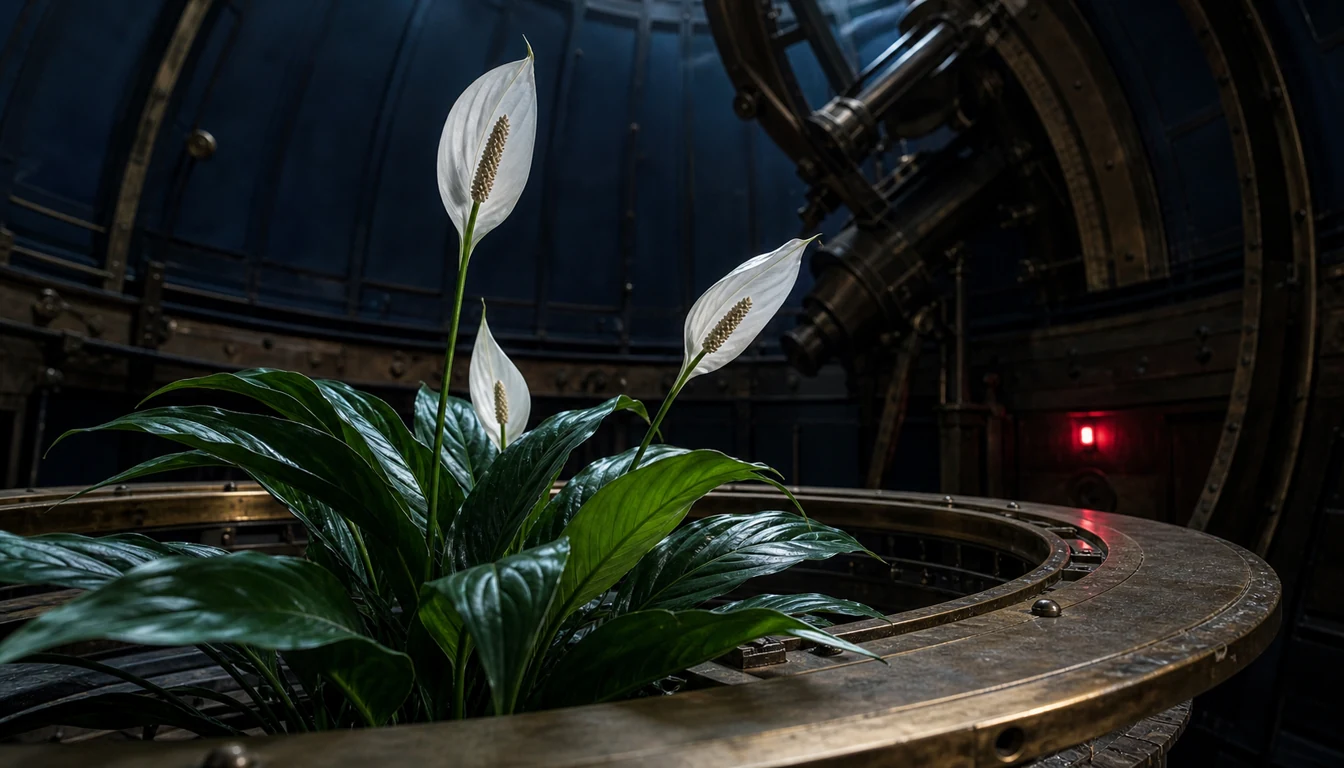
Peace Lily
A flowering foliage plant that wilts clearly when dry but grows in a soil-based mix.
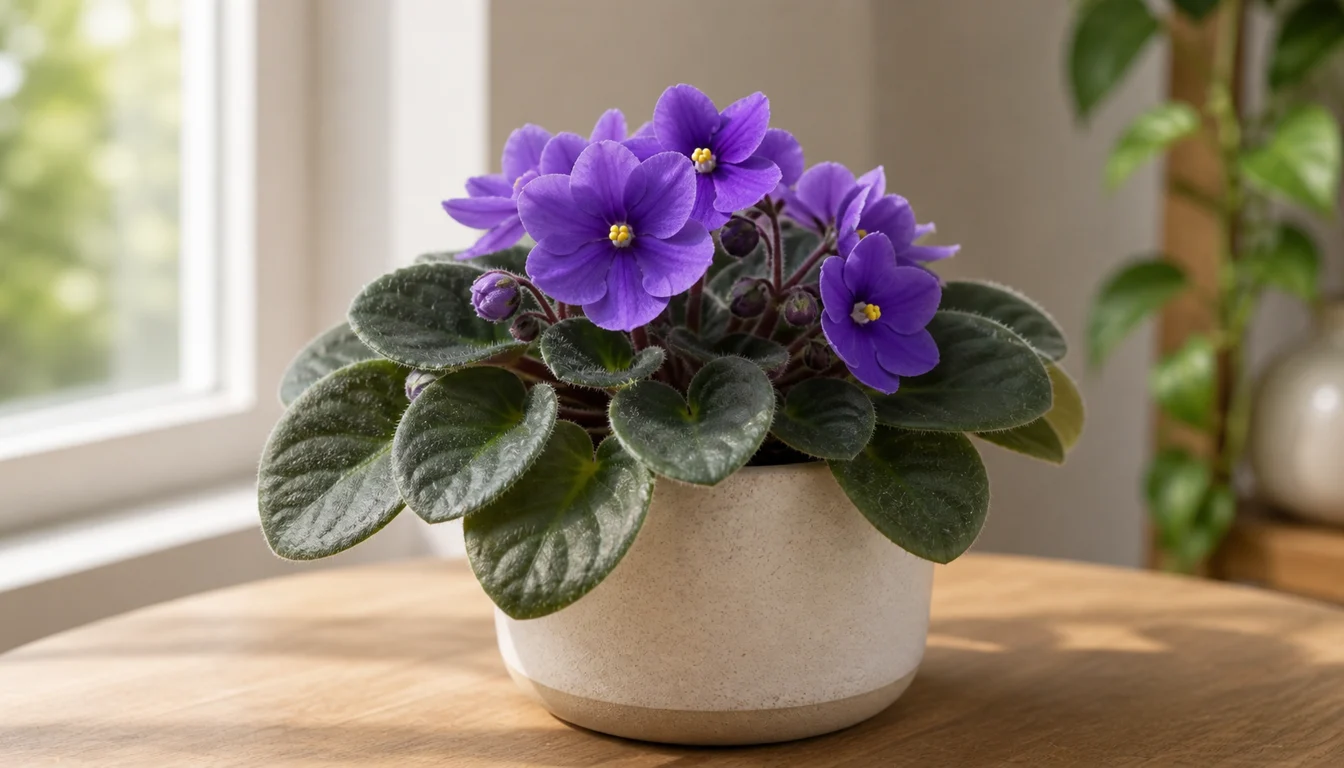
African Violet
A compact flowering plant with a different root system and a preference for steady moisture.
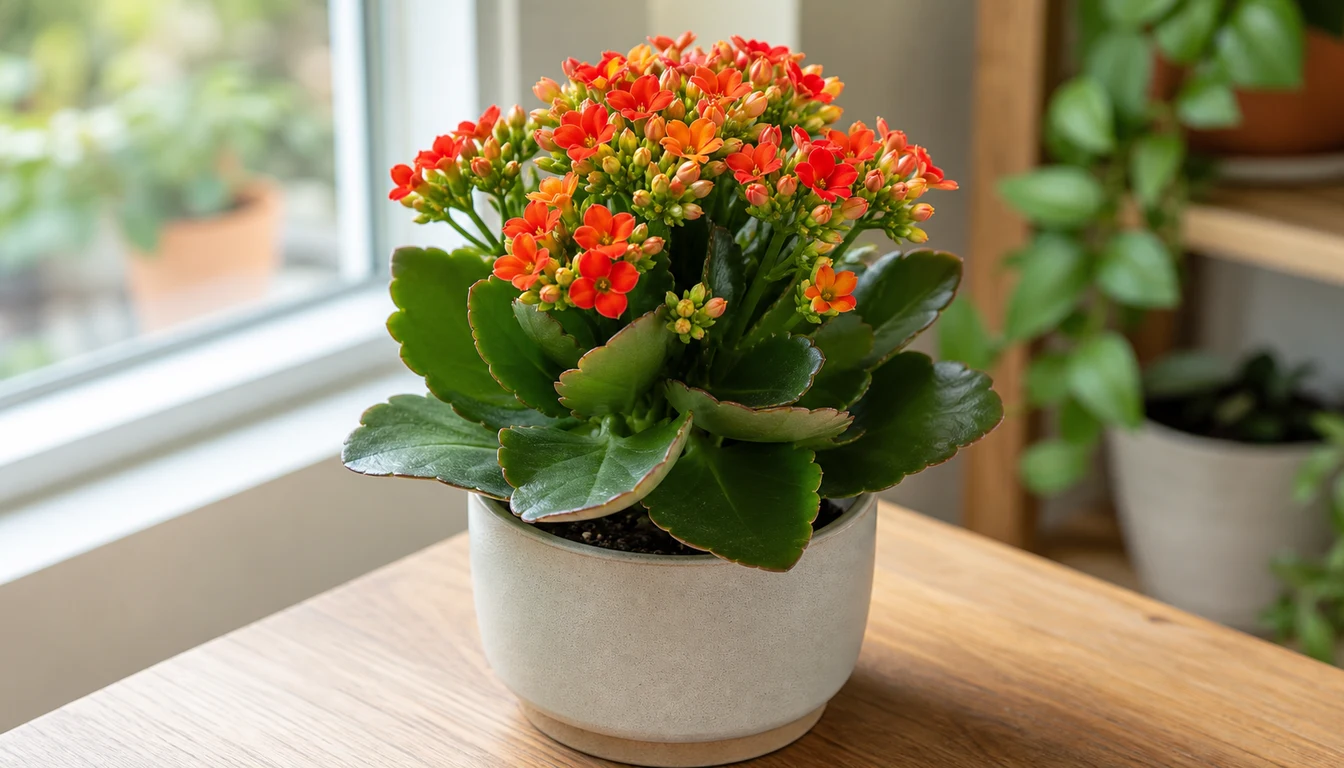
Kalanchoe
A succulent flowering houseplant that stores more water and needs the potting mix to dry further.
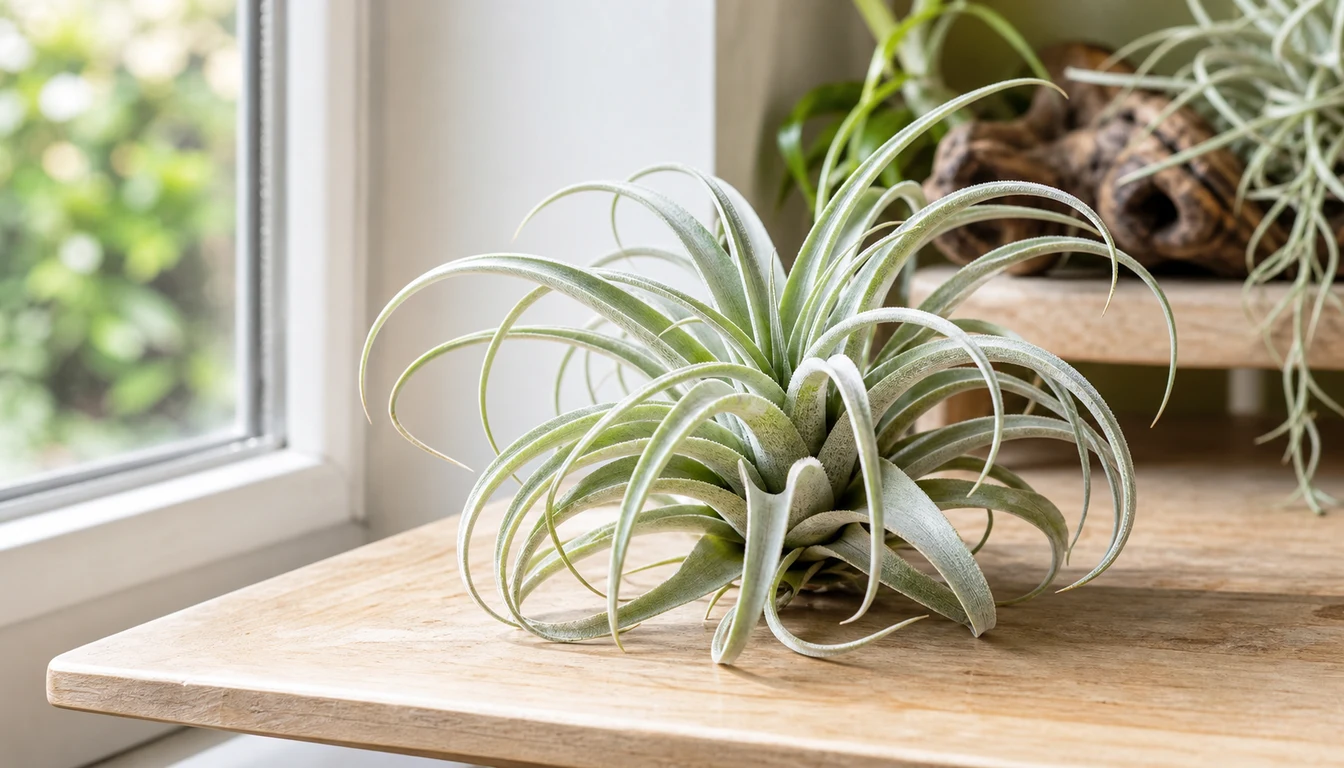
Air Plant
Air plants are living sculptures that thrive without soil, anchoring to driftwood, rocks, or shells while drawing…
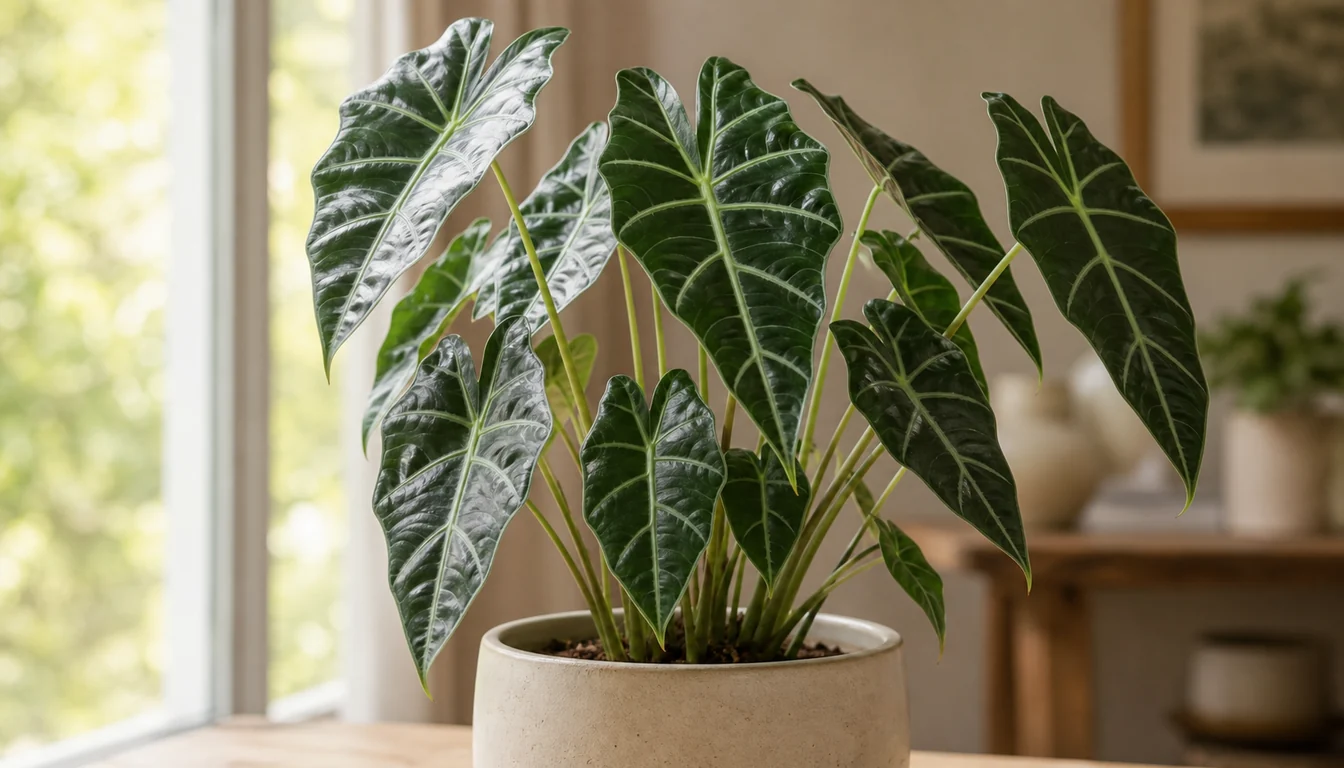
Alocasia
Alocasias include compact, textured houseplants and large elephant ears that need substantial floor space.
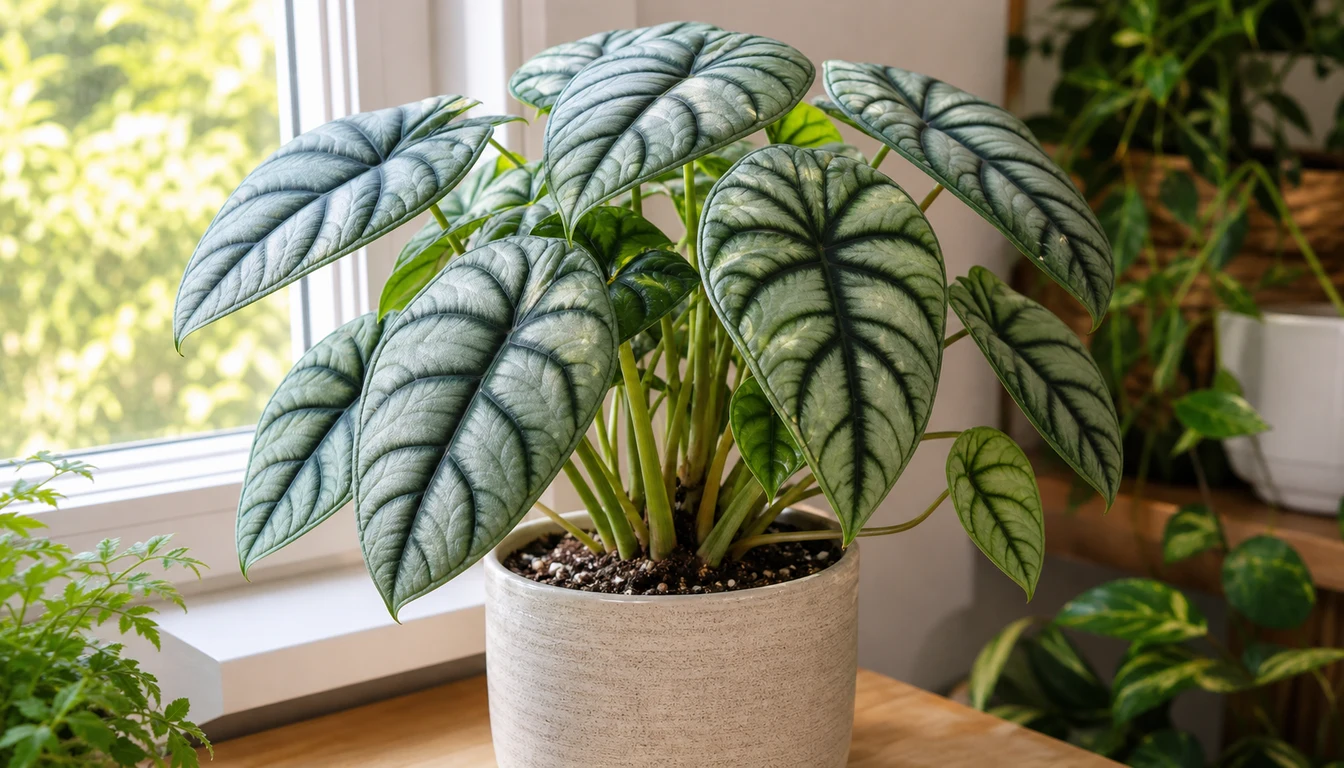
Alocasia Dragon Scale
Alocasia Dragon Scale has thick, quilted-looking leaves with dark veins.