Plantingschedule11 min read
Best Soil for Houseplants: Match the Mix to the Roots
Choose houseplant soil by airflow, water retention, and root habit instead of buying one bag and hoping every plant accepts it.
There is no single best soil for every houseplant. The right mix is the one that gives the roots the balance they need between moisture and air; once that balance is wrong, good light and careful watering cannot fully rescue the plant.
That is why the question is not "which bag is best" so much as "what kind of root zone does this plant want." A thirsty foliage plant and a drought-tolerant succulent can share a shelf, but they should not share the exact same soil recipe.
scienceWhat a good indoor mix is trying to do
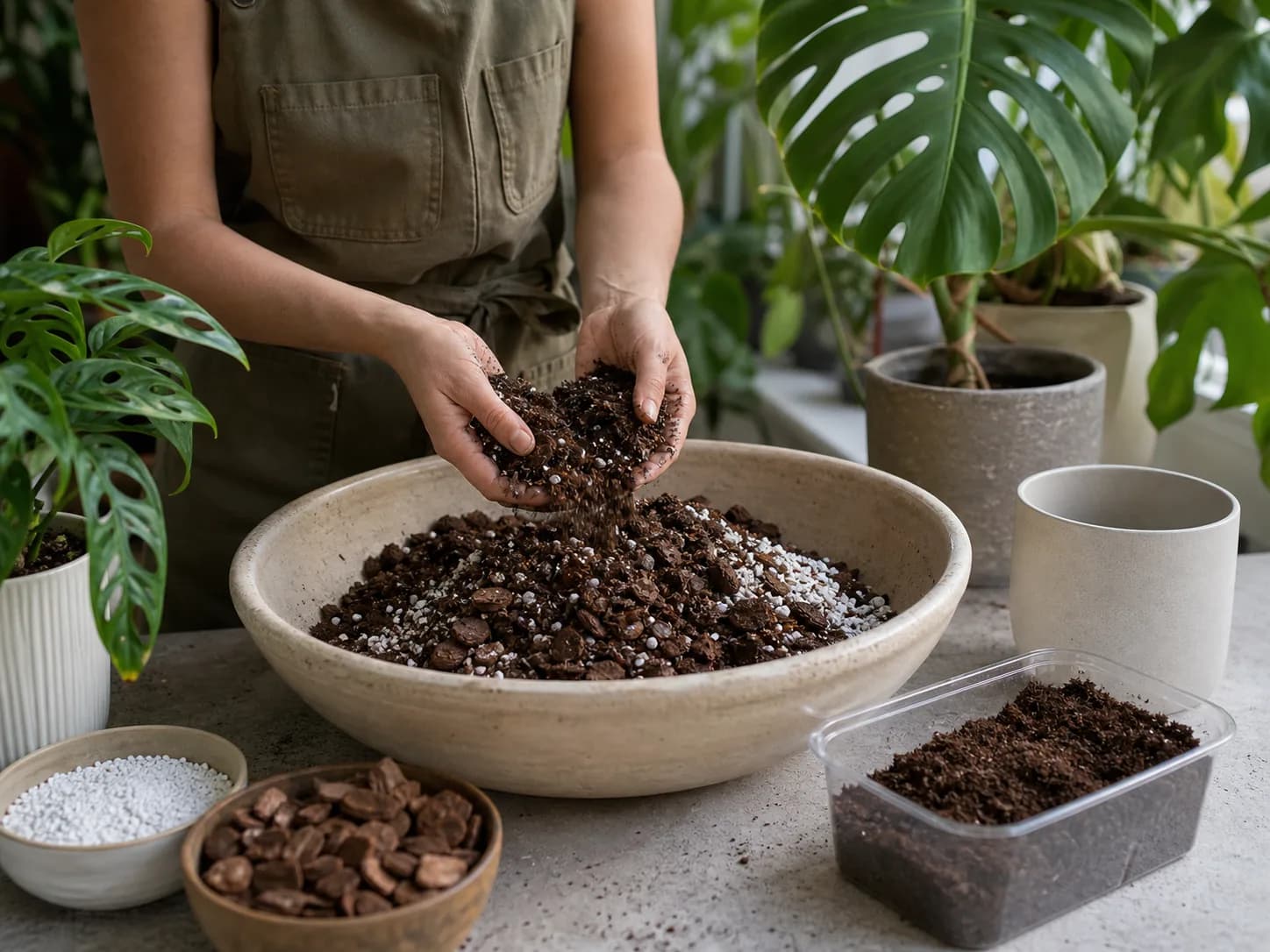
A useful indoor mix does three jobs at once: it holds enough moisture for the plant to rehydrate, it drains enough excess water to protect roots, and it leaves enough pore space for oxygen. Healthy roots need air as much as water.
That balance is why a mix that works for Peace Lily can stay too wet for Snake Plant. Snake Plant roots, like Jade Plant roots, usually resent that heavy mix. It is also why tired, compacted potting soil creates problems even when the owner thinks the watering schedule stayed the same.
If the pot itself is part of the issue, fix drainage and container setup first.
ecoBest soil for tropical foliage plants
Most tropical foliage plants want a mix that stays lightly moist but still open. Pothos usually does well in potting soil loosened with bark, perlite, or another chunky amendment. Monstera and Philodendron usually want that same airy structure.
The goal is not dryness. The goal is a root zone that rehydrates evenly and then sheds enough water that the pot does not stay dense and stale for days.
If you have recently moved a plant into a larger pot, pair the mix decision with repotting guidance so the soil texture and pot size work together.
Guide — See AlsoSpring Blooming Flowers for Early Color in Any YardPractical guide to choosing, planting, and caring for spring blooming flowers in zones 3–11, including timing, bulbs vs
chevron_rightwater_dropBest soil for moisture-loving houseplants
Plants that enjoy steadier moisture still need drainage; they just do not want a mix that dries to dust overnight. Peace Lily and many ferns tolerate a bit more water-holding material than drought-tolerant plants, especially in warm rooms.
That usually means a finer, more even blend with composted organics or coco coir, but not a heavy mud that seals over the root ball. If the plant is already showing yellow leaves or sour soil, stop guessing and compare the symptoms with overwatering vs underwatering.
Email Updates
Join the KnowTheYard update list
Zone-specific advice, seasonal reminders, and new plant guides — no filler.
water_dropBest soil for succulent and low-water plants
Succulent-leaning plants need sharper drainage and more air. Snake Plant resents dense peat-heavy mixes that stay wet around the roots. ZZ Plant, Jade Plant, and Aloe Vera react the same way.
Use a grittier blend or modify a standard indoor mix with extra mineral drainage material. The point is to let the pot dry on a reasonable timeline instead of keeping the roots in cold, damp media.
Once that mix is in place, use houseplant watering frequency for foliage plants. For sharper mixes, follow succulent watering guidance instead.
Guide — See AlsoWhen to Harvest Rosemary for Maximum FlavorLearn exactly when to harvest rosemary for peak flavor, how often you can cut it, and how timing changes with season and
chevron_rightpotted_plantWhen to replace the soil instead of adjusting the schedule
If water is rushing straight through, the soil has shrunk away from the pot wall, or the pot stays heavy for far too long, the mix is no longer doing its job. At that point the schedule is not the main issue.
Old soil breaks down into finer particles; that reduces airflow and changes how the root ball wets and dries. It is often smarter to refresh the mix than to keep inventing new watering rules around failing structure.
For root-bound plants or collapsed soil, use repotting steps instead of trying to micromanage a pot that has already lost balance.
ecoA simple buying rule for most homes
If you want a practical rule, buy by plant group. Use an airy tropical mix for Pothos and similar trailing foliage plants.
Step up chunkiness for Monstera and other bigger aroids. Use a moisture-leaning but draining mix for Peace Lily.
Use a sharper, faster blend for Snake Plant and other low-water plants. ZZ Plant belongs in that faster-draining group too.
That one decision removes a surprising amount of future troubleshooting.
Guide — See AlsoHow to Thin Seedlings Without Wasting PlantsLearn exactly when and how to thin seedlings in trays, pots, and garden rows so you end up with stronger, healthier plan
chevron_righttips_and_updates
Pro Tips
- check_circleChoose soil by root behavior, not by whatever bag was closest at the store.
- check_circleHealthy indoor roots need both water retention and air space.
- check_circleMoisture-loving plants still need drainage.
- check_circleSucculent-type plants fail faster in dense peat-heavy mixes.
- check_circleIf the mix structure is broken, changing the schedule alone will not solve it.
quiz
Frequently Asked Questions
Can I use one potting mix for every houseplant?expand_more
You can, but it usually creates compromises. Tropical foliage plants, moisture lovers, and succulent types dry at different speeds and need different levels of airflow.
Why does my soil stay wet for so long?expand_more
Usually because the mix is too dense, the pot is too large, the room is too dim, or the container drains poorly.
Is cactus soil always right for a snake plant or ZZ plant?expand_more
Not always straight from the bag, but a sharper, better-draining mix is usually safer than a heavy tropical blend for those roots.
How often should indoor soil be replaced?expand_more
Whenever the structure is collapsing, drainage has changed noticeably, or you are already repotting because the root zone needs more space.
Related Guides

Air Purifying Plants for Cleaner Indoor Air
Learn how to pick, place, and care for air purifying plants so they help your indoor air instead of just looking pretty.
11 min read
Best Herbs to Grow Indoors for Real Harvests, Not Spindly Pots
Choose indoor herbs that can actually produce in your light, temperature, and container setup, then match each one to the right harvest rhythm and watering style.
10 min read
Best Indoor Plants for Every Room and Light Level
A practical guide to choosing the best indoor plants for your home, covering beginner-friendly picks, low light champions, bright light lovers, watering basics, and how to avoid the most common mistakes.
13 min read