
How to Grow Parsley From Seed When Germination Takes Weeks
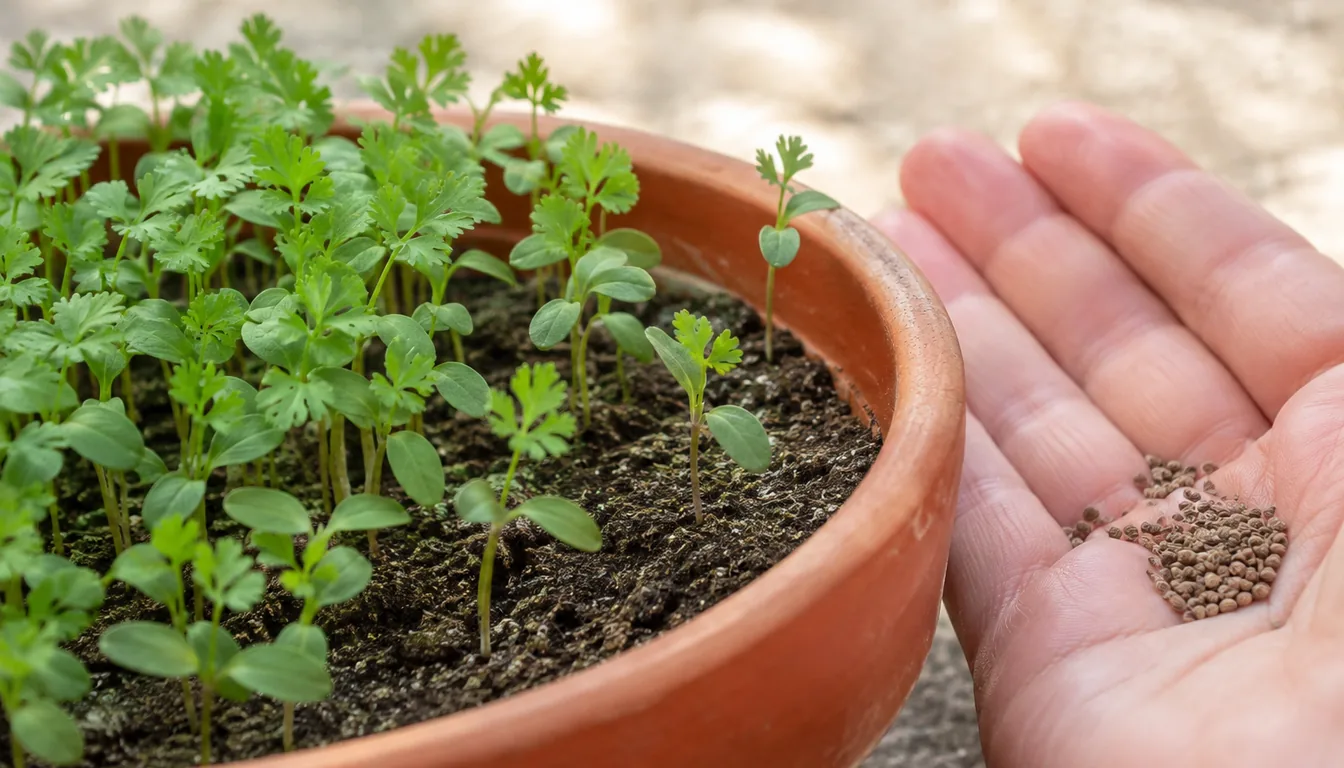
Parsley grows well from seed once you plan for its slow start. Soak the seed overnight, sow it about 1/4 inch deep in individual cells 8 to 10 weeks before your last spring frost, and expect sprouts in two to four weeks. Seedlings go into the garden around the last frost, and the first leaves are ready to cut roughly 75 to 80 days after sowing.
Two details decide most failures. Parsley seed loses viability quickly, so last year's packet may be the reason nothing came up. And the seedling grows a taproot early, so every move after sowing costs it more than it costs most herbs.
At a glance
Why Parsley Seed Takes Three Weeks or More
Parsley is slow even under good conditions. Johnny's Selected Seeds lists 14 to 30 days to germination at 65 to 70°F and notes that seeds take at least three weeks in cell trays. Wisconsin Horticulture describes parsley germination as erratic and low even under optimum conditions, and slower still in cool, wet soil.
The practical result is that a tray with nothing showing after two weeks is usually on schedule. Resowing over the top at that point buries seed that was about to come up. A reasonable point to give up on a sowing is after four to five weeks at room temperature with steady moisture.
Seed age matters more for parsley than for most crops. Illinois Extension's seed life table gives parsley about one year, the same short span as onion and parsnip, while tomato seed keeps about four. A packet from two springs ago may still produce a few plants, but a quick paper towel test before sowing shows whether it is worth the tray space, and the old seed viability test explains how to read the result.
Fresh, good seed also matters for disease. Wisconsin Horticulture names Septoria leaf spot as the most common parsley disease and notes that it can be carried on seed, which is a reason to buy from a seed company rather than sow seed saved from a spotted plant.
Flat-Leaf or Curly Seed
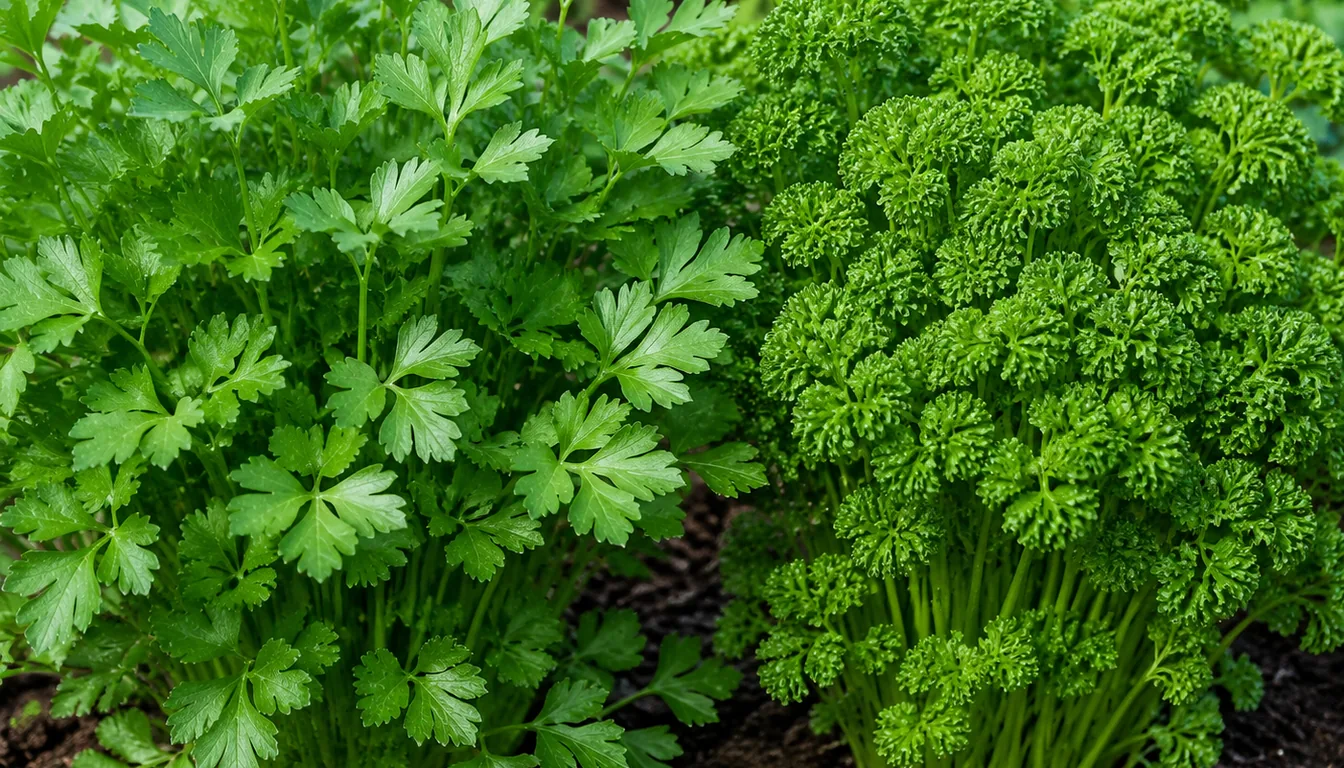
Both types grow from seed the same way, so the choice is about the kitchen and the garden. Wisconsin Horticulture explains that curly types carry much less essential oil than flat-leaf types, which is why flat-leaf parsley has the stronger, sweeter flavor and curly parsley is used more for garnish and edging.
Flat-leaf types may also overwinter better than curly ones, according to the same source, which matters if you plan a fall sowing for early spring leaves.
Variety days to maturity are counted from sowing for herbs. University of Delaware Cooperative Extension lists 'Giant of Italy' and the curly 'Wega' at 75 days and 'Dark Green Italian Plain' at 80 days, which is where the 75 to 80 day first-harvest figure comes from.
Soaking and Sowing the Seed
Illinois Extension and Wisconsin Horticulture both recommend soaking parsley seed in water overnight before sowing to improve germination. Drain it and sow it the same day.
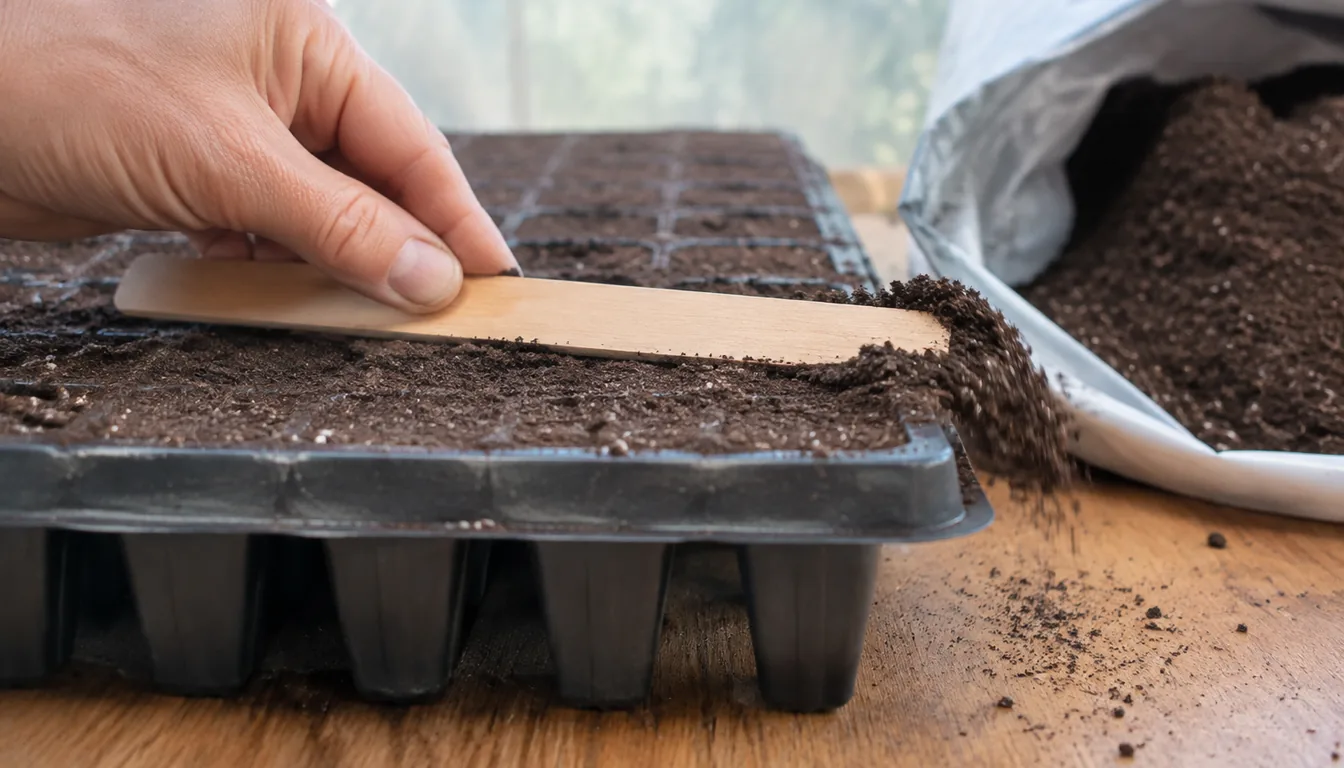
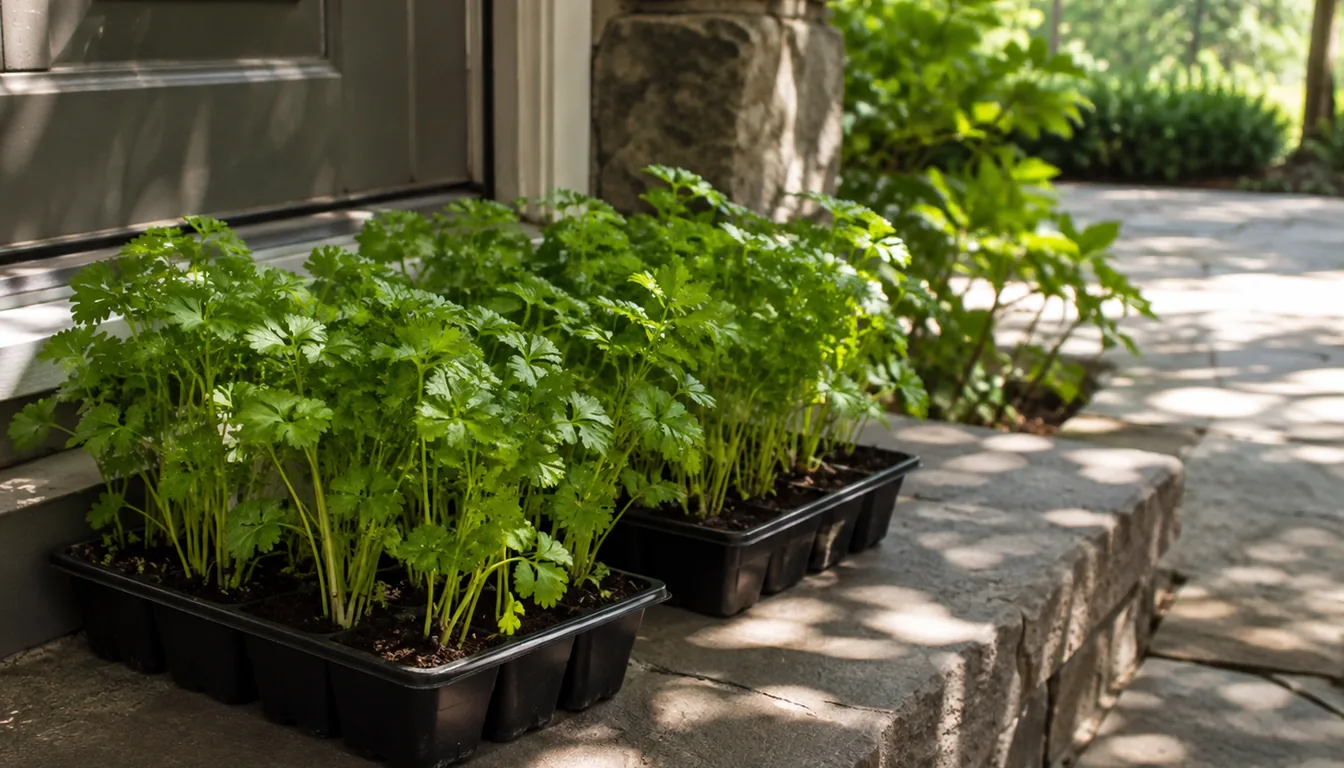
Indoors, individual cells beat an open flat for parsley. Johnny's recommends 1 inch cells, and a cell lets each seedling go into the garden with its root ball intact instead of being teased out of a shared tray.
- SoakCover the seed with water and leave it overnight, then drain it.
- Fill and levelFill cells with a fine, moist seed-starting mix and firm the surface lightly.
- SowDrop two or three seeds into each cell and cover them with about 1/4 inch of mix.
- Hold steadyKeep the mix evenly moist, never soggy, at about 65 to 70°F until seedlings appear.
- Give lightMove the tray to bright light as soon as the first seedlings break the surface.
Wisconsin Horticulture's advice for that long wait is to keep the seed evenly moist, which is the hard part over three or four weeks. The seedling watering schedule covers how to keep cells moist without waterlogging them.
Direct sowing outdoors works too, and it avoids transplanting entirely. Johnny's suggests sowing after the danger of frost has passed, about 1/4 to 1/2 inch deep and three seeds per inch. Illinois Extension adds a useful trick for a slow row. Sowing a few radish seeds with the parsley marks the row within days, so the bed is not weeded or replanted before the parsley appears.
Thinning Without Disturbing the Taproot
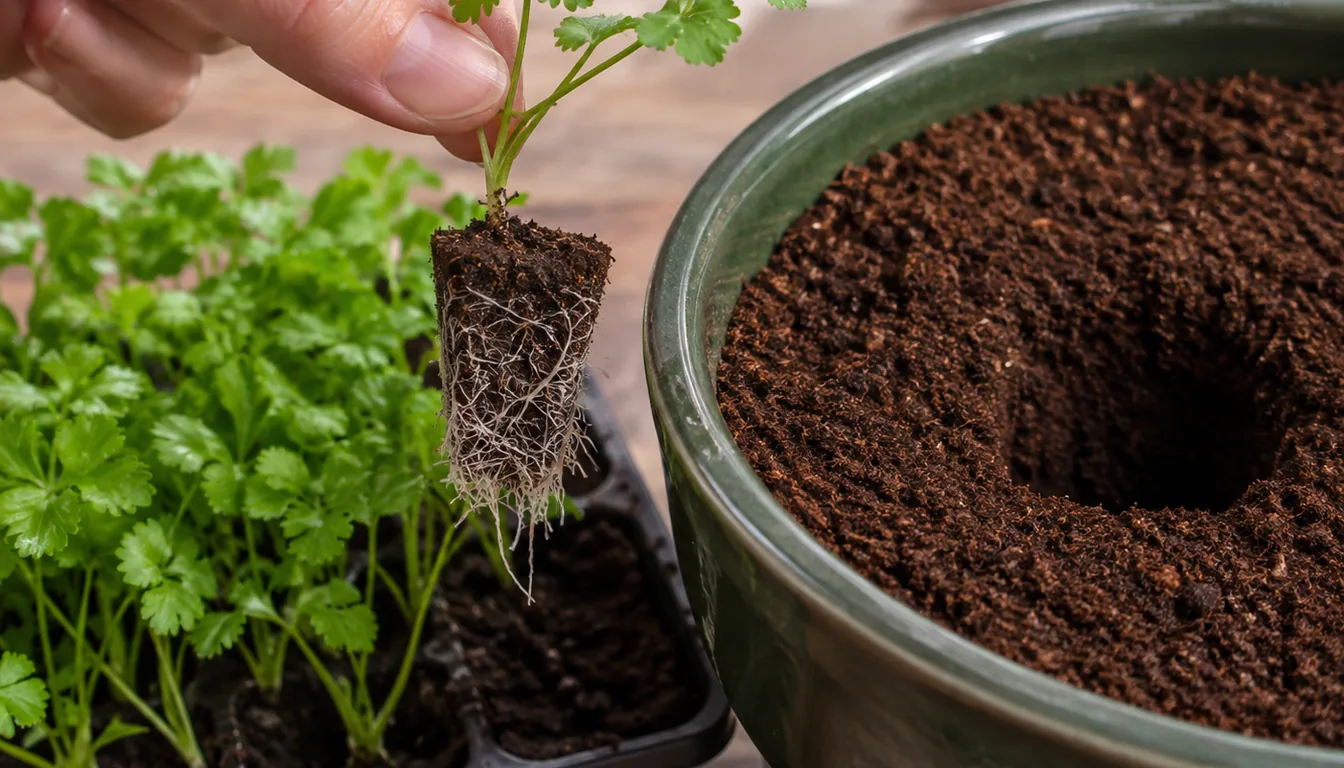
Parsley is a carrot-family plant with a taproot. Wisconsin Horticulture notes that parsley is not easily moved, and NC State Extension and Illinois Extension both advise disturbing the taproot as little as possible at transplanting.
That shapes how thinning is done. Once seedlings in a cell have their first true leaves, snipping the extras at the soil line with scissors leaves the strongest seedling undisturbed. Pulling the extras drags at the roots of the one you keep.
In a garden row, Johnny's recommends thinning to 8 to 12 inches apart, and Wisconsin gives 6 to 12 inches. The thinnings are edible, so the work doubles as a first small harvest.
If seedlings were sown in an open flat, move them to their own cells while they are still small, lifting each one by a leaf with as much mix around the root as possible. The longer they wait, the longer the taproot and the harder the move.
Moving Seedlings Into the Garden
NC State Extension recommends setting parsley seedlings out after the spring frost, 8 to 12 inches apart. Seedlings raised indoors need a few days of gradual outdoor exposure first, and the hardening off schedule lays out how to do that without scorching soft leaves.
Parsley wants richer ground than most herbs. Wisconsin Horticulture recommends relatively fertile soil, and Illinois Extension describes moderately rich, moist, well-drained soil and says parsley will grow in partial shade. That shade tolerance is useful in hot summers, when NC State notes the plant can wilt in hot, humid conditions in the Deep South.
Plant each seedling at the depth it grew in its cell and water it in well. For feeding, Johnny's suggests side-dressing with compost or a balanced fertilizer once or twice during the season if growth needs it, and NC State gives a similar twice-a-season schedule.
Timeline From Seed to First Cutting
The figures above fit together into one calendar, counted from your average last spring frost. A last frost date for your area turns the week numbers into real dates.
| Stage | Timing | What happens |
|---|---|---|
| Sow indoors | 8 to 10 weeks before last frost | Overnight soak, then 1/4 inch deep in cells |
| Germination | 2 to 4 weeks after sowing | Seedlings come up erratically rather than all at once |
| Thin | When first true leaves form | Snip extras so one seedling remains per cell |
| Plant out | Around the last frost date | Harden off first, then space 8 to 12 inches apart |
| First cutting | About 75 to 80 days after sowing | Cut outer stalks once plants are about 8 inches tall |
NC State's harvest guidance is to snip the outside stalks once the plant is roughly 8 inches tall, which leaves the center to keep producing. For a steady supply, Wisconsin Horticulture suggests a few sequential sowings through midsummer, so younger plants take over as older ones slow down.
What Happens to Seed-Grown Parsley in Year Two
Parsley is a hardy biennial grown as an annual. A plant that survives winter does not keep producing leaves the way it did the first year. Illinois Extension explains that the second season brings a seed stalk and leaves that are very tough and bitter, which is why new plants are started each season. NC State adds that second-year plants grow 2 to 3 feet tall and flower before setting seed.
That makes spring sowing a yearly job. A fall sowing can sometimes overwinter for early spring leaves, according to Wisconsin Horticulture, but the leaf flavor is not as good in the second season.
Parsley is also a larval host plant for the black swallowtail butterfly, so its striped caterpillars sometimes turn up on the leaves. Wisconsin Horticulture notes they are seldom numerous enough to cause significant damage and can be moved to other carrot-family plants such as fennel.
Pro Tips
- Buy a fresh packet each year, since parsley seed keeps only about a year.
- Sow a few radish seeds in the parsley row so you can see where it is while you wait.
- Snip extra seedlings at the soil line instead of pulling them, which protects the taproot of the one you keep.
Frequently Asked Questions
How long does parsley take to grow from seed?
Germination takes about 14 to 30 days at 65 to 70°F. Common varieties reach their first cutting about 75 to 80 days after sowing, once plants are around 8 inches tall.
Why didn't my parsley seed come up?
The most common reasons are impatience, old seed, and cold, wet soil. Parsley can take three weeks or more to appear, its seed keeps only about a year, and germination is slowest in cool, wet ground.
Should I soak parsley seed before planting?
Yes. Illinois Extension and Wisconsin Horticulture both recommend soaking it in water overnight before sowing to improve germination.
Can I transplant parsley seedlings?
Yes, with care. Parsley grows a taproot that is easily damaged, so seedlings started in individual cells and planted out with the root ball intact handle the move best.
Will parsley come back the second year?
It often survives winter, but a second-year plant sends up a seed stalk and its leaves turn tough and bitter. Sowing new seed each spring keeps good leaves coming.
Sources & References
- Parsley, Petroselinum crispum, Wisconsin Horticulture, University of Wisconsin-Madison Extension
- Parsley, Key Growing Information, Johnny's Selected Seeds
- Petroselinum crispum, North Carolina Extension Gardener Plant Toolbox
- Parsley, Illinois Extension Herb Gardening
- Parsley, University of Delaware Cooperative Extension
- Seed Viability and Germination, Illinois Extension
Related Guides
Best Butterfly Garden Plants for a Complete Habitat
The best butterfly garden plants do two different jobs. Host plants feed caterpillars, while nectar…
15 min read
Best Fall-Blooming Flowers for Color Near Frost
A bed that still carries flowers in October usually was planned before temperatures fell.
9 min read
Best Fast-Growing Trees for Shade and Privacy
The best fast-growing tree is the one whose mature crown, roots, climate range, and maintenance…
16 min read
Best Fragrant Flowers for Every Yard and Season
The best fragrant flowers depend on climate, light, space, and the hours you use the yard.
15 min read
Best Full-Sun Perennials for Hot, Bright Beds
The best full-sun perennials are the ones that match the bed's soil moisture and drainage, local…
14 min read
Best Ground Cover Plants for Sun, Shade, and Slopes
The best ground cover is a plant that survives the site and performs the job without escaping into…
18 min read