
When Should You Cut Lavender, and Where on the Stem?
Cutting lavender to use is a different job from pruning it, and both are decided by eye rather than by a date.
Get the moment wrong and the bundle looks fine and barely smells. Get the position wrong and the plant carries the stub for the rest of its life, because English lavender does not reliably break from bare wood.
This page covers the harvest itself. The bud stage that holds the most oil, how far down the stem to cut, how to dry bundles so the color lasts, and the lighter touch for culinary lavender.
At a glance
When Should You Cut Lavender for the Strongest Scent?
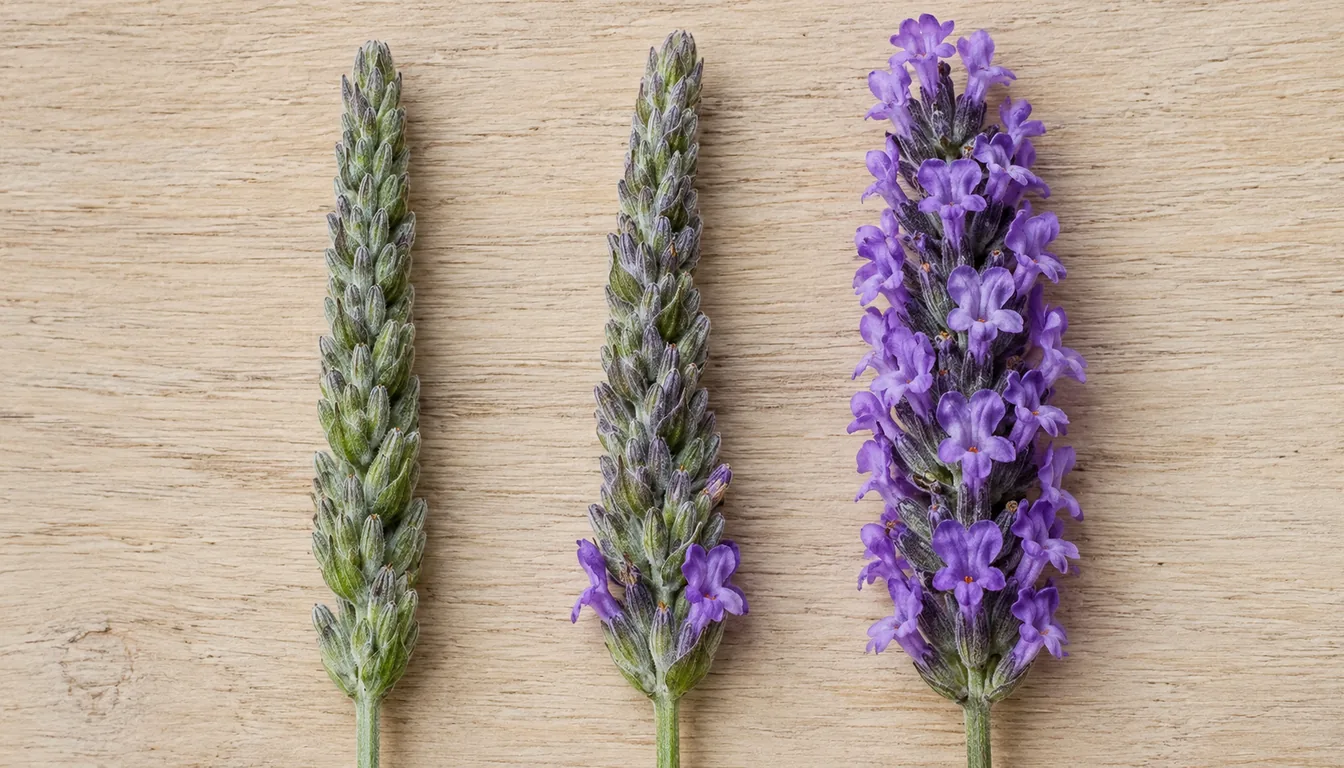
Cut when the lowest one or two florets on a spike have just opened and everything above them is still tight bud.
That is the peak, and it is not full bloom. A spike cut when it is fully purple smells weaker and shatters later, because florets that opened on the plant drop off it as the bundle dries.
The hour matters nearly as much as the day. Cut in the morning once the dew has dried and before the sun is on the plant, because the oils you are harvesting are volatile and heat drives them off.
Shift the target slightly for drying. Cutting a shade earlier, with more buds still closed, trades a little scent for color that holds and petals that stay attached, which is usually the better bargain for anything you are keeping.
For a vase, cut at the stage above and enjoy the color at its brightest.
Where on the Stem Do You Make the Cut?
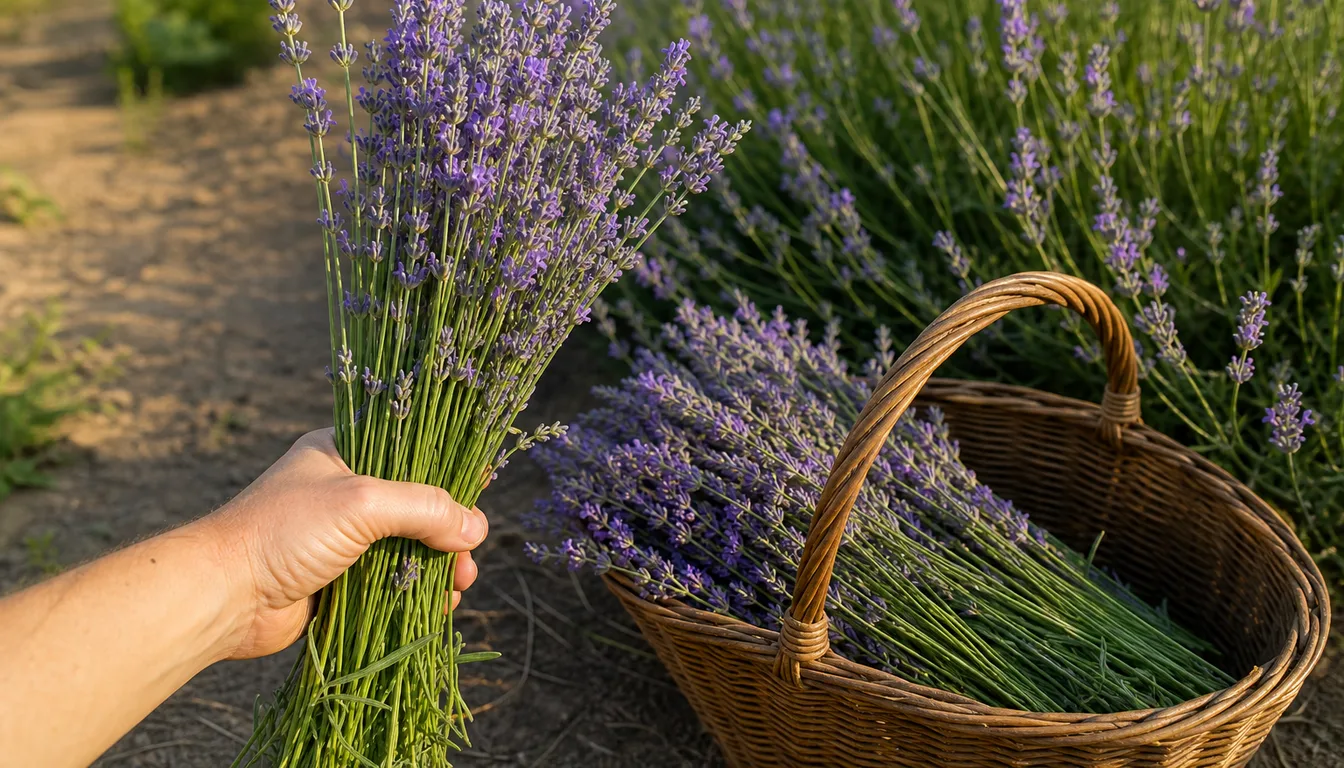
Aim for six to ten inches of stem. That leaves length to re-trim before arranging or hanging, and it is long enough to bundle without the heads sliding out.
The length is the easy part. What actually matters is where the cut sits relative to the leaves.
Every cut goes just above a pair of healthy leaves, in the green leafy growth rather than the gray bare stem lower down. A cut there usually pushes two new shoots below it, which is why a plant that gets harvested often stays denser than one left alone.
Below the leaves the rule reverses. Lavender does not reliably break from bare wood, so a cut into the gray section leaves a stub that stays a stub, and enough of those and the mound opens up in the middle and never closes again.
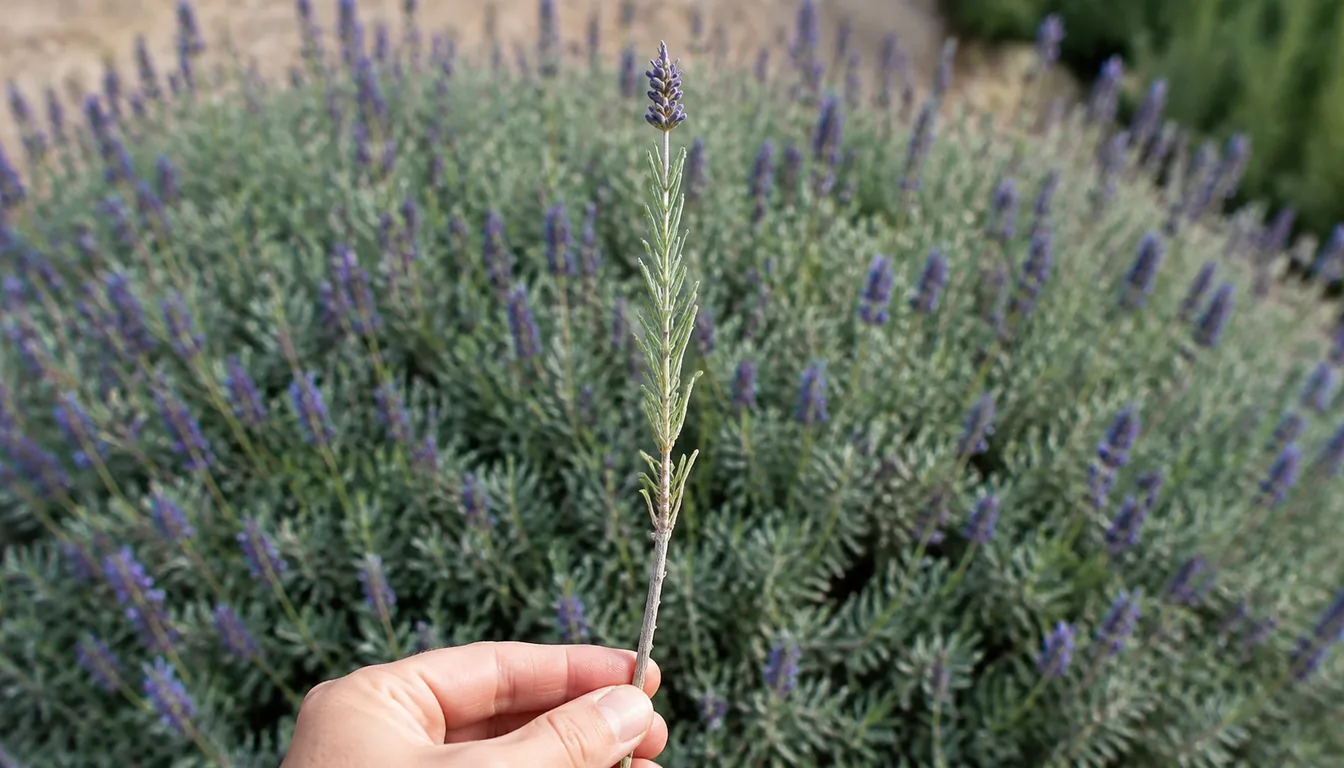
- Above a leaf pair: Never into bare gray wood, however tempting the extra stem length.
- Six to ten inches: Enough to re-trim, short enough to leave leafy growth behind.
- A handful at a time: Gather several spikes in one hand and cut them together, which keeps the heads level and is faster.
- Spread around the mound: Take a few from each side rather than stripping the one nearest the path.
That last one is not tidiness. A side stripped bare stays bare, because the growth that would have filled it in was the growth you removed.
How Do You Dry Lavender Without Losing the Color?
Bundle size is where most harvests are lost.
Twenty to thirty stems is the working number. A thick bundle holds damp in its center long after the outside feels dry, and that center is where mold starts.
Use a rubber band rather than string. Stems shrink as they dry and a band keeps tightening where string goes slack and drops the bundle on the floor.
- BundleTwenty to thirty stems, banded tight just below the leaves.
- HangUpside down somewhere dark with air moving through, never a sunny window.
- WaitOne to two weeks, longer in a humid spell.
- TestBend a stem. A dry one snaps, a stem that bends needs more time.
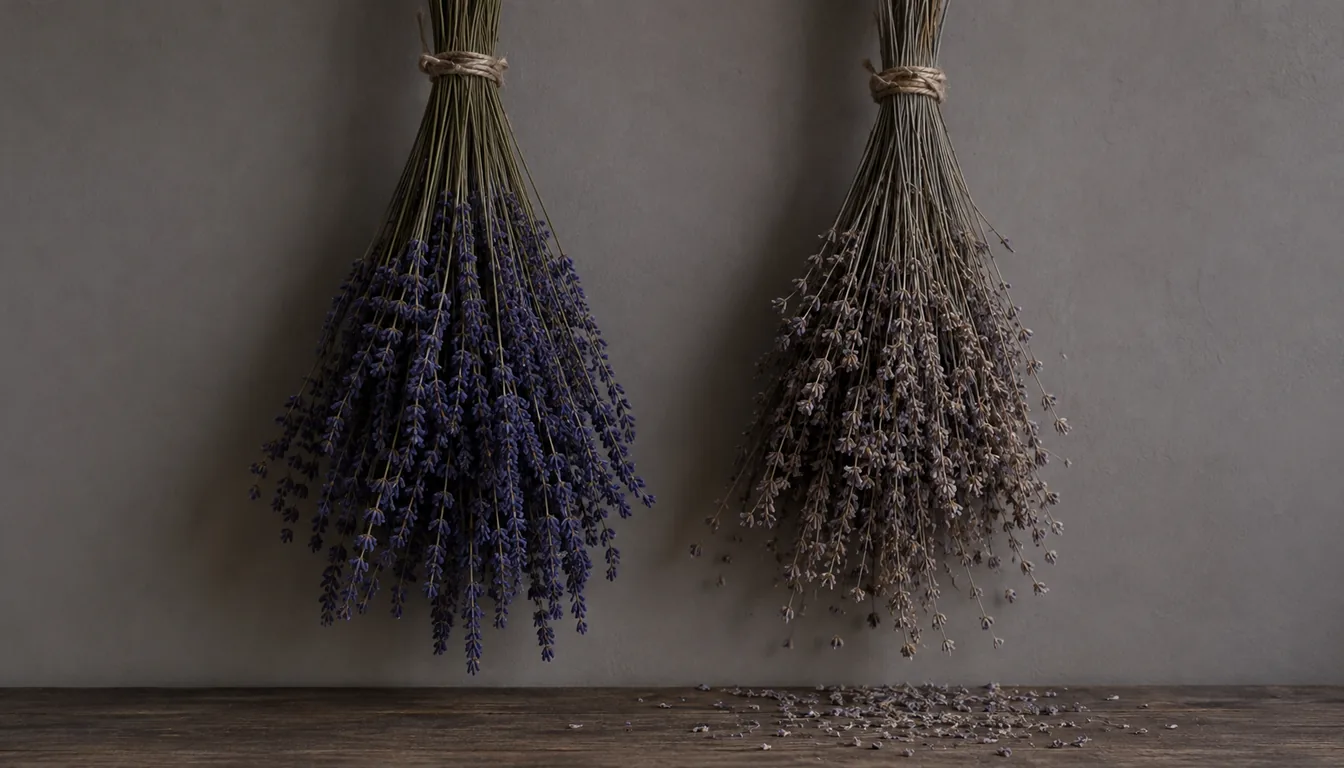
Dark and airy are doing two different jobs. Light is what fades the color, and still air is what lets mold take hold, so a dim shed with a window cracked open beats a bright airy kitchen.
Color loss and petal loss are separate failures with separate causes. A bundle that faded was dried in too much light, and a bundle that shed its florets was cut too late, so the fix depends on which one you are looking at.
Which Lavender Can You Cook With?
Start with the spray history rather than the species.
Only unsprayed plants belong in the kitchen, so if the plant has ever been treated with anything not labeled for food, those stems are for crafts and the question ends there.
Species comes next. English lavender, Lavandula angustifolia, is the sweeter one for cooking, while the camphor-heavy Lavandula stoechas types carry a medicinal note that does not suit food.
The cut itself is the same stage with a different mix. Take spikes carrying mostly tight buds with a few florets just opening, since the buds are what you are after and the open flowers are the part that drops.
Strip the buds from the stems after a short dry. The stems carry a resinous note that ends up in whatever they are steeped in, which is why culinary lavender is sold as loose buds rather than as stems.
Does Harvesting Count as Pruning?
Yes, in one direction.
Every stem taken above the leaves is a small pruning cut, so a plant harvested through the season stays tighter and domed where an unharvested one flowers, stands, and slowly opens out in the middle.
It also means an uneven harvest is an uneven prune. Strip the accessible side and the mound goes lopsided, and lavender will not fill that side back in from bare wood.
Keeping the dome even does a second job. An open center dries out after rain where a dense flattened one holds damp against the crown, which is the way most lavender is actually lost.
None of this replaces the annual work. The tidy after flowering and the shaping in spring are separate jobs on a separate schedule, and the English lavender profile owns both.
How Should Dried Lavender Be Stored?
Sort before you strip.
Straight whole stems are the ones worth keeping intact for wreaths and swags, and once the buds are off, that choice is gone.
Strip the rest over a tray by running your fingers down each stalk. Once a bundle snaps rather than bends, the florets come away cleanly and the tray catches almost all of them.
Store the buds in a sealed jar out of direct light. Light fades color and scent over months in a jar exactly as it does on a drying bundle, so a cupboard beats a shelf by the window.
Pro Tips
- Carry a jar of water out with you for vase stems. Lavender wilts fast in a warm hand and it does not fully recover once the stem has drawn air.
- Cut the whole plant over two or three sessions a few days apart rather than in one pass, so the spikes that are behind get to reach the right stage.
- Keep the first bundle you dry well as a reference. Comparing color against it is far easier than remembering what a good one looked like last summer.
Frequently Asked Questions
Can I cut lavender that has already gone fully purple?
Yes, and expect less scent and more shedding. Fully open spikes are still fine for a vase you will keep for a few days, and they are the wrong choice for anything you intend to dry and store.
How many times can I harvest lavender in a season?
As often as spikes reach the right stage, which for many plants means two flushes. Each cut has to stay in leafy growth, so the limit is how much green stem is left rather than a number of harvests.
What if I already cut into the bare wood?
Leave it and cut elsewhere. A few stubs on a healthy plant are cosmetic, and the response is to keep the rest of the harvest above the leaves rather than to cut the stub back further looking for regrowth.
Do I need to strip the leaves before drying?
Only the ones that would sit under the band, because leaves trapped inside a tight bundle stay damp and mold. The rest can stay on and are stripped with the buds afterwards.
Why did my dried lavender lose its smell after a few months?
Usually light and open storage rather than the harvest. Volatile oils leave a bundle sitting on an open shelf, and a sealed jar in a dark cupboard holds the scent far longer than an ornamental display does.
Sources & References
Related Guides
Cutting Back a Leggy Houseplant Does Not Fix It
Most people cut a houseplant back because it has gone long and bare.
11 min read
Deadheading Daffodils Matters Less Than the Six Weeks After
Almost every page about spent daffodils tells you to remove the seed pod so the bulb is not…
11 min read
French Lavender Pruning Depends on the Plant and Season
French lavender needs light trimming within its leafy growth, rather than a hard cut into bare…
6 min read
Fruit Tree Pruning Starts With Where the Crop Forms
A fruit tree that gives small, crowded, scabby fruit is usually not underfed.
11 min read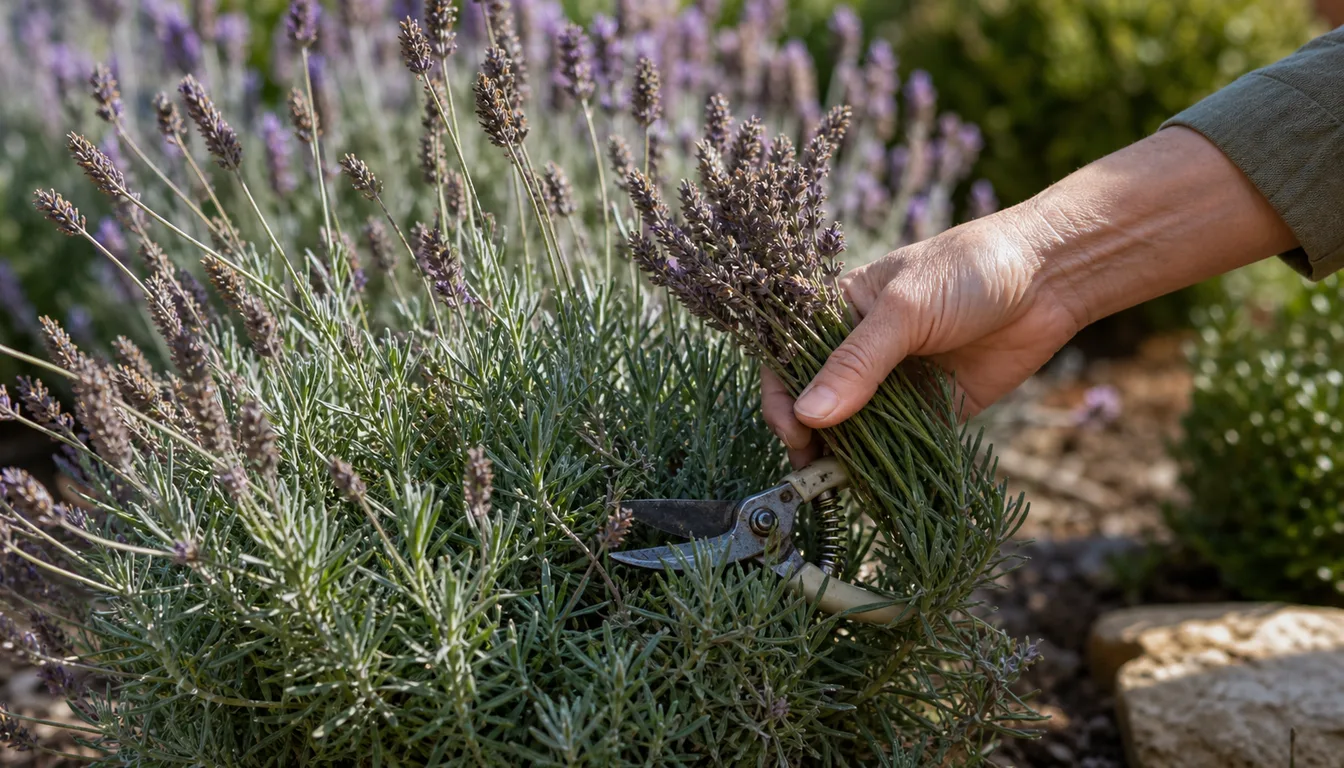
How Deep Can You Cut a Spent Lavender Spike?
Deadheading lavender is the lightest cut you will ever make on the plant, and the one place people…
7 min read
How Do You Prune Spanish Lavender for a Second Flush?
Spanish lavender is the one that flowers first and the one that keeps going.
7 min read