
Fruit Tree Pruning Starts With Where the Crop Forms
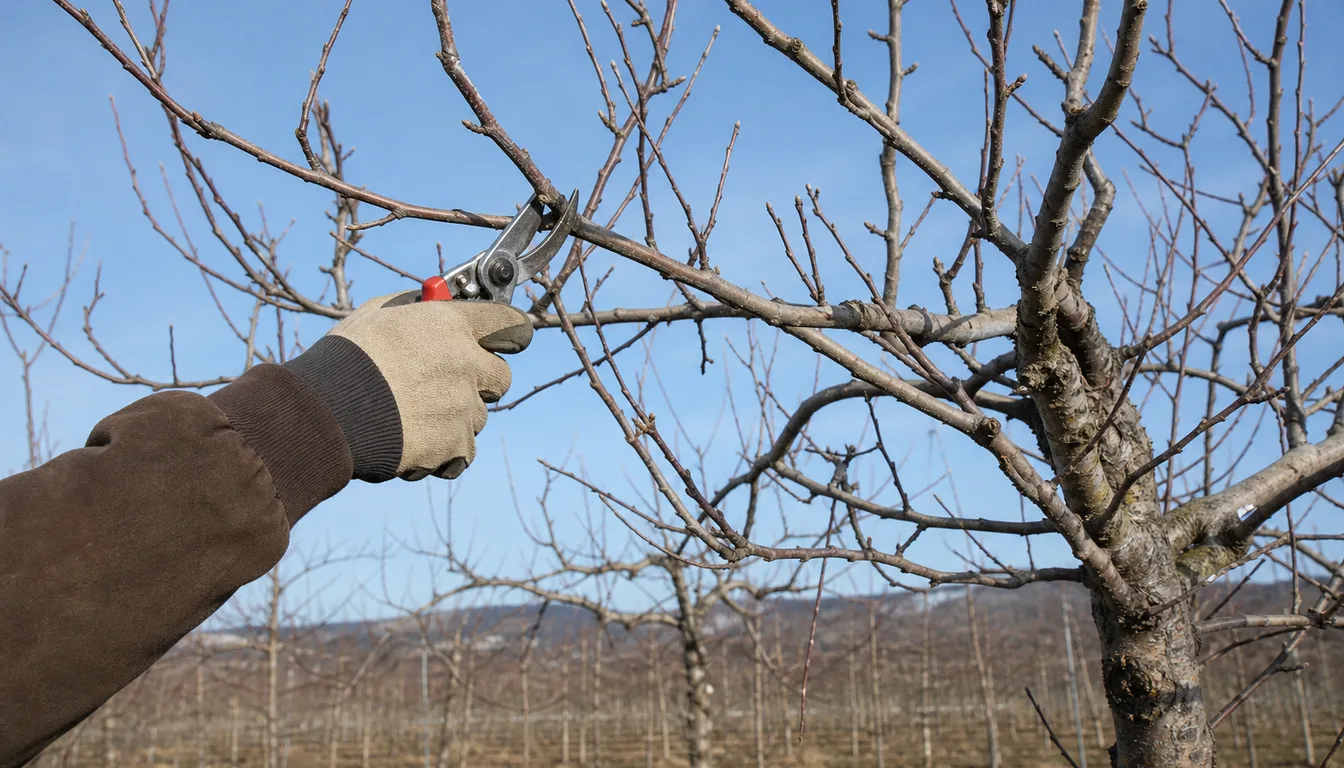
A fruit tree that gives small, crowded, scabby fruit is usually not underfed. It is carrying more fruit than it can finish and shading the ones it has.
The cure is two decisions rather than one technique. Find the wood that is holding next year's crop, then take out enough of everything else that light reaches what stays.
Get the first decision wrong and the pruning itself becomes the problem.
An apple hardly notices when you shorten last summer's shoots.
A peach loses its crop to the same cut.
At a glance
Where Does Your Tree Actually Carry Its Fruit?
Every fruit tree keeps its crop in one of two places, and the two want opposite treatment.
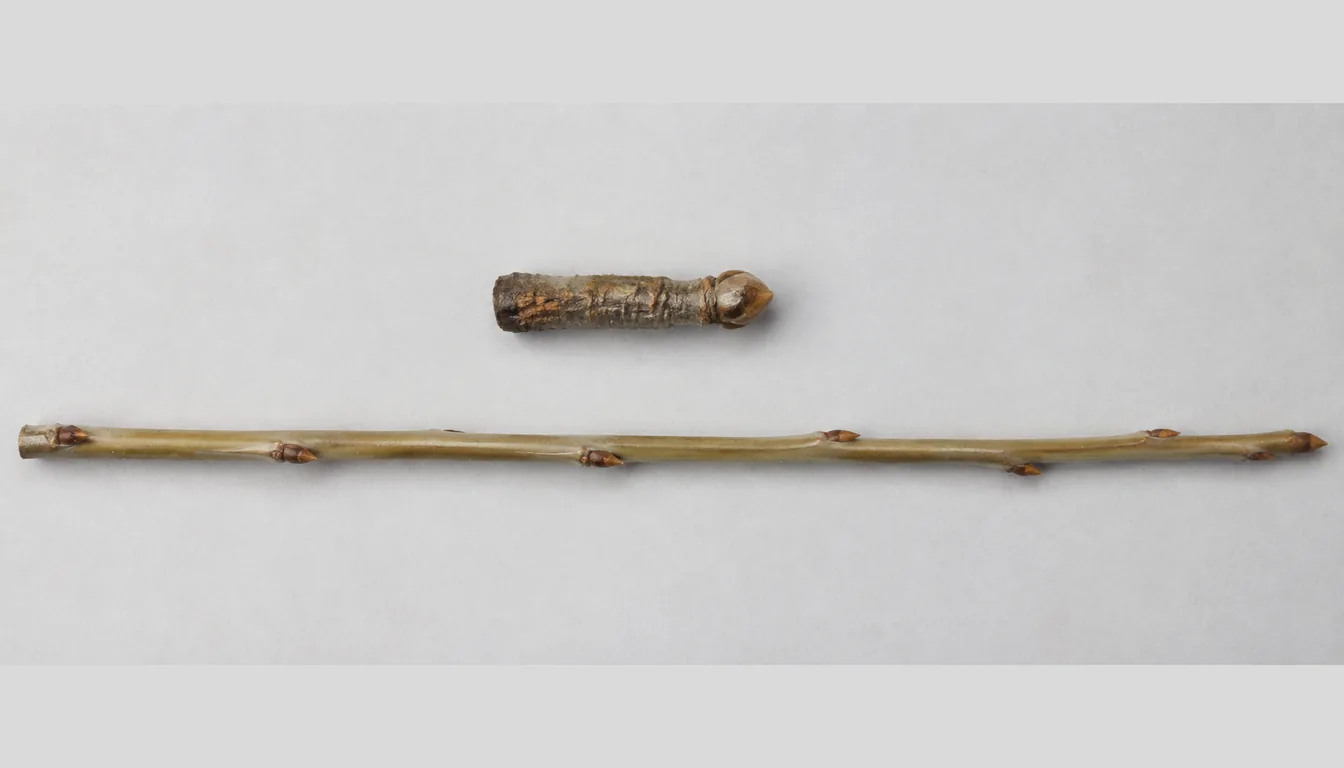
Apples and pears fruit on spurs, which are stubby side branches that lengthen less than an inch a year and sit on wood at least two years old. The wood carrying your apples is older than the shoots around it.
A spur is not permanent. It lives a long time, but its productive life is usually no more than eight to ten years, after which the same stubby branch keeps flowering weakly and setting little.
An old tree with a poor crop often has plenty of spurs and no young ones.
Peaches, nectarines and apricots do the reverse. Their flower buds form on shoots grown the previous summer, so the crop rides on one-year wood and moves outward every year.
Last summer's growth is this summer's harvest.
Plums and cherries sit across the line. Both set on spurs, and plums also carry a share on younger wood depending on the variety, which is why plum advice sounds contradictory wherever you read it.
The practical difference is what a careless cut costs.
Shortening every young shoot on an apple removes almost nothing the tree needed. The same afternoon's work on a peach removes the crop.
| Tree | Fruit forms on | What a cut must leave alone |
|---|---|---|
| Apple, pear | Spurs on wood two years and older | The short stubby side growth, whatever else comes off |
| Peach, nectarine, apricot | Shoots grown last summer | A good supply of pencil-thick one-year shoots |
| Sweet and tart cherry | Spurs on older wood | The spur systems along the main limbs |
| Plum | Spurs, and one-year wood on some varieties | Both, until you know which the variety favors |
How Much New Growth Should There Be Before You Cut?
Before deciding how hard to prune, measure what the tree did last year.
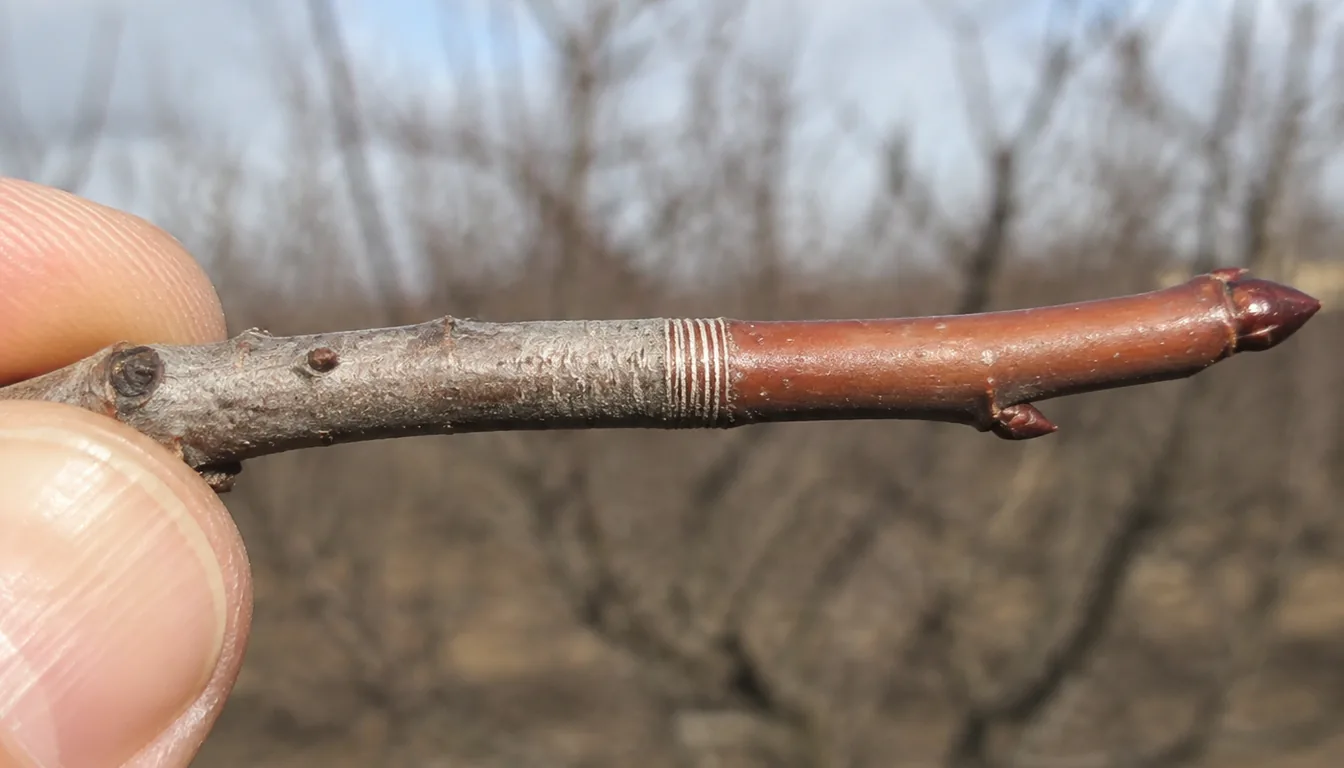
Last season's growth starts at a narrow band of closely spaced rings partway along each shoot, left behind when the bud opened.
Bark is older and grayer on the trunk side of that band and smoother beyond it.
Everything past the band is one year old.
A stone fruit tree needs 12 to 18 inches of that growth each season to carry a decent crop. Measure three or four shoots around the tree rather than the one nearest the path.
Six inches of growth is not a pruning problem. It is a tree short of water, feed or root room, and cutting it harder makes a weak tree spend what it has on replacing branches.
Growth far over the range says the opposite. Upright shoots four to seven feet long are a tree investing in timber instead of fruit, and those are the ones to remove.
No equivalent number exists for apples, because the crop sits on older wood. On an apple the shoot length tells you about vigor, not about next year's harvest.
Which Cut Do You Make, and What Does Each One Trigger?
There are only two cuts, and the tree answers them very differently.
A thinning cut takes a whole shoot out at the point where it joins something else.
Nothing is left to regrow from, and the cut does not invigorate the tree the way other cuts do.
Light and air move into the gap and stay there.
A heading cut removes only the end of a shoot. The buds below the cut wake up, which is exactly why a shortened branch answers with three or four new shoots where one grew before.
That response is the source of most disappointing pruning. Somebody shortens every long branch to tidy the tree, and by August the tree is denser than it was in February.
Most of a yield job on an established tree is therefore thinning cuts. The aim is to get light onto the fruiting wood, and heading cuts add wood in the way of that light.
Heading cuts still have two proper jobs. They build the frame of a young tree, and they renew shoots on stone fruit, where new wood is the crop rather than an obstacle to it.
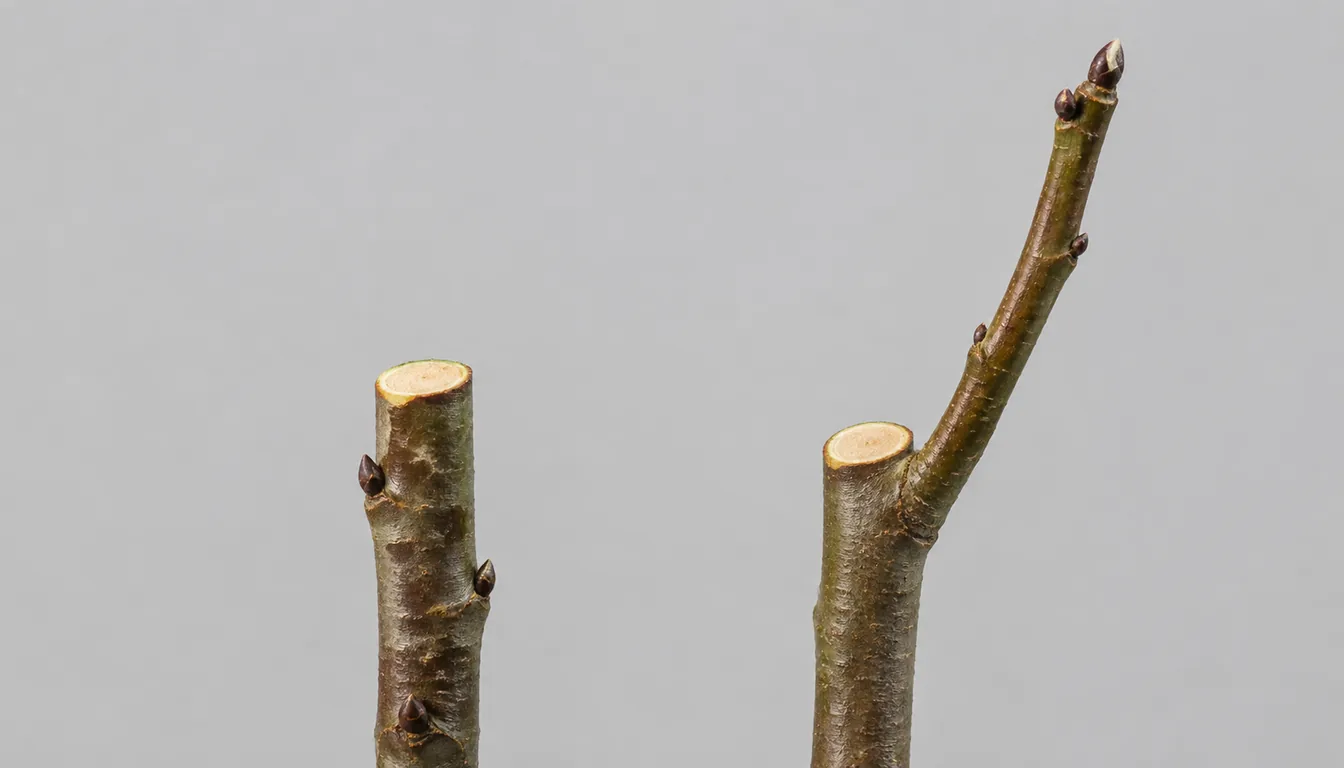
Thinning cut
Removes an entire shoot back to a limb or a side branch, leaving no stub. The tree does not answer with a flush of regrowth, so the opening stays open, which is why this cut does most of the work on a mature tree.
Heading cut
Removes the outer part of a shoot and leaves the rest standing. Buds behind the cut break and several shoots replace the one you shortened, which is how you build young structure and renew fruiting wood on peaches.
What Shape Keeps Light on the Fruit?
Light is the other half of yield. Fruit ripening in shade stays small and colors poorly, and the wood that never sees sun stops setting altogether.
Two frameworks do the job, and the species chooses which. Peach, plum and tart cherry grow naturally into a vase, so they are trained to an open center with three or four scaffold limbs set around the trunk at the compass points and nothing in the middle.
Apples and pears keep a single upright stem and take a central leader, with two or three tiers of scaffold branches spaced up it. A dwarf tree usually needs only two tiers.
Angles decide whether the frame holds.
A crotch between 45 and 90 degrees carries weight well, and on an apple the branch to keep sits about 30 degrees above horizontal.
Narrow upright forks tear out under a heavy crop.
Spacing decides whether light gets in. On a leader tree the lowest branch of the second tier sits at least 24 inches above the top branch of the tier under it, which leaves a window rather than a wall.
Water sprouts undo all of it. Those vertical shoots, some of them four to seven feet long, carry almost no fruit and shade the middle of the tree, so they come out at the base every year.
- Strong crotch angle
- 45 to 90 degrees from the trunk
- Open center scaffolds
- 3 or 4 limbs, none in the middle
- Leader tier gap
- At least 24 in above the tier below
- Lowest branch
- 24 to 36 in above the ground
Is Late Winter Really the Right Time for Your Tree?
Prune fruit trees in late winter is the most repeated line in gardening, and it is an apple rule wearing a bigger hat.
For apples it holds. They are cut in the dormant period, late winter into early spring, with March and April named as the best months in cold regions.
Stone fruit is a different tree. Penn State tells home growers not to prune peach, plum or tart cherry from January through March, because a cut made into cold wet weather sits open while the tree can do nothing about it.
Those species are pruned from just before bloom until about two weeks after petal fall. The tree is awake, the wound closes quickly, and the wet winter diseases that enter through fresh cuts have less to work with.
Sweet cherry is later again, cut after it has fruited or in early July.
Order matters inside the dormant season too. Prune the latest blooming trees first and the earliest blooming last, since a cut is least likely to break dormancy on a tree that was going to wake up late anyway.
Summer pruning has a hard stop at the end of July. Cuts after that push soft growth into autumn, and soft growth meets the first frost unhardened.
- Late winterStart with apples and pears, and inside that group cut the latest blooming trees before the early ones.
- Just before bloomMove to peach, plum and tart cherry, and keep cutting until roughly two weeks after the petals drop.
- Early JulyPrune sweet cherries, either straight after harvest or during the first half of the month.
- End of JulyStop. Any summer cut after this pushes growth that will not harden before the cold arrives.
How Many Fruit Should You Leave on a Branch?
A branch loaded end to end is not a good crop. It is one crop's worth of sugar divided too many ways.
Thin while the fruit is about the size of a nickel. The tree is still deciding how much to invest in each one, and taking the extras off early is what redirects that investment rather than wasting it.
Leave the survivors roughly 6 to 8 inches apart along the branch. On an apple that often means reducing a cluster of five to a single fruit and accepting how wrong it feels at the time.
Weight is the other reason. A fully loaded limb can snap before harvest, and a torn limb costs the fruit and the branch that would have carried next year's.
Thinning is the step home growers skip, and it changes fruit size more than any cut made in winter. It is also the fastest of the jobs on this page.
Skipping it has a second cost that arrives later. A tree allowed to overload one summer often takes the following year off, which is where the pattern of one heavy year and one bare year comes from.
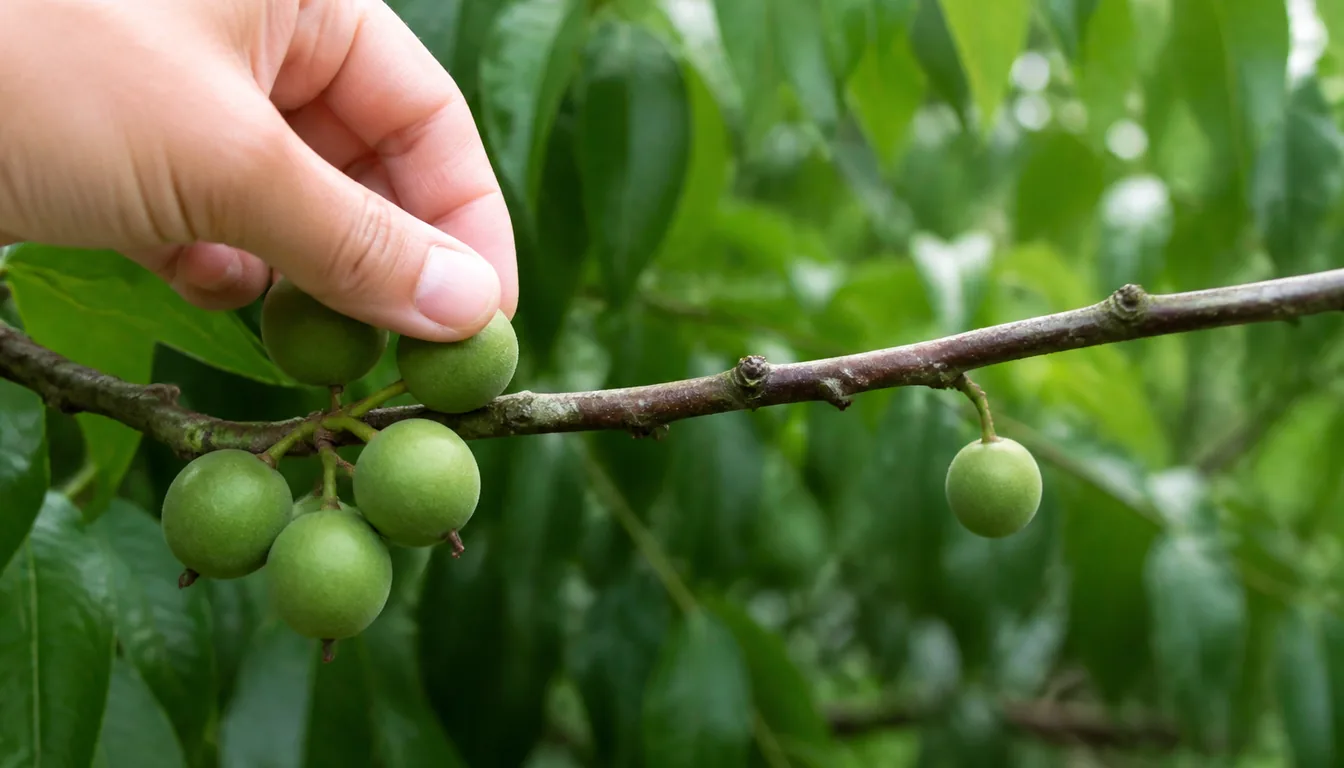
- Wait until the fruit is about the width of a nickel before starting
- Reduce each cluster to the largest single fruit in it
- Leave 6 to 8 in of bare branch between the fruit that stay
- Take off anything marked, misshapen or hanging under a crossing branch
What Turns a Prune Into a Lost Harvest?
Four mistakes cost a season rather than a branch, and all four look like diligence at the time.
The first is tidying a peach. Shortening every one-year shoot removes the flower buds that were going to be the crop, and the tree looks neat all summer with nothing on it.
The second is doing everything in one winter.
A drastic cut means greatly reducing every other cut in the tree that year, because hard pruning is answered with wood.
Spread a renovation across two or three years instead.
The third is fighting a tree that is finished. Trees left unmanaged for several years are generally not reclaimable, and a young replacement will out-fruit the rescue attempt long before the rescue succeeds.
The fourth is a late summer cut. Anything after the end of July pushes growth that meets the frost soft, and the damage shows up the following spring as dieback.
None of these is fixed by cutting more carefully. Each is fixed by stopping earlier.
Pro Tips
- Measure last summer's growth on three shoots before deciding how hard to prune a stone fruit tree.
- Take water sprouts off at the base each year rather than shortening them, since shortening one makes four.
- Thin fruit on a calm morning when you can see the whole branch, and work outward from the trunk.
- Keep a note of which trees you cut in which week, because the order matters more than the date.
Frequently Asked Questions
Can I prune a fruit tree in autumn?
Autumn cuts sit open through the wettest part of the year, which is when the diseases that enter fresh wounds are most active. Wait for late winter on apples and pears, and for the days around bloom on peaches and plums.
How much can I take off in one year?
Enough that the tree does not answer with a thicket. A heavy cut means doing very little else that year, and a full renovation is spread over two or three seasons.
Why does my apple tree fruit heavily one year and not at all the next?
An overloaded tree spends the following season recovering rather than setting flower buds. Thinning fruit to 6 to 8 inches apart at nickel size is the usual way out of that cycle.
Do I need to seal the cuts?
No. A clean cut made at the right time closes on its own, and a sealed wound traps moisture against the wood.
My peach grew only six inches last year. Should I prune it harder?
No. Growth that short points to water, feed or root problems, and pruning a weak tree harder spends what little it has on replacing branches instead of fruiting.
Sources & References
- NC State Extension Gardener Handbook, Tree Fruit and Nuts
- Penn State Extension, Pruning and Training Home Fruit Trees to an Open Center
- Wisconsin Horticulture, Training and Pruning Apple Trees
- University of Wisconsin Horticulture, Pruning Deciduous Trees
- Oregon State University Extension, Fruit Thinning
Related Guides
Cutting Back a Leggy Houseplant Does Not Fix It
Most people cut a houseplant back because it has gone long and bare.
11 min read
Deadheading Daffodils Matters Less Than the Six Weeks After
Almost every page about spent daffodils tells you to remove the seed pod so the bulb is not…
11 min read
French Lavender Pruning Depends on the Plant and Season
French lavender needs light trimming within its leafy growth, rather than a hard cut into bare…
6 min read
How Deep Can You Cut a Spent Lavender Spike?
Deadheading lavender is the lightest cut you will ever make on the plant, and the one place people…
7 min read
How Do You Prune Spanish Lavender for a Second Flush?
Spanish lavender is the one that flowers first and the one that keeps going.
7 min read
How to Deadhead Daisies for More Blooms
To deadhead a daisy, wait until the petals have faded or collapsed, then follow the flower stem…
12 min read