
How to Help an Over-Pruned Apple Tree Recover Over Two to Three Seasons
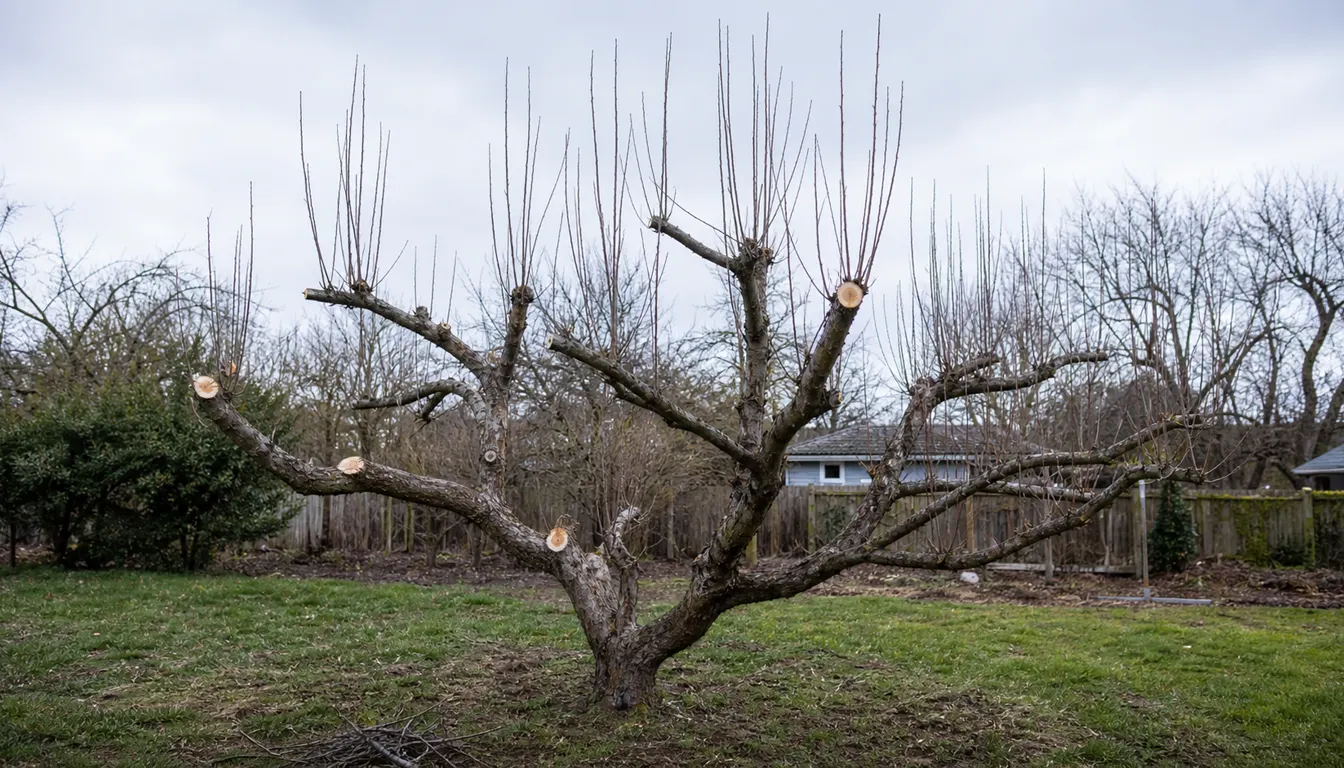
An apple tree that lost too much wood in one session usually survives. Its roots still hold the reserves for the canopy that was there before, so the next spring it pushes a dense crop of fast, upright water sprouts from around the large cuts and along the trunk.
Recovery is mostly a matter of managing those sprouts. Clean up torn or broken wood now and leave the rest of the tree alone. Then, over the next two to three seasons, keep a few well-placed sprouts as future branches and remove or shorten the others, mostly in early summer while they are still soft. A second hard cut, or a dose of nitrogen to speed things up, produces more of the same soft growth.
Routine pruning for fruit yield can resume once the new framework is in place.
Why an over-pruned apple tree fills with water sprouts
A tree keeps its roots and branches roughly in balance. Utah State University Extension explains that removing a lot of wood during the dormant season leaves the tree with more root reserves than the remaining canopy needs, and that surplus goes into vigorous new growth the following season. After a severe cut, most of that growth arrives as water sprouts, the smooth, straight shoots that form just below large pruning wounds and on the upper sides of limbs.
Four consequences follow, and they shape the rest of the recovery.
| What the hard cut causes | Why it matters |
|---|---|
| A flush of upright sprouts | They shade the interior and can be removed or trained, but new ones keep appearing for several years |
| Delayed fruiting | University of Minnesota Extension notes that excessive pruning delays or reduces fruiting and produces mostly leafy growth |
| Fast, soft shoots | Nebraska Extension lists heavy pruning and excess fertility as causes of the rapid twig growth that is most susceptible to fire blight |
| Newly exposed limbs | UMass Extension warns that bark on large limbs can be injured by sudden exposure to sun |
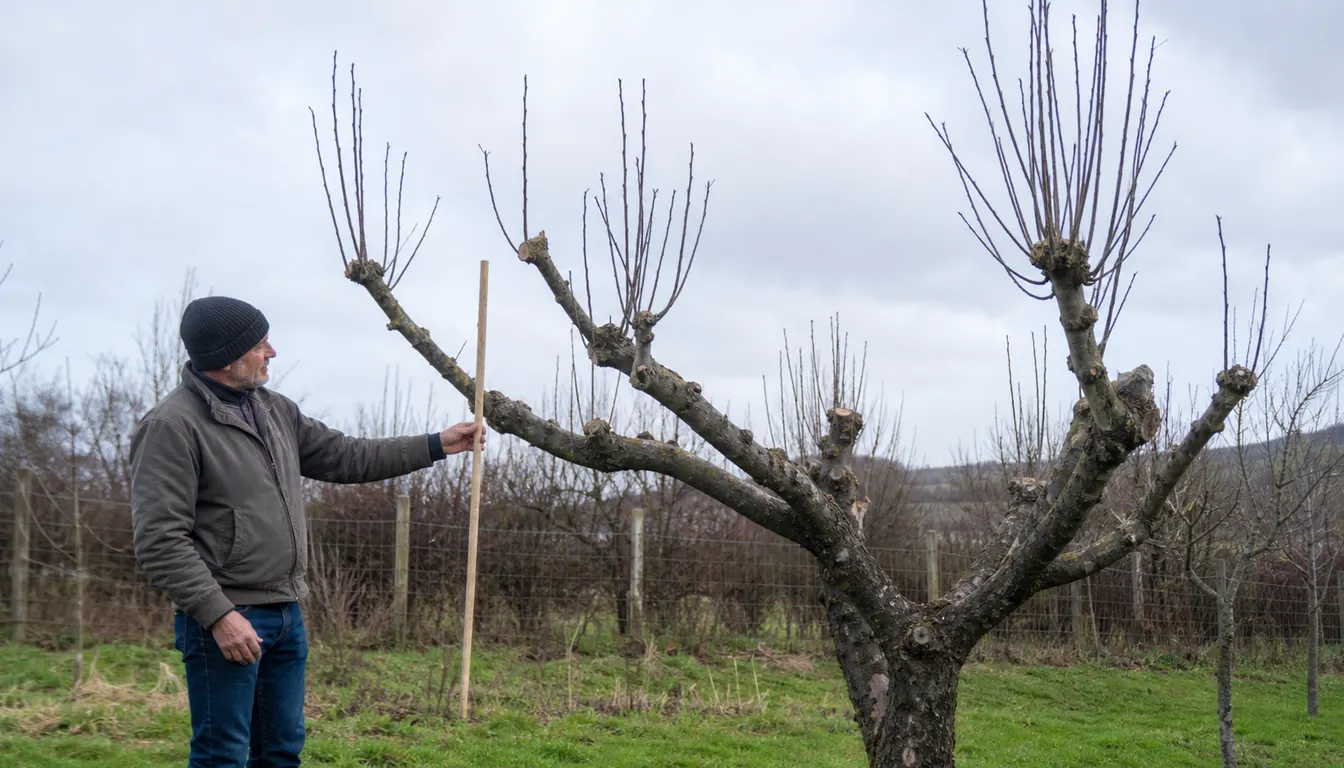
Before planning any repair, look at what is left. A tree with a sound trunk and several healthy scaffold limbs has a framework to rebuild on. A large, old tree that was topped may be a different decision. UMass Extension points out that renovating aged, high-topped apple trees is laborious, the fruit is often poorer than on younger trees, and many older varieties bear heavily only every other year, so keeping such a tree for shade or replacing it can be the more practical choice.
What to cut now and what to leave alone
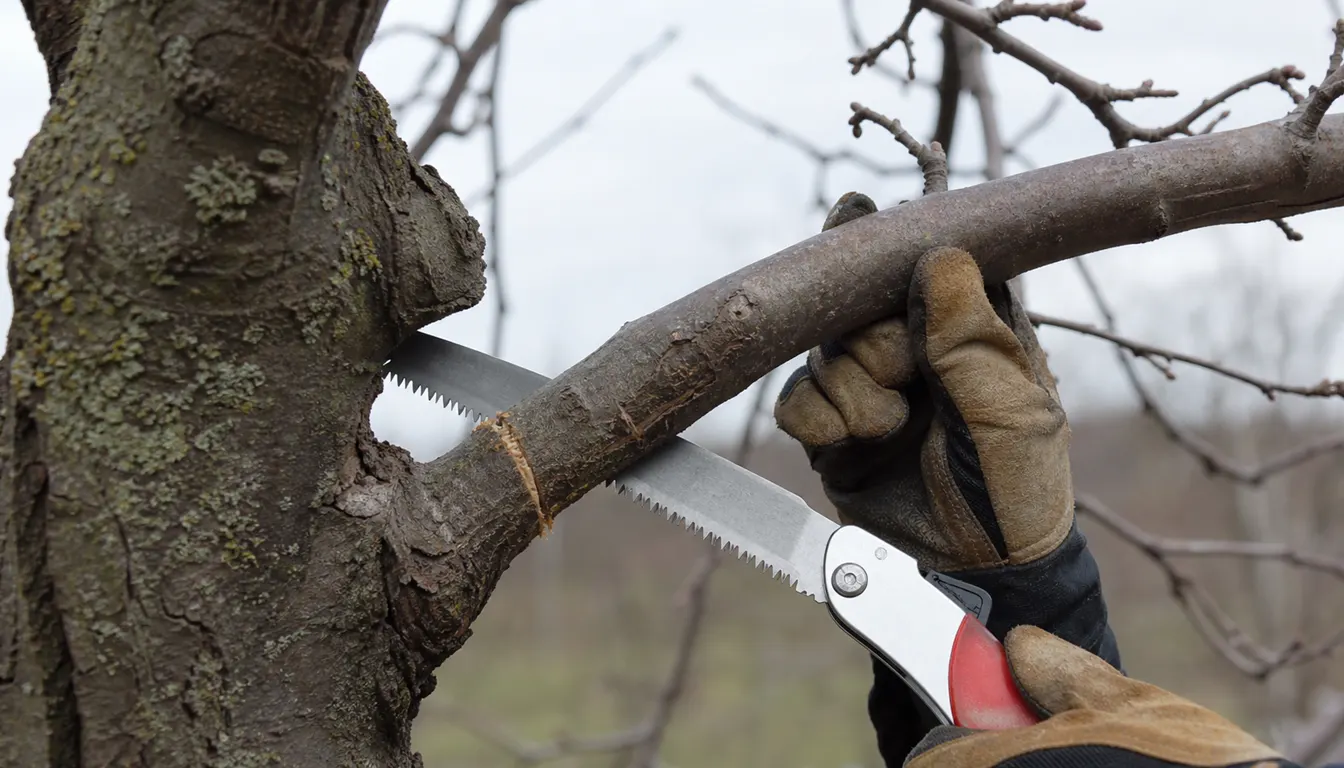
The only cuts worth making right after the damage are repairs. Remove dead, broken, and torn branches and any long stubs, and cut each one back to the branch collar, the swollen ring where the branch meets the trunk or a larger limb. For a heavy limb, University of Minnesota Extension recommends starting the cut from the underside so the bark does not tear as the limb falls.
Leave the healthy wood, even where the tree looks lopsided. Trimming the undamaged side to match the damaged side removes more of the leaf area the tree needs to rebuild, and it triggers another round of sprouts on that side as well. Cutting the top back again is the same mistake on a larger scale. Utah State University Extension describes topping as a heading cut that produces several vigorous shoots at the top of the tree.
Pruning paint is unnecessary. Iowa State University Extension advises against wound dressings because they do not prevent decay and can interfere with the tree's own response to the wound.
Which water sprouts to keep, shorten, or remove
Most of the sprouts will go, but not all at once and not at random. Their position decides their fate. UMass Extension, describing the sprouts that follow a hard cut on an apple tree, sorts them this way.
| Where the sprout grows | What to do |
|---|---|
| On the trunk | Remove it, since it has no useful place in the framework |
| On the inner two-thirds of the lower limbs | Remove it, because it shades the interior |
| On the upper side of limbs in the top of the tree | Thin to about 2 feet apart and keep the ones that lean toward the outside |
| Other sprouts in the top of the tree | Head them back so they form side branches |
A kept sprout is a candidate for a new branch. University of Minnesota Extension advises choosing branches by their position around the trunk so they do not all leave from one side or one height, and spacing the scaffold branches of a central-leader tree about 12 inches apart.
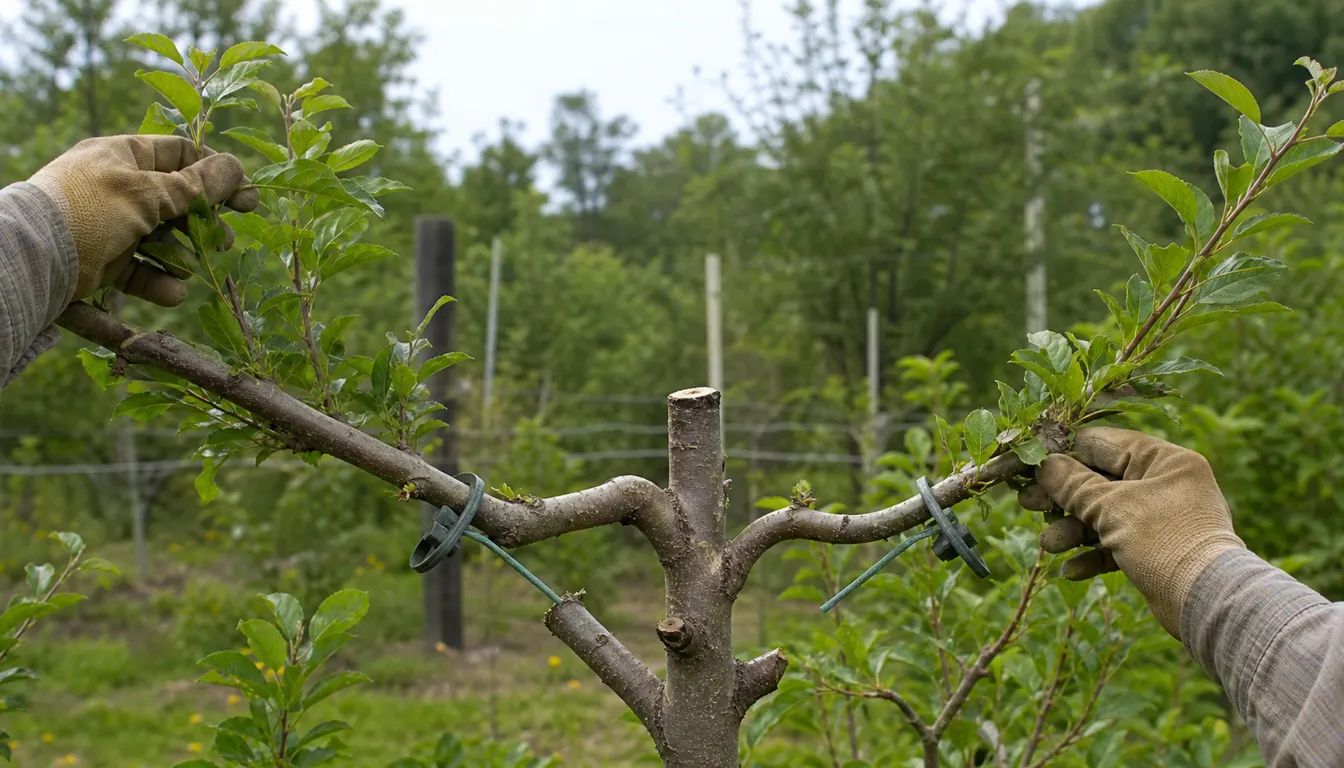
Angle matters as much as position. Upright shoots grow the most vigorously and carry the least fruit, and narrow crotches tend to split under a crop. University of Minnesota Extension recommends training young, flexible shoots toward about 60 degrees from the main stem, using a wooden clothespin on shoots shorter than 6 inches or a notched stick spreader on longer ones. Remove the spreaders at the end of the growing season, and stop short of horizontal, since the branch should still angle upward.
Expect more sprouts the following year. The kept sprouts may develop fruiting wood the next season, while new sprouts keep appearing near the large wounds and need removing each season.
When to do each job over the next two to three seasons
Timing changes how the tree responds. Utah State University Extension explains that dormant pruning tends to increase vigor the next season, while summer pruning removes resources from an actively growing tree and reduces vigor. A tree that is already pushing too many shoots therefore benefits from summer work on the sprouts and only light dormant work on structure.
- Late spring to early summerRub or snap off unwanted sprouts while they are still green and soft. Utah State University Extension notes that tearing them off at this stage produces less regrowth than cutting them out during dormant pruning.
- Midsummer, through late JulyRemove sprouts that were missed earlier. University of Wisconsin Extension advises against pruning sprouts after early August, because late cuts can delay dormancy and leave the tree open to winter injury.
- Late winter, before bud swellMake the structural cuts with the tree dormant. Iowa State University Extension gives late February to early April for its region, and Utah State University Extension warns that pruning after bud swell knocks off buds and blossoms.
- Second and third yearsRepeat the cycle, removing a few more crowding limbs each winter and sorting the new sprouts each summer. Iowa State University and UMass Extension both describe renovation as a two- to three-year process.
Each winter session should stay moderate. NDSU Extension advises taking no more than about 25 percent of a tree's wood at any one time when bringing a neglected tree back into shape, and UMass Extension explains that spreading the work avoids excessive regrowth and sun injury to large limbs. On an over-pruned tree the first winter often needs far less than that, since the earlier cut already removed much of the canopy.
Water, fertilizer, and fruit while the tree regrows
Steady water supports the regrowth more than anything added to the soil. University of Minnesota Extension recommends that apple trees receive about 1 inch of water a week from rain or irrigation from May through October, and that the root zone be watered thoroughly during dry spells. For established trees, the usual trigger is when the top 6 to 9 inches of soil under the canopy are dry. A trowel hole shows this better than the surface does, and most of the roots that take up water sit in the top 12 to 18 inches. Signs that the opposite has happened are covered in overwatered trees.
Fertilizer rarely helps. University of Minnesota Extension suggests adding compost around an apple tree only when the previous year's shoots grew less than 12 inches, and an over-pruned tree typically grows far more than that. Nebraska Extension advises adjusting nitrogen so apple trees make no more than 10 to 12 inches of new terminal growth a year, because fast twig growth invites fire blight. If routine feeding is part of your schedule, the timing in feeding trees and shrubs still applies once growth has calmed down.
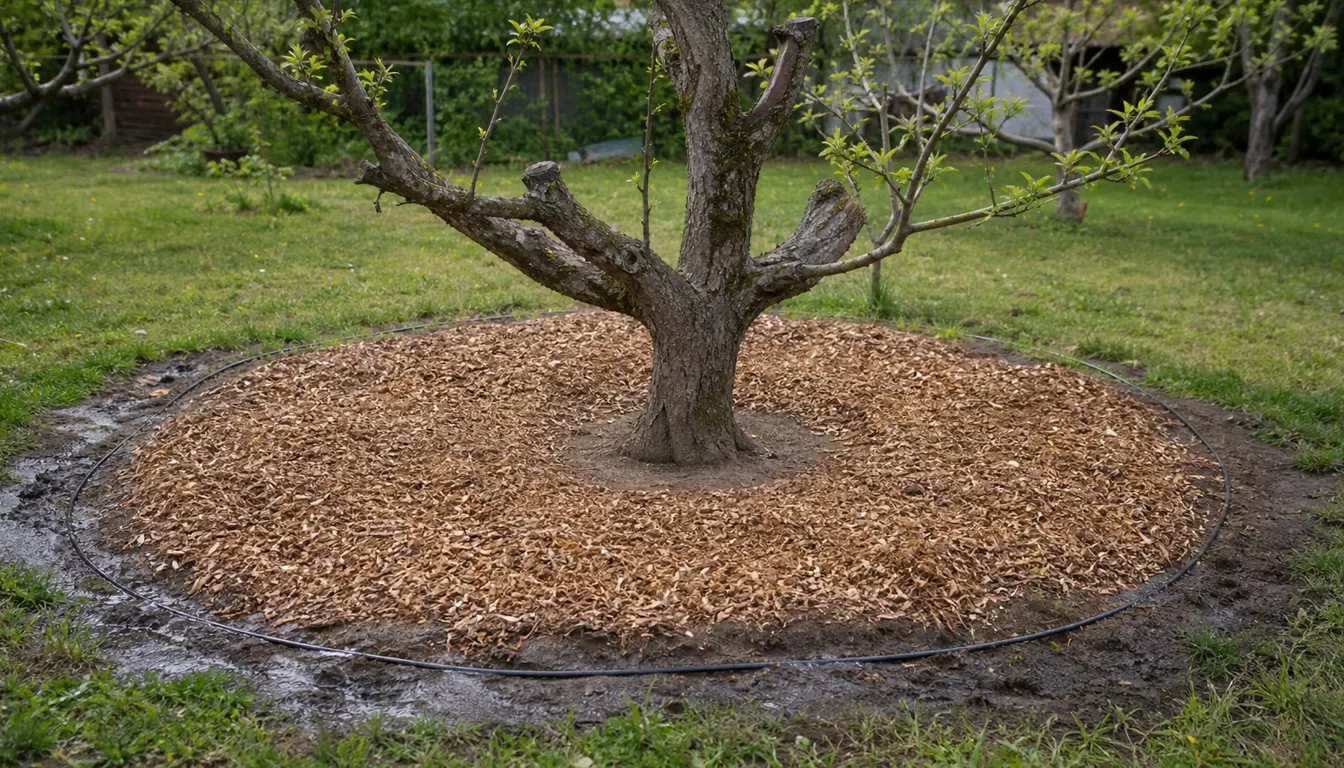
A few inches of mulch over the root zone holds moisture and keeps grass from competing. Keeping it a few inches away from the trunk prevents rodent damage and fungal growth.
Some over-pruned trees still flower and set fruit on the older wood that survived. University of Minnesota Extension recommends thinning apples to one or two fruits per cluster, or about 4 to 6 inches apart, when they reach marble size in late June or early July. Thinning also reduces the tendency to bear heavily one year and lightly the next.
Bark, disease, and pest checks on an opened-up tree
Opening the canopy changes how much sun and air reach the remaining wood, and that creates a few specific problems to watch for during the recovery years.
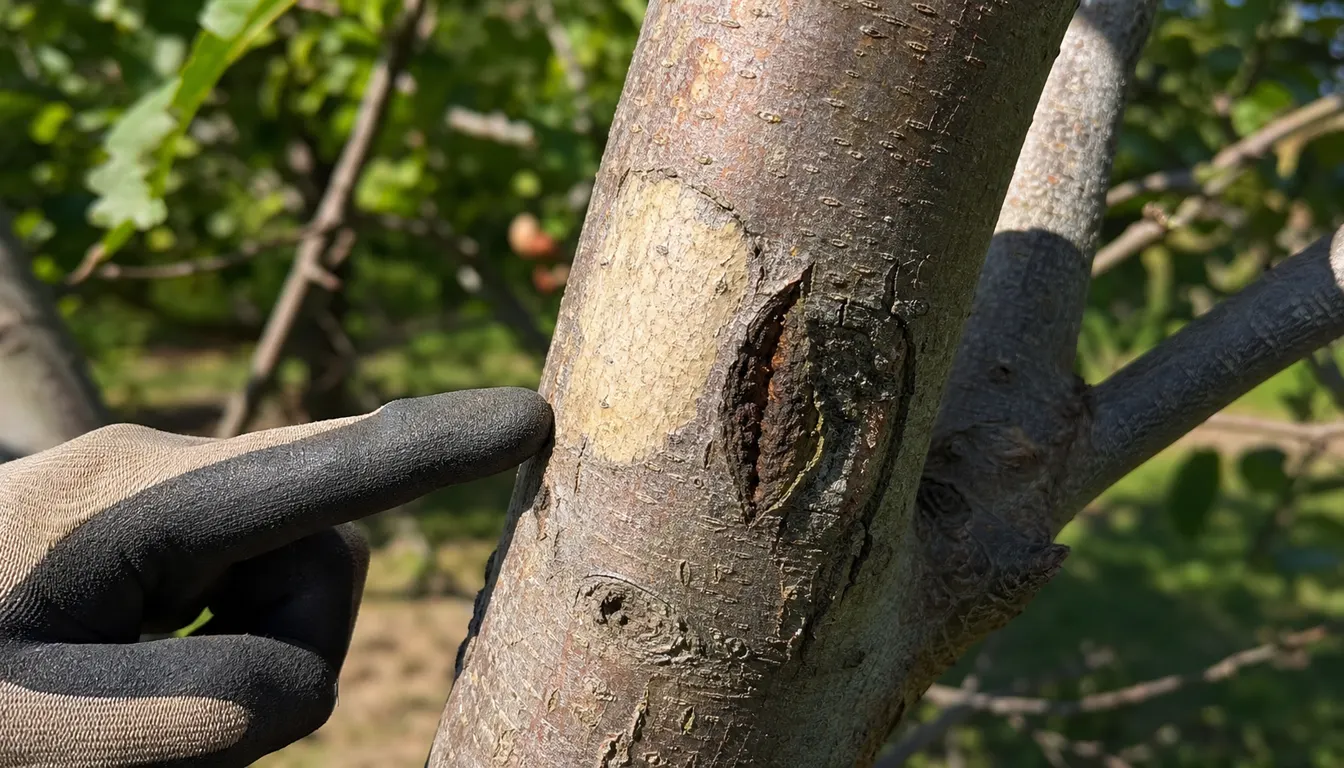
- Sunscald on limbs that were shaded before the cut, seen as pale, dry, or cracked bark on the sun-facing side
- Fire blight on the soft sprouts, seen as blackened tips that curl into a hook
- Crowded sprout clusters that stay damp and shaded, where leaf diseases develop
- Sunken or cracked bark around the large cuts, which can mark a canker forming at the wound
- Pruned shoots left under the tree, which can harbor insects and diseases
Sunscald happens in winter. University of Minnesota Extension explains that sun warms the bark above freezing during the day, and the thawed tissue under it is damaged when it freezes again quickly at sunset. Limbs that sat inside a dense canopy until the hard cut are suddenly exposed to that sun, which is the injury UMass Extension cites when it recommends spreading heavy pruning over two or three years.
Fire blight shows up as scorched-looking shoots and branch cankers. The same disease on pears is described in fire blight on pear trees, and summer removal of crowded sprouts also reduces the damp, shaded conditions behind fungal leaf spots on apples.
Pro Tips
- Photograph the tree each winter so you can compare which sprouts became branches and which cuts are closing.
- Mark sprouts you plan to keep with a loose tie in early summer so they are easy to find among the crowd.
- Use a pruning saw for any cut too thick for hand pruners, so the cut stays clean instead of crushed.
- Keep pruning tools sharp, because sharp blades leave cleaner cuts and reduce the risk of infection.
- Finish winter cuts before the flower buds swell, so the remaining blossoms stay on the tree.
Frequently Asked Questions
Will an over-pruned apple tree bear fruit again?
Usually, yes. Heavy pruning delays or reduces fruiting while the tree puts its energy into leafy regrowth, so expect light crops while it is still pushing mostly sprouts. Fruiting returns as kept sprouts are trained toward wider angles and older wood forms fruiting spurs, and extension services describe the renovation itself as a two- to three-year process.
Should I fertilize an over-pruned apple tree to help it recover?
Usually not. An over-pruned tree already grows vigorously, and extra nitrogen adds more of the soft, fast growth that is most susceptible to fire blight. University of Minnesota Extension suggests compost only when last year's shoots grew less than 12 inches.
Can I fix an over-pruned apple tree in one more pruning session?
No. A second heavy cut triggers another flush of sprouts and exposes more bark to sun injury. Spread structural work over two to three dormant seasons and handle the sprouts in early summer.
Should I cut water sprouts off or bend them?
Both, depending on where they grow. Remove sprouts on the trunk and in the inner part of the lower limbs. In the top of the tree, thin the rest to about 2 feet apart, keep the ones leaning outward, and spread a few toward a wider angle so they can become new branches.
Should I seal large pruning cuts on an apple tree?
No. Iowa State University Extension advises against pruning paint and wound dressings because they do not prevent decay and can interfere with the tree's own wound response. A clean cut at the branch collar is the better protection.
Sources & References
- University of Minnesota Extension, Growing apples in the home garden
- University of Minnesota Extension, Pruning and training apple trees
- University of Minnesota Extension, Watering established trees and shrubs
- UMass Extension, Pruning Neglected Apple Trees
- Iowa State University Extension, How to Prune Neglected Apple Trees
- Iowa State University Extension, Is it advisable to paint pruning wounds when pruning trees?
- Utah State University Extension, Training and Pruning Apple Trees
- University of Wisconsin Extension Milwaukee County, Gardening Tips: Overgrown Grapes, Fruit Fly Traps, and Apple Tree Water Sprouts
- NDSU Extension, Dakota Gardener: When Pruning Apple Trees, Keep it Simple
- Nebraska Extension in Lancaster County, Fire Blight: Use Multiple Strategies for the Best Control
Related Guides
Cutting Back a Leggy Houseplant Does Not Fix It
Most people cut a houseplant back because it has gone long and bare.
11 min read
Deadheading Daffodils Matters Less Than the Six Weeks After
Almost every page about spent daffodils tells you to remove the seed pod so the bulb is not…
11 min read
French Lavender Pruning Depends on the Plant and Season
French lavender needs light trimming within its leafy growth, rather than a hard cut into bare…
6 min read
Fruit Tree Pruning Starts With Where the Crop Forms
A fruit tree that gives small, crowded, scabby fruit is usually not underfed.
11 min read
How Deep Can You Cut a Spent Lavender Spike?
Deadheading lavender is the lightest cut you will ever make on the plant, and the one place people…
7 min read
How Do You Prune Spanish Lavender for a Second Flush?
Spanish lavender is the one that flowers first and the one that keeps going.
7 min read