
French Lavender Pruning Depends on the Plant and Season
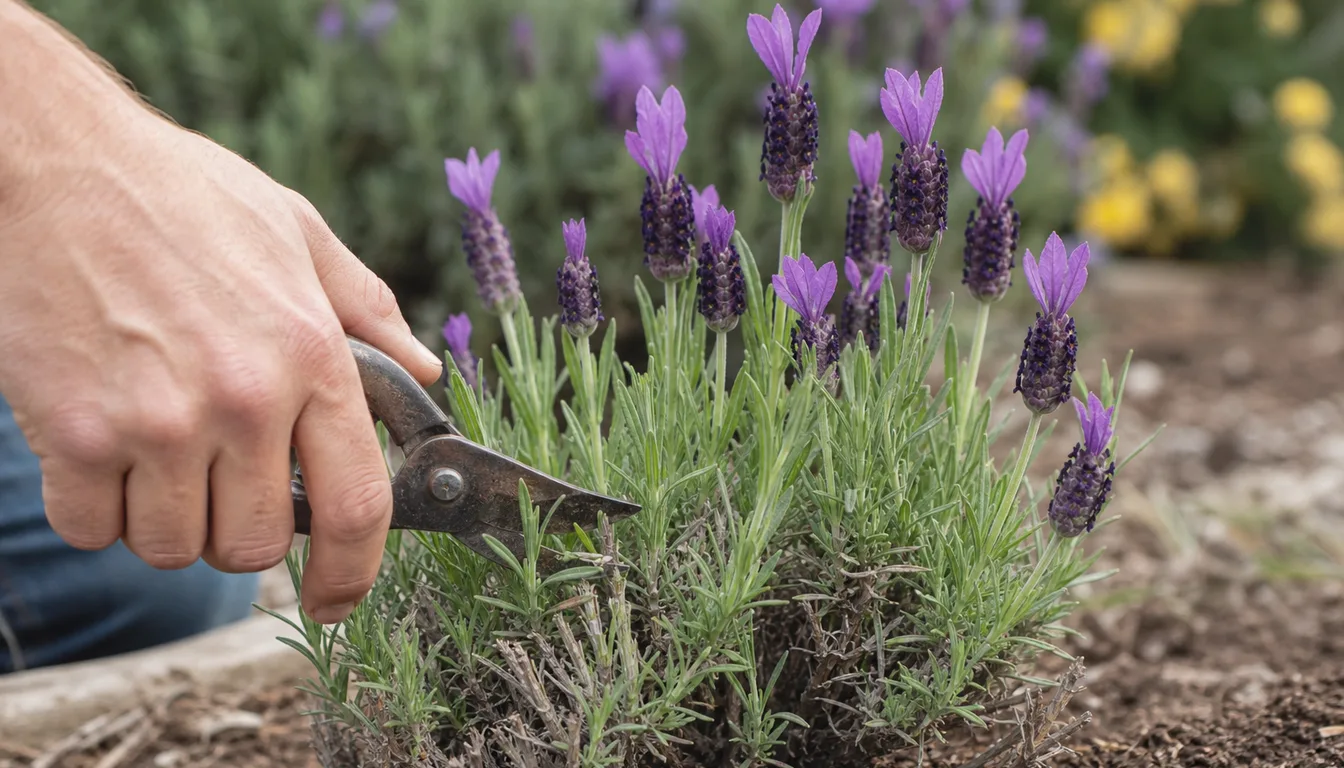
French lavender needs light trimming within its leafy growth, rather than a hard cut into bare stems. After-flowering care and the approach of cold, wet weather determine when a trim is useful.
The name can refer to Lavandula dentata or L. stoechas. Identifying yours first helps you judge its flowering and winter needs before deciding how much to remove.
At a glance
Which French Lavender Do You Have?
Common names overlap. RHS calls Lavandula dentata French lavender, while NC State lists both French and Spanish lavender among the names for L. stoechas.
Dentata has finely divided or toothed leaf edges. Stoechas has narrow gray-green leaves and dense flower heads topped by conspicuous upright bracts, often called rabbit ears. These features help, but a nursery label with a botanical and cultivar name is more useful than the word French alone.
| Plant on the label | Useful recognition cue | What it changes |
|---|---|---|
| Lavandula dentata | Toothed leaf margins and purple-bracted flower spikes | Follow tender-lavender care and avoid autumn pruning in cold or wet regions |
| Lavandula stoechas | Dense heads with conspicuous upright bracts | Flowering and hardiness vary with cultivar; a light trim after bloom suits its woody habit |
| Lavandula angustifolia | Narrow leaves and slender flower spikes | English lavender has different winter tolerance; it is not interchangeable with the tender types |
The English and French lavender comparison explains that planting choice. For an established plant, the immediate question is where healthy foliage remains, not which common name sounds familiar.
Keep the Cut Within Leafy Growth
Lavender does not reliably produce fresh growth from old, bare stems. Cutting a large plant down to a low woody framework can therefore leave persistent gaps or kill it, rather than produce the compact new mound you wanted.
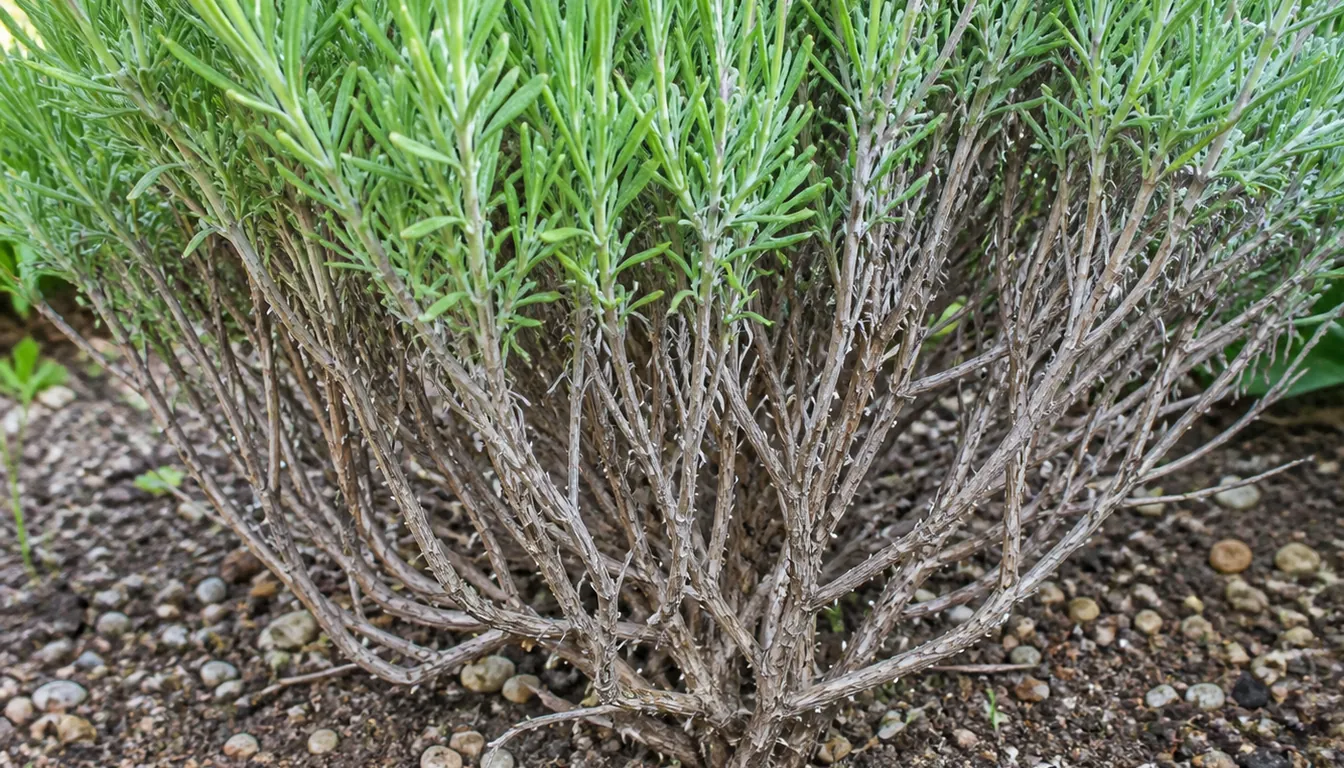
Look into the plant from the side and separate the shoots enough to see the transition from bare stems to leaves. A single level cut across the top can stay in foliage on one branch but enter bare wood on another. Individual snips give more control when the leafy layer is uneven.
The useful distinction is leafy growth versus a bare framework, rather than a universal number of inches above the soil. If only the tips carry leaves, there may be very little room to shorten the plant safely.
Trim After Flowering, With the Weather in Mind
Deadheading removes spent flowers, while shaping also shortens leafy shoots. A plant with a good outline may need only the first. A loose plant can benefit from a light trim, but repeated cutting is not a guarantee of another flush.
For UK growing conditions, RHS recommends trimming L. dentata in late summer and avoiding autumn pruning in wet or cold regions. NC State advises a light shear of L. stoechas after summer bloom. Those seasonal descriptions need local context, especially where the growing season ends early or flowers continue into fall.
- Assess the plantFind the leafy growth and distinguish faded flower stalks from living shoots before cutting.
- Remove spent flowersSnip their stalks without cutting down into the bare framework. Late flowers can also be left for wildlife.
- Shape lightly if neededShorten uneven leafy shoots while keeping foliage below the cuts. Stop where a lower cut would expose bare stems.
- Reassess the seasonIn cold or wet autumn conditions, leave the plant through winter. In spring, assess surviving growth and remove damaged stems before considering light shaping.
There is no need to remove a set fraction from every branch. On a compact young plant, that fraction may be unnecessary. On an old plant, it could remove nearly all the remaining foliage. A rounded outline is an appearance choice, not protection against waterlogged roots.
Shelter Must Match the Winter, Not Just the Pot
L. dentata and L. stoechas are less cold-hardy than English lavender. Iowa State treats both as unsuitable for overwintering outdoors in Iowa, while NC State lists differing hardiness ranges among named stoechas cultivars. A species name or a protected wall cannot settle survival in every garden.
Both freezing and poor drainage matter. Wet soil can promote root problems, while a container leaves roots less insulated than garden soil. Gravel on the surface does not make a saturated root zone drain, and a wrapped pot beside a wall does not create a frost-free space.
For a tender plant kept through a cold winter, a bright, frost-free shelter is a more defensible plan than assuming an unheated porch will stay warm enough. Actual minimum temperatures in that space matter. A plant grown as a seasonal annual does not need a risky autumn reshape in an attempt to make it hardy.
Winter water needs are lower, but a container is still a limited root environment. Judge its moisture rather than leaving it on the summer watering schedule.
A Bare Base Calls for a Different Decision
An older lavender can remain alive while losing the dense shape it once had. If healthy leafy shoots still form a usable outline, modest shaping may be enough. If restoring the desired height would require removing nearly all foliage, replacement is more reliable than a severe renovation attempt.
There is no bare-stem percentage that proves a plant is beyond recovery. Its remaining growth, the space it occupies and whether you can accept its open shape are the practical considerations. Cuttings from healthy, nonflowering shoots can preserve a plant you like before replacing the original.
Decline after pruning does not identify the cause by itself. Cold exposure, prolonged wetness and preexisting damage can coincide with a cut. Before removing more living growth, note which stems are affected, whether the root zone stays wet and when the symptoms appeared. Widespread decline may need local diagnostic help.
Frequently Asked Questions
Does one cut into old wood mean the whole plant is dead?
No. Regrowth from bare stems is unreliable, but one damaged branch does not establish the condition of the whole plant. Further hard cutting can remove healthy growth without solving the original problem.
Sources & References
Related Guides
Cutting Back a Leggy Houseplant Does Not Fix It
Most people cut a houseplant back because it has gone long and bare.
11 min read
Deadheading Daffodils Matters Less Than the Six Weeks After
Almost every page about spent daffodils tells you to remove the seed pod so the bulb is not…
11 min read
Fruit Tree Pruning Starts With Where the Crop Forms
A fruit tree that gives small, crowded, scabby fruit is usually not underfed.
11 min read
How Deep Can You Cut a Spent Lavender Spike?
Deadheading lavender is the lightest cut you will ever make on the plant, and the one place people…
7 min read
How Do You Prune Spanish Lavender for a Second Flush?
Spanish lavender is the one that flowers first and the one that keeps going.
7 min read
How to Deadhead Daisies for More Blooms
To deadhead a daisy, wait until the petals have faded or collapsed, then follow the flower stem…
12 min read