English Lavender vs French Lavender
English lavender, Lavandula angustifolia, is the stronger candidate for cold-winter gardens. French lavender here means L. dentata, a tender, toothed-leaved shrub. Both need sun and drainage, and neither a familiar name nor a hardiness label guarantees success in wet soil.
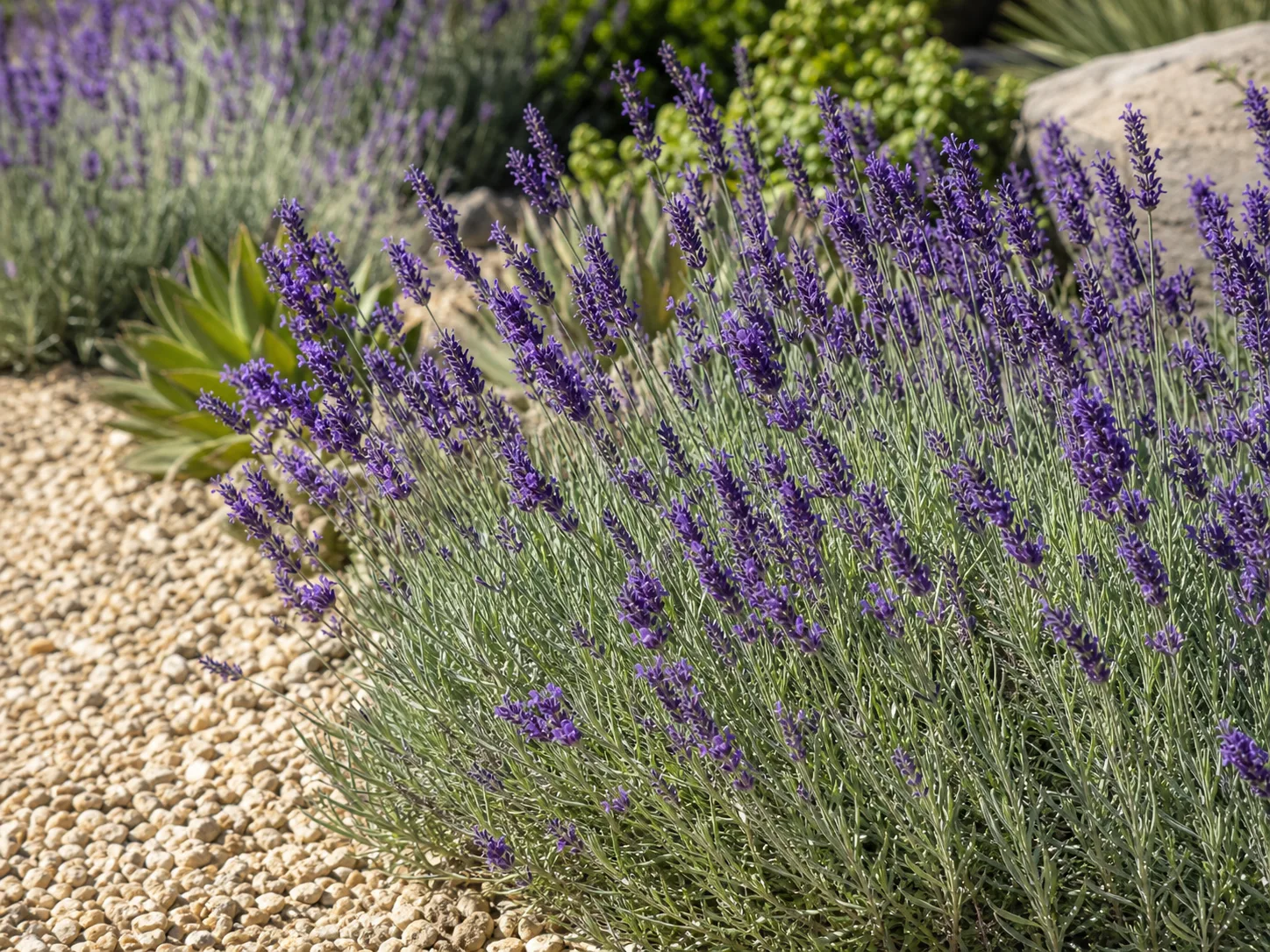
English Lavender
Lavandula angustifolia
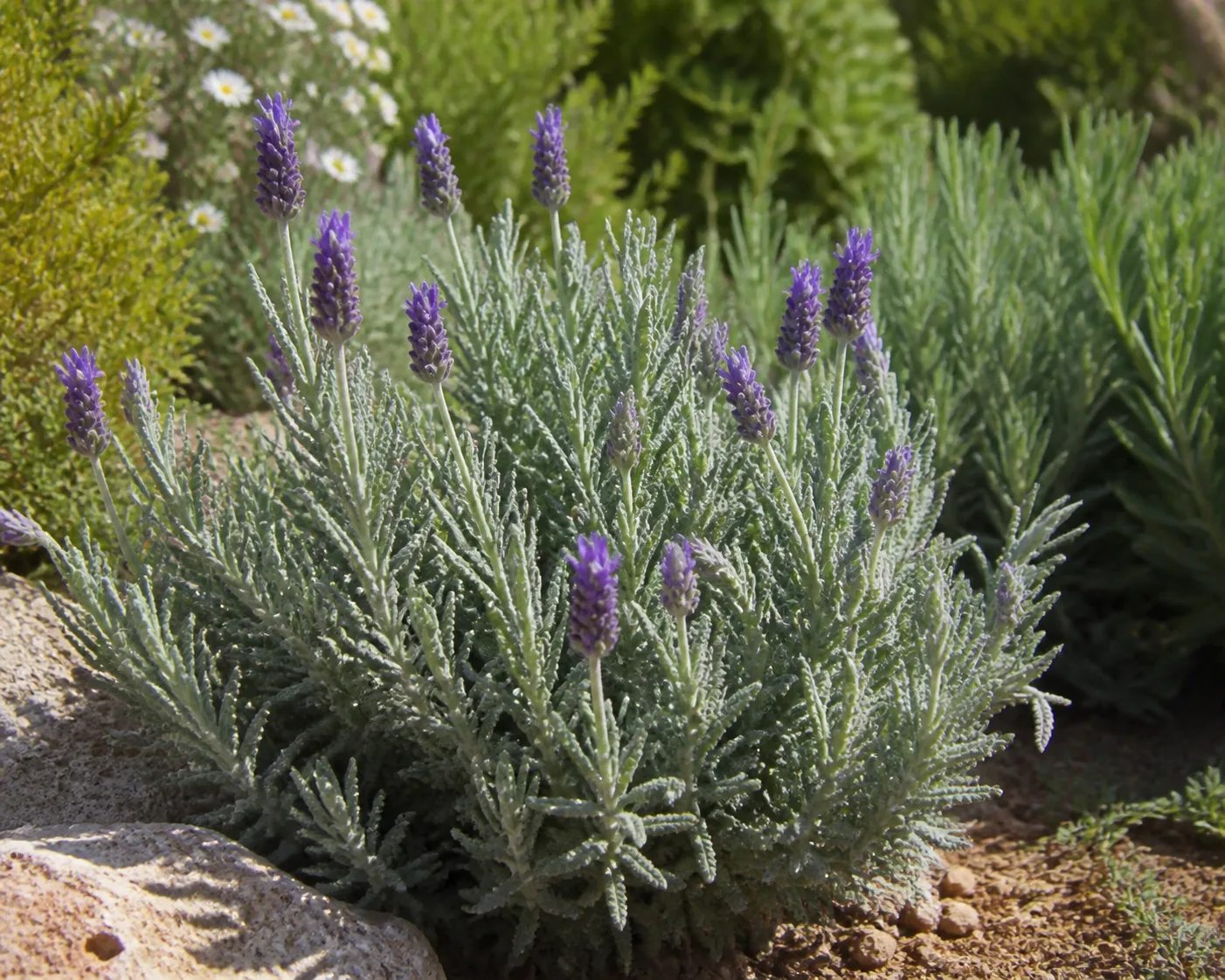
French Lavender
Lavandula dentata
The name French lavender needs checking before the comparison begins. Some sellers and references use it for Lavandula dentata, while others use it for L. stoechas, the lavender with conspicuous upright flower bracts. Advice about one should not automatically follow the other home from the nursery.
For a permanent bed, the first decision is whether the identified plant can survive the site. For a seasonal container, winter hardiness may matter less than the space available and whether you plan to keep the plant afterward. Fragrance, flowering and shape become useful comparisons once that choice is clear.
Specifications
Compare the traits that change the growing decision.
| Feature | English Lavender | French Lavender |
|---|---|---|
| Species compared | Lavandula angustifolia | Lavandula dentata |
| Leaf margin | Narrow leaves with smooth margins | Distinctly toothed or lobed margins |
| Cold-climate fit | Iowa State identifies it as the most reliable lavender for Iowa | Not winter-hardy in Iowa; seasonal or protected container use |
| Flowers and scent | Summer spikes, valued for fragrant dried flowers | Shorter dense spikes with purple bracts; flowers described by RHS as slightly fragrant |
| Growing site | Sun and freely draining soil | Sheltered sun and freely draining soil |
| Size reference | NC State lists about 1–2 feet tall and 2–3 feet wide | RHS lists about 1½–3 feet tall and 3–5 feet wide |
Best Use Cases
Choose by the job the planting needs to do.
A bed that must return after cold winters
It has the stronger evidence for cold-climate planting. Drainage and local winter conditions still affect survival.
French lavender is a poor substitute where the tender species cannot overwinter. A protected pot is a different growing arrangement.
A sheltered mild-climate display
The toothed foliage and dense flower heads provide a different appearance from English lavender. Mature width matters beside a path or in a small bed.
A warm location does not excuse waterlogged soil, and a flowering nursery plant does not promise uninterrupted flowers all year.
Dried flowers and a low fragrant border
Its fragrant flower spikes suit bundles and sachets as well as a low planting. Named cultivars help keep a row consistent in size and bloom.
The best fit follows the intended use and the available growing space, rather than an assumed financial return from homemade products.
French lavender is a common name, not a complete plant label
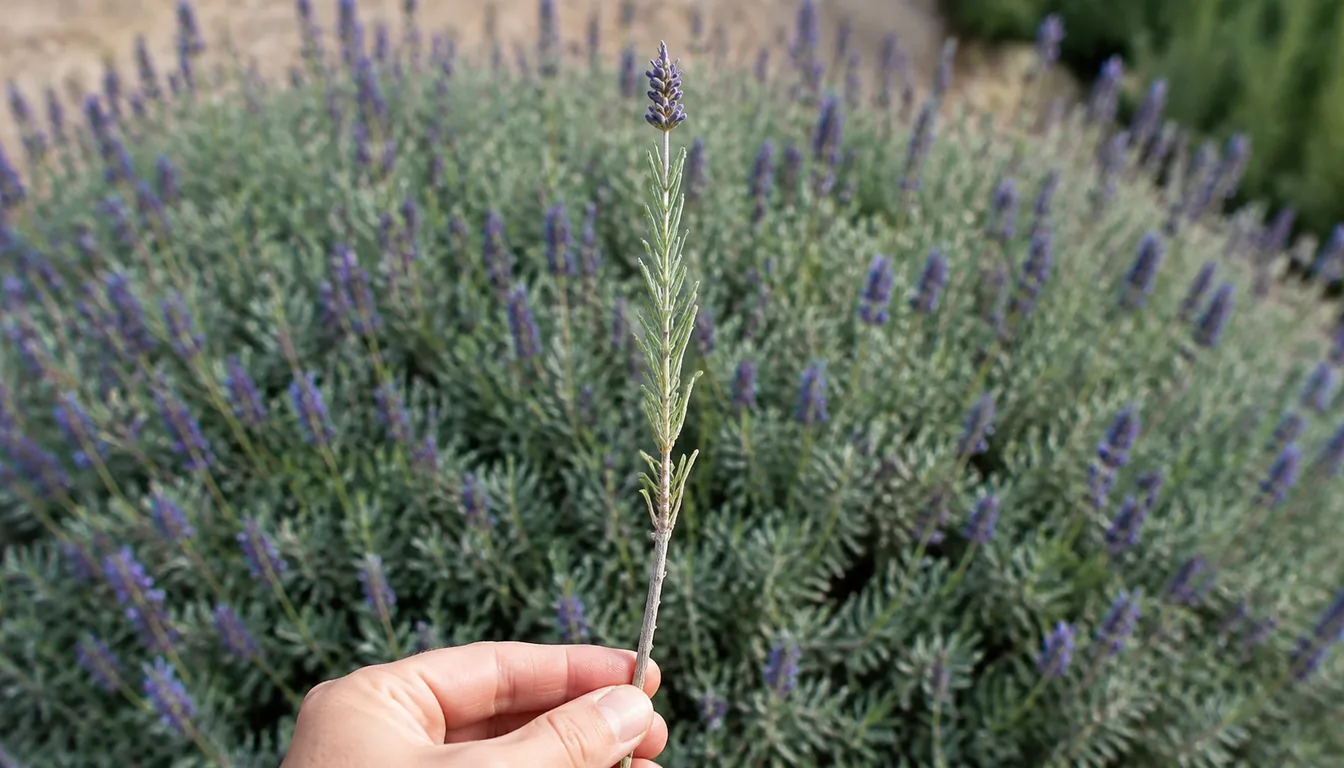
The botanical name settles the scope. L. dentata has toothed leaf edges, whereas English lavender has narrow leaves with smooth margins. Flower color alone is a poor separator because both can carry purple blooms.
L. stoechas creates another source of confusion. RHS uses French lavender for it in its general growing guide, while its L. dentata profile also carries that common name. A plant sold with large tufted bracts may therefore need a different identification before its care is compared.
A botanical name and cultivar label are more useful than trying to infer everything from a single flower photograph. They let you compare the nursery plant with a description of its actual mature size, rather than with a broad common-name promise.
Cold tolerance and growing room decide the permanent planting
Iowa State considers English lavender the most reliable species for its cold-winter conditions and identifies L. dentata as unsuitable for overwintering outdoors there. That is a regional recommendation with a clear consequence. A gardener in that climate needs either the hardier plant or a separate plan for keeping the tender one.
NC State lists English lavender in USDA zones 5–9, but a zone range does not measure wet winter soil, summer humidity or the exposure of a pot. RHS describes L. dentata as a sheltered, mild-climate plant using UK hardiness ratings. Those ratings should not be silently converted into a universal US temperature threshold.
Width matters after the winter decision. The reference dimensions in the table describe plants that can extend well beyond a small nursery pot. A low hedge beside paving needs room for the selected cultivar, and buying a smaller plant does not permanently reduce its eventual footprint.
A long display and a useful dried harvest are different goals
English lavender produces fragrant summer flowers that can be dried for sachets or arrangements. French lavender contributes toothed foliage and dense flower heads, but its scent and flowering schedule should be judged for the named plant and climate rather than described as universally stronger or longer.
RHS describes L. dentata flowering in mid- to late summer under its growing conditions. Flowering dates shift with climate, so local performance is more useful when the planting must look good during a particular month.
For dried material, Iowa State recommends cutting stems as buds begin opening and drying small bundles with good ventilation. Waiting for a longer garden display changes what is available to harvest. The material available for bundles depends on the plant’s size and the flowers left in the garden.
Named cultivars propagated from cuttings retain their parent’s traits more reliably than mixed seedlings. That distinction matters for an even-looking border or a consistent scent, while seedlings may be acceptable when variation is part of the planting.
Drainage and leafy growth matter more than a weekly schedule
A sunny location and soil that releases excess water are shared requirements. English lavender can still fail where cold-tolerant roots spend winter in saturated ground. Swapping it for French lavender does not repair that site problem.
New transplants need moisture while their roots establish. A settled bed and a small pot then behave differently, so one weekly watering interval is a poor rule for both. The condition of the rooting medium, rainfall and growing season determine when more water is useful.
Pruning preserves a leafy framework rather than repeatedly cutting the plant down into bare stems. RHS warns that lavender does not readily renew from old wood and advises against late autumn pruning of L. dentata in cold or wet regions. A local pruning season is more defensible than applying one date everywhere.
If a plant has already become bare and sprawling, a severe cut is not guaranteed to rebuild it. Replacement can be a practical choice when its shape no longer fits the bed.
Fragrance does not establish food or animal safety
A plant grown for ornament, a culinary ingredient and an essential oil are different products. A familiar scent does not identify the plant or tell you which treatments were applied to it.
ASPCA lists English lavender as toxic to dogs, cats and horses. Its record concerns L. angustifolia and does not establish that L. dentata is a non-toxic alternative. Suspected animal ingestion warrants veterinary or animal poison-control advice.
For a bed that animals can browse, the unresolved safety question is enough to reconsider placement. Choosing between the two for appearance does not settle that separate exposure decision.