
Why Is My English Lavender Wilting?
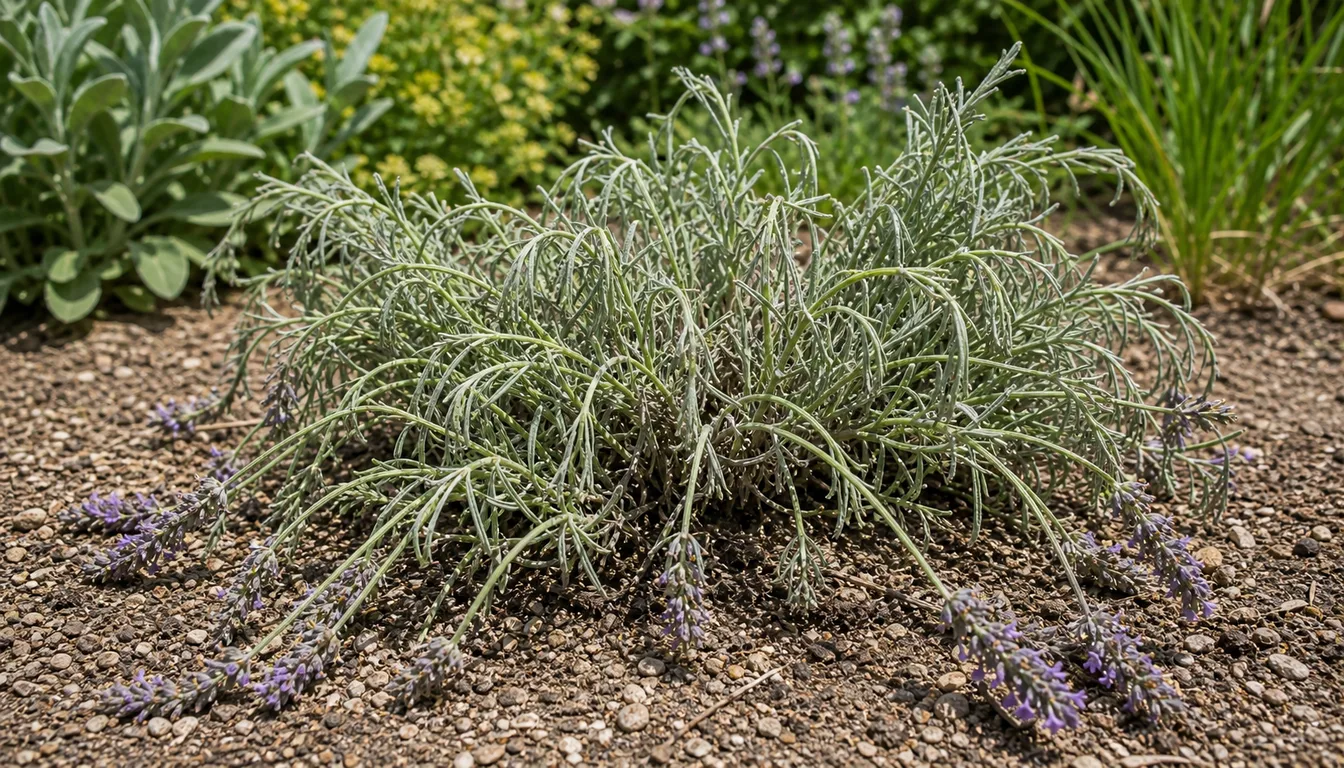
English lavender can wilt because its active roots are dry or because wet, damaged roots can no longer move water. Check the root ball, surrounding soil, crown, and daily recovery pattern before you water again.
Quick diagnosis
Wet roots or a dry transplant root ball
Test two places before you water, the nursery root ball and the soil just outside it.
Damp soil with persistent wilt points toward poor drainage or damaged roots, while a dry root ball with firm pale roots needs a slow, targeted soak.
Open the full diagnosisWhat You Are Seeing
Wilt means the leaves are receiving less water than they are losing. It does not tell you whether the soil holds too little water, or whether injured roots have stopped absorbing what is already there.
Planting age changes the odds.
A new lavender can dry out inside its original potting mix while the bed around it stays moist, but an established plant that collapses after rain is more likely suffering in an oxygen-poor root zone.
Time of day matters too. Green stems that droop through a hot windy afternoon and stand again by morning show a different pattern from a plant that stays limp through a cool night.
Do not prune or fertilize first.
Inspect moisture and living tissue before anything else, because cutting cannot restore damaged roots and fertilizer only adds stress to a plant that cannot use it.
Common Causes
01 High likelihood
Wet soil and poor drainage
English lavender needs air around its roots.
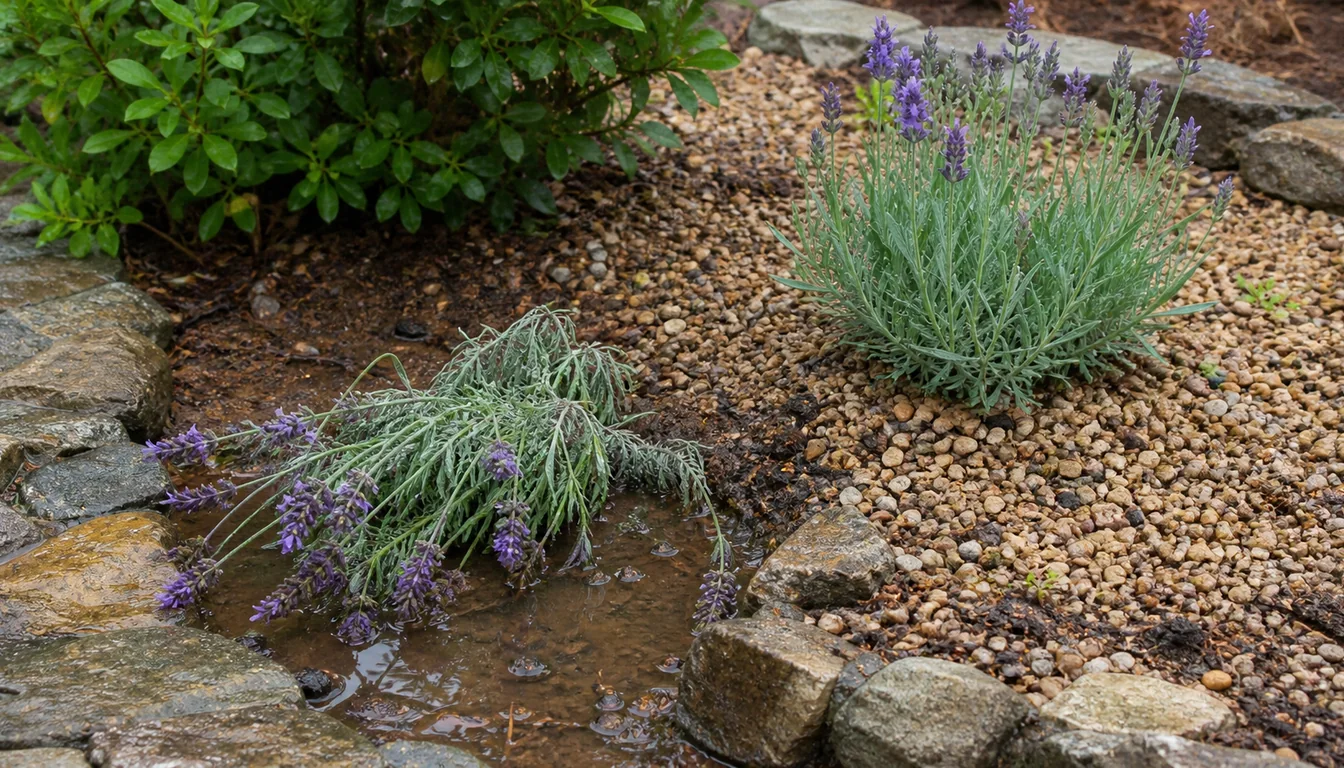
A low spot, dense clay, a buried crown, frequent irrigation, or mulch pressed against the woody base keeps the root zone wet enough to cut water uptake long before obvious rot appears.
How to identify it
- The soil below the surface feels cool and damp one or two days after watering or rain.
- Wilt becomes worse after rain, and nearby lavender on raised gravel remains upright.
- The crown sits below the surrounding grade or touches moist organic mulch.
- Leaves look dull gray-green or yellow while stems remain broadly affected.
What to do
- Stop routine watering and let the upper root zone drain.
- Pull mulch and wet debris away from the crown without exposing roots.
- Redirect runoff and sprinkler spray that repeatedly reaches the plant.
- Move a recoverable plant to a raised, fast-draining position during suitable weather if the site stays wet.
02 High likelihood for new plants
A dry transplant root ball
Nursery potting mix dries faster than the surrounding bed, and it sheds water once it gets very dry. Water then runs around the original root ball, leaving young roots dry even though a finger test nearby feels moist.
How to identify it
- Wilt begins during the first weeks after planting.
- The original root ball feels lighter, drier, or firmer than the bed around it.
- Water disappears down the gap between the root ball and native soil.
- Roots inside the plug are pale and firm rather than dark and soft.
What to do
- Apply water slowly over the original root ball until it wets through.
- Check the plug again after watering instead of assuming the surrounding soil proves success.
- Close air gaps with the excavated soil without burying the crown.
- Reduce establishment watering as roots begin growing into the bed.
03 Medium likelihood
True drought in the active root zone
Established lavender tolerates dry conditions, but that tolerance has limits.
Containers, shallow rocky beds, reflected heat, and long rainless periods all exhaust the water available to active roots.
How to identify it
- Soil is dry at several depths rather than only at the crust.
- The container or root zone feels noticeably light and no cool moisture appears below the surface.
- Stems remain firm at the crown, with no dark soft tissue or sour odor.
- Older leaves and flower spikes dry first during prolonged heat.
What to do
- Water slowly enough to wet the existing root depth, then allow drainage.
- Split the application if water runs off a slope or a very dry container mix.
- Recheck below the surface before the next irrigation.
- Do not turn a drought correction into daily shallow watering.
04 Medium likelihood
Temporary heat, wind, or transplant stress
A recently moved plant, or one hit by an abrupt hot dry wind, loses water faster than healthy roots can replace it. Temporary wilt is most convincing when the canopy recovers as conditions cool.
How to identify it
- Stems droop during the hottest hours and regain firmness overnight.
- Leaves remain silvery-green rather than turning black or mushy.
- The plant was recently installed, divided, or moved from protected nursery conditions.
- The root zone is neither saturated nor dry throughout.
What to do
- Give a new transplant temporary afternoon protection during an extreme heat event.
- Keep the root ball evenly moist during establishment without keeping the crown wet.
- Delay fertilizer and hard pruning while roots settle.
- Remove temporary shade once overnight recovery and new growth show that the plant has stabilized.
05 Serious
Crown or root rot
Persistent saturation injures roots directly and favors root-rotting organisms such as Phytophthora.
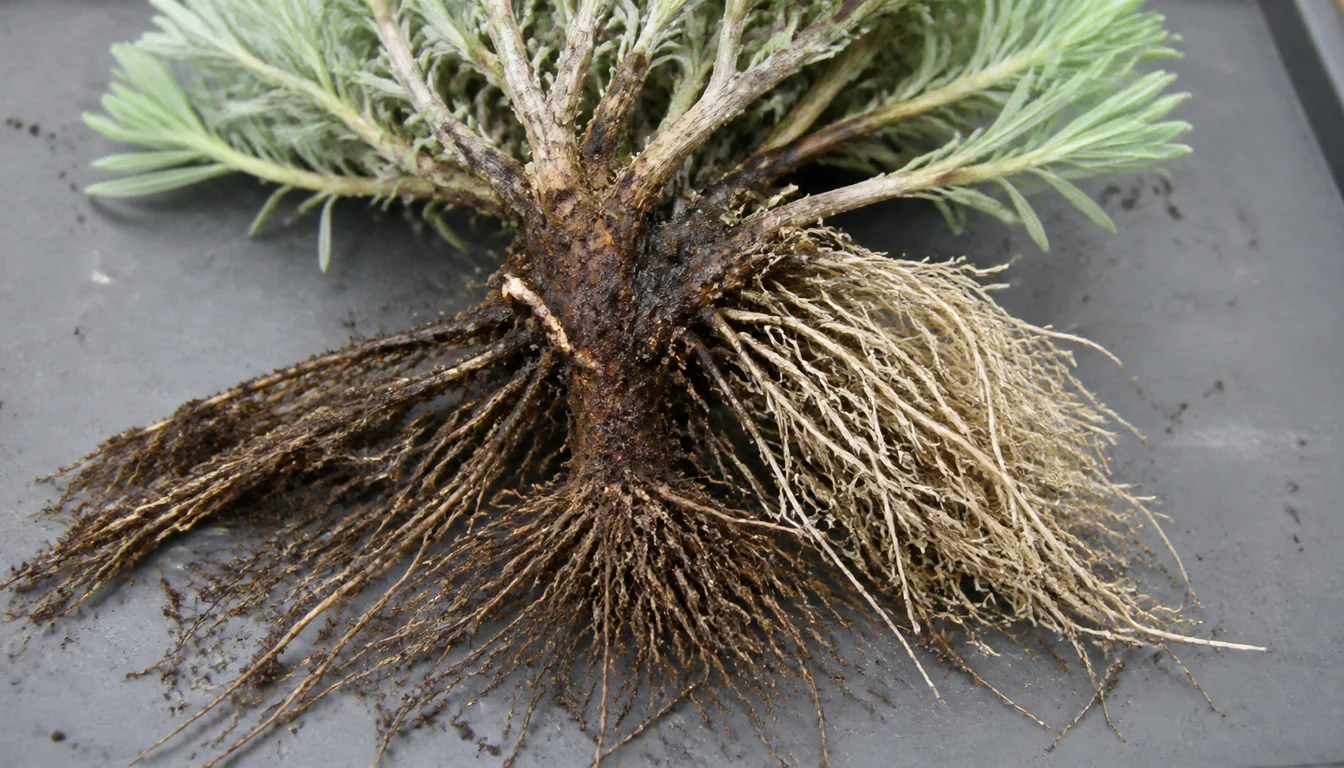
Canopy symptoms alone cannot identify a pathogen, but dark soft crown tissue and decayed roots show that drying the surface will not bring dead tissue back.
How to identify it
- The plant stays limp through cool nights and mild weather.
- The crown at the soil line is brown to black, soft, or easily pulled apart.
- Fine roots are dark, hollow, or mushy instead of pale and fibrous.
- Several plants fail along the same drainage path or irrigation leak.
What to do
- Lift a severely collapsed plant so you can inspect the crown and main roots.
- Remove a plant whose crown is black and soft because that tissue cannot regenerate.
- Discard diseased material and avoid moving its wet soil to healthy lavender beds.
- Correct grade, drainage, and irrigation before planting another lavender in that position.
06 Pattern dependent
Localized stem dieback or injury
One collapsed sector beside upright stems does not fit a whole-root-zone water shortage. A cracked woody stem, a crown lesion, animal damage, or a localized vascular problem interrupts one branch while the rest of the plant still gets water.
How to identify it
- Only one branch or wedge of the clump wilts.
- A lesion, split, dark streak, or constriction appears near the affected stem base.
- Healthy stems remain firm under the same soil moisture and weather.
- The affected branch becomes brittle while the crown elsewhere stays firm.
What to do
- Trace the wilted branch to its base and inspect it before cutting.
- Remove dead tissue with clean tools while preserving healthy green growth.
- Avoid cutting deeply into old leafless wood that has no visible living shoots.
- Seek a local diagnostic service when dieback spreads or several plants develop similar lesions.
Wet roots can produce a dry-looking canopy
Roots need oxygen to maintain the cells that absorb and move water.
Saturated pore spaces hold less air, so a wet root system loses function while the leaves above behave as though the plant is dry.
This is why the next watering decision has to come from soil and tissue evidence. Water helps a genuinely dry, firm-rooted plant, and it extends the stress when the crown is already sitting in damp soil.
Simple wet-soil stress and advanced rot are points on one damage spectrum rather than the same diagnosis.
Firm crown tissue and pale roots leave room for recovery, while soft black tissue means part of the plant is already dead.
Lavender's silvery foliage makes early color changes subtle. Texture, smell, root color, planting age, and overnight recovery all give clearer evidence than leaf color.
Test the root ball and bed as separate soils
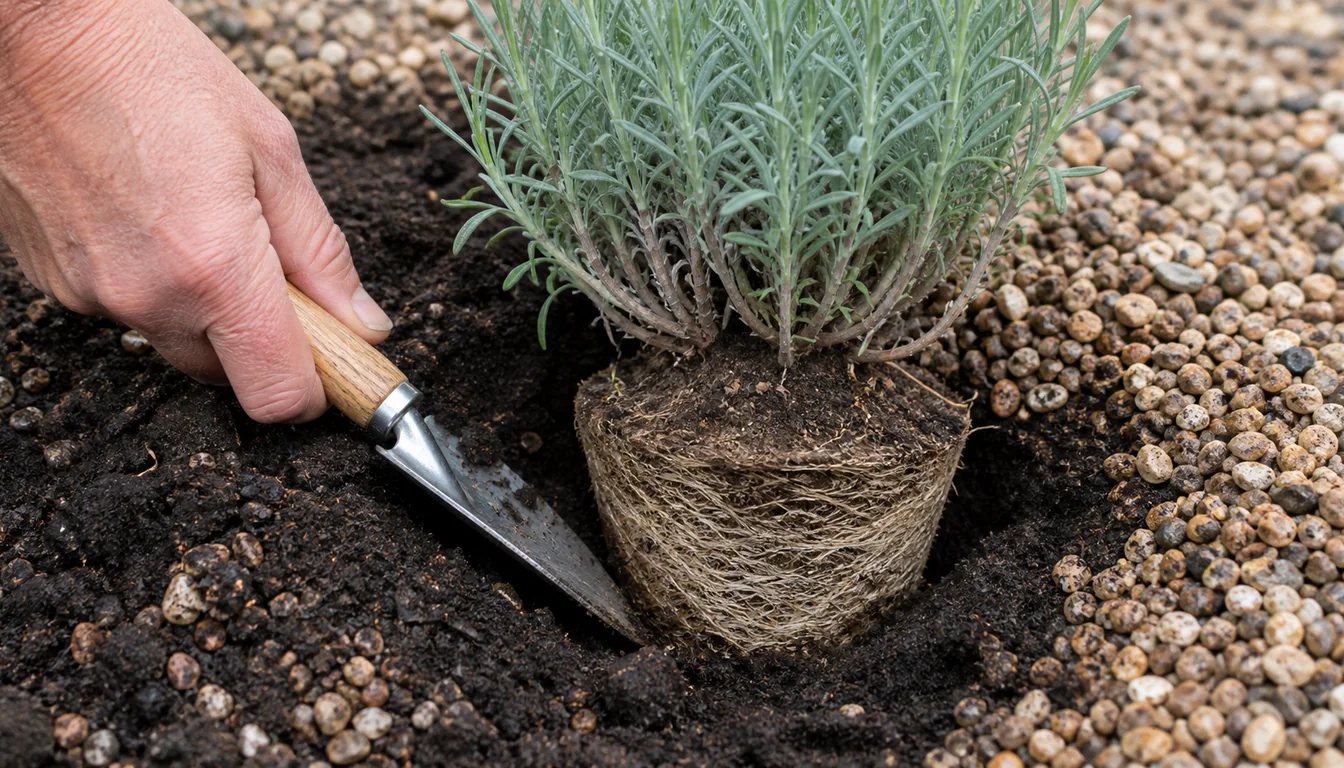
Push a narrow trowel just outside the crown and expose the edge of the original root ball. Keep the woody crown above the soil line and disturb only enough soil to compare moisture, texture, color, and odor.
A dry plug inside moist bed soil needs targeted, slow watering over the plug. A damp plug inside damp soil needs time, airflow, and a drainage correction rather than another soak.
For an established plant, sample more than the top inch because sun can dry the crust while deeper clay stays saturated. In a container, check that water exits the drainage holes and that roots have not formed a dense hydrophobic mass.
- Pull mulch away and confirm that the woody crown is not buried.
- Compare moisture inside the old root ball with soil just outside it.
- Inspect one small root sample for firm pale tissue or dark soft decay.
- Watch where water travels before choosing a slow soak or a drying period.
A one-sided collapse needs a stem check
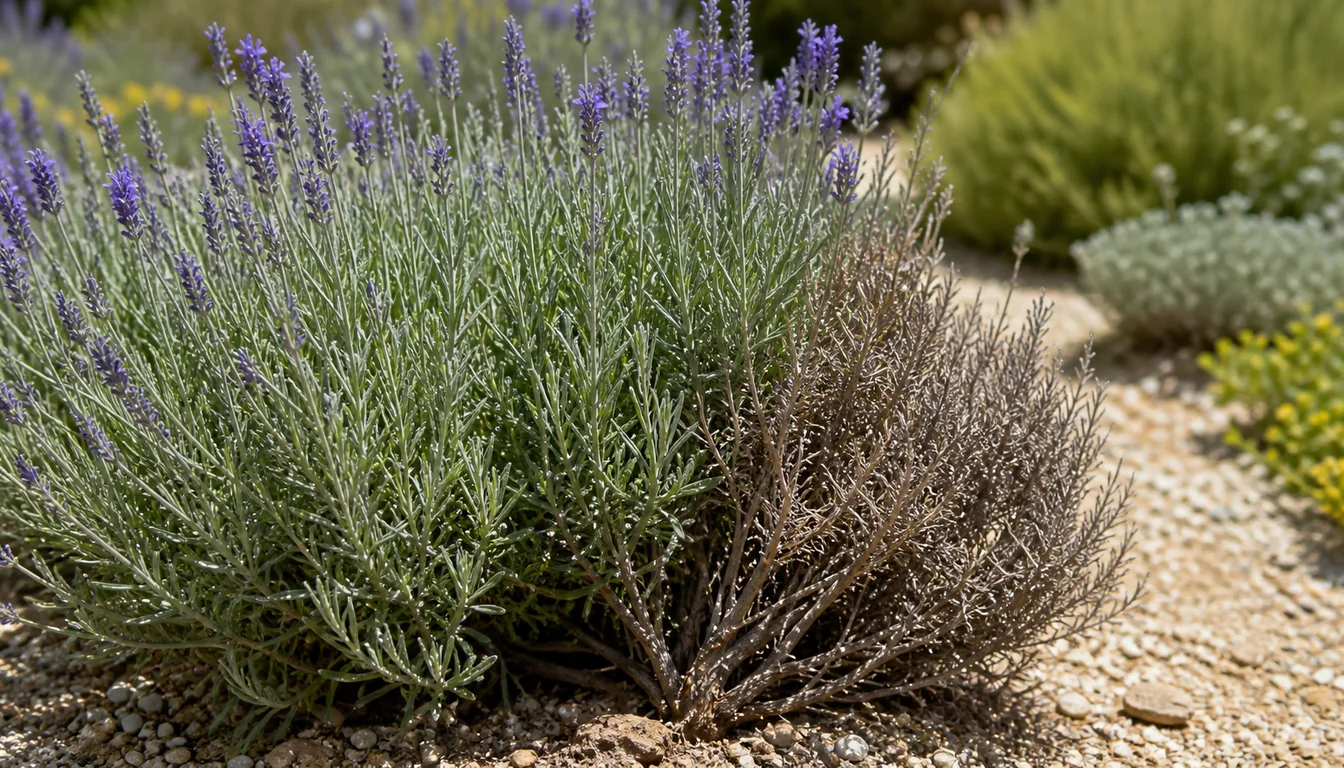
Step back and map the symptom before digging. Whole-plant wilt directs attention to water delivery and the crown, while one wedge of collapsed stems directs attention to the shared branch base.
Follow the affected stems downward and look for a split, rubbed area, dark lesion, or abrupt color change. Cut a dead stem only after locating that boundary, and disinfect the tool before moving to another plant.
Do not name a disease from a photograph of wilt alone. Repeated sector dieback, spreading crown lesions, or several affected plants deserves diagnosis through a local extension or plant clinic.
Whole plant
- Compare root-ball and bed moisture
- Inspect crown and root firmness
- Review rain and irrigation
One sector
- Trace stems to one branch base
- Look for lesions or cracks
- Remove only confirmed dead tissue
Afternoon only
- Check overnight recovery
- Confirm roots are not saturated
- Protect a new transplant briefly
Recovery Plan
Correct the water decision
Give a dry, firm-rooted plant one thorough targeted watering, or stop irrigation around a damp root zone.
Keep the crown uncovered and watch whether the green tips regain firmness overnight.
Watch living tissue
Judge progress by firm new tips and a stable crown rather than expecting every old stem to straighten. Remove brittle dead tips only after the plant has stopped declining.
Confirm that the site works
A recoverable plant holds its firmness between appropriate waterings.
Wilt that returns after every rain or irrigation shows that drainage, grade, or emitter placement still needs correcting.
Stop when the crown is dead
A black soft crown, widespread mushy roots, or continuing collapse through mild weather leaves no living base to rebuild from. Remove the plant and repair the site before replacing it.
Plant English lavender in full sun with the crown slightly above surrounding grade, keep organic mulch away from the woody base, and water according to measured root-zone moisture. New transplants need establishment checks, while mature plants need deep but infrequent water only when their active root zone is dry.
Sources
- English Lavender in the Garden, Utah State University Extension
- Agritourism Diversification: Lavender Production, Penn State Extension
- Soil-Plant-Water Relationships, Oregon State University Extension
- Watering Basics, Oregon State University Extension
- Phytophthora Root Rot on Woody Ornamentals, Penn State Extension
- Growing Lavender in the Garden, University of Vermont Extension