
Deadheading Petunias and Cutting Back Leggy Growth
By midsummer most petunias tell the same story. The basket that spilled over in June now trails long bare stems with a few flowers stranded at the tips, and pulling off the dead blooms did not seem to help. The reason is almost always the same, and it is not the weather.
Deadheading fixes it, but only when you remove the right part and know when a basket needs a real haircut instead of a pinch. This guide covers what to cut, how to do it without coating your fingers in sap, and why even the wave petunias sold as self cleaning still slump without help. The same habits carry over to other bloom machines like salvia.
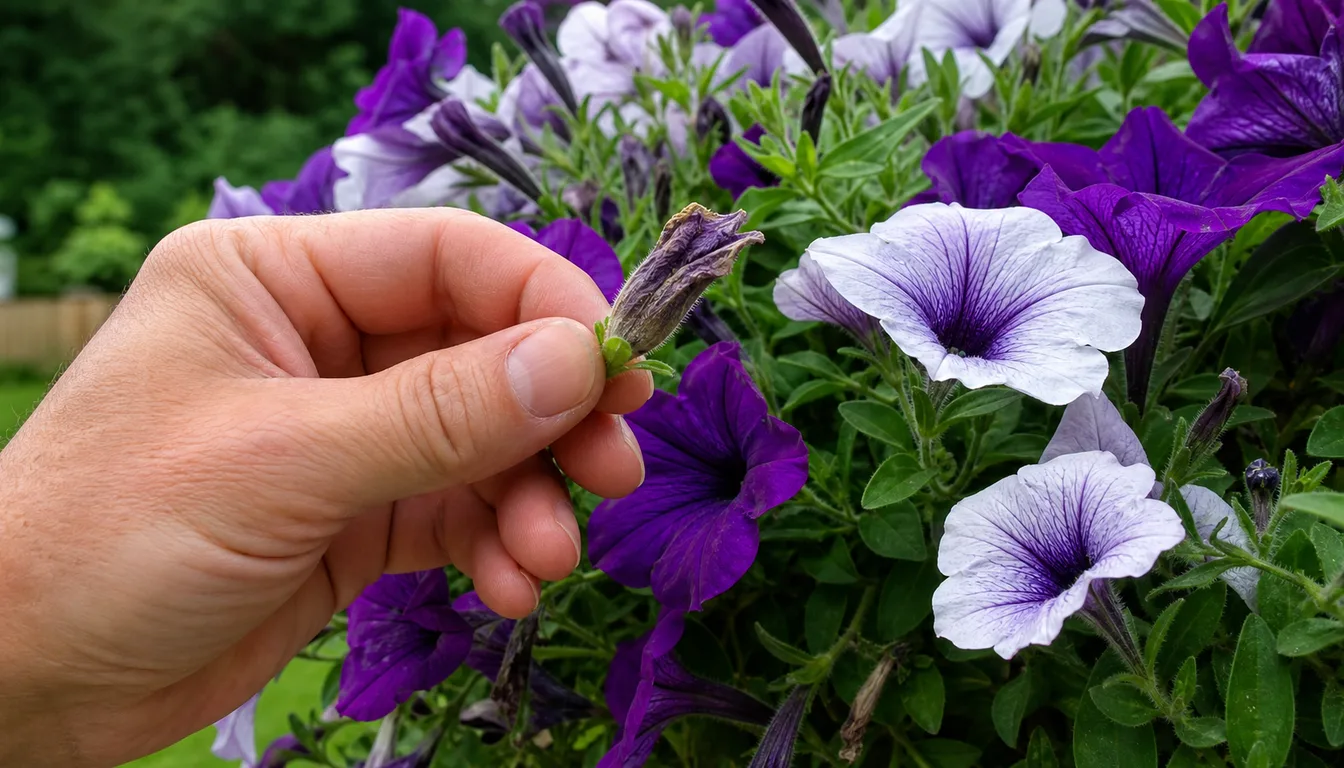
Do Petunias Really Need Deadheading?
Yes, and the difference is dramatic. A spent petunia flower is not just untidy, it is the plant starting to build seed, and once enough pods form the plant reads that as a finished season and slows new buds.
Older grandiflora and multiflora petunias are the hungriest for attention because their big blooms collapse into mush after rain. The newer spreading and wave types are sold as self cleaning, which is only half the story. They shed faded petals on their own, but the seed pods stay behind and still pull energy away from flowering.
The honest answer is that every petunia blooms longer and fuller with deadheading, and the self cleaning label mostly buys you a few extra days between sessions rather than skipping the job.
Self cleaning does not mean no maintenance. Wave and spreading petunias drop old petals but keep setting seed, so they still need a real cutback by midseason.
How to Deadhead Petunias Without the Sticky Mess
Petunias leak a sticky sap that coats fingers and blade within a few plants, and in heat it turns almost glue like. That mess is the real reason people quit deadheading a big planting halfway through.
Two habits keep it manageable. Work in the cool of morning before the sap runs thin and tacky, and keep a rag with rubbing alcohol handy to wipe both your blades and your fingertips. A slim pair of bypass snips cuts cleaner than fingers on the tougher stems without crushing them.
Clean blades matter for more than mess. Wet petunia debris left in the canopy invites botrytis, the gray fuzzy mold that spreads fast in humid summers, so a wipe between containers keeps one sick pot from seeding the rest.
- Best tool: Slim bypass snips or sharp scissors for tougher stems
- Sap control: A rag with 70 percent isopropyl alcohol for blades and hands
- Best time of day: Early morning, when sap is less gummy and stems are firm
- Debris bin: A small bucket so spent blooms never fall back into the plant
When a Leggy Basket Needs a Cutback, Not a Pinch
Daily snipping keeps a petunia tidy, but it cannot rescue a basket that has already gone stringy with flowers only at the ends. By July that is exactly where most trailing petunias land, and no amount of light grooming brings the middle back.
That basket needs a hard cutback, shortening every stem by a third to a half. It looks brutal for about a week, then refills from the base with denser growth and a heavier flush in two to three weeks. Time it right before a stretch of mild, overcast days when you can, since a haircut in a heat wave only stresses the plant.
Water deeply right after a big cutback and follow with a half strength bloom fertilizer so the new shoots have fuel. Skip high nitrogen lawn feed, which pushes leaves over flowers, and lean on the broader plant feeding schedule if containers fade fast.
| Situation | What to do | What to expect |
|---|---|---|
| A few spent blooms, plant still full | Light grooming every 2 to 4 days | Steady flowers, no setback |
| Long bare stems, blooms only at the tips | Hard cutback by a third to a half | Sparse for 1 to 2 weeks, then a strong flush |
| Heat wave in progress | Wait for a cooler window | Cutting now scorches leaves and stalls recovery |
Still Not Blooming? Look Past the Deadheading
If you are snipping faithfully and flowers still stay thin, the problem sits upstream of your scissors. Petunias need at least 6 hours of direct sun to bloom hard, and a basket in bright shade stretches toward the light with few buds no matter how clean it is.
Overfeeding is the next suspect. A high nitrogen feed grows lush green leaves and almost no flowers, so a plant that looks thriving but bare usually wants a bloom ratio closer to what you would give tomatoes setting fruit. A flowering rose in full bud wants the same shift, less nitrogen and more of the phosphorus that drives buds.
Heat and pot size finish the list. Small baskets dry out by midday and stall, and a root bound plant sends water straight down the sides of the pot without ever wetting the roots.
- Leggy, leaning stems, few buds: not enough direct sun
- Deep green, lots of leaves, no flowers: too much nitrogen
- Midday wilt in moist soil: heat stress on a small container
- Water runs straight through: root bound and needs a bigger pot
A Deadheading Rhythm From Spring to First Frost
Petunias wake slowly in cool spring air, so early on you are mostly picking off rain damaged blooms rather than truly deadheading. The real work starts once nights hold above the mid 50s Fahrenheit and the first heavy flush arrives.
High summer is when petunias set seed fastest, so this is the stretch to stay consistent and clear spent blooms every few days. As late summer cools the growth and stems turn woody, shift from pure deadheading toward shortening the long runners while you tidy the tips.
Near frost you can stop entirely. Once repeated cold nights show up in your local frost window the season is closing, and the last blooms can go to seed for the birds.
Late spring: Light cleanup of weather beaten blooms, no hard cuts yet.
High summer: The busy stretch, snip every 2 to 4 days in containers.
Late summer: Combine deadheading with shortening bare runners.
Near frost: Stop once cold nights repeat, and let the last flowers seed.
Deadheading Trailing Petunias in Baskets and Mixed Pots
Most petunias live in hanging baskets and window boxes, and trailing types tangle as they grow. Work one section at a time and cradle the runner in your free hand as you cut, so you are guiding the vine instead of yanking it.
In a mixed pot, keep a lighter touch. When petunias share a basket with a spilling lantana or an upright salvia, cut enough to keep them full but not so hard that they crowd or smother the neighbors.
Right after a trim a basket dries fast and looks thin, so move it somewhere bright but out of hard wind for a couple of days while it refills. In a border, treat the petunias as the bright front edge with a sturdier coneflower behind them. A patch of black-eyed Susan can hold the back of the bed while a mounding verbena knits the two layers together.
Pro Tips
- A quick evening walk-by to pull the two or three worst blooms keeps weekend cleanups short.
- On wave types, run a hand under the basket and shake gently to drop loose spent petals before you snip.
- Mark your calendar for one hard cutback around mid-July so leggy baskets never get ahead of you.
- Angle each cut slightly so rain sheds off the wound instead of pooling on a flat stub.
- Before a week away, cut back and deep-water, then group baskets in shade so they dry slower.
- Rinse sticky snips in warm soapy water after a session so the sap does not gum up the pivot.
- Compost healthy spent blooms, but bin any that show gray mold so it does not spread in the pile.
Frequently Asked Questions
Do wave and spreading petunias need deadheading?
They bloom for a while without it, but the self cleaning label only covers dropped petals. The seed pods stay behind and slow flowering, so they still want a real cutback by midseason and the odd cleanup in between.
Can I pinch petunias instead of using scissors?
Yes, when stems are soft and you can break them cleanly just above a leaf pair. For thicker or woody stems, small snips give a cleaner cut and avoid tearing the stem.
Will petunias rebloom if I never deadhead them?
They keep going for a while, then fade fast and stretch out. Without deadheading the plant spends itself on seed instead of new buds, so you trade a few easy weeks of color for a leggy midsummer slump.
Why are my petunias sticky even the healthy ones?
That sticky feel is normal. Petunia leaves and stems carry glandular hairs that ooze a sap to deter pests, and it gets tackier in heat. It is harmless, so just wipe your hands and blades as you work.
Do I need to deadhead right before a vacation?
If you will be gone a week or more, give them a thorough cleanup and a modest trim first. Water deeply and, if you can, move hanging baskets where a neighbor can reach them easily.
Sources & References
Related Guides
Deadheading Daffodils While Leaving Foliage to Recharge
Deadheading a daffodil is really two jobs that look like one. You take off the spent flower and the…
8 min read
Deadheading Daisies: Why the Cut Depends on the Type
The word daisy covers a dozen unrelated plants, and the cut that keeps one blooming can waste your…
9 min read
Deadheading Geraniums: Snap the Whole Stalk, Not the Petals
A geranium carries its flowers in a rounded cluster on top of a long bare stalk, and that shape is…
10 min read