
Deadheading Geraniums: Snap the Whole Stalk, Not the Petals
A geranium carries its flowers in a rounded cluster on top of a long bare stalk, and that shape is the whole reason people deadhead it wrong. Pinching off the faded petals leaves the tall stalk standing, and it browns into a stick while the plant coasts.
The fix is to take the entire stalk, not the florets. This guide covers that cut, how to tell a bedding geranium from a hardy cranesbill, and when to stop deadheading so you can overwinter cuttings. Other repeat bloomers like roses reward the same steady habit.
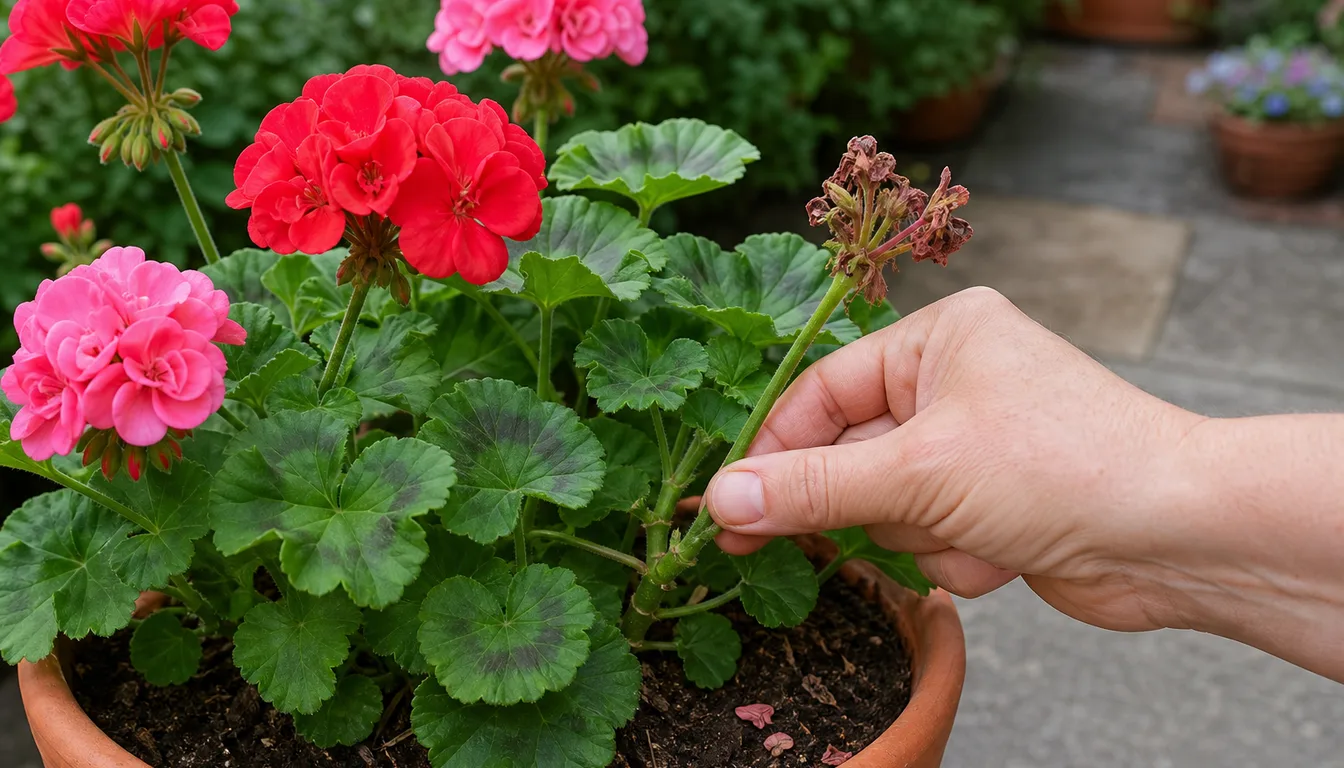
Snap the Whole Stalk, Not Just the Petals
The one move that keeps a geranium blooming is removing the entire flower stalk once the cluster is spent. Follow the bare stalk down from the faded head to where it joins a main stem or leaf node, and take it off there.
On soft, fresh stalks you can snap them out with a sideways push of your thumb, which is where the old advice to snap geraniums comes from. On woody or thick stalks, use clean snips and cut just above the node, leaving a stub no longer than a quarter inch so it heals cleanly.
Leaving only the petals behind is what creates a plant full of bare brown sticks by August. Taking the stalk to its base instead tells the plant to branch and push a fresh cluster from below.
- Find the cluster whose florets have mostly dropped or shriveled.
- Trace its stalk down to the first main stem or leaf joint.
- Snap or snip just above that joint, removing the whole bare stalk.
- Leave the firm buds sitting just below, they are your next flush.
Geranium or Cranesbill? It Changes Your Cut
Two very different plants share the name geranium, and they are not deadheaded the same way. Knowing which you grow saves you from cutting at the wrong point.
The common bedding geranium with round leaves and big flower balls is really a Pelargonium, grown as an annual or a tender container plant. You deadhead it stalk by stalk all season.
The hardy perennial cranesbill, sold as a true Geranium, makes lower mounds of small flowers. Shear the whole clump after its main flush rather than picking over it bloom by bloom as you would tidy a salvia.
| What you have | Tells you | Deadheading move |
|---|---|---|
| Zonal or ivy bedding geranium (Pelargonium) | Thick stalks, round flower clusters, tender | Remove each spent stalk to its base all season |
| Hardy cranesbill (true Geranium) | Low mound, many small flowers, comes back yearly | Shear the whole clump back after the first flush |
Mix the two up and you either shear a pelargonium that wanted single cuts, or pick endlessly at a cranesbill that just needed one haircut.
The Buds Hiding Right Under the Spent Head
Right below every spent geranium cluster sits the next wave of flowers, and rushing the cut is how gardeners lose it. Those fat, pointed buds are grouped just under the old head, often half-hidden by it.
Pause and look before you cut. Firm, pointed, green buds are keepers, so make your cut on the bare stalk above them, not through the cluster of buds. Cutting too eagerly takes the spent head and the whole next flush with it.
If a cut cluster had fat buds attached, you went too high. Next time follow the stalk lower and cut the bare section, leaving the budded joint on the plant.
Trailing ivy types hide these buds even better because the stalks are thin and tangled, much like the stems in a petunia basket, so scan along each vine before snipping.
Zonal, Ivy, and Scented Geraniums Each Cut a Little Differently
The bedding geraniums split into a few types, and each takes a slightly different hand. Reading yours keeps the plant balanced instead of lopsided.
Zonal types stand upright with stout stalks, so single stalk cuts are quick and clean. Ivy and trailing types spill from baskets on thin stalks that tangle, so work one runner at a time and shorten any leggy stem back to a lower node as you go.
Scented geraniums are grown more for their leaves than their small flowers, so you deadhead them lightly and pinch the stem tips to keep them bushy, much the way you would a pot of basil.
- Zonal (upright): Cut each spent stalk to its base, quick and tidy
- Ivy and trailing: Untangle one runner at a time, shorten leggy stems to a node
- Scented: Light deadheading, focus on pinching tips for bushy leaves
- All types: Keep firm buds below the cut for the next flush
How Often to Deadhead, and When to Stop for Cuttings
Cool spring weather slows the bloom cycle, so early on a weekly pass is plenty. Once summer heat speeds flowers up, a container packed with geraniums is worth checking every couple of days because spent stalks show fast at eye level.
Late season carries a decision the other flowers do not. Many gardeners overwinter geraniums by taking cuttings before frost, so in the weeks before your first freeze, ease off deadheading and let the plant hold healthy stems you can root indoors. In frost-free zones the plant keeps going, so treat late fall as a slow shoulder season and deadhead less.
Early spring: A weekly pass, watch the forecast for late frosts.
Peak summer: Check containers every 1 to 2 days for spent stalks.
Before first frost: Ease off, keep strong stems for overwintering cuttings.
Mild-winter zones: Deadhead lightly as growth naturally slows.
Deadheading Geraniums in Pots and Window Boxes
Pots and window boxes are where most geraniums live, and container life changes the rhythm. Faded clusters sit right at eye level and show from the curb, and the tight mix dries fast so old stalks brown quickly.
Plan on cleaning containers two or three times a week at peak bloom, and hold each stalk base with your free hand as you cut so you do not lift the whole root ball. In a mixed planter, trailing fillers like lantana tangle around geranium stalks and pull out if you yank, so cut rather than tug.
Brush fallen petals off the soil and leaves each time. Wet petals trapped in the foliage spot leaves and invite botrytis in a crowded pot, the same gray mold that stains a hydrangea mophead after rain. A light half-strength feed every couple of weeks keeps container plants pushing buds without the floppy growth heavy nitrogen causes.
Why Geranium Buds Dry Up Without Opening
Fat buds that brown and drop before they open point to something other than your cutting. On geraniums this bud drop usually traces to swings in water, either a plant that dried out hard or one left soggy in a pot with poor drainage.
Too little light is the next suspect. A geranium wants at least 4 to 6 hours of direct sun to open its clusters fully, and a shaded porch box makes buds that stall. Heat waves add to it, since flowers stressed by both dry roots and high heat abort buds to protect the plant.
One fungal cause looks similar. Botrytis turns buds brown and fuzzy in damp, crowded plantings, so open up the air flow the way you would around a crowded phlox and clear old petals before reaching for anything stronger.
- Buds brown and drop, soil swings wet to dry: steady the watering
- Buds stall, plant in part shade: move to more direct sun
- Bud drop during a heat wave: shade midday and keep roots evenly moist
- Fuzzy gray on buds in damp weather: botrytis, open up air flow and clean debris
Pro Tips
- Snap soft stalks with a sideways thumb push, but switch to clean snips once a stalk has gone woody.
- Walk around a container from every side, since spent stalks often hide behind fresh clusters.
- Hold each stalk base with your free hand while you cut so you never lift the whole plant out of the pot.
- In the weeks before frost, stop hard deadheading and keep healthy stems for overwintering cuttings indoors.
- Brush petals off the soil surface each pass so trapped moisture does not spot the leaves.
- Pair a light half-strength feed from your usual container feeding routine with your deadheading day rather than a heavy dose that pushes floppy growth.
- Sterilize blades with alcohol after any plant that showed leaf spots before you move to healthy geraniums.
Frequently Asked Questions
Should I snap geraniums off or cut them with pruners?
Either works as long as you remove the whole flower stalk, not just the petals. Snap soft, fresh stalks with a sideways push of your thumb, and use clean snips on woody stalks so you get one clean cut without tearing the stem.
What is the difference between a geranium and a cranesbill?
The common bedding geranium with round leaves and big flower balls is a Pelargonium, usually grown as an annual and deadheaded stalk by stalk. A hardy cranesbill is a true Geranium, a perennial that makes low mounds of small flowers and is better sheared back as a whole clump after its main flush.
Why do my geranium buds turn brown and fall off before opening?
Bud drop usually comes from uneven watering, too little sun, or heat stress, not from your cutting. Keep the soil evenly moist, give the plant at least four to six hours of direct sun, and shade it during peak heat. In damp crowded plantings, brown fuzzy buds can also be botrytis.
How often should I deadhead geraniums in pots?
During peak summer bloom, check containers every one to two days since faded stalks show quickly at eye level. In cooler spring and fall weather you can stretch that to once a week because blooms fade more slowly.
Do perennial geraniums need deadheading too?
Hardy cranesbill types benefit from a shear rather than stalk-by-stalk deadheading. After the first big flush, cut the whole clump back lightly to tidy it and encourage a lighter repeat bloom, then treat it like other flowering perennials.
Sources & References
Related Guides
Deadheading Daffodils While Leaving Foliage to Recharge
Deadheading a daffodil is really two jobs that look like one. You take off the spent flower and the…
8 min read
Deadheading Daisies: Why the Cut Depends on the Type
The word daisy covers a dozen unrelated plants, and the cut that keeps one blooming can waste your…
9 min read
Deadheading Mums, and the Summer Pinch That Comes First
Most people meet mums as a pot of fall color and start snipping brown flowers off in October. That…
9 min read