
How to Grow Raspberries for Big Summer Harvests
Raspberries grow well at home when you give their shallow roots steady moisture, confine the row, support the canes, and prune according to fruiting type. The decision that controls nearly every later task is whether the cultivar fruits on second-year floricanes, first-year primocanes, or both.
Choose a disease-free plant recommended for your region, prepare a sunny, well-drained strip, and install the support before the row becomes difficult to enter. A productive patch is less about forcing growth than about keeping fruiting wood, new wood, light, and picking access in balance.
[ky_keyfacts] Best planting material | Disease-free nursery stock suited to your region Best site | Full sun, good air movement, and soil that drains without drying hard Summer water need | About 1 to 1.5 inches weekly from bloom through harvest Row width | Keep red and yellow raspberry rows about 12 inches wide The annual job | Identify which canes have fruited, then prune for the cultivar's fruiting habit [/ky_keyfacts]
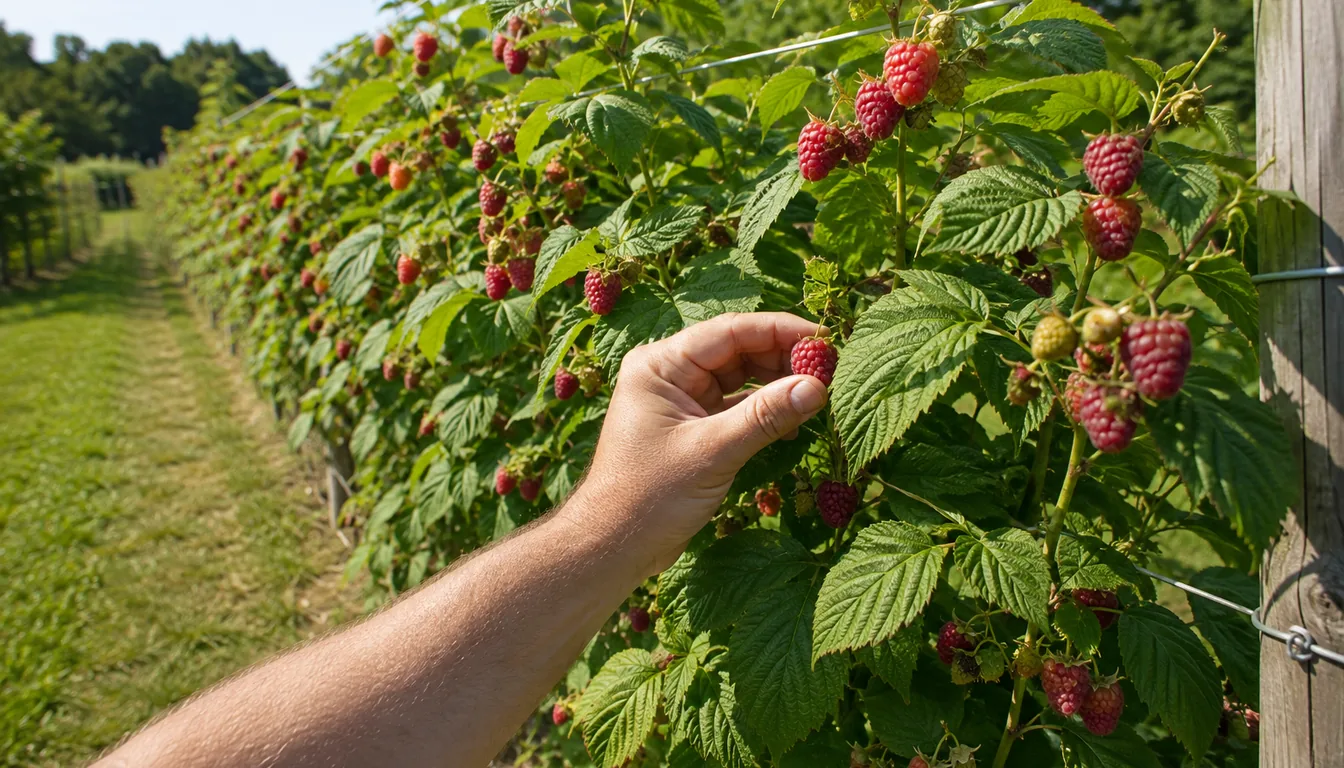
Choose the Right Type and Variety
The first decision that makes or breaks your patch is the type of raspberry you plant.
Summer-bearing raspberries crop once in early summer on second-year canes. They give heavy harvests in a short window, similar to how strawberry plants flush all at once, then rest.
Everbearing raspberries fruit on first-year canes in late summer and early fall, then sometimes lightly again the next spring. They are easier to prune and suit gardeners who want steady picking instead of a single rush.
Color does not tell you the pruning system. Read the cultivar description for fruiting habit, local hardiness, disease notes, and harvest season.
Red varieties are usually the most vigorous and winter-hardy. Golden, black, and purple cultivars can offer distinctive flavor, but their heat tolerance, winter hardiness, and growth habit vary by cultivar.
Check the plant tag for the cultivar's tested hardiness range and disease notes. Match that information to your winter lows and the length of your growing season before buying canes.
If you want the simplest annual pruning routine, choose a fall-bearing red cultivar and manage it for one late crop. You can cut all canes to the ground while they are dormant.
Use the type split below before you pick a cultivar. Pruning only makes sense after this choice is clear.
- Summer-bearing: One concentrated early-summer crop on second-year canes
- Fall-bearing, one-crop system: A late crop on first-year canes and the simplest dormant pruning
- Fall-bearing, two-crop system: A fall crop on cane tips followed by a smaller summer crop lower on those canes
- Black and purple types: Crown-forming plants that need different spacing and summer tipping than spreading red raspberries
| Fruiting habit | Where the main crop forms | Simplest pruning choice |
|---|---|---|
| Summer-bearing | Second-year floricanes | Remove only canes that finished fruiting, then thin the new primocanes |
| Fall-bearing, one crop | First-year primocane tips | Cut every cane to the ground before spring growth |
| Fall-bearing, two crops | Primocane tips in fall, lower cane in the following summer | Remove dead tips in spring and remove the cane after its summer crop |
| Black and purple types | Floricanes growing from a crown-forming hill | Tip new canes in summer, then shorten laterals and retain a limited number per hill |
Pick the Best Spot and Prepare the Soil
Raspberries produce best with 6–8 hours of direct sun. Light afternoon shade helps in hot zone 8–9 yards, but deep shade gives weak, leggy canes and poor fruit set.
Roots hate soggy ground even more than blueberry roots do.
Choose a well-drained area or use a raised bed.
Avoid low spots where snowmelt or storm water stands for more than a day.
Soil should be loose and high in organic matter.
Test the soil before adjusting pH. Raspberries generally perform in slightly acidic soil, but the laboratory recommendation for your soil should control lime and sulfur additions.
Heavy clay benefits from compost worked across the planting strip, but do not add gravel or coarse material to individual holes.
Till or dig a strip at least 2 feet wide and 12–18 inches deep along your future row. Work in 2–3 inches of finished compost across the whole strip, not just in planting holes.
Raspberry crowns need drainage before fertility. Wet, compacted soil around roots causes more failures than a modest nutrient gap.
If your native soil is pure sand, add compost and some topsoil to help it hold moisture and nutrients. In cold zone 3–4, raised beds warm faster in spring, which pushes growth earlier.
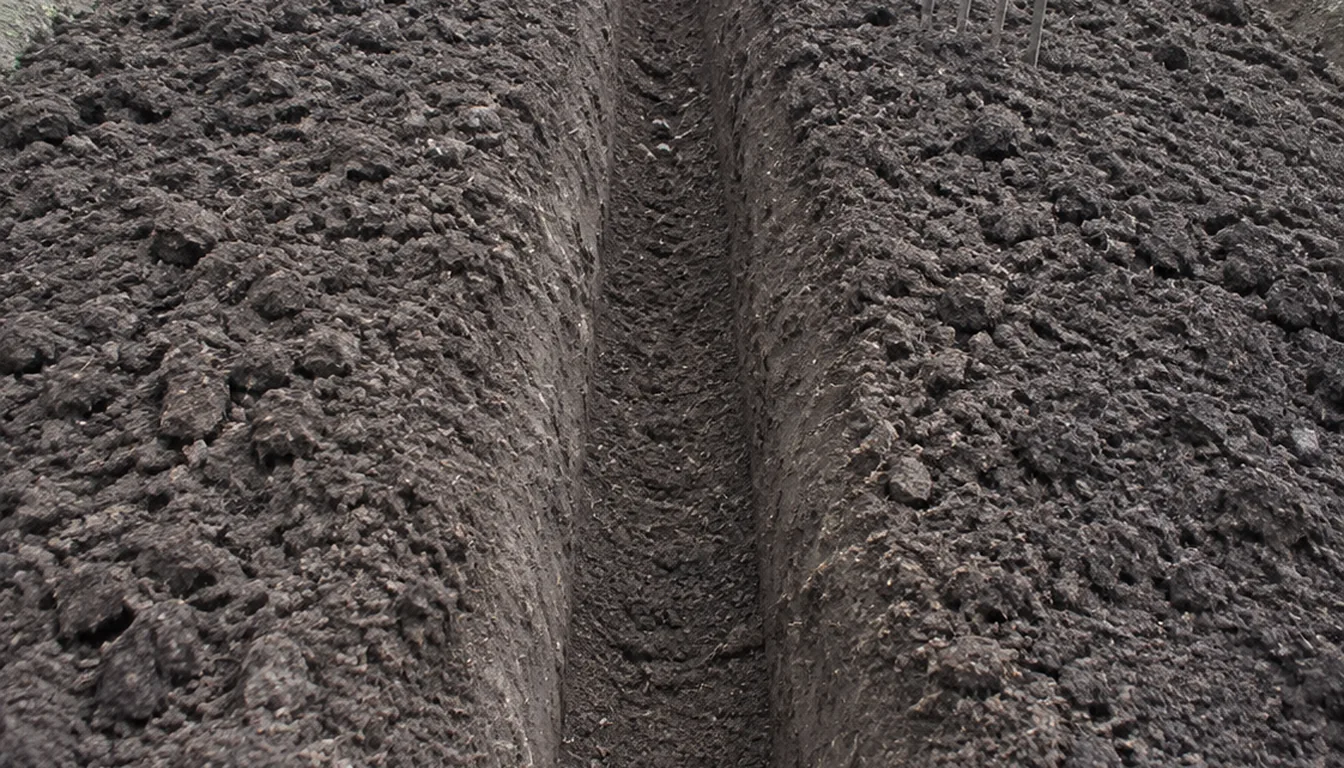
- Sun exposure: 6–8 hours direct light daily
- Drainage: Never plant in spots that stay puddled
- Bed width: Minimum 2 feet, wider for double rows
- Soil amendment: 2–3 inches compost mixed through top 12 inches
- Previous crops: Avoid old bramble or nightshade spots to reduce disease
Install Support Before You Plant
A simple trellis keeps raspberry canes upright, easier to pick, and less disease-prone.
Installing support before planting saves you from trying to pound posts between fragile new roots.
Even compact rows quickly flop without support, especially after a summer rain. Think of your trellis like the stake you would never skip for a heavy tomato vine.
The easiest system for a home row is two sturdy end posts with wires between them. Use rot-resistant wood or metal posts set 2 feet deep and 15–20 feet apart for a single row.
Run 2–3 strands of wire or strong garden line between the posts at about 2 feet, 3.5 feet, and 5 feet high. That gives you places to tie or weave canes as they grow.
Do not rely on plastic "tomato cages" for raspberries. They are too weak and too small once the canes reach full height.
In narrow spaces, you can use a single T-post on each end and a basic one-wire system around 3.5 feet high. This still helps keep the row from spilling into your path.
Leave enough clearance from fences and other shrubs so you can walk around the row for pruning. We like at least 2–3 feet of open space on both sides of the canes for access.
- Post spacing: 15–20 feet apart per row
- Post depth: 2 feet in the ground
- Wire heights: 2 ft, 3.5 ft, 5 ft from soil surface
- Row clearance: 2–3 ft open space on each side
- Goal: Canes upright and separated, not tangled mats
Planting Canes: Spacing, Depth, and First Watering
Bare-root and potted raspberries both like cool soil at planting.
Early spring, as soon as you can work the ground, is ideal in zones 3–6.
In warmer zone 8–9, late fall planting works well so roots establish before summer heat.
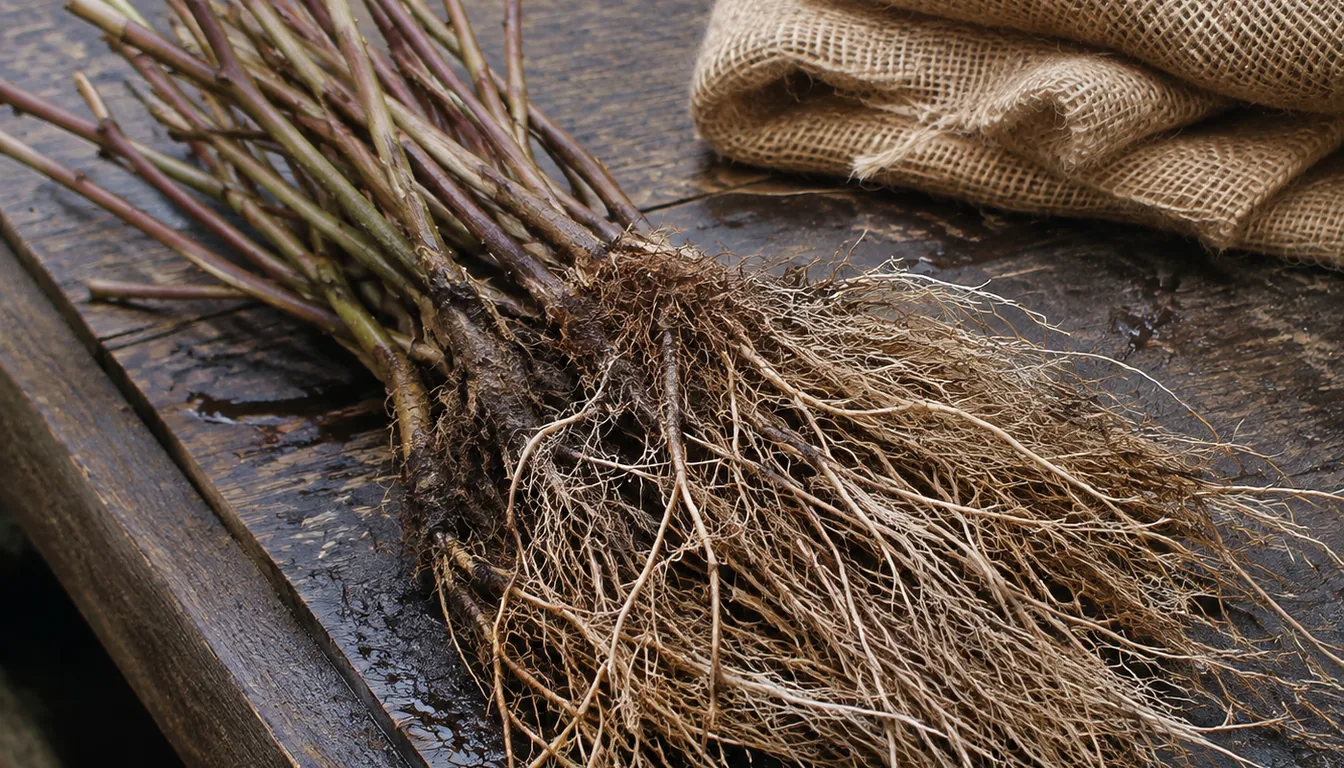
Unpack bare-root canes and trim any broken bits. Soak the roots in a bucket of clean water for 30–60 minutes while you finish preparing holes.
Dig a trench or individual holes so the roots can spread easily.
Set each plant so the original soil line from the nursery sits level with your garden soil, similar to how you would set a young blueberry shrub.
Do not bury the crown deep.
Space summer-bearing raspberries 18–24 inches apart in the row. Everbearing types tolerate closer spacing, around 12–18 inches, because they are often cut back hard each year.
Backfill with loosened soil and compost, pressing gently to remove large air pockets. Form a shallow basin around each plant to catch water.
Water slowly after planting until the loosened root zone is moist and the soil has settled around the roots. Add more soil if settling exposes roots, but do not bury canes deeper to compensate.
New raspberries need consistent moisture their first season, but soggy soil is the fastest way to kill them. Aim for evenly moist, never soupy.
Mulch with 2–3 inches of clean straw, shredded leaves, or wood chips, keeping mulch a couple inches away from the cane base. This keeps weeds down and stabilizes soil moisture better than frequent shallow watering.
- Planting depth: Crown at soil surface, never buried
- Row spacing: 6–8 feet between rows for air flow
- Plant spacing: 12–24 inches, depending on type
- Water per plant: 1–2 gallons at planting
- Mulch layer: 2–3 inches, pulled back from stems
- Protect the rootsKeep bare roots damp and shaded while the row is prepared.
- Spread rather than coilOpen a hole wide enough for roots to extend naturally.
- Set the crown correctlyFollow the nursery or Extension planting depth for the stock type, keeping roots covered and the crown from sinking after settling.
- Backfill with site soilFirm gently so large air pockets close without compacting the strip.
- Water and mulchMoisten the full root zone, then add mulch without piling it against the canes.
- Cut back if directedFollow the nursery instructions for dormant bare-root cane height.
Watering and Mulching for Strong Canes
Consistent moisture keeps raspberry roots shallow but productive. The soil should feel like a wrung-out sponge in the top 2 to 3 inches, not soggy or bone dry.
Deep watering is better than quick sprinkles. Think of the same habit that helps blueberry shrubs, where long, slow soaks encourage roots to reach down.
From flowering through harvest, raspberries commonly need about 1 to 1.5 inches of water per week from rain and irrigation. Apply it often enough that the shallow root zone does not swing between saturated and powder-dry.
Use a simple test before grabbing the hose.
Stick a finger 2 inches deep.
If it feels dry at that depth, it is time to water.
Drip irrigation or a soaker hose is easier than hand watering. It also keeps foliage dry, which cuts disease risk compared with overhead sprinklers.
Overhead watering late in the day encourages leaf diseases and fruit rot, especially in humid regions.
Spread 2 to 3 inches of organic mulch, such as shredded leaves, straw, or wood chips. Keep it pulled back 2 inches from canes to avoid rot at the crown.
Mulch helps in both hot zone 9 summers and cold zone 4 winters. It moderates soil swings and reduces how often you need to water.
If you grow strawberry rows nearby, you can mulch both crops with the same material to simplify maintenance.
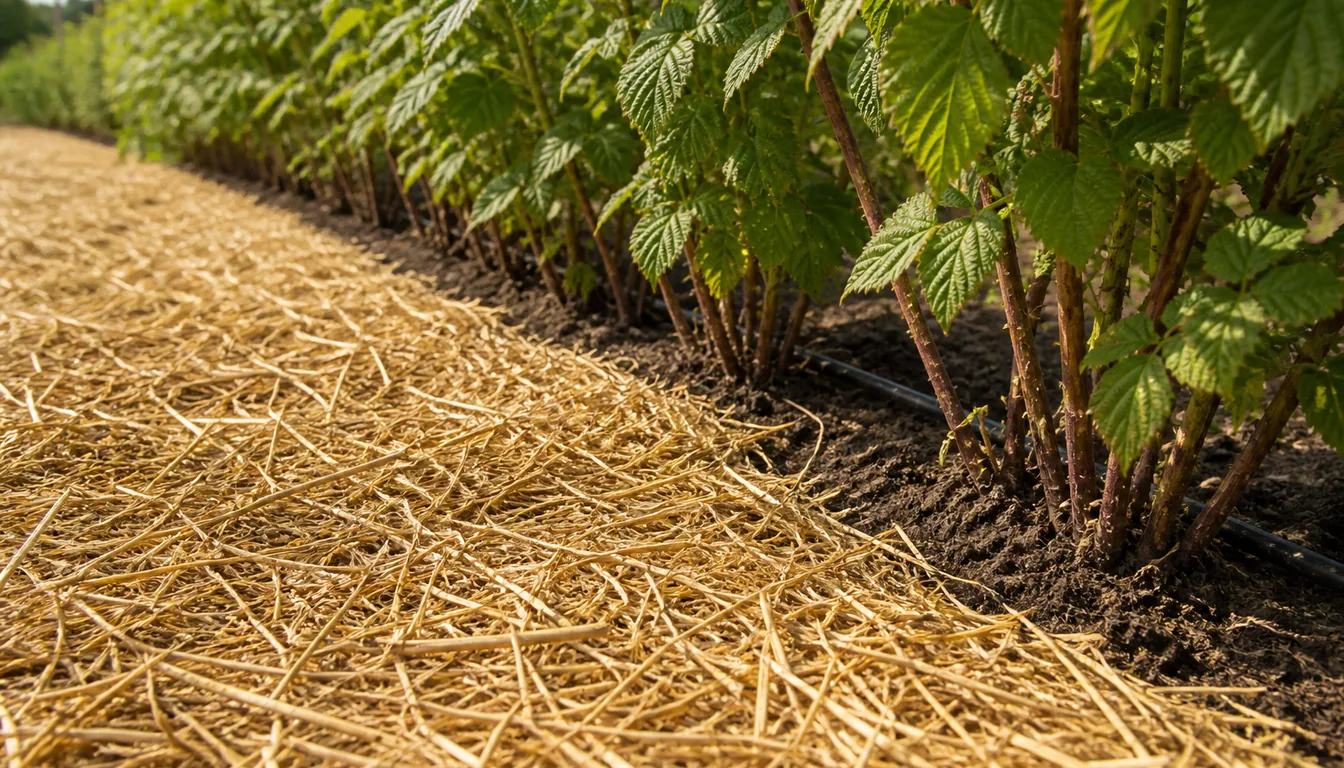
- Water depth: Moisten top 8 to 10 inches of soil
- Summer schedule: 1 to 2 deep soakings per week
- Mulch thickness: 2–3 inches over the root zone
- No-mulch gap: Leave 2 inches around each cane base
Feeding Raspberries Without Overdoing It
Heavy feeding grows tall, floppy raspberry canes with fewer berries. Light, steady nutrition beats big doses of high-nitrogen fertilizer.
If your soil is decent and you added compost at planting, you often only need a small spring feeding. Thin, pale canes or very slow growth suggest they need more.
Apply a balanced granular fertilizer, such as 10-10-10, at a rate the bag recommends for berries. Broadcast it over the root zone in early spring as buds swell.
Water it in well, just like you would when feeding a young apple tree sapling to avoid burning surface roots.
Organic gardeners can side-dress with 1 to 2 inches of finished compost every spring. Rake it lightly into the surface around the row, then re-cover with mulch.
Raspberries need light spring feeding, not late-season nitrogen that pushes soft growth before winter.
Skip late-season fertilizer in late summer and fall in cold zones. New growth that appears after August in zone 5 or colder often winter-kills.
Avoid high-nitrogen lawn fertilizers near raspberries. They are designed for grass and can overload your canes.
If you already maintain a well-fed vegetable patch, treat raspberries similarly but slightly lighter. A soil test and the fertilizer label are better guides than borrowing a rate from a different crop.
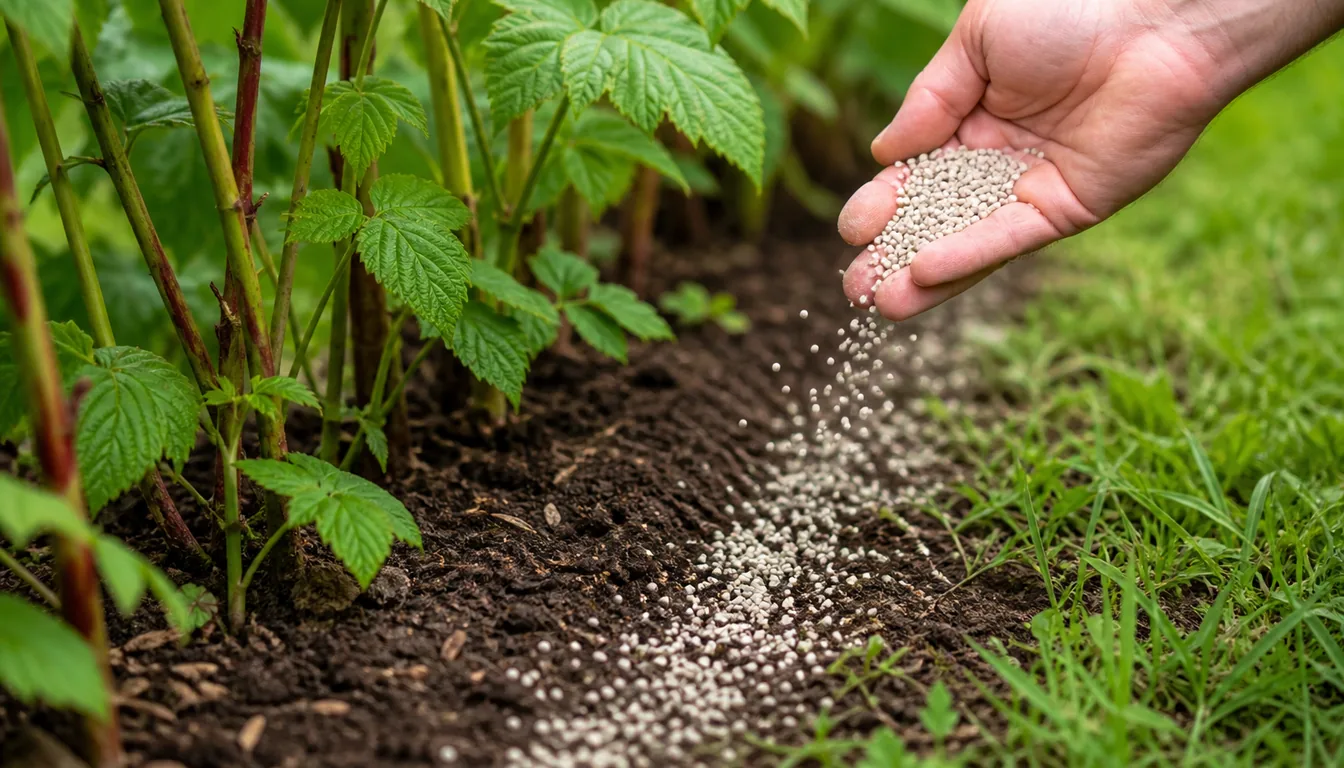
- Best timing: Early spring as buds swell
- Product type: Balanced fertilizer or rich compost
- Organic option: 1–2 inches of compost under mulch
- Avoid: Feeding after mid-August in cold climates
Pruning and Training for Big Harvests
Pruning matters more for raspberries than most people expect.
Good cuts decide how many flowers and fruits you get the next year.
Before pruning, know if you grow summer-bearing, fall-bearing, or everbearing types. The fruiting habit tells you which canes to remove.
Summer-bearing types fruit on second-year canes, called floricanes. After they fruit, those canes will never produce again.
For summer-bearing plants, remove canes that fruited soon after harvest or during the dormant season, cutting them at ground level. Keep healthy primocanes because they carry the next crop.
Spent floricanes are often gray, peeling, and more brittle than fresh first-year canes.
For fall-bearing raspberries, you have two options. The simple method is to cut all canes to the ground before spring growth.
This "one-crop" system gives a single heavy fall harvest. It is perfect if you want low-maintenance rows similar to a patch of asparagus crowns.
If you want two crops, keep healthy first-year canes after fall harvest. Remove only the dead tips that already fruited, then thin crowded canes.
Aim to leave 4 to 6 strong canes per foot of row after thinning. Fewer canes with good spacing give larger berries and better airflow.
Tie remaining canes loosely to your trellis wires. Use soft ties or garden tape so the stems do not girdle as they thicken.
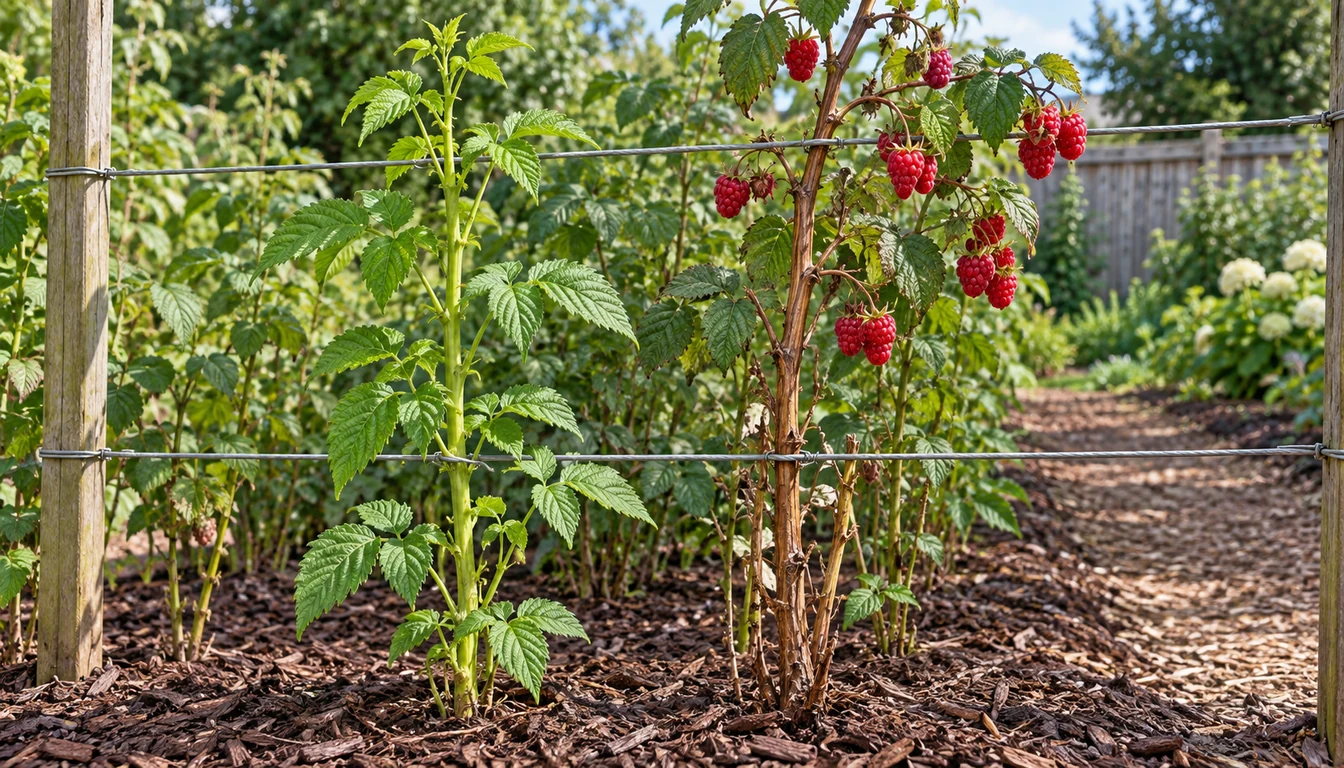
- Summer-bearing: Remove spent, 2-year-old canes yearly
- Fall-bearing, simple: Cut all canes down in late winter
- Fall-bearing, two crops: Keep first-year canes, remove fruited tips
- Target density: 4–6 canes per foot of row
Harvest, Cleanup, and Winter Care
Raspberries respond strongly to season changes.
You can almost set your maintenance calendar by what the canes look like each month.
In spring, focus on cleanup and structure. Finish pruning, repair supports, renew mulch, and apply fertilizer before the canopy fills in.
Summer is all about water, weeds, and harvest. Keep the patch picked clean, since overripe fruit left on the plant encourages insects and molds.
Pick often during peak ripening.\n\nA ripe raspberry releases from its core with little resistance, so fruit that must be pulled hard needs more time.
In fall, cut out spent floricanes on summer-bearing types right after harvest. This frees space and light for the young primocanes that will fruit next year.
Remove and destroy any diseased canes. Do not compost them, especially if you notice orange rust or suspicious blotches on stems.
In colder regions like zone 4 gardeners, winter prep matters. After the ground freezes, add an extra 2 inches of mulch over roots.
Rabbits and voles sometimes chew raspberry canes at snow level. Protect trunks near the base with hardware cloth if wildlife pressure is heavy.
In milder zones, focus on drainage rather than insulation. Wet feet in winter hurt raspberries more than cold temperatures in many zone 8 yards.
If you also grow tender fruit like fig trees, you will notice raspberries need less elaborate wrapping. A good mulch blanket is usually enough.
- Spring: Prune, feed, re-tension wires
- Summer: Water, weed, and harvest often
- Fall: Remove spent canes, clean debris
- Winter: Mulch roots, protect from rodents
- Use shallow containers so the lower berries are not crushed
- Refrigerate ripe fruit promptly and wash it just before use
- Remove overripe or damaged berries from the row
- After a summer crop, identify and remove the spent floricanes
- Keep the path open enough to harvest without breaking new primocanes
- Protect canes from rabbits where winter browsing is common
Common Problems and How To Fix Them
Most raspberry problems trace back to three things, crowded canes, wet foliage, and poor rotation.
Fix those and many pests and diseases fade.
Cane blight and spur blight show up as dark, sunken areas on stems. You might see yellowing leaves above the infected section.
Cut out affected canes at ground level and remove nearby debris. Improve airflow by thinning to that 4 to 6 canes per foot target.
Spotted wing drosophila, a tiny fruit fly, lays eggs in ripening berries. Fruit turns mushy quickly and may show tiny white larvae.
To reduce damage, harvest daily and chill berries right away.\n\nDo not leave overripe fruit hanging, just as you would with soft grape clusters.
If you see poor growth, distorted leaves, or random dead patches, check soil moisture and drainage first. Compacted, soggy soil leads to weak roots and nutrient lockout.
Rule out water and crowding before treating raspberry disease. Those two conditions drive most weak patches.
Weeds also steal moisture and harbor pests. Keep a clean strip under canes and maintain your mulch, even during busy summer weeks.
If issues keep repeating, consider moving the patch in a few years. Rotating raspberries away from old cane fruit spots, along with rotating vegetables, breaks many pest cycles.
- Fungal signs: Dark cankers, tip dieback, yellow leaves above lesions
- Insect clues: Soft, collapsing berries, tiny larvae inside
- Cultural fixes: Better drainage, thinner plant spacing
- When to replace: After several declining years despite good care
Pro Tips
- Mark your rows with stakes before digging so raspberries end up straight, not wandering through the lawn.
- Label varieties at planting with weather-proof tags so you remember which row is everbearing and which is summer-bearing.
- In heavy clay soils, plant raspberries in raised beds at least 8–10 inches high to protect roots from sitting wet.
- Use clean straw or wood chips for mulch, never grass clippings that were treated with weed killer.
- If you are tight on space, choose one everbearing red variety and prune it with the simple mow-every-winter method.
- Plant raspberries at least 3–4 feet away from existing blackberry thickets to reduce disease spread between brambles.
- Install a simple drip line along the row so deep watering is easy and you avoid soaking foliage on humid summer evenings.
Frequently Asked Questions
How many years do raspberries take to produce fruit?
Most raspberries give a light crop the year after planting and reach full production in year three. Fall-bearing types often fruit on first-year canes, so you may see a decent fall harvest the first season after planting bare-root canes.
How long do raspberry plants live?
A well-cared-for raspberry patch can stay productive for 8 to 10 years.
Yields usually peak around years three to six, then slowly decline.
When canes get weaker and berries smaller, plan to start a new row in fresh soil.
Can I grow raspberries in containers?
Yes, smaller or dwarf raspberry varieties grow in large containers at least 18 to 20 inches wide.
Use a high-quality potting mix, a sturdy trellis, and consistent watering.
Expect slightly smaller yields than an in-ground row but easier pruning and harvesting.
Do I need more than one raspberry variety for pollination?
Most raspberries are self-fertile, so a single variety will set fruit. Planting two or more varieties can extend your harvest season and sometimes boost yield, but it is not required for pollination like some tree fruits are.
How far should raspberries be from other garden beds?
Keep raspberries at least 3 feet away from vegetable beds or paths.
Canes sucker and spread, so a bit of distance and a mowing strip help contain them.
Avoid planting where you recently grew other brambles like blackberry bushes to reduce disease carryover.
Sources & References
Related Guides
Best Butterfly Garden Plants for a Complete Habitat
The best butterfly garden plants do two different jobs. Host plants feed caterpillars, while nectar…
15 min read
Best Fall-Blooming Flowers for Color Near Frost
A bed that still carries flowers in October usually was planned before temperatures fell.
9 min read
Best Fast-Growing Trees for Shade and Privacy
The best fast-growing tree is the one whose mature crown, roots, climate range, and maintenance…
16 min read
Best Fragrant Flowers for Every Yard and Season
The best fragrant flowers depend on climate, light, space, and the hours you use the yard.
15 min read
Best Full-Sun Perennials for Hot, Bright Beds
The best full-sun perennials are the ones that match the bed's soil moisture and drainage, local…
14 min read
Best Ground Cover Plants for Sun, Shade, and Slopes
The best ground cover is a plant that survives the site and performs the job without escaping into…
18 min read