Drip Irrigation vs Sprinkler Irrigation
Use drip irrigation for beds, rows, containers, and separated plants that need water at selected root zones. Use sprinklers for lawns and other continuous surfaces, then test coverage and correct overspray instead of assuming every head waters evenly.
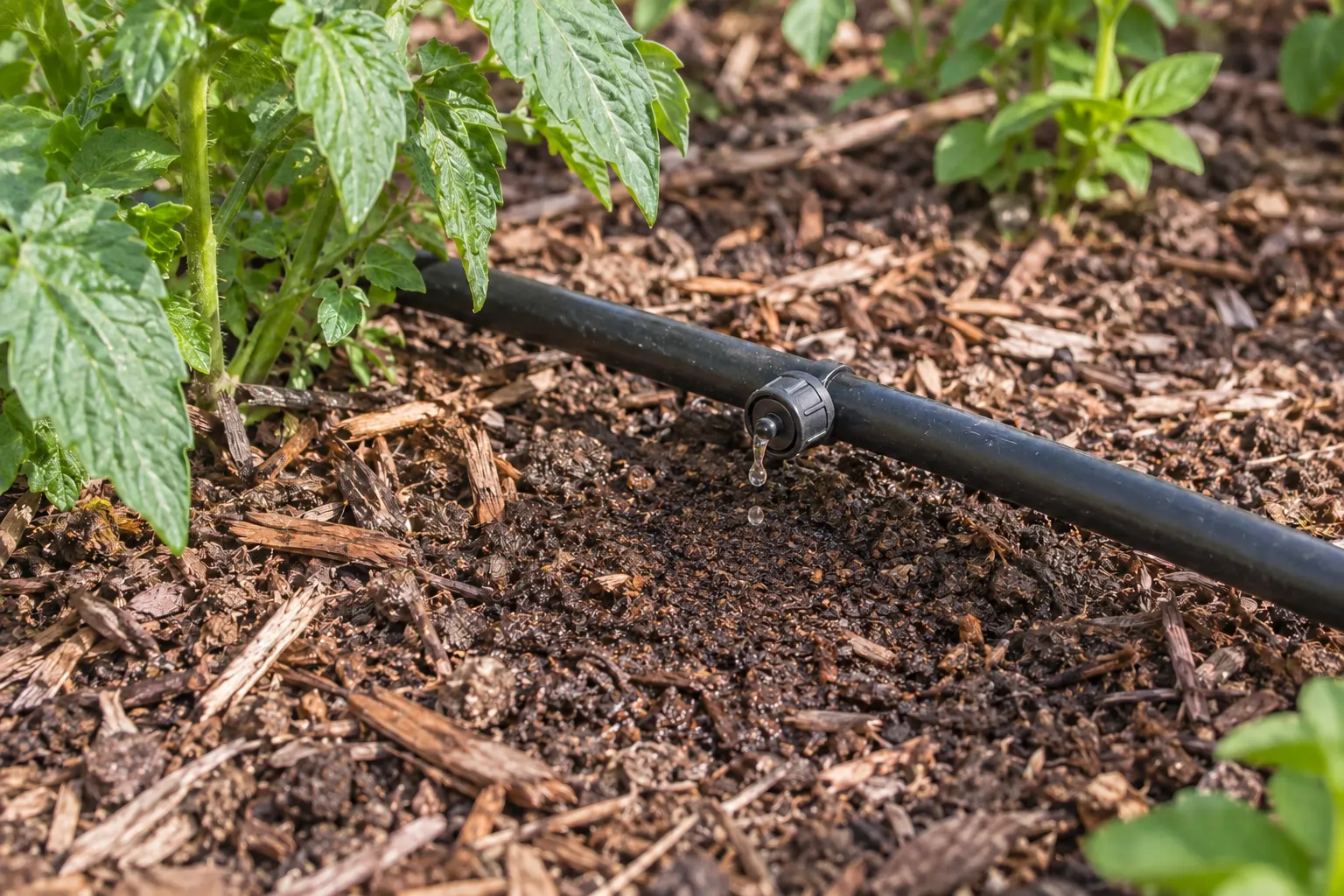
Drip Irrigation
Low-pressure microirrigation
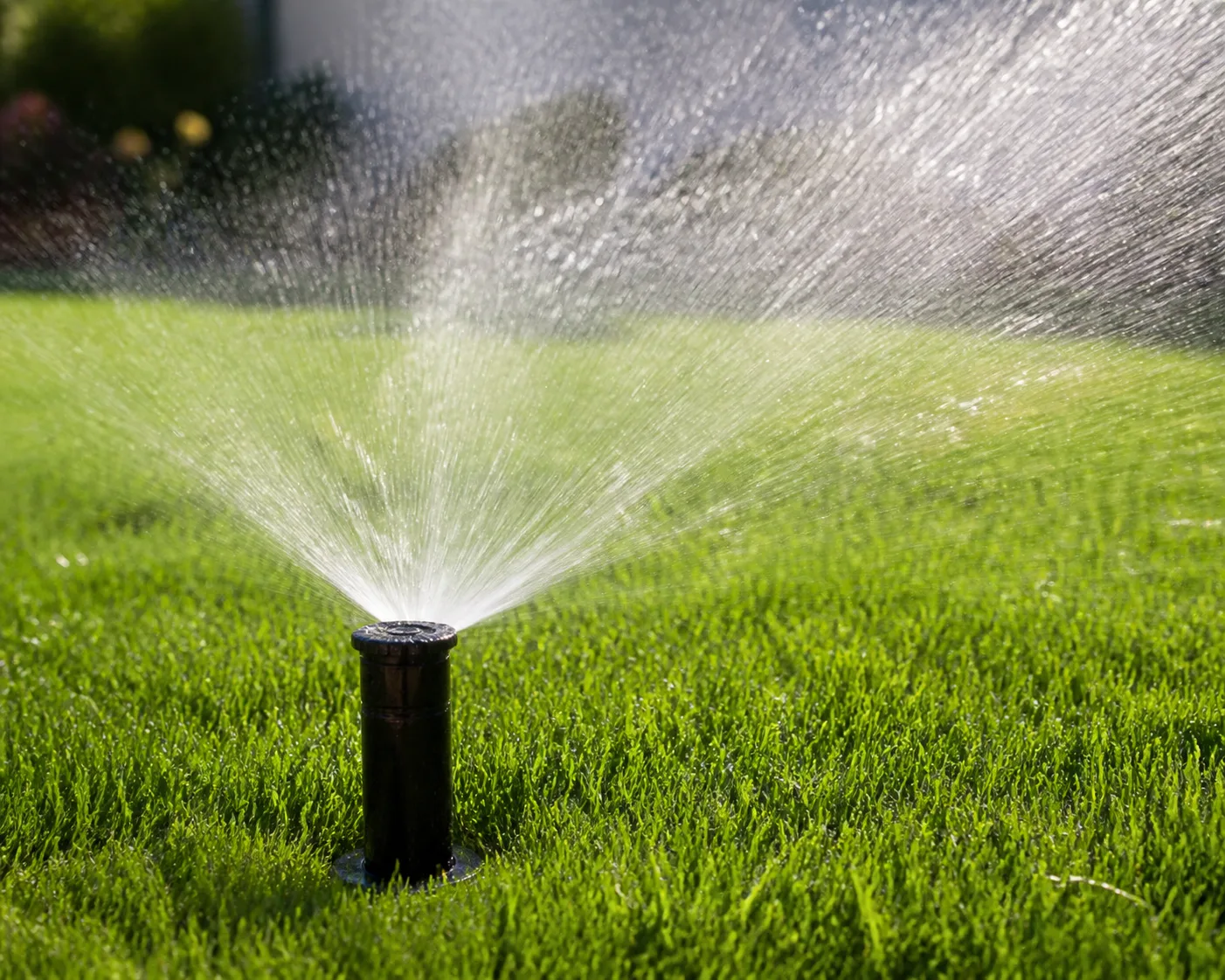
Sprinkler Irrigation
Overhead spray or rotor irrigation
Drip irrigation and sprinklers solve different distribution problems. Drip releases water slowly near selected plants, while a sprinkler throws water through the air across a continuous area.
For most home landscapes, the best answer is a zoned combination rather than one system everywhere. Drip fits vegetable beds, shrubs, and containers, while correctly designed sprinklers fit turf that needs even coverage from edge to edge.
Efficiency still depends on design, pressure, scheduling, and maintenance. A leaking dripline can waste water unseen, and a poorly aligned sprinkler can keep pavement wet while grass remains dry.
Specifications
Compare how each system delivers water, cost, and upkeep.
| Feature | Drip Irrigation | Sprinkler Irrigation |
|---|---|---|
| Delivery pattern | Points or narrow wetted bands | Broad overlapping spray patterns |
| Best fit | Beds, rows, containers, shrubs | Lawns and continuous groundcover |
| Water in the air | Little to none with emitters | Exposed to wind and evaporation |
| Foliage wetting | Usually avoided | Expected within the spray area |
| Main design control | Emitter flow, spacing, and soil spread | Pressure, nozzle, spacing, and overlap |
| Common hidden failure | Clogged or displaced emitter | Low pressure or uneven overlap |
| Common visible waste | Leak or emitter on bare soil | Mist, runoff, and hardscape overspray |
| Useful field check | Inspect each outlet and probe moisture | Run a catch-can uniformity test |
| How it adapts | Move or add emitters as plants grow | Change nozzles, arcs, heads, or zones |
The decisive difference is the area each outlet must wet. Drip is precise because it serves selected root zones, while sprinklers depend on controlled overlap to make a continuous surface uniform.
Do not compare controller minutes between the two systems. Flow and application patterns differ, so runtime must come from measured output, soil infiltration, weather, and root depth.
Best Use Cases
Choose by the site and the workload you can sustain.
Established lawn
Uniform water across turf
Typical surface drip tubing cannot distribute water evenly through a broad, dense turf root zone without an impractical amount of line.
Matched sprinkler heads with overlapping patterns can cover the full lawn, provided pressure and alignment are correct.
Vegetable rows or raised beds
Water crops without soaking paths
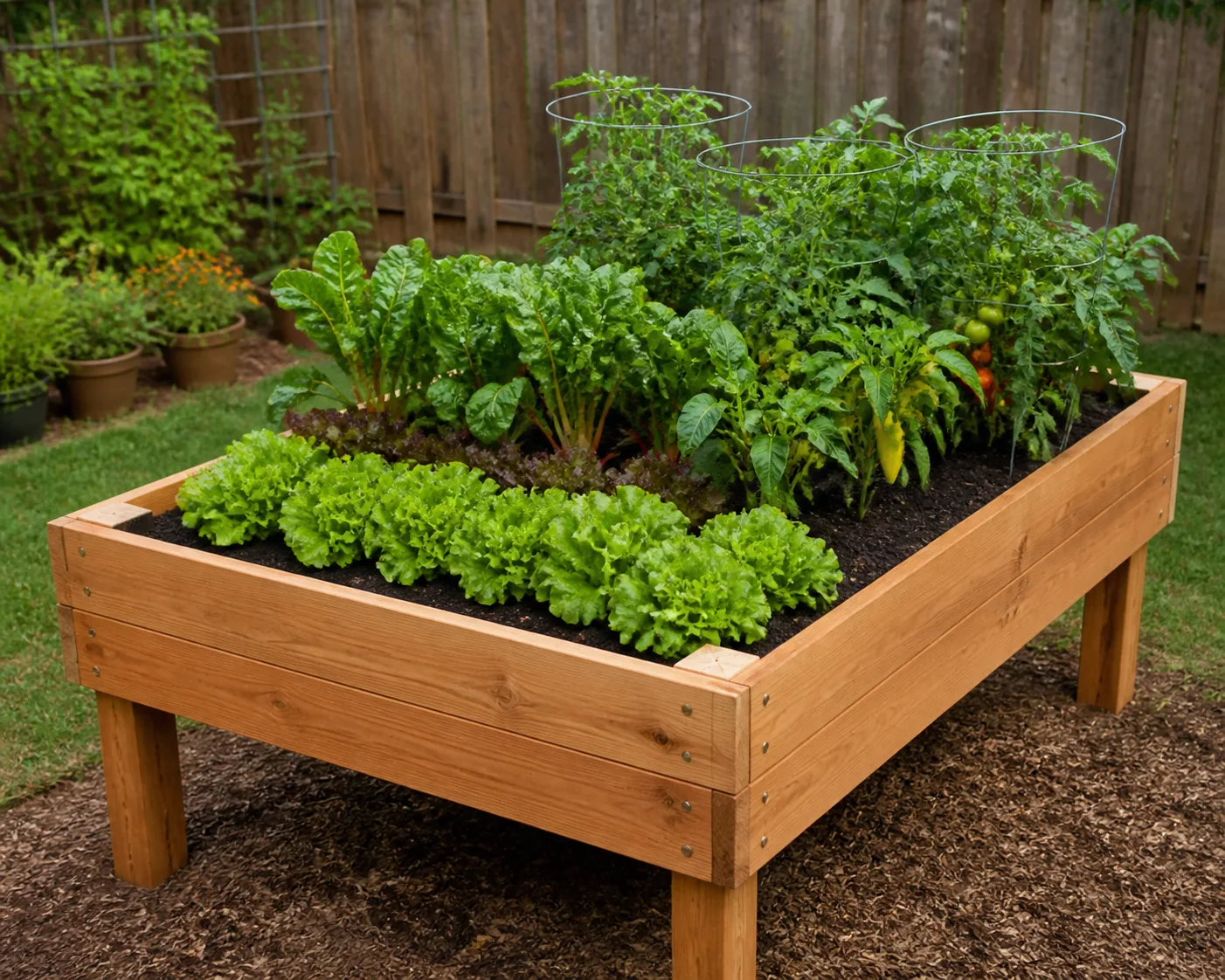
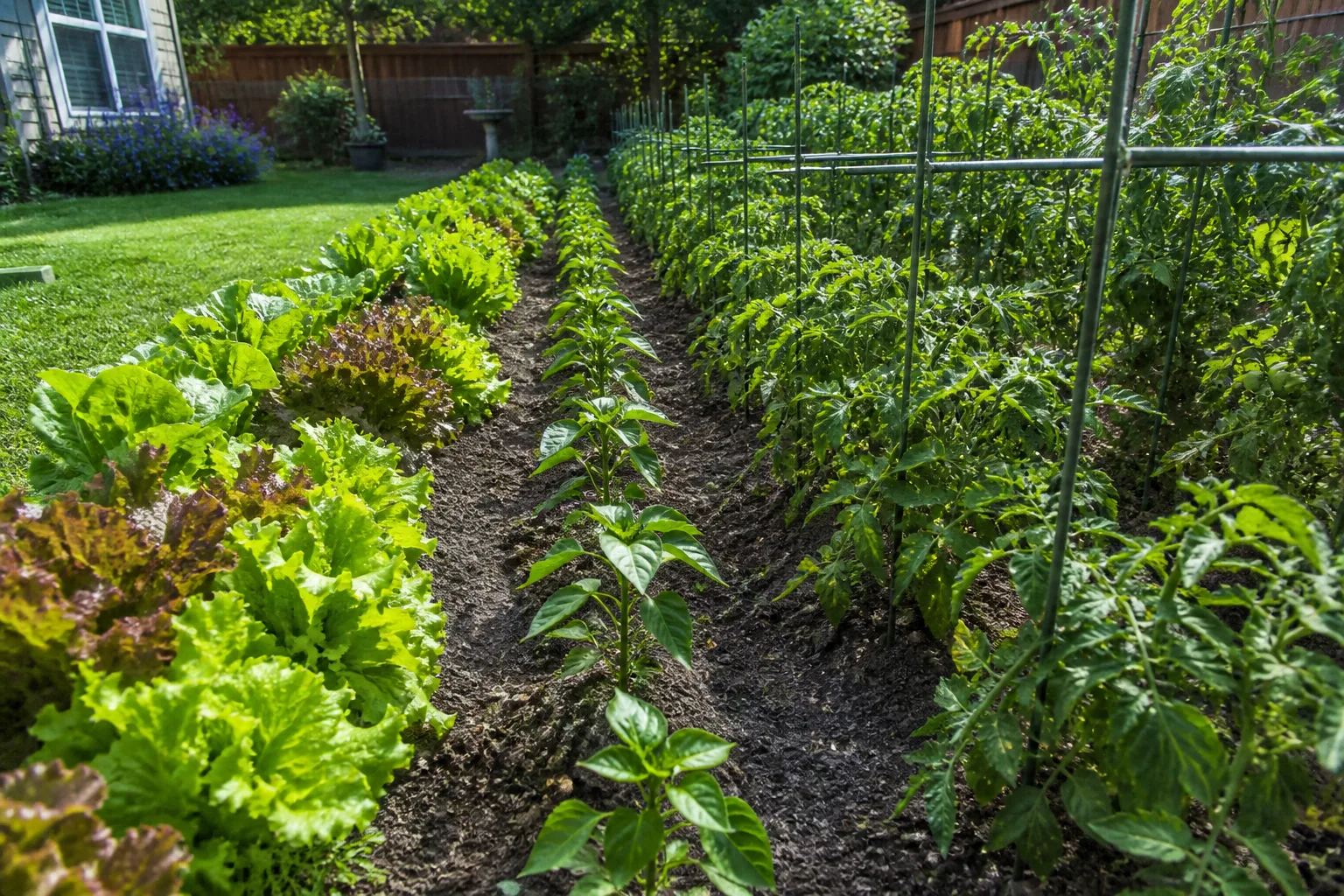
Emitter tubing can follow planted rows and keep most paths dry, which limits wasted coverage and unnecessary weed germination.
Overhead spray can reach the whole bed, but wind, blocked spray, wet foliage, and water on paths reduce control.
Shrubs on a slope
Slow application before runoff starts
Low-flow emitters can apply water below the soil's infiltration rate and direct it to separate shrubs on irregular ground.
Sprinklers can work only when short cycles, low application rates, and the layout keep water from running downhill.
Yard with lawn and planting beds
Different plants need different zones
Put beds on their own drip zones so emitters and schedules can change as plants mature.
Keep turf on separate sprinkler zones so every head in a zone has a compatible precipitation rate and pressure.
Where should you use drip irrigation or sprinklers?
Start by drawing boundaries around areas that share a plant type, sun exposure, soil, and watering need. A lawn in full sun should not run on the same schedule as mulched shrubs in afternoon shade.
Assign the delivery method after those zones are clear:
- Use drip emitters or emitter tubing for rows, planting beds, containers, and separated shrubs.
- Use spray or rotor sprinklers for turf and dense groundcovers that need water across the entire surface.
- Hand-water a few isolated pots or new plants when another permanent zone would add more parts than value.
- Consider a soaker hose for a simple temporary bed when a full emitter network is unnecessary.
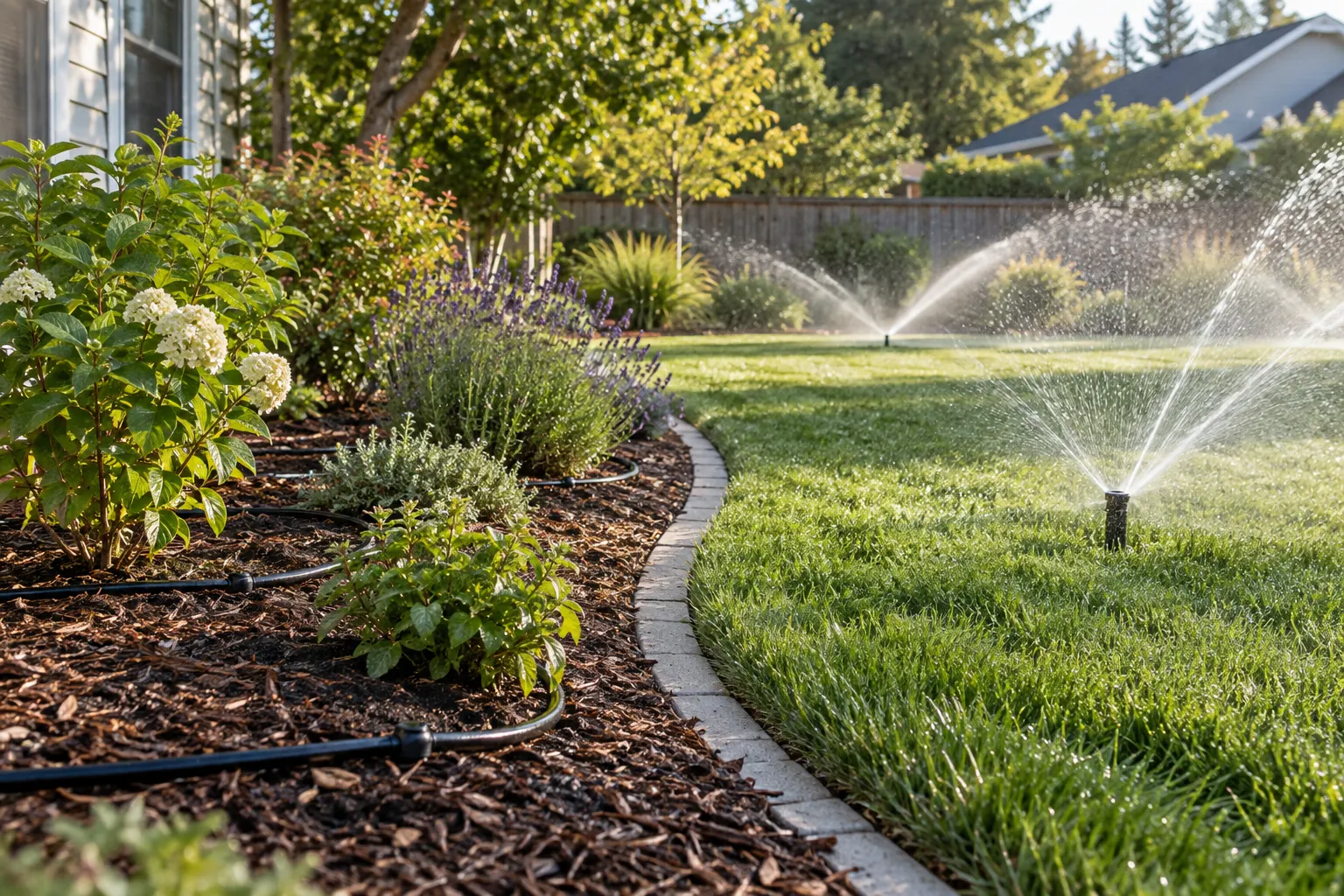
A mixed yard commonly needs both systems. The border between lawn and bed is also the cleanest place to separate them because overspray into mulch and dripline under turf each create maintenance problems.
What does a dependable drip zone need?
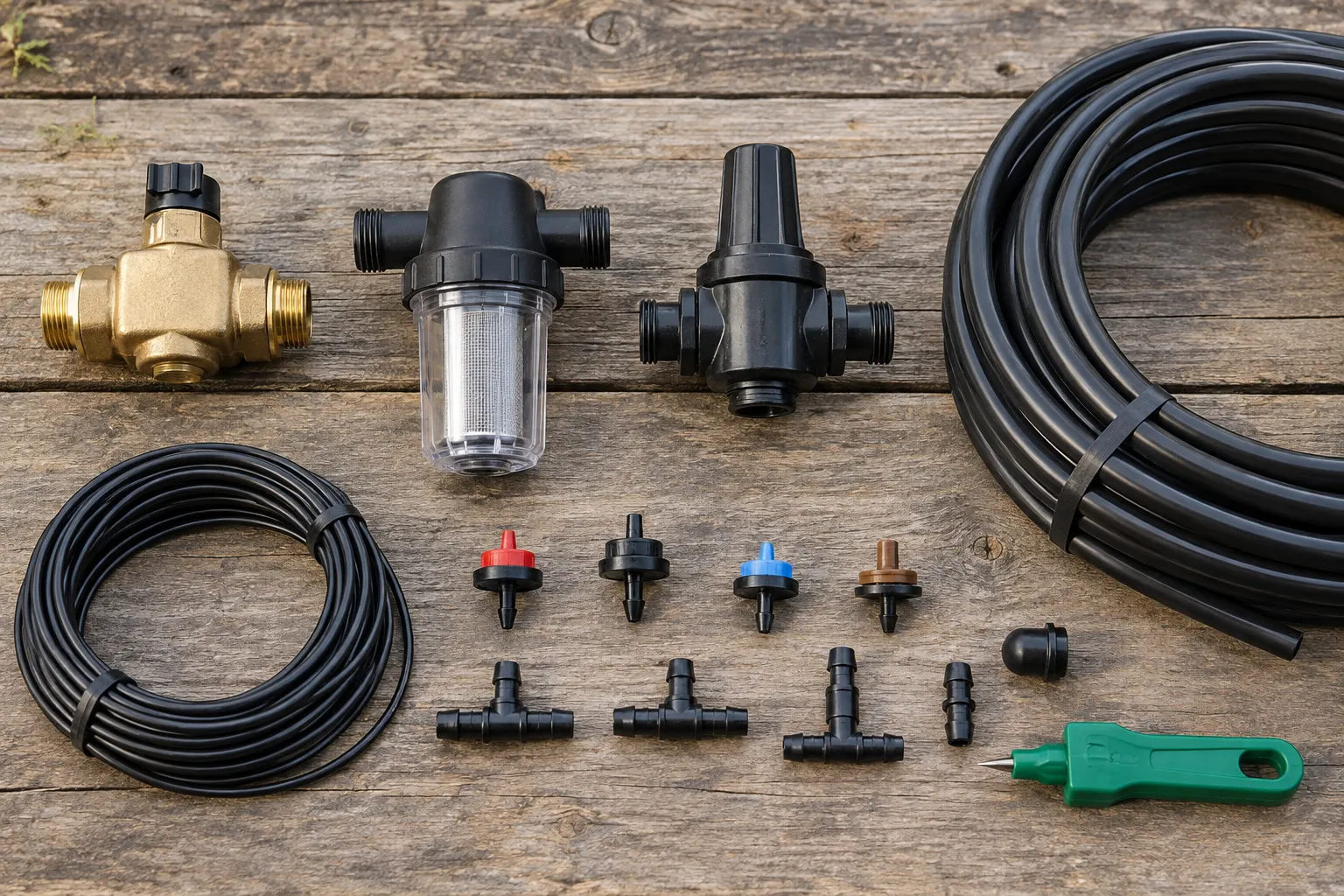
A drip system is more than tubing with holes. A home-garden zone commonly needs a backflow device where required, a filter, pressure regulation, mainline or distribution tubing, measured emitters, end closures, and a way to flush the line.
Colorado State warns that skipped filters, missing pressure reducers, excessive mainline length, and too many emitters are common setup errors. Manufacturer limits still control the exact tubing length, pressure, and total flow.
Place emitters for the root system rather than tight against every stem. A new shrub may begin with outlets near its original root ball, but those outlets should move outward or increase as the root zone expands.
Soil changes the wetting pattern. Water tends to move downward through sandy soil in a narrower column, while finer soil spreads it farther sideways, so identical emitter spacing will not suit both beds.
Use this commissioning check before relying on a timer:
- Flush open line ends until the water runs clear.
- Close the ends and inspect every emitter while the zone operates.
- Confirm that the soil accepts the flow without pooling or runoff.
- Probe after watering to see whether neighboring wetting patterns meet around the active roots.
- Recheck the far end of the line for weak flow or blocked outlets.
The image shows a controlled set of parts for one zone. Each piece has a clear job before water reaches an emitter.
How do sprinklers cover a lawn evenly?
A sprinkler's visible arc is not proof of even watering. Pressure, nozzle choice, wind, head spacing, blocked streams, and mismatched replacement heads can create dry pockets beside saturated ones.
EPA guidance describes head-to-head coverage as a basic way to improve uniformity. Water from one head should reach the neighboring heads, because one isolated spray pattern usually applies less water near its outer edge.
Pressure matters too. Excess pressure can turn droplets into mist and distort coverage, while low pressure shortens the throw and leaves gaps.
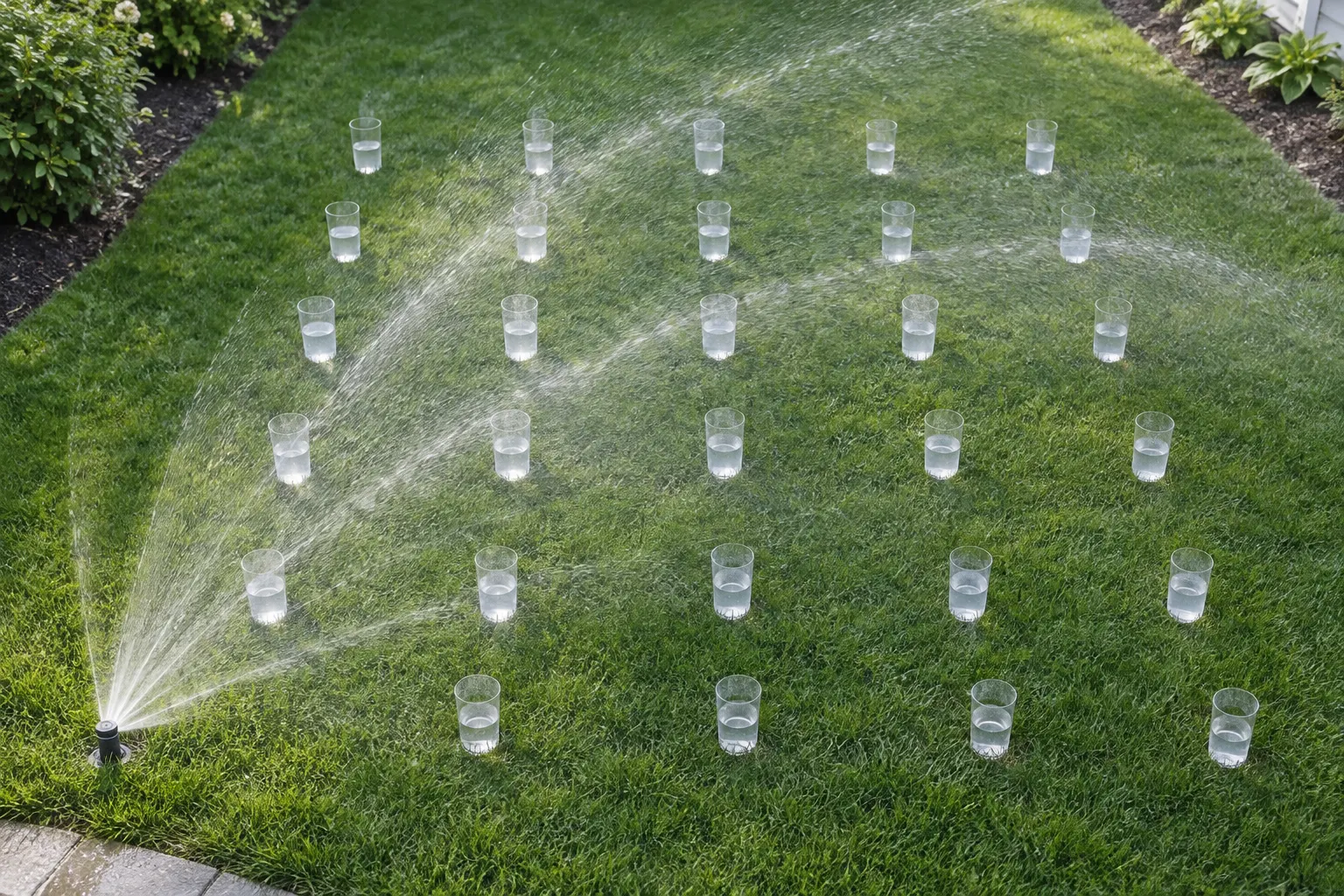
A simple catch-can test measures the result:
- Place six identical, straight-sided containers around one sprinkler zone.
- Run that zone for exactly 10 minutes under normal conditions.
- Measure and compare the depth collected in each container.
- Investigate low or high readings before increasing the whole zone's runtime.
- Repeat after changing heads, nozzles, pressure, or spacing.
Colorado State recommends this method because it reveals the actual precipitation rate for that zone. If one dry cup causes you to run every head longer, the wet areas receive unnecessary water.
Does drip irrigation always save more water?
Properly designed drip usually loses less water to wind, airborne evaporation, and overspray because it releases water at the soil. Colorado State's home-garden guide reports application efficiency above 90% for drip and 50–70% for sprinklers as general system figures.
Those figures do not make drip automatically efficient. The same source warns that excessive scheduling wastes water with any method, and a hidden leak or emitter left beside a removed plant can run unnoticed.
Sprinklers are still the practical automated choice for many lawns. Their water use improves when the zone has uniform coverage, correct pressure, little wind, no pavement spray, and a schedule adjusted to weather.
Plant health also changes the calculation. Drip keeps most leaves dry, which can reduce conditions that favor some foliar diseases, while overhead irrigation wets every leaf in the pattern.
Morning operation gives sprinkler-wet foliage time to dry and usually faces less heat-driven evaporation than midday watering. Local watering rules and weather should still govern the permitted day and time.
The right comparison is useful water reaching active roots. Gallons leaving a valve do not help when they land on a walk, run down a slope, or spill from a damaged outlet.
How long should each system run?
There is no useful universal runtime. One drip zone may use half-gallon-per-hour emitters, another may use inline tubing, and two sprinkler zones can have different precipitation rates even when the controller displays the same minutes.
Set runtime from four observations:
- Measured output: emitter flow or catch-can depth tells you what the zone actually applies.
- Root depth: water should reach the active root zone rather than repeatedly dampening only the surface.
- Soil infiltration: runoff or ponding means the application is faster than the soil can accept it.
- Weather and season: rain, heat, wind, dormancy, and plant growth change demand.
Clay soil or a slope may need cycle-and-soak scheduling, which divides one application into shorter runs with pauses for infiltration. Sandy soil often accepts water quickly but stores less of it near shallow roots.
Use deep watering principles to choose the target depth, then measure how long the actual zone takes to reach it. For food beds, use the vegetable watering guide because season and soil make a fixed weekly timer unreliable.
What should you inspect during the season?
Run every zone while you can watch it. A controller can report that a valve opened, but it cannot prove that each emitter flowed or each sprinkler reached its intended edge.
For drip zones, check:
- Filters for sediment and pressure regulators for damage.
- Emitters for clogs, loose connections, or outlets buried away from roots.
- Tubing for chewing, cuts, kinks, and leaks beneath mulch.
- End points for flushing and the farthest plants for adequate flow.
- Mature shrubs and trees for emitters that still sit at the original planting hole.
For sprinkler zones, check:
- Broken, tilted, buried, or blocked heads.
- Mist that suggests excessive pressure.
- Dry gaps, runoff, and spray reaching streets, walks, walls, or windows.
- Nozzles within one zone that do not share a compatible precipitation rate.
- Controller settings after rain, a seasonal weather change, or watering restrictions.
EPA recommends looking for both clogged drip lines and sprinklers aimed at hardscape. Repair distribution first, then change runtime, because a longer schedule cannot correct a blocked outlet or a misdirected arc.
Winterize equipment where freezing can damage lines and heads, following the manufacturer's instructions and local practice. Check local plumbing rules before changing backflow protection or connecting any irrigation system to a potable supply.