
Raspberries Not Fruiting? Check Flowers, Canes, and Berries
A living raspberry patch can miss its crop at three different stages. Find out whether the canes made no flowers, flowers failed to become berries, or berries formed incompletely before you prune, fertilize, or replace the plants.
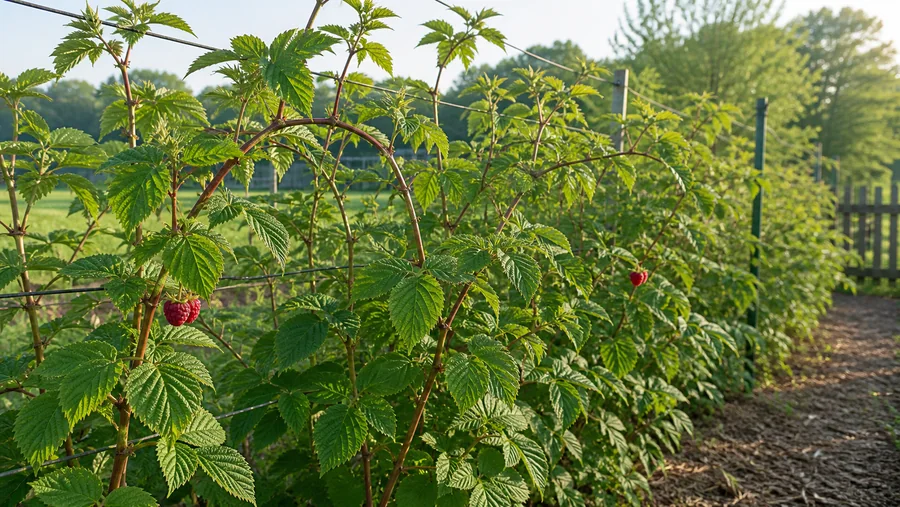
Quick diagnosis
The last completed stage reveals the useful first check
If there were no flowers at all, identify the raspberry type and the age of the canes before you cut anything.
Summer-bearing raspberries flower on second-year canes, while primocane-fruiting cultivars flower near the tips of first-year canes later in the season.
If flowers opened but berries never filled, look back at the bloom period for frost, long rain, unusual heat, poor bee activity, or dry soil. If berries formed but stayed sparse and crumbly, compare one affected flush against a repeating patchwide pattern before you suspect a virus.
Open the full diagnosisWhat You Are Seeing
A leafy raspberry plant is not necessarily ready to carry fruit. The same healthy green cane may be building next year's summer crop, carrying a late crop at its tip, or simply growing back after the fruiting wood was cut out.
Start with the evidence still on the plant.
Flower buds, open blossoms, dried flower parts, green berries, empty receptacles, old fruiting laterals, and uneven budbreak each point to a different break in the crop cycle.
What follows is about living canes that make too few usable berries. If canes are wilting, browning from lesions, hollowed by tunneling, collapsing along one side, or dying from the base, diagnose the cane decline first, because pruning and watering decisions change when the wood itself is failing.
Common Causes
01 High likelihood when no flowers appeared after pruning
Fruiting-age canes were removed
Summer-bearing raspberries carry their main crop on floricanes, the second-year canes that grew as primocanes the year before.
Cutting the whole row to the ground during dormancy removes that summer's crop, even though vigorous new canes soon replace the lost foliage.
The same ground-level cut is deliberate for a primocane-fruiting cultivar grown for one fall crop. The cut is not evidence of a mistake until you know the cultivar's fruiting system and which crop you were expecting.
How to identify it
- No flower clusters appeared, but many new smooth green canes emerged after every cane was cut to the ground.
- The missing crop was expected in early summer rather than near the tips of new canes in late summer.
- No older brown canes with short fruiting laterals were present when spring growth began.
- The patch remains leafy and upright without the lesions, wilt, or collapse that would indicate cane decline.
What to do
- Stop cutting unknown canes and identify whether the cultivar is summer-bearing or primocane-fruiting from its label, purchase record, or observed fruiting season.
- For a summer-bearing cultivar, retain this year's healthy primocanes so they can become next year's floricanes.
- After a floricane finishes fruiting, remove that spent cane at ground level while leaving the current primocanes.
- Mark retained primocanes with loose weatherproof tags so next year's fruiting wood is not removed by mistake.
02 High likelihood in a new planting or short growing season
The canes are not ready yet, or the crop starts too late
A newly planted summer-bearing raspberry may spend its first season making primocanes and nothing else. Those canes have to survive into a second season before they can carry summer fruiting laterals.
Primocane-fruiting cultivars run on a different clock and can start flowering near first-year cane tips late in summer.
A cultivar that starts too late for the local season reaches bloom or green fruit just as cool nights and the first frost end development.
How to identify it
- The patch was planted or cut back recently and consists mainly of first-year canes.
- Canes are vigorous and evenly green, with no widespread bud death or collapsing laterals.
- Flowers or green berries appear only near the tips late in the season.
- The first hard frost arrives before most tip fruit colors and softens.
What to do
- Let healthy primocanes of a summer-bearing cultivar overwinter instead of cutting them because they did not fruit in year one.
- Record where and when flowers first appear so the plant's fruiting system is based on observation rather than cane color alone.
- For a consistently unfinished fall crop, choose an earlier primocane-fruiting cultivar at the next replacement rather than forcing growth with late fertilizer.
- Protect the retained row from accidental mowing, winter breakage, and repeated pruning while its fruiting wood develops.
03 Medium likelihood where budbreak is uneven or bloom met frost
Winter injury or frost damaged the crop-bearing tissue
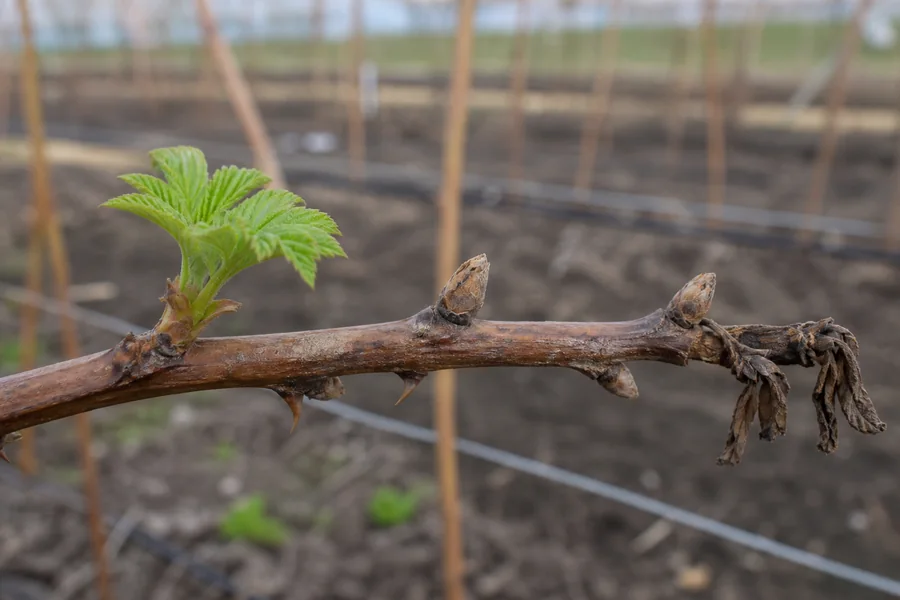
Winter cold can injure floricane buds without killing a single cane to the ground.
Spring growth then comes up uneven, and a lateral may start and then collapse because the damaged tissue cannot support it.
A later cold event can spare leaves and canes and still injure open flowers. Flowers caught near freezing darken, dry, or fail to build green berries, while unopened buds on the same plant carry on normally.
How to identify it
- Live green laterals alternate with dry buds or short collapsed laterals on the same overwintered cane.
- Damage is stronger on exposed cane tops, outside rows, or low areas where cold air settles.
- Flowers browned soon after a cold night while unopened buds remained intact.
- A later flower flush sets fruit better than the flowers that were open during the cold event.
What to do
- Wait for budbreak to finish before removing a questionable cane, then cut only back to sound tissue or remove a cane that has no living laterals.
- Keep rows supported so canes do not whip, crack, or lose buds during winter wind.
- During forecast frost at bloom, use a crop cover that does not crush the canes and remove it when temperatures recover so pollinators can return.
- If cold injury repeats, replace the planting gradually with a cultivar rated for the local winter and harvest season.
04 Medium likelihood when the inner or shaded side flowers least
Shade or crowding limits productive laterals
Raspberries want full sun, and a dense hedgerow shades its own lower and inner laterals. The result is rarely an instant loss of every flower, but the shaded portion makes weak laterals, fewer clusters, and smaller fruit.
The pattern tells you more than a guessed number of sun hours.
A bright outer edge that fruits while the center stays leafy and unproductive is stronger evidence than one cloudy afternoon of observation.
How to identify it
- Fruit clusters concentrate on the sunny top or outside edge of the row.
- The center contains many thin canes and tangled laterals that are difficult to inspect or harvest.
- A building, tree canopy, or expanding shrub now shades the patch during much of the growing day.
- Canes in the same soil fruit better where the row opens into stronger light.
What to do
- Remove spent floricanes after harvest and thin weak excess canes during the recommended pruning period for the cultivar.
- Train retained canes along a support so fruiting laterals receive light and remain accessible to pollinators and pickers.
- Prune a neighboring plant only when that work is safe and suitable for the neighboring species.
- Move the raspberry planting during dormancy if permanent structural shade leaves no productive part of the row.
05 Medium likelihood in heat, drought, or containers
The root zone dried during bloom or fruit fill
Raspberry roots sit in a relatively shallow zone, so bloom and rapidly swelling fruit can run short of water before deeper garden plants show any stress.
Flowers abort, and the berries that survive stay small, dry, or poorly filled.
A single afternoon wilt does not prove drought took the crop. Look for dry soil below the mulch, repeated wilting, light fruit, and a failure that lines up with the hottest or driest part of flowering.
How to identify it
- Soil below the surface mulch is dry during flowering or while green berries are swelling.
- Leaf edges curl or the canopy wilts repeatedly before recovering at night.
- Earlier berries filled better than clusters exposed to a later hot dry period.
- Container-grown roots heat and dry much faster than the same cultivar planted in open soil.
What to do
- Water the root zone deeply enough to moisten it, then check below the surface before watering again rather than following a fixed daily schedule.
- Maintain an organic mulch layer that moderates drying while keeping mulch away from the cane crowns.
- Repair blocked emitters and extend the wetted area as the raspberry row expands.
- Do not compensate for dry roots with fertilizer because salts and soft growth can add stress without restoring aborted flowers.
06 Medium likelihood when flowers opened but fruit is sparse
Bloom weather led to incomplete pollination
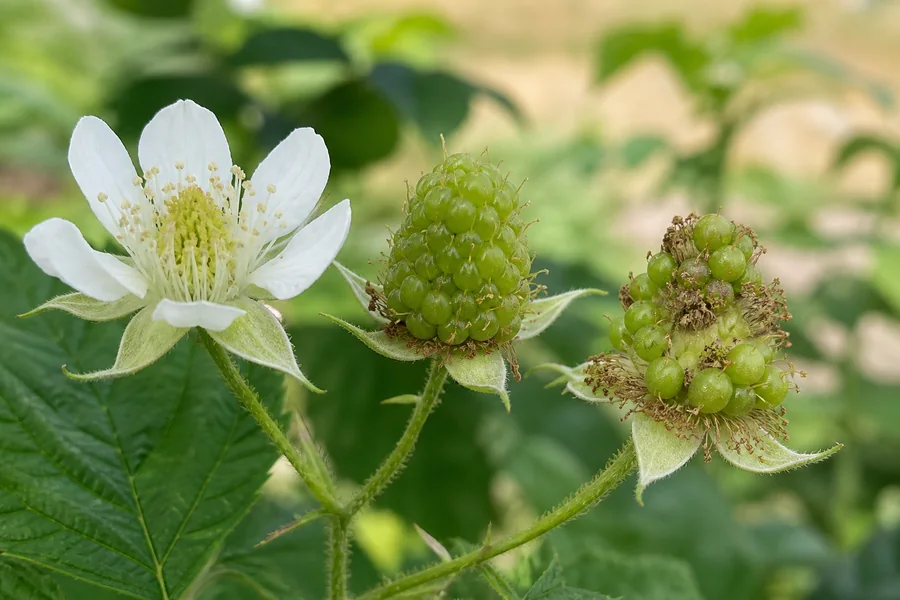
A raspberry is a bundle of small drupelets, and each one needs its own successful pollination.
When too few drupelets develop, the berry comes out small, dry, seedy, lopsided, or crumbly.
Most garden raspberries can set fruit with their own pollen, but insects still move it efficiently among the many flower parts. Long rain, strong wind, cool conditions, or unusual heat during bloom cut the visits down and shorten the useful window.
How to identify it
- Flowers opened normally, but young fruit developed visible gaps where drupelets never enlarged.
- The affected clusters share one rainy, windy, unusually cool, or hot bloom period.
- A later bloom flush produces fuller berries when weather and insect activity improve.
- Canes and leaves otherwise remain firm, and there is no patchwide pattern of dying wood.
What to do
- Keep soil moisture steady through the next flower flush so drought does not add another cause of poor set.
- Avoid spraying insecticides on open raspberry flowers and follow every product label restriction around pollinators.
- Provide diverse flowering plants nearby across the season instead of buying a second raspberry solely as a presumed pollinator.
- Judge the next flush separately because damaged flowers and missing drupelets cannot be repaired after fruit development begins.
07 Possible with both lush growth and a clear feeding history
A heavy nitrogen application favored cane growth
Extra nitrogen pushes long leafy canes and delays hardening without touching whatever is limiting flowers or fruit.
The cause is credible when an unusually lush patch follows heavy manure, lawn fertilizer drift, or repeated high-nitrogen feeding.
Dark leaves on their own are not a fertilizer diagnosis. Shade, cultivar vigor, young cane age, and plenty of moisture all make dense green growth, so reaching for phosphorus or a bloom booster on appearance alone creates a second problem.
How to identify it
- Canes grew unusually long and soft after a known heavy or late nitrogen application.
- The raspberry row is noticeably lusher than untreated portions of the same planting.
- Lawn fertilizer or manure was applied close enough to reach the raspberry root zone.
- No soil test or care record supports a separate nutrient deficiency.
What to do
- Stop supplemental nitrogen for the rest of the season and allow current canes to mature.
- Keep lawn fertilizer out of the raspberry root area and measure future applications for the planted row rather than the whole bed.
- Use a soil test when poor growth, unusual leaf color, or repeated crop failure suggests a nutrient or pH problem.
- Do not add high-phosphorus fertilizer unless a test and local recommendation show that the soil needs it.
08 Low, but important when the pattern repeats
Persistent crumbly fruit may involve a virus
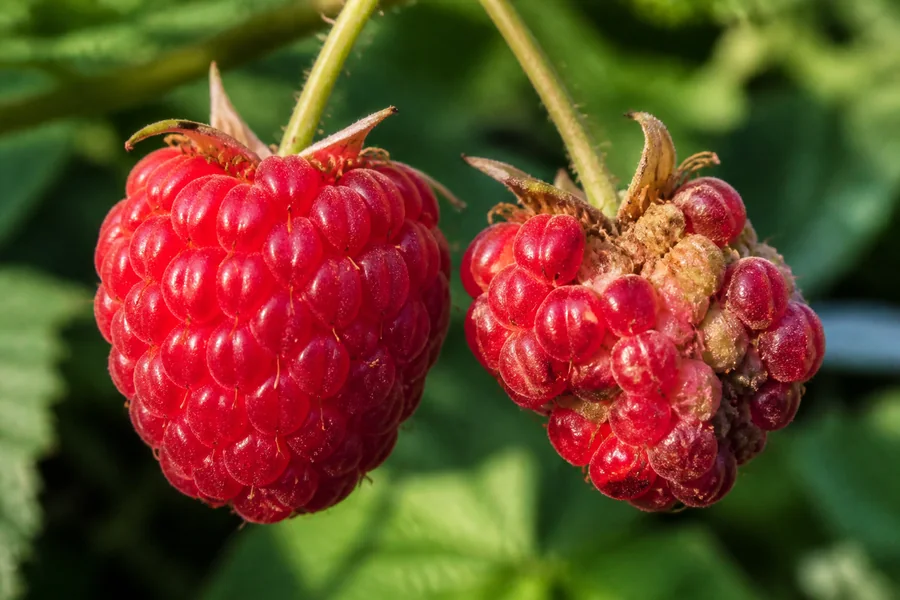
Raspberry bushy dwarf virus interferes with drupelet development and produces crumbly berries even while the canes keep normal vigor.
Incomplete pollination makes a similar-looking fruit, so one malformed berry or one bad bloom period is not enough to condemn a planting.
Concern rises when the same cultivar makes crumbly fruit across many clusters and several seasons while neighboring raspberries set normal berries under the same weather. No spray cures an infected plant, which is why confirmation matters before removal and replanting.
How to identify it
- Many berries break apart or contain sparse uneven drupelets across more than one flower flush.
- The pattern returns in another season instead of following one short spell of poor bloom weather.
- Nearby cultivars under the same conditions form fuller berries.
- Plant vigor may appear normal, so healthy leaves do not rule out the virus.
What to do
- Photograph several affected clusters and record the cultivar, bloom weather, and whether the pattern repeats.
- Ask a local extension or diagnostic service about confirmation before removing an established patch.
- If infection is confirmed, remove affected plants and their suckers rather than taking propagation pieces from them.
- Replant with certified clean stock in a different location when local guidance recommends replacement.
09 Possible when flowers and empty receptacles remain
Birds or other wildlife took fruit after it set
A patch can look as though it never fruited when ripe berries vanish between checks. Birds take whole berries, while other visitors leave pecked fruit, dropped drupelets, bent laterals, or tracks along the row.
This is a harvest loss rather than a flowering failure.
Fertilizer and harder pruning will not replace berries that already formed, and they may leave the next crop more exposed.
How to identify it
- Pale cone-shaped receptacles remain where ripe raspberries detached from the plant.
- Partly eaten berries, scattered drupelets, droppings, tracks, or disturbed netting appear near the row.
- Green berries are visible, but colored berries vanish before the next planned harvest.
- Protected clusters ripen while exposed clusters disappear.
What to do
- Harvest as soon as berries color fully and release easily instead of leaving a ripe crop through several days of feeding.
- Use taut wildlife netting on a rigid frame so birds cannot reach fruit through it or become tangled in loose mesh.
- Close ground-level gaps and inspect the cover after wind or garden work.
- Remove damaged and overripe fruit so odor and fallen berries do not keep attracting visitors.
One cane can pass through two very different jobs
A primocane is simply a cane in its first growing season.
On a summer-bearing raspberry it builds leaves, height, and buds, survives winter, then becomes a floricane and produces the flower-bearing side shoots in its second season.
A primocane-fruiting raspberry can flower on the upper part of a first-year cane. Keep that cane and its lower portion may behave as a floricane and carry another crop the following year, while cutting everything down in dormancy trades that possible summer crop for a simpler single fall crop.
Once a floricane finishes its crop it declines and never fruits again.
Removing spent floricanes is useful, but taking out unfruited primocanes at the same time erases next year's crop on a summer-bearing plant.
Fruit formation adds a second clock. A flower can open perfectly and still make an incomplete berry because the drupelets do not all develop, so flower presence, fruit shape, and the timing of weather stress tell you more than leaf color.
Start With What the Plant Made
Walk the row before pruning or feeding and find the last reproductive stage the plant completed. Check several canes because one shaded lateral or one damaged cluster may not represent the whole patch.
- No flowers or flower remains
- Identify cultivar type and cane age, then inspect overwintered buds, pruning history, crop timing, light pattern, and fertilizer history.
- Flowers opened, but berries did not fill
- Review frost and weather during bloom, look for missing drupelets, confirm pollinator activity, and check moisture below the surface.
- Berries formed but are small, crumbly, eaten, or missing
- Compare affected flushes, inspect fruit texture and empty receptacles, then separate water or pollination stress from persistent virus-like symptoms and wildlife loss.
The three branches do not share one corrective action. Pruning can preserve next year's wood in the first branch, but it cannot repair a frost-injured flower or refill missing drupelets in a berry that has already formed.
Change branches if the cane itself is failing. Wilt, spreading lesions, snapped or hollow stems, and whole laterals collapsing point to cane, crown, root, or borer damage that must be identified before the low crop can be addressed.
Read the Cane Before You Cut It
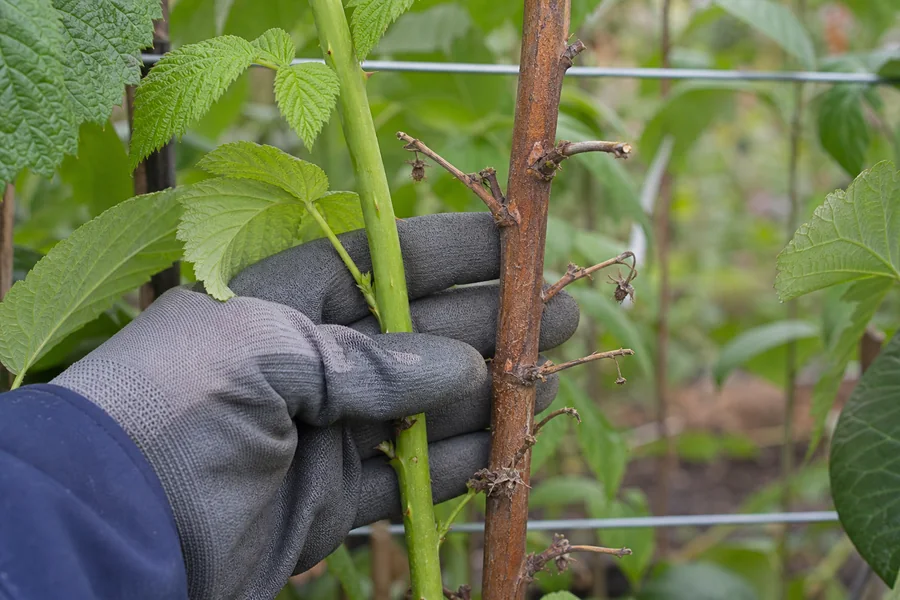
Start with the plant label or purchase record when it is available, then verify the answer from a full fruiting season. Cane color helps, but sunlight, cultivar, and weather can change bark color enough that old lateral attachments and the location of flowers are safer clues.
- Summer-bearing or floricane-fruiting
- First-year primocanes become next year's fruiting floricanes. Cutting the entire row to the ground during dormancy removes the coming summer crop.
- Primocane-fruiting or fall-bearing
- First-year cane tips can fruit late in the season. Cutting all canes down during dormancy is a valid single-crop system, while retaining their lower portions can allow an earlier second crop.
A spent floricane often has gray or brown bark, branched fruiting laterals, old cluster stems, and a declining tip after harvest. A primocane is usually smoother and more vigorous, but do not remove an uncertain cane only because it looks brown in winter.
When the cultivar is unknown, mark a sample of new canes and record when and where flowers appear. One season of observation costs less than repeating a pruning system that may remove the exact wood the plant needs.
Recovery Plan
Classify the failure before making a cut
Record whether the patch made no flowers, flowers without full berries, or fruit that formed poorly or disappeared.
Photograph the cane bases, old laterals, flower remains, and several affected clusters, then identify the cultivar and the recent pruning history if you can.
Protect the process that can still change
Keep the root zone evenly moist, keep insecticide off open flowers, and compare the new fruit set against the flush that failed. Frost-damaged flowers and crumbly berries will not recover, but later flowers can set normally when the cause was a short weather or water event.
Preserve the cane age for the intended crop
Remove spent floricanes once they finish, and keep healthy primocanes for a summer-bearing crop.
For a known primocane-fruiting cultivar, choose deliberately between a single fall crop from ground-level dormant pruning and a two-crop system that keeps the lower cane.
Judge flowers and fruit, not leaf growth alone
Look for even budbreak on overwintered canes, note the first flowers, and compare berry fill across separate bloom periods.
A missing summer crop after the fruiting wood was cut has to wait for a new cane cycle, while repeated crumbly fruit across good bloom periods deserves lab confirmation.
Before each pruning session, identify which canes carried fruit and mark the strongest new canes that must remain for the chosen crop system. Remove spent floricanes, dead wood, and weak excess canes with clean cuts, then keep the retained row supported and open enough to inspect flowers and harvest fruit.
Maintain even root-zone moisture from bloom through harvest and check beneath mulch rather than watering by surface appearance. Keep lawn fertilizer out of the row, avoid late heavy nitrogen, and use a soil test before correcting an assumed nutrient or pH problem.
Record bloom dates, frost, prolonged rain or heat, and the clusters affected. Buy certified clean stock for replacements, avoid propagating from plants with repeated crumbly fruit, and protect ripening berries with a rigid well-secured wildlife barrier when empty receptacles show that a crop formed and was taken.
Sources
- Pruning and Training Raspberries, University of Minnesota Extension
- Growing Raspberries in Your Home Garden, Oregon State University Extension
- Growing Raspberries in Colorado Gardens, Colorado State University Extension
- Why Are My Raspberries Small, Dry, Crumbly, and Seedy?, Iowa State University Extension
- Raspberry Management for Utah, Utah State University Extension