
Which Plants Repel Squash Bugs, and What Actually Helps?
No garden plant has been shown to create a dependable scent barrier that keeps squash bugs away from squash, pumpkins, and zucchini.
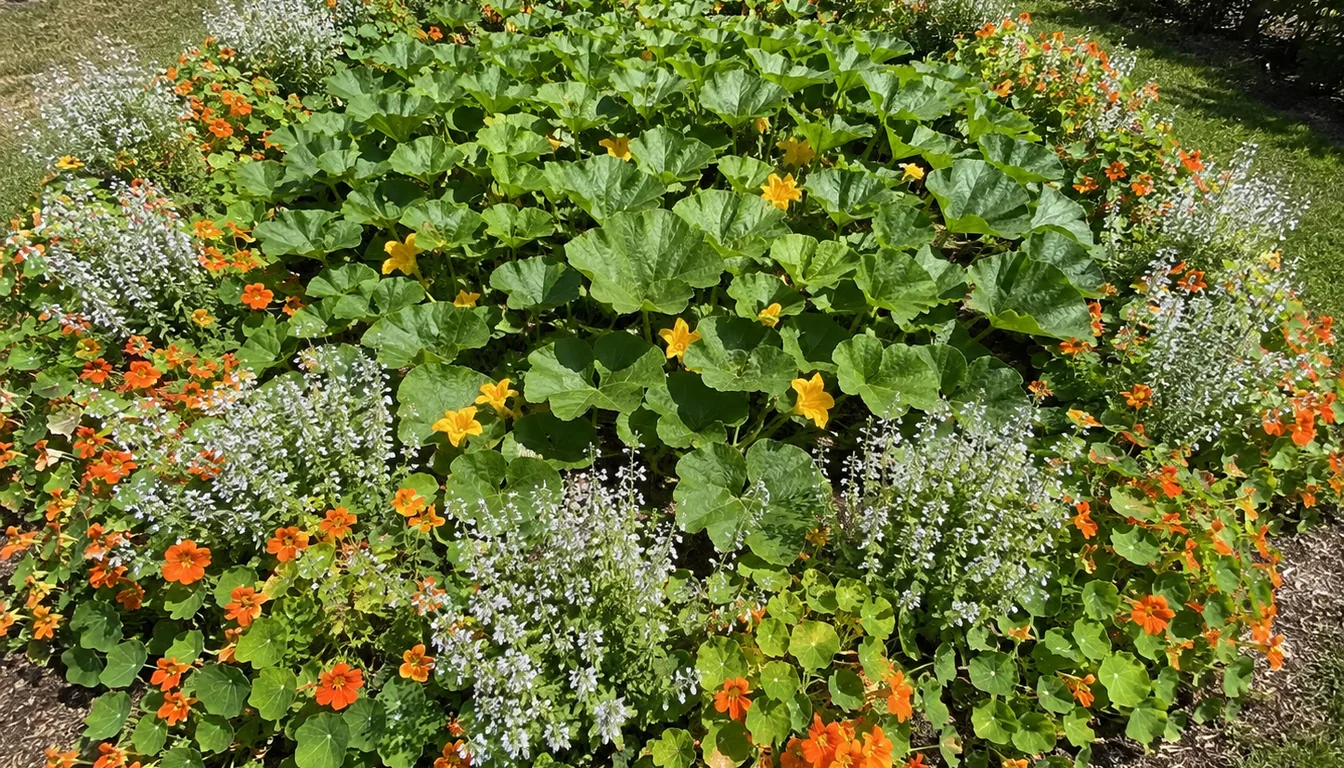
Nasturtiums and marigolds have some extension-backed evidence for reducing squash bug populations or damage in certain plantings, but they are helpers rather than protection you can leave unattended.
Blue Hubbard squash works differently. It attracts the bugs as a trap crop and succeeds only when you remove the insects and eggs concentrated there.
The reliable plan combines the right plant role with early exclusion and repeated scouting.
Choose a companion for a specific job, then keep row cover, egg removal, crop cleanup, and resistant varieties in the plan.
At a glance
Which Plants Have Useful Evidence Against Squash Bugs?
The phrase "repellent plant" hides several different jobs.
A plant may reduce damage in a field trial, attract the pest away from the crop, feed beneficial insects, or simply appear on an unsourced companion chart.
Those jobs are not interchangeable. A trap crop that draws squash bugs must never be treated as a protective border and ignored.
| Plant or group | Supported role | What you still must do |
|---|---|---|
| Nasturtium | May reduce squash bug populations in mixed plantings | Scout squash and flowers |
| Marigold | May reduce cucurbit damage in mixed plantings | Keep access and airflow open |
| Blue Hubbard squash | Attracts bugs away from the main crop | Remove bugs and eggs promptly |
| Simple open flowers | Supply nectar and pollen for parasitoids | Avoid broad-spectrum sprays |
| Mint, tansy, catnip, and aromatic herbs | Direct squash bug repellency is not established | Do not rely on scent claims |
University of Minnesota Extension warns that many long companion-planting lists online lack research support. Its review identifies nasturtium as a supported companion for reducing squash bug populations and cites a study in which nasturtiums and marigolds reduced damage.
University of Maryland Extension also lists nasturtium and marigold among companions that can help reduce damage from squash bugs and cucumber beetles. That evidence supports testing them within a complete pest plan, not promising that a border will repel every adult.
Are You Dealing With Squash Bugs or a Different Cucurbit Pest?
Squash bugs are true bugs, not beetles.
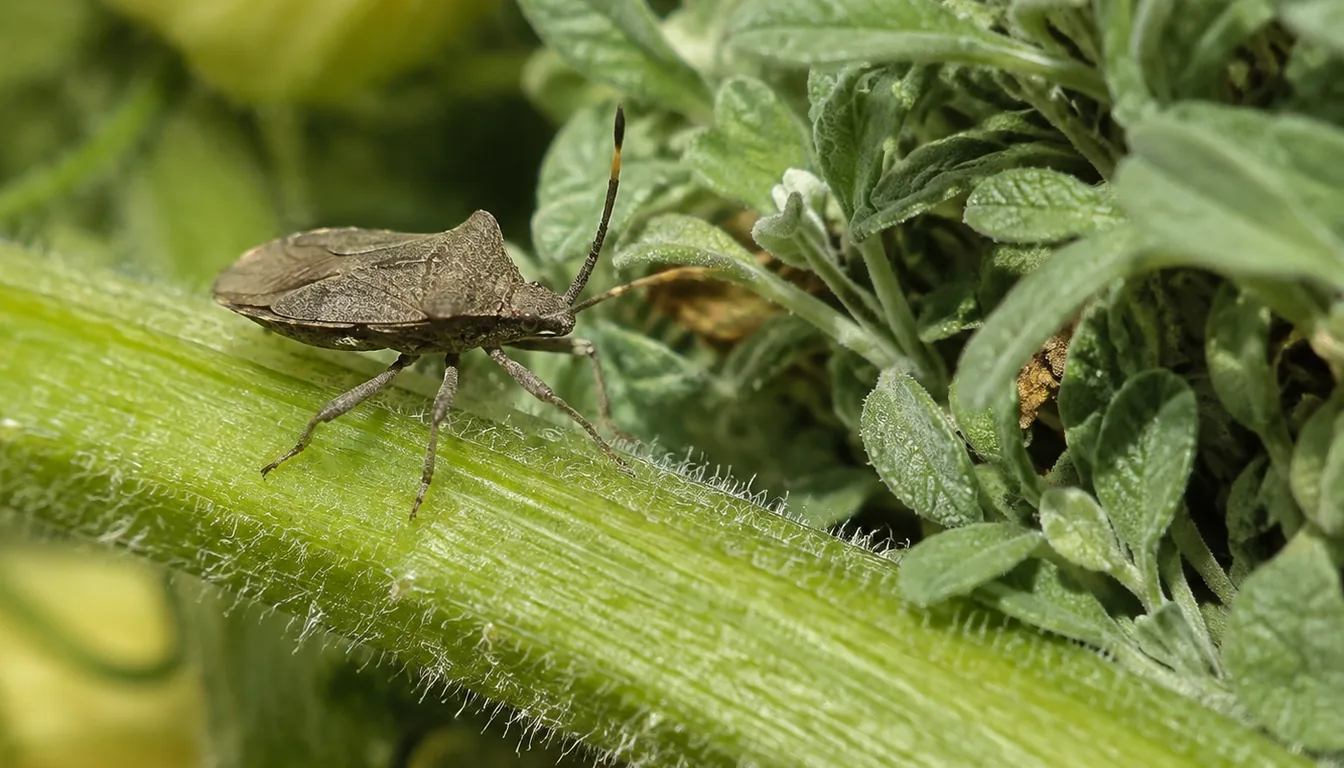
Adults are flattened, gray to brownish black, about 5/8 inch long, and carry orange-brown stripes along the exposed edges of the abdomen.
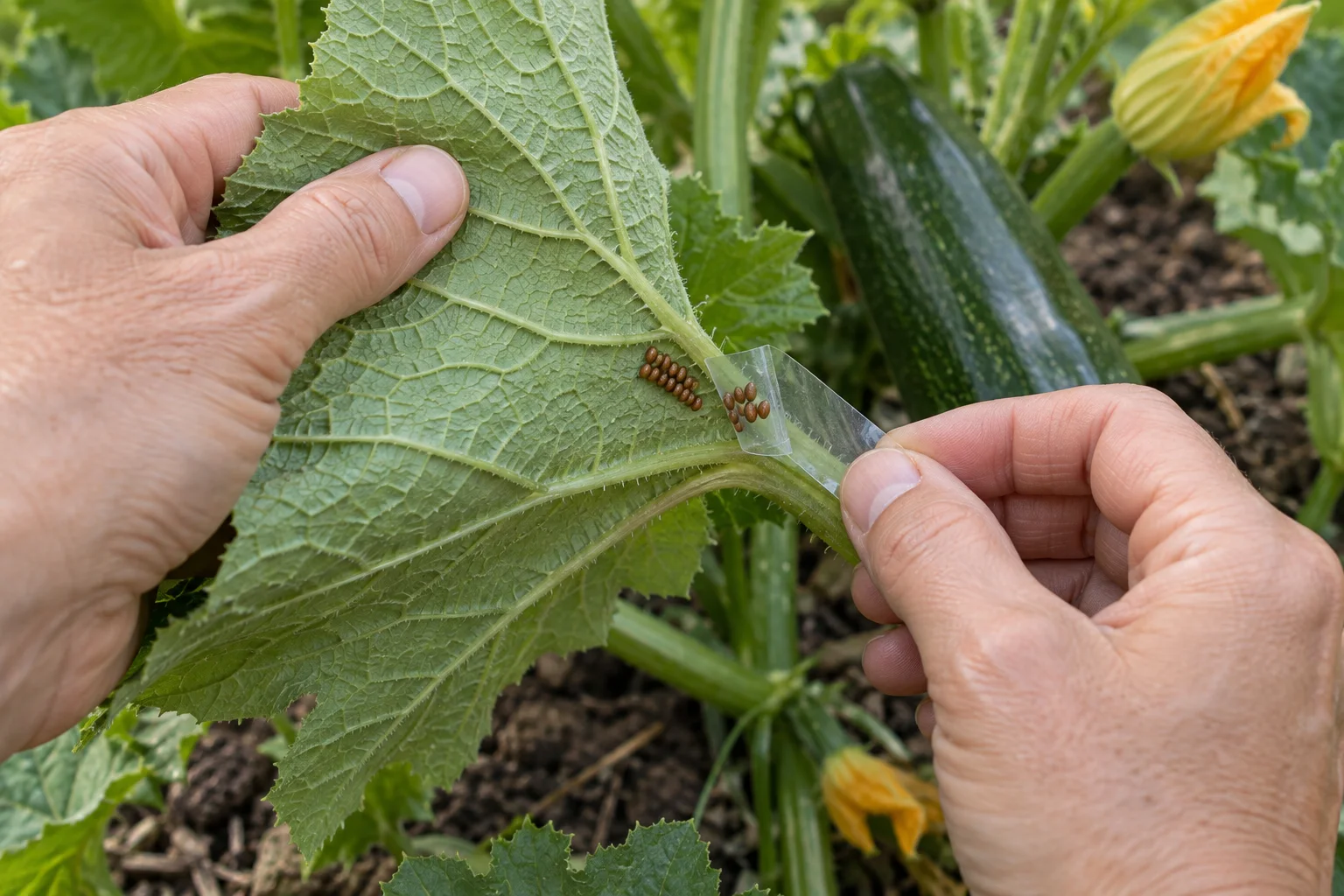
Eggs usually form neat clusters of 12 to 20 bronze or brick-red ovals on the undersides of leaves between veins.
Young nymphs gather in groups and change from pale bodies with reddish parts to greenish gray bodies with dark legs as they develop.
Squash bug
Bronze egg clusters, groups of gray nymphs, adults near leaf bases, and yellow-to-brown feeding patches
Squash vine borer
Sudden collapse with sawdust-like frass and damage concentrated near the stem base
Cucumber beetle
Small striped or spotted beetles, ragged feeding holes, and possible bacterial wilt
Stink bug
Broader shield-shaped adult from a different insect family, often found on many crops
Heavy squash bug feeding can disrupt water movement, leaving blackened crisp foliage, scarred fruit, or vines that wilt above the feeding site. If a moist zucchini plant suddenly collapses and the stem base contains frass, check the separate guide to squash vine borer damage instead.
Striped or spotted insects that jump or fly from flowers point toward cucumber beetle damage. A correct identification prevents you from judging a companion plant against the wrong pest.
How Should You Use Nasturtiums and Marigolds?
Treat nasturtiums and marigolds as evidence-informed companions, not as a wall.
Plant them where their growth will not cover the squash crown or stop you from reaching lower leaves.
Trailing nasturtiums fit along the outside of a bed or into an open gap between widely spaced vines. Their round leaves can fill bare soil, but vigorous plants may need to be redirected so they do not hide egg masses.
Compact single-flowered marigolds work well along a path edge because they stay easier to see through than a dense block of tall plants.
Their flowers also keep access open for small beneficial insects better than highly doubled blooms with hidden centers.
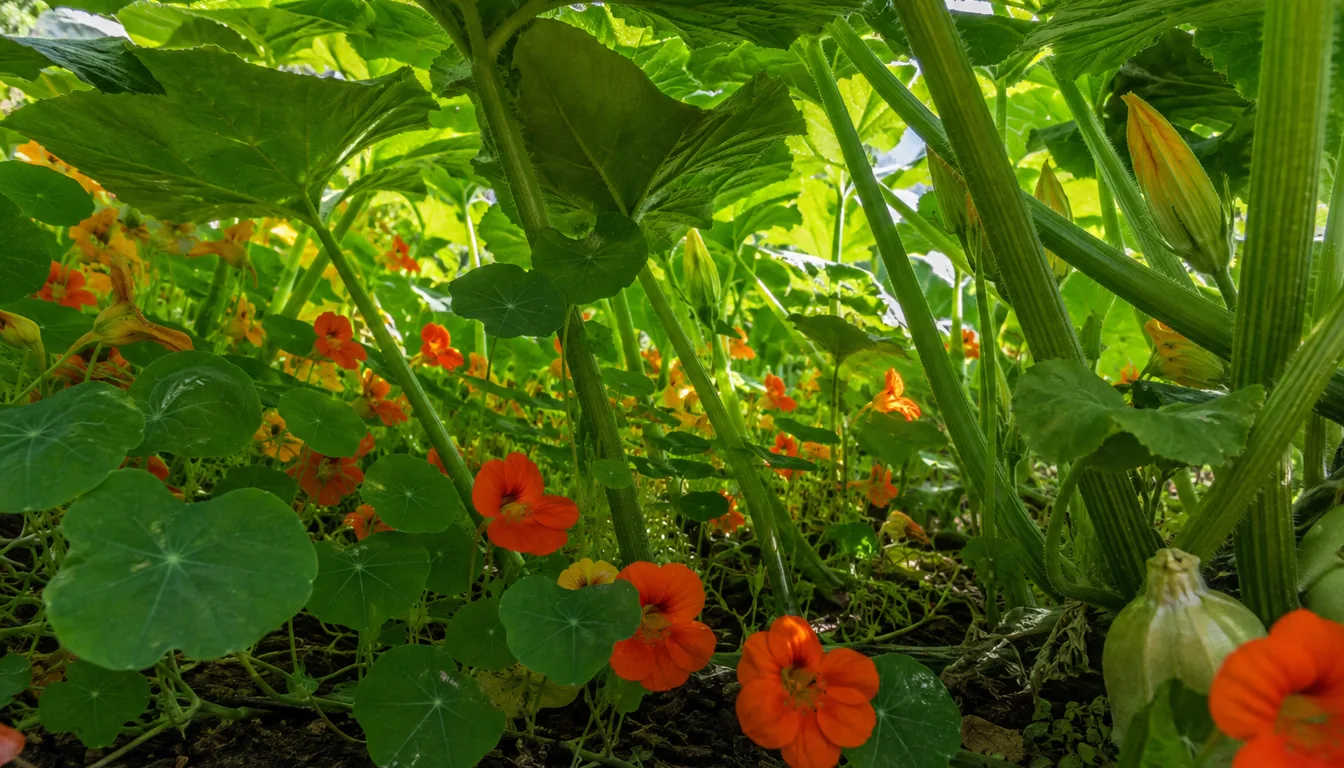
- Keep a clear hand-width inspection lane around each squash crown
- Place companions where they will not shade young cucurbit leaves
- Leave enough path access to turn over the oldest leaves
- Water each species according to its root zone rather than one calendar
- Remove diseased or collapsed companion foliage that creates shelter
- Continue scouting even when the flower border looks healthy
There is no research-backed universal distance such as 8, 12, or 24 inches that makes these flowers repel squash bugs. Follow the mature width on the seed packet, protect airflow, and preserve access for inspection.
Companion planting can still provide value when pest reduction is modest. Flowers support pollinator visits, cover otherwise bare edges, and diversify the bed, provided those benefits do not make pest scouting harder.
Do not add more plants when crowding is the current problem. Prune, redirect, or remove growth until you can see the crown and both sides of the lower leaves.
How Does Blue Hubbard Squash Work as a Trap Crop?
Blue Hubbard is often listed beside repellent plants even though it does the opposite. Its value comes from being highly attractive to overwintered squash bug adults, which can concentrate on the trap crop before the main planting becomes their preferred host.
Utah State University tested ten New England Blue Hubbard plants at the ends of rows containing 25 Howden pumpkins.
The trap crop was planted two weeks earlier, and the pumpkins in those plots carried significantly fewer adults, nymphs, and egg masses than pumpkins without the trap crop. The trial included a crucial action that short summaries often omit.
Researchers hand-picked adults and nymphs into soapy water and removed eggs from the Blue Hubbard plants with tape during June and July.
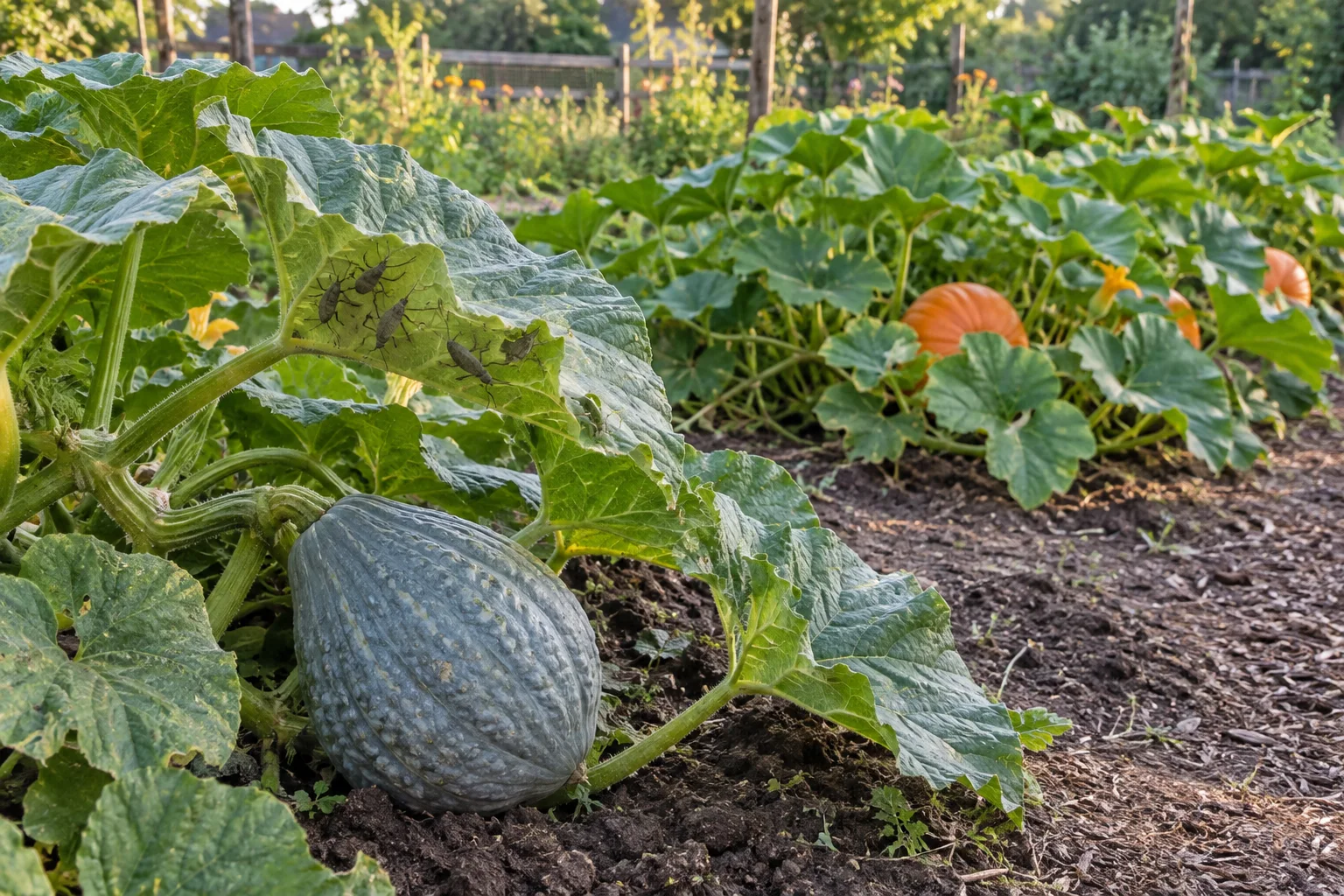
- Choose the main cropReserve the best bed space for the pumpkin or squash you intend to harvest.
- Start the trap crop firstGive Blue Hubbard an earlier start so it is attractive when overwintered adults arrive.
- Place it at arrival pointsUse bed ends or border positions that you can reach without crossing vines.
- Inspect it frequentlyCheck leaf undersides, crowns, and nearby debris while plants are young.
- Remove concentrated pestsCollect adults and nymphs and lift or crush every egg mass found.
- Protect the main crop tooKeep scouting the harvest crop because a trap crop does not catch every bug.
- End the refugeRemove cucurbit residue promptly after harvest so adults lose winter shelter.
The USU plot is evidence that the system can work, not a universal ratio for every garden. Bed size, local bug pressure, planting dates, and the cultivars around you change how attractive each plant becomes.
Start with a manageable trap plant or border that you can inspect thoroughly. An unattended Hubbard can become a nursery that produces more bugs beside the crop you wanted to protect.
Can Flowering Herbs and Wildflowers Help Natural Enemies?
Squash bugs have natural enemies, including the tachinid fly Trichopoda pennipes, which attacks older nymphs and adults, and several small wasps that parasitize eggs.
Utah State University notes that flowering plants can provide alternative nectar and pollen for these parasitoids.
This is a habitat claim, not proof that dill, cilantro, alyssum, or another aromatic plant directly repels squash bugs.
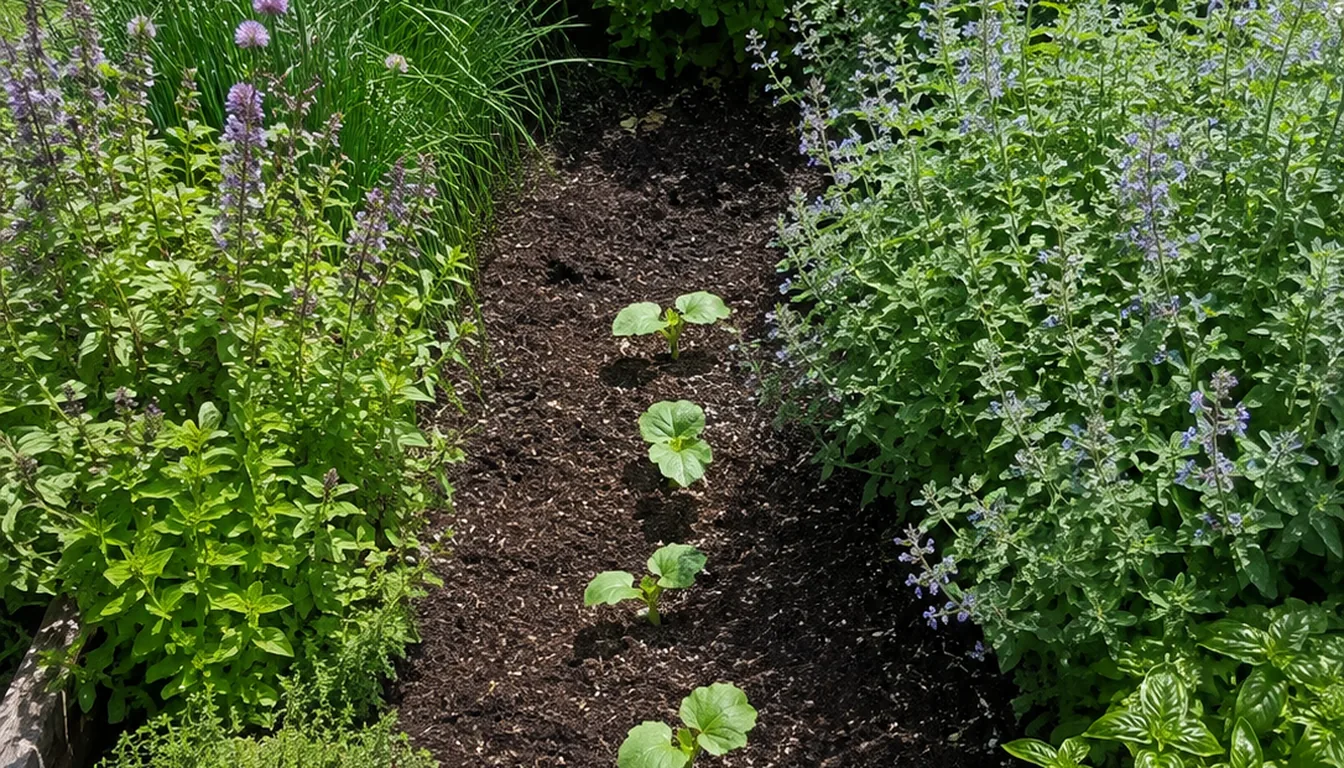
Plant choice should focus on accessible flowers, a long bloom window, and compatibility with the vegetable bed.
- Helpful flower shape
- Open or shallow flowers that small insects can reach
- Useful sequence
- Several species that overlap from spring through late summer
- Best position
- Bed edge or nearby strip that does not block crop access
- Spray caution
- Broad-spectrum insecticides can kill parasitoids and pollinators
- Expected result
- Better habitat, not guaranteed control of an active outbreak
Let a few culinary herbs flower if their umbels fit your garden, but do not plant mint in open ground merely because a chart calls it repellent. A contained herb can contribute flowers without becoming a permanent weed.
A diverse strip also needs ordinary horticultural judgment. Match light and moisture needs, avoid shading young squash, and choose a mature size that keeps air moving through the crop.
The best flower strip has a purpose after the marketing language is removed. It feeds useful insects and pollinators, makes room for inspection, and adds a crop or bloom you actually want.
How Do You Lay Out the Bed Without Creating More Shelter?
Start with the squash plant's mature spread and your walking route. Cucurbit leaves can already form a dense canopy, so every companion needs to preserve a line of sight to the crown and lower leaves.
A narrow bed reached from both sides is easier to scout than a broad island surrounded by vines. Put low companions along accessible edges, taller flowering plants where they will not cast afternoon shade, and a trap crop where you can inspect it first.
| Bed zone | Suitable role | Avoid |
|---|---|---|
| Outer sunny edge | Marigolds or other low flowers | A solid wall that blocks access |
| Open gaps between vines | Redirected nasturtiums | Foliage over the squash crown |
| Reachable bed end | Blue Hubbard trap crop | An unchecked plant behind vines |
| Nearby flower strip | Nectar plants for parasitoids | Broad-spectrum spray drift |
| Main crop canopy | Clear scouting space | Boards, weeds, or deep sheltering debris |
Mulch deserves special attention because squash bugs hide beneath protected surfaces. Mulch can conserve water and suppress weeds, but thick material piled against the crown gives adults another refuge.
Keep the immediate crown visible and lift any board used as a monitoring trap every morning. A board only helps when you destroy the bugs underneath instead of leaving a permanent shelter.
Do not copy a diagram as though every garden faces the same arrival direction. Watch where adults first appear, note which bed edge borders last year's cucurbits or debris, and adapt the placement next season.
What Scouting Routine Stops a Small Population From Growing?
Begin before leaves overlap.
Utah State University recommends at least weekly monitoring and says hand removal works best when it starts early and repeats every two to three days.
The useful interval depends on what you find.
Once the first adult or egg mass appears, a short check every few days is more effective than a long inspection after nymphs have spread through a mature canopy.
- Turn over the oldest leaves and follow their main veins
- Inspect the crown, stem joints, and soil-level hiding places
- Check the Blue Hubbard trap crop before the main crop
- Lift egg masses with tape or crush them without tearing the leaf
- Drop adults and nymphs into soapy water
- Recheck neighboring plants after finding a wilted vine
- Record the first date and the bed edge where bugs appeared
Eggs hatch in roughly 10 to 14 days, while a female can lay as many as 250 eggs. Removing one cluster early therefore prevents a much harder search for mobile nymphs later.
Adult bugs are difficult to control with insecticides, and a crowded canopy makes spray coverage unreliable. That is why early physical removal carries more value than a late rescue treatment in a home garden.
If you are unsure whether an adult is a squash bug or stink bug, compare its body shape and markings before acting. The squash bug versus stink bug guide shows the differences without treating every shield-shaped insect as the same pest.
Which Controls Matter More Than a Repellent Border?
Floating row cover prevents adult squash bugs from landing on young plants when every edge is secured. Remove the cover when flowers need insect pollination, unless you are hand-pollinating beneath the barrier.
Never cover a bed that already contains overwintered adults or residue from an infested cucurbit crop. The fabric would trap the pest with its food.
Pros
- Secure row cover excludes adults during vulnerable early growth
- Hand removal targets eggs and young nymphs before numbers rise
- Prompt residue removal reduces overwintering shelter
- Relatively resistant cultivars can tolerate or avoid some pressure
Cons
- A flower border alone cannot exclude flying adults
- An unmanaged trap crop can increase the local population
- Late broad-spectrum spraying can harm pollinators and parasitoids
- Rotation within a tiny garden may not move the crop far enough
Healthy plants tolerate feeding better, so irrigate the root zone consistently and avoid stressing young transplants.
Good care improves resilience but does not make a susceptible plant immune.
Pumpkin, Hubbard squash, and yellow straightneck or crookneck squash tend to suffer more damage, while cucumbers and melons are less attractive hosts. No cucurbit is fully immune, and cultivar response can differ by region.
Crop rotation helps most when the new planting is genuinely separated from last year's cucurbit area. In a small yard, residue removal and early row cover may do more practical work than shifting pumpkins a few feet.
Which Companion-Planting Claims Should You Reject?
Reject any list that gives exact spacing, promises a scent barrier, or names a dozen herbs without showing what study supports each claim. Repetition across websites is not independent evidence.
Tansy deserves extra caution because it can spread aggressively and is toxic if eaten. Mint can also escape a bed, and neither plant solves the squash bug's life cycle simply by smelling strong.
| Claim | What is missing | Better decision |
|---|---|---|
| Mint keeps squash bugs away | Direct field evidence | Grow it only if you want contained mint |
| Tansy forms a protective border | Evidence plus plant-safety context | Choose a useful noninvasive companion |
| Strong smells confuse every adult | Measured effect on squash bugs | Use row cover for exclusion |
| More flowers always improve control | Access, bloom shape, and spray history | Build a small functional flower strip |
| One Blue Hubbard protects the bed | Pest removal from the trap crop | Commit to inspection and removal |
Also reject a fixed promise about zones or a payoff after one or two seasons. Squash bug survival depends on winter conditions, local hosts, garden sanitation, and when adults reach the planting.
Your own notes can refine a sound strategy, but they cannot prove why one bed had fewer bugs. Record crop variety, planting date, row-cover period, first egg date, companion plants, and removal work so next year's comparison has useful context.
The most defensible plan uses nasturtium or marigold for their supported companion role.
Use Blue Hubbard only as an actively managed trap crop, provide flowers as habitat, and rely on exclusion plus scouting for direct control.
Pro Tips
- Start inspecting as young vines expand rather than waiting for visible wilt.
- Use tape to lift egg masses when crushing them would damage a tender leaf.
- Keep companion foliage away from the squash crown so adults have fewer hidden resting places.
- Check a Blue Hubbard trap crop before checking the main crop, then remove every pest found.
- Remove cucurbit vines and fruit promptly after the final harvest to reduce winter shelter.
- Keep a simple season record with the first adult, first egg mass, and first nymph dates.
Frequently Asked Questions
Do marigolds keep squash bugs away?
Marigolds have some evidence for reducing cucurbit damage in mixed plantings, but they do not reliably exclude squash bugs. Use them where they preserve airflow and scouting access, then continue checking for eggs and nymphs.
Does nasturtium repel squash bugs?
Extension reviews report that nasturtium can reduce squash bug populations in companion plantings. The result is a possible reduction in pressure, not a guarantee that adults will avoid the bed.
Does Blue Hubbard squash repel squash bugs?
No. Blue Hubbard attracts squash bugs and can serve as a trap crop when it starts early and the concentrated adults, nymphs, and eggs are removed.
What is the fastest way to reduce squash bugs in a small garden?
Start early, inspect every two to three days after the first find, remove egg masses, and collect adults and nymphs into soapy water. Secure row cover can prevent adult arrival before flowering.
Can squash bugs survive in garden debris?
Adults overwinter in protected places such as plant debris, compost piles, wood piles, and areas near foundations. Remove cucurbit residue promptly after harvest and reduce nearby shelter.
Sources & References
- Utah State University Extension: Blue Hubbard Squash as a Trap Crop to Suppress Squash Bug
- Utah State University Extension: Squash Bugs
- University of Minnesota Extension: Companion Planting in Home Gardens
- University of Minnesota Extension: Squash Bugs
- University of Maryland Extension: Vegetable Succession and Companion Planting
Related Guides
Do Marigolds Keep Squirrels Away From Your Garden?
Squirrels can strip a bed of seedlings or freshly planted bulbs in a single morning.
11 min read
Do Squash Bugs Bite People?
No. A squash bug cannot bite you. Its mouthparts are a slender stylet built to pierce plant tissue…
9 min read
Does Dawn Dish Soap Kill Grubs? Why It Fails and What Works Instead
No. Dawn and other dish detergents do not bring white grubs to the surface, and they do not kill…
9 min read
How Do You Get Rid of Spider Mites on Houseplants?
Spider mites on houseplants often can be reduced by repeatedly washing the leaf undersides.
11 min read
How Much Neem Oil Per Gallon? Read and Scale the Label Rate
There is no universal amount of neem oil per gallon. The rate belongs to the exact product and its…
11 min read
How to Control Fungus Gnats in Houseplant Soil
Fungus gnat control works best when it addresses the larvae in potting mix as well as the adults…
15 min read