
Is It Tall Fescue Brown Patch? Inspect the Blade Lesions
A tan circle in Tall Fescue is not enough to prove brown patch. Inspect upright blades at the changing edge for irregular tan lesions with dark brown margins, then check whether warm humid nights and more than 10 hours of leaf wetness fit the timing before changing irrigation or buying fungicide.
Start diagnosis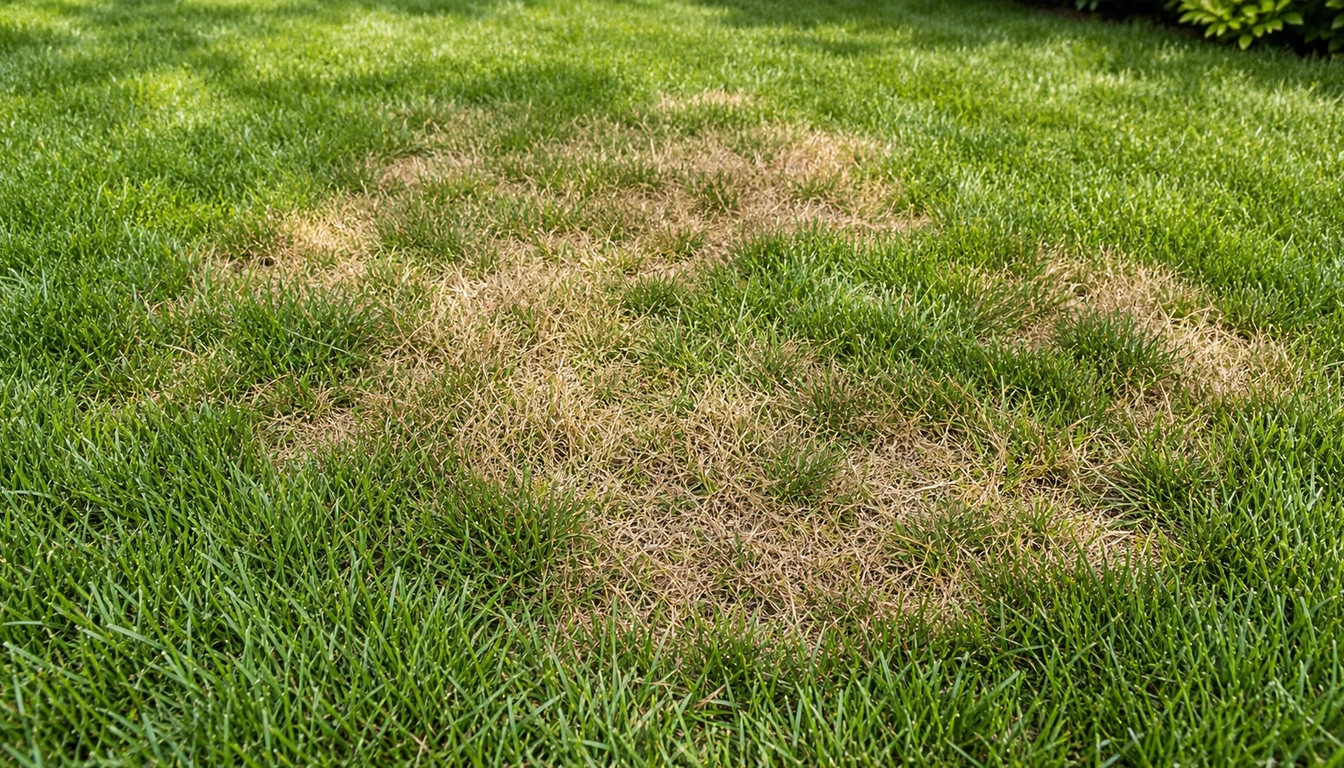
What You Are Seeing
Brown patch is a foliar disease caused by Rhizoctonia fungi, and tall fescue is especially susceptible. On a home lawn, the infection may produce circles from a few inches to several feet wide, overlapping irregular patches, or a diffuse thinning with no neat ring at all.
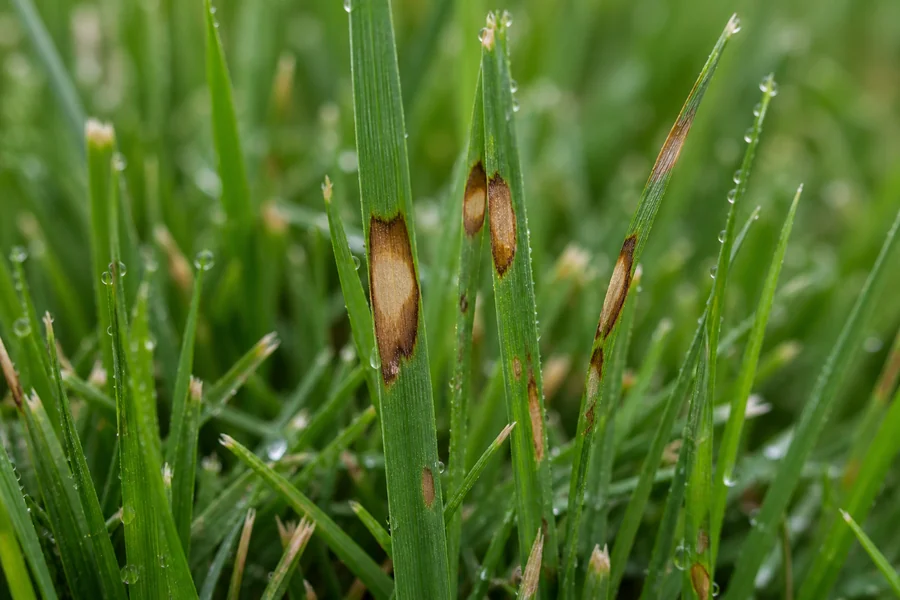
The most useful evidence sits on individual blades near the active margin. Look for irregular tan or light-brown lesions outlined by a darker brown border, with affected blades often remaining upright rather than collapsing into a greasy mat.
White threadlike mycelium may bridge wet blades at dawn, but it can disappear as dew dries. A dark smoke ring is also unreliable on lawn-height tall fescue because that feature is most pronounced on closely mown turf.
Weather supplies the other half of the diagnosis. Infection can begin when nights exceed 60°F, becomes more severe above about 70°F at night, and needs roughly 10 to 12 continuous hours of wet foliage.
Common Causes
Rhizoctonia brown patch
This diagnosis fits when blade lesions, moisture, and weather agree. Tall fescue may look drought-stressed from a distance even though the soil remains damp because the fungus is damaging foliage rather than simply exhausting soil water.
- Inspect fresh damage at the green-to-tan edge rather than fully dead material in the center.
- Find irregular tan lesions with chocolate-brown or reddish-brown margins on several blades.
- Notice upright blighted foliage, sometimes with fine white mycelium between dew-wet blades at dawn.
- Match the onset to warm nights, high humidity, rain, heavy dew, or late irrigation that kept leaves wet.
- Expect circles, merging arcs, or diffuse blighting rather than requiring one perfect ring.
- Move irrigation to early morning and stop any extra evening cycle that extends leaf wetness.
- Mow at the recommended height for tall fescue with a sharp blade and avoid removing more than one-third of the blade at once.
- Pause heavy nitrogen applications while disease weather persists, especially when the lawn already has lush growth.
- Leave affected blades in place unless clippings form wet piles because normal mowing does not require bagging every diseased clipping.
- Use the treatment decision below before applying a fungicide because dead blades will not turn green after spraying.
Drought stress or summer dormancy
Heat alone can push this cool-season grass toward dormancy, and uneven sprinkler coverage can create broad tan areas. The blades usually fold, roll, or become uniformly straw-colored without the scattered dark-edged lesions of brown patch.
- Probe the soil in both green and brown turf and compare moisture several inches down.
- Look for folded blades, lingering footprints, and a blue-gray cast before the area turns tan.
- Check whether the shape follows sprinkler reach, a slope, compacted soil, or reflected heat.
- Confirm that individual blades lack irregular tan lesions with brown borders.
- Watch for improved blade posture after correct deep irrigation rather than expansion after a humid night.
- Measure sprinkler delivery with straight-sided containers instead of increasing every zone by guesswork.
- Water deeply enough to wet the active root zone, then wait until the lawn shows the next early drought signal.
- Allow established tall fescue to remain dormant only if local guidance and water restrictions support that choice.
- Do not apply fungicide to a uniformly dry area that has no lesion evidence.
Pythium blight
Pythium can also race through tall fescue during hot wet weather, but it produces a wetter collapse. Treating it as ordinary brown patch can waste the short window for confirming a fast-moving disease and selecting a product actually labeled for it.
- Look for greasy, water-soaked foliage that mats together instead of remaining upright.
- Check for rapid streaks along drainage flow, mowing paths, or other routes that move wet leaf material.
- Inspect at dawn for fluffy white growth on collapsed foliage while the canopy is still wet.
- Treat same-day expansion during extreme heat and saturation as a reason to seek laboratory or extension diagnosis.
- Keep mowers and foot traffic out of wet affected turf so contaminated foliage is not dragged into healthy areas.
- Stop late watering and correct standing water without letting unaffected tall fescue suffer drought.
- Submit a fresh edge sample or clear close photographs to a local diagnostic service before choosing chemistry.
- Use only a fungicide whose label names Pythium on the turf species and site because brown-patch products are not automatically interchangeable.
Dollar spot or red thread
These diseases can mingle small straw-colored spots into a larger pale area, so lawn-scale pattern alone can mislead. Blade details and the size of the first spots provide the faster separation.
- Dollar spot begins as small straw-colored spots and may leave narrow hourglass-shaped lesions across a blade.
- Red thread produces pink or red antlerlike fungal threads extending from affected leaf tips during moist weather.
- Neither diagnosis depends on the broad irregular tan lesion with a dark margin typical of brown patch on tall fescue.
- Check whether low nitrogen and slow growth fit the site before assuming excessive fertility caused the damage.
- Confirm the visible sign before changing fertility because excess and deficient nitrogen lead to different decisions.
- Correct irrigation timing and mowing stress while keeping the lawn on its soil-test-based fertility plan.
- Seek local identification when multiple lesion types occur in the same area because mixed foliar diseases are possible.
- Do not reuse a brown-patch fungicide schedule without checking whether the label covers the confirmed disease.
Urine, a spill, or fertilizer burn
A chemical or salt injury begins where material landed, so its shape often reflects one event rather than contagious movement through wet foliage. Dog urine commonly leaves a small straw center with a darker green perimeter where the diluted nitrogen stimulated growth.
- Map the mark to a pet route, spreader turn, refueling spot, cleaning spill, or overlapping fertilizer pass.
- Look for a sharply defined splash, stripe, or small spot that appeared soon after the event.
- Check for a greener outer ring around urine injury instead of dark-edged lesions on individual blades.
- Confirm that the boundary does not advance after warm humid nights.
- Flush a very recent soluble salt or urine deposit with water only when doing so will not create runoff into drains or waterways.
- Stop adding fertilizer to the injured area and let surviving crowns show whether they can regrow.
- Rake out fully dead material and reseed at the normal tall fescue establishment window if the crown does not recover.
- Calibrate the spreader and keep fill or cleanup work off the lawn before the next application.
Grubs or another root injury
Root loss makes turf wilt and brown even when the blades carry no fungal lesions. The decisive evidence is below the surface, where damaged sod loses its anchor and may lift like a loose carpet.
- Tug the margin gently and compare its resistance with healthy turf nearby.
- Cut and fold back a small square at the edge when the turf lifts easily, then compare what you find with the signs that confirm lawn grubs.
- Look for missing fine roots, feeding larvae, tunneling, construction injury, or buried debris.
- Notice increased bird, raccoon, or skunk digging without treating animal activity as proof by itself.
- Confirm that blades lack the irregular dark-bordered lesions expected from brown patch.
- Identify and count any larvae before deciding whether their number and life stage justify treatment under local extension guidance.
- Correct the actual root injury, which may involve compaction, excavation damage, shallow soil, or an insect rather than fungus.
- Keep the remaining root zone evenly moist during recovery without leaving foliage wet overnight.
- Reseed only after the damaging cause is controlled and seasonal temperatures favor tall fescue establishment.
Dark-edged lesions on upright blades separate brown patch from a dry lawn
Part the grass at the edge where green blades meet fresh tan foliage and inspect several individual blades. Brown patch becomes likely when irregular tan lesions have chocolate-brown borders, the soil still carries moisture, and damage advances after warm humid nights. Dry folded blades over dry soil suggest drought, while greasy matted leaves or turf that lifts without roots require a different diagnosis.
Open full diagnosisStop the Conditions That Keep the Edge Moving
Brown patch needs susceptible leaves, an active pathogen, and a long warm wet period at the same time. You cannot remove Rhizoctonia from the landscape, but you can shorten overnight leaf wetness and avoid producing tender growth during the disease window.
Water between early morning and sunrise so natural dew and irrigation dry in one cycle after daylight. Repair overlapping heads, shaded low spots, clogged drainage, and dense border growth that holds humid air over the same patch night after night.
Keep tall fescue above about 3 inches during summer unless local cultivar guidance specifies otherwise, and sharpen the mower when torn tips leave a pale cast. Skip mowing saturated turf, yet continue normal mowing when it is dry because letting the canopy become overly tall can retain more moisture.
A soil test and the lawn's annual plan should govern fertility. Avoid a heavy quick-release nitrogen push during active hot humid disease weather, but do not starve recovering tall fescue or assume every modest summer feeding causes brown patch.
Check the Blade Before Naming the Patch
Choose a spot where green turf grades into newly discolored blades because the center of an old patch has lost many diagnostic details. Examine several blades in natural light, then compare soil moisture and root anchorage on both sides of that edge.
The same lawn can hold disease and drought at once, especially when sprinkler coverage is uneven. Record the blade sign first, then the soil and root sign, so one brown shape does not erase evidence of a second problem.
- Irregular tan lesion with a dark border
- Brown patch rises to the top when foliage stayed wet through a warm night.
- Folded blades and dry soil
- Measure irrigation coverage and root-zone moisture before considering fungicide.
- Greasy matted leaves
- Keep traffic out and seek prompt confirmation for Pythium blight.
- Tiny spots or red threads
- Compare dollar spot and red thread signs before changing nutrition or chemistry.
- Sharp spill pattern or green rim
- Trace pet, fertilizer, fuel, or cleaning activity around the mark.
- Loose turf with damaged roots
- Inspect below the surface for larvae or physical root injury.
Decide Whether Fungicide Earns a Place
A home lawn with mild damage often stops declining when nights cool, foliage dries sooner, and tall fescue resumes active growth. Cultural changes reduce the next infection opportunity, but they cannot restore color to a blade that is already dead.
Fungicide is easier to justify when a confirmed outbreak is actively expanding, valuable new turf is at risk, severe loss repeats each summer, or the forecast continues the warm wet infection window. A local diagnostic lab or extension office is worth the delay when blade signs conflict, because Pythium and nonfungal injury change the product decision completely.
Choose a product labeled for brown patch on the exact turf site, follow its rate and interval, and observe all environmental restrictions. Preventive timing can protect high-value or repeatedly damaged turf more reliably than waiting until most foliage is brown, while repeated curative spraying without confirmation wastes money and increases resistance pressure.
Recovery Plan
Mark the edge and verify whether it is still advancing
Place small flags or take photographs from the same angle so patch growth can be separated from old discoloration. Recheck blade lesions at dawn, correct late irrigation, and keep mowers off saturated turf while the diagnosis is still being resolved.
Look for growth from surviving crowns
Brown patch commonly damages tall fescue foliage without killing every crown, so cleaner leaves may emerge when cooler drier growing weather returns. Continue correct mowing and irrigation while judging living shoots instead of expecting dead blades to regain color.
Overseed only the areas that remain thin
Rake away loose dead material after active disease has stopped, loosen the surface, and overseed the lawn when local fall temperatures favor tall fescue establishment. Repeatedly damaged lawns benefit from a blend of locally tested cultivars with improved brown-patch resistance, though no tall fescue cultivar is completely immune.
Reduce next summer's risk by choosing locally tested tall fescue cultivars, watering early enough for leaves to dry after sunrise, keeping summer mowing height near local tall fescue guidance, and correcting shaded wet pockets. Use soil-test-based fertility instead of a heavy nitrogen push during disease weather, and inspect blade lesions at the first new tan edge so a drought, spill, root problem, or Pythium outbreak does not receive the wrong treatment.