
How to Overseed a Lawn That Actually Fills In
Thin, tired grass usually is not a mowing problem, it is a plant-count problem. Overseeding fixes that by packing more grass plants into the same square footage.
What works, and why: timing, prep, seeding, and watering so those seeds sprout instead of feeding birds. We will call out differences for cool-season lawns like fescue and Kentucky bluegrass, and warm-season lawns like bermuda. You can pair these steps with the same-season work in the month-by-month lawn calendar for an even better result.
Pick the Right Time and Grass Seed
Soil temperature, not the calendar, decides whether seed germinates fast or just rots. Cool-season grasses like fescue blends want soil around 55–70°F.
Kentucky bluegrass lawns want that same cool-season window, but they usually take longer to thicken.
Warm-season lawns like bermuda in full sun need warmer soil, roughly 65–80°F.
Zoysia carpets also need warm soil and active growth before seed or plugs make sense. That usually means late spring in cooler zones and early summer in zone 8–10.
Fall is prime overseeding time for cool-season turf in zones 4–7. Soil is warm, air is cooler, and weed pressure drops. Spring works, but you will fight more crabgrass and heat stress.
Seed choice matters just as much as timing. Match seed type to your existing lawn. Mixing tall fescue into a fine fescue lawn, for example, gives a patchy, mismatched texture.
Check the label on the bag. Skip anything with a high percentage of “other crop” or weed seed. Pay a bit more for high-purity, named varieties instead of mystery “sun and shade” mixes.
Overseeding outside the right temperature window wastes almost every seed you spread, even when prep and watering are solid.
Use the timing checks below before you open the seed bag.
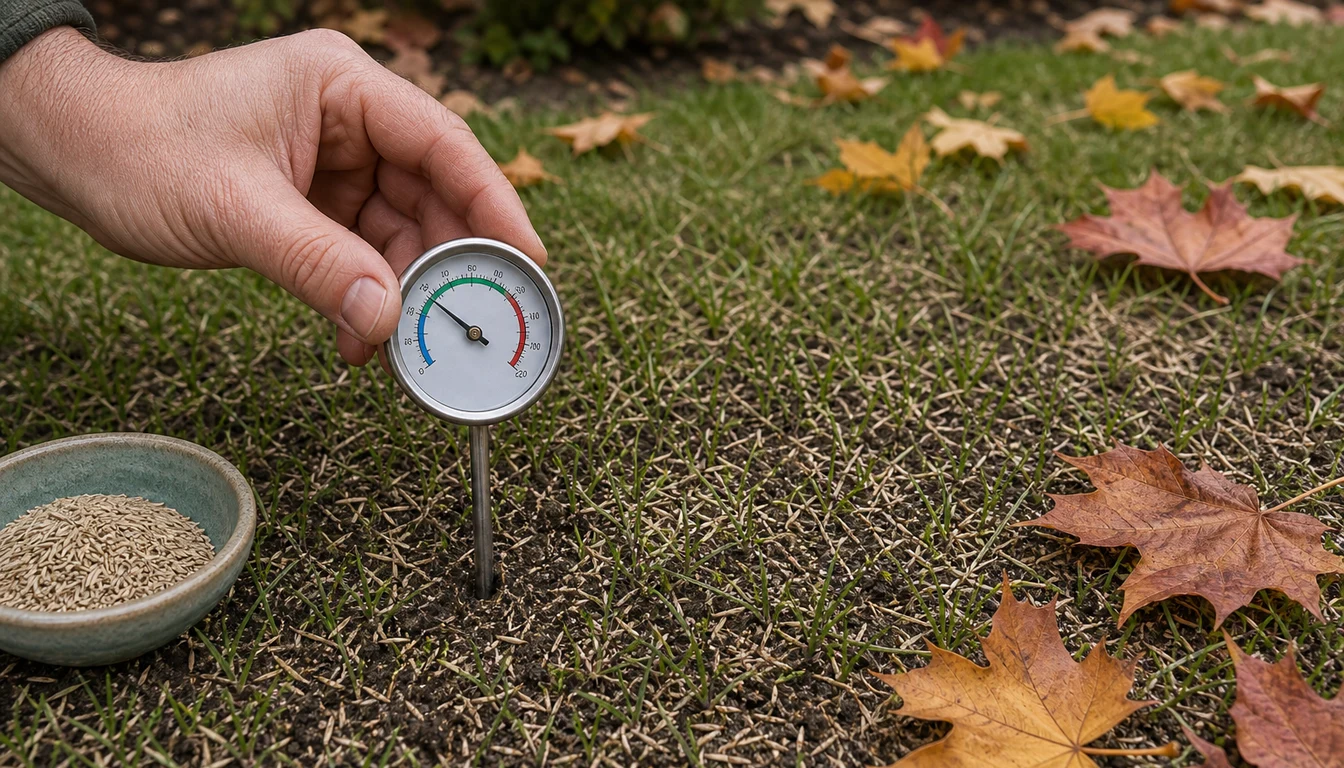
- Cool-season window: Late August to mid October in most zone 4–7 yards
- Warm-season window: Late spring to early summer after frost risk is gone
- Seed type: Match existing turf species whenever possible
- Quality check: Look for 0% weed seed and low “other crop” on the tag
- Local tweak: Use your county extension soil-temp charts if you are unsure
Prep the Lawn So Seed Can Reach Soil
Most overseeding failures come from seed stuck on top of thatch or long grass. Seed needs firm, bare soil contact to sprout and root.
Mow the lawn short before you start, but do not scalp it. For cool-season turf, drop the mower to about 2–2.5 inches for this one cut. Bag or rake up the clippings instead of mulching.
Heavy thatch acts like a dry sponge and blocks seed from reaching soil. If you can see more than ½ inch of springy brown material at the base of the grass, dethatch or power rake first.
Core aeration helps too, especially in compacted yards or where kids and dogs play. Plugs give seed pockets of loose soil and improve air and water flow.
Handle rough grading and leveling at this stage. Fill low spots with a mix of topsoil and compost so new seedlings are not sitting in puddles.
Do not apply pre-emergent weed control before overseeding, it blocks grass seed germination along with weeds.
Run through the prep checklist once the lawn is cut short and debris is off the surface.
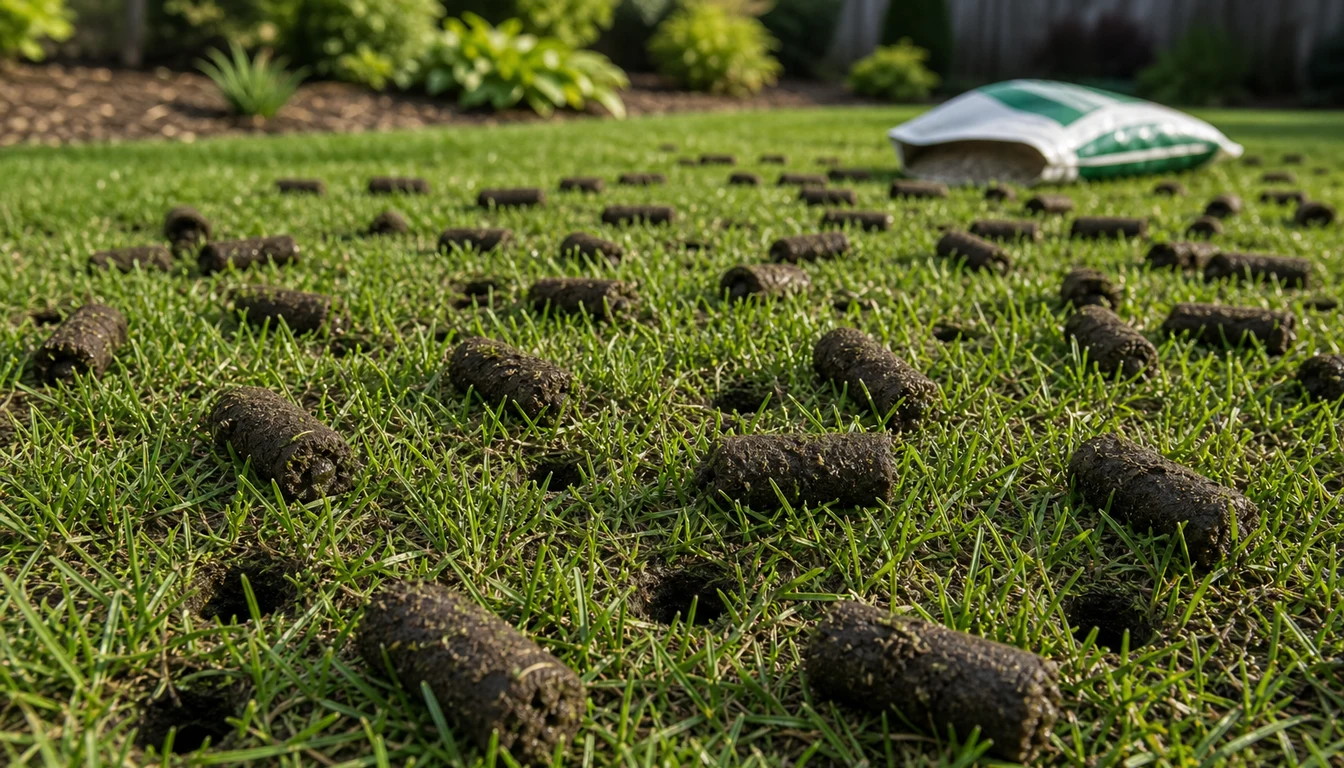
- Mowing height: Cut to 2–2.5 inches for cool-season, 1.5–2 inches for warm-season
- Clippings: Bag or rake everything so seed is not sitting on debris
- Thatch check: Remove thatch thicker than ½ inch with a dethatcher
- Aeration: Core aerate compacted areas before spreading seed
- Leveling: Fix obvious dips with soil mix so water does not pool on seedlings
Calculate Seed Rate and Set the Spreader
Too little seed barely thickens the lawn. Too much seed crowds seedlings, creates weak plants, and invites disease. The bag already tells you the sweet spot.
Look for the overseeding rate, which is lower than the rate for bare-ground seeding. Cool-season mixes often call for 3–5 pounds per 1,000 square feet when overseeding. Warm-season overseeding with perennial rye uses similar or slightly higher rates.
Measure your lawn area instead of guessing. Break it into rectangles and triangles, then add them up. Most front yards are smaller than we think, which is why people often over-apply.
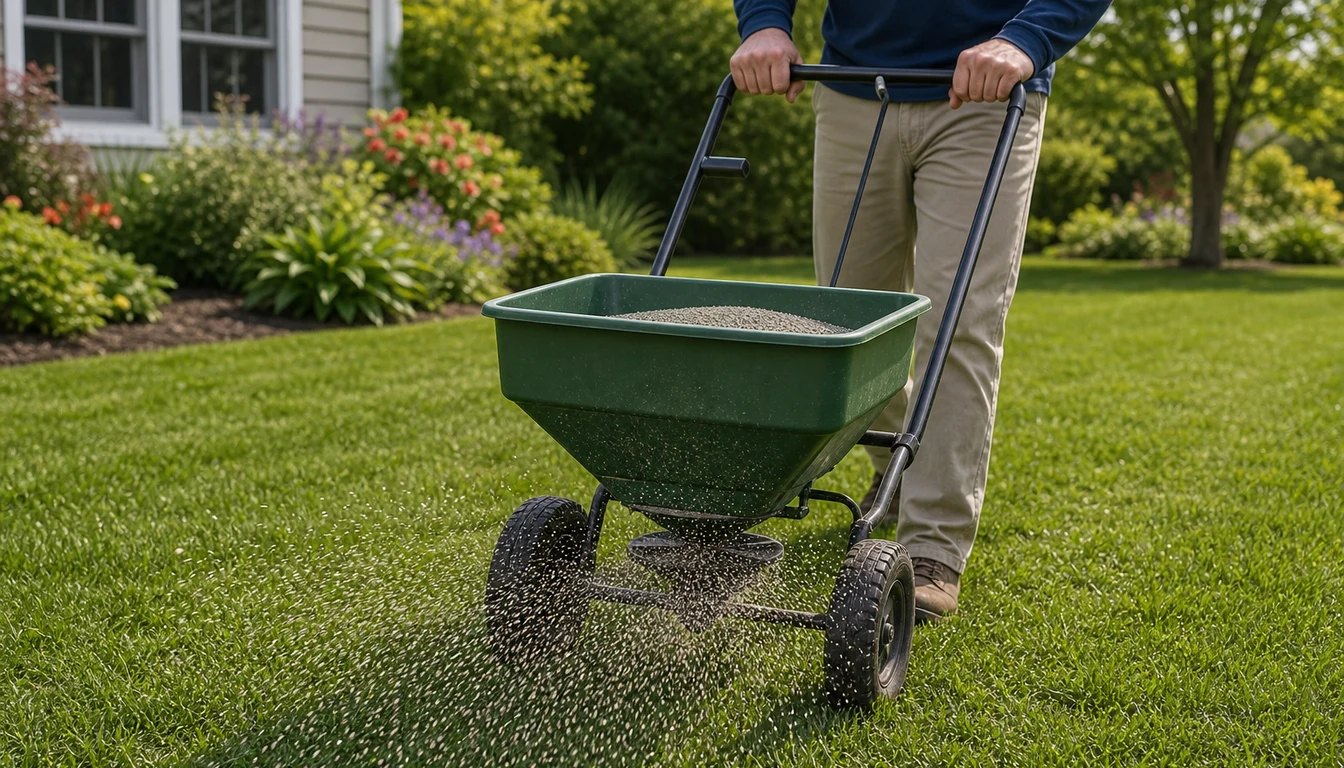
Use a broadcast or rotary spreader for even coverage. Hand-spreading almost always leads to stripes and bald spots.
Start with the spreader setting printed on the bag, but treat it as a first draft. Test the setting on a 200–250 square foot patch, weigh seed before and after, and adjust.
If you are unsure, start slightly low on the setting and make a second light pass at a right angle.
These numbers keep the rate practical before you cover the whole yard.
- Common overseed rate: 3–5 lb per 1,000 sq ft for cool-season mixes
- Area math: Length × width for rectangles; divide odd shapes into chunks
- Spreader type: Broadcast spreader for large areas, handheld for tiny strips
- Test run: Calibrate over a small measured area before doing the whole yard
- Pattern: Make two lighter passes in crisscross directions for even coverage
Spread Seed and Add a Thin Cover
Once the lawn is cut short, cleaned up, and aerated, you are ready to put seed down. Calm, dry days are best so wind does not blow seed away.
Walk steady, overlap your wheel tracks slightly, and avoid sudden stops with the spreader open. You should be able to see a light, even peppering of seed across the soil and into aeration holes.
On bare or very thin spots, apply a bit more seed, but still avoid dumping heavy piles. In shady areas under maple canopy or near dense shrubs, use shade-tolerant seed from the same brand line.
Covering seed lightly keeps moisture in and protects from birds. Use ¼ inch or less of screened compost or seed-starter mulch. You should still see many seeds through the cover.
We like compost over straw in city yards. It adds organic matter and does not blow around or introduce weed seeds like cheap straw sometimes does.
Do not bury seed deeper than ¼ inch. Deep seed struggles to reach light and often rots.
Keep the final pass light and even; heavy piles are harder to rescue than a slightly thin pass.
- Spreading pace: Walk at a normal, steady pace with constant cranking
- Overlap: Slight overlap between passes to avoid stripes
- Spot repair: Hit bare patches twice instead of turning up the setting
- Cover depth: No more than ¼ inch of compost or mulch over seed
- Final step: Lightly roll or step the area to press seed into contact with soil
Watering Schedule After Overseeding
Fresh seed fails more from dry soil than anything else.
You want the top 0.5 inch of soil constantly damp until most seed has sprouted. That usually means several short watering cycles per day instead of one long soak.
Adjust based on weather, not the calendar. Hot wind in Zone 7 dries seed much faster than a cool cloudy day in Zone 4, just like beds of young tomato starts need tighter watering in early heat.
If the surface dries and crusts, germination drops fast, so water before the soil turns pale and dusty.
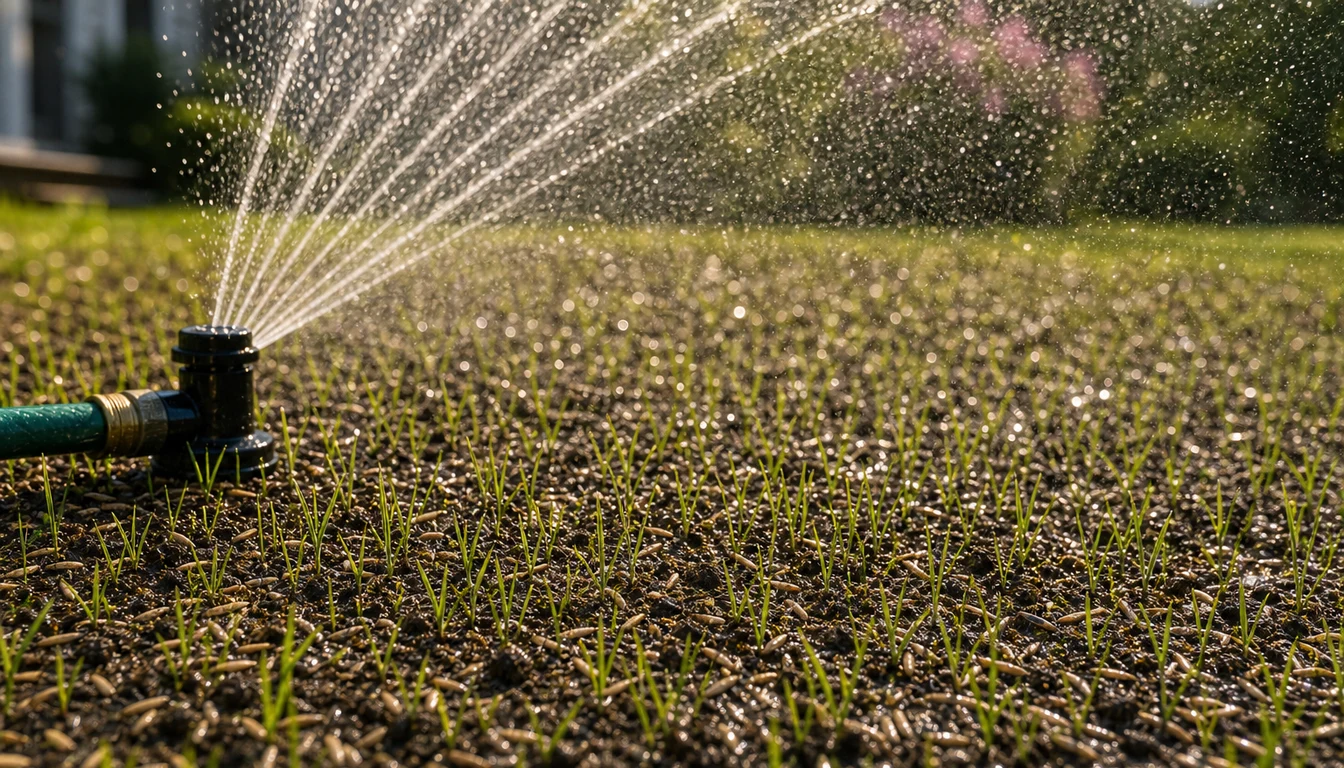
- Days 1–7: Mist or run sprinklers 2–4 times daily for 5–10 minutes each, keeping the surface shiny, not soupy.
- Days 8–14: Water 1–2 times daily, a bit longer, to keep moisture just below the surface as roots dive.
- Days 15–28: Shift to once a day or every other day, watering deeper so the top 2–3 inches are moist.
- After 4 weeks: Move toward a deep, infrequent pattern like in any good deep watering schedule.
The timeline gives you the cadence, but the soil surface still makes the final call each day.
If footprints stay visible more than a minute after you step, the soil is too dry for new seedlings.
If you are on a slope, shorten run times and add more cycles. That keeps seed from washing downhill while still soaking in.
On heavy clay, break long watering into at least two shorter cycles. Give water time to soak so you avoid puddles and floating seed.
Rain counts as watering, but not all rain is equal. A drizzle for ten minutes barely dampens the thatch compared with a slow one inch overnight soak.
Mowing and Foot Traffic While Seedlings Establish
New grass blades bend and break easily, so heavy use can undo a good overseeding job.
You still need to mow though, or tall existing grass will shade out seedlings and weaken your base turf.
Wait to mow until seedlings are at least 3 inches tall and mixed visually with the old grass. That usually lines up around 3–4 weeks for cool season types like modern fescue mixes in fall.
Cut high for the first few mows. Set the mower 0.5–1 inch higher than your normal setting to protect tender crowns and avoid scalping uneven patches.
Never remove more than one third of blade height in a single mow, especially on young grass.
Use a sharp blade so it slices instead of tearing. A torn tip browns, which looks like disease on thin new turf.
If you use a heavy ride-on mower, consider one or two early cuts with a lighter push mower. That reduces ruts in soft, freshly watered soil.
Limit dogs, kids, and wheelbarrows on newly seeded areas for at least 4–6 weeks. Build a habit route to the shed so you are not flattening seed every trip.
In the worst bare zones, lay down simple string or flags to remind people that area is off limits. It seems fussy, but it is cheaper than buying more seed.
Fertilizer and Weed Control After Overseeding
Seedlings are hungry once they sprout, but too much nitrogen early can burn or push weak, floppy growth.
If you did not mix fertilizer in at seeding, apply a light starter product at 50–75 percent of the bag rate once most seedlings reach 1–1.5 inches.
Look for something labeled starter lawn fertilizer or with a higher middle number, similar to how we feed a new bed of young blueberry shrubs to build roots, not just top growth.
Avoid strong weed-and-feed products on new grass. The herbicide piece is rough on seedlings and can stall your fill-in.
Pre-emergent crabgrass killers usually block grass seed too, unless the label clearly says it is seed-safe.
If you must tackle weeds, spot-spray obvious broadleaf clusters with a hand sprayer. Shield tiny grass with cardboard while you spray to cut drift.
Another option is to overseed again in fall, then do a full-yard pre-emergent in early spring before you see weeds.
For warm-season lawns overseeded with cool-season rye for winter color, lean on lighter nitrogen. Keep it around 0.25–0.5 lb N per 1,000 sq ft every 4–6 weeks, and favor slow release.
Tie your fertilizing to your bigger schedule, using tools like the vegetable bed feeding plan or a soil test, instead of guessing based on the bag marketing.
Seasonal Timing by Zone and Grass Type
The best overseeding window depends more on soil temperature than the date printed on a bag.
Cool-season lawns want soil between 50–65°F. Warm-season overseeding for winter color leans closer to 70°F soil before nights get too cold.
In Zone 3–4, the prime cool-season window is late summer, roughly late August through early September. Think right after peak heat ease, while the soil stays warm enough to sprout bluegrass blends quickly.
In Zone 5–6, aim for early to mid fall. That is usually early September to early October, before consistent frost but after the worst summer stress.
In Zone 7–8, cool-season overseeding hits best in late September through mid October. For warm-season turf like dense bermuda lawns, overseed with rye for winter color when nights drop into the 50s but soil still feels warm.
Zones 9–11 are different. Many lawns are warm-season only. Overseeding with rye is mostly cosmetic, so consider whether you really want more mowing in winter before you copy stadium-style turf.
- Cool-season focus: Overseed once or twice a year to thicken, usually fall and occasionally spring.
- Warm-season focus: Fix bare spots in late spring, then consider winter rye only if you crave green during dormancy.
- Shaded lawns: Seed a bit earlier in fall so slower growth still hardens off before real cold.
- High-traffic yards: Favor rugged types like tall fescue patches and keep to the very best timing window.
Soil thermometers are cheap and more honest than the calendar. Push one into bare areas in the afternoon to make the timing call.
Fixing Thin Spots, Washouts, and Other Problems
Even a careful overseeding run has misses. Low spots stay thin, dogs dig, and a surprise storm can float seed into the gutter.
You get a better lawn by fixing these small failures quickly instead of waiting for next year.
For light thinning where you still see seedlings, scratch the soil gently with a leaf rake. Add a half-rate of seed, top with a very thin compost layer, and fold that zone back into your normal watering plan.
If you had washouts, rebuild the grade first so water does not repeat the damage. Then reseed just that section using the same steps you used for the full yard.
Do not bury new seed under more than 0.25–0.5 inch of soil or compost, or it struggles to break through.
Disease can also thin tender new lawns, especially in humid stretches that already cause issues on leafy hydrangea shrubs. Look for discolored patches, fuzzy mold, or greasy-looking blades.
If you suspect a fungal problem, ease back on watering frequency and mow with a bag to remove clippings from infected areas.
Sometimes the issue is simply wrong grass in the wrong place. A thin, shady corner that never holds zoysia type turf might prefer a shade bed of big hosta clumps or mulch.
Give your overseeded lawn 6–8 weeks before judging the full result. Cool nights in fall can make it look slow at first, then you suddenly notice it filled in nicely once blades thicken.
Pro Tips
- Use a soil thermometer at 2–3 inches to time overseeding, not just your calendar.
- Rent a core aerator for compacted yards so seed can fall into the holes and root deeper.
- Split the seed into two equal batches and spread in crisscross passes for even coverage.
- Avoid weed-and-feed products within 6–8 weeks of overseeding so seedlings are not stunted.
- Keep the top ½ inch of soil consistently damp until seedlings are well rooted.
- Raise mowing height one notch after overseeding to protect tender new grass tips.
- Patch dog-worn paths with a little extra seed and compost right after your main overseed.
- Flag sprinkler heads and shallow utilities before aerating or dethatching to avoid damage.
Frequently Asked Questions
How soon can I walk on my lawn after overseeding?
Keep traffic off overseeded areas for at least 2 weeks, longer if soil is wet. Light, careful walking to mow is fine once seedlings reach about 3 inches, but avoid kids, pets, and heavy equipment for 4–6 weeks.
Should I aerate every time I overseed?
Core aeration helps in compacted or high-traffic yards, but you do not need it every year. If a screwdriver already slides into soil easily and roots look deep, you can skip aeration and just dethatch and seed.
Can I overseed a lawn full of weeds?
You can, but results are weaker. Heavy weeds compete for light and water. Tackle major weed problems first over a season, then overseed once you have more open turf, using spot-sprays instead of blanket weed-and-feed on new grass.
Is spring or fall better for overseeding?
For cool-season grasses, fall is almost always better. Soil stays warm, air is cooler, and weeds are less aggressive. Spring overseeding works, but young grass then faces summer heat only a few months later, so it needs more watering.
How long before an overseeded lawn looks full?
You usually see germination in 5–14 days. A lawn often looks noticeably thicker by 4 weeks, but real fill-in and deeper rooting take 6–8 weeks or more. Patience, steady watering, and high mowing are what carry it across the finish line.