Bermuda Grass vs Tall Fescue
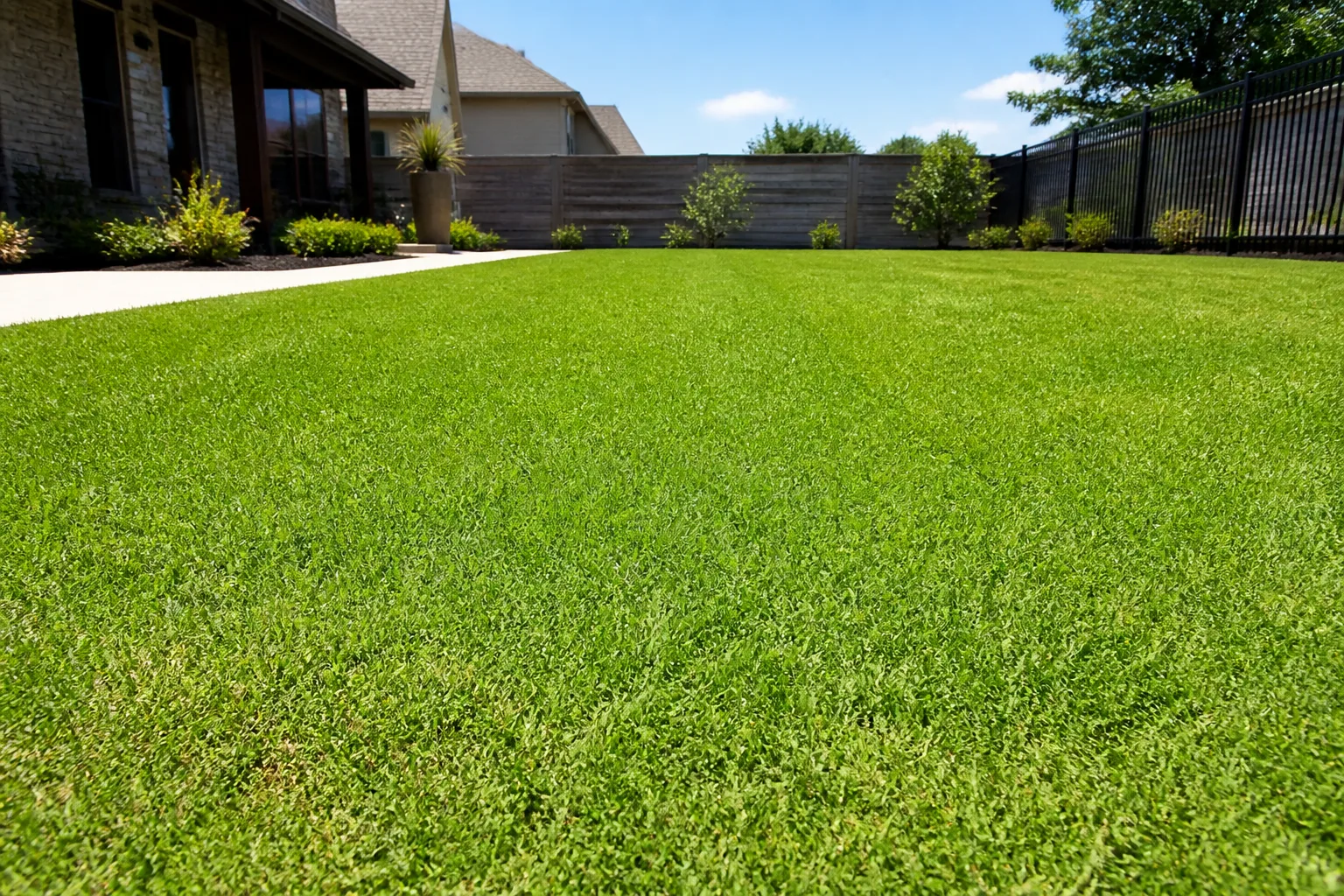
Bermuda grass is usually the stronger fit for a hot, sunny lawn with frequent summer use. Turf-type tall fescue offers cool-season growth and greater tolerance of partial shade. Local climate, winter injury risk and the time of year you use the lawn matter more than a single hardiness-zone label.
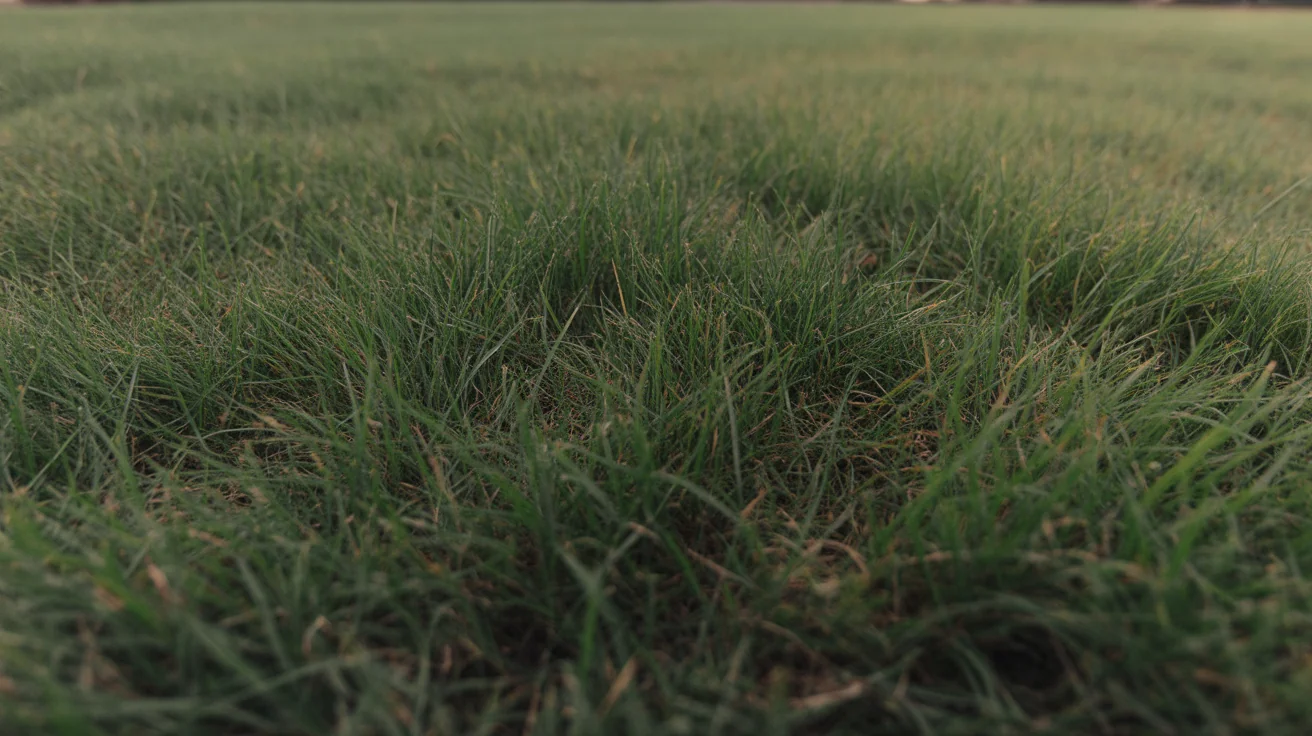
Bermuda Grass
Cynodon species and hybrids
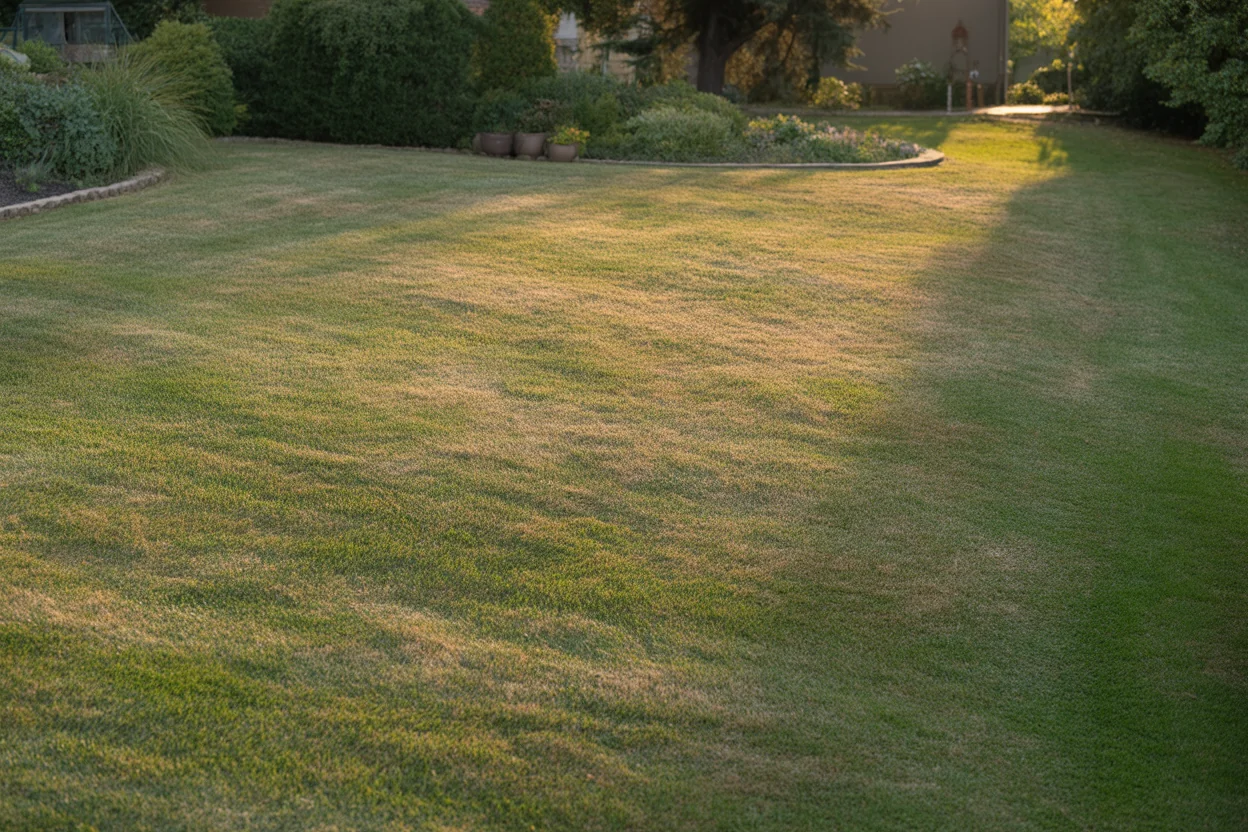
Tall Fescue
Festuca arundinacea (Schedonorus arundinaceus)
Bermuda grass and tall fescue reach their strongest growth in different seasons. Bermuda uses summer warmth to spread, while tall fescue grows most actively in cooler conditions and can struggle when heat, humidity or drought persist.
The fescue in this comparison is turf-type tall fescue. Fine fescues have different texture and site limits, so a recommendation for a shaded fine-fescue lawn cannot be transferred to every product labeled fescue.
In the transition region between predominantly warm-season and cool-season lawns, either choice can involve a difficult season. The useful question is which grass can remain healthy at the site and recover during the months when the lawn receives the most use.
Specifications
Compare the traits that change the growing decision.
| Feature | Bermuda Grass | Tall Fescue |
|---|---|---|
| Strongest growth | Warm summer conditions | Cooler spring and fall conditions |
| Cold-season appearance | Normally dormant and brown after frost | Can retain cool-season color where conditions permit |
| Light | Best in full sun, poor shade tolerance | Sun to partial shade, with cultivar differences |
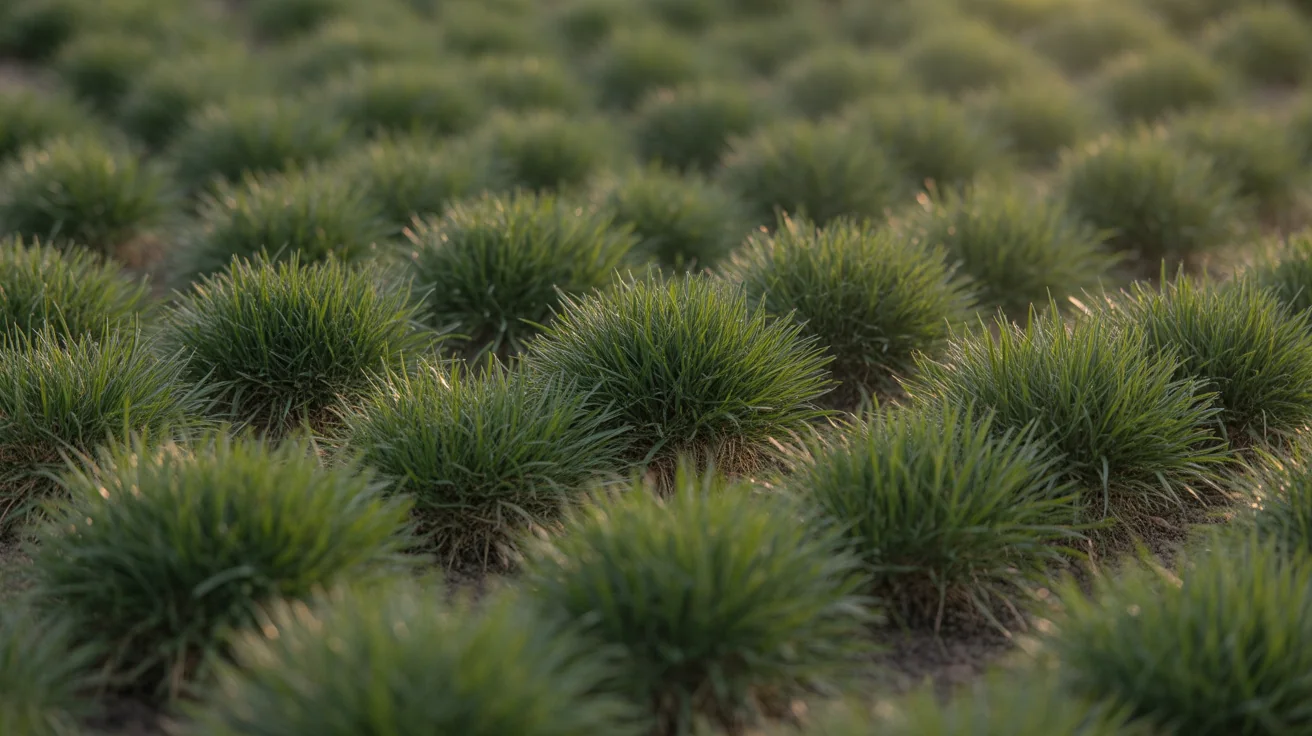
| Spread | Surface stolons and underground rhizomes | Primarily bunch-forming, limited lateral spread |
| Repairing small gaps | Can grow in from healthy surrounding turf | Often needs reseeding after whole plants die |
| Establishment choices | Seeded cultivars or vegetatively planted cultivars | Seed or locally available sod |
| Recurring care issue | Containing runners and matching mowing to growth | Maintaining density through summer stress and wear |
The table describes tendencies, not a fixed sunlight cutoff, weekly water allowance or automatic annual overseeding schedule. Cultivar choice and the actual lawn conditions determine how strongly each difference matters.
Best Use Cases
Choose by the job the planting needs to do.
An open lawn used heavily in summer
Warm-season growth matches the traffic
Bermuda combines strong wear tolerance with rapid spread during active growth. Healthy plants around a small damaged area can send stems into it, making recovery possible without reseeding every gap.
Tall fescue can make durable turf, but its limited spreading habit means a completely bare patch often needs new seed. Heavy use during hot-weather stress can remove plants faster than the lawn replaces them.
A lawn with partial tree shade
Enough light still has to reach the turf
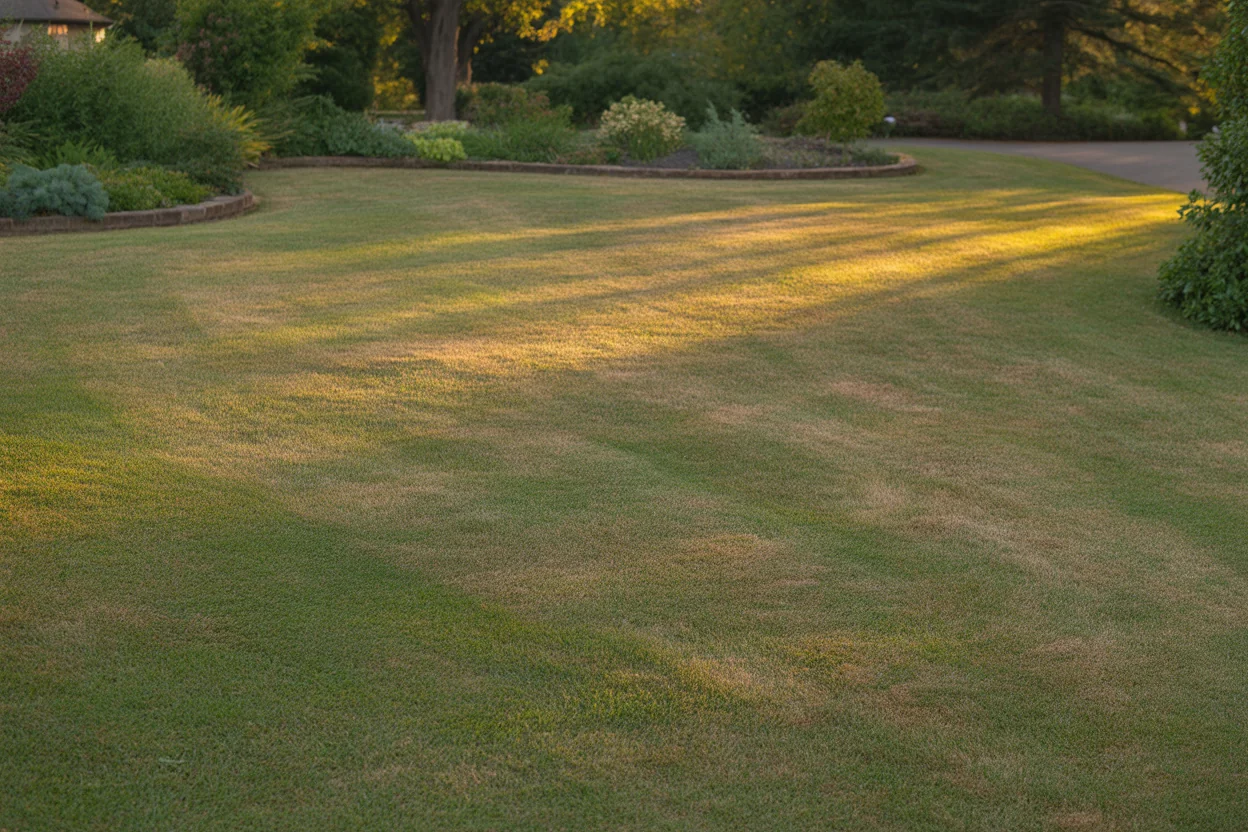
Bermuda performs poorly in shade. Fertilizer and irrigation cannot replace the missing light, and growth under a tree may remain weak even while an open part of the same lawn looks vigorous.
Tall fescue tolerates some shade, but deep shade can defeat it too. Local cultivar recommendations and the pattern of light across the growing season are more useful than treating four, five or eight hours as a universal pass line.
Winter appearance
Dormancy and survival are separate questions
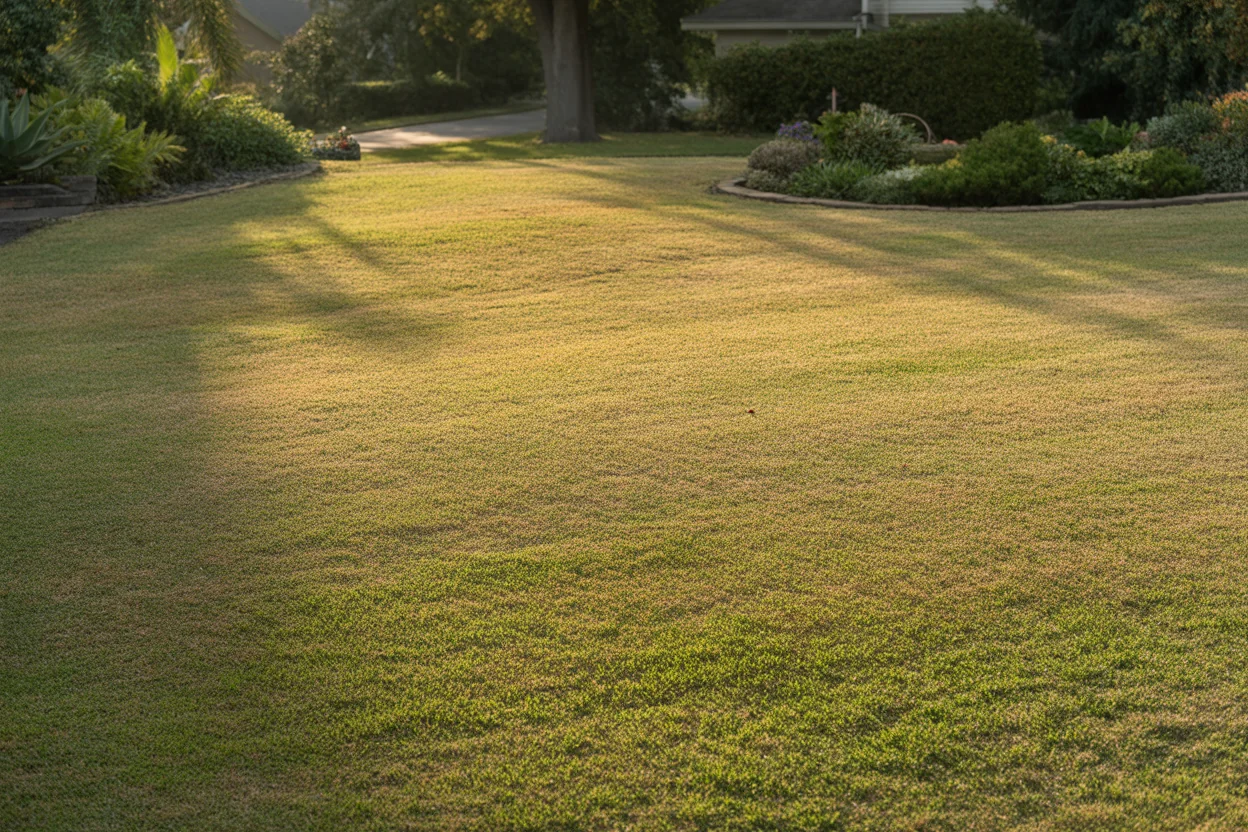
A healthy Bermuda lawn normally turns brown after frost. Some sites also face winter injury, which is different from normal dormancy and depends on cultivar and local conditions.
Tall fescue can stay green through much of the cool season in suitable regions. That does not promise year-round color in every climate, or make severe cold, snow cover and summer stress irrelevant.
Why local climate can outweigh the grass label
A winter hardiness zone summarizes winter minimum temperatures. It does not describe the length of summer heat, humidity, rainfall, shade or the soil beneath the lawn. Two sites in the same zone can therefore put different pressures on the same grass.
NC State places tall fescue mainly in the mountains and piedmont and notes problems in sunny, sandy coastal-plain sites. Bermuda has a different seasonal fit. These regional recommendations explain why a national zone range alone cannot settle this choice.
Tall fescue can develop deep roots where the soil permits, so calling it shallow-rooted misstates its main drought advantage among cool-season grasses. Bermuda also tolerates drought well, but surviving drought and staying green are different outcomes. Neither is exempt from establishment watering or prolonged moisture stress.
What happens when Bermuda enters a fescue lawn
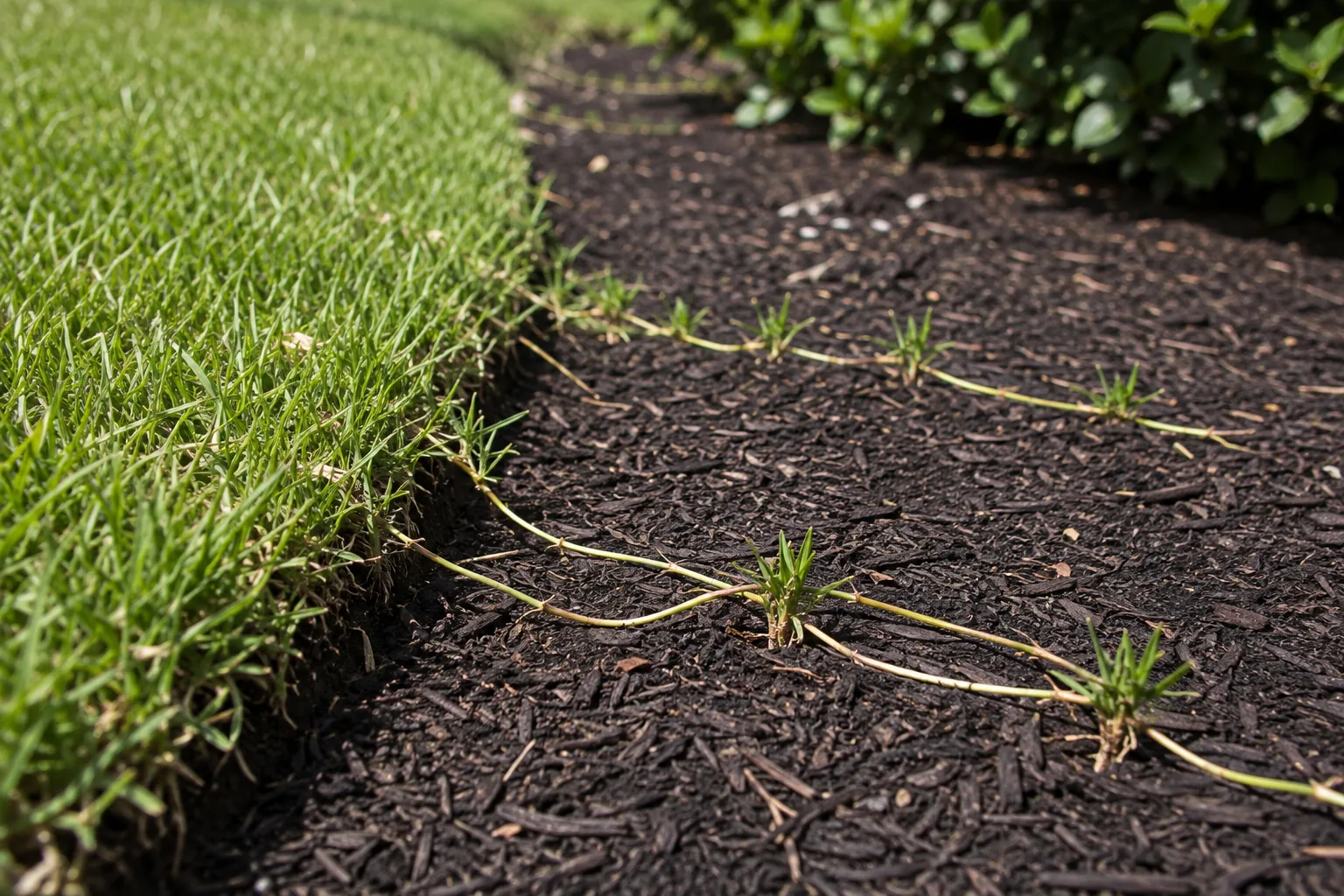
Bermuda has both stolons on the surface and rhizomes underground. Those stems allow it to cross boundaries and establish shoots among tall fescue plants. Its ability to recover after wear also makes it difficult to contain when it is the unwanted grass.
The result depends on light, climate and management. Bermuda may be more competitive in hot, sunny parts of the lawn while fescue persists elsewhere. There is no supported rule that every mixed lawn becomes all Bermuda after two or three summers.
Different dormancy patterns can produce uneven winter color. A defined border can make maintenance easier, but a path or a particular edging depth is not a guarantee that runners or rhizomes cannot cross it. A mixed lawn needs a decision about the desired grass before renovation, rather than repeated seed additions without addressing competition.
How establishment and maintenance affect the choice
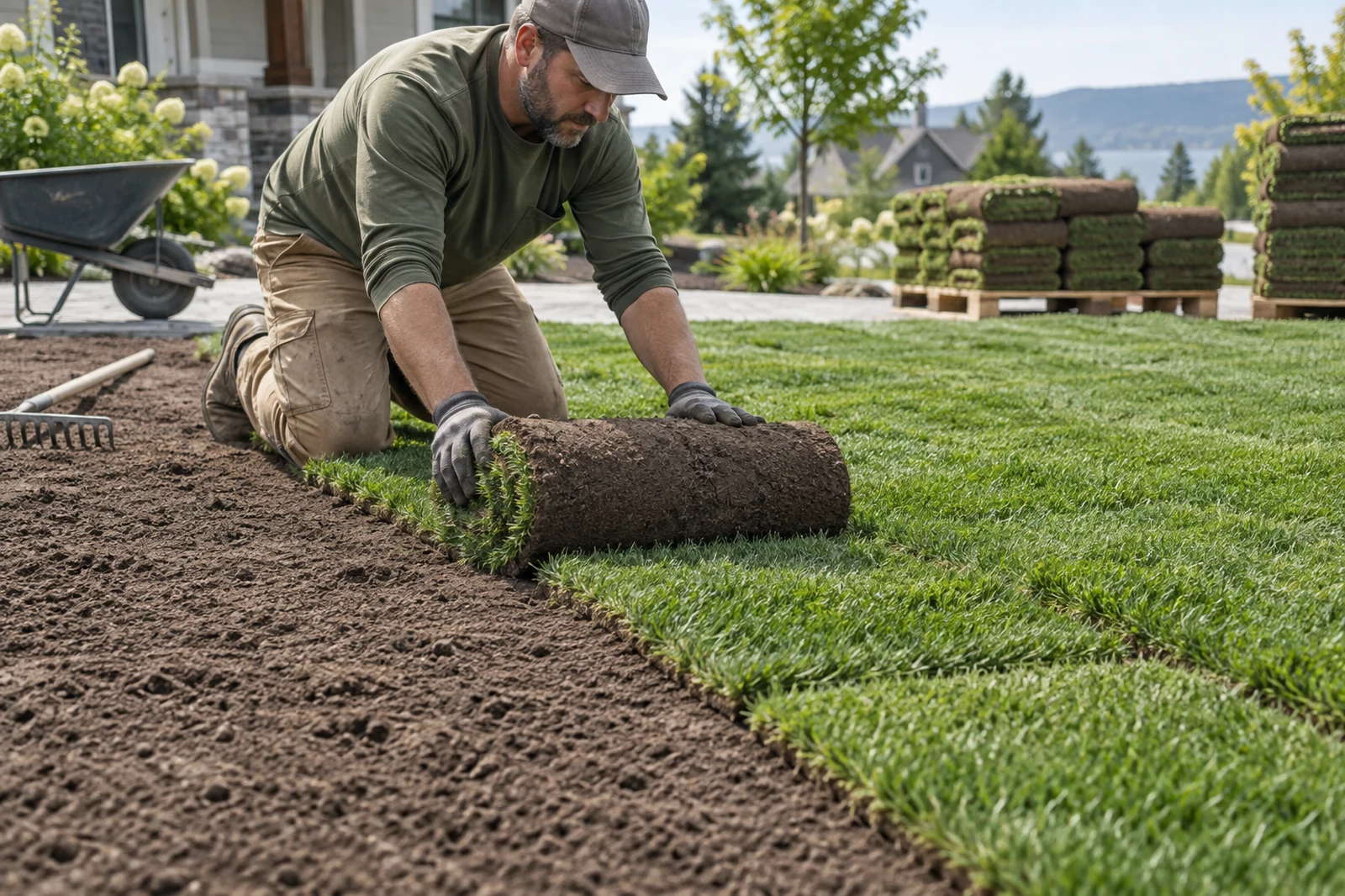
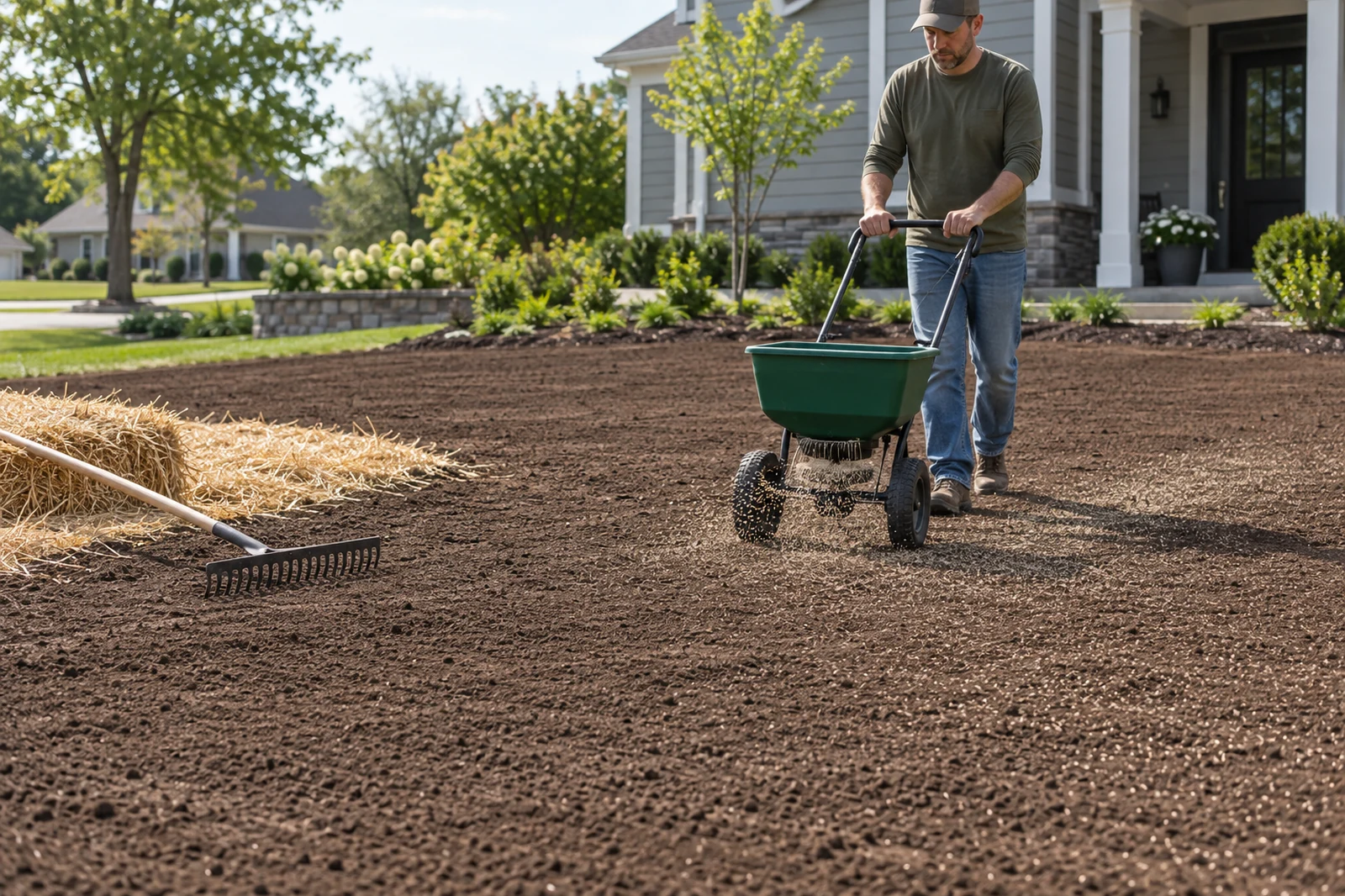
The cultivar determines whether Bermuda can be started from seed. Some improved cultivars are planted as sod, plugs or sprigs instead, so the cheapest seed price does not represent every Bermuda lawn. Tall fescue is commonly seeded, and sod availability depends on the local supplier.
Sod and seed also carry different waiting periods. Immediate soil cover still needs rooting care, while newly seeded areas need protection as seedlings establish. The remaining growing season matters more than a blanket promise that warm soil makes any planting date suitable.
Bermuda's rapid growth can increase mowing and edge maintenance during favorable summer weather. Tall fescue often needs attention to thin areas, but an intact stand does not automatically need full-lawn overseeding every autumn. The reason for thinning should determine the repair.
Winter overseeding of Bermuda with ryegrass is a separate seasonal program. Ryegrass competes with the warm-season lawn as it resumes growth, so winter color is not a free extension of Bermuda's green season. Local transition guidance matters before committing to that practice.
The better maintenance comparison includes the actual cultivar, usable sun, damaged areas and desired appearance. Fixed numbers of fertilizer applications or weekly mowing visits hide those differences rather than predict the work for a particular lawn.