Fertilizingschedule11 min read
When to Fertilize Lawn in Texas by Region and Grass Type
Texas lawns need fertilizer timed to soil temperature, not the calendar. This guide breaks down the best fertilizing schedule by region, grass type, and season so you feed at the right time without burning or wasting product.
Texas lawns do not follow the same fertilizing schedule as cooler states. Heat, long summers, and big north-south differences mean your neighbor in Amarillo needs a different plan than someone in Houston.
Here we break Texas into practical zones and match fertilizer timing to soil temperature and grass type. You will see how feeding warm-season grasses like bermuda in full sun differs from cool-season patches of tall fescue. For broader product basics, pair this with a general lawn fertilizing schedule. We will also flag months when fertilizer does more harm than good, so you can stop guessing at the garden center.
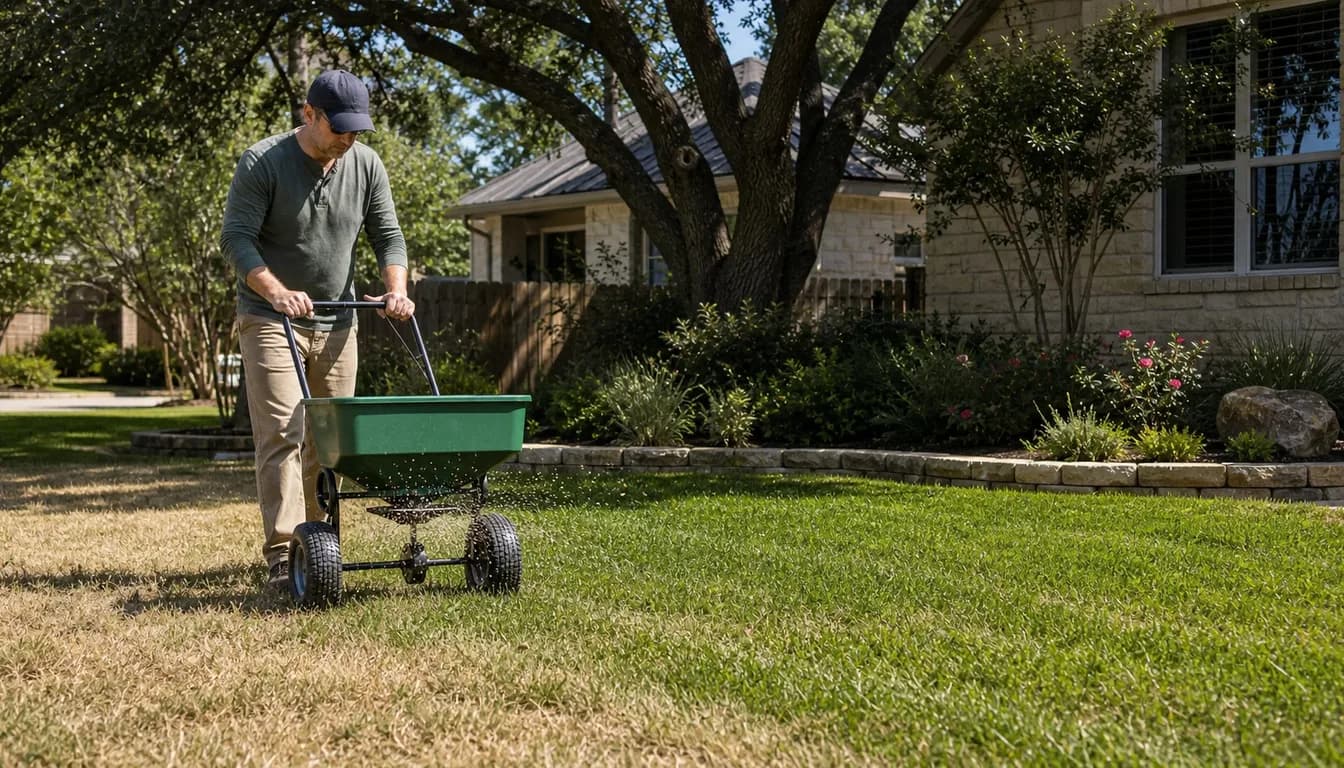
Wait for 65°F soil and active growth before the first Texas lawn feeding.
grassKnow Your Texas Grass Type First
Fertilizer timing in Texas starts with knowing what is growing under your feet. Most sunny lawns are warm-season grasses that thrive in summer heat and go brown or straw colored in winter.
Common warm-season choices include dense bermuda turf and tight zoysia lawns. St. Augustine and low-water buffalo turf belong in that same camp. Cool-season grass like fescue mixes only shows up in shadier Texas lawns or overseeded areas in the north of the state.
Warm-season grasses wake up slowly once soil sits near 65°F at 2-3 inches deep. That is when fertilizer finally helps. Cool-season grasses grow hardest in early spring and fall, so they use fertilizer while it is still mild.
If you inherited the yard and are unsure what you have, compare blade width and texture against photos of common types or visit a local nursery. Guessing at grass type leads to the most common fertilizing mistakes in Texas.
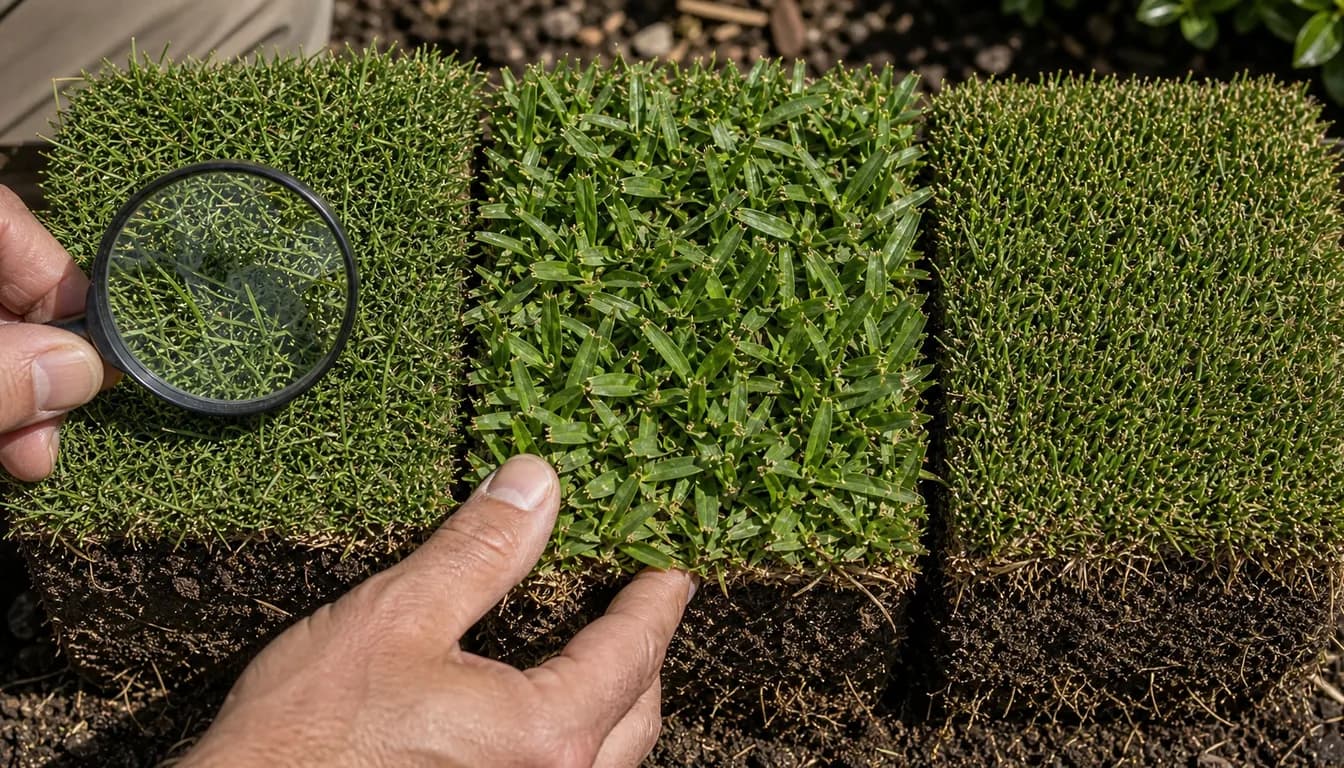
Your fertilizer timing follows your grass type, not your zip code.
- fiber_manual_recordBermuda lawns: Fine blades, full-sun, handles sports and dogs well
- fiber_manual_recordSt. Augustine: Wide blades, thick stolons, better in coastal humidity
- fiber_manual_recordZoysia: Medium blades, dense carpet feel, slower to spread
- fiber_manual_recordBuffalo / native mix: Wispy look, drought friendly, often in low-input yards
Grass ID comes before fertilizer timing.
Do not build a fertilizing plan until you are at least 80% sure of your grass type. The schedule shifts by weeks between warm-season and cool-season lawns.
thermostatTexas Regions and Soil Temperature Windows
Air temperature is only a rough guide in Texas. A cool front can fool you, but soil at root level stays warmer or cooler than the forecast suggests.
Most warm‑season lawns should not see nitrogen until soil hits 65°F for several days. In Texas, that happens anywhere from early March in the Rio Grande Valley to late April in the Panhandle.
Think of broad regions rather than chasing exact dates. North Texas (Dallas, Fort Worth, Amarillo) warms later and cools earlier than Central Texas (Austin, Waco). Gulf Coast yards from Houston to Corpus Christi stay warm and humid far longer, so their feeding window runs deeper into fall.
West Texas lawns deal with intense sun, wind, and often poorer soils, so fertilizer timing there leans on moisture as much as temperature. A dry, windy April can delay that first application, even if the soil thermometer technically reads warm enough.
- fiber_manual_recordNorth Texas: First warm‑season feeding roughly late April to early May
- fiber_manual_recordCentral Texas: First feeding roughly late March to mid‑April
- fiber_manual_recordGulf Coast / South: First feeding roughly early to mid‑March
- fiber_manual_recordWest Texas: First feeding once soil is 65°F and rain is in the forecast
The thermometer keeps those regional windows honest.
Keep a cheap soil thermometer near the hose bib. It will guide fertilizing decisions more accurately than any "Texas lawn calendar" on the bag.
Guide — See AlsoBenefits of Composting for Healthier Soil and PlantsLearn how composting turns kitchen scraps and yard waste into free fertilizer, improves soil, and boosts plant health in
chevron_rightwb_sunnySpring Fertilizing: Wake‑Up Feed by Grass Type
The first feeding after winter sets the stage for how your lawn looks the rest of the year. You want to feed when grass is actively growing, not when it is just starting to green in random patches.
For bermuda and zoysia, wait until at least half the lawn is consistently green and you have already mowed once. In Central Texas that usually means early to mid-April. In North Texas, think late April or even early May in a cool spring.
St. Augustine behaves more like a coastal shrub than like northern bluegrass lawns. It greens early along the Gulf Coast but stays tender to late cold snaps. Hold fertilizer until nights are mostly above 60°F to avoid feeding disease instead of roots.
In shady or mixed lawns with fescue patches, early spring feeding can help the cool-season sections but over-push the warm-season areas once heat hits. Split the difference by giving a light, balanced product in March; then move to a stronger warm-season blend once soil is truly warm.
- fiber_manual_recordWarm-season first feeding rate: About 0.5-0.75 lb of actual nitrogen per 1,000 sq ft
- fiber_manual_recordCool-season spring rate: Up to 1.0 lb nitrogen per 1,000 sq ft in North Texas
- fiber_manual_recordProduct choice: Use a slow-release, high-nitrogen fertilizer labeled for southern lawns
Check last fall before you feed again in spring.
Skip spring fertilizer entirely if you put down a heavy nitrogen application in late fall. Overfeeding in Texas spring often means mowing twice a week and fighting disease by June.
Email Updates
Join the KnowTheYard update list
Zone-specific advice, seasonal reminders, and new plant guides — no filler.
water_dropSummer Feeding: Heat, Drought, and Burn Risk
Once Texas heat settles in, your lawn still needs food, but timing and product strength matter much more. Many burned lawns start with a heavy June fertilizer on an already stressed yard.
Warm-season grasses like backyard bermuda and dense zoysia can handle summer feeding if moisture is available. Aim for a lighter dose in early summer, then let the grass cruise through the hottest stretch with minimal extra nitrogen.
On the Gulf Coast, where humidity keeps lawns growing, a mid-summer feeding around late June can help St. Augustine fill bare spots. In Central and North Texas, treat summer fertilizer as optional, particularly in drought years.
Use slow-release or organic products when daytime highs routinely top 90°F. Fast-release fertilizers combined with shallow watering scorch leaf tips and invite weeds.
- fiber_manual_recordEarly summer rate: 0.5 lb nitrogen per 1,000 sq ft or less
- fiber_manual_recordSkip feeding: During extended triple-digit weeks or active watering restrictions
- fiber_manual_recordWatering rule: Water in fertilizer with about 0.25-0.5 inch of irrigation within 24 hours
Drought stress changes the answer even when the calendar says feed.
Never fertilize a drought-stressed, bluish gray lawn. Deep watering and recovery come first, fertilizer only after the grass is clearly growing again.
If you struggle with houseplants, the same principle applies with low-care snake plants. Forgiving pothos still needs the right water and light before extra fertilizer helps.
Guide — See AlsoVegetable Garden Fertilizer Chart by Crop and SeasonUse this vegetable garden fertilizer chart to match NPK, timing, and rates to each crop so you feed enough for strong gr
chevron_rightcalendar_monthFall Fertilizing: Repair Heat Damage and Build Roots
The most valuable feeding for a Texas lawn often happens in early fall, right after the worst heat breaks. This pass repairs summer stress and stacks energy in the root system for winter.
In North and Central Texas, that usually means late September through mid October, when nights cool but soil is still warm. In the Valley and Gulf Coast, you can often stretch to late October.
For warm season lawns like bermuda in full sun and zoysia carpets, use a fertilizer with more potassium and moderate nitrogen. Look for something near 16 0 8 or 15 0 15, and skip high nitrogen "summer green up" products.
Cool season patches or overseeded areas with fescue blends like a bit more nitrogen. A balanced 20 10 10 in North Texas works, but back off in the southern half of the state where cool season grass struggles with lingering heat.
- fiber_manual_recordTiming cue: Target soil temps dropping into the 70 60°F range for the season.
- fiber_manual_recordRate: Stay around 0.75 1.0 lb nitrogen per 1,000 square feet.
- fiber_manual_recordWater in: Apply 0.25 0.5 inch of irrigation within a day to move granules off leaves.
- fiber_manual_recordMowing: Mow 2 3 days before fertilizing, not right after application.
Weak turf needs repair before nitrogen.
Skip fall nitrogen if your warm season lawn is weak, diseased, or heavily thatched. Focus on weed control and soil improvement instead.
If you only fertilize once in Texas, make it this early fall feeding focused on roots, not quick color.
ac_unitWinter and Dormant Season Feeding Rules in Texas
Brown winter grass in Texas usually means dormancy, not death, so resist the urge to pour on fertilizer. Feeding hard while warm season grass sleeps wastes money and can stress the plants.
For bermuda, zoysia, centipede, buffalo, and St Augustine, shut down nitrogen when your regular mowing slows to a crawl. In much of Texas, that is late October to mid November, earlier in the Panhandle.
High nitrogen on dormant warm season turf pushes tender growth during a warm spell that then gets hammered by the next cold snap. That new growth is also easy pickings for diseases.
Cool season lawns in North Texas, often mixes of tall fescue clumps and perennial rye overseed, are the exception. These can use a light winter feeding if they stay actively growing.
- fiber_manual_recordWarm season rule: No nitrogen within 4-6 weeks of first expected hard frost.
- fiber_manual_recordCool season rule: Light applications, 0.25-0.5 lb N per 1,000 square feet, only while grass is clearly growing.
- fiber_manual_recordSoil work: Winter is prime time for soil testing and planning fertilizer choices for beds too.
- fiber_manual_recordTrees and shrubs: Coordinate woody plant feeding so you are not overloading any one area.
Dormant turf should stay quiet unless a cool-season patch is actively growing.
Never apply weed and feed products to dormant warm season lawns in Texas. You risk root damage with almost no benefit.
If you want winter green, overseed a small area with rye instead of forcing the whole yard to stay active with fertilizer.
Guide — See AlsoCan You Fertilize Wet Grass Without Damaging Your Lawn?Learn when it is safe to fertilize wet grass, when to wait, and how moisture, product type, and weather affect burn risk
chevron_rightcompostMatching Fertilizer Type and Rate to Texas Conditions
Getting timing right will not help if the product and rate are off. Texas lawns see blazing sun, heavy storms, and often poor native soils, so product choice matters more than in milder states.
Slow release nitrogen is your friend in this climate. Look for bags that list at least 30-50 percent slow release on the label. This keeps growth steady instead of explosive, which is vital when days can jump from 75°F to 95°F in a week.
Fast release products are cheaper but spike growth and raise burn risk if irrigation is uneven. They can work during milder shoulder seasons, especially on tough grasses like buffalo on shallow soils, but treat them with respect.
Texas lawns on sandier soils, especially near the Gulf, leach nutrients faster after big rains. Heavy black clays in Dallas or Houston suburbs hold nutrients better but can tie some up. That is why a soil test from your county extension is worth the small fee.
- fiber_manual_recordClay dominant yards: Favor slow release, moderate nitrogen and occasional core aeration to reduce compaction.
- fiber_manual_recordSandy yards: Use split applications, lighter but more often, to prevent nutrients flushing past roots.
- fiber_manual_recordOrganic options: Compost topdressing at 0.25 inch adds slow nutrients and fights compaction.
- fiber_manual_recordBag math: A 40 lb bag of 24 0 11 has 9.6 lb nitrogen. At 1.0 lb N per 1,000 square feet, that bag covers about 9,500 square feet.
Bag math is safer than judging by lawn size from memory.
Always base your rate on pounds of actual nitrogen per 1,000 square feet, not just how big the lawn looks.
If you also feed containers or indoor foliage, use a separate product. Follow a houseplant specific schedule instead of sharing lawn fertilizer.
water_dropWatering and Mowing Around Fertilizer Days
Water and mowing timing can make or break a Texas fertilizer application. The same heat that drives growth can also cook wetted leaves if you get the order wrong.
Most granular fertilizers want dry grass blades during application and then a soak to move pellets to the soil. Aim to water within 24 hours, ideally in the cool morning, with about 0.25-0.5 inch of irrigation.
In summer, coordinate with deep versus frequent watering advice so you are not drowning shallow rooted lawns. One solid irrigation that also carries in fertilizer is better than several misty passes.
Mow one to three days before you fertilize, never immediately after. Freshly cut tips are more prone to burn if pellets sit there. Shorter blades also help granules drop through to the soil instead of hanging on the foliage.
- fiber_manual_recordBefore: Mow, clear clippings, then wait at least 24 hours before fertilizing.
- fiber_manual_recordDuring: Spread fertilizer on dry grass, in two perpendicular passes for even coverage.
- fiber_manual_recordAfter: Water deeply once, then leave the grass alone until it is dry again.
- fiber_manual_recordEdge care: Sweep granules off sidewalks and out of street gutters to avoid runoff.
Separate big lawn treatments so you can read the response.
Do not combine fertilizer day with herbicide, insecticide, and a heavy watering marathon. Stack treatments across weeks so you can tell what helped or hurt.
If you have young trees or foundation shrubs near the lawn, watch for overwatering signs there too, not just in the turf.
Guide — See AlsoHow to Overseed a Lawn Without Aerating or Heavy EquipmentStep-by-step guide to overseed your lawn without renting an aerator. Learn how to prep the turf, choose seed, and get go
chevron_rightwarningCommon Texas Fertilizing Mistakes and How To Fix Them
Most damaged Texas lawns are not underfed, they are mistimed or overfed. Learning the usual mistakes saves money and several seasons of recovery.
The classic error is hammering a struggling summer lawn with more nitrogen, hoping it greens up. In 100°F heat, that usually fries shallow roots on grasses like St Augustine in shade and opens the door to disease instead of recovery.
Another big miss is fertilizing when weeds dominate more square footage than turf. Fertilizer does not know the difference between rescue grass and volunteer plants in an old bed. It will happily feed dandelions and crabgrass along with your bermuda.
Calibrating a spreader rarely happens in home lawns, yet it is the line between perfect feeding and stripes. Uneven apps show up as dark and light bands, especially obvious on fine textured grasses that resemble bluegrass type lawns.
- fiber_manual_recordOverapplication: Water heavily to flush salts, then skip the next planned feeding and focus on mowing high.
- fiber_manual_recordWrong season: If you fertilized late before a freeze, accept some cosmetic damage, then emphasize spring recovery.
- fiber_manual_recordWeedy yard: Use targeted weed control and maybe light overseeding before returning to normal fertilizer cycles.
- fiber_manual_recordStriping: Measure and mark walking lanes, then reduce spreader setting a notch to cut the risk.
Recovery starts with the cause, not another nitrogen pass.
If an area thins after a mistake, consider overseeding with a compatible grass and follow a fill in overseeding plan instead of relying only on fertilizer.
Fertilizer cannot fix poor mowing height, compaction, deep shade, or bad irrigation. Fix those first, then let timing and nutrients support the recovery.
tips_and_updates
Pro Tips
- check_circleUse a soil thermometer at 2–3 inches depth and wait for 65°F before the first spring feeding on warm‑season lawns.
- check_circleCalculate square footage accurately so you do not exceed 0.75–1.0 lb of nitrogen per 1,000 sq ft per application.
- check_circleSplit big yearly nitrogen totals into 2–3 smaller feedings to reduce burn risk in Texas heat.
- check_circlePair fertilizer timing with your mowing schedule and never feed a lawn that has not needed a cut in several weeks.
- check_circleChoose slow‑release or organic products for mid‑summer applications, especially on St. Augustine and zoysia.
- check_circleHold off on fertilizing during drought restrictions and focus on deep, infrequent watering when allowed.
- check_circleAlways sweep or blow stray granules off driveways and sidewalks so nutrients do not wash into storm drains.
- check_circleMatch your lawn plan with a simple year‑round schedule similar to a monthly lawn calendar.
quiz
Frequently Asked Questions
How often should I fertilize my Texas lawn each year?expand_more
Most Texas lawns do best with two to four feedings per year, depending on grass type and region. Warm season grasses usually get early spring, early summer, and early fall feedings, with fall being the most important for long term health.
What month should I fertilize Bermuda grass in Texas?expand_more
Wait until soil hits 65°F and grass is fully green, often late March to April in much of Texas. Second and third feedings land around early summer and early fall, avoiding the peak heat and the four to six weeks before your average first frost date.
Is it safe to fertilize during a Texas drought?expand_more
Only fertilize during drought if you can provide at least 0.5 inch of irrigation after application and maintain consistent watering. If your area has watering restrictions or the lawn is already going dormant, hold fertilizer until rainfall and growth return.
Can I use the same fertilizer on my lawn and garden beds?expand_more
You can, but it is not ideal. Lawn fertilizers are usually high in nitrogen and low in phosphorus. Vegetables and flowers such as tomato vines often appreciate more balanced nutrients than flowering roses do from a lawn blend. Use products matched to each area when possible.
Do I need to fertilize if I topdress with compost in Texas?expand_more
A 0.25 inch compost topdressing adds slow nutrients and organic matter, which can let you cut back synthetic fertilizer, but it rarely replaces it completely on high traffic lawns. Combine compost with lighter fertilizer rates and regular soil tests to dial in your schedule.
menu_book
Sources & References
- 1.Texas A&M AgriLife Extension, Home Lawn Fertilizationopen_in_new
- 2.Texas A&M AgriLife Extension, Warm-Season Turfgrass Management Calendaropen_in_new
- 3.Oklahoma State University Extension, Lawn Management in Oklahomaopen_in_new
- 4.University of Georgia Extension, Home Lawns: Fertilization and Wateringopen_in_new
Related Guides
Benefits of Composting for Healthier Soil and Plants
Learn how composting turns kitchen scraps and yard waste into free fertilizer, improves soil, and boosts plant health in any size garden.
12 min read
Best Fertilizer for Indoor Plants
Learn how to choose the best fertilizer for indoor plants by growth style, season, and pot size without burning roots or overfeeding slow growers.
14 min read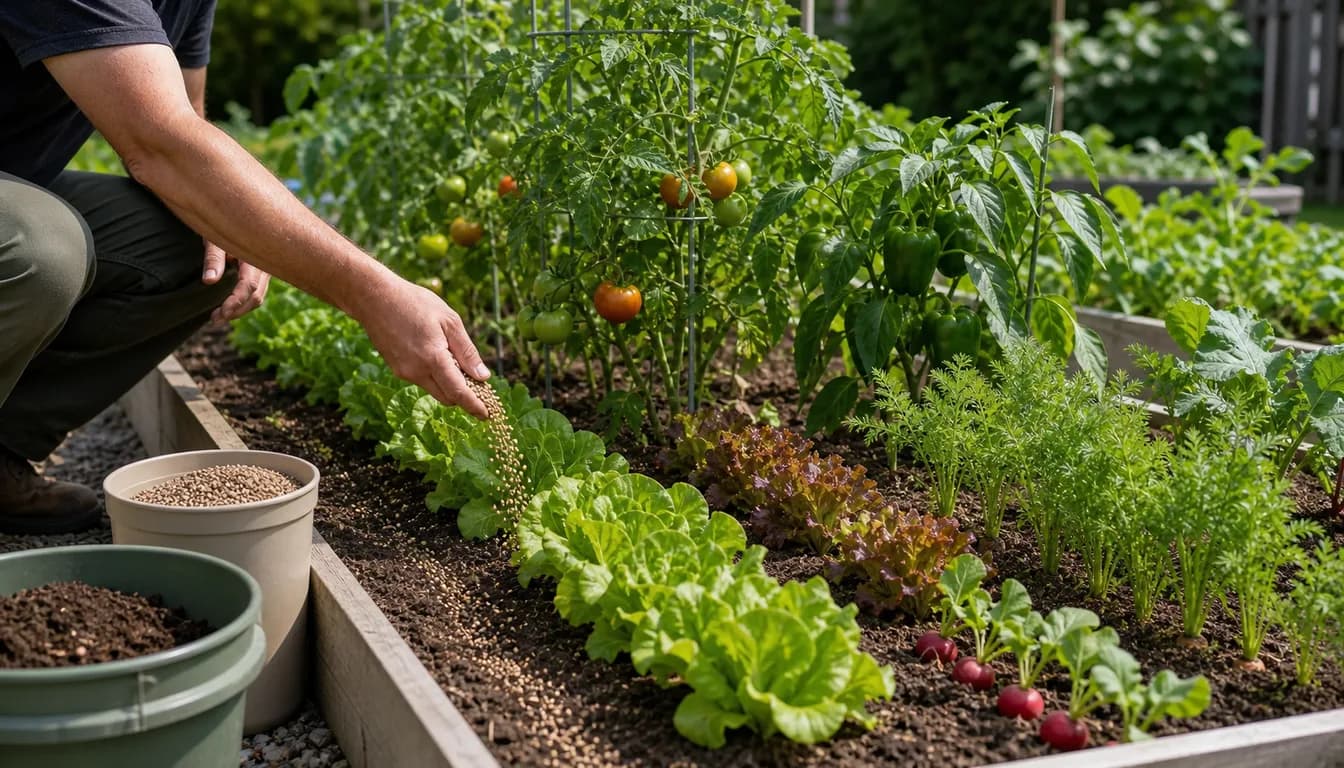
Best Fertilizer for Vegetables by Garden Type
Learn how to pick the best fertilizer for vegetables by crop group, soil condition, and garden setup so you feed beds, rows, and containers without wasting nutrients.
11 min read