Fertilizingschedule11 min read
How to Fix Compacted Soil for Healthier Roots
Learn practical ways to loosen compacted soil in lawns, beds, and veggie gardens so roots can breathe, water can soak in, and plants grow.
Hard soil that sheds water and fights every shovel swing is more than annoying. Compaction starves roots of air, traps water at the surface, and keeps fertilizers sitting on top instead of feeding plants.
Fixing compacted soil starts with confirming the layer, then matching the repair to beds, lawns, or containers. Aeration, compost, and better watering work together, just like timing fertilizer does in a high‑yield vegetable garden.
quizSpotting Compacted Soil Before You Grab a Shovel
Footprints that linger on a lawn, puddles that hang around for hours, and beds that crack when dry are all red flags. Compacted soil blocks air pockets, so water and roots have nowhere to go.
You can confirm compaction with a screwdriver or soil probe. Push it straight down after normal watering or rain. If you struggle to get deeper than 2–3 inches, the top layer is squeezed tight and roots will hug the surface.
Plants growing in compacted areas look stressed even when watered. Lawns thin out into patches, while shrubs like front‑yard boxwood show slow, weak growth compared to looser spots. Vegetables may stay small and bolt early.
Do a simple hand test in beds. Dig a small hole about 6 inches deep. If the top crumbles but the layer beneath feels hard and slick, you likely have a compacted subsurface layer that needs loosening, not just more fertilizer.
Water that cannot soak into the root zone will never carry fertilizer where plants can use it.
If your fertilizer seems useless and water runs off, compaction is almost always part of the problem.
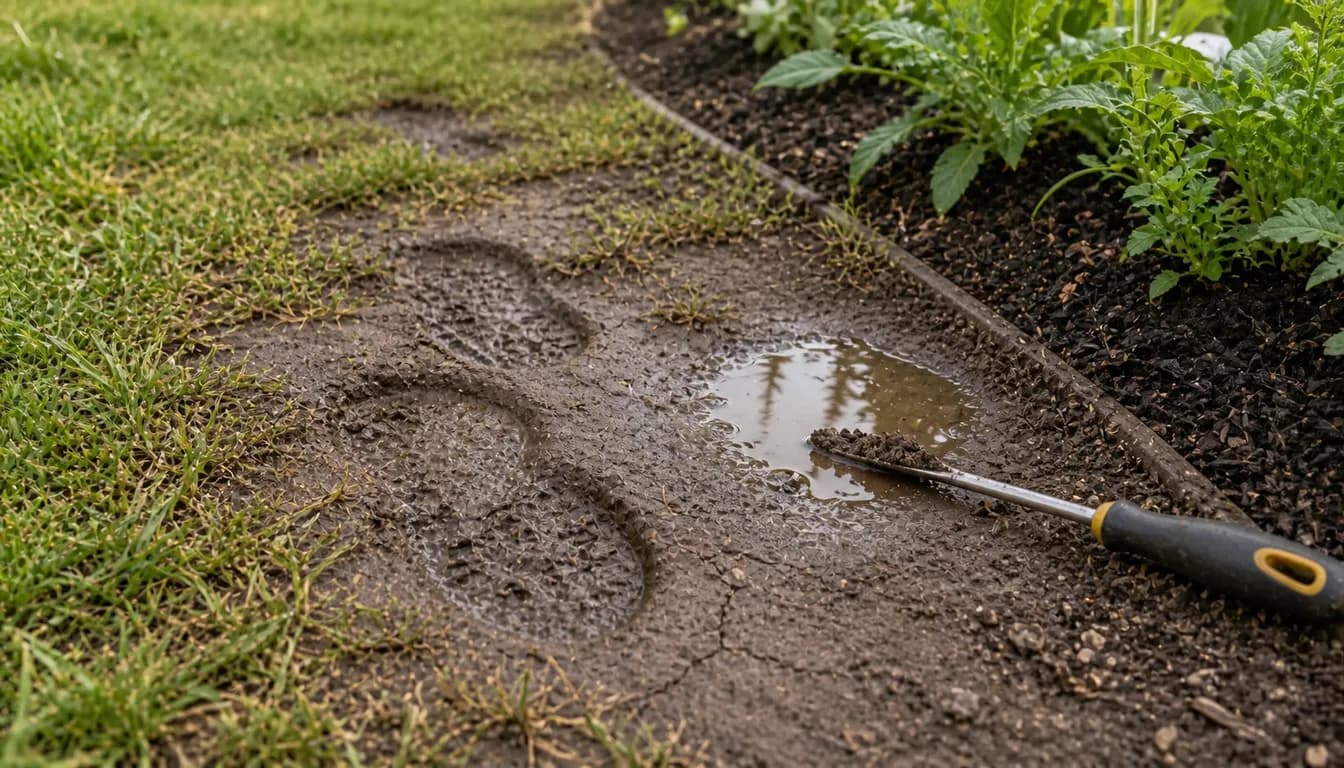
Persistent footprints and puddles are classic signs of soil compaction.
scienceWhy Soil Gets Compacted in the First Place
Heavy foot traffic, riding mowers, and cars parked on the grass push soil particles tighter together over time. Clay soils in Zone 5–7 suburbs with kids and dogs are especially prone to turning into brick.
Construction work is another major cause. New homes often have topsoil stripped, then equipment drives over the subsoil repeatedly. When a thin layer of topsoil is tossed back on, trees like young oak trees or shrubs struggle for years because their roots hit a dense layer underneath.
Regular shallow watering makes compaction worse. Sprinklers that run daily for ten minutes only wet the surface. Roots stay near the top, then foot traffic and mower wheels crush that thin layer. Deep, infrequent watering, like we use for deep‑root lawn watering, encourages roots to push lower instead.
Some garden habits also tighten soil. Working beds when they are soggy smears particles together. Walking between rows in a narrow vegetable plot compresses the same strips all season. Over time, the root zone for crops like indeterminate tomatoes turns into a shallow pan that dries fast and floods easily.
Compaction builds slowly and is easier to prevent than to undo. Understanding how your daily routines affect soil structure helps you fix current trouble spots and stop new ones from forming.
Guide — See AlsoWhen to Fertilize Your Garden for Real ResultsLearn exactly when to fertilize vegetable beds, flowers, fruit, and lawns so you feed plants at the right time instead o
chevron_rightyardLoosening Garden Beds With Manual Aeration and Organic Matter
Garden beds respond fastest to simple hand tools and organic matter. You do not need to double‑dig the whole space, but you do need to break that compacted layer and keep it open with roots and compost.
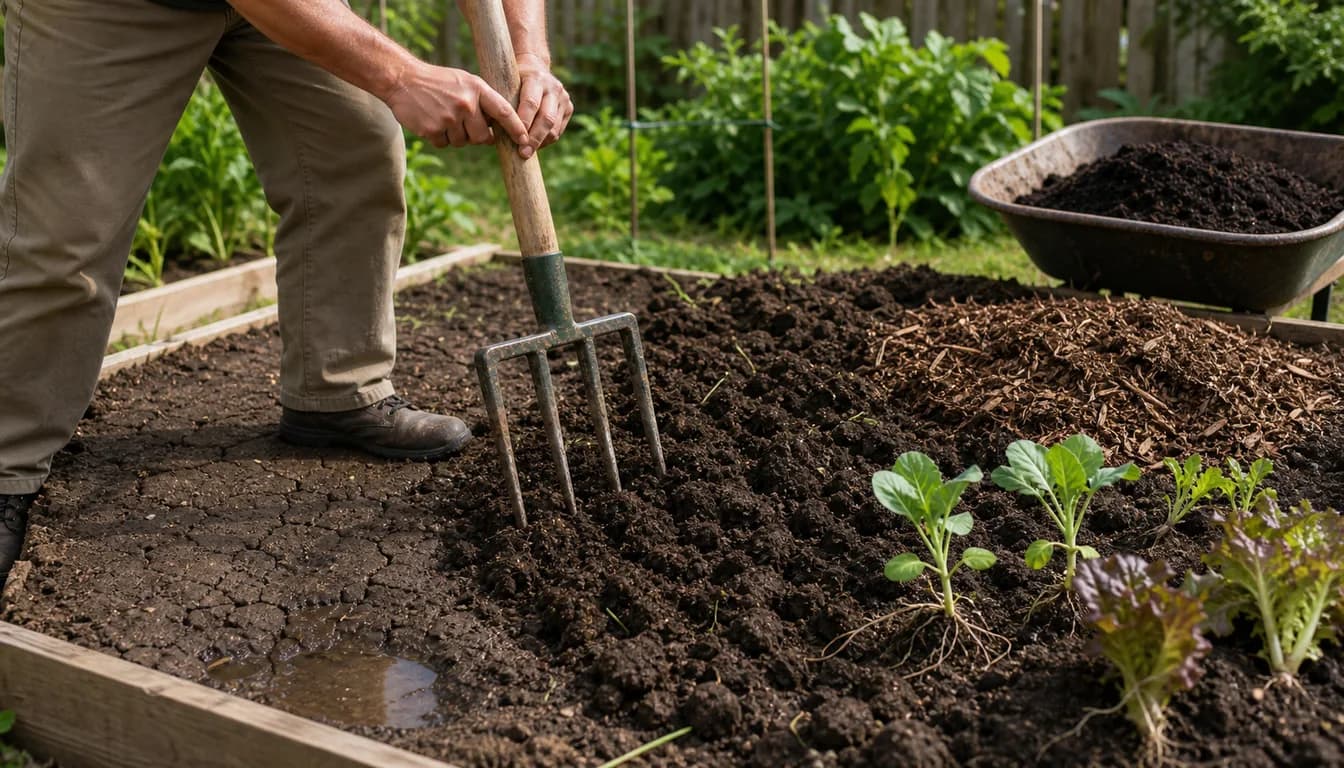
Start by loosening the soil when it is slightly moist, not soggy. Use a digging fork or broadfork, working in rows. Push the tines 8–10 inches deep and gently rock back to lift, without turning layers completely. This cracks the dense layer while keeping microbes closer to where they live.
After loosening, spread 2–3 inches of finished compost or well‑rotted manure on top. Rake it into the top 4–6 inches. Organic matter holds moisture while also improving drainage, which helps perennials like deep‑rooted coneflower clumps punch roots farther down.
Switch to permanent or semi‑permanent paths to protect your work. Keep your feet off planting zones and concentrate traffic on mulched aisles. This is especially helpful in vegetable rows with crops like long carrot roots that need loose soil to grow straight and deep.
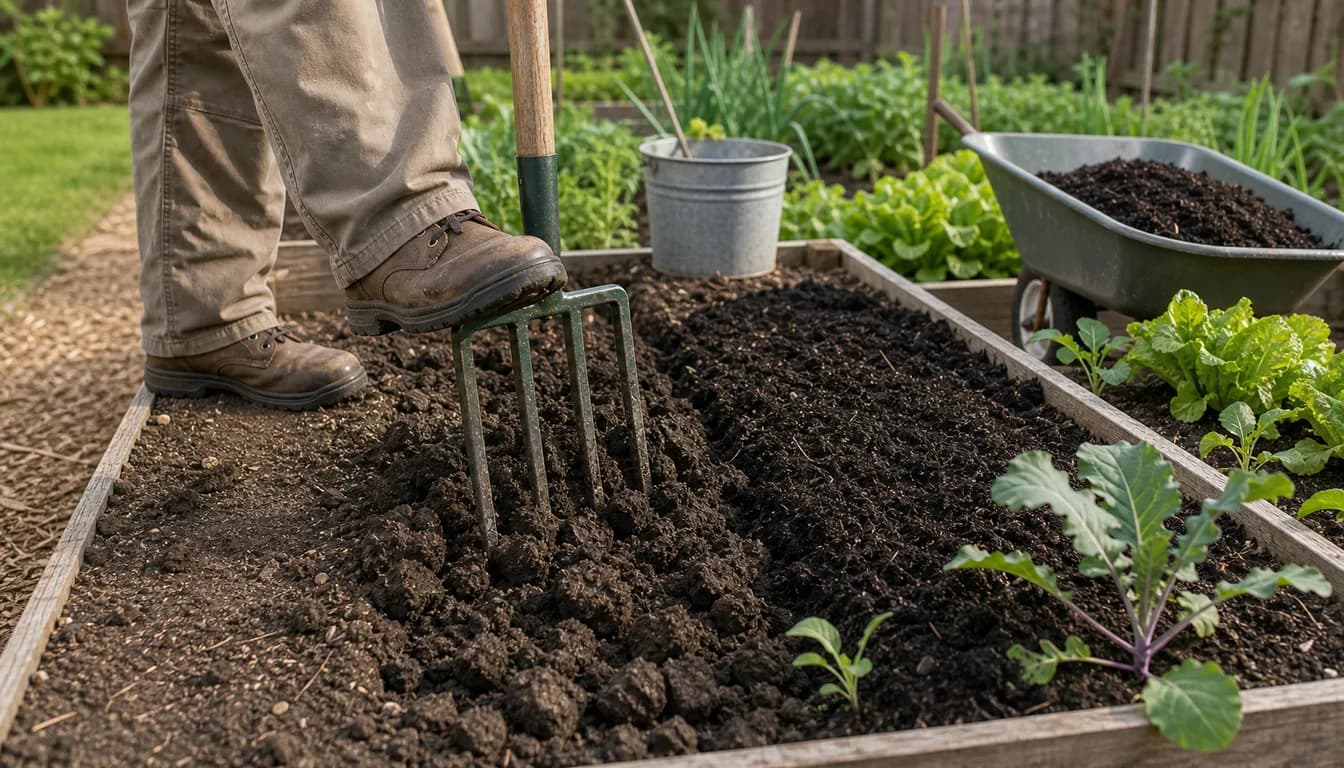
Using a broadfork in moist soil loosens compaction without flipping all the layers.
- fiber_manual_recordCompost layer: 2–3 inches across the bed surface
- fiber_manual_recordLoosening depth: 8–10 inches with a fork or broadfork
- fiber_manual_recordMulch on top: 2 inches of shredded leaves or straw
- fiber_manual_recordRepeat cycle: every 1–2 years for heavy clay
Over a few seasons, earthworms, roots, and consistent compost additions rebuild structure. You will see less crusting after rain and easier trowel work around young transplants.
Email Updates
Join the KnowTheYard update list
Zone-specific advice, seasonal reminders, and new plant guides — no filler.
grassAerating Compacted Lawns Without Starting From Scratch
Lawns rarely need total replacement just because of compaction. Core aeration combined with topdressing can bring turf back for warm‑season bermuda stolons. Cool‑season fescue blades in cooler zones can recover the same way.
Core aerators pull plugs about 2–3 inches deep and leave them on the surface. These openings give roots oxygen, let water soak in, and create channels for compost and fertilizer. Spike shoes or solid‑tine tools only push soil sideways, which does not relieve true compaction.
Time aeration when grass is actively growing. Cool‑season lawns in Zone 5–7 respond best in fall, often right before overseeding using a method similar to thickening thin turf. Warm‑season lawns in Zone 8–10 prefer late spring once they are fully green.
Right after aeration, spread 0.25–0.5 inches of screened compost across the lawn. Use a leaf rake or leveling rake to work it into the holes without burying the grass. This topdressing feeds soil life and gradually replaces dense mineral soil with a looser mix.
Avoid aerating during summer drought or winter dormancy. Stressed grass will not fill in the holes and weeds move in faster.
Follow with a deep watering so plugs soften and compost washes into the cores. Over the season, repeat deep, infrequent watering similar to practices for drought‑tolerant plantings to encourage roots to chase moisture down through the newly opened channels.
Guide — See AlsoWhat Is Loamy Soil and Why Gardeners Love ItUnderstand what loamy soil really is, how it feels, drains, and holds nutrients, plus simple ways to improve your garden
chevron_rightcalendar_monthAftercare: Helping Soil Stay Open Once You Fix It
Freshly loosened soil can tighten back up within a season if you treat it the same way as before. Think of this phase as rehab, where roots and microbes rebuild the soil structure you just opened.
Consistent moisture is the first job. Aim for deep watering that wets the top 6 to 8 inches instead of daily sprinkles. That depth encourages roots of tomato transplants and shrubs to grow down through the loosened zone.
A surface cushion comes next. Add 2 to 3 inches of shredded bark, chopped leaves, or straw, but do not let mulch touch the trunks of young apple trees. Mulch shields soil from pounding rain and slows re-compaction.
Traffic rules finish the picture. Keep people, wheelbarrows, and pets off newly opened beds. Lay stepping stones or a simple plank if you need to weed or harvest without undoing your work.
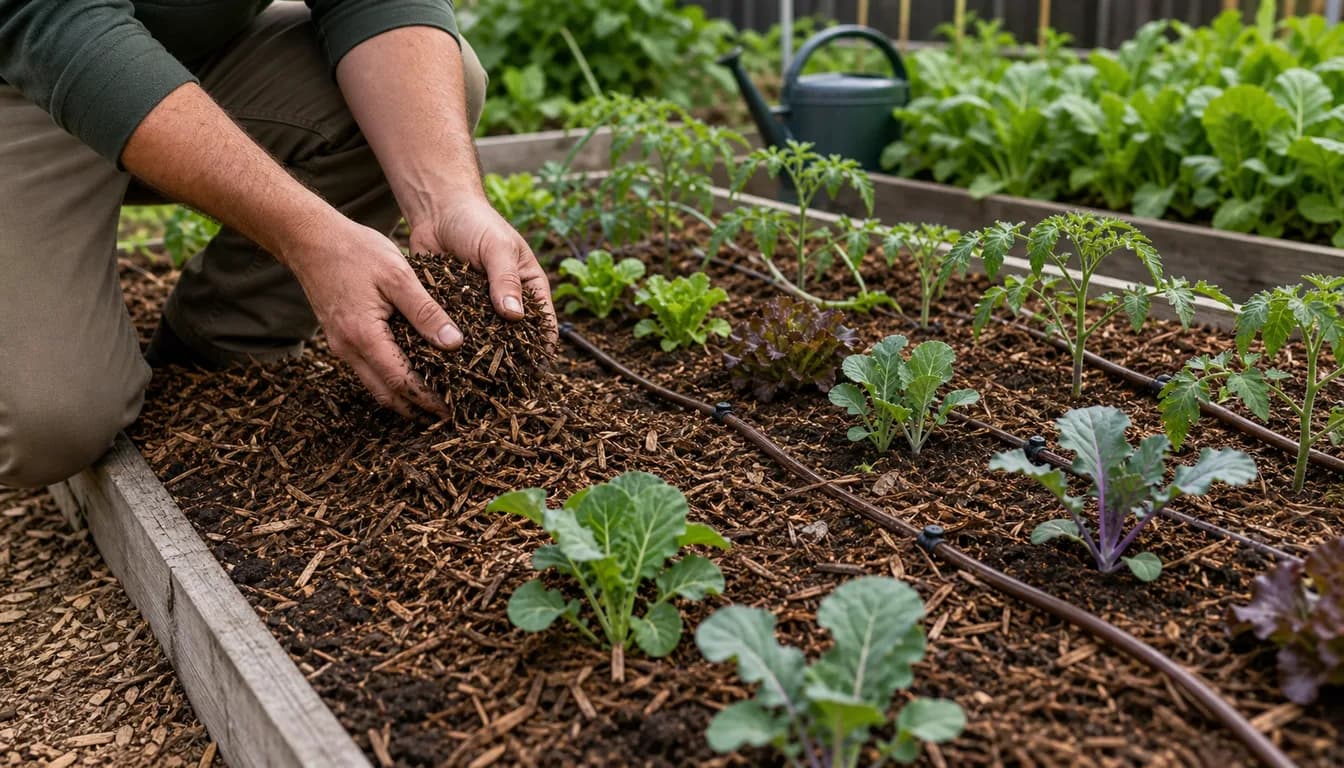
Mulch and steady moisture help freshly loosened soil keep its new structure.
- fiber_manual_recordWater depth: Moisten top 6–8 inches per session
- fiber_manual_recordMulch layer: Maintain 2–3 inches year round
- fiber_manual_recordFoot traffic: Use boards or paths, avoid bare soil steps
- fiber_manual_recordFertilizer timing: Feed only after good drainage returns
thermostatTiming Fixes by Season and Climate
Soil responds very differently in April than it does in August. You can fix compaction any time the ground is workable, but some seasons give you faster recovery and thicker roots.
Cool-season lawns, like tall fescue lawns and Kentucky bluegrass yards, bounce back best from core aeration in early fall. Soil is still warm, weed pressure is lower, and roots are eager to grow.
Warm-season turf such as hot-climate bermuda and home zoysia patches prefer late spring through midsummer. Wait until they are fully green and actively growing so holes fill in quickly instead of staying bare.
For vegetable beds in zones 5–7, deep loosening and compost digging fit well in early spring or fall. In hotter areas like zone 9 gardens, heavy work is easier on you and the soil structure in the cooler months.
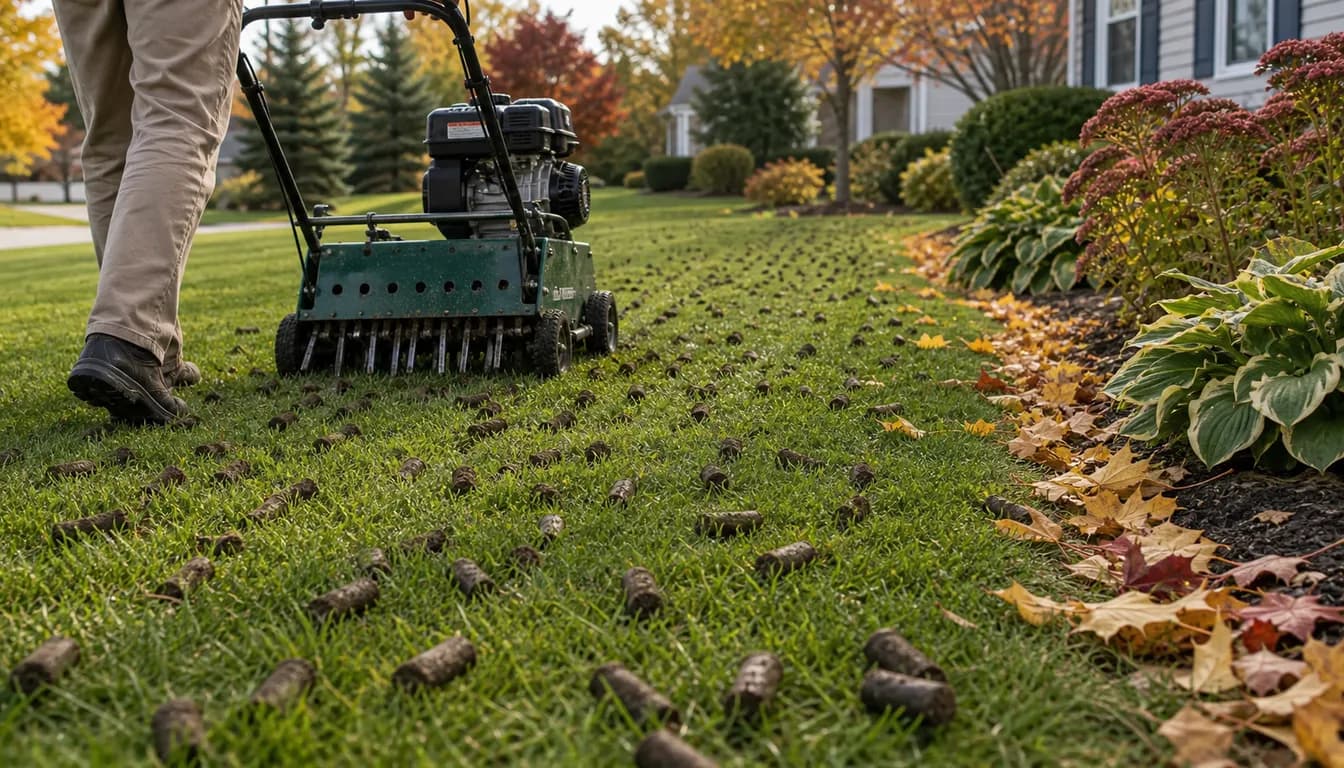
Cool-season lawns recover from core aeration fastest in early fall.
- fiber_manual_recordCool-season lawns: Core aerate early fall
- fiber_manual_recordWarm-season lawns: Aerate late spring to midsummer
- fiber_manual_recordVeggie beds: Loosen in spring or fall
- fiber_manual_recordClay soils: Avoid working when smeared and sticky
Guide — See AlsoBenefits of Composting for Healthier Soil and PlantsLearn how composting turns kitchen scraps and yard waste into free fertilizer, improves soil, and boosts plant health in
chevron_rightcompostFertilizing After Compaction Repairs
Nutrients do not fix compacted soil, but good structure changes how fertilizer behaves. Once water can soak in instead of running off, you can feed plants without wasting product or burning roots.
In lawns, hold off on fertilizer right after aggressive core aeration if the grass is already stressed. Wait a week or two for watering to settle the soil, then follow the rates from your lawn fertilizer schedule so you are feeding roots, not weeds.
Garden beds respond well to slow, steady nutrition. A 1 to 2 inch layer of finished compost worked into the top few inches supplies nutrients and also keeps pores open. That beats dumping a strong synthetic fertilizer into soil that is still recovering.
Container plants grown in compacted potting mix, like a potbound fiddle leaf fig tree, should be repotted into fresh mix before you think about feeding. Never correct poor structure by adding more fertilizer, it just concentrates salts in tight soil.
- fiber_manual_recordLawns: Fertilize 1–2 weeks after aeration
- fiber_manual_recordBeds: Use compost as both amendment and slow fertilizer
- fiber_manual_recordPots: Repot first, then feed lightly
- fiber_manual_recordSalt risk: Avoid high-dose quick-release products
warningCommon Mistakes That Re-Compact Soil Fast
Most compacted yards are not ruined by one bad decision. They get that way from small habits that repeat all year. Breaking those habits matters as much as any aerator or broadfork.
Working soil when it is wet is the biggest offender. If a squeezed handful of soil makes a slick ribbon, wait. Compacting wet clay around spring peony clumps or vegetable rows can set you back a whole season.
Over-tilling comes next. It feels satisfying to pulverize every clod, but repeated rototilling breaks natural aggregates and collapses pore spaces. Smooth the top few inches for planting, then leave deeper layers alone.
Heavy equipment finishes the damage. Parking trailers on the lawn, stacking firewood by your foundation hydrangeas, or driving mowers over the same track in a narrow side yard all press soil until roots struggle for air.
Never till or drive on soil that sticks to your shovel in thick globs, you will create long-lasting compaction.
The prevention list is short, but it has to become a habit.
- fiber_manual_recordWet tilling: Wait until soil crumbles instead of smears
- fiber_manual_recordDeep rototilling: Limit to initial bed creation
- fiber_manual_recordRepeated tire tracks: Re-route traffic or add paths
- fiber_manual_recordStorage: Keep heavy items off root zones
Guide — See AlsoWhen to Apply Fertilizer to Your Vegetable GardenLearn exactly when to apply fertilizer to your vegetable garden by soil type, crop, and growth stage so you get steady h
chevron_rightscienceAdvanced Fixes for Stubborn Clay and High-Traffic Areas
Some spots fight every basic fix. Side yards between houses, play areas, and driveways over hard clay may need heavier tactics or design changes to stay plantable.
Permanent paths solve a lot of problems. Lay pavers or gravel in the routes kids, pets, and mowers use, then treat the remaining space as a planting bed. This keeps soil near shade hosta clumps or shrubs from being walked to death.
For extreme clay, deep ripping with a broadfork or rented stand-on aerator every 1–2 years helps. Combine that with annual topdressing of compost to slowly change structure from the top down, instead of dumping sand that can cement into bricks.
In vegetable gardens, consider raised beds at least 10 to 12 inches tall over compacted subsoil. You can still grow deep-rooted crops like carrots in loose soil while the subsoil under the bed gradually improves from worm activity and moisture.
- fiber_manual_recordPaths: Put hard surfaces where people always walk
- fiber_manual_recordDeep loosening: Repeat on worst clay every 1–2 years
- fiber_manual_recordTopdressing: Add 0.5–1 inch of compost annually
- fiber_manual_recordRaised beds: Use when subsoil is basically concrete
tips_and_updates
Pro Tips
- check_circleTest for compaction with a screwdriver after rain; if it stops at 2 inches, start loosening.
- check_circleWork soil only when it is moist, not wet, to avoid smearing particles together.
- check_circleSwitch to deep, infrequent watering so roots grow below the compacted surface layer.
- check_circleKeep feet and wheelbarrows on dedicated paths to protect improved beds from new compaction.
- check_circleCore‑aerate lawns during active growth, then topdress with a thin layer of screened compost.
- check_circleUse mulch on beds and paths to cushion soil from rain impact and foot pressure.
- check_circleGrow deep‑rooted perennials and cover crops to act as living tillers that naturally open soil.
quiz
Frequently Asked Questions
How long does it take to fix compacted soil?expand_more
Surface compaction can improve in one season with aeration and compost. Deep, clay-heavy compaction is a multi-year project, where yearly topdressing, smart watering, and traffic control slowly rebuild structure down through the root zone.
Will worms and microbes loosen compacted soil on their own?expand_more
Healthy soil life helps a lot, but they need decent conditions first. Once you open pathways and add organic matter, earthworms and microbes keep pores from collapsing. In heavily compacted yards, they cannot fix the problem without your initial mechanical help.
Is sand a good fix for clay compaction?expand_more
Adding small amounts of sand to heavy clay can actually make it harder, like brick. Focus on compost, shredded leaves, and mulches instead. Sand only helps when it is a very large fraction of the mix, which is not practical in most home yards.
Should I aerate my lawn every year?expand_more
High-traffic or clay lawns benefit from annual core aeration, especially with kids, dogs, or mowers. On deeper, loamier soils with light use, aerating every 2–3 years plus good mowing and watering practices is usually enough to prevent serious compaction.
Can I plant trees or shrubs in compacted soil?expand_more
You can, but growth will be slow and roots stay shallow. It is better to loosen a wide planting area, improve drainage, and mulch well before adding woody plants like azalea shrubs. Flowering dogwoods establish stronger roots when the surrounding soil is opened first.
menu_book
Sources & References
- 1.Penn State Extension – Soil Compaction in the Home Landscapeopen_in_new
- 2.University of Minnesota Extension – Preventing Soil Compactionopen_in_new
- 3.Oregon State University Extension – Aerating Lawnsopen_in_new
- 4.University of Illinois Extension – Improving Garden Soil with Organic Matteropen_in_new
Related Guides
Benefits of Composting for Healthier Soil and Plants
Learn how composting turns kitchen scraps and yard waste into free fertilizer, improves soil, and boosts plant health in any size garden.
12 min read
Best Fertilizer for Indoor Plants
Learn how to choose the best fertilizer for indoor plants by growth style, season, and pot size without burning roots or overfeeding slow growers.
14 min read
Best Fertilizer for Vegetables by Garden Type
Learn how to pick the best fertilizer for vegetables by crop group, soil condition, and garden setup so you feed beds, rows, and containers without wasting nutrients.
11 min read