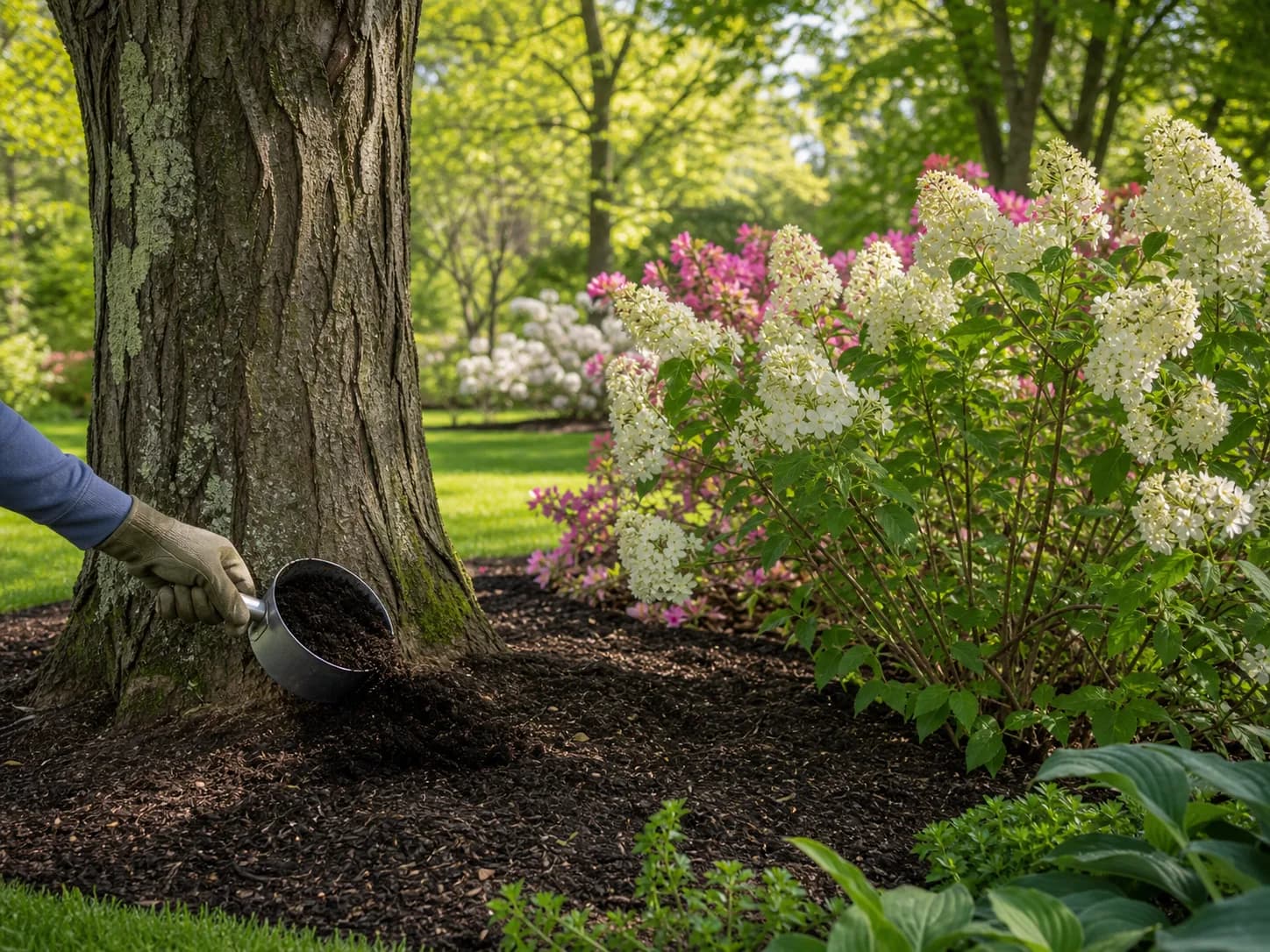
Fertilizingschedule10 min read
When to Fertilize Trees and Shrubs Without Pushing Weak Growth
Learn the best time to fertilize trees and shrubs, how timing changes for flowering shrubs, evergreens, and fruit trees, and when to skip feeding altogether.
Trees and shrubs do not need fertilizer on the same clock as lawns or annual flowers. Most woody plants feed best when roots are active and the plant can use those nutrients for steady extension growth instead of a late burst of tender stems.
For most yards, the safest window is early spring just before or as buds swell; a few plants also handle a light follow-up after bloom. The real job is knowing when to feed, when to hold back, and how to match timing with the kind of woody plant you grow.
compostStart with root activity, not the bag calendar
Woody plants respond slowly, so fertilizer timing should follow root activity instead of your lawn routine. In most climates, roots on Apple Tree saplings, Boxwood hedges, and Hydrangea shrubs wake up in cool, moist spring soil before the canopy is fully leafed out.
That is why the main feeding window usually lands in late winter to early spring, right around bud swell. Feed just before active spring growth and roots can capture nutrients while the plant is building leaves, stems, and flower buds.
Late-summer or fall feeding is where many gardeners get in trouble; it pushes soft new shoots that do not harden before cold weather. In colder yards like zone 5 gardens, that tender flush often winter-burns even if the plant itself is hardy.
- fiber_manual_recordBest general window: Late winter to early spring as buds swell
- fiber_manual_recordSoil condition: Moist, workable soil; not frozen, soggy, or powder dry
- fiber_manual_recordMain risk: Late feeding that triggers weak fall growth
yardNew plantings and established plants need different feeding
Freshly planted trees and shrubs do not need a strong fertilizer hit in the planting hole. New roots are trying to spread into the surrounding soil; too much quick nitrogen can stress them instead of helping.
For first-year plantings like a young Arborvitae screen or Azalea bed, focus on deep watering and mulch first. If growth is steady and leaves look healthy, you can often wait until the next spring to feed lightly.
Established woody plants are different. Once roots are settled, a modest spring application can support denser foliage, stronger flower set, or steadier annual extension growth. This is especially useful in lean soils, new subdivisions, or beds where you already know compaction is part of the problem from fixing compacted soil.
If a tree or shrub is newly planted and already stressed, solve water and drainage first. Fertilizer is not the rescue step.
That pause matters more than any product label because root recovery comes before feeding.
- fiber_manual_recordYear 1: Water and mulch first; feed only if growth clearly stalls
- fiber_manual_recordEstablished plants: Light spring feeding is usually enough
- fiber_manual_recordBefore feeding: Check soil moisture and root-zone drainage
Guide — See AlsoWhat Is Loamy Soil and Why Gardeners Love ItUnderstand what loamy soil really is, how it feels, drains, and holds nutrients, plus simple ways to improve your garden
chevron_rightecoFlowering shrubs, evergreens, and fruit trees do not peak at the same time
Flowering shrubs can use timing a little differently from evergreens or fruiting trees. Spring bloomers like lilac and some Azalea types usually do best with a light early-spring feeding or a gentle post-bloom follow-up, especially if last year's growth looked weak.
Evergreens and conifers, from Boxwood to Arborvitae, usually need only one feeding in early spring. They do not benefit from repeated high-nitrogen applications, and they are especially vulnerable to late flushes that fail to harden before winter.
Fruit trees and fruiting shrubs should be fed conservatively. Young Apple Tree and Peach Tree plantings often get a small spring dose as buds swell, then nothing more unless a soil test or weak growth says otherwise. Many backyard growers pair that schedule with pruning timing from apple tree pruning recovery or flowering shrub timing so feeding and canopy structure work together.
- fiber_manual_recordFlowering shrubs: Early spring, with optional light dose after bloom
- fiber_manual_recordEvergreens: One early-spring feeding only in most yards
- fiber_manual_recordFruit trees: Light spring feeding; avoid repeated late-season nitrogen
Email Updates
Join the KnowTheYard update list
Zone-specific advice, seasonal reminders, and new plant guides — no filler.
lightbulbHow to tell when a plant actually needs feeding
Not every tree or shrub needs annual fertilizer. Mature plants in decent soil often coast for years on mulch, leaf litter, and normal root spread. Feeding out of habit can create lanky growth with no real payoff.
Look for specific cues instead. Pale foliage, shorter-than-usual new shoots, weak bloom, or a plant that has outgrown the soil around a new build can all justify a spring feeding. On the other hand, a vigorous Weeping Willow or strong Hydrangea that already grows hard each year rarely needs more push.
A soil test is the cleanest answer if you are unsure. It helps you separate low fertility from pH, drainage, or watering issues. That matters because overwatering can mimic nutrient stress, especially on woody plants that stay too wet, as covered in overwatered tree symptoms.
Feed because the plant or soil gives you a reason, not because the month changed.
- fiber_manual_recordGood reason to feed: Pale growth, weak extension, poor bloom, known lean soil
- fiber_manual_recordBad reason to feed: Routine habit on already vigorous plants
- fiber_manual_recordBest confirmation: Soil test plus observed growth pattern
Guide — See AlsoComposting Facts That Actually Help Your GardenStraight answers on composting facts that matter for home gardens, from what to put in the pile to how long it really ta
chevron_rightwater_dropApplication timing matters as much as fertilizer type
Even the right product underperforms if you throw it on at the wrong moment. Spread granular fertilizer over moist soil, then water it in gently so nutrients move into the root zone instead of sitting on mulch.
Keep fertilizer away from trunks and main stems. Feeder roots sit out near the drip line, not jammed against bark. That is true when you are feeding privacy Arborvitae, a specimen Japanese Maple, or a mixed bed of flowering shrubs.
Slow-release products are usually the safest fit for woody plants because they feed gradually. If you already manage broader timing questions through general fertilizing schedules, use the woody-plant end of that logic here: steady, spring-biased feeding beats repeated quick doses.
- fiber_manual_recordApply on moist soil: Never on bone-dry roots
- fiber_manual_recordPlacement: Spread around the root zone, not at the trunk base
- fiber_manual_recordWater in: Light irrigation after application helps move nutrients down
warningCommon mistakes that make woody plants worse
The biggest mistake is treating trees and shrubs like turf. Lawns can take more frequent seasonal feeding, but woody roots move slower and hold stress longer. A fertilizer schedule that works for lawn feeding can easily overstimulate shrubs or ornamentals.
Another common mistake is feeding stressed plants in heat. A wilted shrub in July often needs water or better mulch, not more nutrients. The same goes for trees planted into compacted subsoil or surrounded by soggy irrigation.
Finally, do not stack products. If a plant already received compost, a balanced spring fertilizer, and rich mulch, another "bloom booster" rarely solves anything. It usually just pushes top growth faster than the root system can support.
When a woody plant looks bad, diagnose water, soil, and root space first. Fertilizer belongs after the cause is clear.
That sequence keeps you from feeding the symptom instead of the cause.
- check_circleDo not copy lawn timing: for trees and shrubs
- check_circleDo not fertilize heat-stressed plants: in midsummer
- check_circleDo not stack products: hoping for faster recovery
Guide — See AlsoBest Time to Fertilize Your Lawn Around RainfallLearn exactly how to time lawn fertilizing with rain so you do not waste product, burn grass, or pollute runoff.
chevron_righttips_and_updates
Pro Tips
- check_circleFertilize woody plants a little before active spring growth, not after a long stretch of summer heat.
- check_circleUse mulch to build soil slowly so mature trees and shrubs need fewer fertilizer inputs over time.
- check_circleKeep fertilizer a few inches off trunks and spread it where feeder roots actually run.
- check_circleSkip late-season feeding in cold climates so stems can harden before frost.
- check_circleCheck whether weak growth is really a drainage problem before you buy another bag of fertilizer.
quiz
Frequently Asked Questions
Should I fertilize trees and shrubs in fall?expand_more
Usually no. In most climates, fall feeding risks pushing tender growth that does not harden before winter. Early spring is safer for most woody plants.
Do newly planted shrubs need fertilizer right away?expand_more
Usually not. Focus on water, mulch, and root establishment first. Light feeding can wait until the plant is settled and actively growing.
Can I use lawn fertilizer on shrubs?expand_more
That is usually a poor fit. Lawn fertilizers often push more nitrogen than woody plants need and encourage weak, leafy growth instead of steady structure.
How often should mature trees be fertilized?expand_more
Only when growth or a soil test shows they need it. Many mature trees in decent soil do not need yearly fertilizer.
Related Guides
Benefits of Composting for Healthier Soil and Plants
Learn how composting turns kitchen scraps and yard waste into free fertilizer, improves soil, and boosts plant health in any size garden.
12 min read
Best Fertilizer for Indoor Plants
Learn how to choose the best fertilizer for indoor plants by growth style, season, and pot size without burning roots or overfeeding slow growers.
14 min read
Best Fertilizer for Vegetables by Garden Type
Learn how to pick the best fertilizer for vegetables by crop group, soil condition, and garden setup so you feed beds, rows, and containers without wasting nutrients.
11 min read