Fertilizingschedule11 min read
Make Homemade Vegetable Fertilizer That Actually Works
Learn how to mix safe, effective homemade vegetable fertilizer from common ingredients, when to use each type, and how to avoid burning your plants.
Store fertilizers add up fast, and half the time the box instructions feel vague. With homemade vegetable fertilizer, you control the ingredients, the strength, and the timing.
We will walk through simple recipes you can mix with pantry items and yard waste. You will see how to match each recipe to hungry crops like indeterminate tomatoes, leafy greens, and root beds; the goal is feeding a whole vegetable garden without leaning on expensive bags of blue crystals or guessing what your soil needs.
scienceUnderstand What Vegetables Really Need
Before mixing anything, it helps to know what you are feeding. Most vegetables lean on three main nutrients, nitrogen (N), phosphorus (P), and potassium (K).
Nitrogen pushes leafy growth, phosphorus supports roots and flowers, and potassium keeps plants tough and disease resistant. Secondary nutrients like calcium and magnesium matter too, especially for crops such as fruiting peppers and large tomato varieties.
Heavy feeders, including corn, winter squash vines, and many brassicas, pull more nutrients than quick salad greens. Sandy soil loses nutrients faster than dense clay, so two gardens on the same street may need different feeding plans.
A simple soil test tells you if you are short on phosphorus or already high in potassium. That keeps you from blindly dumping on fertilizer that your beds do not need.
Homemade fertilizer only works well if you match the recipe to what your soil already has and what your crops burn through fastest.
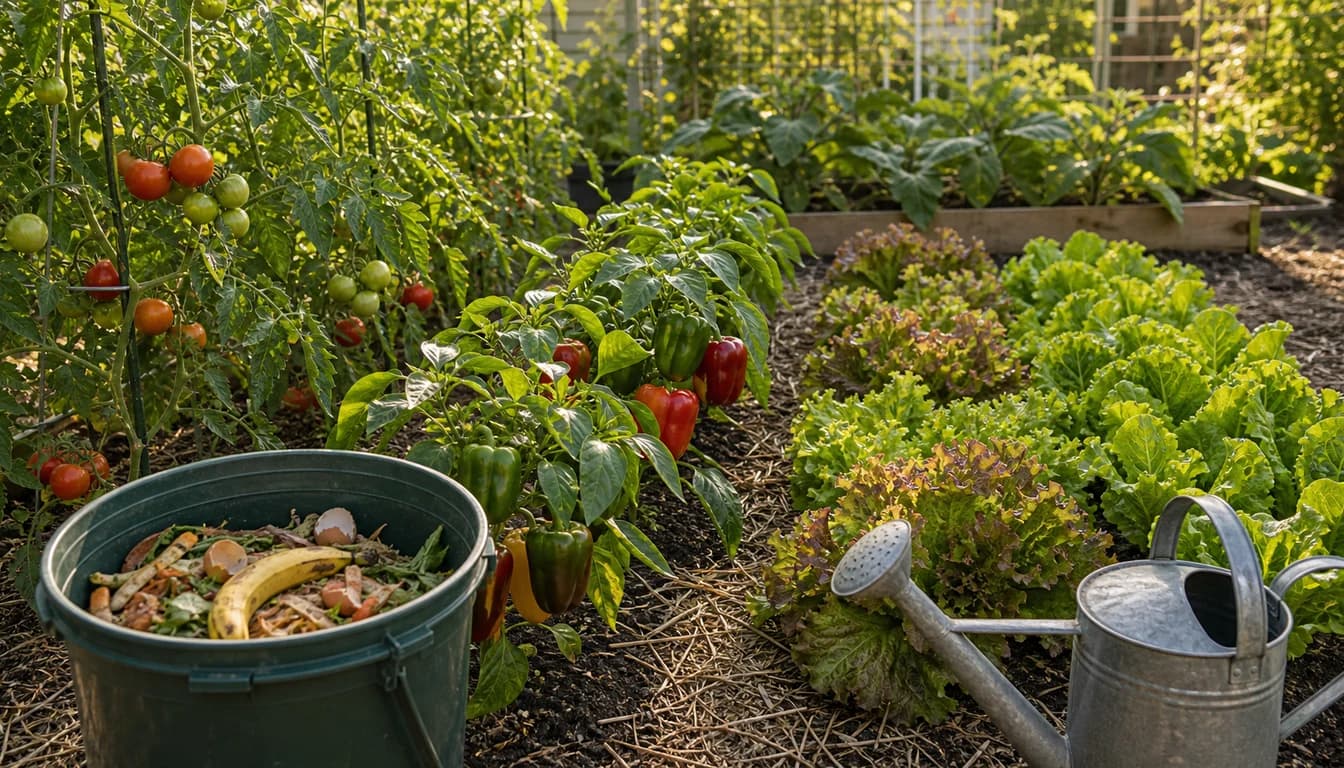
Different crops in the same bed use nutrients at different rates.
- fiber_manual_recordLeafy crops: Higher nitrogen for beds with spinach, kale, and lettuce
- fiber_manual_recordRoot crops: Steadier phosphorus and potassium for carrots, beets, and onions
- fiber_manual_recordFruit crops: Balanced NPK with extra calcium for tomatoes, cucumbers, and melons
compostGather Safe, High-Value Ingredients
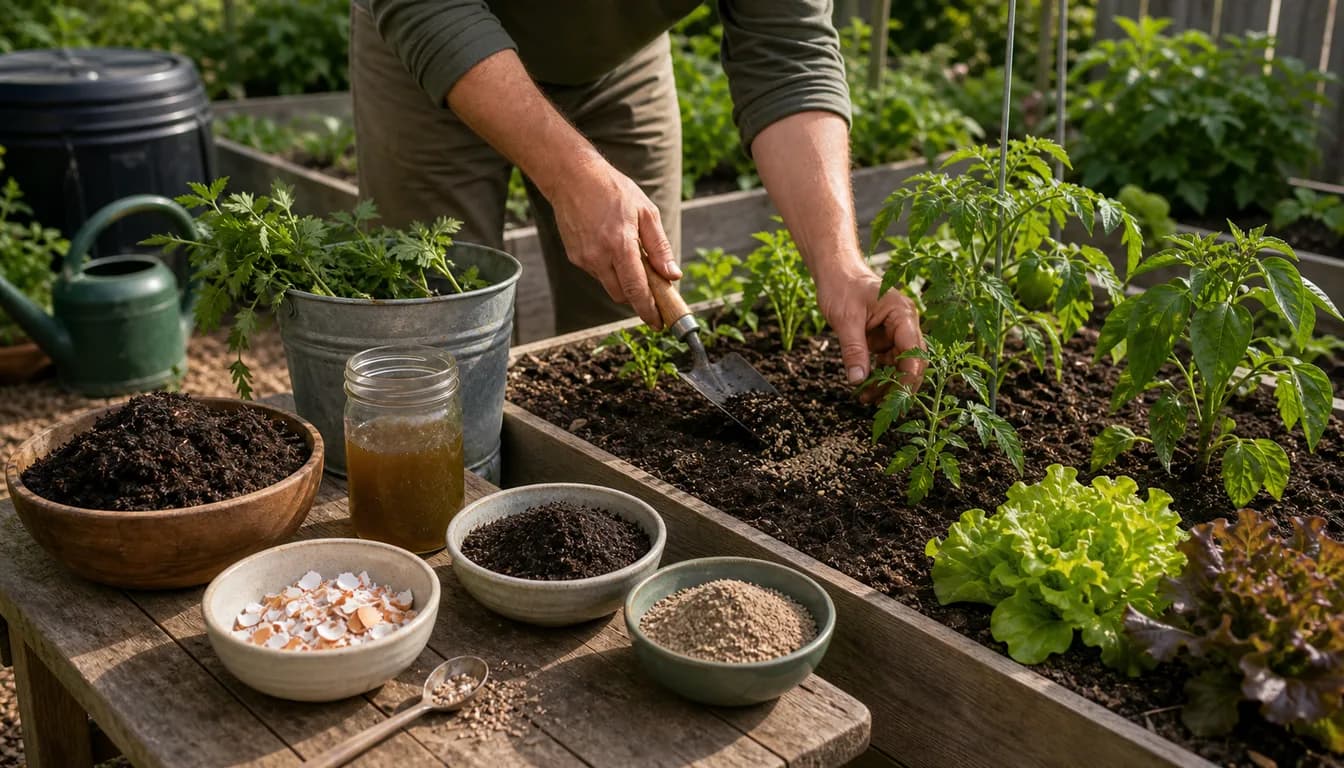
Good fertilizer ingredients are already around you. Kitchen scraps, grass clippings, and fall leaves all carry nutrients plants can reuse once they break down.
Split ingredients into three buckets, nitrogen rich, phosphorus rich, and potassium rich; that keeps the recipe choices easier to read. That makes it easier to build balanced mixes for crops like broccoli or eggplant transplants.
Nitrogen heavy inputs include fresh grass clippings, coffee grounds, and manure that has been composted for at least six months. Phosphorus comes from bone meal, rock phosphate, and well aged poultry manure.
Wood ash from untreated firewood, kelp meal, and banana peels bring potassium. Crushed eggshells are an easy source of slow release calcium for blossom-end-rot-prone tomatoes and sweet pepper plants.
Never use pet waste, treated lumber ash, or fresh manure directly on vegetables. They raise the risk of pathogens, burnt roots, and salt buildup in your beds.
That safety line matters more than any homemade recipe tweak, especially in beds you harvest every few days.
- fiber_manual_recordNitrogen sources: Coffee grounds, clover clippings, finished compost
- fiber_manual_recordPhosphorus sources: Bone meal, aged poultry litter, soft rock phosphate
- fiber_manual_recordPotassium sources: Wood ash in small doses, kelp meal, dried seaweed
- fiber_manual_recordCalcium and extras: Crushed eggshells, agricultural lime when soil tests call for it
Guide — See AlsoBenefits of Composting for Healthier Soil and PlantsLearn how composting turns kitchen scraps and yard waste into free fertilizer, improves soil, and boosts plant health in
chevron_rightlocal_floristMix a Simple Dry Fertilizer Blend
Dry blends are easy to store and sprinkle around plants. You can tailor a batch to heavy feeders like sweet corn or sprawling zucchini hills with just a few ingredients.
Think of this as your homemade all purpose garden food. It will not be perfectly labeled like a bagged 5-5-5, but it gives a gentle, steady feed that is hard to overdo.
A basic starting blend uses 4 parts compost, 1 part seed meal or alfalfa meal, 1 part rock phosphate or bone meal, and 1 part kelp meal. Mix these in a tote or wheelbarrow until the texture feels even.
For leafy beds with spinach rows or kale patches, add one extra part seed meal for more nitrogen. For root beds holding carrots and beets, hold back some seed meal and keep phosphorus and potassium steady.
Dry fertilizers still burn roots if you pour them directly against stems or load too much into a planting hole.
That is why the dry-rate checklist stays conservative on purpose.
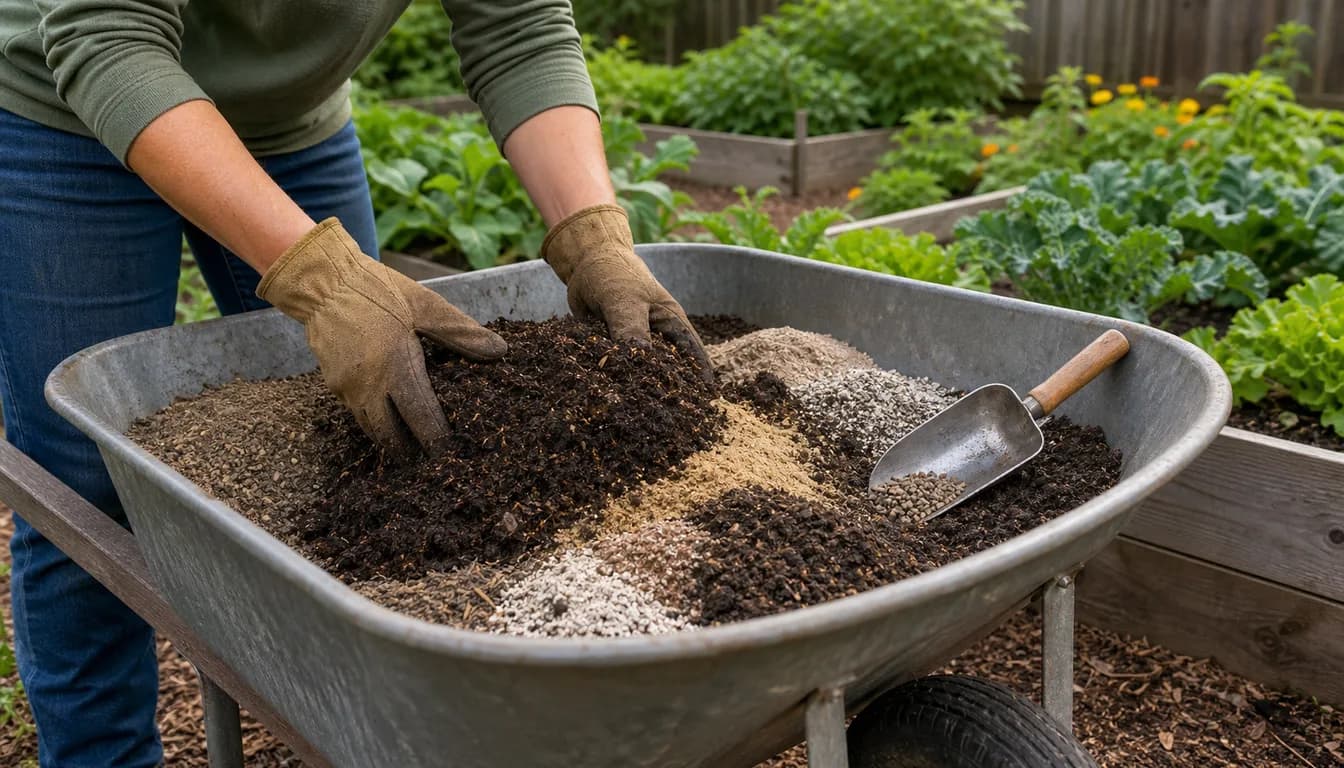
Blend dry ingredients well so each scoop carries a similar nutrient mix.
- fiber_manual_recordStandard bed rate: 2 to 3 cups per 10 square feet, scratched into the top inch
- fiber_manual_recordSide dressing rate: 1 to 2 tablespoons per medium plant like bell peppers
- fiber_manual_recordTiming: Once at planting, then lightly again midseason for long crops
Email Updates
Join the KnowTheYard update list
Zone-specific advice, seasonal reminders, and new plant guides — no filler.
water_dropBrew Compost Tea and Liquid Feeds
Liquid feeds act fast and are perfect when plants are already in the ground and look hungry. You can water in nutrients right at the root zone of flowering cucumbers or container patio tomatoes.
The simplest option is a passive compost tea. Fill a bucket one third full with finished compost, then top with water. Stir once daily and steep for 24 to 48 hours. Strain the liquid through a cloth and dilute it to a weak tea color before using.
For a stronger but still safe feed, mix 1 cup of fish emulsion or homemade fish scrap leachate into 5 gallons of water. Add half a cup of molasses if you want to feed soil microbes in beds holding pole beans. Spring peas can use the same mild microbe boost.
Most garden problems with homemade liquids come from making them too strong or letting them go foul in the sun.
If a bucket smells rotten or like sewage, do not put it on edible plants. Toss it on a non food hedge and start a fresh batch.
Smell is the fastest safety check before any liquid feed touches roots.
- fiber_manual_recordCompost tea dilution: About 1 part tea to 4 parts water for soil drenching
- fiber_manual_recordFeeding frequency: Every 10 to 14 days for containers, monthly for in ground beds
- fiber_manual_recordBest timing: Early morning or late afternoon to avoid leaf scorch
Guide — See AlsoWhen to Fertilize Lawn in Fall for Strong Spring GrowthLearn the right fall fertilizing window for cool- and warm-season lawns, how soil temperature affects timing, and how to
chevron_rightwater_dropApply Homemade Fertilizer Without Burning Plants
Placement matters more than the recipe. Keep homemade fertilizer 2-4 inches away from stems so salts do not burn roots on contact.
Work dry mixes into the top 1-2 inches of soil, then water right after. Moisture pulls nutrients into the root zone so your plants, not the sun, use them.
Liquid feeds belong on moist soil, not bone-dry beds. Water lightly first, then pour your compost tea around the base of tomato vines and other heavy feeders.
Never pour strong liquid fertilizer directly on dry roots. You will see leaf scorch within a day.
Use a simple rate for dry blends: about 1/4 cup per square foot for new beds, and 2 tablespoons per plant for established veggies like pepper starts. Cut that in half for herbs.
Liquid feeds can be weaker but more frequent. Aim for a 1:10 concentrate to water ratio for compost tea on crops like cucumber hills and zucchini plants.
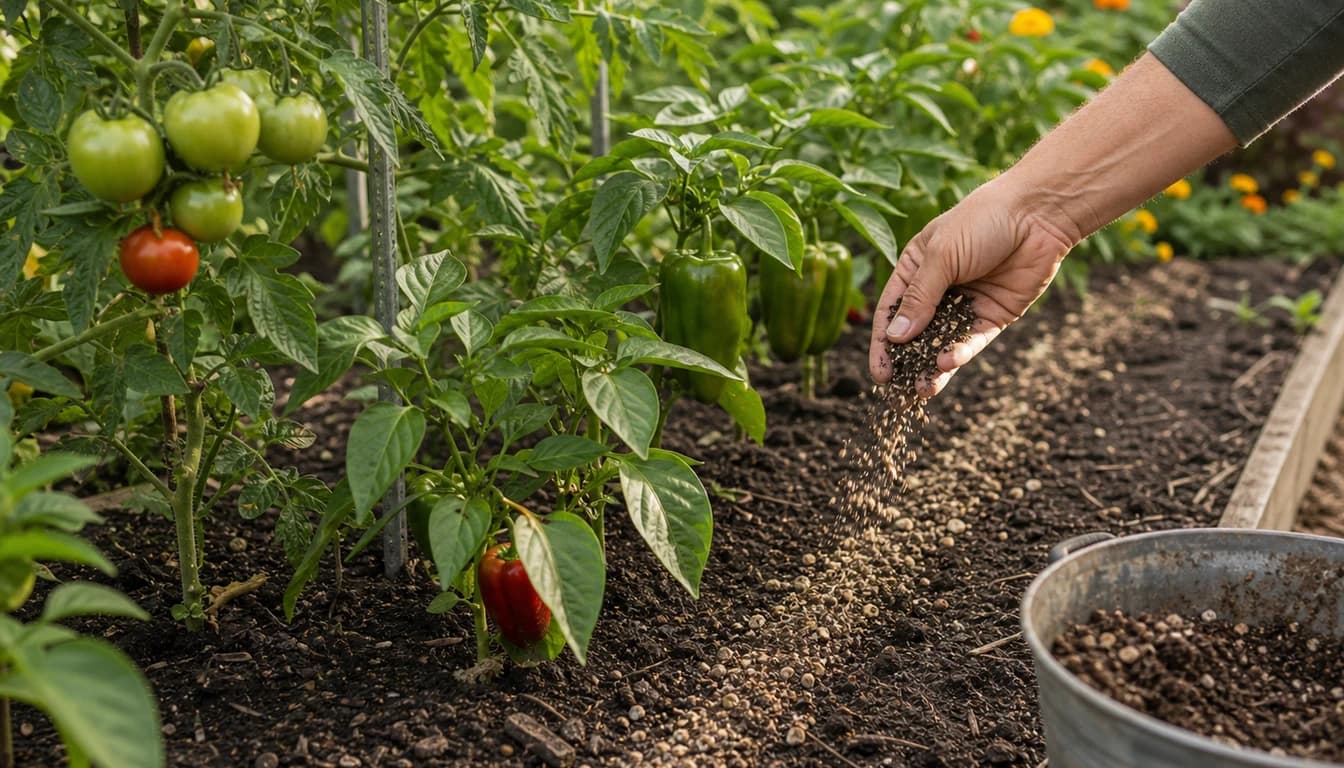
Side dress rows with dry fertilizer, keeping it a few inches from stems.
- fiber_manual_recordDry side-dress: 2 tablespoons per mature plant, scratched in and watered
- fiber_manual_recordRow application: 1/4 cup per square foot, mixed into topsoil before planting
- fiber_manual_recordLiquid soak: 1 part concentrated tea to 10 parts water on already moist soil
- fiber_manual_recordContainer veggies: half-strength rates, since pots hold salts closer to roots
calendar_monthTime Feedings To Plant Growth Stages
Vegetables follow a rhythm. You get the best results when fertilizer timing matches seedling, leafy growth, and fruiting stages instead of the calendar.
Seedlings of crops like broccoli transplants and kale starts only need very weak liquid feeds. Strong nitrogen at this stage makes them tall and flimsy.
Once plants are established and growing fast, nitrogen demand jumps. This is when side-dressing corn, bean rows, and spinach beds with your dry blend really pays off.
Fruit and root stages need more balance. Too much nitrogen late will give you big vines on pumpkin hills and leafy carrot tops instead of fruit and roots.
- fiber_manual_recordAt planting: Mix a light dose of dry fertilizer into the top 4 inches of soil for most crops.
- fiber_manual_record3-4 weeks after planting: Side-dress fast growers like young corn and pea vines when they hit 6-8 inches tall.
- fiber_manual_recordFirst flower buds: Switch to more phosphorus and potassium for flowering tomatoes, eggplant plants, and cantaloupe vines.
- fiber_manual_recordMidseason boost: One more light feeding halfway through the harvest window, especially in sandy soils.
Matching fertilizer to growth stage is worth more than perfect NPK numbers. It keeps plants from surging, stalling, then crashing later in the season.
Guide — See AlsoCan You Fertilize Wet Grass Without Damaging Your Lawn?Learn when it is safe to fertilize wet grass, when to wait, and how moisture, product type, and weather affect burn risk
chevron_rightthermostatAdjust Homemade Fertilizer For Soil and Season
Soil type changes how aggressively you can feed. Sandy ground leaches nutrients fast, while tight clay can hold salts and cause burn if you repeat heavy doses.
In loose sandy beds, your homemade blend can be used more often at lower rates. Shallow-rooted crops like radish rows and leafy greens appreciate steady light snacks instead of rare big meals.
Dense clay soil needs gentler treatment. Add more finished compost and leaf mold to your recipes so nutrients are buffered, especially for fussier crops like cauliflower starts and Brussels sprouts.
If your soil cracks when dry and puddles when wet, treat it as clay and go easy on concentrated feeds.
Cool spring soil releases nutrients slowly. An early-season application for peas, spinach, and cabbage seedlings can carry them a surprisingly long way.
Warm mid-summer beds burn through nitrogen quickly, especially under crops like sweet corn and watermelon vines. Plan a midseason side-dress even if you fertilized at planting.
- fiber_manual_recordSandy soil: Smaller doses every 3 weeks, extra compost in the top 6 inches
- fiber_manual_recordClay soil: Lower-strength mixes, more compost and leaf mold, longer gaps between feedings
- fiber_manual_recordCool weather crops: One strong base feeding, then light liquid boosts only if leaves pale
- fiber_manual_recordHeat-loving crops: Base feeding plus at least one midseason side-dress once growth explodes
quizTroubleshoot Yellow Leaves and Poor Growth
Nutrient problems often show up as yellow leaves, weak stems, or poor flowering. Before you change fertilizer, confirm watering and light are right for your beds.
Uniform pale leaves on older growth usually point to nitrogen shortage. This shows up fast on hungry plants like sweet corn stands and sprawling winter squash vines.
Yellowing between the veins on newer leaves suggests iron or magnesium issues. You see this on tomato foliage and pepper plants when pH runs high or soil stays cold.
Nutrient lockout from soggy, compacted soil looks like deficiency, but more fertilizer will not fix it.
If flowers drop on plants like pole beans and pea vines, check stress first. Heat, drought, or waterlogging often beat nutrient issues in the blame line.
Slow, stunted growth with dark green leaves can mean you fed too much nitrogen, especially on leafy beds of spinach rows and kale patches. Growth may look fine, but roots and fruit lag.
- fiber_manual_recordSuspected deficiency: Add a light side-dress of your dry blend and water deeply once.
- fiber_manual_recordPossible lockout: Loosen soil, add compost, and fix drainage before adding more fertilizer.
- fiber_manual_recordFlower drop: Improve watering and mulch first, then offer a mild liquid feed.
- fiber_manual_recordPast overfeeding: Flush beds with deep water twice over a week to leach excess salts.
Guide — See AlsoWhen to Fertilize Your Garden for Real ResultsLearn exactly when to fertilize vegetable beds, flowers, fruit, and lawns so you feed plants at the right time instead o
chevron_rightcompostKeep Homemade Fertilizers Safe, Stored, and Balanced
Homemade fertilizer ingredients are natural, but they still need careful storage. Bone meal, seed meals, and blood meal all attract pets and wildlife if left open.
Store dry mixes in sealed buckets with tight lids. Label them with the mix date and rough NPK, especially if you adjust blends for crops like garlic beds versus potato rows.
Compost tea and liquid feeds are fresher. Use them within 24-48 hours of brewing so they do not turn anaerobic and smelly.
Toss any liquid feed that smells rotten or sulfurous. Do not pour it on vegetables or patios.
That storage check keeps the feeding plan useful instead of sloppy.
Balance across the garden matters too. Heavy feeders such as indeterminate tomatoes, block-planted corn, and heading broccoli deserve the richest blends.
Light feeders, including many herbs like basil clumps and thyme mounds, prefer leaner soil. Too much nitrogen makes them floppy and dulls flavor.
- fiber_manual_recordLabel buckets: Include contents and how you plan to use each mix.
- fiber_manual_recordChild and pet safety: Keep bone and blood meal locked away from curious noses.
- fiber_manual_recordLiquid shelf life: Brew small batches you can use in two days.
- fiber_manual_recordBed planning: Group hungry crops together so you can feed that area more heavily.
If you ever move from homemade blends to bagged products in part of the yard, read labels and compare with organic versus synthetic options so you do not accidentally double up on nutrients.
tips_and_updates
Pro Tips
- check_circleKeep a notebook where you record each homemade mix, where you used it, and how plants responded.
- check_circleStrain any liquid fertilizer well before running it through drip lines to avoid clogs.
- check_circleWater beds deeply the day before feeding if soil is dry so nutrients move more evenly.
- check_circleTest wood ash on a small area first, since high pH soils can get worse with heavy ash use.
- check_circleFeed containers a bit more often than in ground beds because pots leach nutrients faster.
- check_circleStop high nitrogen feeds on tomatoes and peppers once fruits set to avoid leafy vines with few fruits.
- check_circleRotate heavy feeders like corn and brassicas with beans or peas to let soil nutrients recover.
quiz
Frequently Asked Questions
How often should I use homemade fertilizer on vegetables?expand_more
Most beds do well with a solid feeding at planting, then a light side-dress or liquid feed every 3-4 weeks during active growth. Sandy soils and heavy feeders like corn and tomatoes may need an extra midseason boost.
Is homemade vegetable fertilizer safe for raised beds?expand_more
Yes, homemade blends work very well in raised beds. Just go a bit lighter on the rate, since nutrients are trapped in a smaller volume of soil. Water thoroughly after each application to prevent salt buildup near the wood edges.
Can I use homemade fertilizer on herbs and flowers too?expand_more
You can, but use half the rate you would on vegetables. Many herbs prefer leaner soil, and flowers like roses or dahlias may need tweaks to the recipe. For ornamental beds, compare with your routine from store-bought fertilizers first.
Do I still need compost if I use homemade fertilizer?expand_more
Compost and fertilizer do different jobs. Compost builds soil structure and long-term fertility, while homemade fertilizer provides a focused nutrient boost. For strong, steady crops, use both instead of trying to replace one with the other.
Will homemade fertilizer attract pests or animals?expand_more
Ingredients like bone meal and blood meal can attract dogs, raccoons, or rodents if left on the surface. Mix them into the top inch of soil, water well, and store leftovers in sealed containers to cut down on nighttime digging.
menu_book
Sources & References
- 1.Colorado State University Extension – Fertilizing Vegetable Gardensopen_in_new
- 2.University of Minnesota Extension – Manure and Compost in the Home Gardenopen_in_new
- 3.Oregon State University Extension – Fertilizing Your Gardenopen_in_new
- 4.Penn State Extension – Vegetable Garden Fertilizer Guidelinesopen_in_new
Related Guides
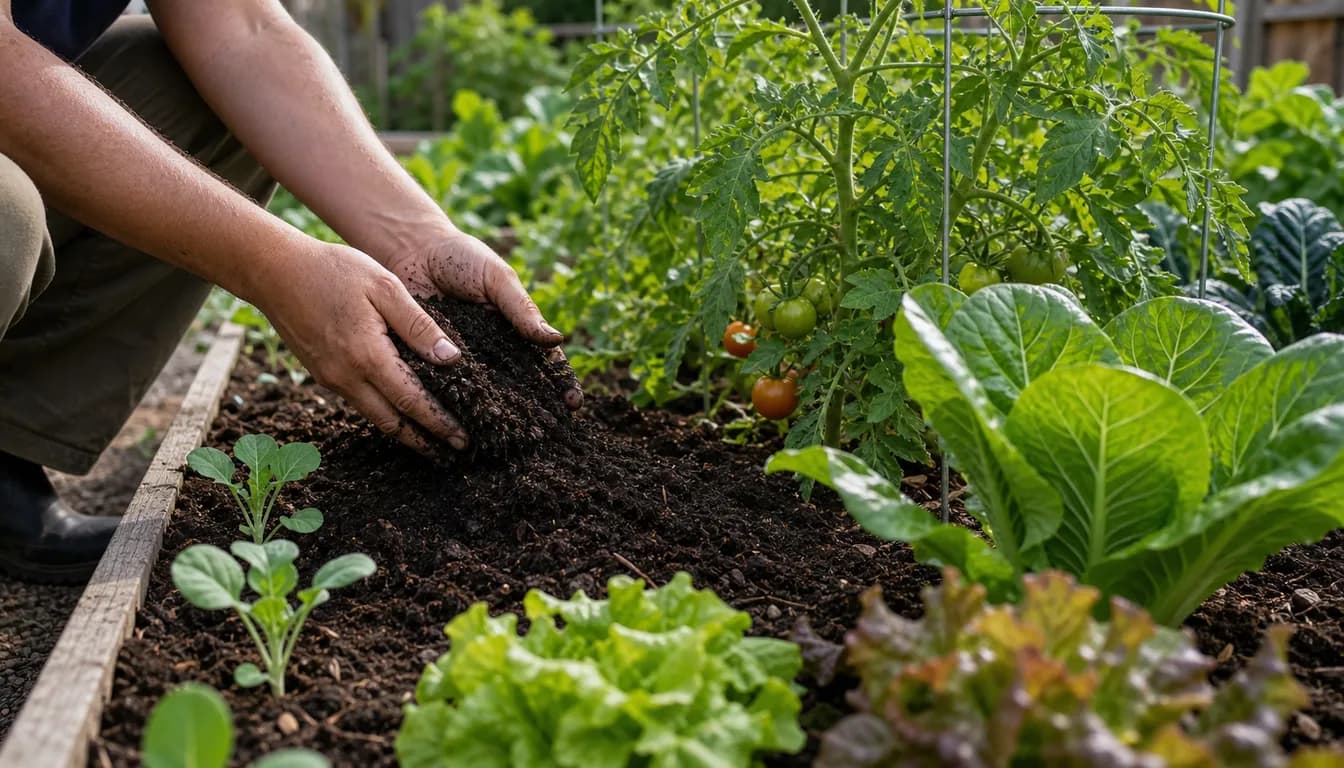
Benefits of Composting for Healthier Soil and Plants
Learn how composting turns kitchen scraps and yard waste into free fertilizer, improves soil, and boosts plant health in any size garden.
12 min read
Best Fertilizer for Indoor Plants
Learn how to choose the best fertilizer for indoor plants by growth style, season, and pot size without burning roots or overfeeding slow growers.
14 min read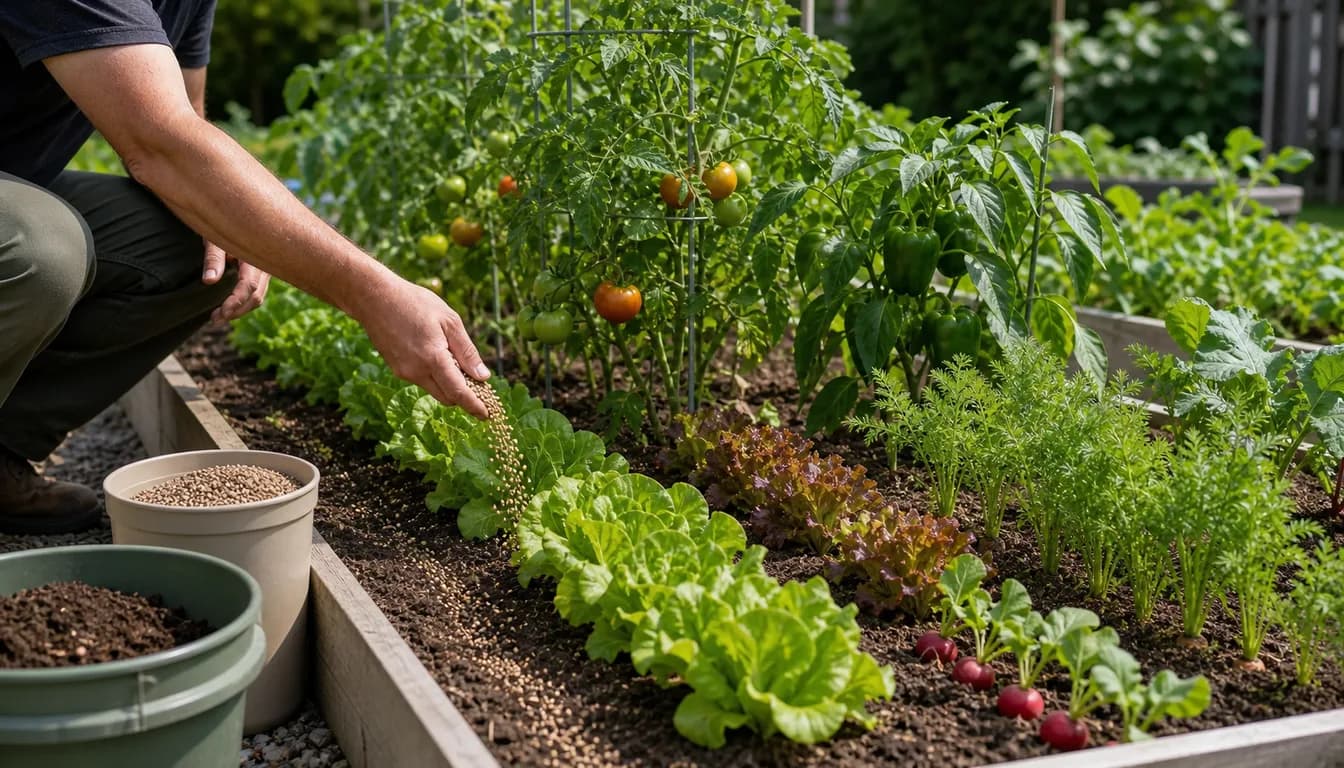
Best Fertilizer for Vegetables by Garden Type
Learn how to pick the best fertilizer for vegetables by crop group, soil condition, and garden setup so you feed beds, rows, and containers without wasting nutrients.
11 min read