
Best Time to Fertilize Your Lawn Around Rainfall
Rain can be your best helper or your worst enemy when you fertilize a lawn. A gentle shower helps carry nutrients to the roots. A downpour washes money straight into the storm drain.
This guide breaks down the best timing for different fertilizers, soil types, and grass species. We will also connect timing to bigger lawn routines, like overseeding and year-round lawn schedules, so every feeding pays off.
Before vs. After Rain: The Simple Rule
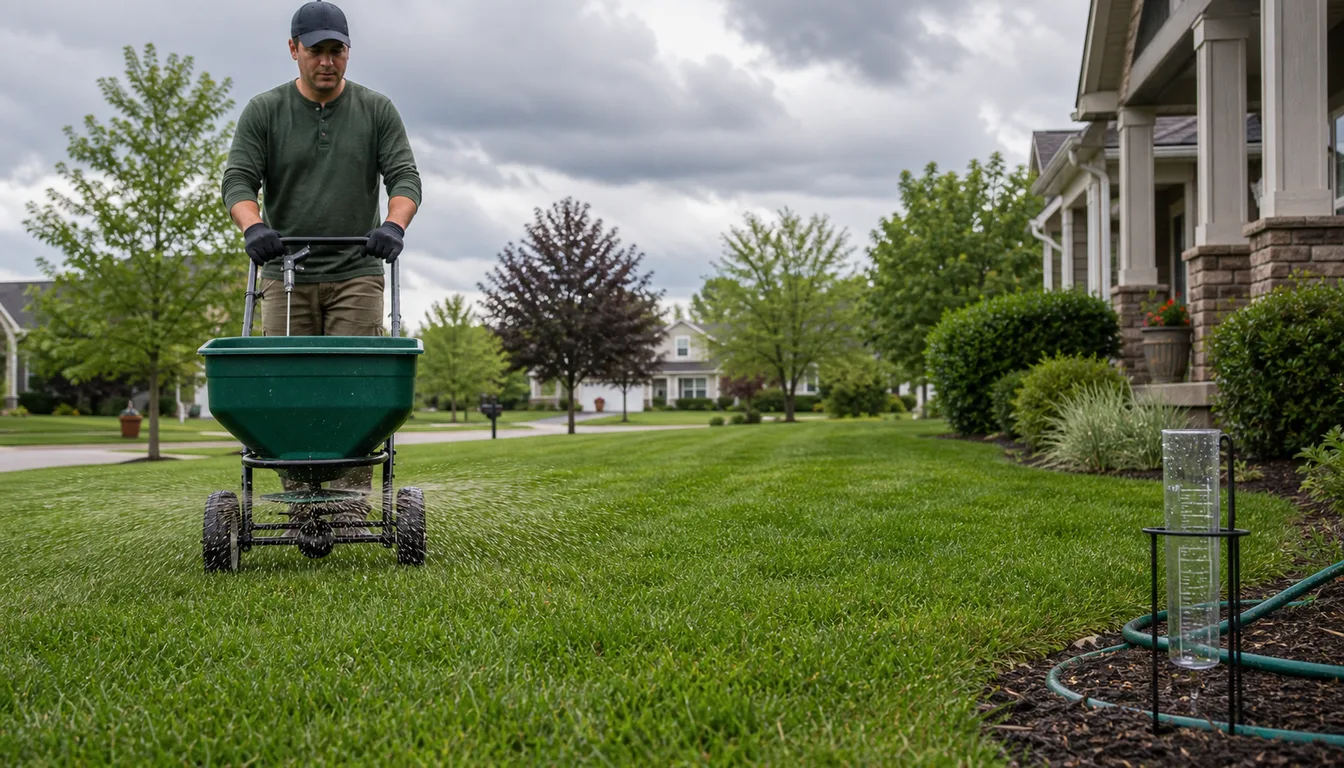
The sweet spot is light rain within 24 hours after fertilizing, not heavy rain before or right after. You want just enough moisture to dissolve the granules and pull nutrients into the root zone.
If a soaker storm is coming, hold off. A heavy rain within 24 hours of fertilizing is the fastest way to lose product and risk runoff into drains. Wait until the forecast shows less than 0.5 inch of expected rain in a day.
For most lawns, apply granular fertilizer to dry grass blades, then water in with 0.25 to 0.5 inch of irrigation, or let a gentle shower handle that work. Wet blades at application increase the risk of burn and product sticking to leaves.
Liquid fertilizers are different; those products often work best when applied to slightly damp grass, then left on the leaf for several hours before rain or irrigation. Always match your timing to the label, especially on hose-end sprayers and weed-and-feed mixes.
Use the quick rule list below before you check the next forecast.
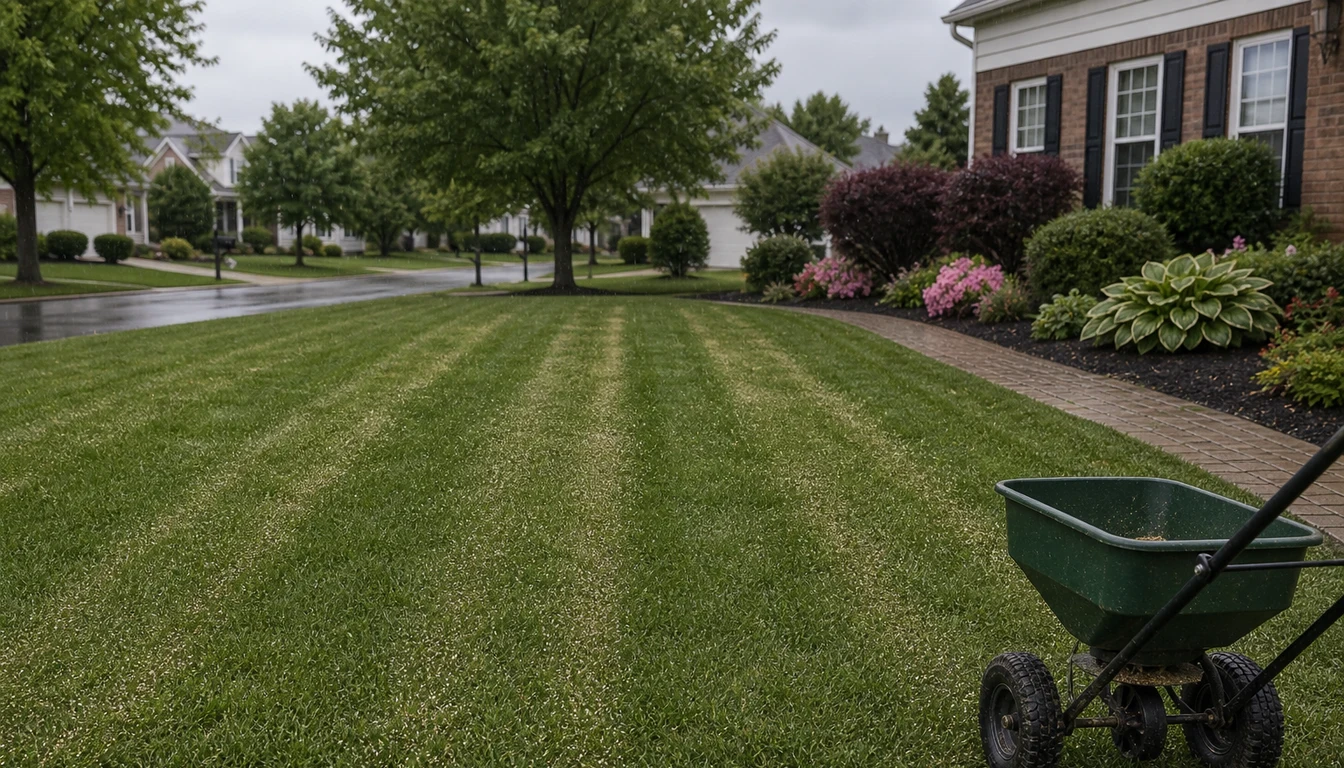
- Best with rain: Light, steady showers totaling under 0.5 inch after application
- Worst with rain: Thunderstorms or downpours in the first 24 hours
- Granular rule: Dry lawn at spread time, then light water soon after
- Liquid rule: Damp lawn, then several dry hours before any rainfall
Reading the Forecast Without Guessing Wrong
Forecast percentages confuse a lot of us. A 40% chance of rain usually means there is a moderate chance some part of your area gets measurable showers, not that your yard will definitely get soaked.
The hourly forecast and radar matter more. Look for 1-3 hours of light rain or drizzle, not a single hour with bright red radar blobs. Short, intense storms move fertilizer off slopes, especially on tight clay soils that shed water.
Soil type changes how much risk you can take. Heavy clay in Zone 5 suburbs often sheds water quickly, especially under large shade trees. Even moderate rain can move granules there. Sandy soil in coastal Zone 9 yards drains fast, so a slightly heavier shower is less of a problem.
Consider wind too. Strong wind ahead of a front can dry out the lawn faster than expected and blow granular fertilizer onto sidewalks. That wastes product and stains concrete if it is not blown or swept back.
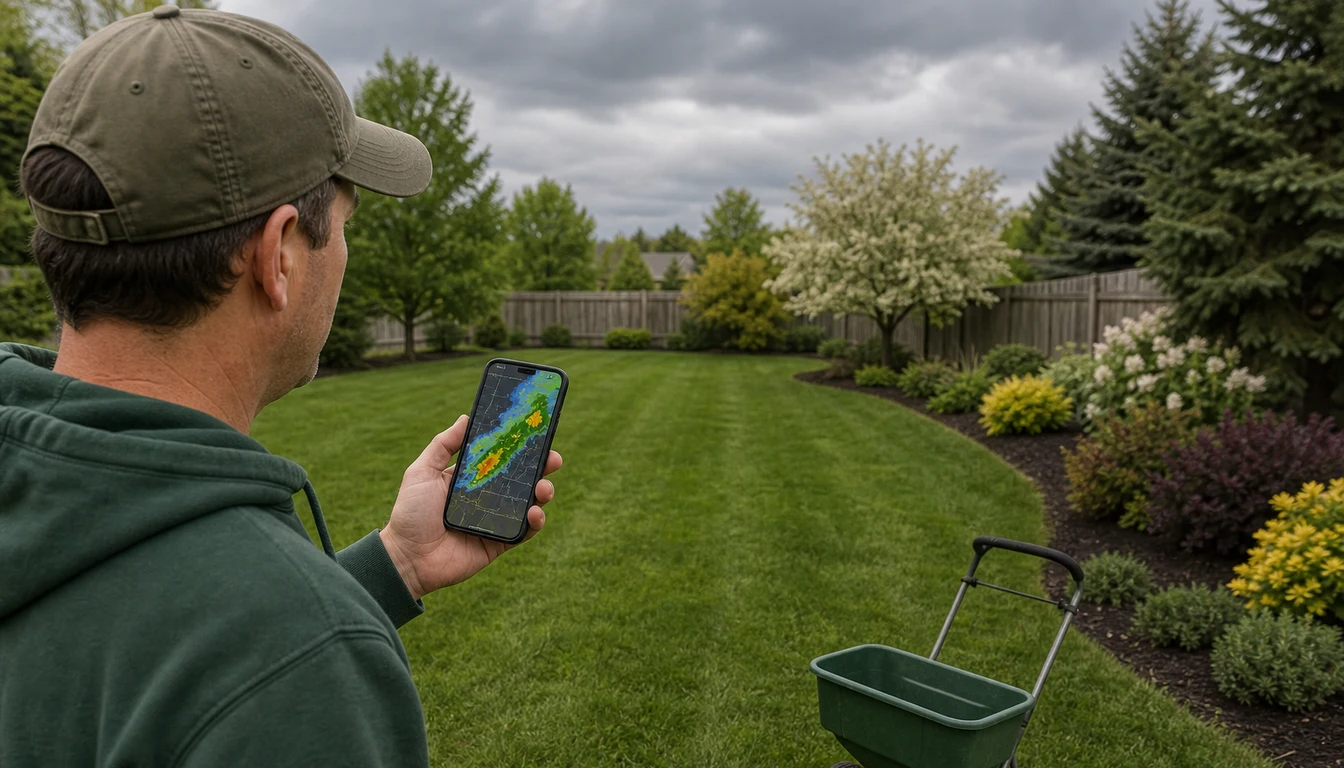
- Green light: Forecast shows light showers or 0.1-0.3 inch of rain spread across several hours
- Yellow light: Scattered storms, totals near 0.5 inch, especially on sloped yards
- Red light: More than 0.75 inch expected, or severe storms in the next 24 hours
- Backup plan: If the forecast changes, be ready to water in with sprinklers instead of gambling
Warm-Season vs Cool-Season Lawns and Rain Timing
Different grass types handle heat, fertilizer, and rain combinations in very different ways. A warm-season lawn like bermuda in full sun loves summer feeding paired with warm, humid showers. A cool-season turf like Tall Fescue prefers lighter feedings during cooler, wetter weather.
Warm-season grasses such as zoysia lawns put on most growth when soil temps stay above 65°F. St. Augustine turf and bahia in sandy soil follow the same warm-soil pattern. Rain paired with fertilizer during this window drives fast green-up. Heavy summer storms can still wash product off slopes, so timing around storm fronts is key.
Cool-season grasses, like Kentucky bluegrass and perennial rye overseeds, peak in spring and fall. In many areas, those seasons already bring frequent light rain, which is ideal for spoon-feeding smaller doses.
In hot summers, cool-season lawns often go semi-dormant. Feeding heavily before a warm thunderstorm in July can stress them instead of helping. It is usually better to feed lightly or pause until temperatures ease.
- Warm-season focus: Time applications for late spring through midsummer, using light showers to water in
- Cool-season focus: Aim for early spring and fall windows with gentle rain, avoid heavy summer storms
- Transition zones: In mixed turf areas, follow the dominant grass type when planning timing
- Dormant periods: Never fertilize a fully brown, dormant cool-season lawn just because rain is coming
Granular vs Liquid: How Rain Changes the Rules
Granular fertilizer needs water to dissolve and move into the soil. The safest approach is to spread on dry grass, then rely on either a quarter inch of irrigation or a light rain shortly after.
If you expect a small shower, apply granular product 3-12 hours before the rain starts. That gives time to spread evenly and blow granules off sidewalks. For organic products like those many people also use around tomato beds, the risk of burn is lower, but runoff is still wasteful.
Never apply granular fertilizer right before a forecasted downpour on slopes or near storm drains, even if the label says "slow-release".
Liquid fertilizer behaves more like a foliar feed. Many products are designed to sit on the blade for 15-30 minutes or more before watering in. That makes timing around rain even more sensitive.
A surprise shower ten minutes after spraying can rinse half your nutrients off the leaves. On the flip side, dry heat and wind can cause leaf spotting if liquid is applied in full sun at midday.
- Granular timing: Spread on dry grass, then light water or gentle rain within 24 hours
- Liquid timing: Damp lawn, no rain for at least 2-4 hours after spraying
- Weed-and-feed: Follow label strictly and avoid rainfall sooner than directed to prevent dilution
- Near gardens: Be extra cautious around herb patches. Drift and runoff can also stress flowering shrubs.
What To Do Right After It Rains
Those first 24 hours after a light to moderate rain set up your fertilizer better than anything from a bag. The soil is open, hydrated, and ready to move nutrients down to the roots.
Walk the yard as soon as the grass is safe to step on. You are checking for puddles, runoff paths, and bare spots that might need different fertilizer rates than the rest of the lawn.
If you used a granular product before the rain, look for leftover prills sitting on sidewalks, driveways, and patios. Sweep them back into the turf so you are not washing nutrients into storm drains.
For untreated areas, that moist soil is a green light. Apply your fertilizer, then give it a 5–10 minute light watering to replace the gentle rinse that rain would have provided.
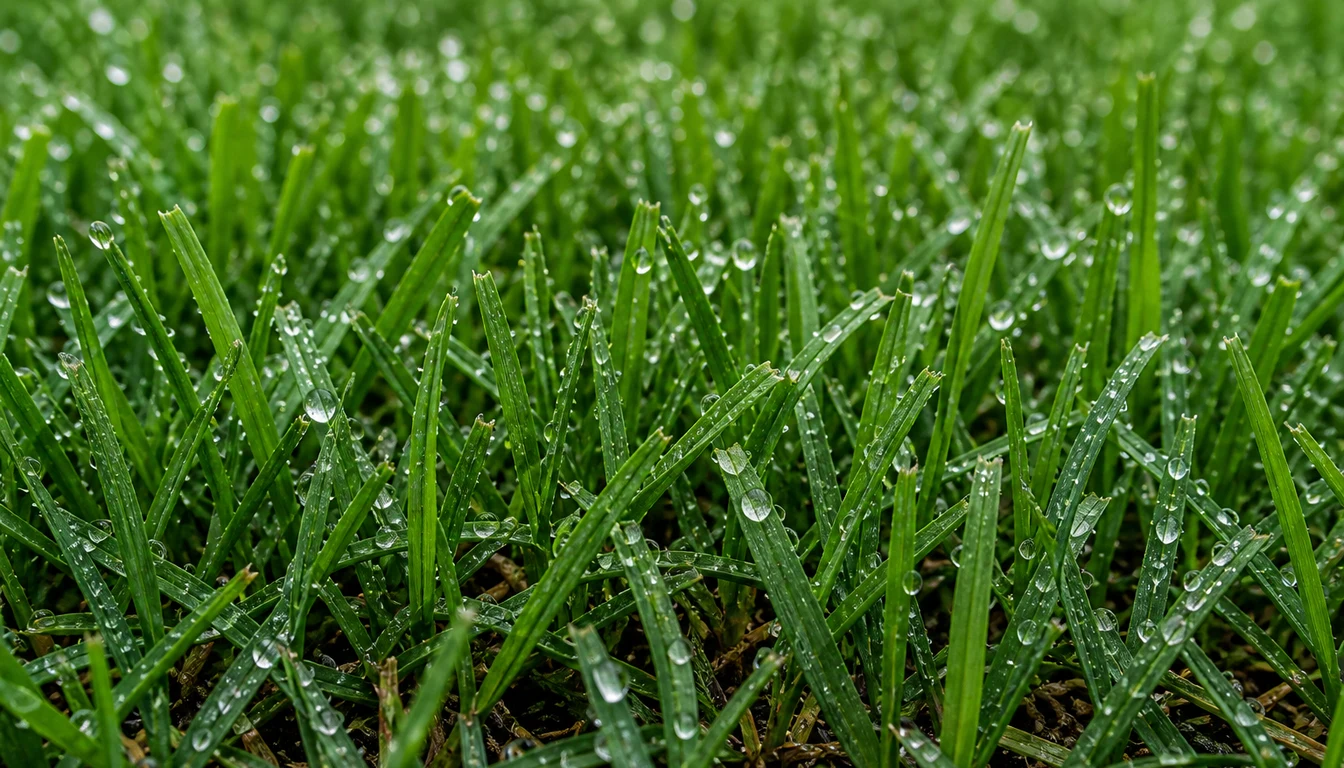
- Check moisture: Soil should feel damp 1–2 inches down, not squishy.
- Fix washouts: Rake soil back where rivulets cut channels through slopes.
- Sweep hard surfaces: Push stray fertilizer back onto grass, never into gutters.
- Touch up bare spots: Use a starter product if you recently overseeded.
- Light follow-up drink: Use sprinklers only where rain missed the edges.
Avoiding Burn and Runoff in Wet Conditions
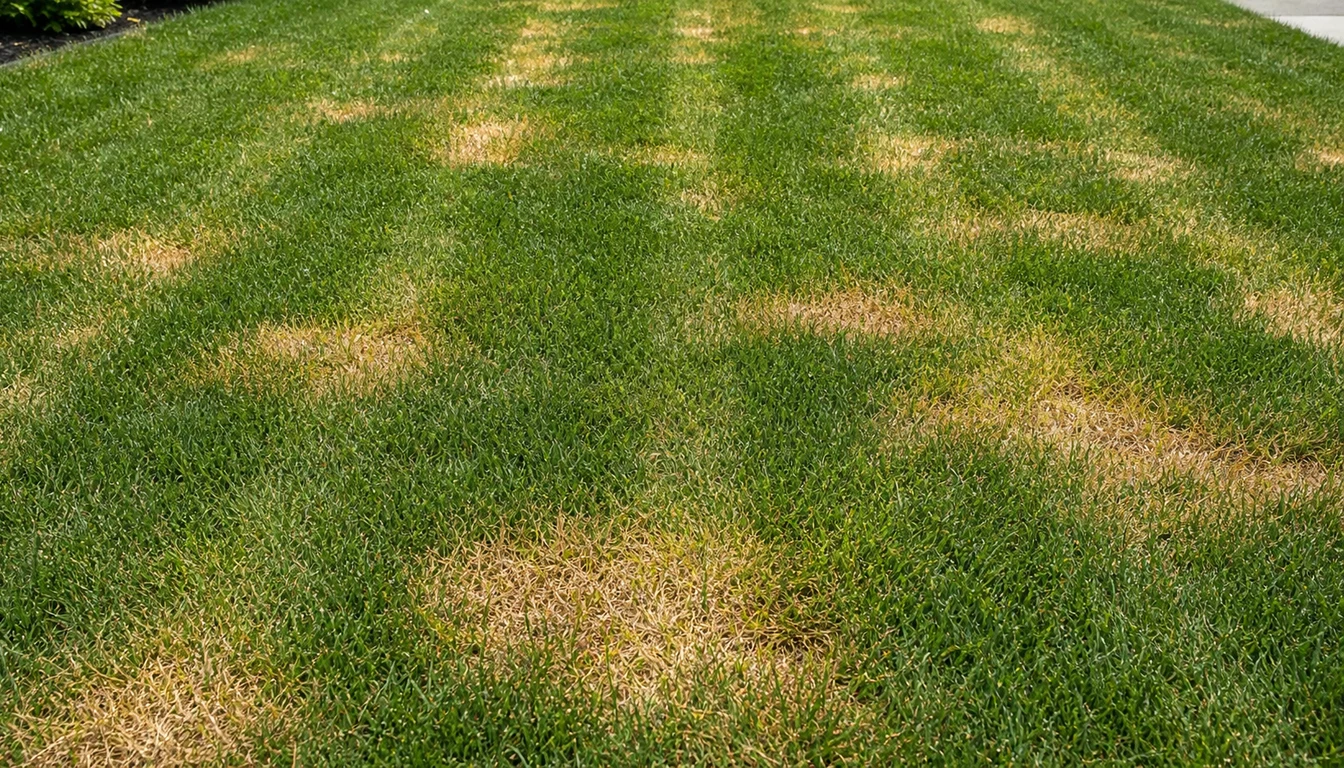
Saturated soil and heavy rain are what cause most fertilizer horror stories, not the product itself. Roots need air pockets as much as they need nutrients.
If your lawn squishes or footprints fill with water, skip fertilizer completely. Wait until the surface drains and the top inch of soil feels just damp before you even think about feeding.
Fast-draining lawns on zone 7 style sandy soil handle rain plus fertilizer better than tight clay yards. On clay, even a light extra shower can flip you from ideal to oversaturated in an afternoon.
Granular fertilizer on waterlogged soil is the fastest way to burn roots and waste money.
- Do a step test: If your footprint shines with water, postpone feeding.
- Watch slopes closely: Hillsides lose fertilizer first, so use smaller doses there.
- Skip double watering: Rain plus heavy irrigation is what pushes nutrients past roots.
- Use slow-release: Coated products are gentler when conditions are borderline.
- Keep buffer zones: Leave a strip unfertilized near ponds, ditches, and drains.
Those checks matter most when runoff can carry product away before roots use it.
Never fertilize right before a storm that is forecast to drop more than an inch of rain, especially on compacted or sloped yards.
Seasonal Schedules That Work With Rain
The right rain timing does not help much if you feed in the wrong month for your grass type. Calendar plus forecast is where lawns really improve.
Cool-season lawns such as fescue mixes and Kentucky bluegrass types want most nitrogen in spring and fall. For them, aim to line up light rain with those seasonal feeding windows.
Warm-season lawns like bermuda in full sun or zoysia carpets wake up later and peak in summer. Heavy spring storms can wash away early fertilizer before these grasses fully green up.
Use your regional pattern as a guide, then fine-tune with a local forecast.
- Early spring (cool-season): Feed once soil hits the mid-50s, then use rain to wash in a balanced product.
- Late spring (warm-season): First feeding for bermuda and zoysia should follow steady warming and a mild rain event.
- Mid-summer: Go lighter on nitrogen in heat, even if storms look perfect, to avoid pushing tender growth.
- Early fall: This is the big meal for cool-season lawns, especially if you plan to overseed thin sections.
- Late fall: Winterizer products should be timed to rain shortly after grass stops top growth but before ground freezes.
Use the list as a calendar frame, then let soil temperature make the final call.
Soil temperature and grass type should set your seasonal plan. Rain timing is how you get the most out of each application.
Fixing Problems After Bad Rain Timing
Everyone gets caught by a surprise downpour eventually. The key is recognizing what happened and adjusting instead of dumping on more fertilizer.
If a storm hits right after you fertilize and you see little green-up over 10–14 days, assume some nutrients leached away. Do not rush a second full-rate application. Start with a half-rate or wait for your next scheduled feeding.
Yellow tip burn or irregular brown patches often show up where fertilizer piled up in small mounds. This is more common on tight soils, similar to how overfeeding a potted peace lily indoors scorches only certain roots.
For heavy runoff, focus first on soil health and drainage. Aeration, compost topdressing, and switching to slow-release products help far more than chasing color with frequent soluble feeds.
- Washed-out application: Wait at least 4 weeks, then apply a lighter follow-up dose if color is still weak.
- Burned streaks: Water deeply every few days for two weeks to dilute salts around damaged roots.
- Pale, hungry lawn: Use an iron-rich product to boost color without dumping extra nitrogen.
- Repeated runoff: Coordinate core aeration with your next feeding, then let a light rain move nutrients down.
- Uneven growth: On the next pass, use a broadcast spreader at right angles to your first pattern for better overlap.
Check roots before assuming the fertilizer failed.
If you are unsure whether poor color is from washout or disease, pull a few small plugs. Healthy roots stay white or cream colored even after a heavy rain.
Advanced Tricks To Sync Fertilizer and Rain
Once you have the basics down, you can squeeze more value out of every bag by pairing rain with other lawn tasks. This is how golf courses treat storms as tools, not problems.
Soil testing first makes everything else easier. Knowing your actual nutrient levels means you can choose blends that match your yard instead of guessing, the same way a good test shapes how you feed a vegetable bed.
On compacted lawns, schedule core aeration a day or two before a gentle rain. Those open channels let both water and fertilizer dive straight into the root zone instead of running along the surface.
You can also combine overseeding with well-timed showers. A slow-release, starter-friendly fertilizer plus a week of light, regular rain can jumpstart new seed, much like using the right mix when you fertilize young blueberry shrubs in spring.
- Use rain windows: Plan big jobs like aeration and seeding for the same week as a steady, not stormy, forecast.
- Split applications: Two lighter feeds 4–6 weeks apart ride several rain events and reduce loss.
- Add organics: A thin compost layer under or over fertilizer improves water holding and reduces leaching.
- Track results: Snap photos after each rain-timed feeding so you can repeat what worked.
- Adjust for irrigation: If your sprinkler schedule is dialed in using deep watering habits, treat surprise rain as a bonus and skip the next run.
Pro Tips
- Keep a cheap rain gauge in the yard so you know if storms delivered the 0.25–0.5 inch you counted on.
- If radar shows red or purple cells headed your way, delay fertilizing until that system passes.
- Blow or sweep stray granules off driveways and sidewalks before any rain to prevent stains and runoff.
- On sloped lawns, split heavy seasonal feedings into two lighter applications spaced 3–4 weeks apart.
- Pair fertilizer timing with aeration on compacted clay so rain carries nutrients deeper instead of sideways.
- Avoid evening liquid applications before humid nights to reduce leaf disease risk on dense turf.
- Track each feeding date and rainfall in a notebook or app to fine-tune timing for your specific yard.
- If a surprise downpour follows fertilizing, skip the next scheduled feeding instead of doubling up.
Frequently Asked Questions
Is it better to fertilize lawn before or after rain?
For most home lawns, lightly moist soil right before a light to moderate rain is ideal. Avoid fertilizing before heavy storms or on saturated soil, and skip feeding entirely if more than an inch of rain is expected.
How long before rain should I apply lawn fertilizer?
Apply granular fertilizer 12–24 hours before a forecast of light rain so it has time to stick to blades and soil. If storms keep shifting, water it in yourself with 10–15 minutes of irrigation instead of gambling on the forecast.
Can I fertilize wet grass after it rains?
Yes, you can fertilize damp grass as long as the soil is not waterlogged and there is no standing water. Let the surface dry enough that it does not squish underfoot, then apply and give it a short irrigation to wash fertilizer off the blades.
What happens if it rains too much after fertilizing?
Heavy rain can wash nutrients past the root zone or off your property, which weakens results and can pollute waterways. Watch for poor color instead of reapplying immediately, and consider aeration and slow-release products to reduce future losses.
Should I change fertilizer timing in summer storms?
During summer, pair fertilizer timing with milder stretches between heat waves, not just any storm. High heat plus heavy feeding can stress the lawn, so use lighter rates and slow-release products even if rain timing looks perfect.
Sources & References
Related Guides
Benefits of Composting for Healthier Soil and Plants
Composting is basically free fertilizer that you make in your own yard. It turns kitchen scraps and…
12 min read
Best Fertilizer for Indoor Plants Depends on the Pot
Fertilizer is where a lot of indoor plant care goes sideways. Too weak and you get leggy, pale…
14 min read
Best Fertilizer for Vegetables by Garden Type
Fertilizer only helps vegetables if it matches what your soil and crops need. Random products and…
11 min read