
Why Pomegranates Split Before Harvest and How to Stop It
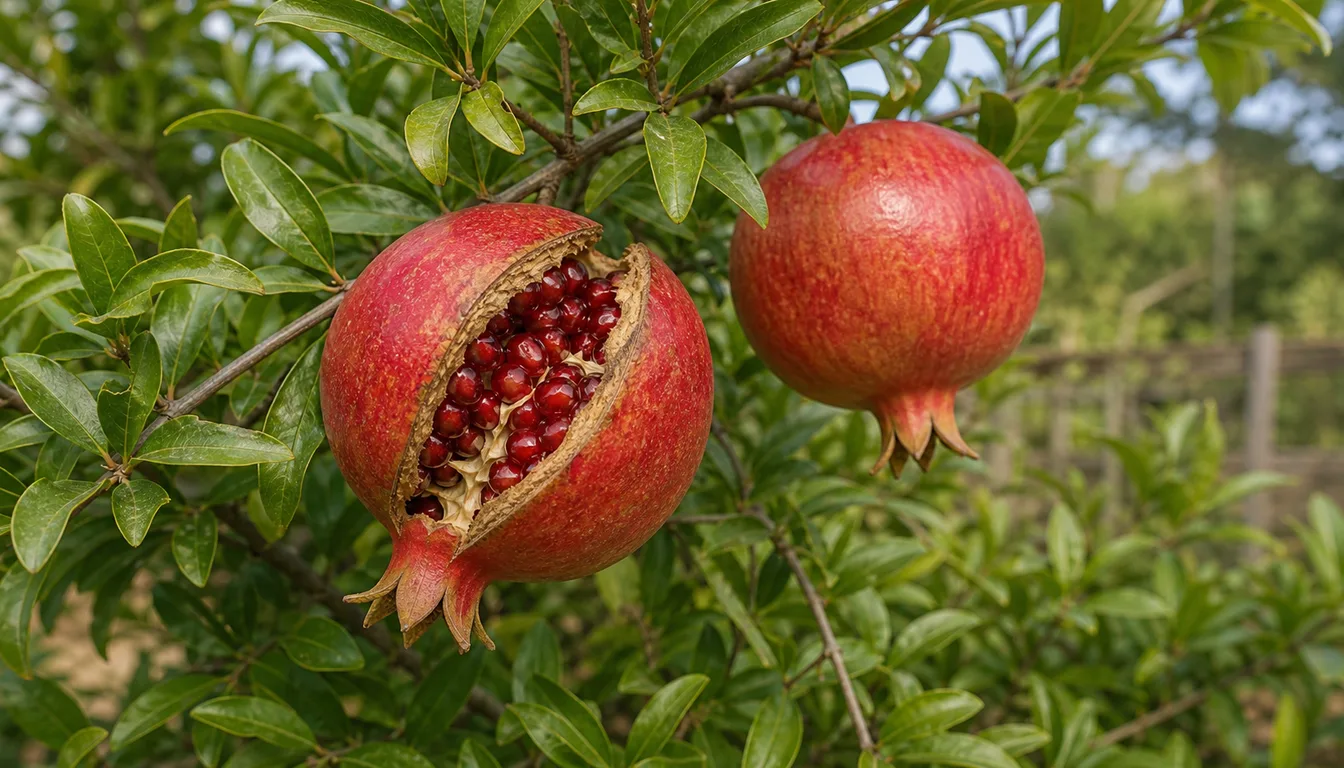
A pomegranate usually splits when its juicy arils expand faster than the rind can stretch, with rain or heavy irrigation after dry soil as the common trigger near harvest and sunburn, over-ripeness, cultivar traits, or a confirmed nutrient imbalance leaving the rind with even less margin.
Quick diagnosis
A clean split after rain points first to a dry-to-wet moisture swing
Look at the rind before changing the irrigation. A clean opening through otherwise normal skin, especially on several ripe fruit after rain or a deep watering, fits a pressure split.
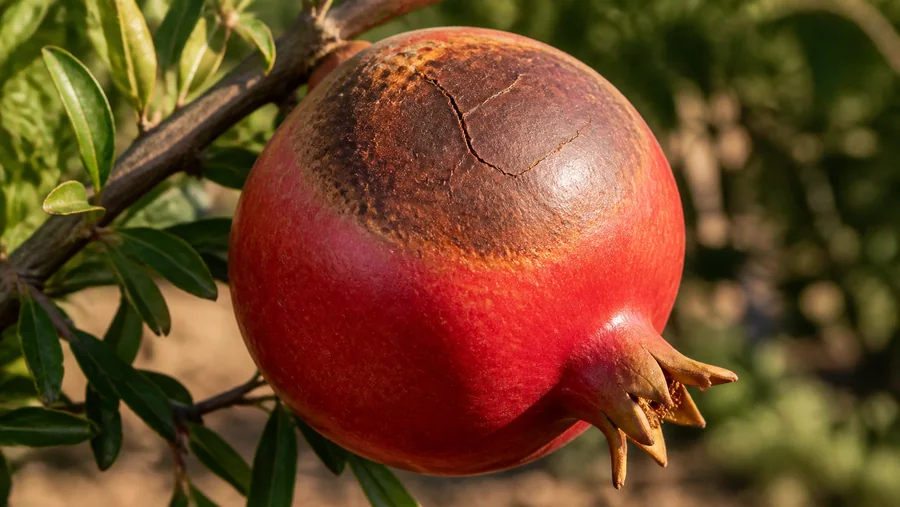
A dry dark patch on the sun-facing shoulder points to sunburn, while a puncture, black powder, soft brown arils, or a sour smell means the fruit was wounded or infected and needs to be discarded rather than treated as a simple water crack.
Open the full diagnosisWhat You Are Seeing
A pomegranate is packed with juice-filled arils inside a firm leathery shell. During the last stage of ripening, the arils can continue swelling while the rind becomes less able to expand, so a sudden increase in water can push the shell past its limit.
Timing and appearance separate a lengthwise crack that appears soon after rain from a one-sided patch that changed from pale or blotchy to dark and dry over several hot days.
A true pressure crack begins in the rind itself. Bird pecks, insect feeding, thorn rub, and wind scars begin at a visible contact point, while Aspergillus and other fruit rots add discoloration, black powder, soft tissue, or decayed arils.
Cracking belongs to a later stage than poor fruit set, because a near-mature fruit that opened needs a ripening and rind diagnosis while flowers or tiny fruitlets that dropped never reached this problem.
Common Causes
01 Most likely
Dry soil was followed by rain or heavy irrigation
A fruiting pomegranate can tolerate drought, but drought tolerance does not protect ripe fruit from a sudden refill. When dry roots receive abundant water, the arils take up water quickly and press outward against a rind that has lost some flexibility.
This cause becomes more convincing when several nearly ripe fruit open within a day or two of the same rain, with the crack running from crown to stem or lengthwise through rind that remains normally colored and firm.
The useful correction is steady root-zone moisture before the storm arrives. Flooding an already dry tree just before forecast rain adds another large pulse, while withholding all water through drought leaves the fruit vulnerable when weather finally changes.
How to identify it
- The soil was dry several inches below the surface before rain or irrigation.
- One or more nearly ripe fruit split soon after the same wetting event.
- The opening passes through otherwise firm rind without a dark dead patch around it.
- The exposed arils initially look glossy and normally colored rather than brown or powdery.
- Container-grown fruit crack during hot weather when the pot repeatedly dries hard between waterings.
What to do
- Harvest newly split fruit immediately and sort it before insects or rot enter the opening.
- Check moisture below the mulch and irrigate before the root zone becomes severely dry.
- Apply water slowly over the active root area instead of dumping it beside the trunk.
- Reduce or skip irrigation when meaningful rain is forecast, but do not create a new drought first.
- Keep a broad organic mulch layer over the root zone with clear space around the trunk.
02 Likely on exposed fruit
Sunburn weakened one exposed side of the rind
Sunscald starts as an abnormal blush or pale blotch on the side facing the strongest sun. With more heat, that area can become dark, dry, and necrotic, and the weakened rind may form shallow cracks before a wider split develops.
Location matters more than hot weather by itself because fruit hidden inside the same canopy may remain sound while fruit on an outer south- or west-facing branch carries a distinct damaged shoulder.
Sudden exposure often follows hard summer pruning, a broken limb, or leaf loss. Removing more foliage after the injury appears makes the remaining fruit hotter, so the immediate response is protection and steady water rather than another aggressive cut.
How to identify it
- Damage is concentrated on the side that faces the strongest afternoon sun.
- The rind first looked pale, yellowish, or unusually blotchy before turning dark and dry.
- Cracks begin within or along the edge of the damaged patch.
- Outer fruit are affected more often than fruit shaded inside the canopy.
- The problem followed a heat wave, leaf loss, broken branch, or heavy summer pruning.
What to do
- Leave healthy foliage around the remaining fruit and postpone major pruning until the dormant period.
- Use temporary shade cloth where a young or container plant receives punishing afternoon sun.
- Keep the root zone evenly moist during heat without saturating the soil.
- Remove fruit that develops soft decay, black growth, or a strong odor inside the damaged area.
- Plan gradual canopy thinning rather than exposing a full crop in one pruning session.
03 Common near harvest
Ripe fruit stayed on the tree through another rain
A mature rind has little stretch left, so fruit that are ready to pick can split under a smaller moisture change than fruit still sizing, which is why Utah State University Extension recommends harvest before over-ripeness and rain near ripening.
Color alone cannot settle maturity because ripe pomegranates range from greenish or pink to deep red by cultivar. Better clues include full expected size, heavier feel, flatter sides instead of a perfectly round outline, a developed crown, and the metallic note that mature fruit can make when tapped.
Pomegranates do not become sweeter or truly ripen after picking. The goal is therefore to harvest mature fruit before the next risky rain, not to strip immature fruit from the tree merely because clouds are forecast.
How to identify it
- The ripest and heaviest fruit split first while smaller fruit remain intact.
- Fruit had already reached their expected cultivar color and full size.
- The sides look slightly flattened or angular rather than perfectly round.
- A few fruit split at the normal harvest period even without a severe drought.
- Cracking worsens after each late-season rain while mature fruit remain hanging.
What to do
- Pick mature fruit before forecast rain once several ripeness clues agree.
- Harvest in two or more passes because bloom and ripening are not perfectly synchronized.
- Clip the stem close with clean shears rather than pulling and tearing the fruit free.
- Use split fruit promptly and reserve intact fruit for longer storage.
- Record the harvest window so next year's first picking begins before the usual cracking week.
04 Recurring pattern
The cultivar has a rind that cracks more readily
Pomegranate cultivars do not share one rind thickness, fruit size, ripening date, or resistance to splitting. A cultivar that makes large juicy arils behind a less flexible skin can crack repeatedly under a moisture change that another tree tolerates.
This explanation needs a pattern across seasons, such as the same named cultivar cracking at similar maturity each year while a nearby cultivar under the same irrigation and weather remains mostly intact.
Changing the current tree's genetics is impossible, but the pattern still changes the plan. An earlier harvest window and especially steady late-season moisture may protect much of the crop, while future planting decisions can favor locally proven or documented split-resistant cultivars.
How to identify it
- The same tree or named cultivar cracks in multiple seasons.
- A nearby cultivar under similar soil, rain, and irrigation stays mostly intact.
- Cracking clusters at the same stage of color and size each year.
- The tree remains vigorous and the rind has no sunburn patch or disease signs.
- Stable irrigation reduces but does not eliminate the recurring pattern.
What to do
- Begin checking maturity earlier than the calendar date used for less susceptible cultivars.
- Harvest this tree in several passes before its usual split point.
- Keep irrigation steady even when nearby established trees can tolerate a longer dry interval.
- Keep a season record that compares weather, watering, maturity, and the number of sound fruit.
- Choose a locally tested split-resistant cultivar if repeated losses justify replacing or adding a tree.
05 Low likelihood without a test
A confirmed nutrient imbalance left the rind weaker
Research on pomegranate cracking associates weak rind development with imbalances involving boron, calcium, potassium, and zinc. That association does not make a cracked fruit a nutrient test, because moisture swings, maturity, sun exposure, and cultivar traits can produce the same final opening.
Consider this cause only after the common patterns fail, a soil or tissue test supports it, and broader signs such as poor new growth or abnormal leaves fit the result.
Blind treatment can replace one imbalance with another, so follow a laboratory or local Extension recommendation for the named deficiency and judge the next crop rather than expecting fertilizer to repair rind that has already split.
How to identify it
- Cracking continues across seasons despite stable moisture and timely harvest.
- Sunburn, wounds, and rot do not match the rind pattern.
- A soil or tissue test identifies a relevant nutrient shortage or imbalance.
- Other growth or fruit symptoms support the same test result.
- A qualified local recommendation connects the measured result with a specific amendment rate.
What to do
- Test before applying boron, calcium, potassium, zinc, or lime for cracking.
- Correct soil pH first when the report shows that pH is limiting nutrient availability.
- Apply only the material and rate recommended for the measured result.
- Keep moisture steady because a nutrient correction does not remove the water-pressure trigger.
- Evaluate fruit formed after the correction rather than fruit whose rind is already mature.
A fresh clean split may be usable, but the opening changes the clock
A split rind cannot close or heal back into a storage-quality pomegranate once insects, dust, rain, and fungal spores can reach the exposed arils.
A fruit that split recently can be used promptly when the arils are firm, normally colored, clean, and free of insects, mold, and off odors. Wash the outside before opening it further, trim away the exposed edge, and refrigerate or use the sound arils instead of storing the whole cracked fruit.
Discard fruit with black powder near the crown or crack, soft brown arils, slimy tissue, visible mold, insect larvae, or a sour fermented smell. Those signs fit decay or contamination rather than a fresh mechanical opening.
Cracking does not mean the entire shrub is dying. Judge plant health from foliage, shoot growth, roots, and the next fruit, while treating each open fruit as a short-lived harvest item.
Keep the root zone steady without flooding it before harvest
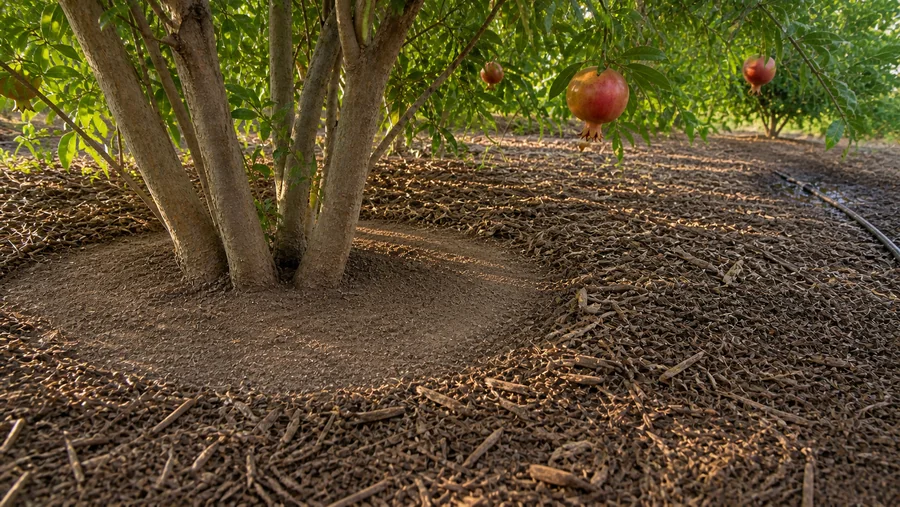
Check soil before turning on irrigation. Pull mulch aside near the outer half of the canopy and feel several inches down, because a dry surface can cover moist soil and one wet spot beside an emitter can hide a dry root zone elsewhere.
Water when that deeper soil is beginning to dry but before it becomes hard and dusty, aiming for a gradual change from moist to slightly drier instead of a calendar that alternates saturation with drought.
One universal number of gallons cannot fit a pomegranate in sand, clay, a raised bed, and a container. Run slow irrigation long enough to wet the active root area, then check how far the moisture traveled and adjust the next run from that evidence.
Place drip tubing or emitters across the root zone under the canopy rather than against the trunk. Cover that area with organic mulch to slow evaporation, but leave the trunk flare uncovered so bark does not stay wet.
Use the forecast as part of the next decision. Skip a scheduled irrigation when substantial rain is about to wet an already moist root zone, yet avoid withholding water for days in an attempt to keep the fruit dry.
A container needs closer checks because its entire root zone can dry in one hot day. Shade the pot itself, confirm that drainage holes stay open, and divide the needed water into steadier applications when one large soaking runs straight through dry mix.
Judge the change by whether fruit that finish ripening under the new routine develop fewer clean pressure splits after the next warm spell or rain event.
Harvest ripe fruit before the next rain tests the rind
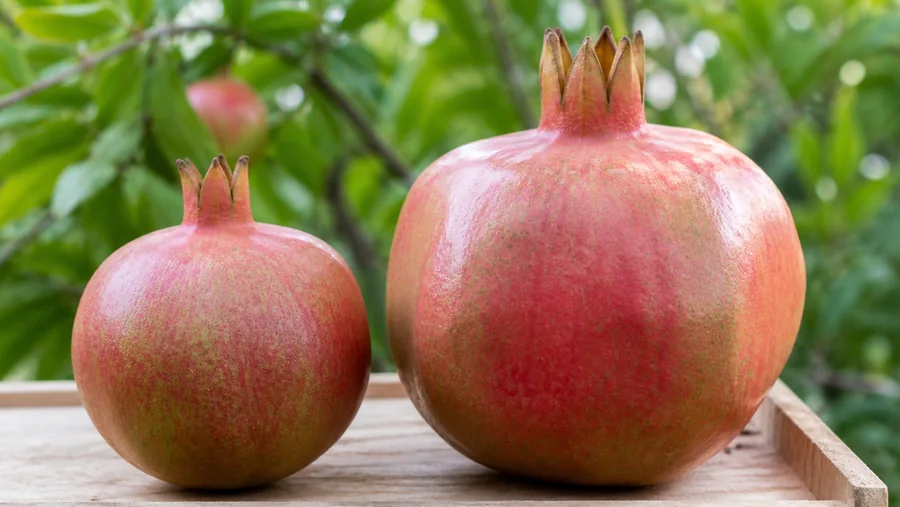
Pick before rain only when the fruit already shows several maturity clues. A mature pomegranate has reached the expected size and color for its cultivar, feels heavy, and often changes from round to slightly flattened or angular as the arils fill the internal chambers.
Tap the rind and listen for the metallic note described by Extension harvest guides, then compare it with fruit known to be immature on the same tree. Use that sound with shape, size, cultivar color, and your normal harvest dates rather than treating one cue as a universal test.
Leave fruit that are still small, light, or well short of their cultivar color because pomegranates do not continue true ripening after harvest and an early-picked crop may never develop its best flavor.
Clip each ripe fruit close to its base with clean shears. Pulling can tear the branch or crown, and a sharp piece of stem left on one fruit can puncture another during handling.
Return as later fruit mature because staggered picking suits a shrub that flowered over several weeks and removes the most vulnerable fruit before each rain without guessing that the whole crop is ready.
Recovery Plan
Harvest and sort every open fruit
Pick freshly split fruit before rain, ants, birds, or fungal spores reach the exposed arils. Keep only fruit with clean firm tissue for prompt use and discard anything with decay, black powder, larvae, or an off odor.
Check soil and harvest the mature group
Inspect moisture below the mulch instead of watering automatically. Clip fruit that already meet several maturity clues and leave clearly immature fruit to continue developing.
Narrow the moisture swing
Use slow root-zone irrigation, maintain the mulch ring, and watch which fruit split after the change. A continuing one-sided dark patch moves the diagnosis toward sunburn rather than water alone.
Use the pattern to change the plan
Record the cultivar, first mature date, rain events, exposed fruit, and cracking pattern. Adjust the next harvest window, protect the canopy, and order a soil or tissue test only when the common causes do not explain a repeat loss.
Prevent cracking by avoiding severe dry-to-wet changes while fruit size and ripen, then harvest mature fruit before late-season rain. Keep mulch over the root area, distribute slow irrigation beneath the canopy, and leave enough foliage to shield fruit from harsh afternoon sun.
Do not use fertilizer as the first response to a split. Test when the problem repeats despite steady water, timely harvest, and intact rind, then correct only the deficiency the report identifies.
Sources
- Pomegranate Production, University of Georgia Cooperative Extension
- Pomegranate, Fruit of the Desert, Utah State University Extension
- The Pomegranate, University of Florida IFAS Extension
- Aspergillus Fruit Rot of Pomegranate, UC Statewide IPM Program
- Pomegranates, UC Master Gardeners of Placer County
- Fruit Cracking in Pomegranate, Extent, Cause, and Management