Apple Tree vs Pear Tree
Choose the cultivar and rootstock combination before choosing by fruit name. Apple trees offer a wider range of dwarfing and fruit options, while pear trees may face fewer insect problems in some regions, but neither is universally easier.
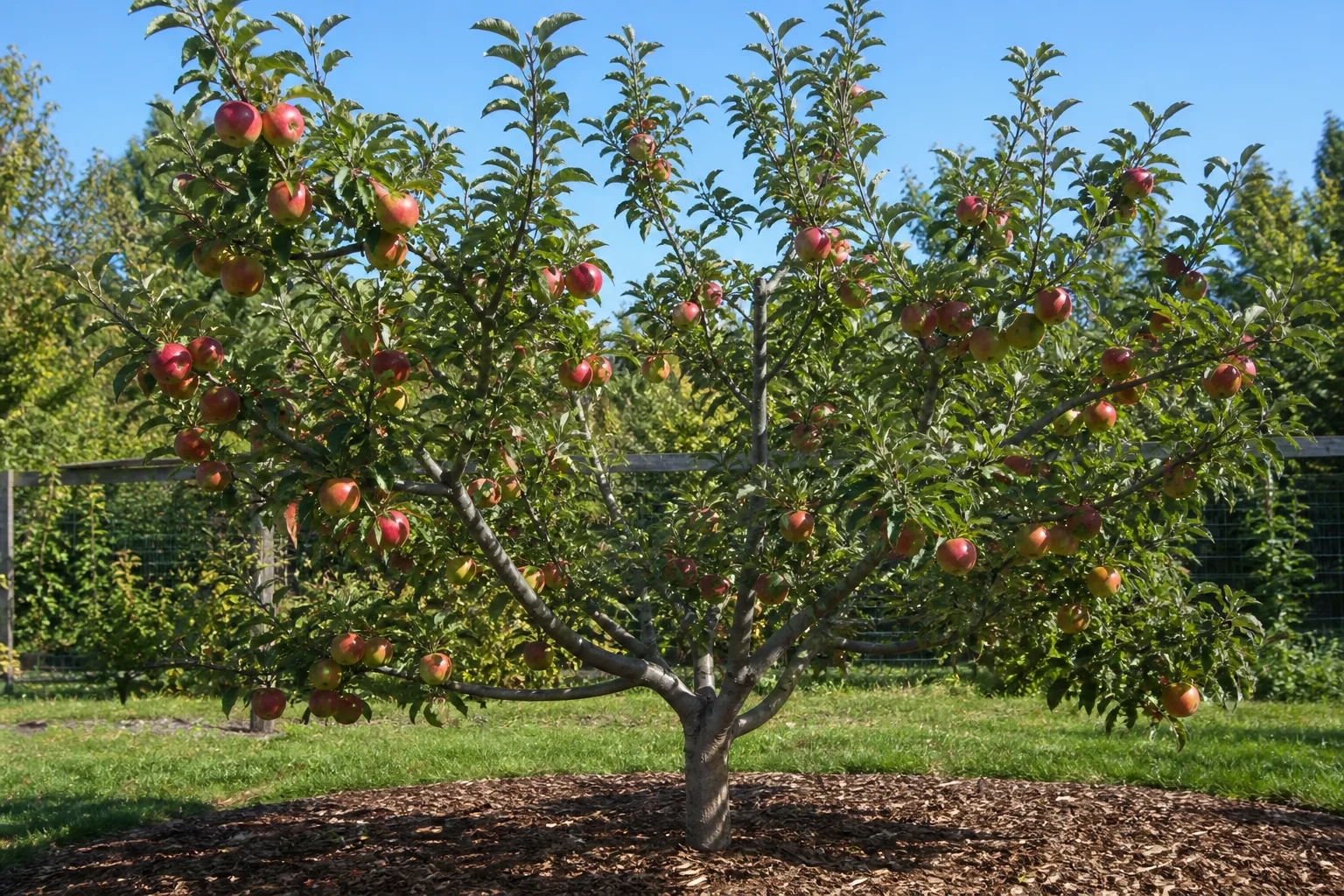
Apple Tree
Malus domestica
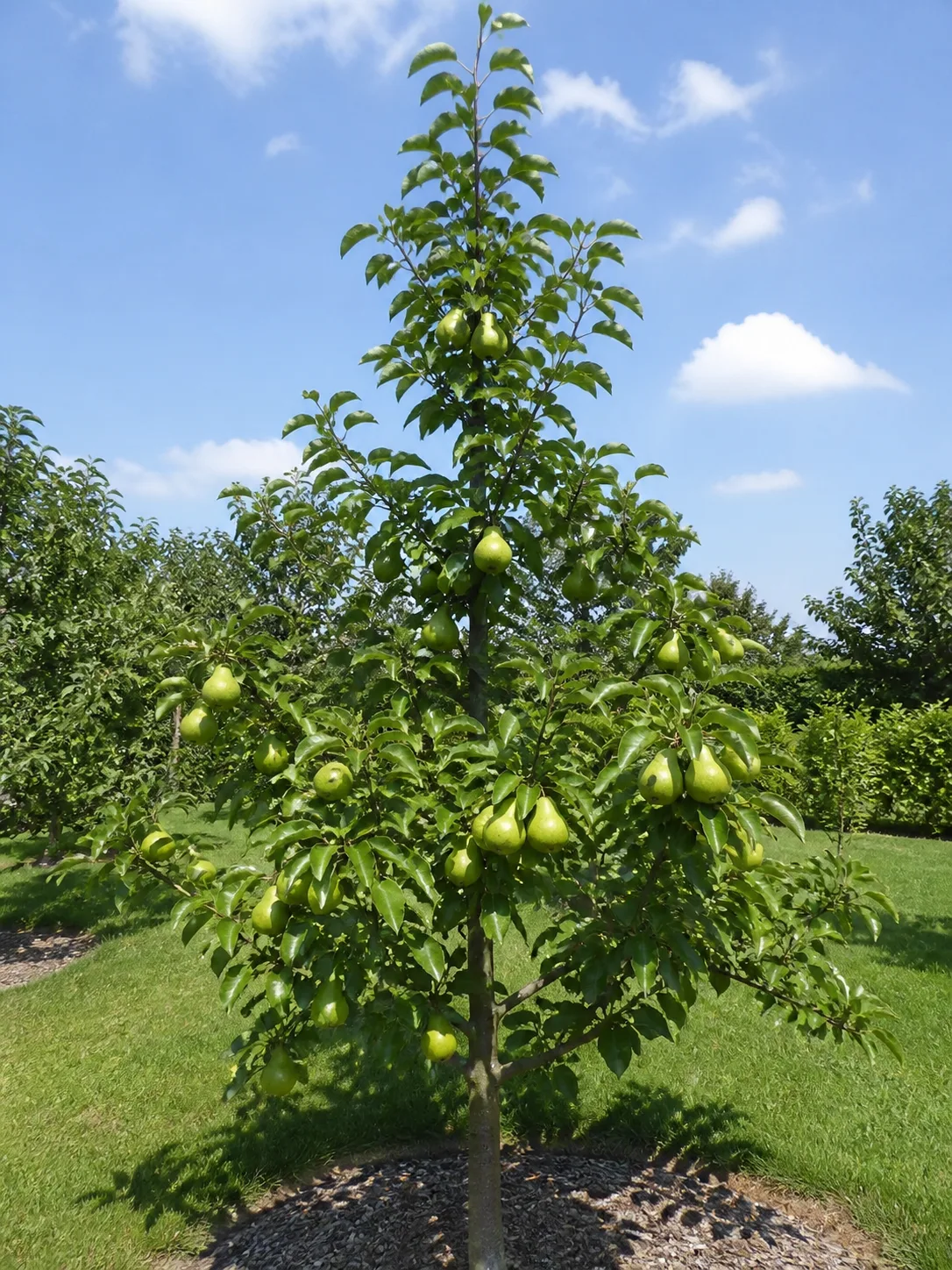
Pear Tree
Pyrus communis and Asian pear species
Apple and pear trees share the same basic orchard needs.
Both require abundant sun, soil that drains, compatible pollen, early training, and regular observation.
The meaningful differences appear in the exact grafted tree, the pests active where you live, and the way you want to harvest the fruit.
An apple tree is usually the more flexible shopping category because nurseries offer many scion and rootstock combinations.
A pear may suit a gardener who accepts a larger tree and, in some climates, a lighter insect-management load.
Do not buy either tree from a front label alone.
Record the cultivar, rootstock, mature size, hardiness, disease resistance, pollen partner, and harvest method before you assign it a permanent space.
The decision often changes after those details are known.
A disease-resistant apple on a supported dwarf rootstock can be easier to reach than a vigorous pear, while a locally adapted pear can be less troublesome than a susceptible apple.
Specifications
Compare the traits that change the growing decision.
| Feature | Apple Tree | Pear Tree |
|---|---|---|
| Edible fruit source | Apple scion cultivar | Pear scion cultivar |
| Mature tree size | Rootstock, scion, site, and training | Rootstock, scion, site, and training |
| Pollination plan | Usually another compatible apple or crabapple | Usually another compatible pear cultivar |
| Site | Full sun and well-drained soil | Full sun and well-drained soil |
| Time to first crop | Varies with rootstock, cultivar, age, and care | Varies with rootstock, cultivar, age, and care |
| Disease decision | Check scab, fire blight, rust, and local pests | Check fire blight and local pear pests |
| Harvest pattern | Usually picked at eating maturity | European pears usually finish ripening off after harvest |
| Routine access | Pruning, thinning, scouting, and repeated picking | Pruning, scouting, crop adjustment, and prompt harvest |
The tree in the pot is two plants joined together. The scion determines the fruit cultivar, while the rootstock strongly influences mature size, anchorage, soil adaptation, bearing age, and sometimes disease risk.
Compare a named apple combination with a named pear combination. Species-wide height, yield, chill, price, and maintenance figures hide the differences that decide whether the tree fits.
Best Use Cases
Choose by the job the planting needs to do.
Small yard and easy reach
Tree size comes from the whole graft
Apple nurseries commonly offer several dwarfing levels, making it easier to match a tree to hand pruning, a short ladder, or a permanent support system.
Compact pear options exist, but cold-hardy dwarfing rootstocks may be harder to find. Confirm the named rootstock and final support need instead of trusting the word dwarf.
Space for only one trunk
Pollen may be the limiting resource
Most apples need pollen from another compatible apple cultivar, although a nearby ornamental crabapple may serve if bloom overlaps.
Most pears also set more reliably with a compatible second cultivar. A multi-graft tree can help in a tight space, but each graft still needs care and suitable bloom timing.
Fruit eaten straight from the tree
Harvest behavior changes the experience
Apples normally develop their eating quality on the tree, and a taste test helps confirm harvest maturity.
Many European pears are picked mature but firm and finished indoors. Asian-type pears follow a different harvest pattern, so the cultivar identity matters.
Lowest realistic disease burden
Local pressure outranks the species label
Apple scab, fire blight, insects, and animal damage differ by climate, nearby hosts, and cultivar resistance.
Pears can be relatively trouble-free in some northern areas, yet fire blight can still kill shoots or whole young trees. Local Extension guidance should decide the comparison.
Why does the rootstock matter as much as the fruit?
A nursery apple or pear is normally a grafted plant. The named fruit cultivar forms the upper tree, while a separate rootstock supplies the lower trunk and roots.
The fruit label tells you flavor and harvest traits, but it does not finish the buying decision. Rootstock identity controls much of the tree you must manage, including size potential, anchorage, support, soil response, and how soon cropping may begin.
Terms such as dwarf, semi-dwarf, and standard are useful only when the seller can name the rootstock or give a reliable mature range for that exact combination. Two trees carrying the same apple cultivar can demand very different spaces when their rootstocks differ.
Apple buyers often get more choices because many nurseries offer a cultivar across several dwarfing rootstocks. Pear buyers may find fewer dwarf combinations, especially where the rootstock must also survive cold winters.
The scion still changes vigor. Site, training, crop load, and climate then modify the result, so the label should provide a range rather than a guaranteed height.
| Ask the seller | Why it changes the decision |
|---|---|
| What is the exact scion cultivar? | Determines fruit, harvest window, hardiness, and disease traits |
| What is the exact rootstock? | Strongly affects size, anchorage, bearing age, and support |
| Will the tree stand alone? | Some dwarf rootstocks need permanent staking or trellis |
| What spacing does this combination need? | Prevents crowding and preserves access for pruning and harvest |
| Is the graft union clear? | It must remain above soil so the scion does not root and defeat dwarfing |
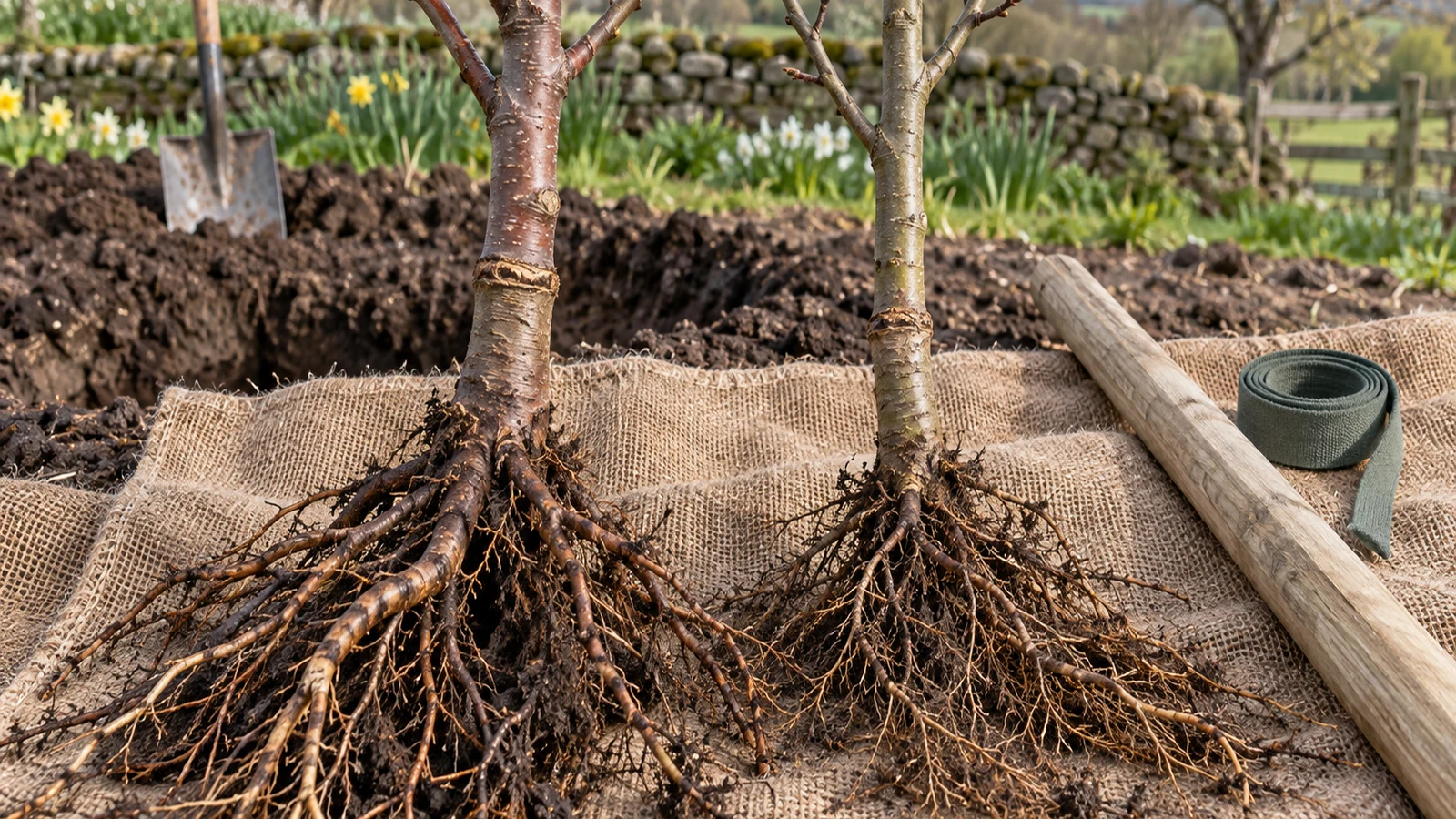
The image shows two young grafted trees before planting. The swollen change in trunk tissue above the roots is the union to keep visible above the finished soil line.
Can one apple or pear tree produce a reliable crop?
A single trunk does not necessarily mean a single pollen source, and a second tree does not automatically solve pollination. The flowers need compatible pollen, overlapping bloom, and insect activity while the blossoms are receptive.
Most apples need a genetically different apple cultivar. A nearby flowering crabapple may supply pollen, but distance, bloom overlap, and pesticide exposure during bloom can still affect the result.
Triploid apple cultivars create another complication because they do not serve as useful pollen donors for ordinary partners. A nursery or regional cultivar chart should identify this before you buy.
Most pears also set more reliably with a compatible second pear cultivar. Some may produce a limited crop alone, but that possibility is weaker than a verified pollen plan.
- [ ] Record the exact cultivar, not just apple or pear
- [ ] Find a compatible partner in a regional chart
- [ ] Confirm that both normally bloom together in your climate
- [ ] Measure whether an existing tree is close enough to be useful
- [ ] Check whether a multi-graft tree carries compatible cultivars
- [ ] Avoid insecticides that can harm pollinators during bloom
A multi-graft tree can place two or more cultivars on one trunk, which helps where ground space is limited.
It also requires balanced pruning so one vigorous graft does not shade or overtake the others.
Fruit set can still fail after good pollination. Frost can injure flowers, prolonged rain can limit bee activity, excessive vigor can suppress flowering, and a young tree may not yet carry enough mature fruiting wood.
Treat pollination as the first check, not the only diagnosis.
If fruit still fails to set, distinguish missing pollen from weather, age, pruning, and crop-load effects.
Which tree fits the planting site you actually have?
Both trees crop best in generous direct sun and soil that drains after rain. Neither belongs in a low pocket where cold air settles during bloom or water remains around the roots.
The old claim that pears tolerate any suburban clay better than apples is too broad. Rootstock, soil structure, compaction, drainage, and the exact pear all matter more than the species label.
Measure the usable width and height before shopping. Include room for a ladder or picking pole, a path around the canopy, permanent support, nearby wires, fences, buildings, and the second pollen source.
A tree that technically fits at planting can still fail the yard if mature branches block a walk or put every crop above safe reach. Choose a final size that you can prune and harvest without routinely overreaching.
- 1. Observe the site: Record direct sun, frost pockets, wind exposure, and standing water through more than one weather event.
- 2. Test and inspect soil: Use a soil test for pH and nutrients, then look below the surface for compaction or a sharp fill layer.
- 3. Reserve mature space: Use the named rootstock and scion range, then add working access around the canopy.
- 4. Plan pollen: Place a compatible cultivar within the distance recommended by local guidance.
- 5. Plan protection: Account for deer, rabbits, voles, mowing equipment, and the support the rootstock requires.
Planting depth matters because burying the graft union can allow the scion to make its own roots. That can produce a much larger tree than the dwarf label promised.
Set the root flare at the correct grade, spread or correct circling roots, backfill mostly with the native soil, and water the root zone thoroughly. Keep mulch off the trunk and preserve a vegetation-free area so grass does not compete with the young tree.
Do not turn a generic weekly watering sentence into a permanent schedule. Check the root-ball and surrounding soil, then adjust for rainfall, heat, wind, soil texture, mulch, and the tree's stage of establishment.
How do pruning and support differ in practice?
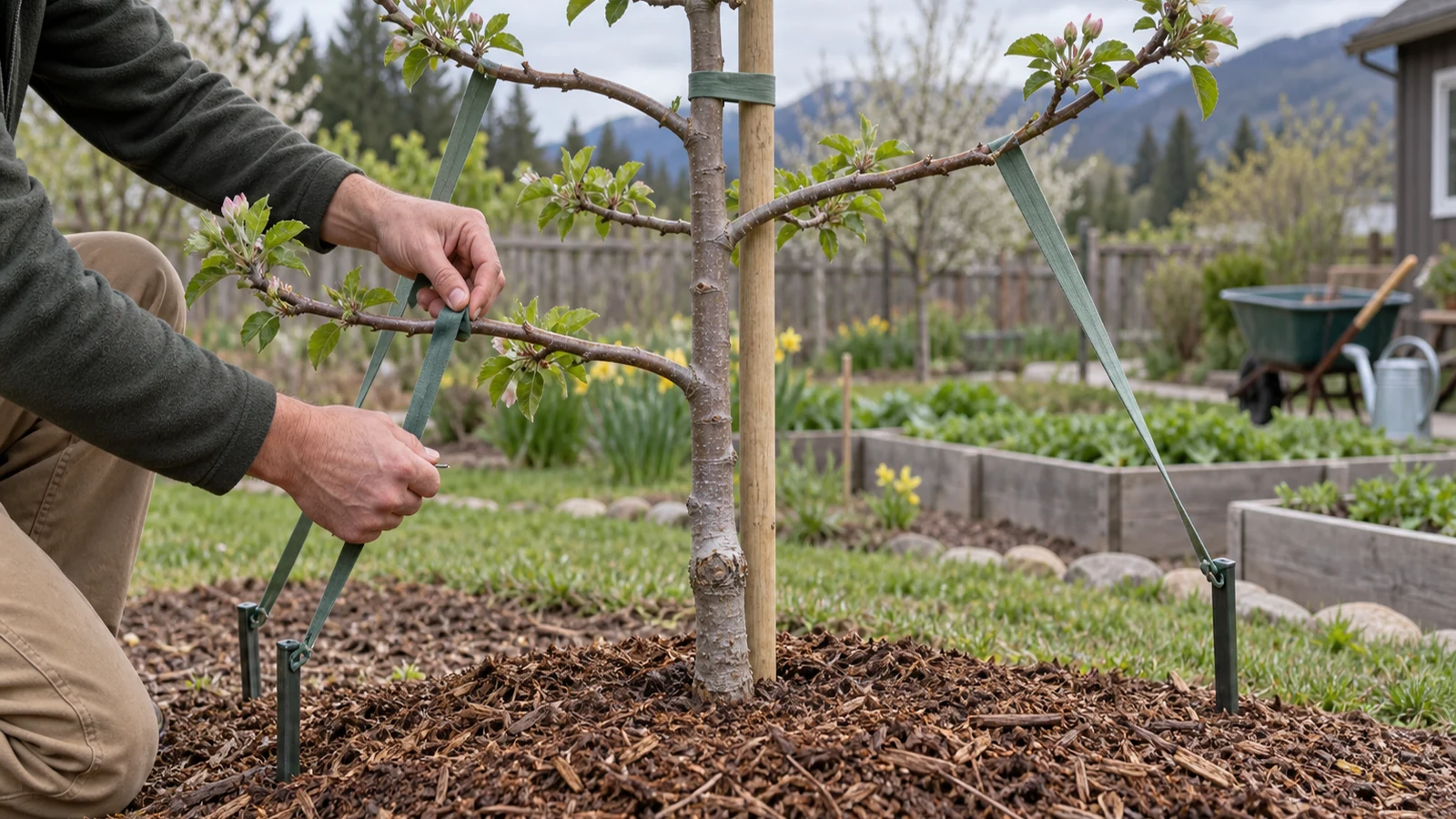
Young apple and pear trees are commonly trained around a central leader, but the final method must match the rootstock, cultivar, and orchard system. Training starts while branches are flexible because correcting a crowded mature canopy requires larger cuts.
Pear shoots often grow strongly upright. Wide branch angles can improve structure and light distribution, so early spreaders or flexible ties may do more useful work than repeated heading cuts.
Apple branch habit varies by cultivar. The goal is still a defined leader, separated scaffold branches, light reaching fruiting wood, and space to work safely.
The image shows a young tree being trained with broad, flexible ties. A tie should guide a branch without cutting bark, and any trunk support should prevent toppling without making the stem completely rigid.
Prune during the locally recommended dormant window for routine structure work, then remove broken or dangerous wood when it is found. Disease strikes can require a different timing and sanitation method, so diagnosis comes before the cut.
Avoid aggressive topping. It creates vigorous upright shoots, removes fruiting wood, and can turn one height problem into years of corrective pruning.
A larger standard tree can be sturdy and productive, yet every task moves higher. A smaller supported tree may need more infrastructure but makes inspection, thinning, pruning, and harvest easier from the ground.
Is a pear tree really less troublesome than an apple?
It can be in a particular region, but the claim needs a location and a cultivar. University of Minnesota describes pears as relatively trouble-free there, while also warning that pear insect pressure can change as the crop becomes more common.
An apple may face scab, rusts, fire blight, fruit insects, and animal injury, but resistance differs sharply by cultivar. Choosing a resistant apple can remove more work than choosing a susceptible pear merely because its category sounds easier.
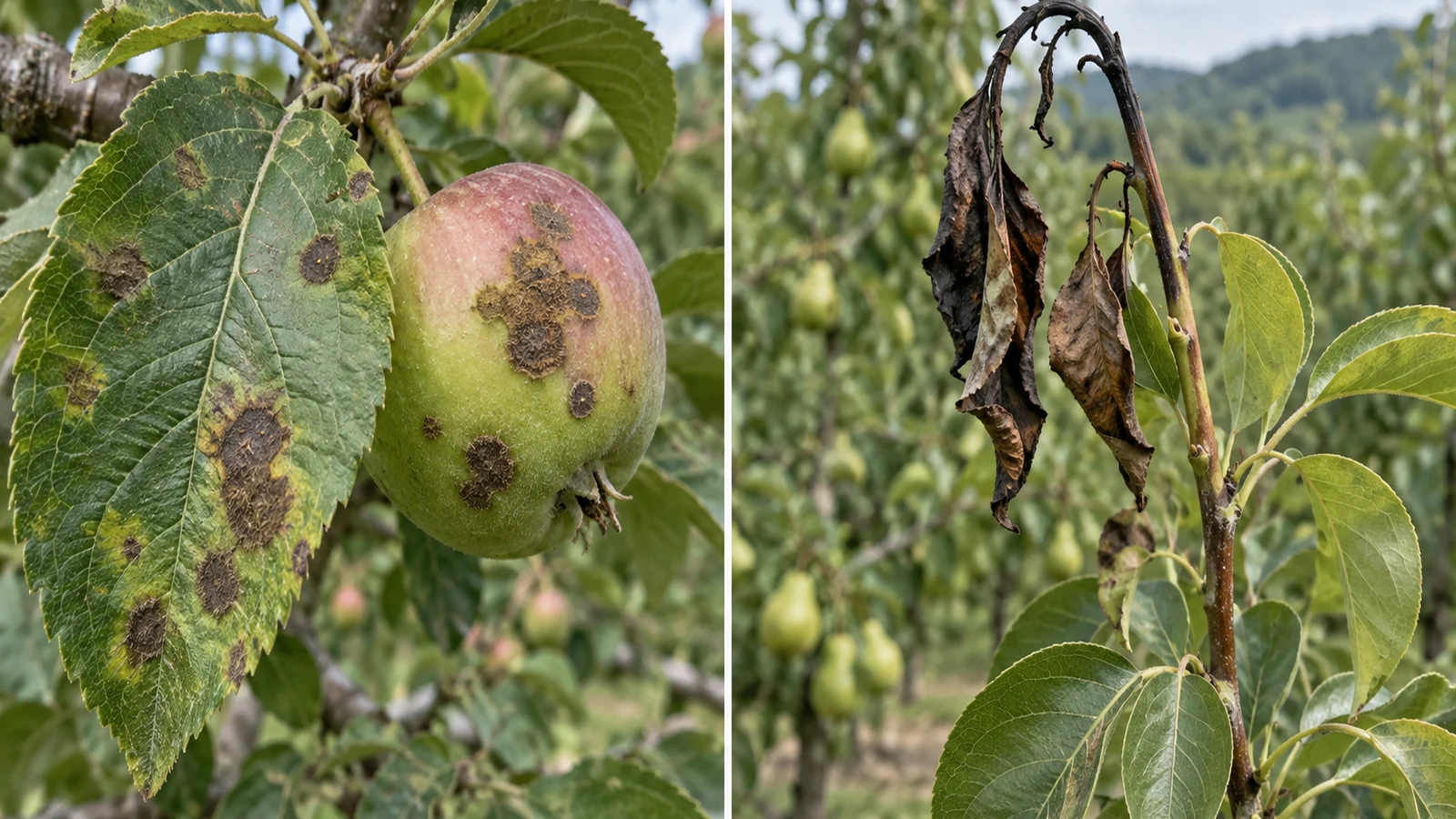
Fire blight affects both apples and pears. On a pear, blackened leaves that remain attached to a bent shepherd's-crook shoot are an urgent sign because the bacterium can move into larger wood.
The comparison image places typical apple scab damage beside a fire-blight strike. It is a recognition aid, not a complete diagnosis, because hail, spray injury, other leaf spots, drought, and broken shoots can create partial lookalikes.
| Observation | More consistent with | Next action |
|---|---|---|
| Olive-brown leaf or fruit lesions | Apple scab or another fungal spot | Compare lesion pattern and local disease reports |
| Black bent shoot tip with attached leaves | Fire blight | Follow current local pruning and sanitation guidance promptly |
| Holes, tunnels, or damaged fruit | An insect or animal | Identify the pest before choosing a control |
| Dense wet interior canopy | Higher disease opportunity | Restore light and airflow with correct training |
| Repeated disease on one cultivar | Susceptibility or strong local pressure | Consider resistant replacement rather than endless rescue |
Do not build a spray calendar from the species name. Scout at the relevant growth stage, identify the problem, choose resistant cultivars, remove fallen or diseased material when guidance calls for it, and use the least disruptive effective control.
Excess nitrogen can produce lush susceptible growth and can increase fire-blight risk. Apply nutrients from soil evidence and growth response rather than trying to force a young tree into rapid size.
How much fruit-thinning work should you expect?
A tree can set more fruit than it can mature well. Excess crop load can bend branches, reduce fruit size, delay ripening, and leave fewer flower buds for the following season.
Apple clusters commonly need hand thinning after natural fruit drop. University of Minnesota recommends leaving one or two fruits per cluster and using spacing along the branch as the quality check for its regional cultivars.
Pear trees can also need thinning when fruit set is heavy, especially where clusters crowd each other or branch strength is limited. Use local and cultivar-specific timing because removing fruit too late may not provide the same benefit.
Thinning is also a reach decision. A tree that matures above the height you can safely work may turn a simple hand task into ladder work across hundreds of fruitlets.
Do not compare advertised maximum yields. A smaller tree may supply all the fruit a household can pick, store, and use, while a larger crop can become fallen fruit, insects, wildlife pressure, and cleanup.
Ask how much usable fruit you want, then choose tree size and crop load around that job. Orchard value comes from fruit you can manage, not from the largest number attached to a mature specimen.
Why do apples and European pears need different harvest tests?
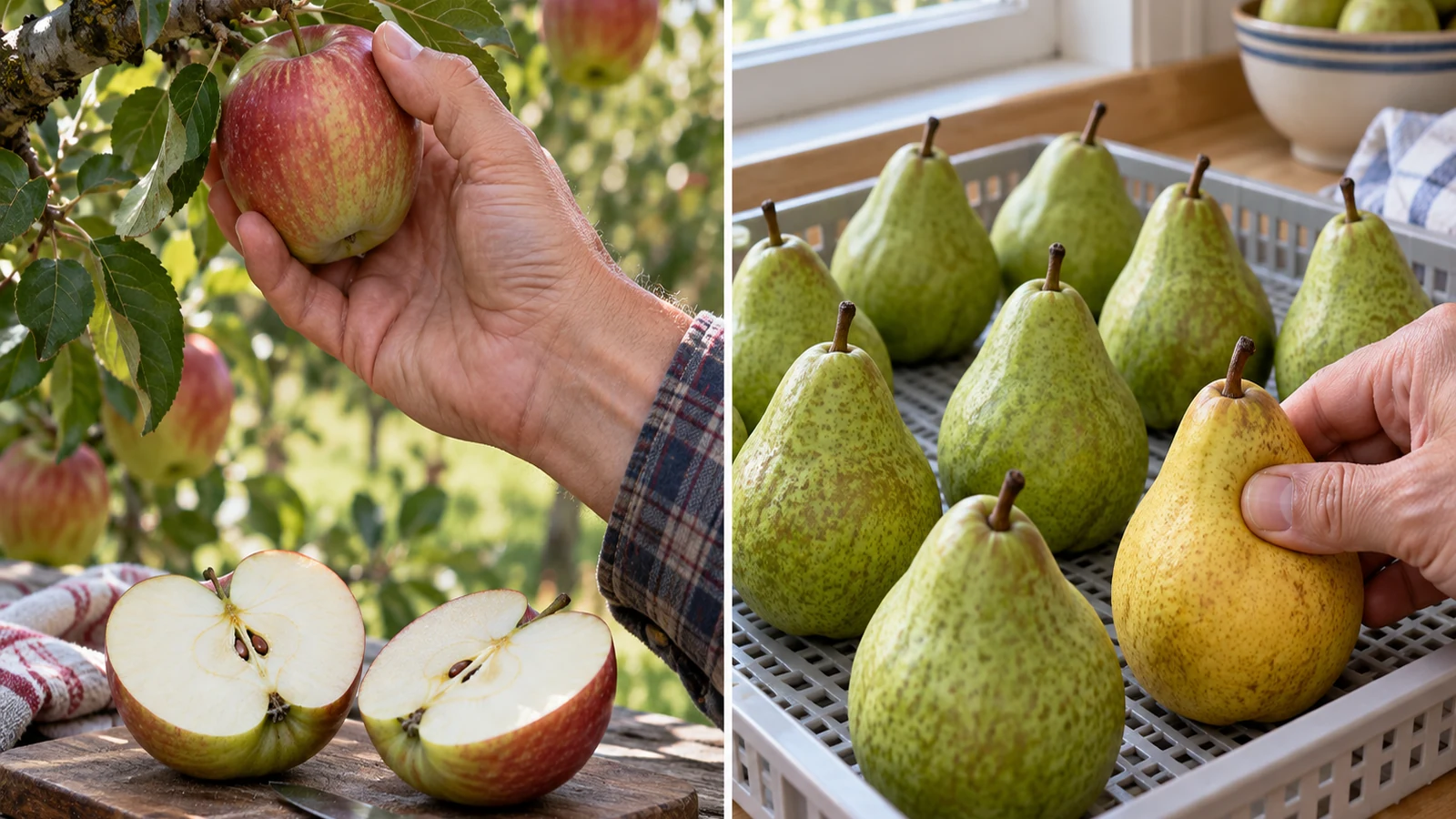
Apples normally reach eating maturity on the tree. Ground color, flavor, firmness, easy separation, and the expected cultivar window together give a better answer than red skin alone.
Test an apple directly by lifting and twisting a candidate fruit, cutting it, and tasting it. One tree may need several picking passes because exposed fruit and shaded fruit do not always finish together.
Most European pears should be harvested mature but still firm. If they soften fully on the tree, the flesh can become coarse or break down from the core outward.
Mature European pears usually release when lifted toward a horizontal position, although cultivar exceptions exist. Some winter pears also require a period of cold storage before they will ripen properly.
Asian-type pears differ because they are generally allowed to develop eating quality on the tree. This is why a tag that says pear without naming the type leaves out a key harvest instruction.
| Harvest question | Apple | European pear |
|---|---|---|
| What are you judging? | Eating maturity on the tree | Physiological maturity before full softness |
| Useful signs | Ground color, flavor, firmness, separation | Cultivar color, sweetness, firm flesh, separation |
| After picking | Cool promptly for the intended storage period | Cool as required, then finish ripening indoors |
| Common mistake | Picking by red color alone | Waiting for the whole fruit to soften on the tree |
Handle both fruits with the palm and a gentle upward twist so you do not bruise them or pull off the fruiting spur. Separate damaged fruit because one bruised or diseased piece can shorten storage for the rest.
Storage life is a cultivar-and-temperature trait, not an apple-versus-pear constant. Some apples store for months, some are short-lived, and European pear cultivars differ widely in chilling and ripening requirements.
The image shows the practical split between an apple checked at the tree and firm European pears arranged for controlled ripening after harvest.
Which fruit tree should you actually buy?
Choose an apple when the available cultivar and rootstock fit your space, a compatible pollen source exists, and you value broader choices in flavor, harvest season, storage, and compact tree systems. Accept that crop thinning and region-specific pest work may be part of the bargain.
Choose a pear when a locally recommended cultivar fits your winters and disease pressure, you can provide compatible pollen, and its mature size and harvest method suit the household. A European pear is especially logical when you are comfortable picking a concentrated crop firm and ripening it indoors.
Choose neither when the site holds water, receives too little sun, sits in a damaging frost pocket, lacks room for mature access, or cannot support the required pollen plan. Fixing those constraints or selecting another fruit crop is cheaper than nursing the wrong tree.
- [ ] Available width, height, and safe working access
- [ ] Local hardiness and chill fit for the exact cultivar
- [ ] Scion cultivar and named rootstock
- [ ] Compatible pollen partner with overlapping bloom
- [ ] Resistance to the diseases common in your area
- [ ] Permanent stake or trellis requirement
- [ ] Expected harvest window and ripening method
- [ ] A realistic plan for thinning, pruning, storage, and cleanup
Price the complete planting rather than one tree tag. Include any second pollen tree, support, guards, irrigation parts, pruning tools, safe harvest equipment, storage space, and replacement risk.
The best choice is the grafted tree whose requirements you can verify and maintain. That standard may lead two neighboring gardeners to different answers even when both want fresh fruit.
Sources & References
- Growing apples in the home garden, University of Minnesota Extension
- Growing pears in the home garden, University of Minnesota Extension
- Growing tree fruits and nuts at home, Oregon State University Extension
- Picking and storing apples and pears, Oregon State University Extension
- Apple scab of apples and crabapples, University of Minnesota Extension
- Choosing apple rootstocks, University of Minnesota Extension