Hostas vs Coral Bells
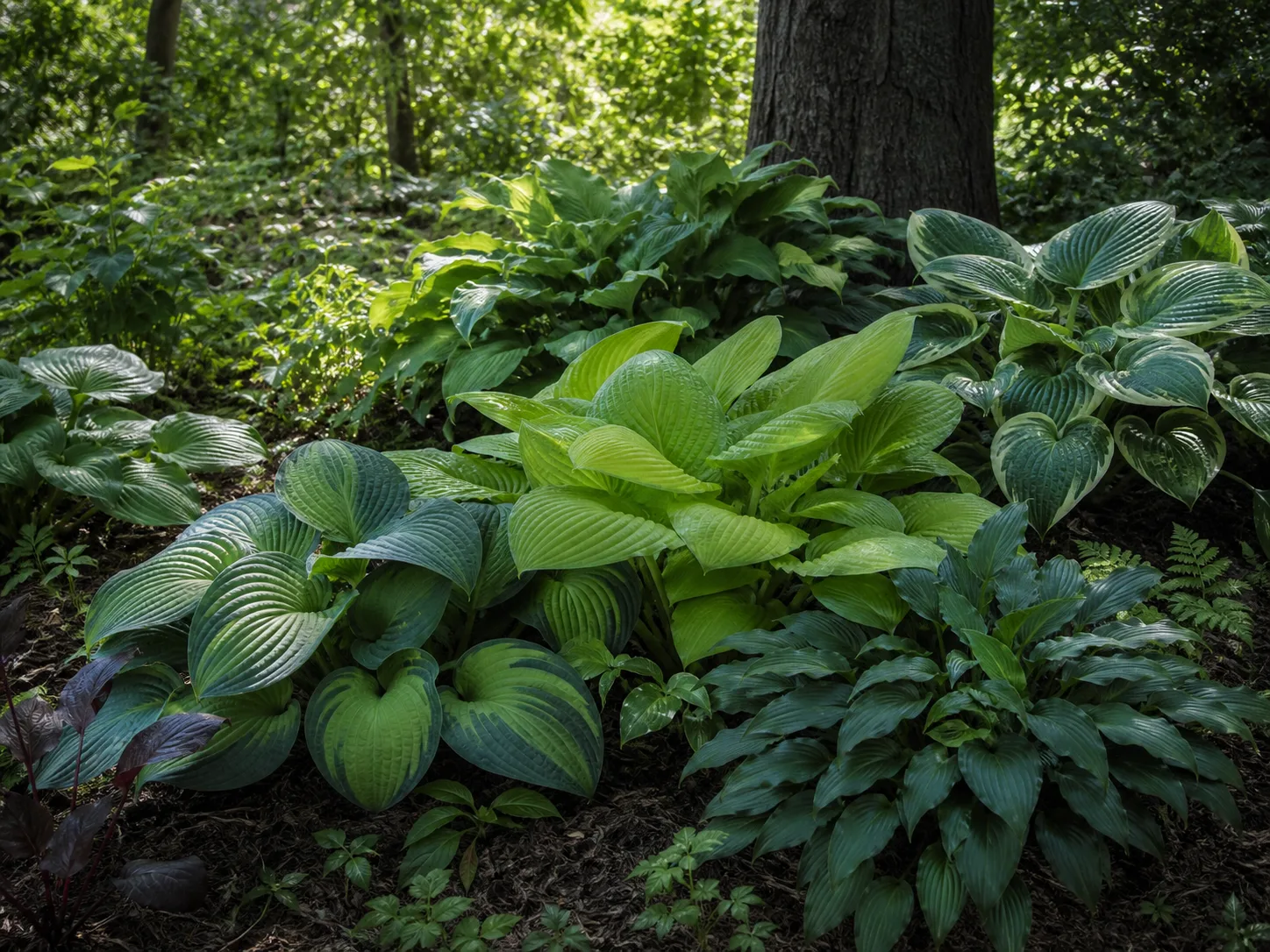
Hostas offer broad leaves in sizes from miniature to giant. Coral bells offer smaller foliage mounds with a wide color range. Cultivar size, light, and drainage matter more than a blanket rule that one always fits a smaller bed.
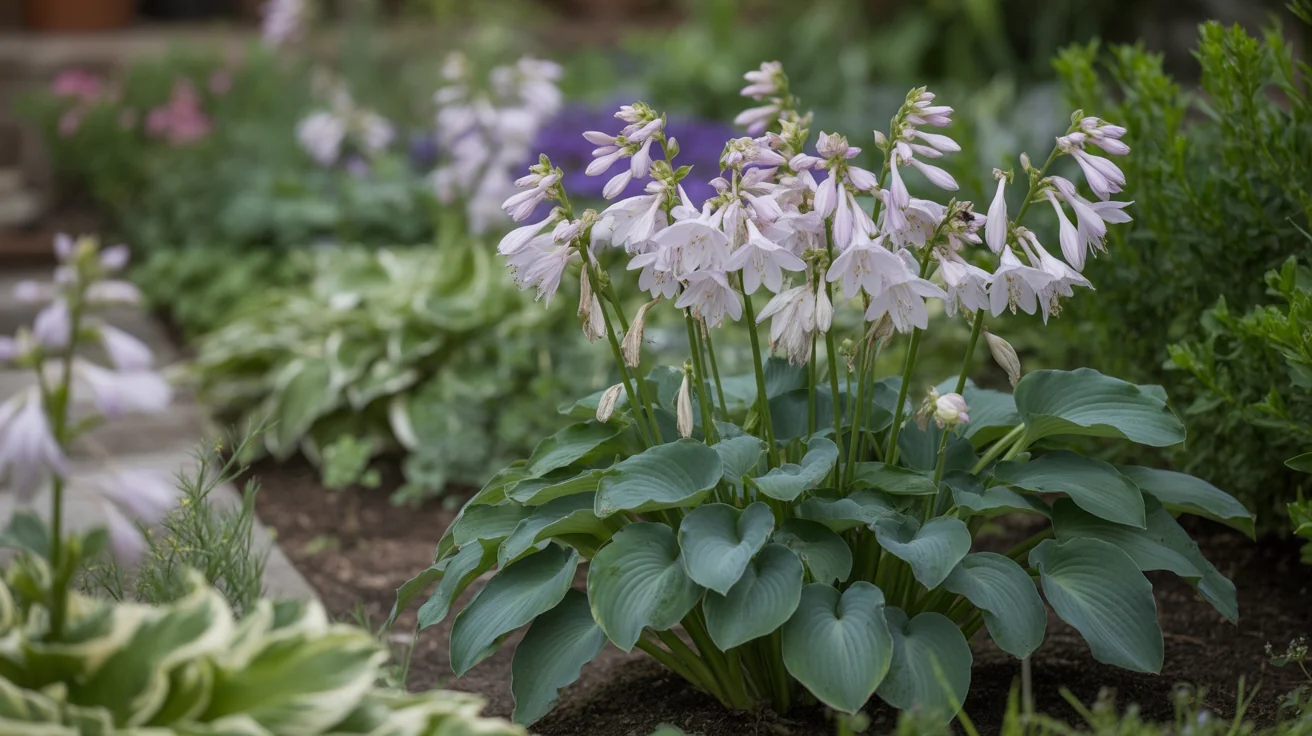
Hostas
Hosta spp.
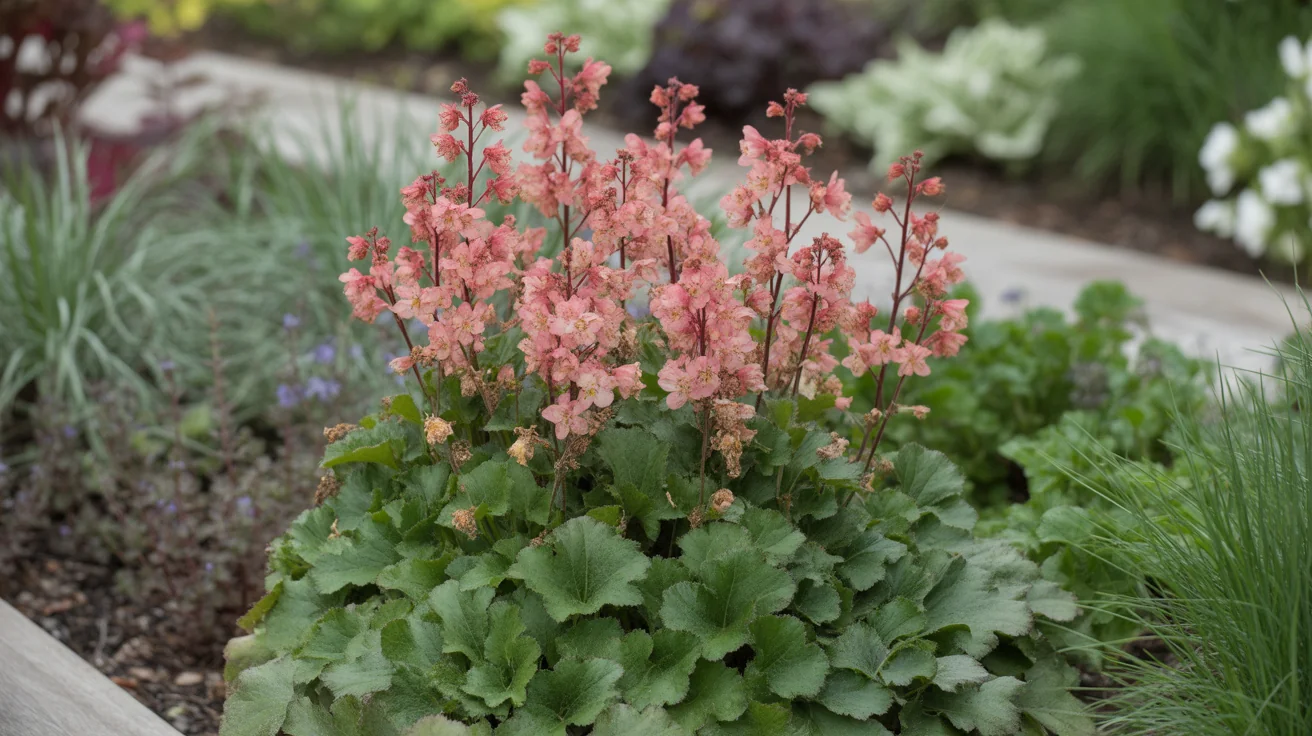
Coral Bells
Heuchera spp.
Hostas and coral bells can both anchor a shade planting, but the useful comparison goes beyond green leaves versus colorful leaves. A miniature hosta can fit a narrow edge, while a large cultivar can overwhelm it. Coral bells also differ in sun and heat tolerance according to their parentage.
The main decision is how the foliage will occupy the bed when mature. Leaf color is easier to enjoy when the plant has enough light to grow well and enough space to keep its shape. Neither genus guarantees success in a dark, wet corner.
Specifications
Compare the traits that change the growing decision.
| Feature | Hostas | Coral Bells |
|---|---|---|
| Leaf effect | Broad leaves; blue, green, gold, and variegated forms | Low mounds with many foliage colors |
| Mature space | Miniature to giant cultivars | Generally compact mounds; cultivar-specific spread |
| Light | Filtered shade; deep shade slows growth | Sun or shade according to cultivar |
| Drainage | Moist, well-drained soil | Moist, well-drained soil |
| Division | Not needed simply to keep a mature clump healthy | Can rejuvenate aging crowns |
| Animal safety | NC State lists Hosta as toxic to dogs, cats, and horses. | ASPCA lists Heuchera sanguinea as non-toxic to dogs, cats, and horses; other species and hybrids need their own identification. |
Division is a more useful maintenance distinction than a promised lifespan. Minnesota Extension says mature hostas do not need division for health. Its perennial-division guide describes coral bells as having accessible surface crowns and offsets, while dense hosta roots can take more effort to separate. That does not establish a fixed number of minutes per plant.
Newly planted coral bells can also lift out of the soil during winter freeze-thaw cycles. Iowa State describes this frost heaving as an establishment concern. A plant can tolerate the winter temperature yet suffer when soil movement exposes its crown.
Animal safety is separate from resistance to deer or slugs. The ASPCA coral-bells listing identifies Heuchera sanguinea, so it cannot establish the status of every species and hybrid sold under the same common name.
Best Use Cases
Choose by the job the planting needs to do.
Deep shade beds
North side, heavy shade
Hostas can survive deep shade, although the University of Minnesota notes slower growth when the site is too dark. Filtered light usually gives a better planting than assuming broad leaves will fill any light-starved space.
Coral bells vary in light tolerance. NC State describes selections for sun or shade, with leaf scorch possible in hot, dry sun. A label for the actual cultivar is more useful than treating every purple- or lime-leaved plant alike.
Foliage color
Season-long interest
Hosta foliage includes blue, green, gold, and variegated forms. A repeated cultivar can give a border a consistent leaf pattern without relying on flowers for interest.
Coral bells offer purple, orange, brown, yellow, and green foliage. That range makes them useful color accents among larger leaves. Light needs still come first. A preferred color is not a reason to place an unsuitable cultivar in harsh sun.
Small-space borders
Tight paths, low edges
Hosta size varies too much for a single width to describe the group. Minnesota Extension gives examples from a foot or less across to several feet wide. Selecting a small cultivar avoids treating repeated cutting or division as the price of keeping a path clear.
Coral bells usually make relatively low mounds, with flowers held above the foliage. That form suits an edge where you want leaf color at close range. The named cultivar’s spread still needs room between the crown and the walking surface.
Wildlife pressure
Deer and slugs
Hostas are susceptible to slug damage and deer browsing. A ring of less-preferred plants is not a barrier that prevents deer from reaching them.
NC State lists deer and rabbit resistance for coral bells, and Minnesota Extension includes them among plants slugs tend to avoid. These are useful selection traits, not guarantees that every plant remains untouched. Feeding pressure and local wildlife still affect results.
Mixed perennial beds
Layered plantings
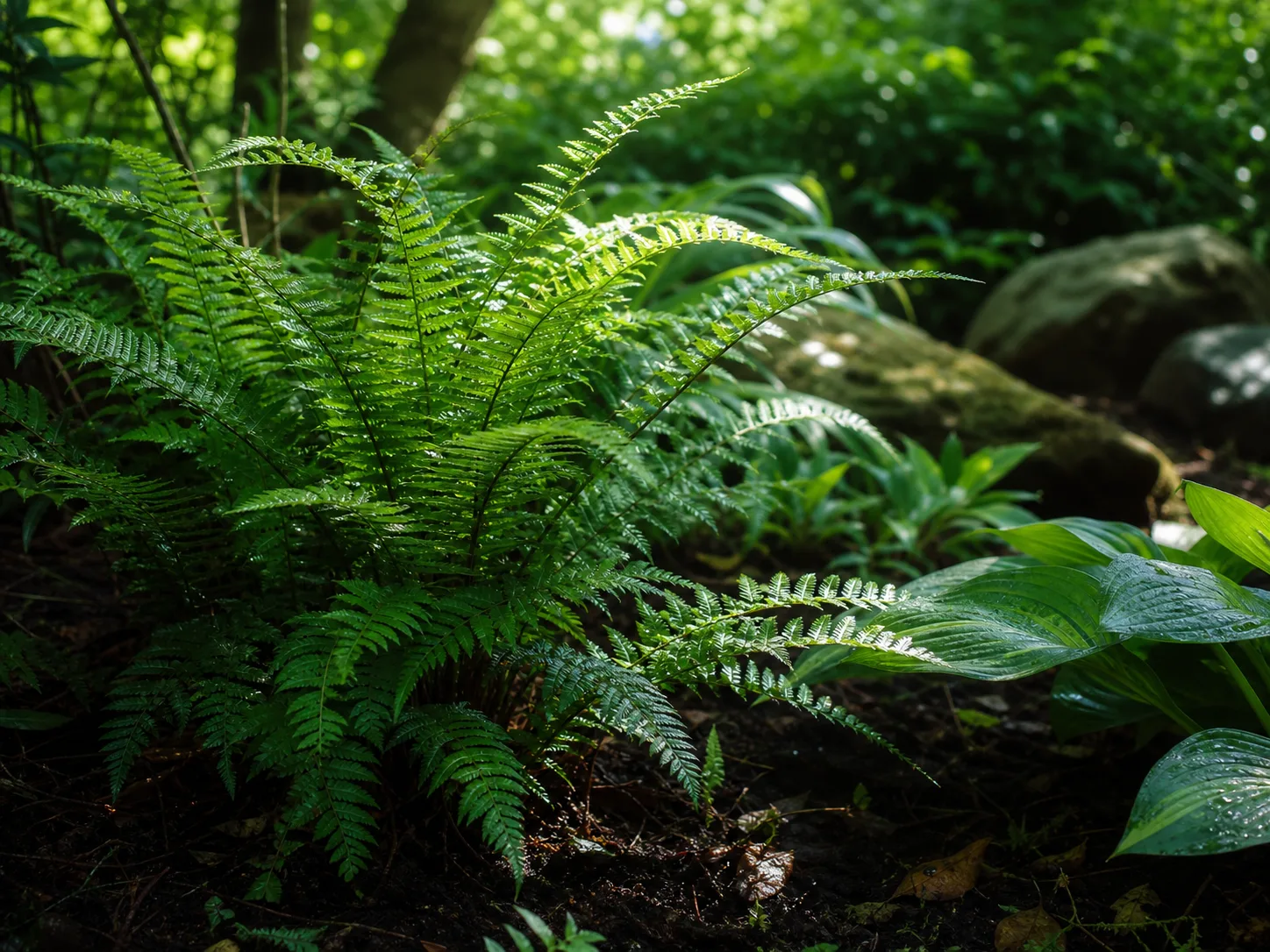
Large hostas can sit behind smaller foliage mounds, while miniature types belong closer to the edge. Their coarse leaves also contrast with divided fern fronds. Leaving space for mature leaves preserves that contrast instead of hiding the smaller plant.
Coral bells can bring a contrasting leaf color into the same planting. Iowa State notes that cultivar parentage affects adaptability, so two plants sold as coral bells may behave differently. A mixed bed works best when its plants share suitable moisture and light, rather than color alone.
Sources & References
- University of Minnesota Extension: Hostas
- NC State Extension: Hosta
- NC State Extension: Heuchera
- Iowa State University Extension: Heuchera or Coral Bells
- University of Minnesota Extension: How and when to divide perennials
- University of Minnesota Extension: Slugs in home gardens
- ASPCA: Coral Bells (Heuchera sanguinea)