Hosta vs Hardy garden ferns
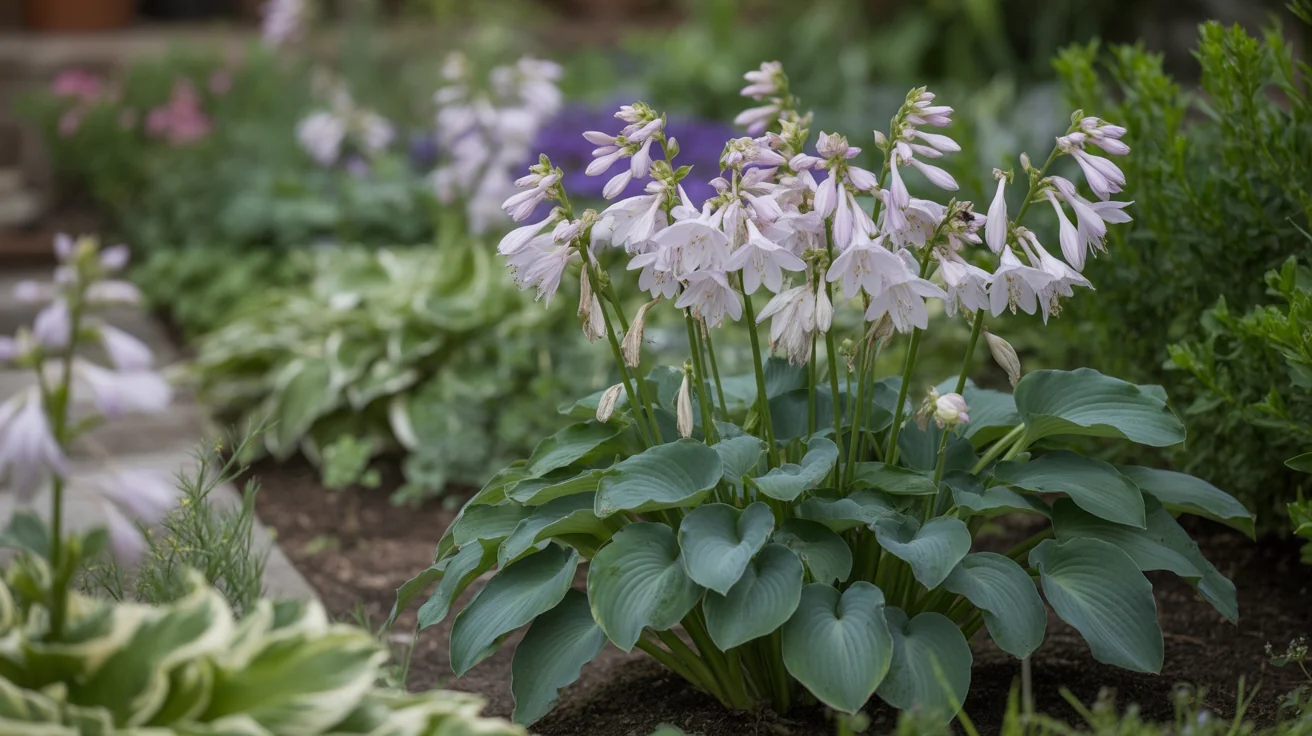
Hostas give shade beds broad, mounded foliage. Hardy ferns add divided fronds, but the species determines whether they suit a dry slope, a damp spreading bed, or an evergreen border.
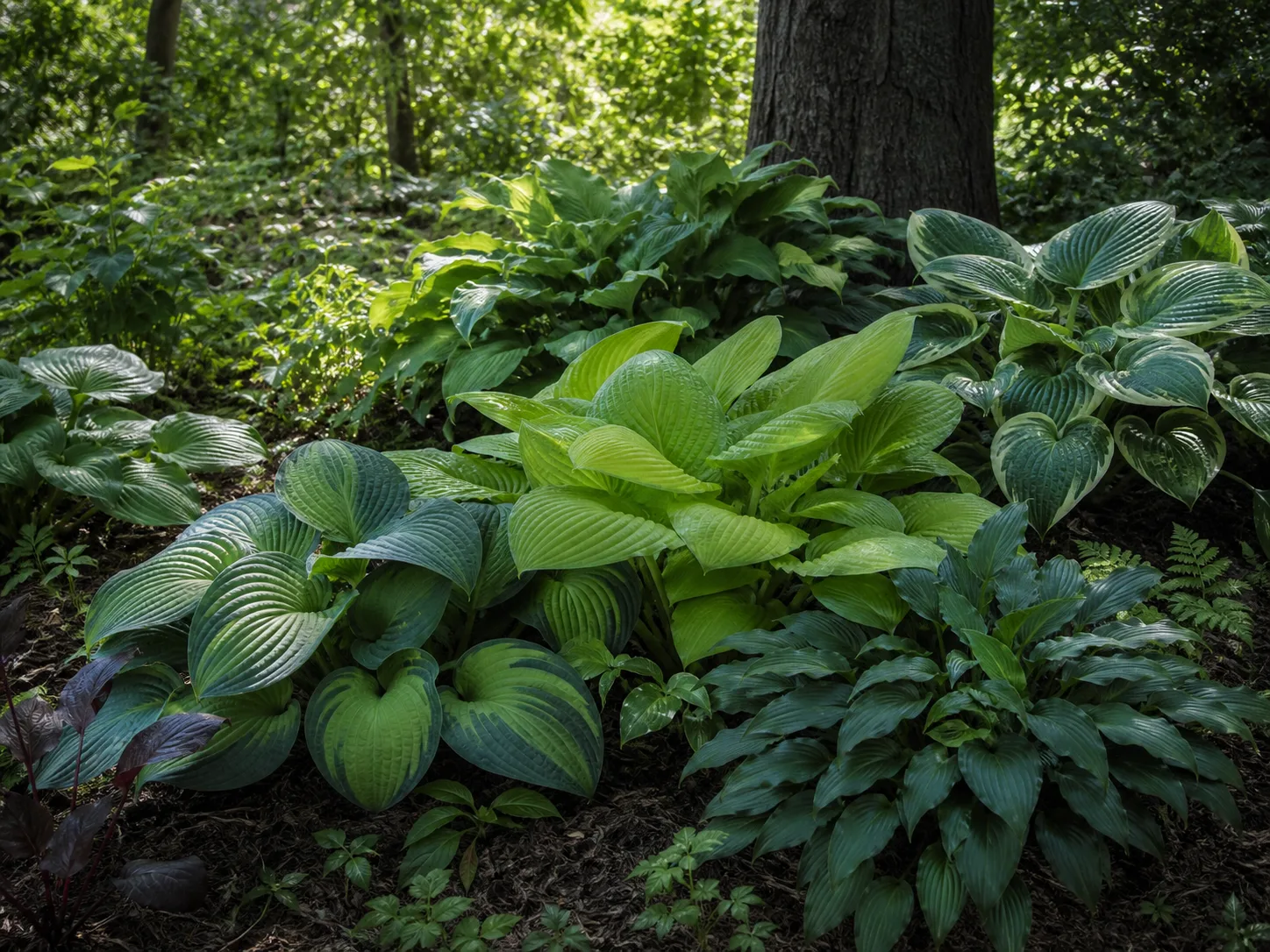
Hosta
Hosta spp.
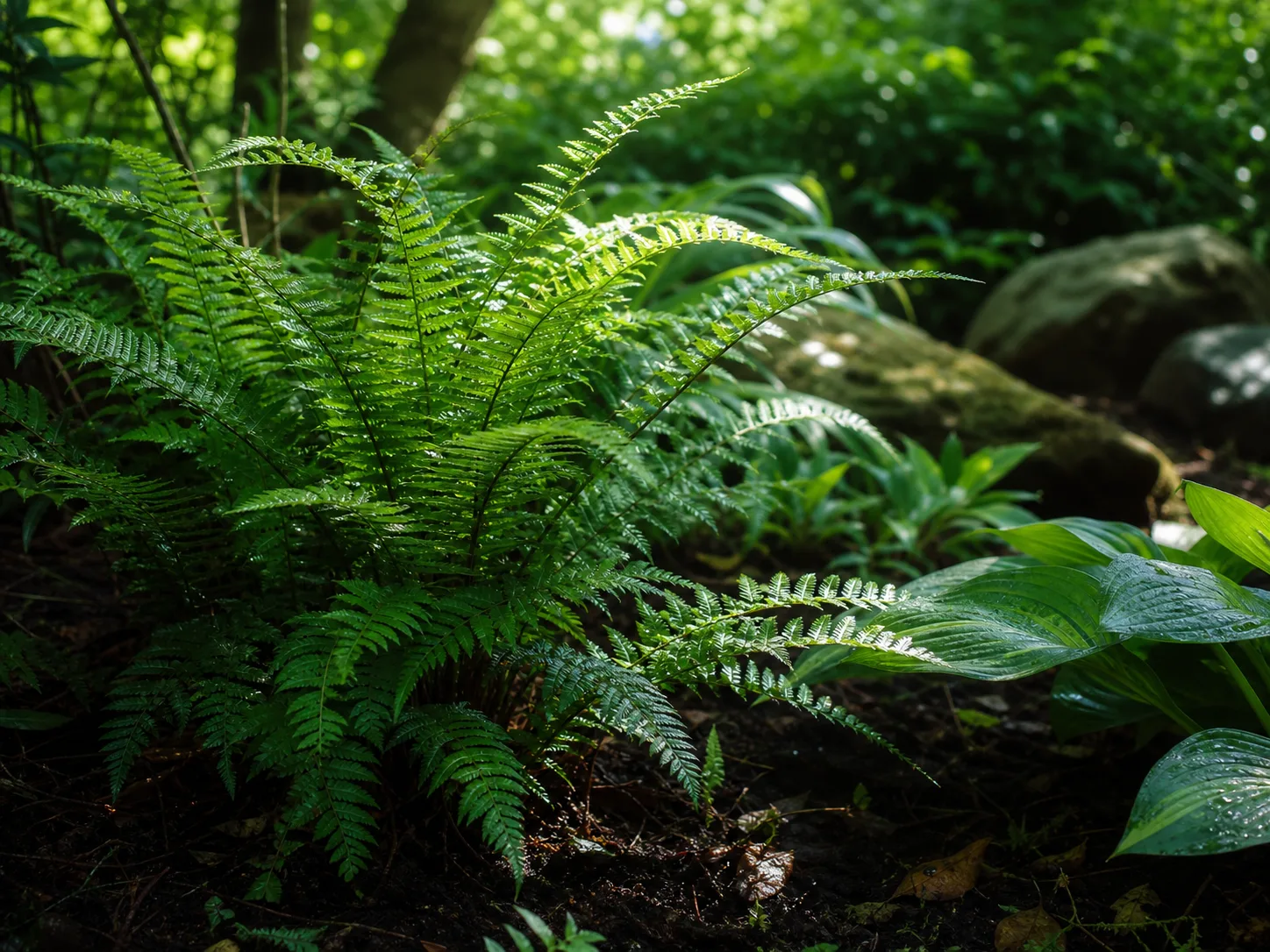
Hardy garden ferns
Various fern species
Hostas and garden ferns can share a shade border, but they are not interchangeable. Their contrasting leaf shapes explain the visual choice. Soil drainage, mature spread, and winter foliage decide whether that choice will work in the bed.
This comparison concerns outdoor shade planting. A tropical Boston fern sold for a porch basket does not establish the winter hardiness or moisture needs of garden ferns. The examples below use named hardy species so that “fern” does not become a promise that any fern will fit.
A broad hosta mound can anchor a border, while divided fern fronds soften its edges. Neither form automatically needs fewer plants. A miniature hosta and a giant cultivar occupy very different spaces, just as a clumping fern and a running fern do.
Specifications
Compare the traits that change the growing decision.
| Feature | Hosta | Hardy garden ferns |
|---|---|---|
| Foliage form | Broad leaves in a mound; size depends on cultivar | Divided fronds; form depends on species |
| Light in a garden bed | Filtered or dappled shade; cultivar and climate matter | Shade requirements vary by species |
| Soil moisture | Moist, well-drained soil | Christmas fern tolerates drier shade; sensitive fern suits moist sites |
| Spread | Clumping, with large differences in mature width | Christmas fern clumps; sensitive fern spreads by runners |
| Winter foliage | Leaves die back | Evergreen Christmas fern or deciduous sensitive fern |
| Animal safety | NC State lists Hosta as toxic to dogs, cats, and horses. | Depends on the fern’s identity; “fern” alone does not establish safety. |
A fern’s identity determines its light, moisture, and winter needs. Hardiness belongs to the named species and cultivar. Iowa State lists Christmas fern for zones 3–8; that example is not a zone range for all garden ferns.
For maintenance, the University of Minnesota says mature hostas do not need division simply to stay healthy. Division is useful when you want more plants or a different arrangement. A fixed replacement or division interval would overstate the work involved.
Hostas are vulnerable to deer browsing and slugs. Ferns can also have slug damage, and Maryland Extension reports deer grazing Christmas fern when other food is scarce. Neither choice offers a guarantee against wildlife damage. Animal ingestion is a separate issue from browsing resistance, as the safety row shows.
Best Use Cases
Choose by the job the planting needs to do.
Foundation shade bed
Foliage beside the house
Hostas form distinct clumps that work as repeated foliage accents. Their leaves die back seasonally, so they will not hide a bare foundation through winter. In deep shade growth is slower, and mature cultivar size matters more than the size of the nursery pot.
Christmas fern offers evergreen fronds in a clump rather than a running colony. Maryland Extension describes its tolerance of moist to dry soils. That makes it worth considering for a shaded border where the old assumption that every fern needs constant dampness would rule it out.
Woodland texture
Combining broad and divided leaves
Broad hosta leaves make a clear contrast with fern fronds. Repeating that contrast can connect separate parts of a bed without requiring a different plant in every gap.
Iowa State describes ferns as useful partners for coarse-leaved hostas and for spring plants that disappear in summer. A fern can occupy that later-season space, provided its mature growth does not crowd the neighboring crown.
Damp ground
Moist soil and drainage
Hostas need drainage and can develop root or crown rot in poorly drained soil. Persistent ponding changes the planting decision. Adding a hosta beside a downspout does not solve the drainage problem.
Sensitive fern (Onoclea sensibilis) is one candidate for moist rain-garden areas. Maryland Extension notes that it spreads by underground runners and can crowd less vigorous neighbors. That is useful in a bed intended to fill, but a problem in a small mixed collection. Other ferns do not inherit its tolerance or spreading habit.
Drier shade
Soil beneath trees or roof overhangs
Hostas beneath shallow-rooted trees can need extra water because the trees compete for it. A shaded bed is not necessarily a moist bed, and an automatic weekly watering schedule cannot describe both recent rain and a prolonged dry spell.
Christmas fern can tolerate drier shaded soil, while many other garden ferns need more consistent moisture. Iowa State also cautions that few ferns tolerate prolonged standing water. The useful distinction is between named species and soil conditions, not a universal hosta-versus-fern drought ranking.
Winter appearance and spread
What remains after the growing season
Hosta leaves die back for winter. The dormant crown remains, but the summer mound no longer screens the soil or the plants behind it.
Christmas fern keeps evergreen fronds, although snow may flatten them. Sensitive fern loses its foliage fronds after frost while fertile fronds can remain. Its runners also create a different maintenance job from the clumping Christmas fern. These differences matter more than a generic “low-maintenance fern” label.