
What Is Loamy Soil, and Can You Turn Your Garden Soil Into It?
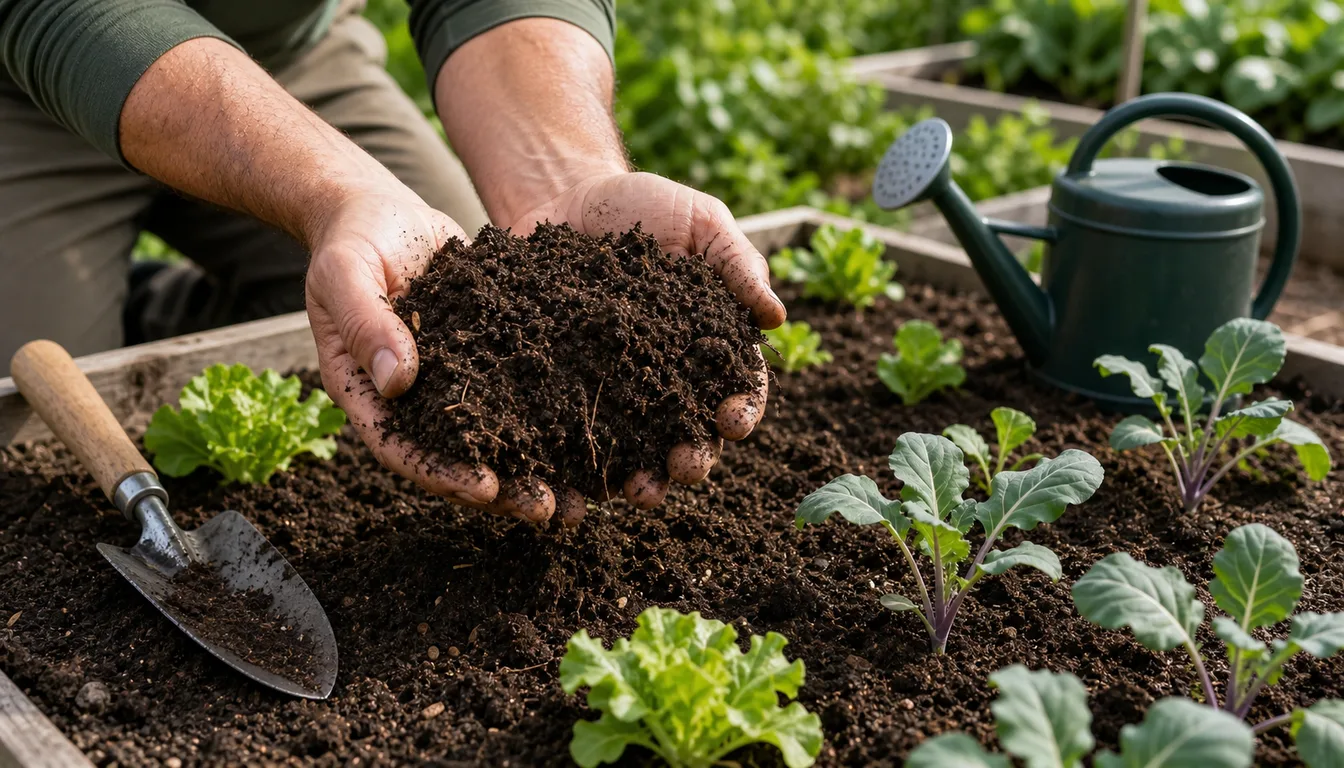
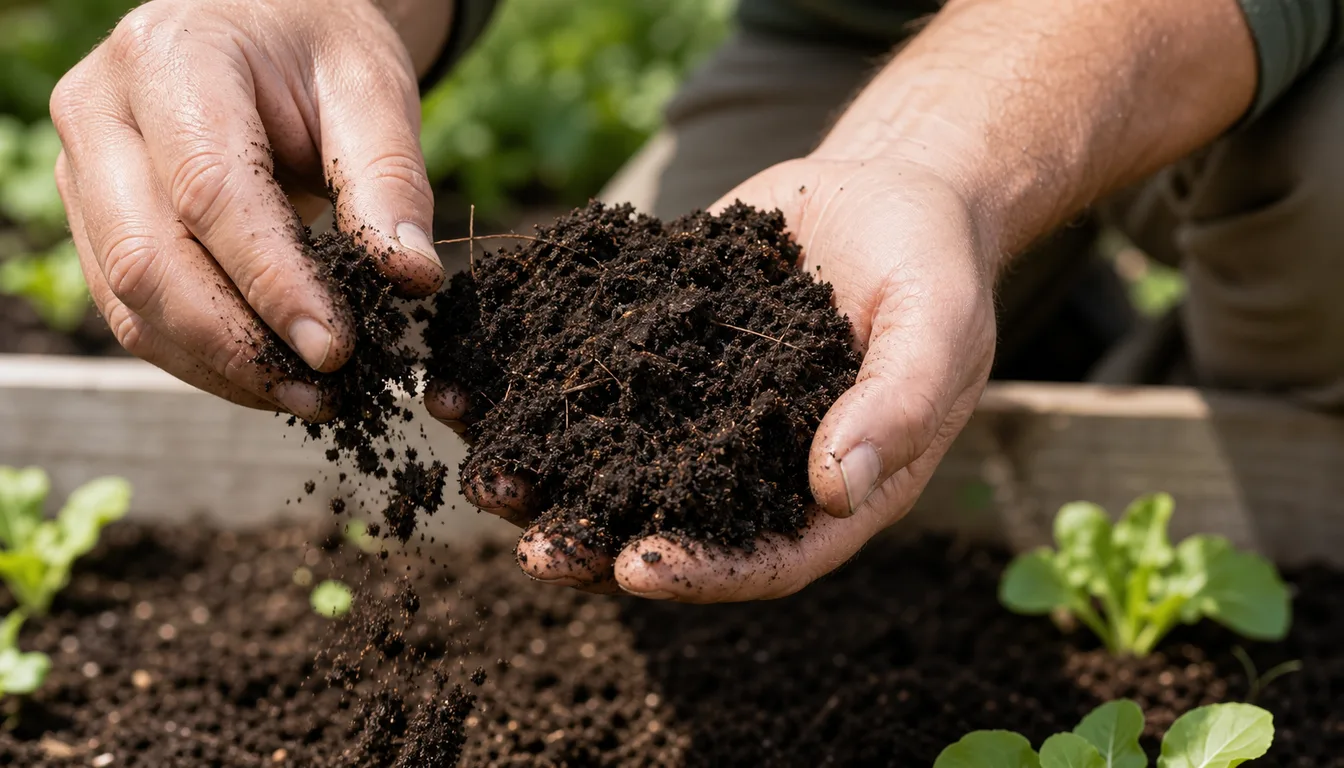
Loam is a soil texture with moderate amounts of sand, silt and clay, so that none of the three dominates. Colorado State gives the example of a soil with 20 percent clay, 40 percent silt and 40 percent sand. That balance is why loam drains without drying out quickly and holds water without staying soggy.
Texture is the one soil property a gardener cannot practically change. Oregon State's soil scientist says no amount of sand added to clay will change its texture, and that the clay will remain clay. What can change is structure, the way particles clump together, and organic matter is what builds it. Colorado State notes that a sandy soil with 4 to 5 percent organic matter makes an ideal gardening soil, so the goal is loam's behavior rather than loam's particle count.
At a glance
What Makes a Soil Loam?
Soil texture is the share of three mineral particle sizes. Sand is the largest, silt is middle-sized, and clay is the finest. The percentage of each sets the soil's texture class, and the texture triangle sorts soils into classes running from sand through sandy loam, loam and clay loam to clay.
Loam sits in the middle of that triangle. The Virginia Cooperative Extension Gardener Handbook describes it as approximately 7 to 27 percent clay, 28 to 50 percent silt and 23 to 50 percent sand. The names on either side tell which particle leans heavier, so a sandy loam has more sand and a clay loam more clay.
Clay has far more influence than its share suggests. Colorado State notes that a soil with as little as 20 percent clay behaves like a clayey soil, while a truly sandy soil needs more than 50 percent medium to coarse sand. A loam near the top of its clay range can therefore feel and drain much like a clay.
- Loam, by percent
- About 7-27% clay, 28-50% silt, 23-50% sand
- Example loam
- 20% clay, 40% silt, 40% sand
- Behaves like clay
- From as little as 20% clay
- Truly sandy
- More than 50% medium to coarse sand
How Can You Tell If Your Soil Is Loamy?
Two home tests give a fair reading of texture, one in a minute and one over a few days.
The feel test starts with a small handful of moist soil worked between the fingers. Sand feels gritty, silt feels smooth like flour, and clay feels sticky. Pressing the moist soil out between thumb and finger into a ribbon gives Colorado State's measure. A ribbon that breaks before 1 inch is coarse, sandy soil. One that reaches 1 to 2 inches is medium texture, the range that takes in most loams. A ribbon longer than 2 inches is clayey.
The jar test separates the particles by settling speed.
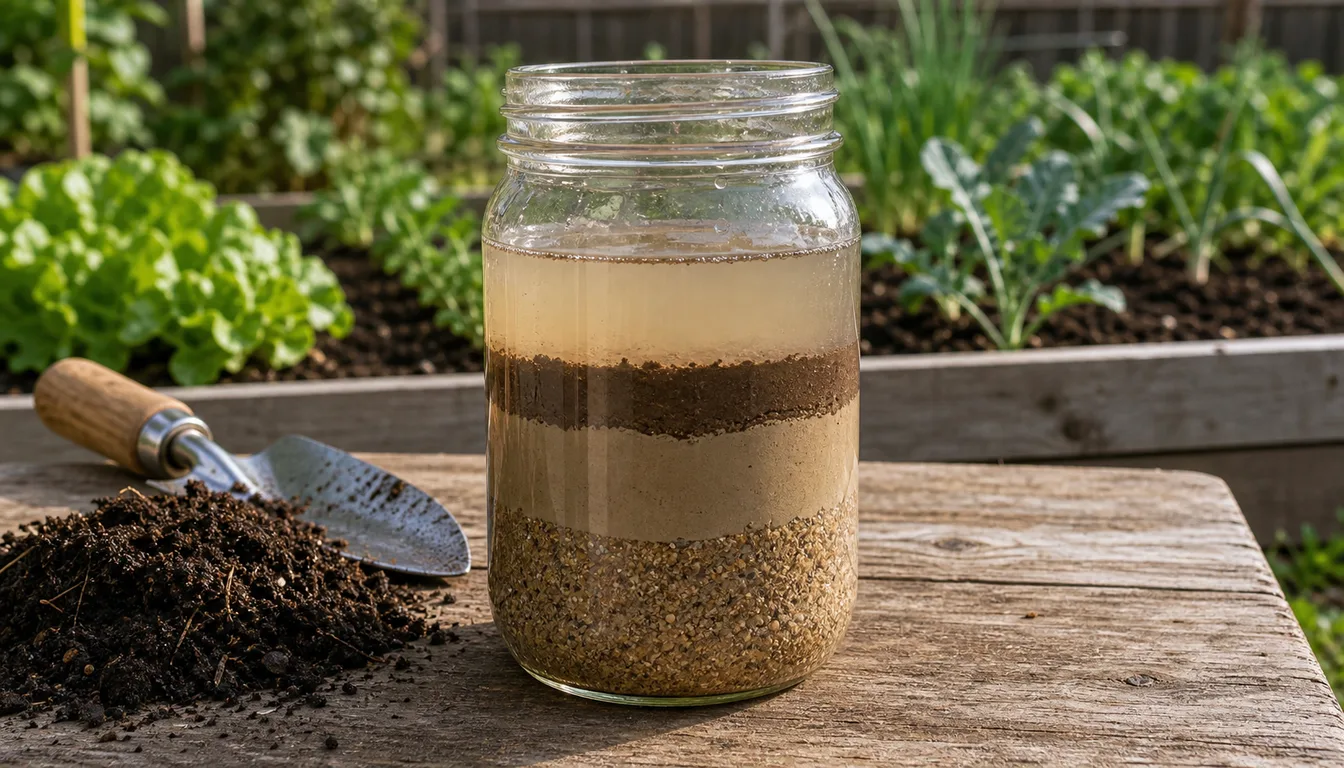
- Fill the jarFill a straight-sided jar about one-third full of soil, then top it up with water, leaving space at the top.
- Shake itCap the jar and shake it hard until the soil becomes a uniform slurry.
- Mark the sandAfter 1 minute, mark the depth of the settled layer, which is sand.
- Mark the siltAfter 2 hours, mark the top of the next layer, which is silt.
- Mark the clayWhen the water clears, usually 1 to 3 days, mark the final layer, which is clay.
- Work out the sharesDivide each layer's height by the total height and multiply by 100 for its percentage.
Clemson Extension uses 48 hours for the clay reading, and Colorado State notes some soils take weeks to clear. The percentages that come out can be placed on the texture triangle, and a result such as 40 percent sand, 40 percent silt and 20 percent clay lands in loam.
Why Does Loam Grow Plants So Well?
A soil in good condition for plants is about half solid material and half open pore space. The Virginia handbook puts the ideal near 25 percent air and 25 percent water by volume, and Cornell's soil scientists note that the balance shifts daily with rain, drainage and plant use.
Loam's mix of particle sizes helps keep that balance, but particles alone do not create it. Colorado State explains that as soil microorganisms break down organic matter, the tiny soil particles bind together into larger clumps called aggregates, which increases the large pore space where air and drainage water move. On fine, clayey or compacted soils, the lack of those large pores restricts water and air and limits root growth.
That is why organic matter matters more than the texture class. Colorado State's ideal for most gardens is 4 to 5 percent organic matter, and it calls a sandy soil at that level an ideal gardening soil. A loam with almost no organic matter can still crust and pack, while a sandy loam rich in it behaves like the soil gardeners mean when they say good loam.
Can Clay or Sand Be Turned Into Loam?
Clay cannot be turned into loam by mixing in sand, and sand cannot be turned into loam by mixing in clay. Oregon State's soil scientist Brewer says no amount of sand added to clay will change its texture, and that sand grains give the clay a surface to cling to, which can make conditions worse. University of Arkansas puts the amount of sand needed to change texture at 50 percent or more by volume in most cases, a quantity no garden bed can practically take.
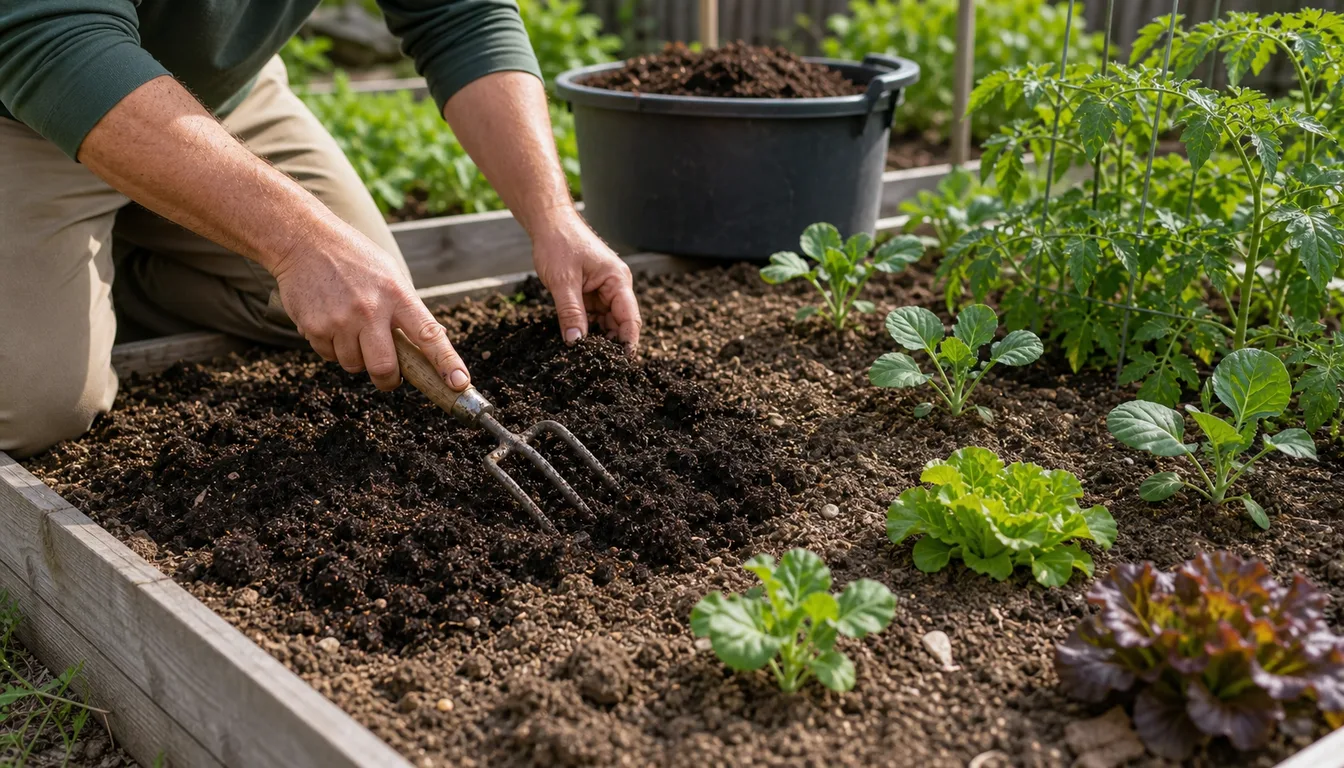
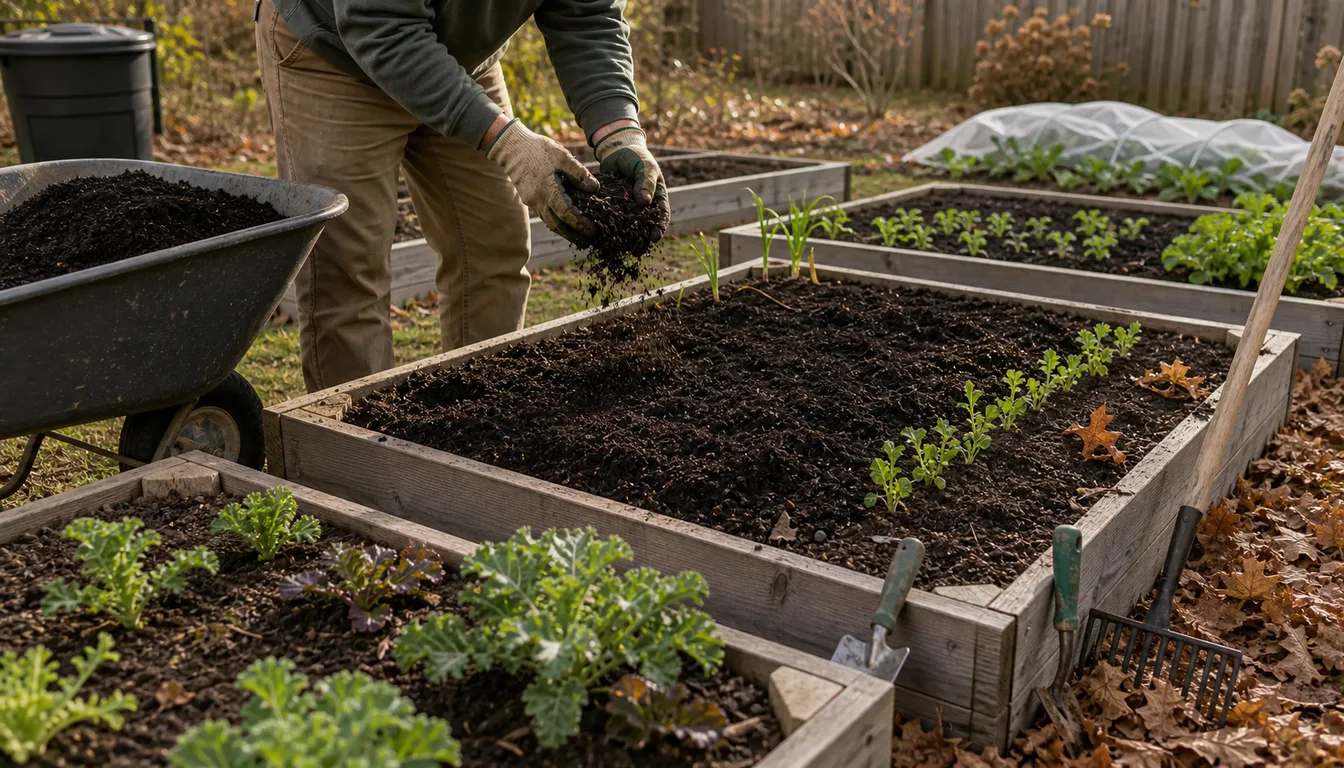
Organic matter is the amendment that works in both directions. Oregon State's guidance is to spread 1 to 3 inches of composted organic matter over a bed and work it into the top 6 to 8 inches with as few passes as possible. Colorado State scales it to the depth being worked, about 2 inches of compost for an 8-inch depth and 1 inch for a 4-inch depth.
The change has to be kept up. Brewer notes that repeated additions of organic matter do change clay soils, but they must be at least annual to maintain the change, and the soil itself will remain clay. Spreading 2 to 3 inches on top of beds each year is Oregon State's maintenance pattern.
Established plantings are harder. Colorado State points out that amendments are easy to add to annual flower and vegetable beds but cannot be worked into the root zones of trees, shrubs, perennials and lawns. There, organic matter goes on as a surface layer, and compaction is treated as its own problem, covered in fixing compacted soil. How sand and clay compare as starting points is laid out in sandy soil vs clay soil.
What About Plants That Need Sharp Drainage?
Plants that need sharp drainage are where the sand-in-the-hole habit does the most harm. Illinois Extension says lavender demands full sun and extremely well-drained soil, and that dampness more than cold kills it. Its answer for poor drainage is a raised bed, where the soil can be modified and the planting sits higher, with a gravel mulch to keep the crown dry.
A pocket of sand or gravel dug into clay works against that. Colorado State warns that an abrupt change in soil texture creates a boundary that affects water movement and root growth, and advises against creating such interfaces. A sandy planting hole in clay is exactly that kind of boundary, where water can collect in the pocket instead of draining away.
Arizona Extension's planting guidance for trees and shrubs points the same way, with no organic amendments in the backfill, native soil in the hole, and a raised mound where the soil is heavy or shallow. Colorado State's advice for herbs is to work organic material into the whole planting bed before planting, which improves drainage across the bed rather than in a single hole.
Whole-bed amendment
Compost worked across the full bed improves drainage evenly, without a boundary for water to stall at.
Raised bed or mound
Lifts roots and crowns above wet native soil, the option Illinois gives for lavender.
Sand in the planting hole
Creates a texture boundary that traps water around the roots in clay.
How Do You Build a Loam-Like Mix for a Raised Bed?
A raised bed is the one place where a loam-like soil can be built from scratch. University of Maryland Extension suggests a compost-topsoil mixture from a landscape supplier, and its vegetable specialist notes that beds with 20 to 50 percent plant-based organic matter by volume typically produce healthy vegetable gardens. Topsoil bought on its own needs at least 2 inches of compost worked in.
Maryland also lists what to reject. Soil that smells foul, looks mottled gray or feels chalky is a poor buy, and a feel test and a jar test on a sample show whether a load is mostly fine clay before it is spread.
The boundary problem applies here too. Colorado State notes that filling a raised bed with soil different from the ground beneath it creates an interface at the change line. Iowa State's fix is to remove any sod, work up the existing soil, then add the new mix a few inches at a time and work each layer into the soil below, because distinct layers impede water movement and discourage root growth.
Recipes differ on sand. Iowa State's raised-bed mix includes coarse sand, while Oregon State and Arkansas caution that sand can compact silt and clay soils. Where the native ground is clay, a mix built from topsoil and compost avoids the risk. Volumes for a given bed size come from the raised bed soil calculator.
How Does Loam Change Fertilizing?
Soil texture and organic matter both change how much fertilizer a bed needs.
Organic matter cuts the nitrogen need directly. Colorado State's standard for vegetable gardens is 0.2 pound of nitrogen per 100 square feet where organic matter is below 2 percent, half that at 2 to 3 percent, and none at 4 percent or more. A bed improved toward that 4 to 5 percent target therefore needs less fertilizer each year.
Sand changes the pattern rather than the total. University of Minnesota suggests more frequent nitrogen at a lower rate on sandy soil, and Clemson splits the vegetable side-dress into two smaller doses on sand.
A soil test reports organic matter alongside pH, phosphorus and potassium, so one report answers both questions. The amounts for each crop and bed size are in the vegetable fertilizer chart.
Pro Tips
- Read the jar test only after the water clears, which can take a day or more.
- Skip sand as a clay amendment and add compost every year instead.
- Amend the whole bed or raise it for lavender and other plants that need sharp drainage.
- Work a new raised bed's fill into the soil below a few inches at a time so it does not form a separate layer.
- Check organic matter on the soil test report, since it changes how much nitrogen a bed needs.
Frequently Asked Questions
Is loamy soil the same as topsoil?
No. Topsoil is the surface layer of soil, or a product sold under that name, and it can be any texture from sandy to clayey. A feel test and a jar test on a sample show whether a particular load is loamy.
How long does it take to turn clay into loam?
Clay never becomes loam, because texture does not change. What changes is structure. Oregon State notes that yearly organic matter additions do change how clay behaves, but they must continue at least annually and the soil remains clay underneath.
Should I add sand to clay soil?
No. Oregon State says no amount of sand will change clay's texture and that sand gives clay a surface to cling to, and University of Arkansas notes that small additions can make clay denser. Compost added every year is the amendment that helps.
Is sandy loam good for a garden?
Yes, especially with enough organic matter. Colorado State calls a sandy soil with 4 to 5 percent organic matter an ideal gardening soil, though it needs smaller, more frequent nitrogen feedings than a heavier loam.
What does a ribbon test show?
How much clay a soil has. Moist soil pressed into a ribbon that breaks before 1 inch is sandy, one that reaches 1 to 2 inches is medium texture like most loams, and one longer than 2 inches is clayey.
Sources & References
- Managing Soil Tilth: Texture, Structure, and Pore Space, Colorado State University Extension
- Estimating Soil Texture: Sandy, Loamy or Clayey, Colorado State University Extension
- Virginia Cooperative Extension Gardener Handbook, Chapter 2: Soils and Nutrient Management
- Soil Texture Analysis: The Jar Test, Clemson Cooperative Extension
- Soil Science 101, Cornell University SoilNOW
- Clay Soil Challenges and Solutions for Oregon Gardeners, Oregon State University Extension
- Add Organic Matter to Improve Most Garden Soils, Oregon State University Extension
- Will Adding Sand Help My Clay Soil?, University of Arkansas Cooperative Extension
- Lavender, University of Illinois Extension
- Planning and Plants for an Herb Garden, Colorado State University Extension PlantTalk
- Planting Guidelines: Container Trees and Shrubs (AZ1022), University of Arizona Cooperative Extension
- Q&A: What Kind of Soil Should I Use in Raised Beds?, University of Maryland Extension
- What Would Be a Good Soil Mix for a Raised Bed?, Iowa State University Extension
- Vegetable Gardens: Soil Management and Fertilization (CMG GardenNotes #711), Colorado State University Extension
- Quick Guide to Fertilizing Plants, University of Minnesota Extension
- Recommendations for Liming and Fertilizing Vegetables, Clemson Cooperative Extension
Related Guides
Best Fertilizer for Indoor Plants: How to Choose
The best fertilizer for most indoor plants is a complete fertilizer labeled for houseplants, with…
15 min read
Best Fertilizer for Vegetables by Garden Type
Fertilizer only helps vegetables if it matches what your soil and crops need.
11 min read
Can You Fertilize Wet Grass Safely?
A wet lawn right when you planned to fertilize creates second thoughts fast.
11 min read
How Long Does Compost Take to Be Ready?
Compost does not follow a calendar, it follows conditions.
11 min read
How to Fertilize Tomatoes Without Overfeeding
Fertilize tomatoes according to a soil test and product label, not a fixed weekly calendar.
15 min read
How to Fertilize a Vegetable Garden for Maximum Yield
Fertilizer is not magic dust. It is plant food in a specific ratio.
14 min read