
What's a Brussels Sprout Plant? How to Fill a Whole Stalk
Brassica oleracea var. gemmifera Brassicaceae
Brussels sprouts are not a quick brassica with many tiny heads. They are a long-season stalk crop that only tastes worth the space when the plant builds hard through summer and then finishes the sprouts in cool fall weather.
Good care starts with timing, but it ends with learning how to manage the stalk like a season-long structure.
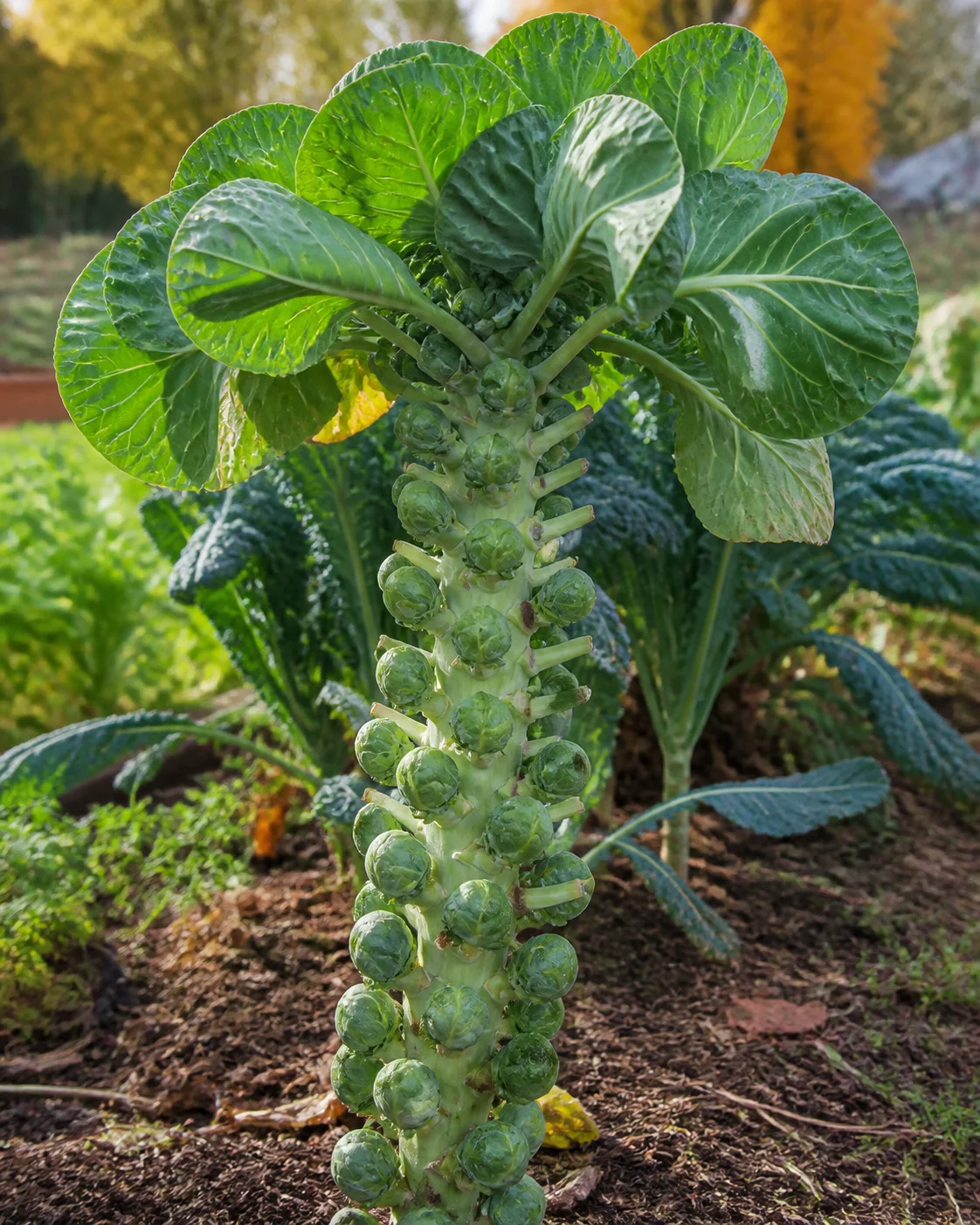
Care snapshot
When Should You Plant Brussels Sprouts to Finish in Fall?
The first idea most people skip is that Brussels sprouts are a fall-finishing crop, not a summer vegetable. The plant can grow through summer, but the sprouts themselves size and sweeten best when days cool off.
That means you plan backward from the weather you want at harvest, not forward from the day you feel like planting.
A row that reaches sprout-making stage in July often gives loose buttons and flat flavor, while a row that reaches that same stage in October often gives tight sprouts that finally justify the bed space.
This is where Brussels sprouts split from cabbage. That crop also likes cool weather, but it usually finishes much earlier.
Broccoli is quicker too, and Brussels sprouts ask you to carry one plant for months before the real payoff begins.
Most varieties need 90 to 180 days from transplant to first harvest, a wide enough range that the seed packet's maturity number matters as much as the calendar date you plant.
Marking the expected first-frost date on a calendar before you plant makes the whole timeline concrete instead of a vague fall goal.
- Best target
- Sprouts maturing in the cool part of fall, not in peak summer heat
- Common timing miss
- Plants are still skinny when cold arrives or already trying to fill sprouts during hot weather
- Why frost helps
- Once buds are formed, cool weather can improve firmness and flavor instead of hurting it
Why Does the Summer Stalk Decide Your Fall Harvest?
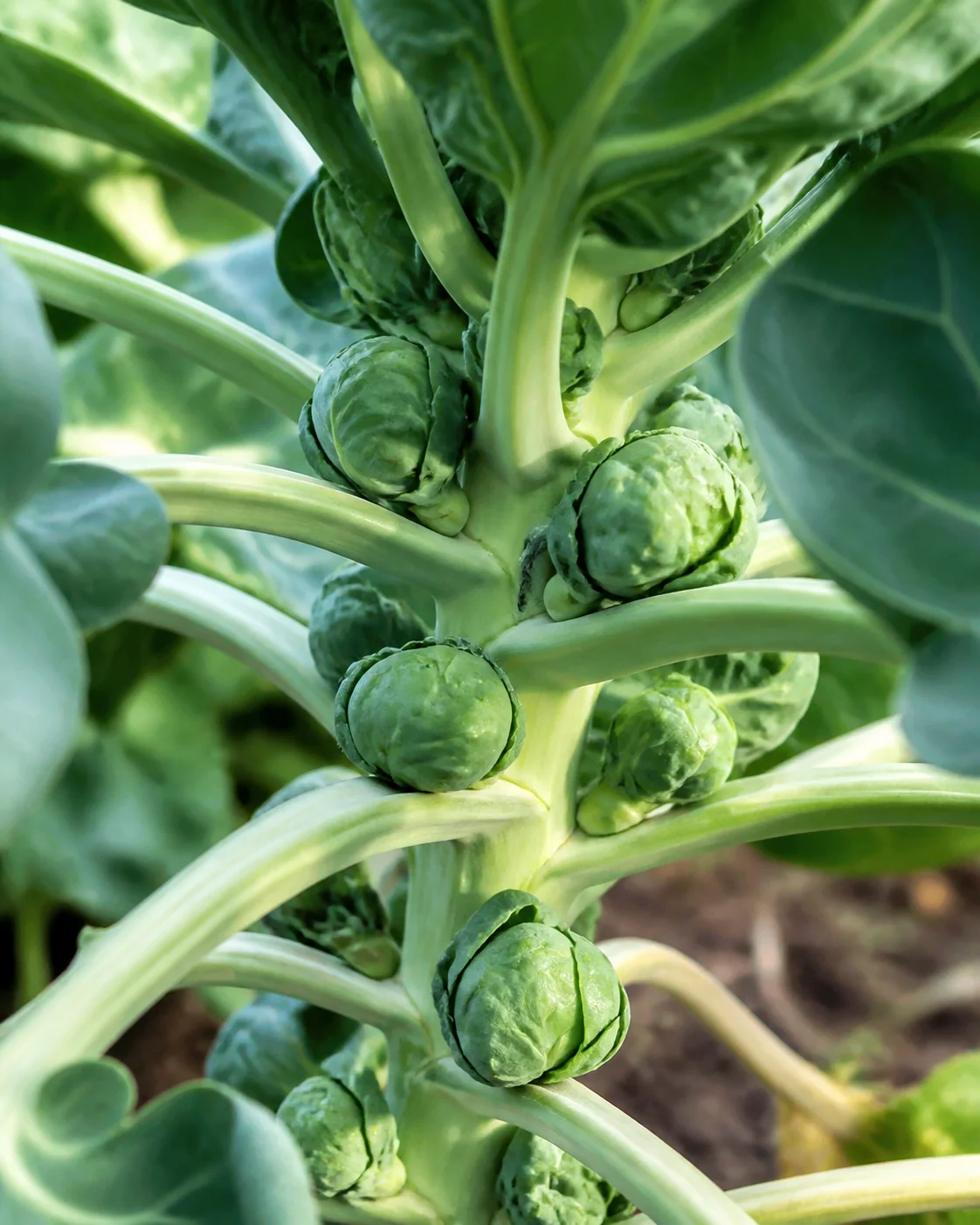
Every sprout grows from a leaf axil on the main stem, so a weak stalk guarantees a weak harvest. If the stem stays thin and the leaf canopy never becomes powerful, the plant has no engine for making dozens of firm buds later.
Start with rich soil, but keep the fertility calm and steady instead of blasting the bed with one heavy late feeding. A simple side-dress timed around vegetable fertilizer timing works better than trying to rescue a tired plant after midsummer.
The watering style matters too because tall brassicas become unstable when roots stay shallow. The logic from deep watering fits Brussels sprouts well.
You want a plant anchored well enough to keep feeding sprouts when autumn winds arrive.
This long setup phase is why the crop feels closer to building a framework than growing a quick vegetable.
With kale, leaf production is already the harvest, but with Brussels sprouts, leaf production is only the factory.
Each sprout forms where a leaf meets the stem, spiraling up the stalk in the same orderly pattern that governs leaf arrangement on most plants. That spiral is why sprouts size from the bottom up instead of all at once, since the lowest buds simply started developing first.
A dark green, upright canopy through midsummer is the clearest sign the plant is on track. A pale or yellowing canopy at that stage is worth fixing immediately, not waiting out.
Which Variety Should You Grow, and How Much Room Does It Need?
Not every garden has the same fall runway.
In a short season, an earlier variety matters more than dream yield on the seed packet, while in a long mild fall, slower fuller strains can be worth it because the plant has time to stack more usable buds.
Spacing is not an afterthought.
Crowded plants shade each other, hold moisture in the leaf axils, and stay softer in the stem, a combination that gives you smaller sprouts and more disease pressure in the exact spots you need to harvest cleanly.
A sturdy transplant matters too. Plants that sulk after setting out never quite recover their stalk thickness, even if they later turn green again.
The same careful start used in hardening off seedlings pays off more here than on faster crops that can outrun a weak first week.
Early varieties typically finish near the 90-day mark, while late varieties can run past 150 days. Reading that number on the seed packet before planting matters more here than for almost any other vegetable in the garden.
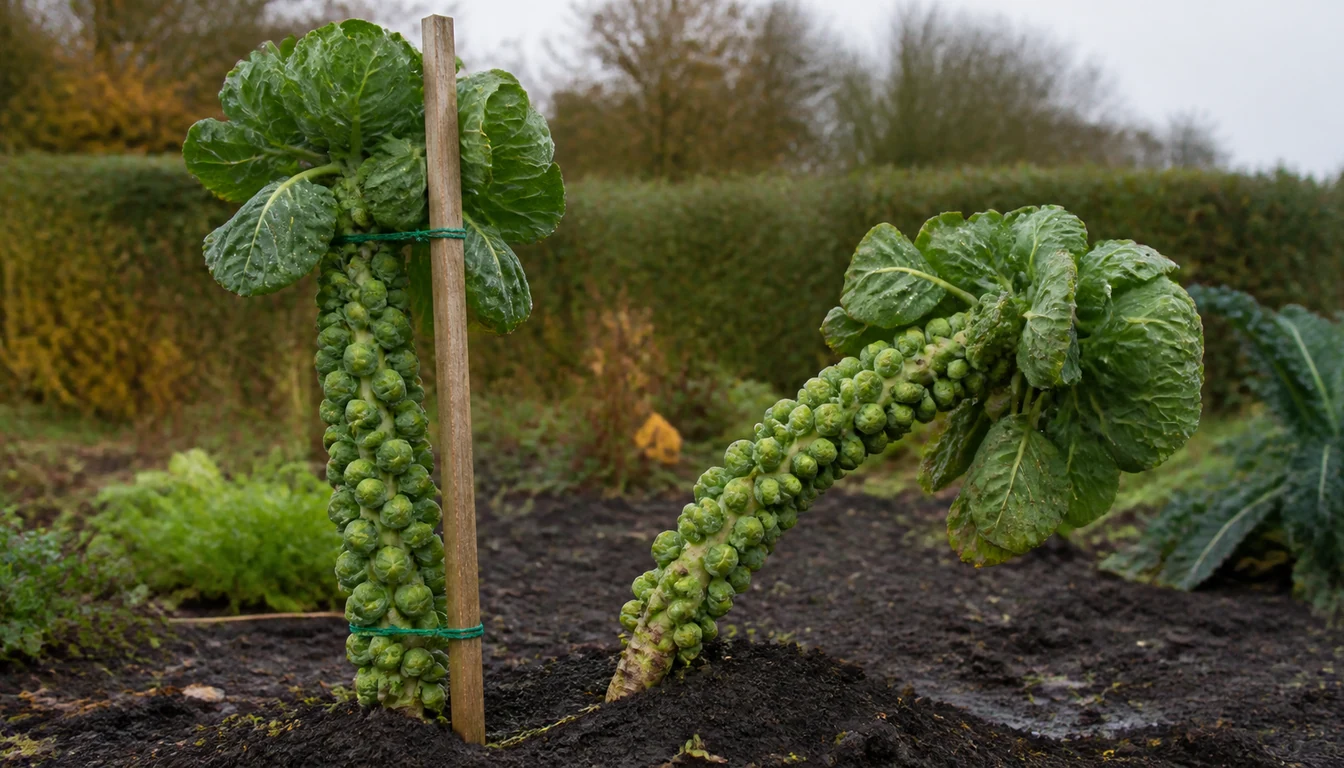
Staking early costs almost nothing compared to the alternative. A stem that leans hard once loaded with buds is much harder to straighten without snapping roots than one supported from the start.
- Use shorter-season cultivars where frost arrives early.
- Give each plant 18-24 inches so the whole stalk gets light and air.
- Stake windy sites before the stem gets top-heavy with buds.
- Keep the row out of late shade from corn, tomatoes, or trellises.
Should You Top Brussels Sprouts, and When?
Topping is not a magic ritual for every Brussels sprouts plant. It only helps when the stalk has already built a useful run of buds and you want the plant to stop climbing and finish what it already made.
Do it too early and you remove growing power the plant still needed. Do it too late and the tip keeps stretching while upper and middle buds stay only half committed.
The right moment depends on your frost horizon and how much of the stalk is already productive.
Leaf stripping follows the same rule. Remove leaves when they improve airflow or make harvesting easier, but do not strip so aggressively that you rob the plant of the leaf area still feeding the upper sprouts.
A stalk topped too aggressively can even push the plant into stress flowering, wasting energy on blooms instead of finishing the buds already started. Removing just the growing tip, not a foot of stem, keeps that risk low.
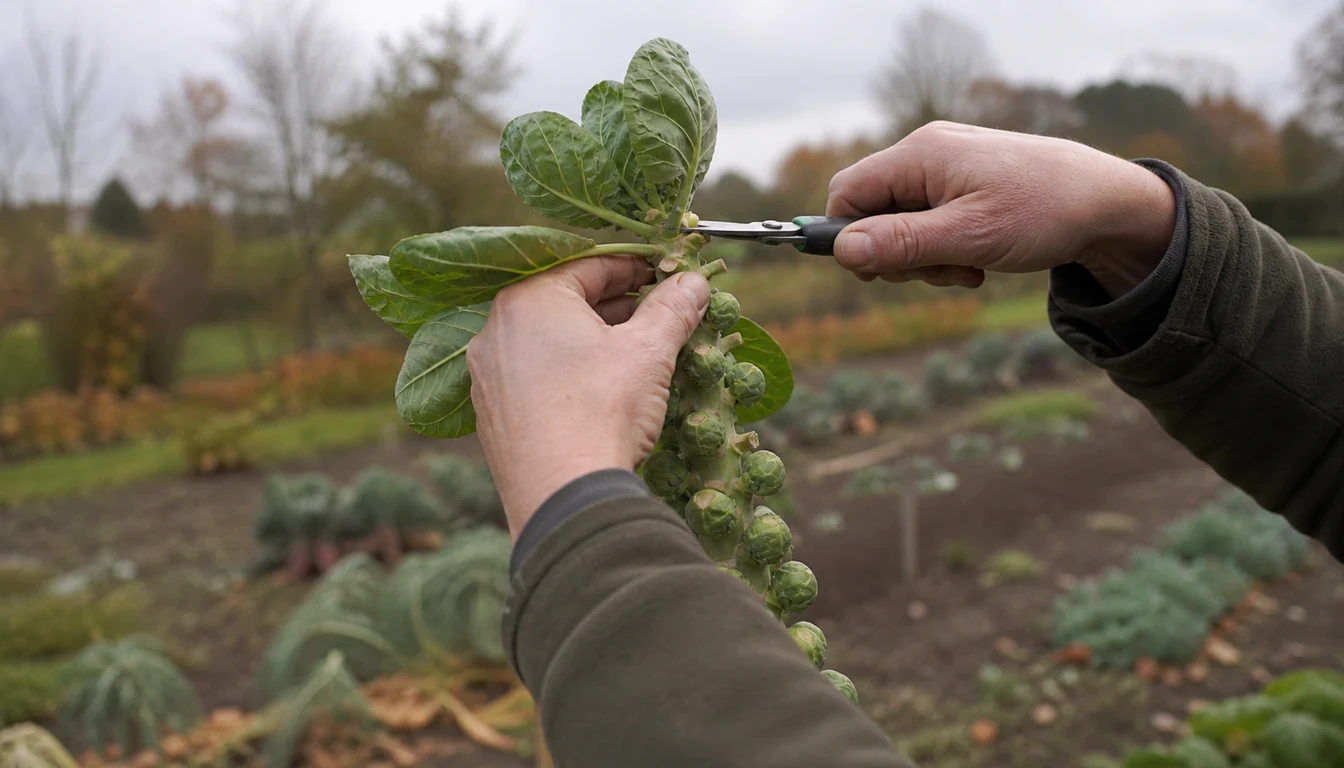
- Wait until lower and middle sprouts are already visible and real, not just tiny bumps.
- Top about 4-6 weeks before the weather window truly closes for your garden.
- Keep watering after topping so the plant can finish the buds it has left.
- Strip only yellowing or harvest-blocking leaves instead of peeling the whole stem bare.
How Do You Harvest Brussels Sprouts From the Stalk?
The lowest sprouts mature first because they formed first. That means harvest usually moves upward over time instead of happening in one clean cutting day.
A tight bud low on the stem is ready even while the top third still needs more weather.
A good sprout feels firm and dense when you press it gently. Loose leaves flaring outward mean it either never filled properly or already sat too long.
If the stem is still healthy and the upper buds are tightening, keep the plant standing and keep harvesting in waves.
This is one of the biggest differences between Brussels sprouts and cauliflower.
Cauliflower asks for one well-timed cut, while Brussels sprouts ask for repeated judgment over several weeks.
In milder Zone 7 gardens and warmer, that harvest window can stretch into winter.
In colder spots, you may get a shorter run but better sweetness, and either way, patience matters more here than on almost any other brassica.
A twist-and-snap motion works as well as a knife once you get the feel for it, pulling the sprout away from the stem at the point it naturally wants to separate. Cutting is gentler on the stalk if you are harvesting near buds you plan to leave for another week.
A light frost or two before the final harvest push often improves the whole batch at once, converting stored starches into sugars across every bud still on the stalk.
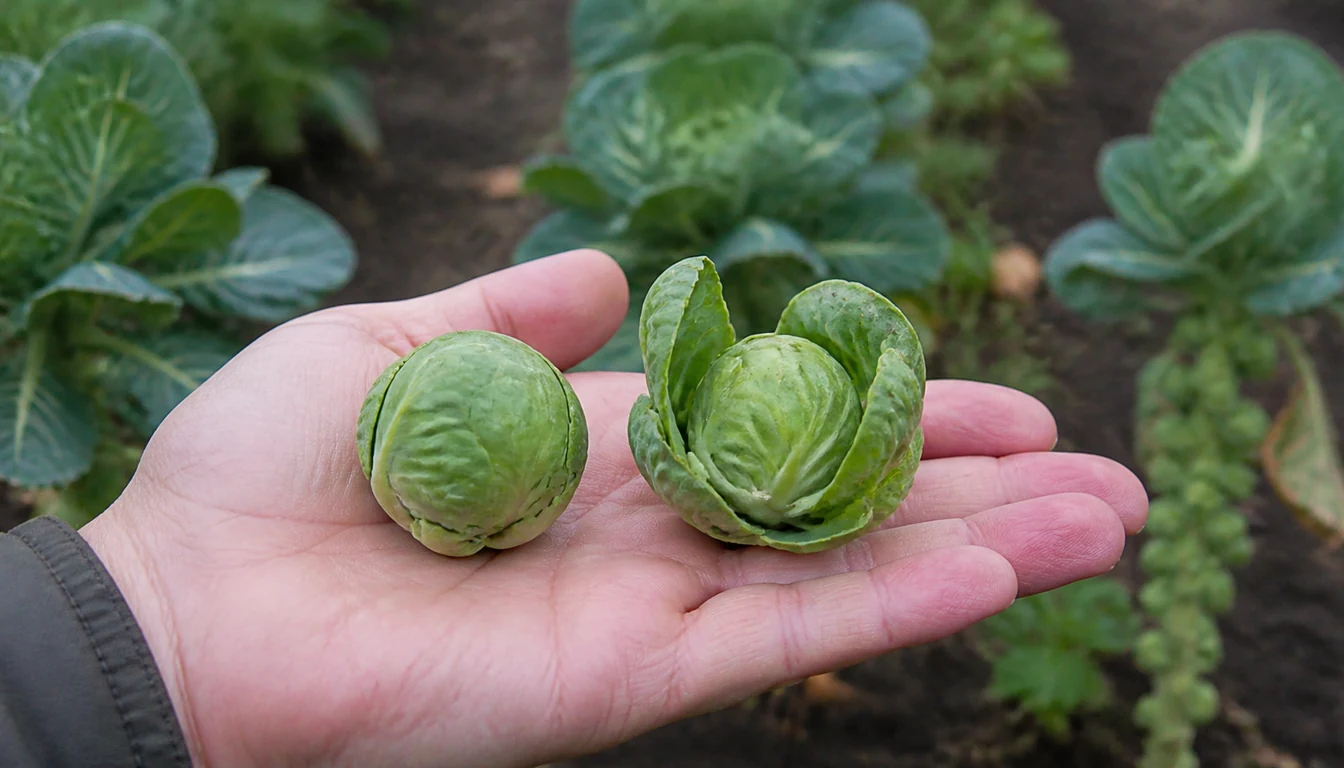
Why Are My Brussels Sprouts Loose Instead of Firm?
Loose sprouts are not one problem.
Sometimes the plant hit heat during the fill stage, or the stem never became strong enough.
Sometimes the row was crowded and too shaded, or late heavy feeding kept the plant pushing leafy growth instead of tightening buds.
That diagnosis matters because the fix changes with the cause.
Bad timing means shifting the calendar, and weak stalks mean improving summer nutrition and spacing.
Heavy pest damage means protecting the leaf engine earlier, and changing seed alone will not correct a row that never had the right conditions.
A soil test taken before planting next season removes some of the guesswork around feeding. Knowing baseline nitrogen and organic matter levels beats reacting to a loose harvest after the fact.
Weather Cause
- Warm nights during bud fill
- Not enough cool finish before hard freeze
- Weak flavor along with loose texture
Plant-Build Cause
- Thin stem and small leaf canopy
- Crowded plants with poor lower light
- Lush leaves but little bud firmness after late nitrogen
What Pests Hide in Brussels Sprouts Leaf Axils?
The bad news about Brussels sprouts pests is that they hide exactly where your food is forming. Aphids pack into leaf axils and between young buds.
Worms and loopers start on leaves, then leave a dirty mess around the sprouts if you let them get ahead, and by harvest time they are much harder to clean out.
Clubroot is the bigger long-term threat, since this soil-borne disease can live in a bed for years and stunts every future brassica planted there. A long rotation gap matters more for clubroot than for any surface-feeding insect.
Early row cover, steady scouting, and plain natural pest control habits beat a late panic response almost every time. Once aphids are tucked inside tight buds, cleanup gets far less pleasant.
After the last pick, clear the stalk and rotate out of the brassica family if you can. The crop already occupied the bed for a long time.
There is no reason to hand the next cabbage crop the same pest apartment, since Kale will inherit the same pressure too if you replant too soon.
Yellow sticky traps near transplants give an early warning for flying pests before damage shows on the leaves themselves. Catching a rising population early is far easier than knocking one back after it settles into the axils.
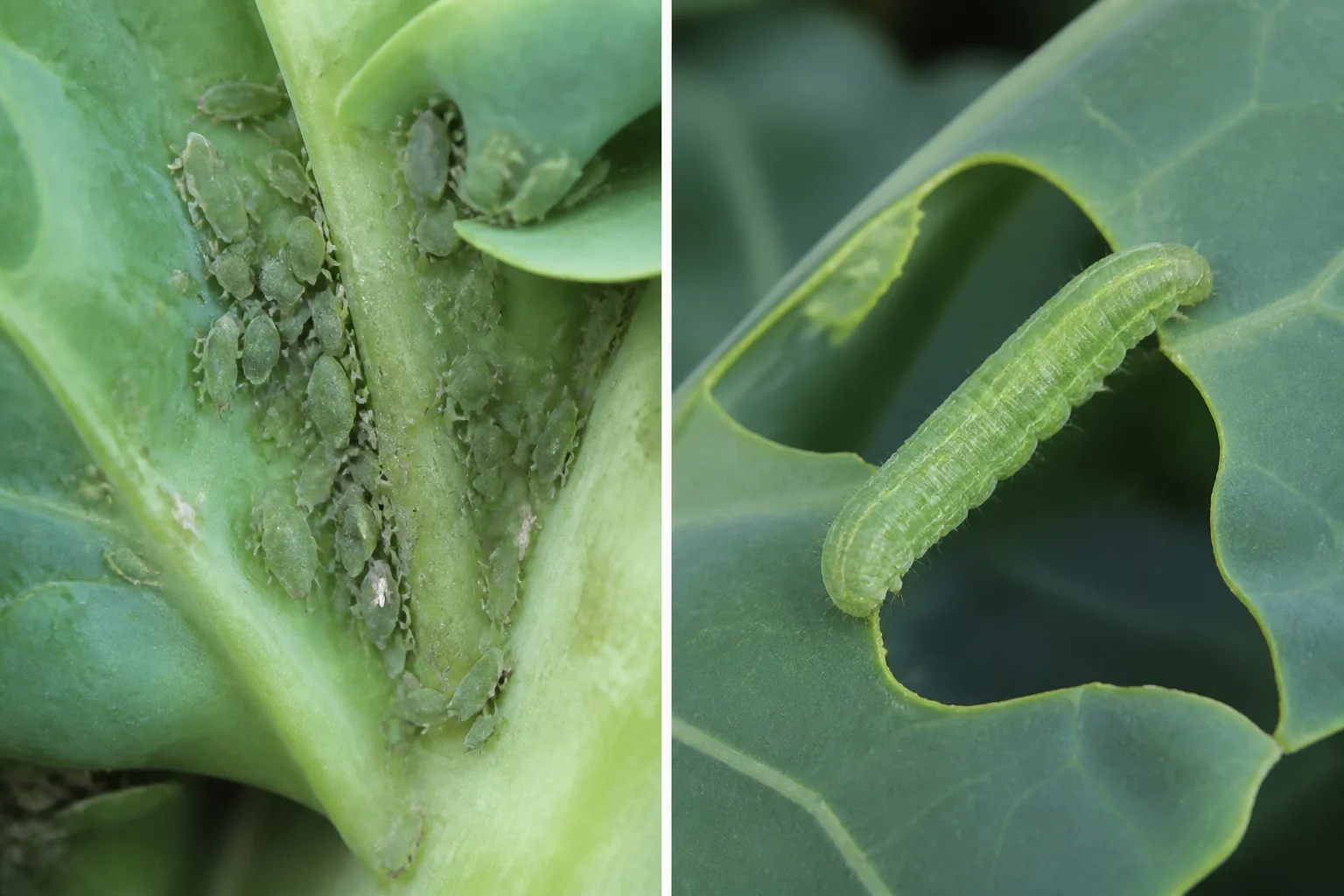
They hide in the exact folds where sprouts form and can make harvest sticky and dirty.
They chew the leaf engine and foul the buds before you notice them.
They matter most early because early setbacks reduce the final stalk the whole crop depends on.
Are Brussels Sprouts Safe for Dogs and Cats?
Brussels sprouts are food-safe for people, but no ASPCA or NC State pet toxicity record was found for them, so their safety for cats and dogs is unknown. The fiber content that makes them healthy in modest amounts is also what causes trouble in large ones.
A pet that eats a large quantity of raw or cooked sprouts can end up gassy or have loose stools, the same reaction some people get. If a pet eats a large amount or seems unwell, contact a veterinarian.
Like other brassicas, sprouts contain goitrogenic compounds that can interfere with thyroid function if eaten in very large amounts regularly over time. Ordinary garden-to-table portions are not a practical concern for people.
Frequently Asked Questions
Why are my Brussels sprouts loose instead of firm?
Loose sprouts usually mean the fill stage happened in warm weather, the stalk stayed weak, or the plants were too crowded. Variety matters, but timing and summer stalk strength matter more.
When should I top Brussels sprouts plants?
Top only after the plant already has a useful run of visible sprouts, usually about 4-6 weeks before your cold weather window closes. Topping earlier can cut off growth the plant still needed.
Does frost make Brussels sprouts sweeter?
Light frost often improves flavor once the buds are already formed because cool weather helps the plant hold more sugars in the sprouts.
Do Brussels sprouts need staking?
They often do in windy sites or rich beds where the stalk gets tall and heavy. It is much easier to stake early than to rescue a leaning plant loaded with buds.
How many Brussels sprouts plants should I grow per person?
About 4-6 plants per person is a practical home-garden number if you want several meals over the harvest window. The exact yield depends on fall length, stalk strength, and how long the row stays healthy.
Sources & References
- University of Minnesota Extension: Growing Brussels sprouts
- University of Minnesota Extension: Growing broccoli, cabbage, and other cole crops
- Oregon State University Extension: Broccoli, Brussels sprouts, cabbage and cauliflower
- University of Wisconsin Extension: Growing broccoli, cabbage and cauliflower in home gardens
- Missouri Botanical Garden Plant Finder: Brassica oleracea var. gemmifera
- Brassica oleracea (Bresych Gwyllt, Wild Cabbage, Wild Mustard) | North Carolina Extension Gardener Plant Toolbox
Related Plants
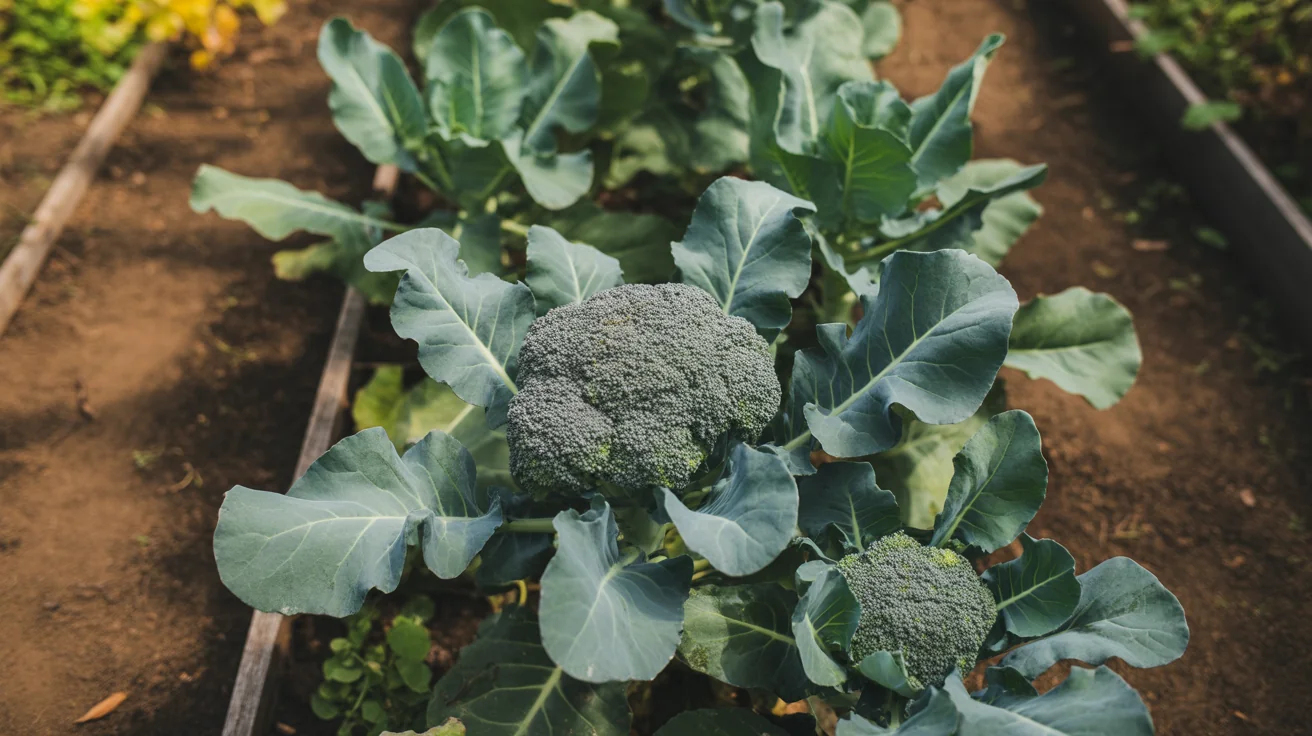
Broccoli
Another cool-season brassica, but it gives one main head before side shoots instead of a stalk full of sprouts.
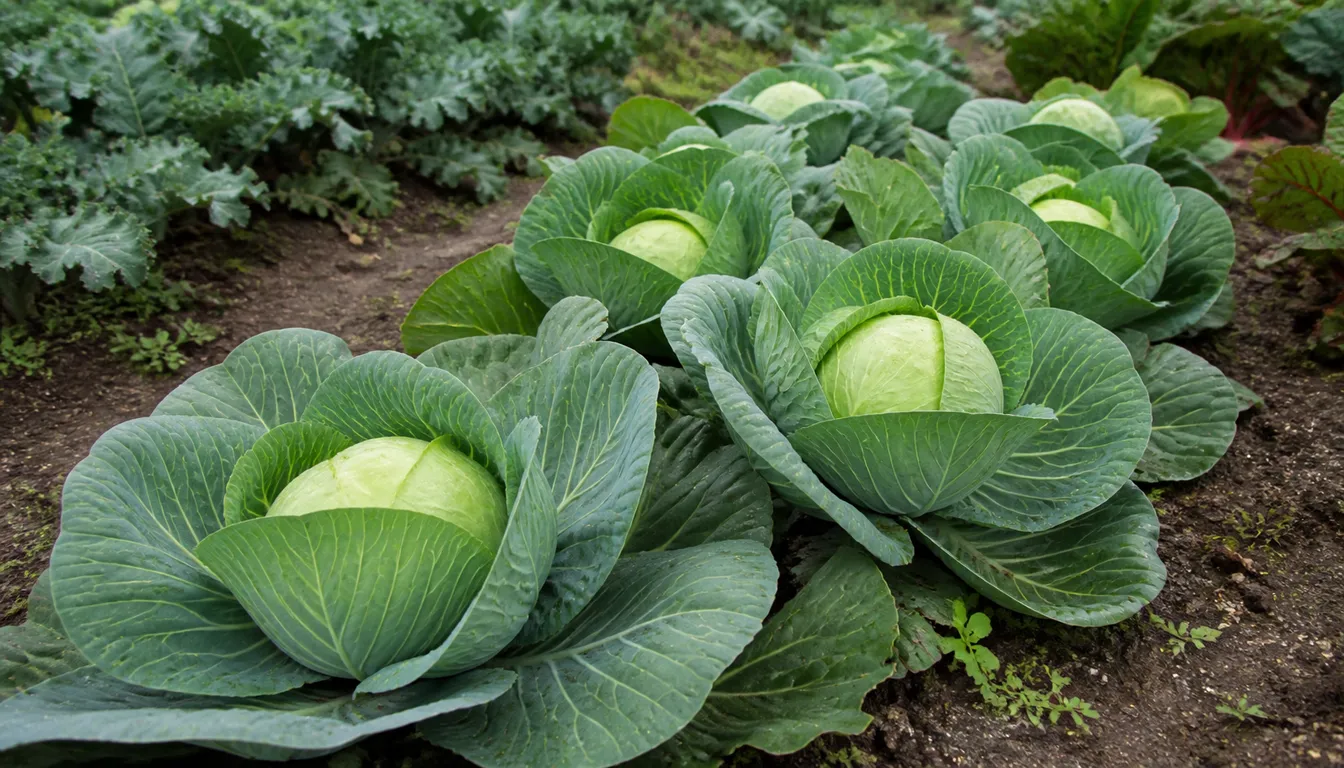
Cabbage
Makes one tight head and usually finishes sooner, so it fits a shorter cool window than Brussels sprouts.
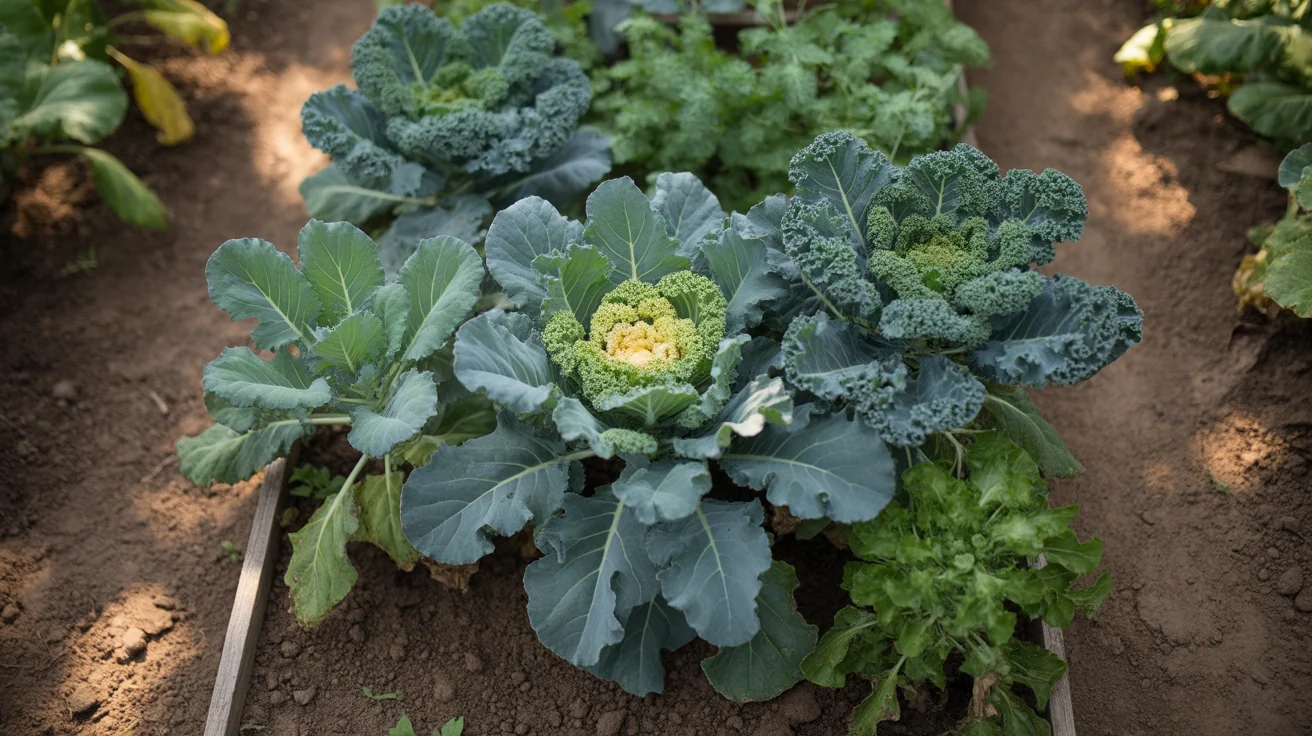
Kale
Shares many brassica pests but keeps producing leaves instead of asking for a long stalk-and-sprout finish.
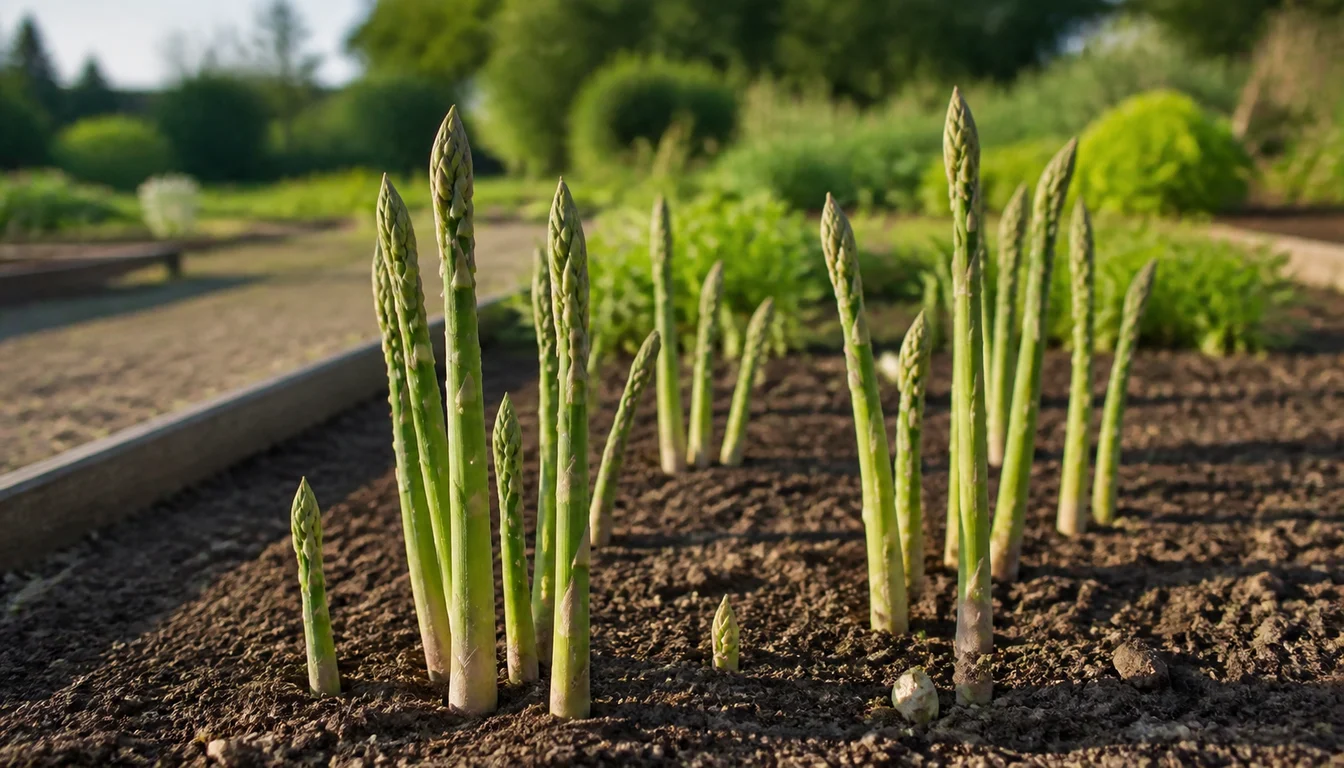
Asparagus
Asparagus rewards careful establishment with spring harvests for many years.
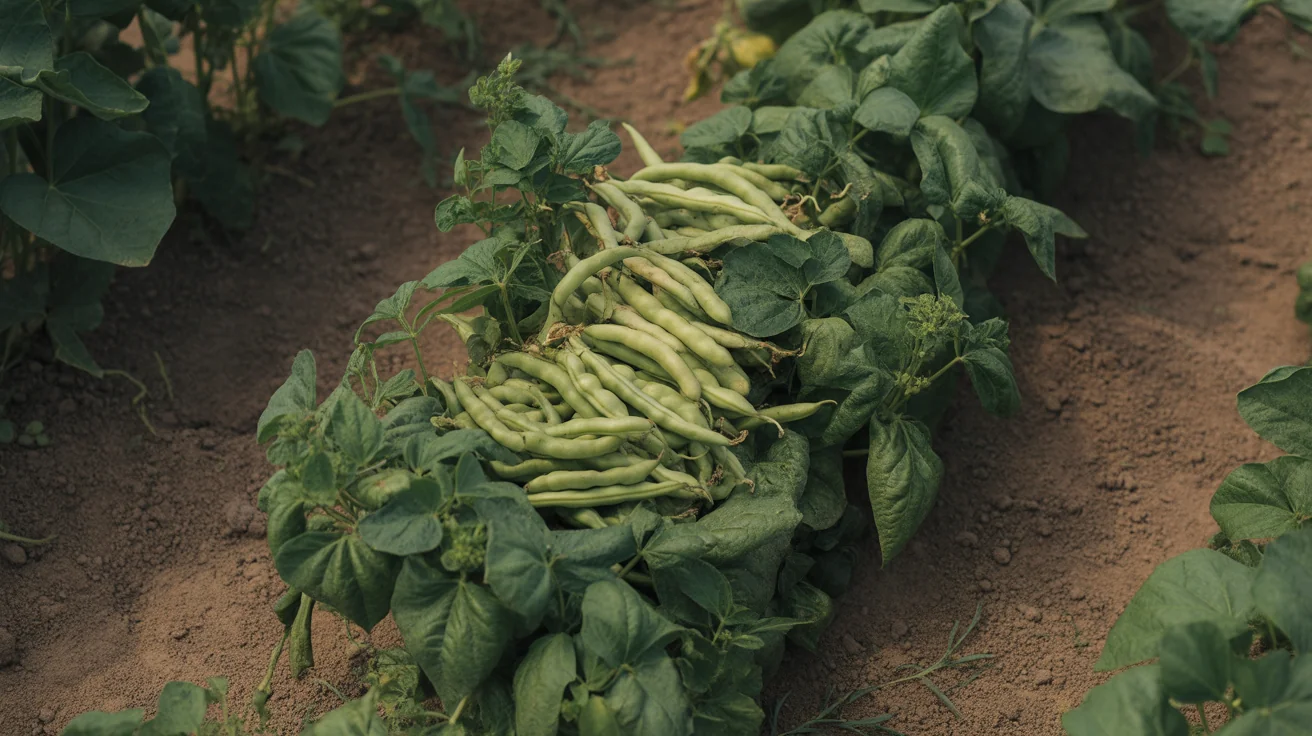
Beans
Two different plants share the name bean, one that stays knee-high and gives most of its crop inside two or three…
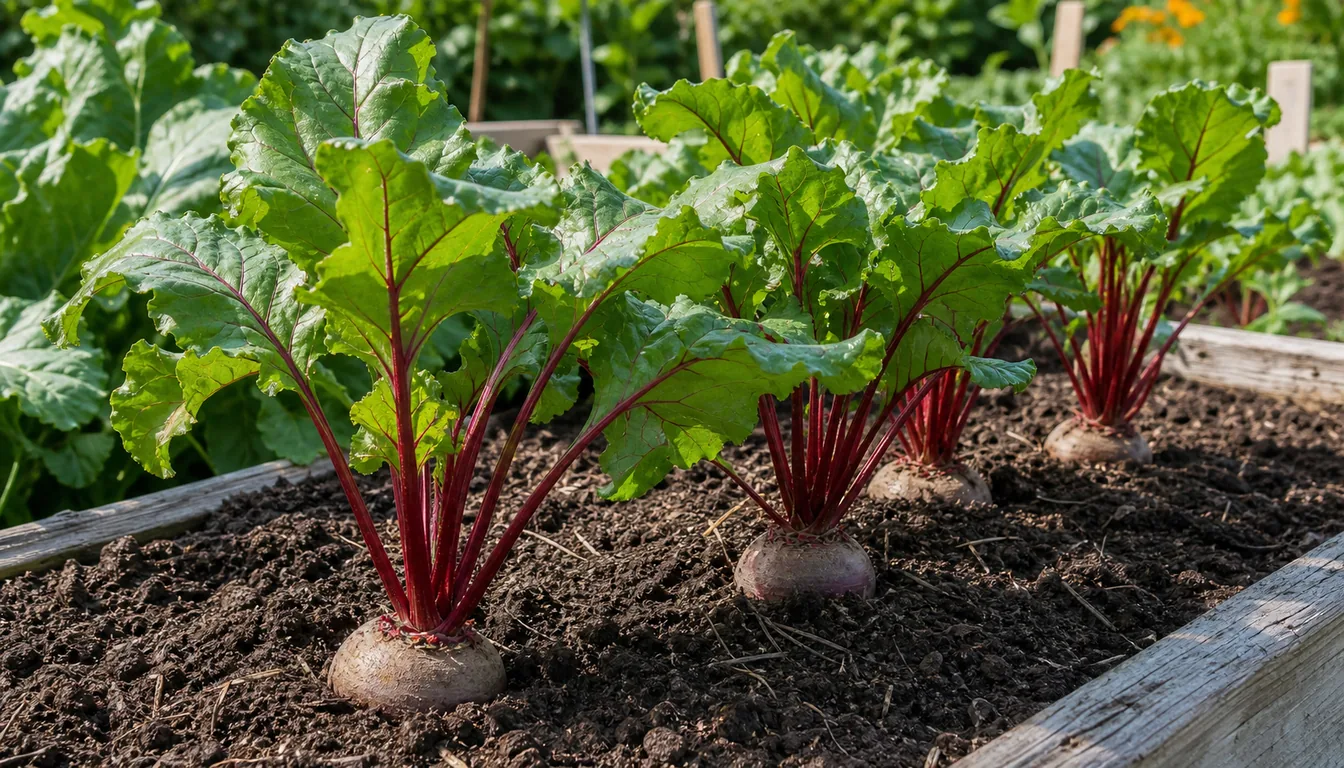
Beet
Beet care starts with one unusual fact. Each seed ball can make several seedlings, so the crop needs early thinning…