At a glance
- Fungus
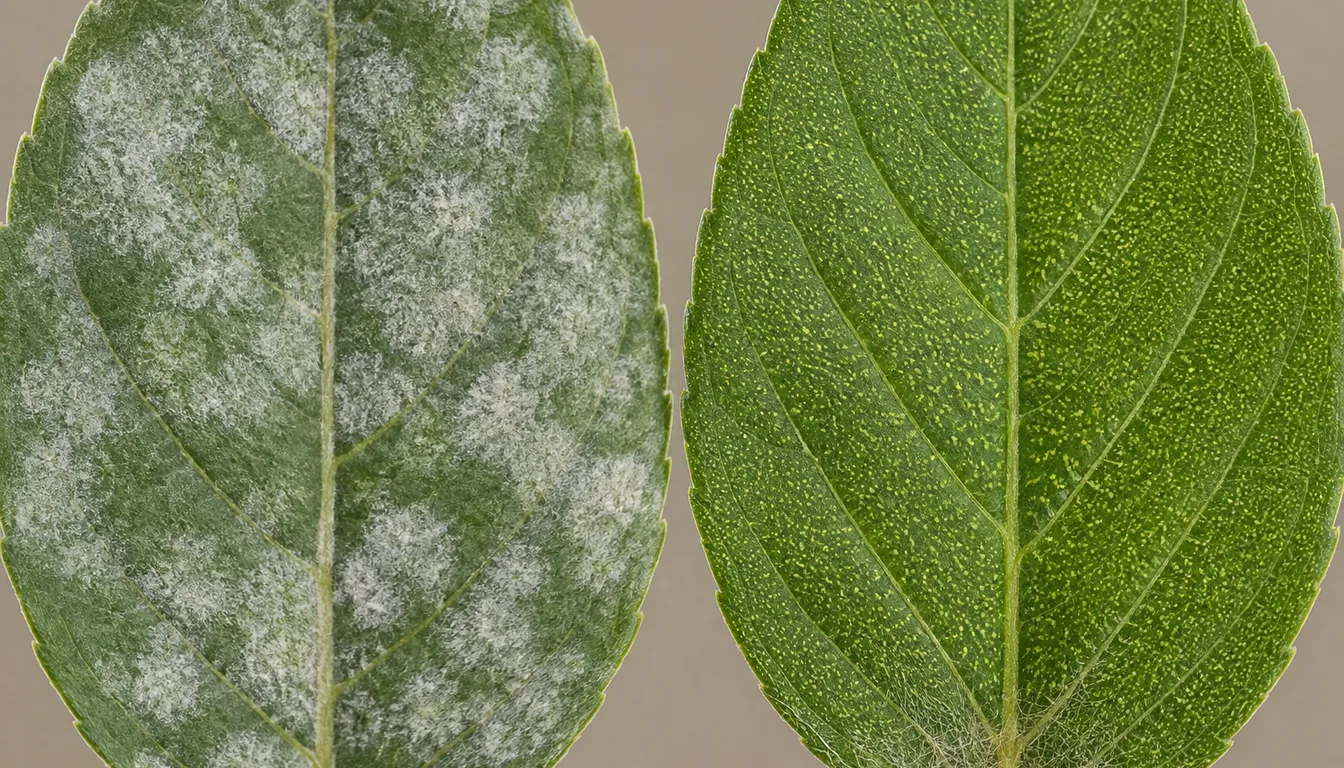
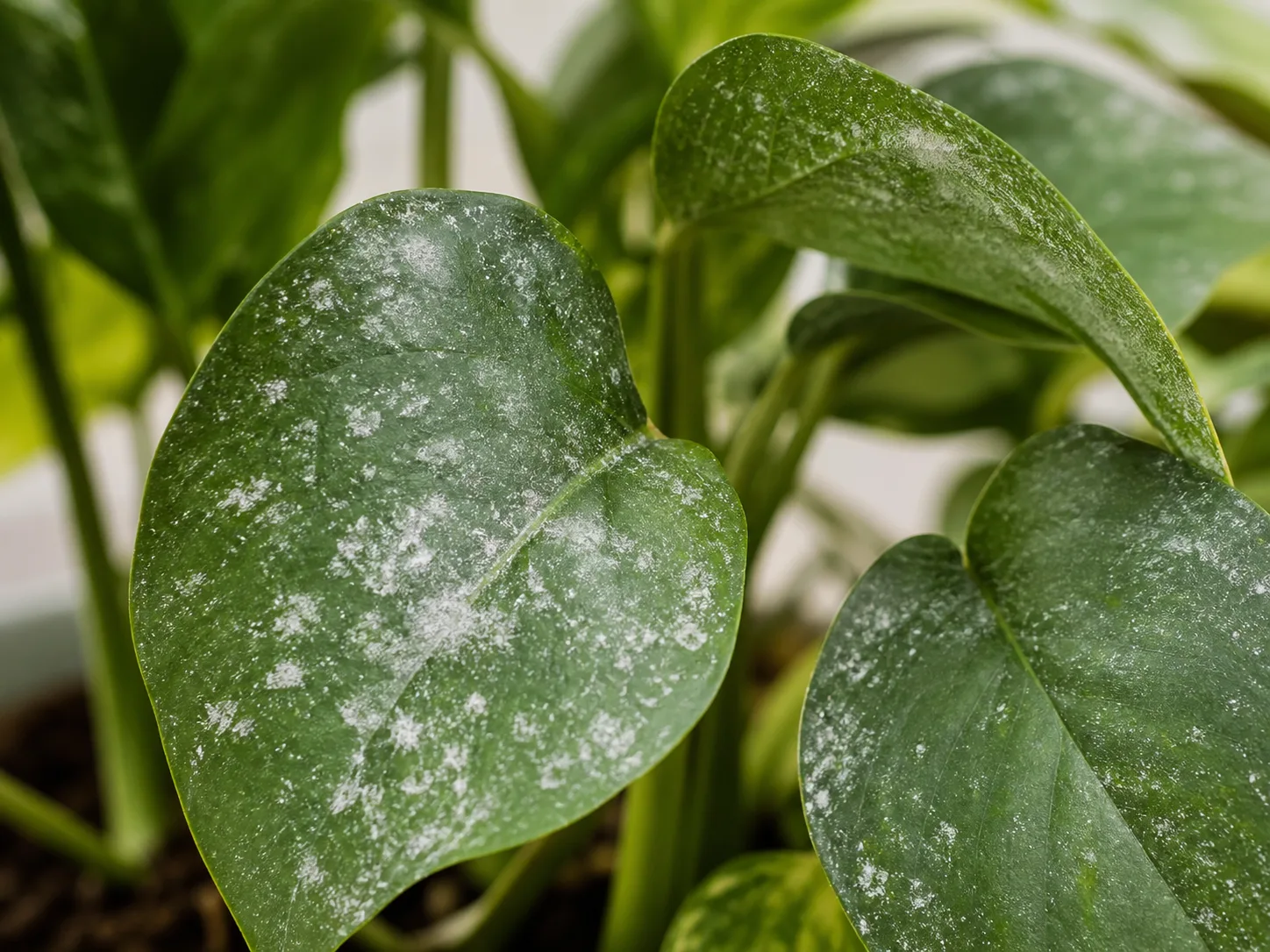
- Grayish-white powder on the upper leaf surface
- Pests
- Waxy bugs, stippling or webbing, often on leaf undersides
- Salts
- White crust on leaves, the mix or the pot rim
- New plants
- Isolate for one to two weeks
A ten-power hand lens and a look at both sides of the leaf start the sorting, and the sections below give the fix for each cause and the habits that keep the spots from coming back.
Which kind of white spot is it?
A white mark on a leaf can be a fungus growing on the surface, the wax or feeding damage of an insect, a salt left behind by water or fertilizer, or sun damage. Use a ten-power hand lens, which helps in finding pests, and check the tops and undersides of the leaves, the veins, the points where leaves join stems, and the surface of the mix.
| What you see | Cause | What else to check |
|---|---|---|
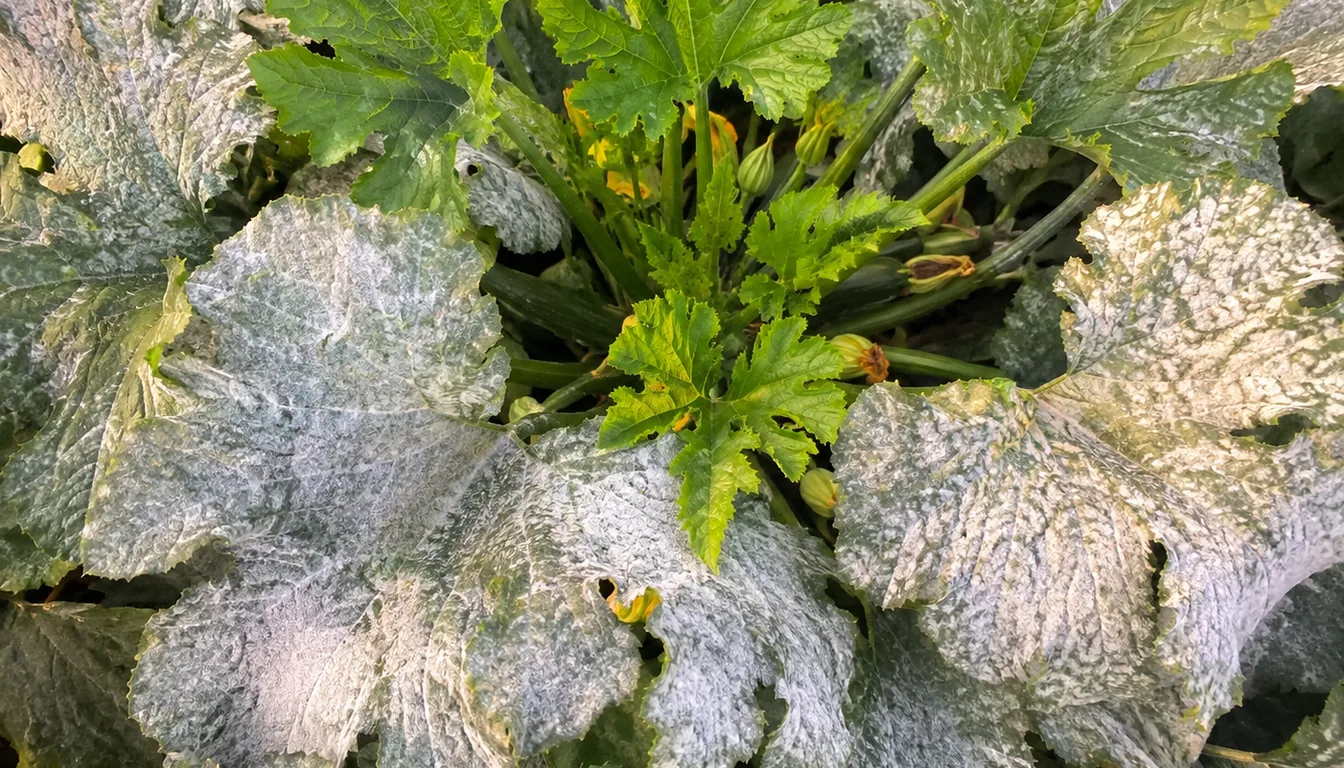
| Grayish-white powder on the upper leaf surface, often starting on the lower leaves, in small round spots that spread and join | Powdery mildew | Leaves may curl, twist or discolor before the white shows |
| Soft, oval insects covered in white powdery wax, with white filaments along the body, along veins on leaf undersides or where leaves join stems | Mealybugs | Sticky honeydew |
| Waxy, shell-like coverings, round, oval or oyster-shell-shaped and usually brown, gray or white, on stems and along leaf mid-veins | Scale | Soft scales make honeydew and armored scales do not |
| Tiny white gnat-like insects on leaf undersides that flutter up when you water or handle the plant | Whiteflies | Yellow sticky cards catch the adults |
| Stippled light dots or mottled leaves, sometimes with fine webbing | Spider mites | Tap a leaf over white paper and watch for tiny moving creatures |
| Irregular silvery streaks or splotches | Thrips | Small shiny drops of excrement where feeding is heavy |
| White crystallized coating on leaves, or a white crust on the mix or pot rim | Mineral or fertilizer salts | Hard water or soluble fertilizer |
| A papery white or tan area on the leaf after a move from indoors into much stronger light | Sunscald | When the plant last moved |
Honeydew, the shiny, sticky coating on leaves and on the tabletop under the plant, comes from aphids, mealybugs and scale insects, and black sooty mold can grow on it. Fine webbing separates spider mites from aphids and thrips, which can also live on leaf undersides.
What should you do about powdery mildew?
Powdery mildew is a group of closely related fungal diseases that form a grayish-white, powdery mat on leaves, stems and flower petals. It is not considered fatal, but severe infection can damage a plant, with leaves that become dwarfed, curled and distorted, and in severe cases turn yellow or dry and brown.
These fungi germinate without free water on the leaf and need only a high relative humidity. Moderate temperatures of 60 to 80°F and shade favor the disease, and temperatures above 95°F may suppress it, so locating plants in sun, with good air circulation, discourages it.
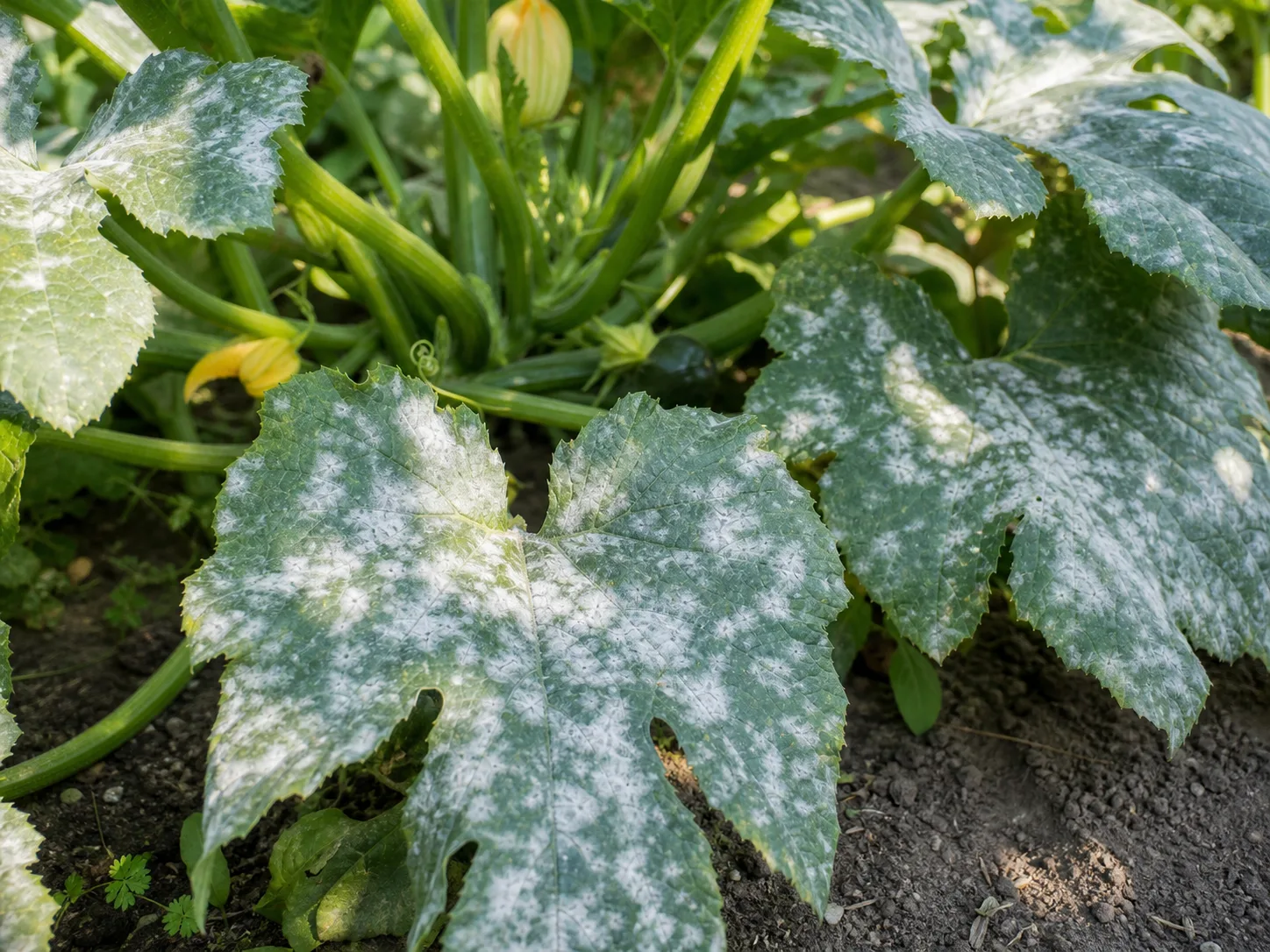
- Remove infected leavesIf only a few leaves show mildew, removing them helps control it. Put them in the trash, green waste or compost, since a properly maintained compost pile should kill the spores.
- Open up the plantingPrune excess foliage, space plants so they are not crowded and keep each one in the light it needs. Go easy on nitrogen, which stimulates the young, succulent growth that is more susceptible to infection.
- Spray early, by the labelFungicides work only when applied as soon as symptoms appear. Cover both leaf surfaces, follow the label's spray interval and use the shorter interval in cool, damp weather.
- Clean up at the end of the seasonPrune out infected stems and rake up fallen leaves, then watch plants that had a severe infection early the next spring.
Overhead watering is where the sources split. Clemson advises against it because it raises humidity inside the plant canopy, while UC IPM says a midmorning sprinkling washes spores off the plant and gives it time to dry, and that spores landing in water are unlikely to survive.
Which product fits depends on how far the mildew has gone.
- Sulfur is effective only when applied before the disease appears, and it can damage plants in high temperature and humidity.
- Horticultural oil or neem oil controls mild to moderate infections and works best as an eradicant.
- Some potassium bicarbonate products eradicate the fungus but can injure infected plants, so skip them on advanced mildew, where the injury will be severe.
Resistant cultivars reduce the odds next season, and UC IPM's list includes Phlox paniculata ‘David’ and ‘Robert Poore’. Resistance is not immunity, so disease can still develop depending on conditions and plant care.
The problem pages for specific plants cover the details.
How do you remove mealybugs, scale, whiteflies, thrips and mites?
Isolate the plant from others as soon as you find pests. Then try non-chemical removal first, and consider a pesticide only if the problem continues.
Mealybugs
Pick them off with tweezers or a cotton swab dipped in alcohol. For serious houseplant infestations, dab with 70% (or less) isopropyl alcohol and water, after testing a small part of the plant for leaf burn.
Scale
Remove small numbers with a fingernail file or something similar.
Whiteflies
Yellow sticky cards capture the flying adults and show that they are present.
Thrips
Yellow or blue sticky cards capture the flying adults.
Spider mites
Spray or mist the undersides of the leaves with water at least once a day, and water the plant enough that it is not drought stressed, which increases mite damage.
Wipe the leaves with a damp paper towel, changing towels often to prevent spread. Look below the soil surface on the main stem too, because some mealybugs are found there.
If the pests persist, soaps and plant oils kill only the insects the spray covers, by smothering them, and repeat applications are usually necessary. Contact insecticides are less effective on adult mealybugs because of their waxy coating and their tendency to hide, while insecticidal soaps, horticultural oils and neem oil applied directly to immature mealybugs can reduce numbers.
Water the soil a day or two before you spray, because a pesticide should never go on a moisture-stressed plant.
Treating spider mites on houseplants covers that routine in full.
Could minerals, fertilizer or sunscald be behind it?
Hard water and soluble fertilizer both leave salt deposits. Hard water carries dissolved substances such as calcium carbonate, sodium and iron, and fertilizer salts come from the components of soluble fertilizers. Either one usually shows up as a white crystallized coating on leaves or a white crust on the mix or pot.
Salt deposits can harm a plant by competing for moisture and causing desiccation or burning of tissues. Brown leaf tips, yellowing leaves and unaccountable wilting are signs of salt buildup, and the most obvious sign is a whitish crystal buildup around the lip of the pot or on top of the mix. The salts can be leached out.
- Remove and discard the white crust and some of the mix from the surface of the root ball, which can be 1/2 to 1 inch depending on the size of the plant and root ball, taking care not to damage roots.
- Set the pot in a sink with the drainage holes open and fill it to the top with tepid tap water a couple of times, letting it drain well between rinses.
- Scrape salts off the outside of the pot, the drainage holes and the saucer.
- Add new mix where you removed the old, water lightly, and water again only when the original root ball feels dry.
To keep minerals from building up again, leach the potting mix every 4 to 6 months with at least 3 times the pot's volume of fresh water, and water with a source low in dissolved minerals. For fertilizer salts, follow the label rate and wash spills off the plant. Avoid bottom watering and pots without drain holes.
Sunscald is a common problem when plants are suddenly exposed to much stronger light, similar to a sunburn, and even the brightest indoor spot gets far less light and radiation than full sun outdoors. On sensitive plants, the first sign is usually an area of the leaf turning papery white or tan (Maryland Extension, describing vegetable transplants). Once leaves are scalded, all you can do is water and feed the plant properly until it grows new leaves.
Start a houseplant that moves outside in shade and, if you want it in more sun, increase its exposure gradually over about two weeks. Many houseplants do best in full shade or indirect light all summer, and some tolerate part shade once acclimated.
Water drops are another suspect, because it is a widespread belief that sunlit drops focus light and burn leaves. In an experiment, sunlit water drops on horizontal hairless leaves of ginkgo and maple did not cause burn damage.
Why do white spots come back, and how do you keep them away?
Powdery mildew fungi survive the winter attached to plant parts and fallen leaves, and they start producing spores again in spring as daytime temperatures rise above 60°F, which is why a plant that had a severe infection should be checked early the next spring, while a recurrence can still be treated early.
Excess nitrogen feeds two of these problems. It stimulates young, succulent growth, which is more susceptible to powdery mildew infection, and over-application combined with regular irrigation stimulates new growth where mealybugs prefer to lay eggs.
Spider mites thrive in dry, warm conditions, and water-stressed plants are the most likely to be damaged. Broad-spectrum insecticides used for other pests frequently cause mite outbreaks, so avoid them when possible.
- Water the soil at the base of the plant, not the leaves.
- Isolate newly acquired plants for one to two weeks, which gives any pest problem time to show.
- Check the undersides of leaves.
- Match each plant to the light, humidity and temperature of its spot, because a plant that struggles cannot fight off pests.
If new leaves come in with the same white problem, look again with the hand lens before the next spray. A fungicide must go on as soon as symptoms appear, and soap or oil kills only what it covers.
Pro Tips
- Look with a ten-power hand lens, which helps in finding pests, and check the leaf undersides.
- Isolate a plant as soon as you find pests, and isolate new plants for one to two weeks.
- Test 70% (or less) isopropyl alcohol and water on a small part of the plant before you dab mealybugs.
- Water the soil a day or two before you spray, since a pesticide should never go on a moisture-stressed plant.
- Start a fungicide at the first symptom of powdery mildew and cover both sides of the leaves.
- Move a houseplant to full sun over about two weeks, starting in shade, to prevent sunscald.
Frequently Asked Questions
Does powdery mildew need wet leaves?
No. Powdery mildew fungi do not need free water to germinate, only a high level of relative humidity, and water on the leaf for long periods inhibits germination and kills the spores of most of them.
Does powdery mildew reach the fruit of vegetables?
The fruiting parts of vegetables are usually not affected. Apples, grapes and stone fruits can develop weblike russet scars or corky areas.
What is the white crust on my potting mix and pot rim?
Salt deposits from hard water or soluble fertilizer usually appear as a white crust on the mix or pot, and the salts can be leached out. Take off the crust and some of the mix (1/2 to 1 inch, depending on the size of the plant), fill the pot to the top with tepid water a couple of times, and replace the mix you removed.
Does watering in the sun burn leaves?
On smooth, hairless leaves such as ginkgo and maple it did not, in an experiment with sunlit water drops. Drops held up by wax hairs, as on floating fern leaves, can cause sunburn.
Can I use rubbing alcohol on mealybugs?
For serious problems on houseplants, dab with 70% (or less) isopropyl alcohol and water. Test a small part of the plant first and watch for leaf burn.
How long should I isolate a new houseplant?
Isolate newly acquired plants for one to two weeks, which allows any possible pest problems to become visible.
Sources & References
- Clemson Cooperative Extension HGIC, Powdery Mildew on Landscape and Garden Plants
- UC IPM, Powdery Mildew on Ornamentals
- University of Minnesota Extension, Managing Insects on Indoor Plants
- UC IPM, Mealybugs
- UC IPM, Spider Mites
- University of Maryland Extension, Mineral and Fertilizer Salt Deposits on Indoor Plants
- PlantTalk Colorado, Colorado State University Extension, Leaching Salts From Potting Mixes
- UConn Home and Garden Education Center, Move Houseplants Out, Prune Spring Shrubs and Other June News
- University of Maryland Extension, Sunscald on Vegetable Leaves
- Egri et al., Optics of sunlit water drops on leaves, New Phytologist 2010