
Why a Cherry Blossom Tree Barely Flowers
Poor flowering on a Cherry Blossom tree begins at one of two stages.
Flower buds were scarce before winter, or buds formed and were later killed, removed, or eaten before they could open.
Quick diagnosis
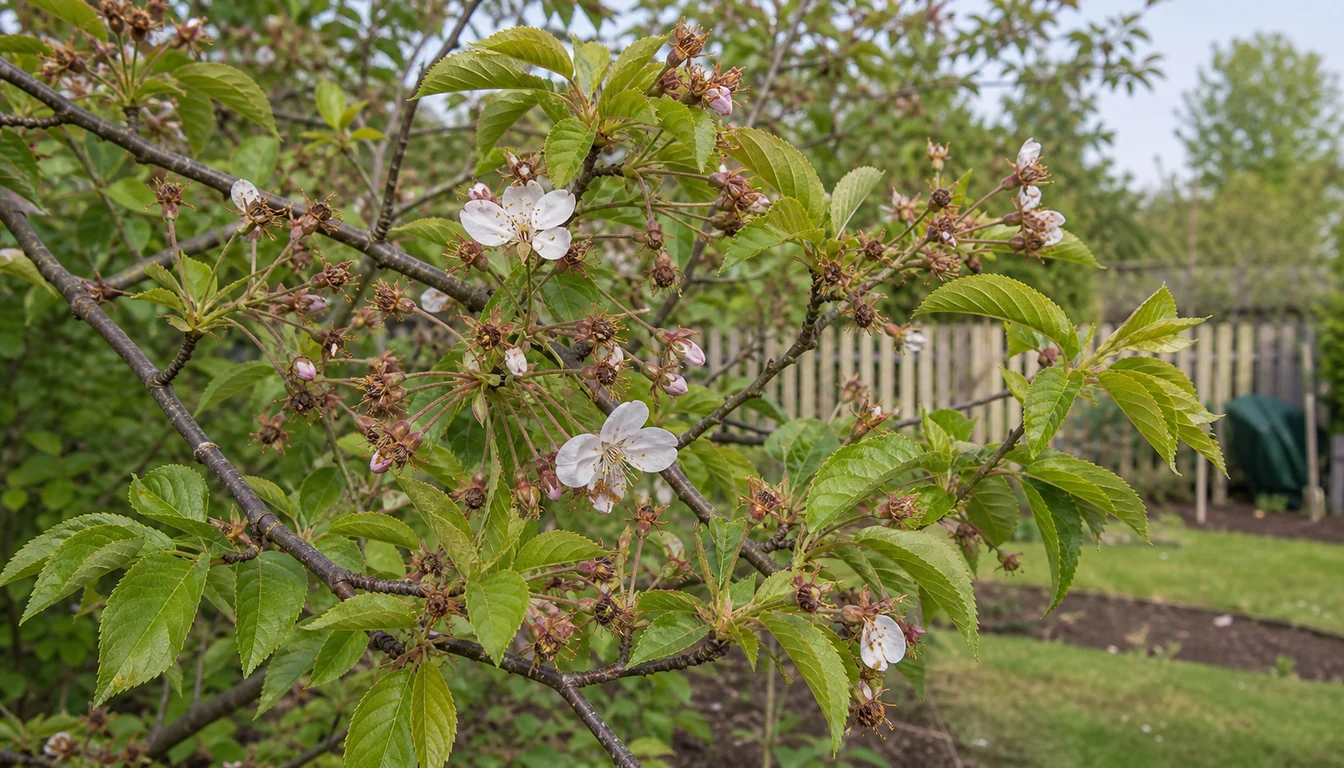
Cut a bud and compare flowering across branches
Brown or black flower tissue after a freeze means buds formed but died.
Plump healthy buds that were clipped point to browsing, while leafy branches with few flower buds shift attention to last season's sun, pruning, root stress, nitrogen, age, or climate fit.
Open the full diagnosisWhat You Are Seeing
The current flower display was prepared well before spring. Light, shoot growth, root function, and pruning during the previous growing cycle influenced how many flower buds entered winter, while cold and browsing determined how many survived.
Start with three pieces of evidence. Open several unopened buds, compare exposed and sheltered branches, and map bloom density against sun, recent cuts, browsing height, and last season's growth.
This diagnosis concerns flower quantity and bud survival. Purple or brown lesions, shot holes, and early yellow leaf drop after foliage expands belong in the separate Cherry Blossom leaf spot guide.
Common Causes
01 High likelihood
Spring frost after flower buds swelled
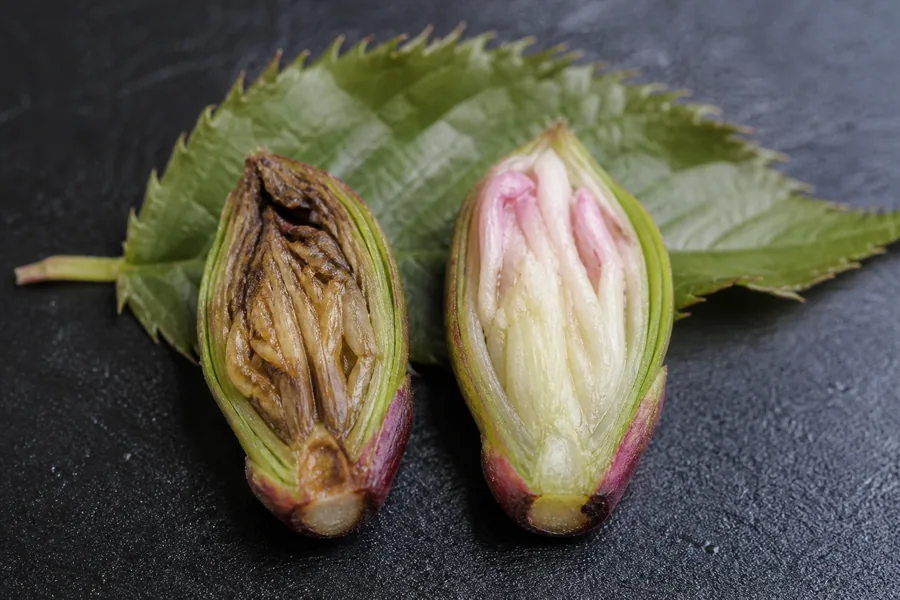
Flower buds become more vulnerable as they swell and open. A freeze after a warm period can kill internal flower parts while tougher leaf buds survive, producing a leafy tree with a suddenly reduced display.
How to identify it
- Bloom loss follows a recorded freeze after buds enlarged.
- Cut flower buds contain brown, black, or water-soaked tissue.
- Leaf buds open normally on the same shoots.
- Low branches or the side facing a cold pocket are affected most.
- Nearby early-flowering trees show a similar one-year loss.
What to do
- Wait until survival is clear before pruning buds or short spurs that still look firm.
- Use local frost-date guidance together with the current forecast before protecting a young or small tree with supported breathable frost cloth.
- Remove the cover after temperatures recover so buds can dry and receive light.
- Keep the root zone normally moist before cold weather without saturating it.
- Consider a later-blooming cultivar or a site with better cold-air drainage when the same frost pattern repeats.
02 Medium likelihood
Winter bud injury or poor climate fit
Flower buds can be less cold-hardy than wood and leaf buds, and warm winter swings can reduce hardiness before another cold event. A cultivar poorly matched to local winter cold, chilling, or bloom timing may flower weakly across several years rather than after one obvious spring frost.
How to identify it
- Bud death was present before the usual spring frost window.
- Leaf-out is much stronger than flowering for several winters in a row.
- Protected buds survive better than buds on exposed upper or windward branches.
- The cultivar's hardiness and bloom timing do not fit the local pattern.
- Other stresses do not explain the chronic branch-wide shortage.
What to do
- Confirm the cultivar when possible and compare Japanese cherry hardiness and bloom habit with local extension recommendations.
- Avoid late-season nitrogen and hard pruning that encourage tender growth before winter.
- Maintain fall soil moisture when conditions are dry and keep mulch away from the trunk.
- Use a sheltered planting position for a replacement without placing the tree in deep shade.
- Replace only after repeated evidence shows climate mismatch rather than one abnormal winter.
03 Medium likelihood
Too little direct sun
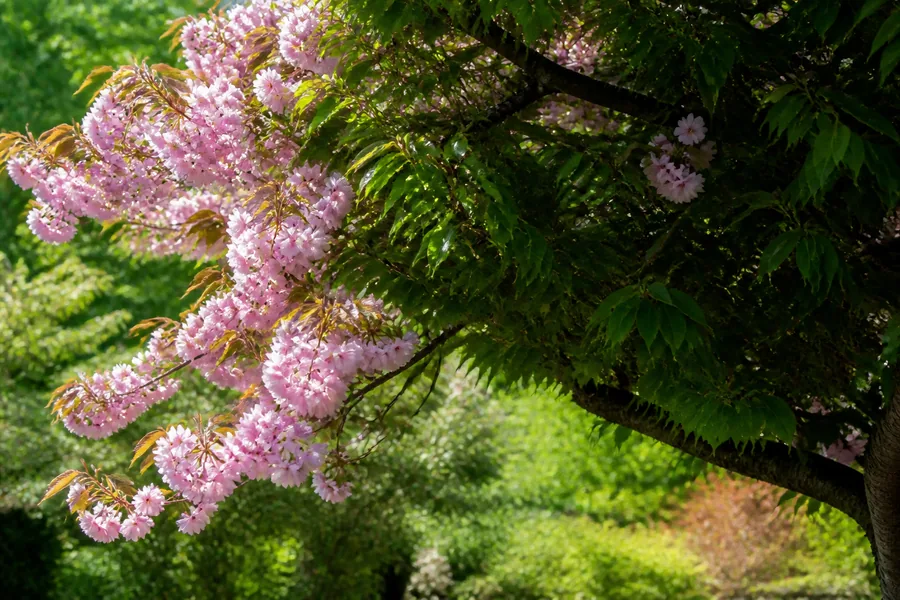
Japanese flowering cherry produces its best display in full sun. A tree shaded by buildings or a maturing canopy may still make leaves, but branches receiving less light can set fewer flower buds during the previous growing season.
How to identify it
- Sunlit outer branches flower better than the shaded interior or one shaded side.
- The tree receives much less direct light than when it was planted.
- Leaf growth is adequate but flower clusters are consistently sparse.
- A nearby tree, hedge, or structure now blocks the main light period.
- Cut buds look healthy where present, with no widespread cold injury.
What to do
- Map direct sun during the growing season rather than judging light from the leafless spring canopy.
- Thin a competing plant only when it can be done safely and without damaging its structure.
- Avoid stripping the cherry canopy in an attempt to bring light through the tree itself.
- Move a young transplant during a suitable dormant period when the site cannot supply adequate light.
- Choose a different ornamental tree for a permanently shaded site rather than forcing bloom with fertilizer.
04 Medium likelihood
Pruning removed flower-bearing wood
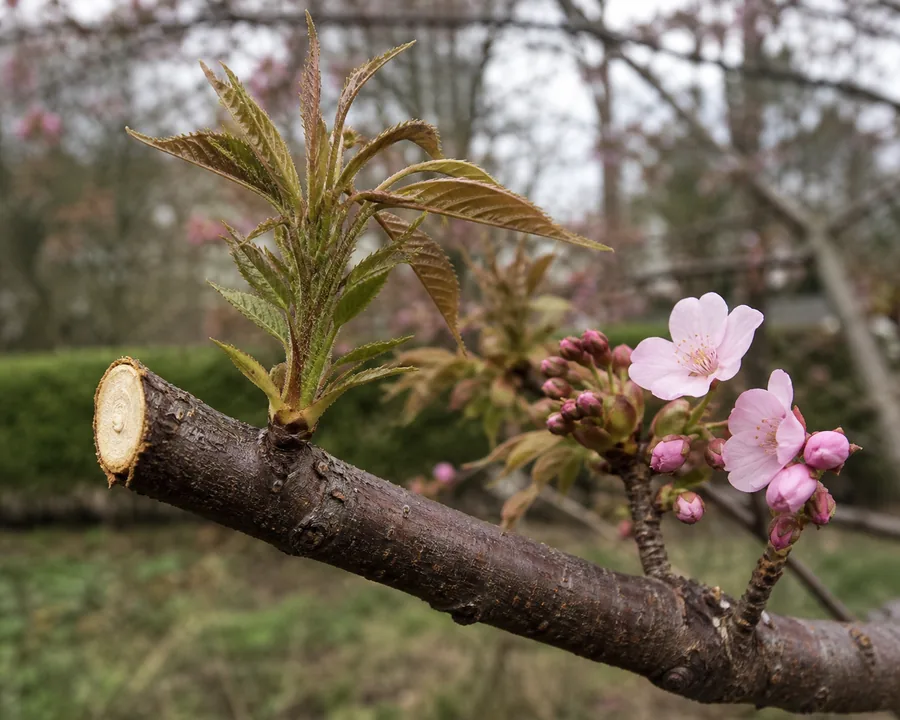
Ornamental cherries carry flower buds on established shoots and short flowering spurs. Heading branches or removing spur-bearing wood before bloom can remove the display directly, while repeated hard cuts replace short flowering sites with long leafy shoots.
How to identify it
- Sparse bloom follows recent pruning or storm cleanup.
- Cut ends are concentrated where flower clusters would normally appear.
- The canopy carries many long vigorous shoots but few short spur systems.
- Unpruned branches flower more heavily than recently shortened branches.
- Buds remaining away from cuts are firm and healthy.
What to do
- Pause corrective pruning until the tree's flowering wood and health are clear.
- Use where the crop forms as the pruning principle and retain sound short spurs.
- Follow locally recommended ornamental cherry timing because disease risk also affects when cuts are safest.
- Remove dead, damaged, or hazardous wood for safety without treating bloom loss as a reason for wholesale thinning.
- Photograph flowering before future pruning so the next person can identify productive branches.
05 Low likelihood
Drought, waterlogging, compaction, or root competition
Flower-bud formation depends on the tree completing a functional growing season. Drought, saturated soil, buried roots, compaction, and turf or tree competition can reduce shoot vigor and stored energy, leaving fewer buds for the following spring.
How to identify it
- Annual shoot growth was weak before the poor bloom.
- The root zone became very dry or stayed saturated for long periods.
- The trunk flare is buried, mulch touches bark, or traffic compacted soil under the canopy.
- Leaf size, canopy density, or branch-tip growth also declined.
- Poor flowering persists beyond a single freeze event.
What to do
- Check moisture in several places beneath the canopy and use soil and weather evidence to schedule water.
- Redirect standing runoff and keep the trunk flare visible.
- Maintain an organic mulch ring that does not touch the trunk.
- Keep vehicles, storage, and repeated foot traffic off the main root area.
- Seek an arborist assessment when root stress occurs with dieback, cankers, instability, or major construction damage.
06 Low likelihood
Excess nitrogen and leafy growth
Nitrogen does not create flower buds on demand. Repeated lawn fertilizer drift or unnecessary high-nitrogen feeding can encourage long vegetative shoots and dense leaves while masking the light, pruning, or root evidence that actually controls flowering.
How to identify it
- Long soft shoots and large dark leaves dominate the canopy.
- Flowering spurs are scarce on the most vigorously fed side.
- Lawn fertilizer or tree feeding was applied without a soil or growth need.
- Cold, browsing, and recent pruning do not explain the shortage.
- The tree is not otherwise showing nutrient-deficiency symptoms.
What to do
- Stop automatic feeding and review every fertilizer applied inside the root area.
- Test soil when growth history suggests a real nutrient problem.
- Keep lawn fertilizer outside the tree's mulched root zone.
- Do not counter excess nitrogen with severe pruning because that can trigger more vigorous shoots.
- Judge the correction from balanced shoot growth and the next bud crop, not immediate leaf color.
07 Low likelihood
A young, newly transplanted, or recovering tree
A recently planted tree may devote resources to roots and canopy before it carries a full mature display. Nursery bloom can also reflect conditions before planting, so a lighter second spring is not automatically a disease when growth and establishment otherwise look sound.
How to identify it
- The tree was planted or moved recently.
- Roots are still establishing but shoots and leaves look proportionate and healthy.
- There is no cut-bud injury, browsing, or strong shade pattern.
- Bloom increases gradually as short flowering wood develops.
- The planting depth and drainage are suitable and the canopy is not declining.
What to do
- Keep the root ball and surrounding soil evenly moist while avoiding saturation.
- Maintain mulch and an open trunk flare without adding bloom booster.
- Delay nonessential pruning while the permanent branch framework establishes.
- Protect the trunk and roots from mower, string-trimmer, and traffic damage.
- Allow a full growing cycle before judging improvement unless decline signs appear.
08 Low likelihood
Animals removed flower buds
Deer, rodents, and some birds can remove or damage flower buds before bloom. Physical loss is localized by height, access, and bite pattern, unlike internal frost injury that leaves intact brown buds behind.
How to identify it
- Short spurs or twig tips end in fresh clipped or ragged bites.
- Damage stops at a consistent browsing height.
- Tracks, droppings, rubbed bark, or repeated animal activity appear nearby.
- Protected interior or upper branches retain more buds.
- Remaining cut buds contain healthy flower tissue.
What to do
- Identify the animal from the damage pattern before choosing protection.
- Use a physical barrier sized and installed so it does not rub bark or entangle wildlife.
- Protect young trunks from rodents without trapping moisture against bark.
- Avoid unsafe homemade repellents and follow local wildlife rules.
- Remove protection or widen it as the tree grows so the barrier does not girdle the trunk.
Separate bud formation from bud survival
A flower bud that formed and died preserves evidence inside.
Slice several buds lengthwise and compare brown collapsed tissue with firm pale flower parts, while checking exposed and sheltered branches rather than relying on one bud.
A formation problem leaves too few flower buds before winter.
Strong shade differences, removed spurs, weak last-season growth, very vigorous nitrogen-driven shoots, or recent establishment help explain that shortage.
Leaf buds surviving does not clear cold injury because flower tissue can be more vulnerable. A tree that greens normally after a freeze may still have lost much of its display.
Pollination cannot explain missing flowers because it occurs after flowers open and affects fruit set. Ornamental cherry flowering is judged from bud and flower abundance, even on cultivars that set little or no fruit.
Recovery Plan
Preserve the evidence
Open a small sample of buds, record freeze dates and recent pruning, map branch bloom against light and browsing, and photograph the pattern. Dead flower buds will not reopen, so avoid fertilizer or aggressive cutting aimed at forcing a second display.
Build the next bud crop
Correct the supported light, water, drainage, mulch, competition, or fertilizer issue while leaves are active. Protect healthy short flowering wood and track shoot growth so next spring can be compared with a real baseline.
Test the diagnosis
Improvement appears as more healthy flower buds and a denser, better-distributed display after one full growing cycle. Repeated failure despite healthy buds and suitable care calls for cultivar confirmation, climate review, or qualified tree diagnosis.
Support reliable Cherry Blossom flowering with full sun, moist well-drained soil, an open trunk flare, and measured pruning that preserves flowering wood. Avoid unnecessary nitrogen, document cold and browsing patterns, and judge chronic poor bloom only after the tree has had a complete season to form the next bud crop.