
Should You Grow Oleander? Care and Toxicity in the Yard
Nerium oleander Apocynaceae
Oleander is an evergreen flowering shrub for sunny, warm sites. All parts are poisonous, including dry trimmings, so household access and disposal matter as much as drought tolerance. Established shrubs tolerate dry periods, but young plants and containers still need attention to soil moisture.
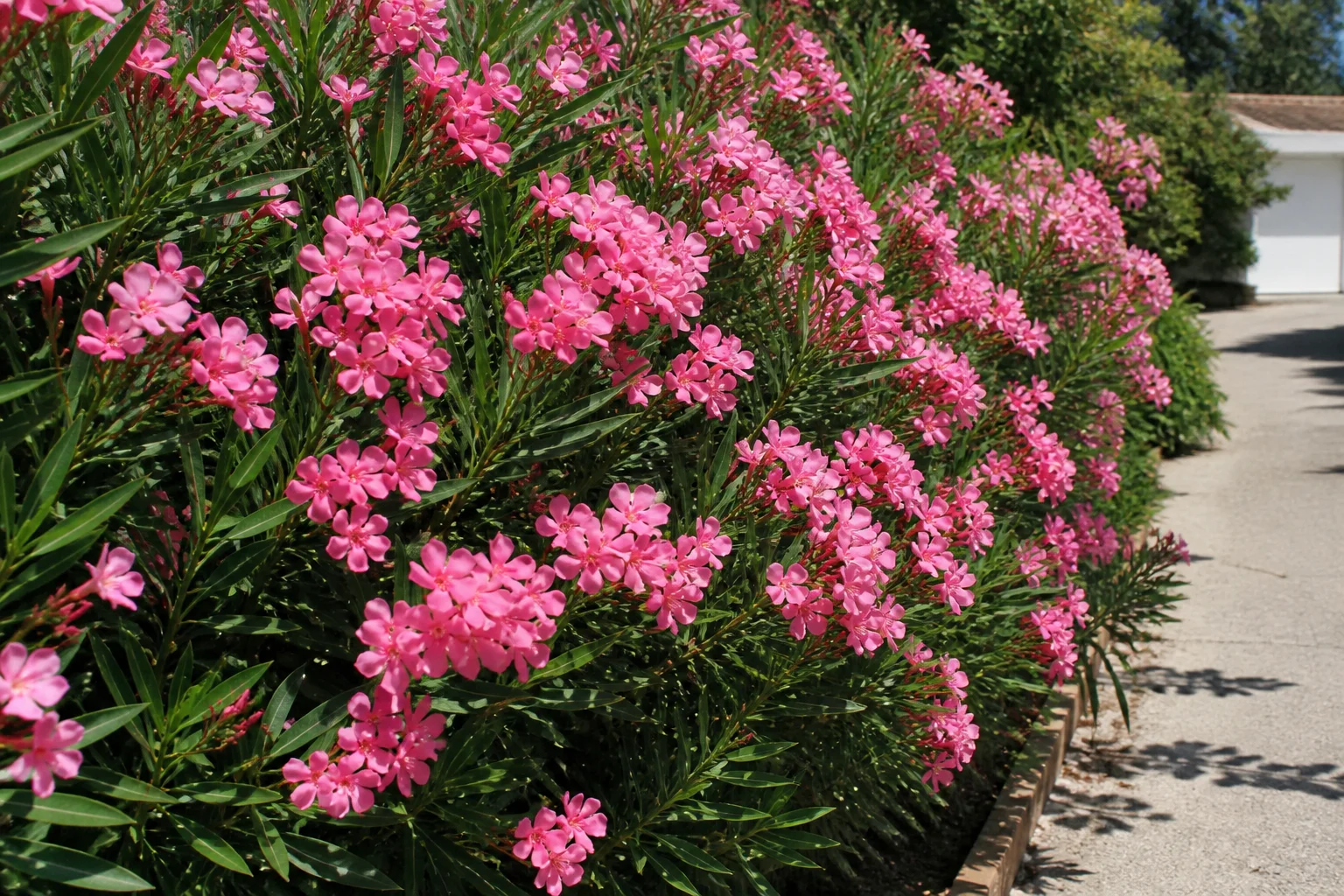
Care snapshot
Oleander Identity and Poisoning Risk
Oleander (Nerium oleander) belongs to the dogbane family, Apocynaceae. Its narrow, leathery leaves and terminal flower clusters help distinguish the shrub, but appearance alone is never a test of whether a plant is safe to handle or eat.
The plant contains cardiac glycosides, which can disrupt heart function when swallowed. Sap contact can also irritate skin. These are different exposure routes, so gloves reduce contact during pruning but do not make leaves, flowers or stems safe to ingest.
ASPCA lists oleander as toxic to dogs, cats and horses. Dry leaves and branches remain poisonous, which makes fallen material and stored trimmings relevant even when an animal cannot reach the standing shrub.
A sunny location does not resolve those hazards. Where children may put plant parts in their mouths, animals chew vegetation, or clippings cannot be kept out of reach, another planting is the more practical choice.
Site Fit and Winter Limits
Oleander can provide a flowering screen in an open ornamental area, but its mature branches need room away from routine traffic. A narrow path creates repeated contact and pruning work, while an animal enclosure adds the possibility of chewing both foliage and fallen pieces.
Winter performance varies by region and cultivar. NC State lists USDA Zones 8a–10b, while UF/IFAS gives 9a–11 and describes periodic cold injury even in 9a. A zone range therefore does not promise an evergreen hedge through every winter or a full flower display after a freeze.
Salt tolerance also needs context. Although some references describe coastal tolerance, UF/IFAS’s pest and care guidance cautions against direct salt spray and favors planting behind dunes. A protected coastal site is a better-supported choice than assuming an exposed seafront planting cannot scorch.
In a colder climate, a container allows winter protection only if a suitable storage space exists. Oleander needs bright conditions under cover, and children and animals must still be unable to reach it. A garage name alone establishes neither enough light nor frost protection.
- Landscape screen
- Space for mature width, suitable local winter conditions and controlled access to foliage and waste
- Coastal planting
- Protection from direct spray rather than a blanket salt-proof assumption
- Cold-climate container
- A bright, protected winter location plus a practical way to move the mature plant
Mature Size Before Flower Color
Flower color gets attention, but mature size decides how much pruning and handling a planting will require. UF/IFAS describes standard landscape forms around 10–18 feet tall and 10–15 feet wide. Those dimensions do not describe every dwarf cultivar or a plant restricted to a pot.
Dwarf selections fit containers and smaller ornamental spaces better, but smaller plants still carry the same ingestion hazard. A compact shrub within chewing distance is not made pet-safe by its size.
UF/IFAS names Petite Pink and Petite Salmon as dwarf cultivars. Its flower examples include white Sister Agnes and pale-yellow Isle of Capri. A named plant with an appropriate mature spread is more useful for planning than choosing by flower color and expecting repeated shearing to hold any cultivar in a small bed.
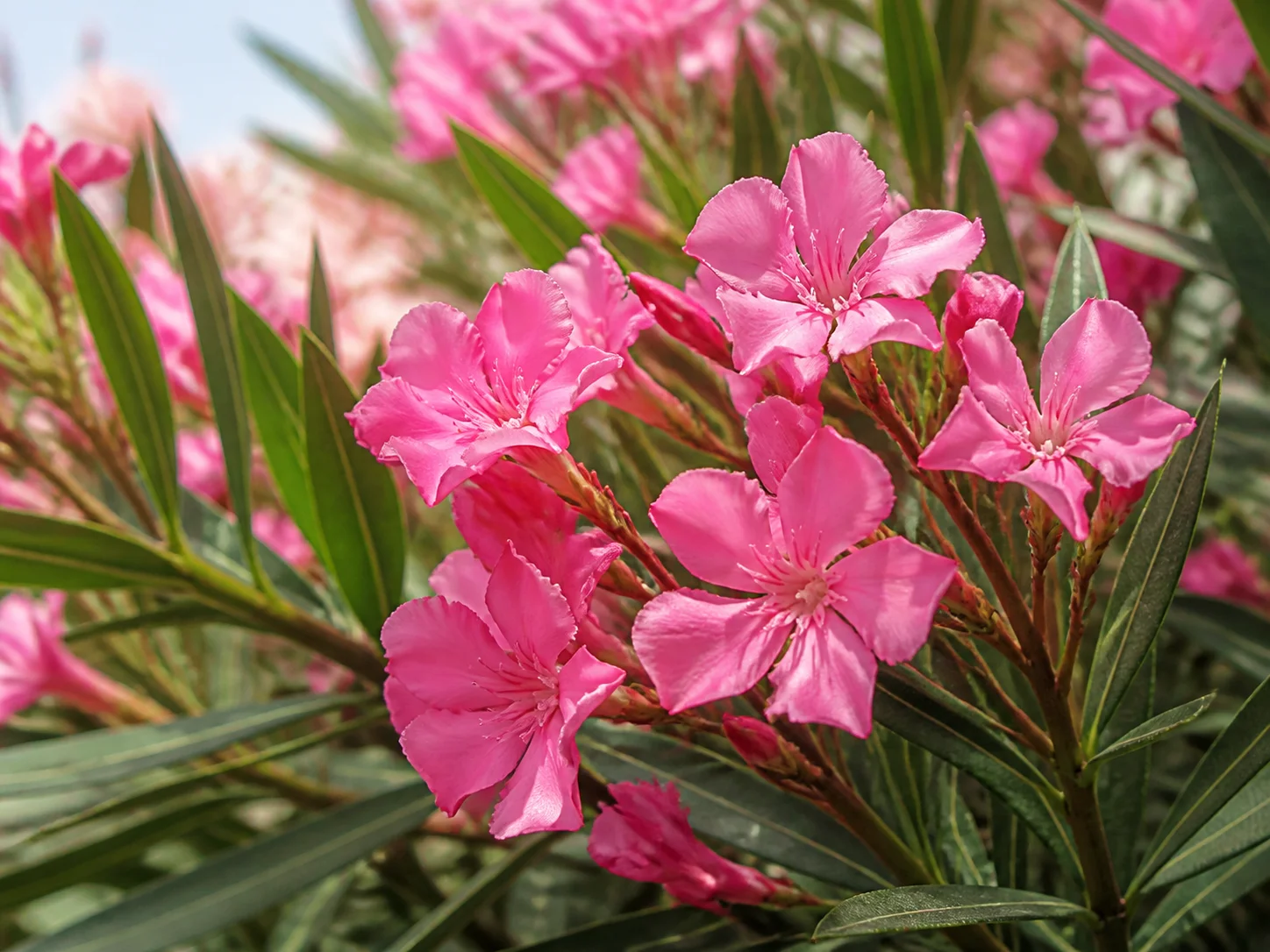
The close view below shows flower clusters and narrow leaves. It supports recognition, not identification of a named cultivar, proof of hardiness, or a record of a growing trial.
Sun and Water as Roots Establish
Full sun gives oleander its best flowering and a fuller crown. A shrub in partial shade may remain alive while becoming lankier and flowering less. That difference matters when the reason for planting it is a dense, colorful screen.
A newly planted shrub has a smaller working root system than an established landscape plant. Moisture in its original root ball and surrounding soil is therefore more useful than a fixed weekly schedule. Rain that wets the surface does not necessarily wet the whole root ball.
Deep watering wets the occupied root zone, followed by time for drainage and air to return. Established oleander tolerates dry periods, but drought tolerance does not mean that growth and flowering remain unchanged. UF/IFAS describes more growth when moisture is available.
Containers are different because roots draw from a limited volume of mix. When the upper mix has begun to dry, checking moisture farther down helps distinguish a drying pot from one that remains wet below. Thorough watering with free drainage is appropriate when the root ball needs it, rather than repeated small splashes or leaving the pot standing in water.
Pot weight can add information when you already know the weight of that same container wet and dry. It cannot establish moisture by itself, and tipping a large woody plant is an unnecessary lifting and spill risk.
Drainage and Feeding
Oleander tolerates several soil textures, including clay, when drainage is suitable. Heavy soil alone does not prove that a raised bed is required. Persistent pooling after rain or irrigation is the more useful reason to reconsider the location or correct drainage before planting.
More fertilizer is not an automatic response to weak flowering or yellow leaves. Shade, root conditions, cold injury and pests can produce problems that feeding will not resolve.
UF/IFAS’s pest and care guidance describes low fertility needs and notes that established roots may already receive nutrients from a fertilized lawn. Its older tree profile mentions yearly feeding. These recommendations do not establish a compulsory annual dose for every yard. Existing fertilizer inputs, soil information and actual growth determine whether more is justified.
A container has a different nutrient reserve from a landscape root zone. Any feeding needs to suit the potting medium, existing fertilizer and product label. Adding fertilizer to a persistently wet or otherwise damaged root system does not correct its lack of drainage.
Pruning and Containing the Waste
Pruning exposes sap and produces material that remains poisonous after drying. Gloves, covered skin and eye protection reduce contact, while a tarp and nearby container make it easier to collect small pieces. Tools and cut branches belong away from food preparation.
Light shaping after flowering and removal of winter-damaged branches after winter serve different purposes. The first limits size while preserving the shrub’s form. The second removes dead wood after its extent is clearer. Flowering on new growth does not guarantee a full display immediately after hard pruning or a damaging freeze.
Repeatedly forcing a large cultivar into a small space creates more cuts and more waste to handle. Mature size is therefore a maintenance and exposure decision, not just a visual preference.
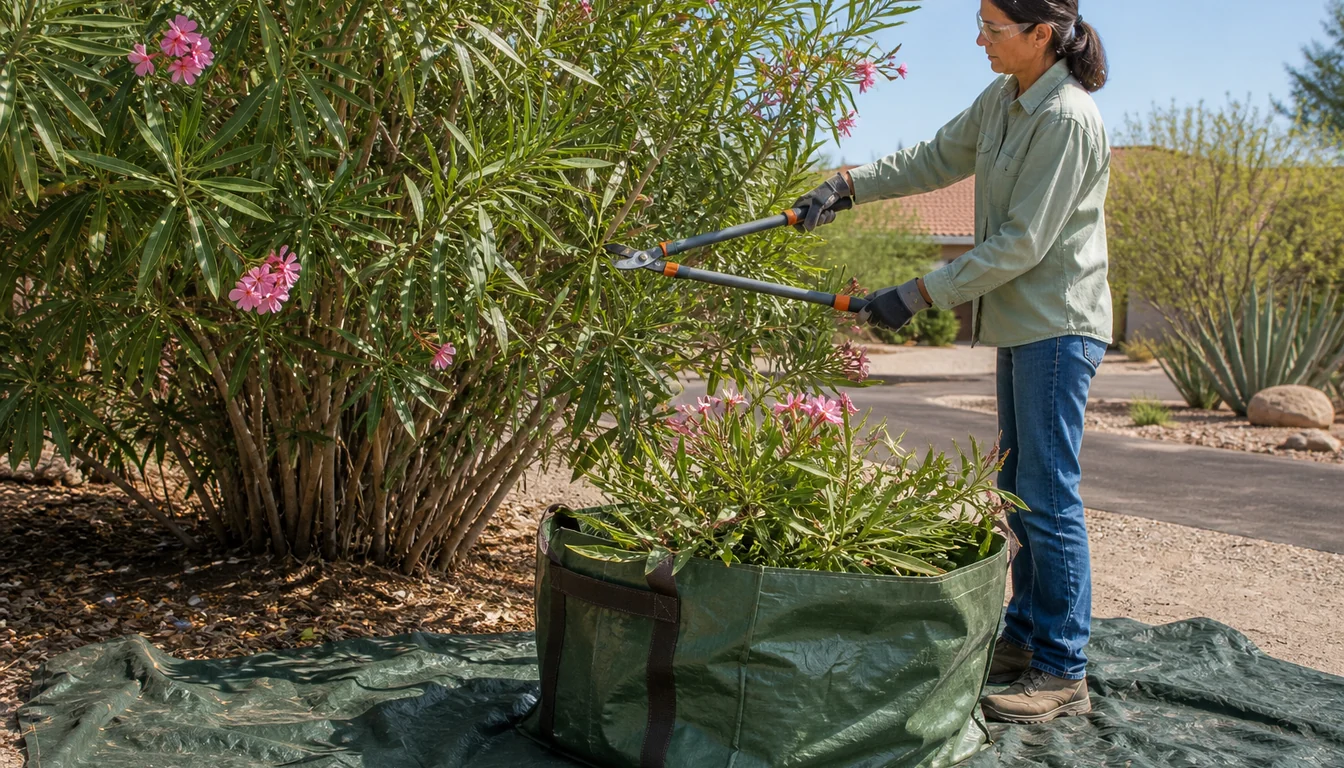
Never burn oleander trimmings or use the branches as cooking fuel or skewers. Keep collected material away from children and animals, including while it waits for removal. The local waste service can confirm whether it accepts oleander and how the material must be contained.
Loose or incompletely decomposed pieces can be swallowed or mixed into harvested produce. Keeping trimmings contained and out of edible beds addresses that direct exposure. Accepted waste collection avoids having to judge whether an individual home compost pile has fully processed the material.
Propagation Without Unnecessary Exposure
Oleander can be propagated from stem cuttings. RHS also lists seed and spring air layering. A cutting carries the parent plant’s cultivar traits, while seed is not a reliable way to reproduce a named selection exactly.
Semi-hardwood cuttings use growth that has begun to firm, rather than a leaf by itself. A clean, freely draining rooting medium and a protected propagation space support the work. The label needs to identify oleander before the young plant resembles a mature flowering shrub.
Propagation is worthwhile only when there is an appropriate place for the resulting plants. Cuttings, discarded leaves and rooting containers need the same separation from food work, children and animals as pruning waste. Keeping young pots labeled and out of reach avoids treating an unflowered cutting as an unidentified, harmless plant.
Pests, Cold Injury, and Leaf Scorch
Visible insects and the pattern of damage provide a starting point. UF/IFAS describes yellow oleander aphids with black markings on tender growth, orange caterpillars with black hair tufts, and small armored scales on leaves. Sticky honeydew, missing leaf tissue and attached scale covers point toward different checks rather than one general spray.
Aphid predators and parasitized aphids can already be reducing an infestation. Scale treatment depends on the pest and its vulnerable stage, because an armored cover can limit contact treatments. A pesticide label must cover the plant, pest and outdoor use. A houseplant treatment schedule is not an outdoor oleander recommendation.
Cold injury is considered alongside the timing of a freeze and the affected branches. Brown leaves alone do not establish cold as the cause, just as glossy green leaves do not prove a plant is free of disease.
Oleander leaf scorch involves Xylella fastidiosa bacteria obstructing water transport. Xylem-feeding insects spread the bacteria. Symptoms can begin on part of the shrub, but drought and excess salts can also cause yellowing or brown margins.
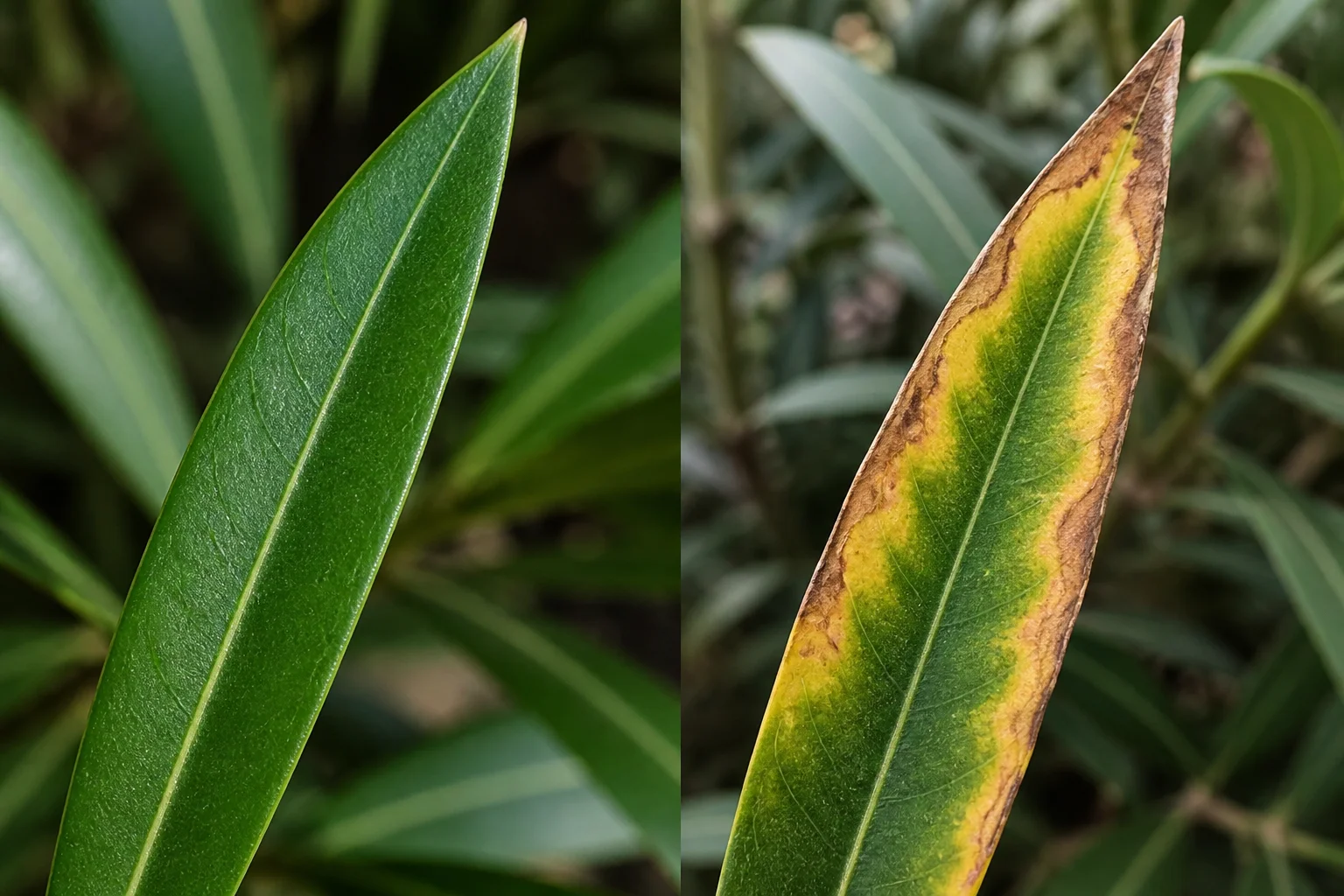
UC IPM recommends diagnostic testing to distinguish these problems. Soil or tissue tests can investigate excess minerals, and a plant diagnostic laboratory can test for Xylella. Watering history, the distribution of symptoms and progression over time help that assessment. A single leaf photograph cannot confirm infection.
There is no known cure. UC IPM says symptom pruning cannot save an infected plant and describes early removal as a possible way to reduce inoculum, without experimental validation of that benefit. UF/IFAS discusses reduced symptoms after pruning newly affected branches. Reduced symptoms are not proof of a cure or prevention of spread. Local Extension or a diagnostic service can guide management after confirmation.
Comparing Alternatives Without False Safety Labels
A replacement has to meet the original job, whether that is summer flowers, a winter screen or a shrub that can be maintained within reach. It also needs its own check for mature size, local growing conditions and the animals that use the space.
Boxwood is not a non-toxic substitute. ASPCA lists Buxus species as toxic to dogs, cats and horses. Its smaller leaves and formal hedge shape do not remove that limitation.
A familiar ornamental name, a nursery display or the absence of an oleander warning does not establish another plant’s safety. When access to poisonous vegetation cannot be controlled, that is a reason to reject oleander and evaluate a suitable replacement, rather than keep it and rely on extra pruning.
Sources & References
- Nerium oleander — NC State Extension Plant Toolbox
- Oleander — ASPCA Toxic and Non-toxic Plants
- Boxwood — ASPCA Toxic and Non-toxic Plants
- Oleander Leaf Scorch — UC IPM
- Key Plant, Key Pests: Oleander (Nerium oleander) — UF/IFAS EP574
- Nerium oleander: Oleander — UF/IFAS ST412
- Oleander poisoning — MedlinePlus
- Nerium oleander L. — RHS
Related Plants
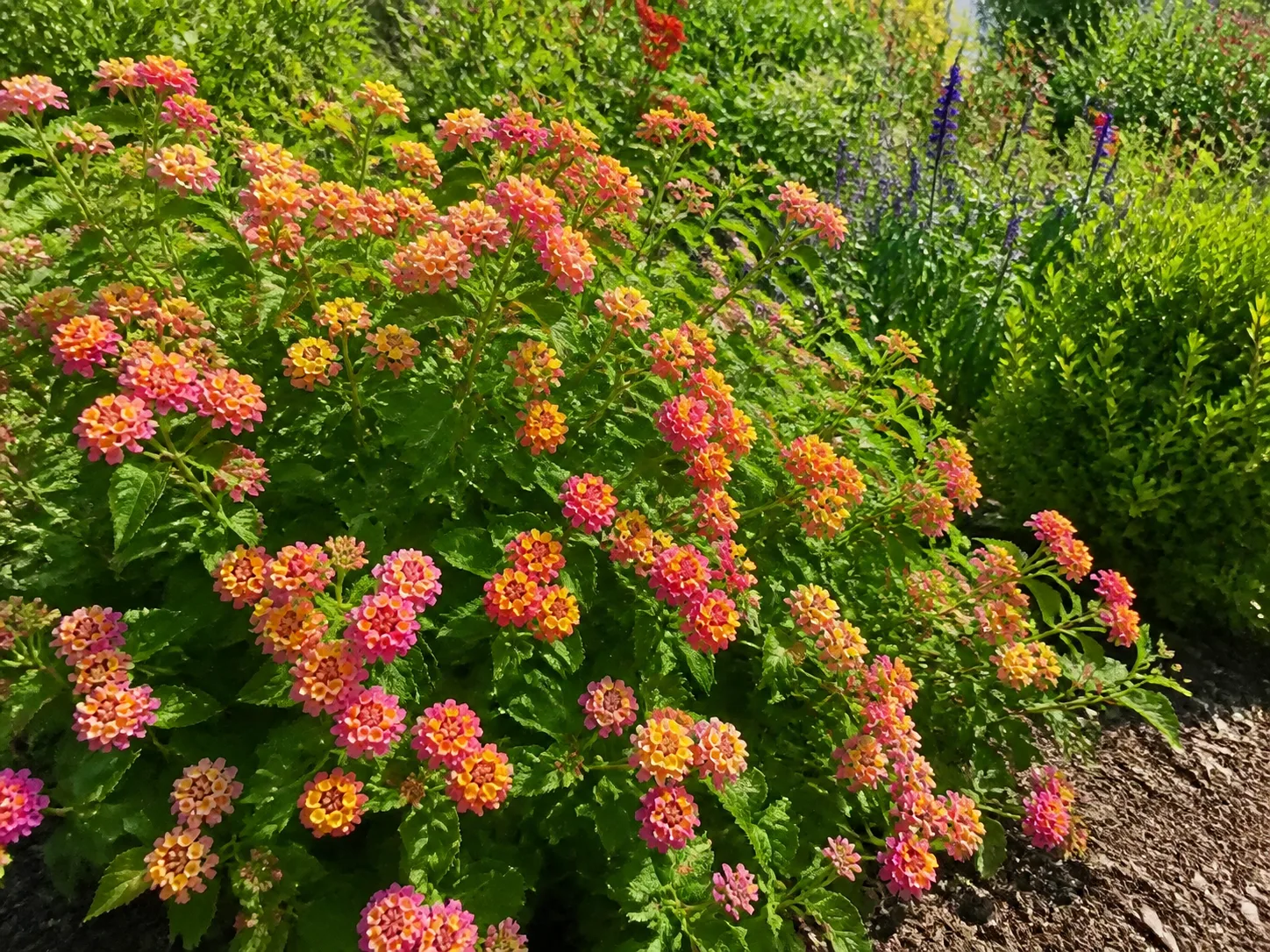
Lantana
Sun-loving flowering shrub or groundcover with long bloom season and good drought tolerance.
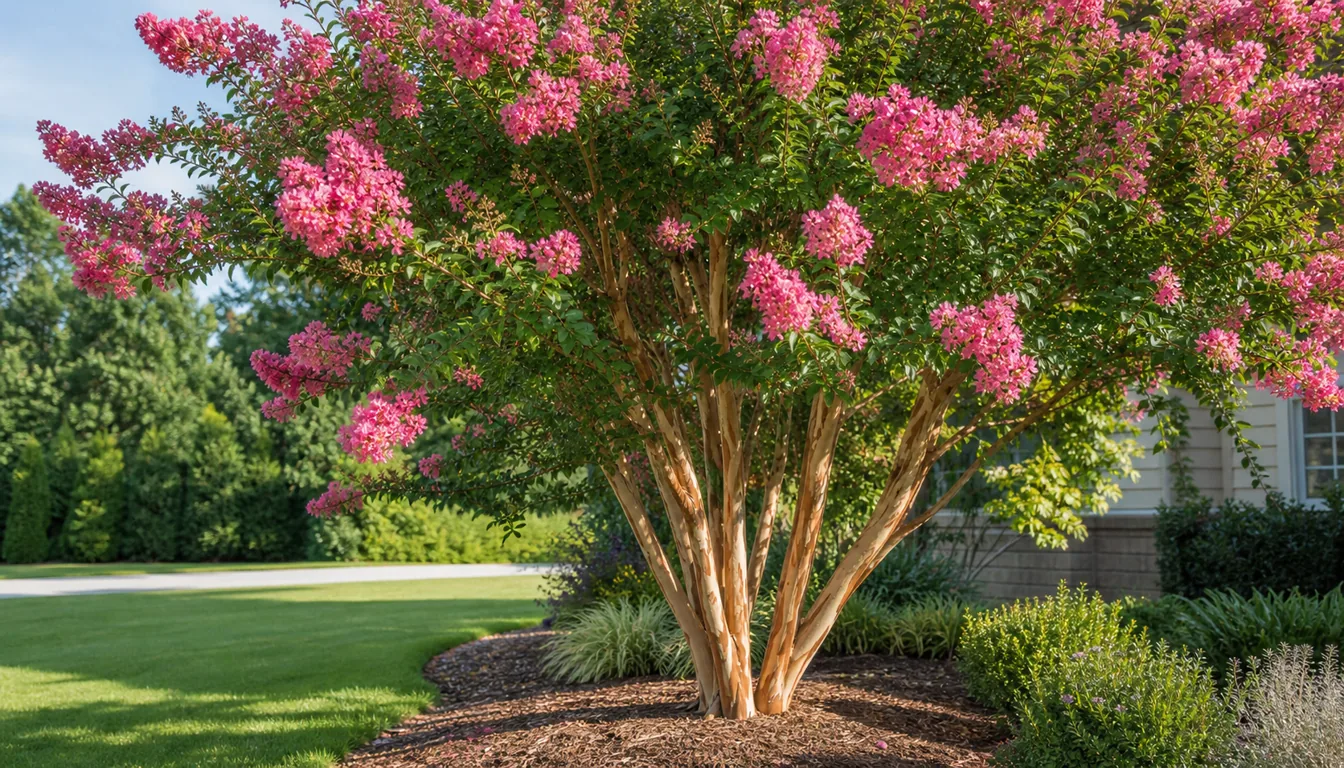
Crepe Myrtle
Deciduous flowering shrub/tree with colorful summer blooms and good heat tolerance, often paired with oleander in warm…
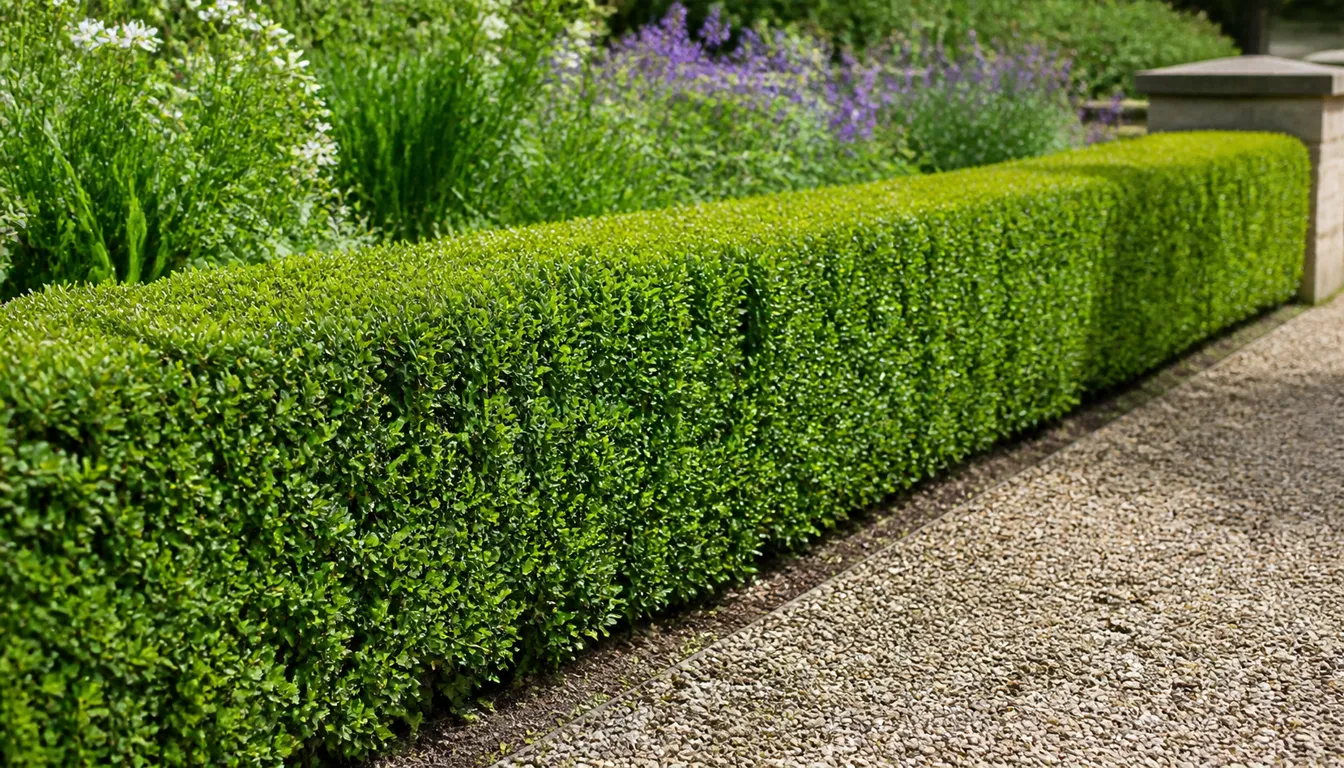
Boxwood
Evergreen formal hedge option with its own toxicity concerns for dogs, cats and horses.
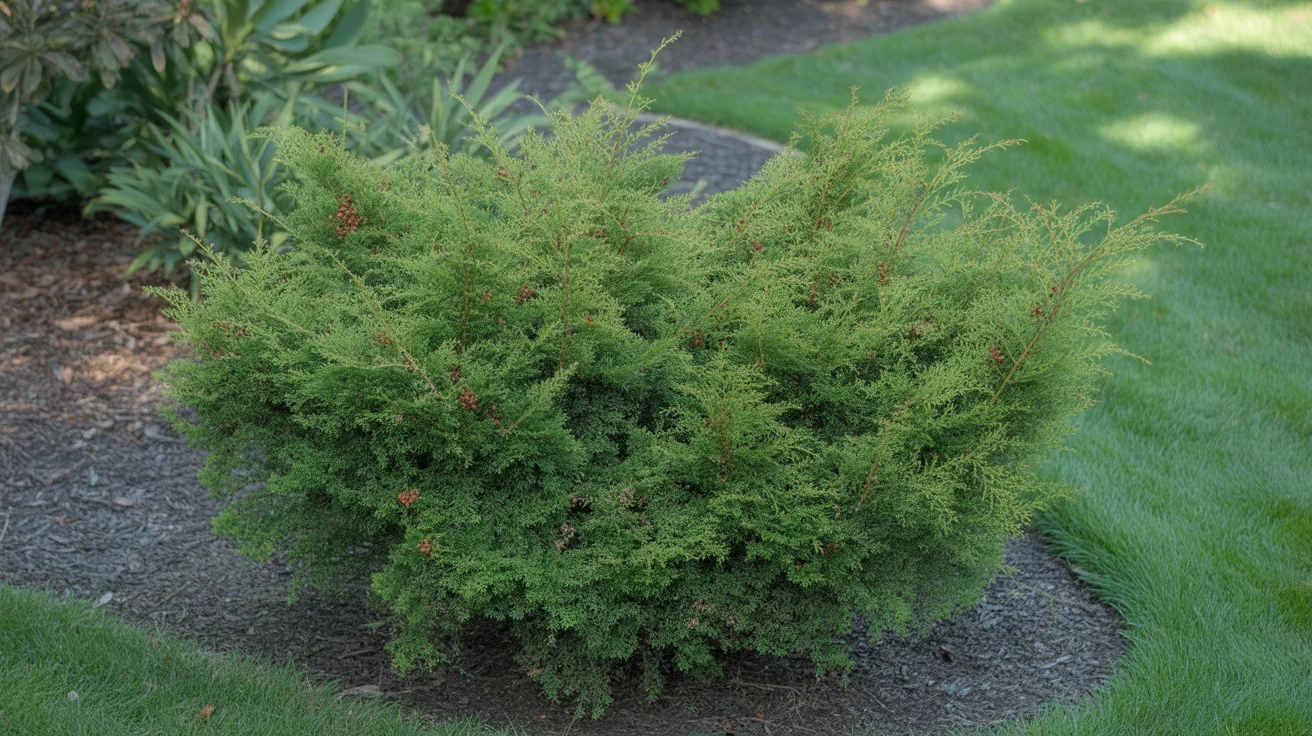
Arborvitae
Arborvitae can form a dense living screen where its mature width, exposure, and water needs fit the site.
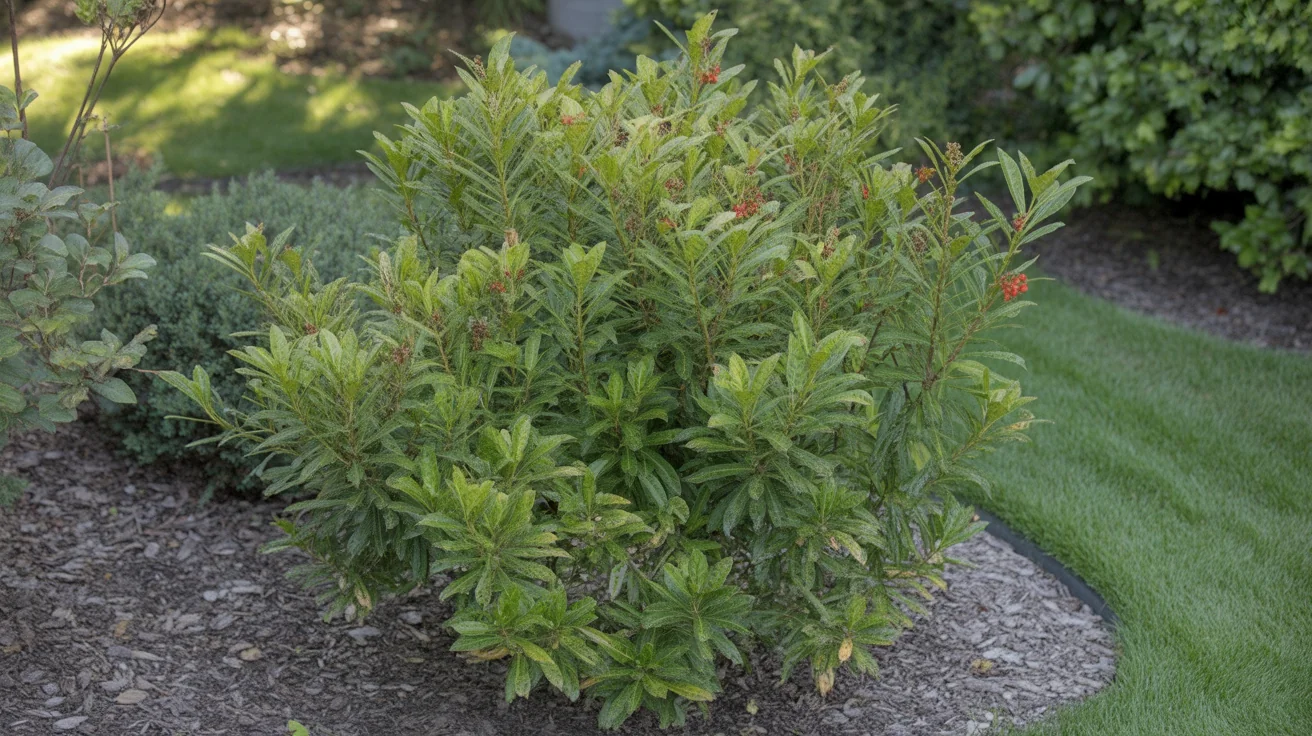
Aucuba
Aucuba is the shrub for bright shade with dry root competition. It keeps evergreen structure near north walls, porches…
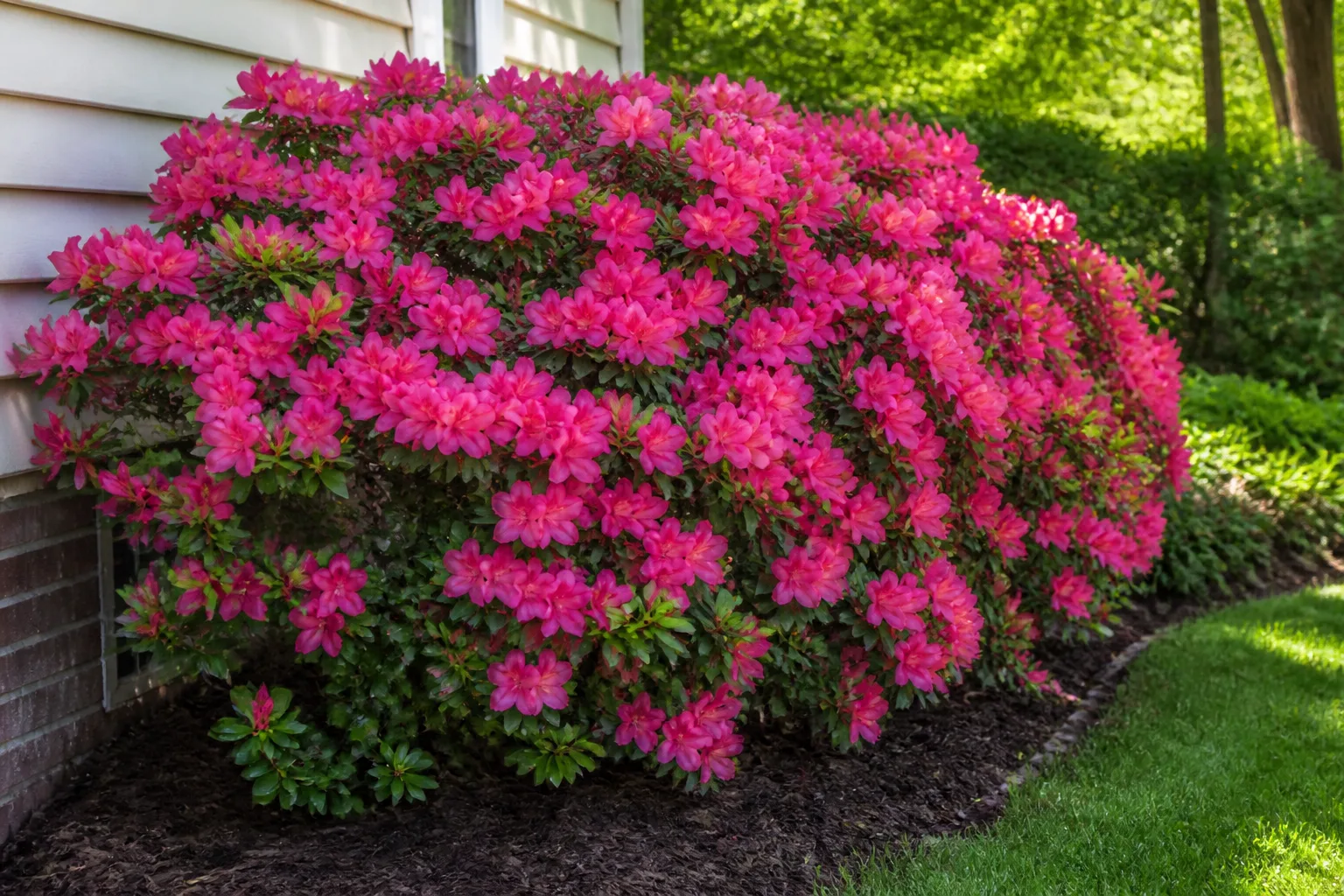
Azalea
Azaleas bring spring flowers, and some cultivars bloom again later in the year.