Succulentsschedule10 min read
Best Container Gardens with Succulents
Build succulent container gardens by pot geometry, drainage, plant compatibility, crown airflow, dry-down speed, and when a mixed bowl should become separate pots.
A succulent container garden is a small root system with a design problem wrapped around it. The bowl can look finished on day one and still fail because the middle stays wet, the crown is buried, or one plant grows faster than every neighbor.
The short version: choose the pot shape before the plant list. A healthy container needs a real drain path, visible crown space, and plants that can share one dry-down rhythm.
potted_plantPick the Pot Shape Before the Plant List
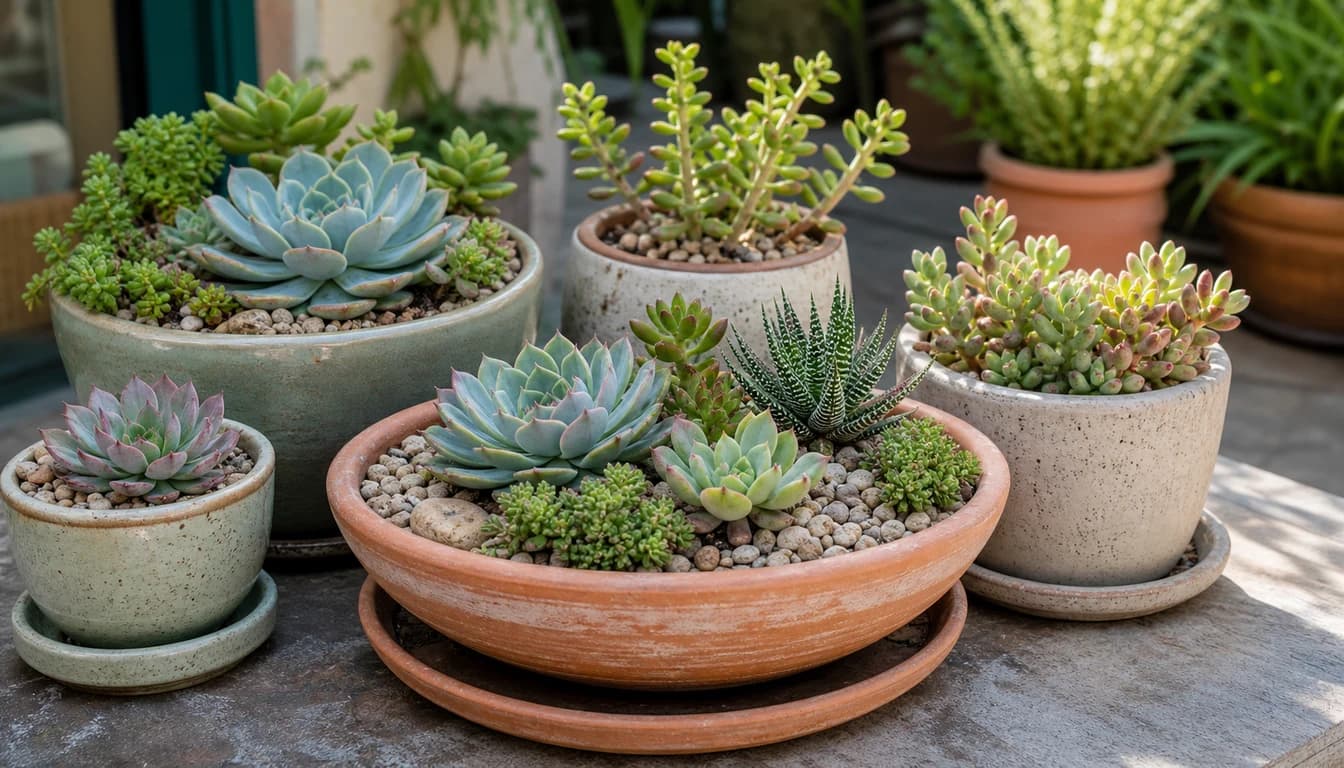
Choose the container before choosing the prettiest rosette. A shallow bowl works for compact crowns and low fillers, but it punishes woody succulents that need a deeper root ball. A tall narrow pot may suit one upright plant and fail as a mixed garden because the surface stays crowded while the lower mix stays wet.
The first check is simple: can water leave the pot fast, and can air reach the crowns after planting? If the answer is no, the container is decorative storage, not a long-term succulent garden.
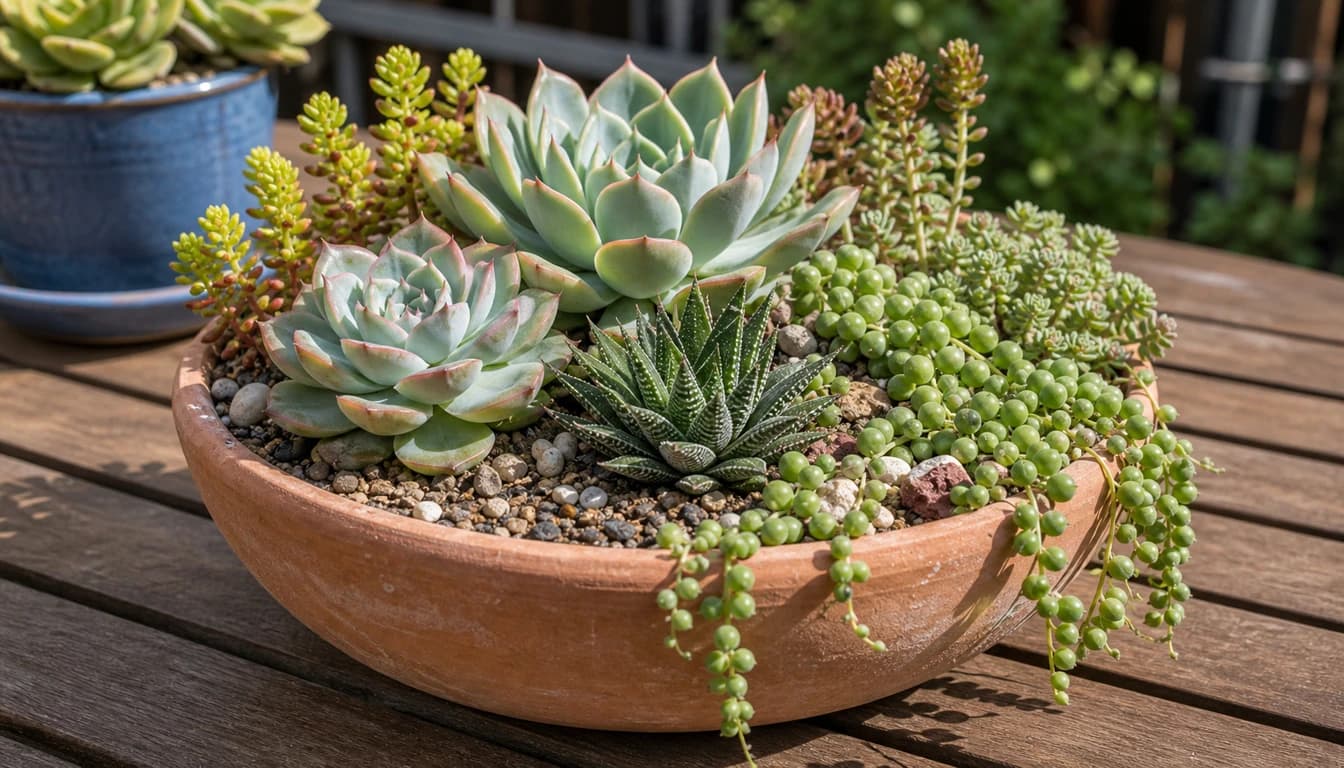
Pot width, depth, and drain holes decide whether a succulent container dries evenly.
| Pot shape | Best use | Main risk | ||
|---|---|---|---|---|
| Wide shallow bowl | low rosettes, Sedum mats, small offsets | wet center if crowded | ||
| Terracotta dish | fast-drying outdoor or bright-window grouping | dries too fast for young roots | ||
| Deep pot | one upright anchor or woody succulent | mixed plants hide dry-down clues | ||
| Cachepot with liner | indoor display with removable nursery pot | standing runoff after watering | ||
| Wall or rail planter | trailing edge plants with airflow | uneven sun and wind exposure |
Use drainage hole guidance before you buy the display pot. The container is part of the care system; it is not a cover for a plant list.
water_dropGroup Plants by Shared Dry-Down Rhythm
A mixed succulent bowl should not ask one plant to stay dry while its neighbor is still thirsty. The best combinations share light, root depth, and dry-down speed.
Sedum is a forgiving baseline because many types tolerate lean soil and dry crowns. It belongs with other fast-draining plants, not with tropical houseplants that need a softer moisture rhythm.
Jade Plant can be a strong upright anchor, but it grows into woody weight and should not be squeezed into a shallow novelty dish. Aloe Vera needs enough room around sharp leaves so watering and inspection do not become awkward.
Trailing succulents need their own test. String of Pearls can soften an edge, but its stems rot quickly if the crown sits on wet top dressing.
A good mixed container has one watering decision. If you already know one plant will need a different rhythm, give it a separate pot.
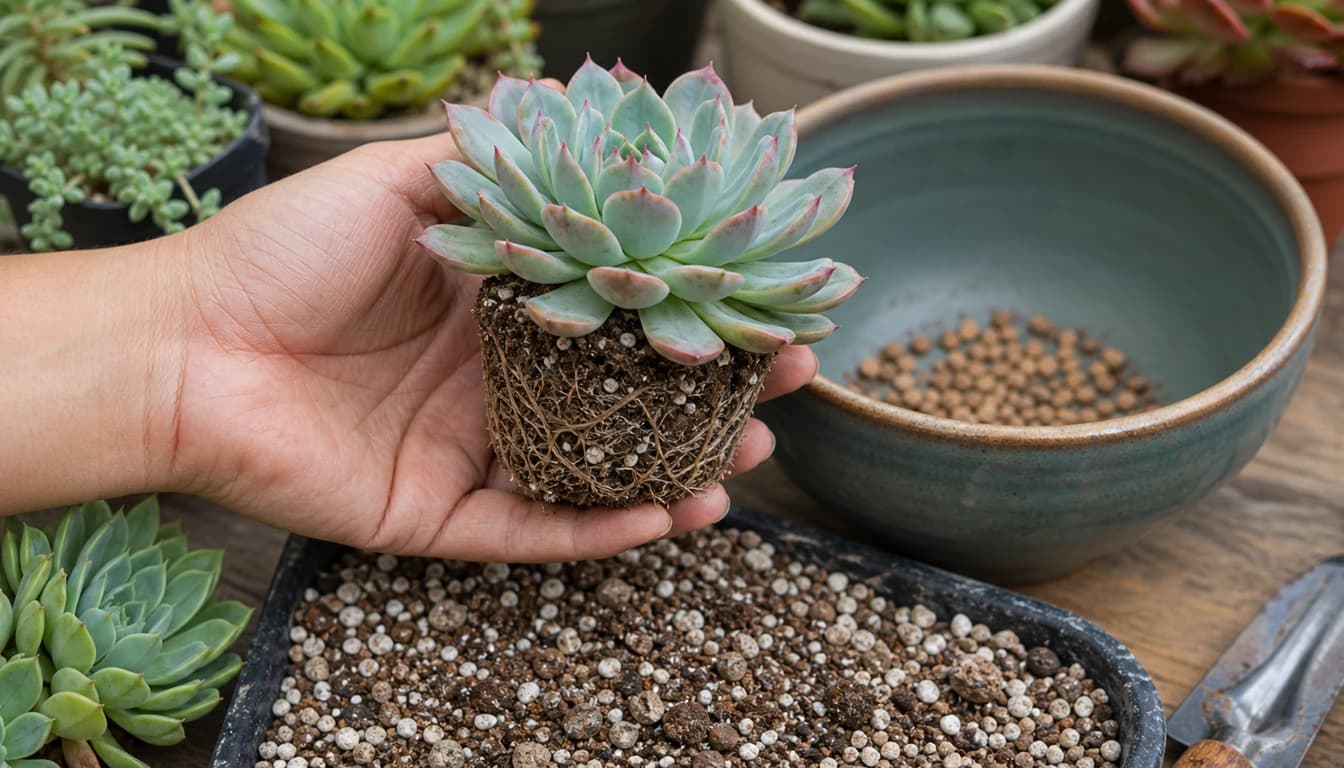
Mixed succulent containers work when roots dry at a similar pace.
spaKeep Crowns Visible After the Design Looks Full
A container garden can be too finished. Gravel, moss, tight rosettes, and decorative stones may hide the exact crown tissue you need to inspect.
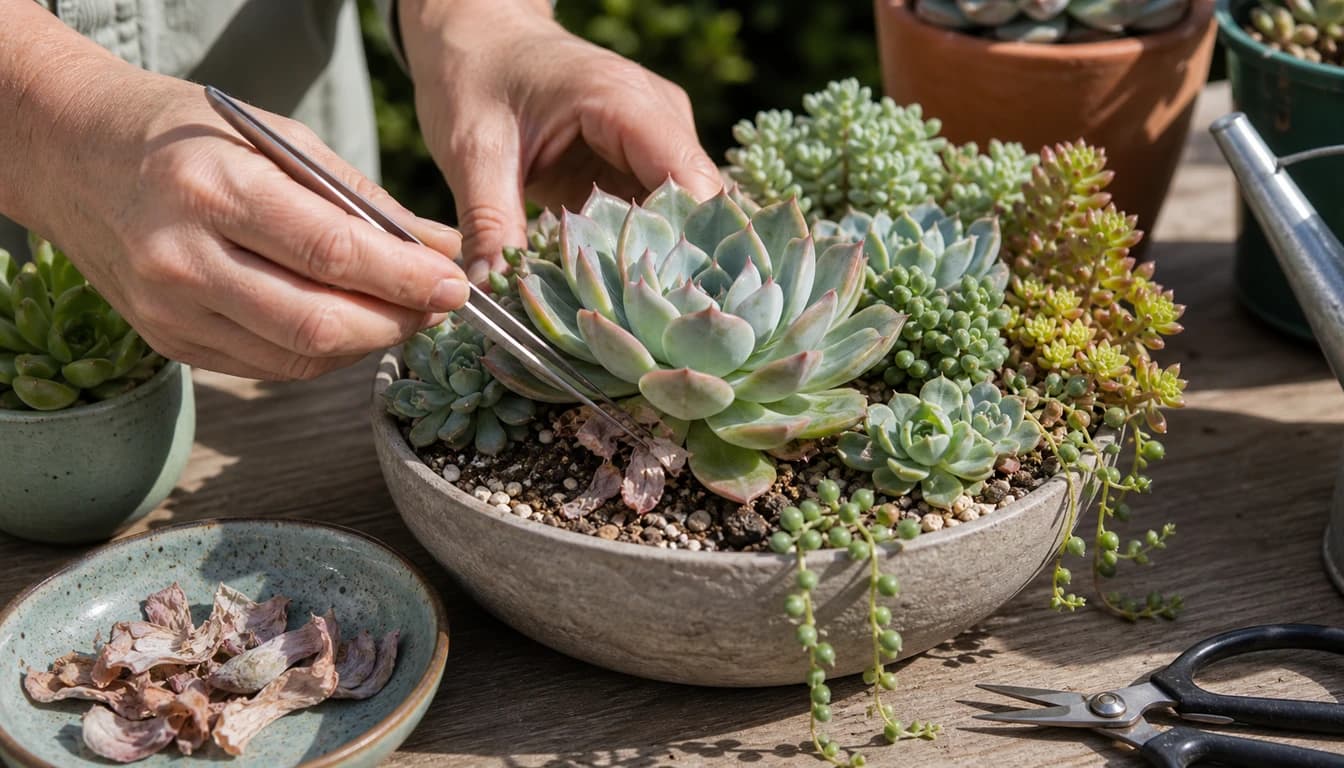
Leave bare gaps where water can enter the mix and air can move across the plant necks. Top dressing is fine as a thin surface layer, but it should not bury lower leaves or press against soft stems.
The layout should also leave a hand path. You need room to lift dead leaves, check for mealybugs, turn the pot, and water soil instead of pouring into rosette centers.
If lower leaves turn translucent or the crown darkens, compare the setup with overwatering signs before adding more plants.
Think of fullness as a season-two goal. On planting day, the best container may look a little open because it has room to stay healthy.
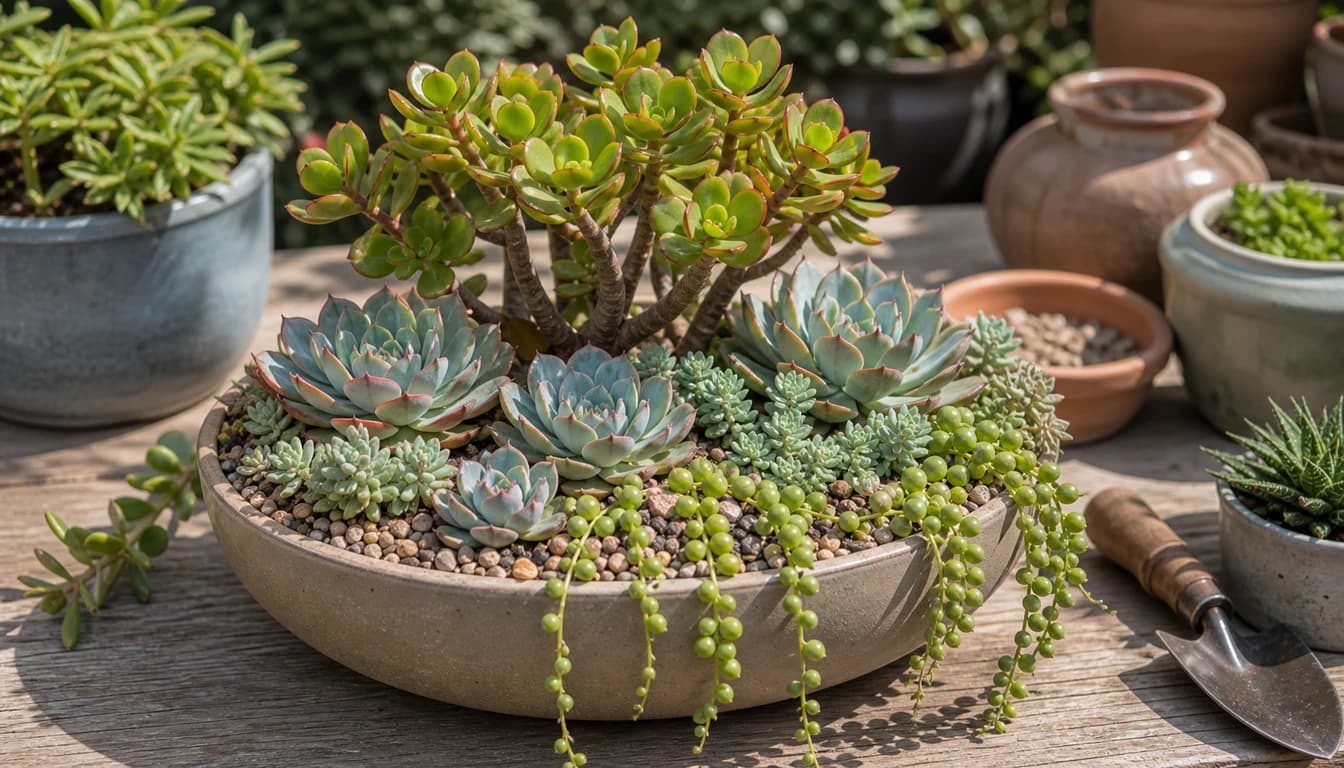
A finished succulent container should still leave visible space around crowns and stems.
Email Updates
Join the KnowTheYard update list
Zone-specific advice, seasonal reminders, and new plant guides — no filler.
yardUse One Anchor, One Edge, and One Quiet Filler
A mixed container is easiest to maintain when every plant has a job. Pick one anchor for height or weight, one edge plant for spill, and one quiet filler for surface coverage.
The anchor should not outgrow the bowl first. The edge plant should be allowed to hang where stems dry freely. The filler should cover soil without trapping moisture against crowns.
Yucca belongs only in a container with enough scale and light for its mature structure.
Repeat texture instead of collecting every form in one pot. A container with three compatible roles usually looks calmer than a crowded dish with eight different watering needs.
Simple plant roles keep a succulent container readable without crowding it.
opacityWater by Pot Weight, Not by Surface Color
The surface of a succulent container lies. Gravel can look dry while the middle is wet, and a terracotta edge can dry faster than the root ball.
Lift the pot after watering, then again as it dries. That weight change teaches more than a weekly reminder. Use potted-plant watering guidance when the container is deep, crowded, or hard to judge.
Water the whole root zone, let the pot drain, and empty any saucer or cachepot. If the center stays heavy for a week, the fix is usually more air, fewer plants, or a different pot, not smaller daily sips.
Compare your routine with deep watering versus frequent watering before blaming the plant. Succulent roots need oxygen after a drink.
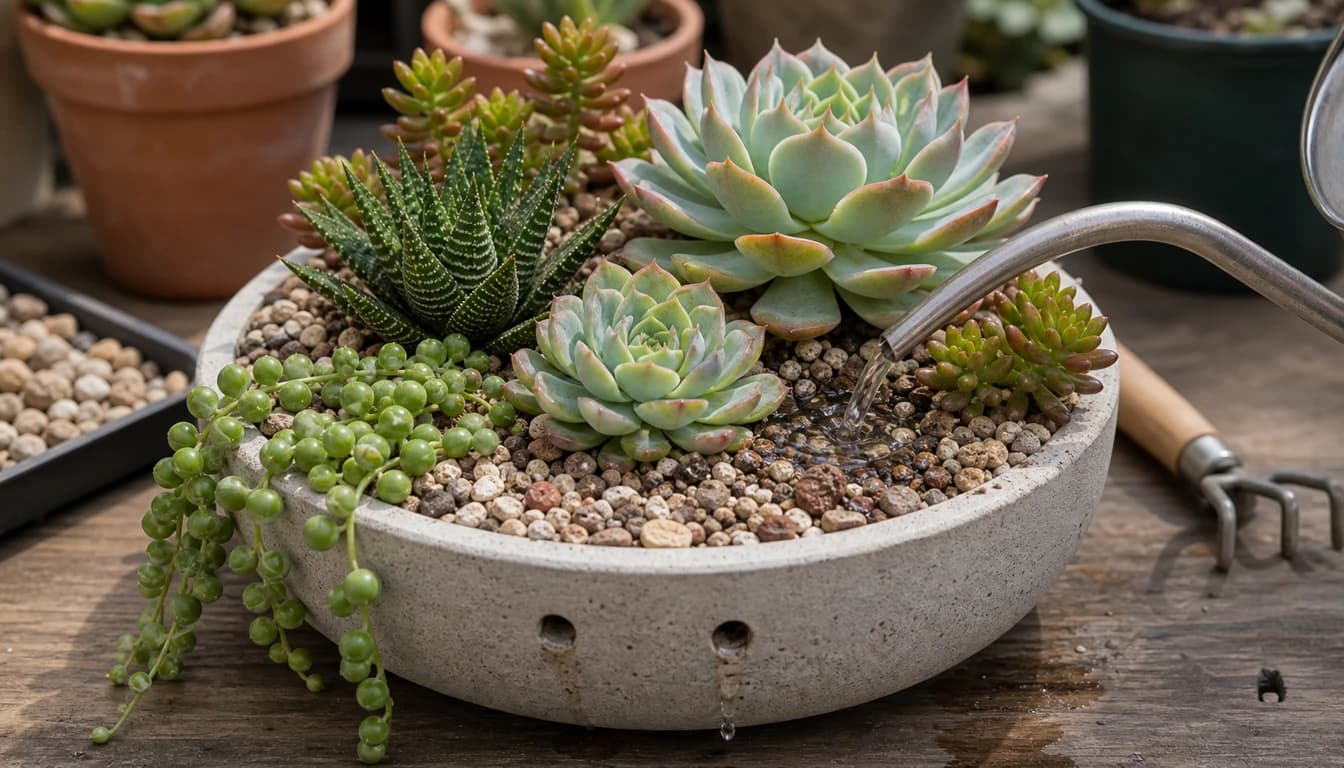
A succulent container should be watered through the root ball, then allowed to drain and lighten.
wb_sunnyDecide Whether the Container Lives Indoors or Outside
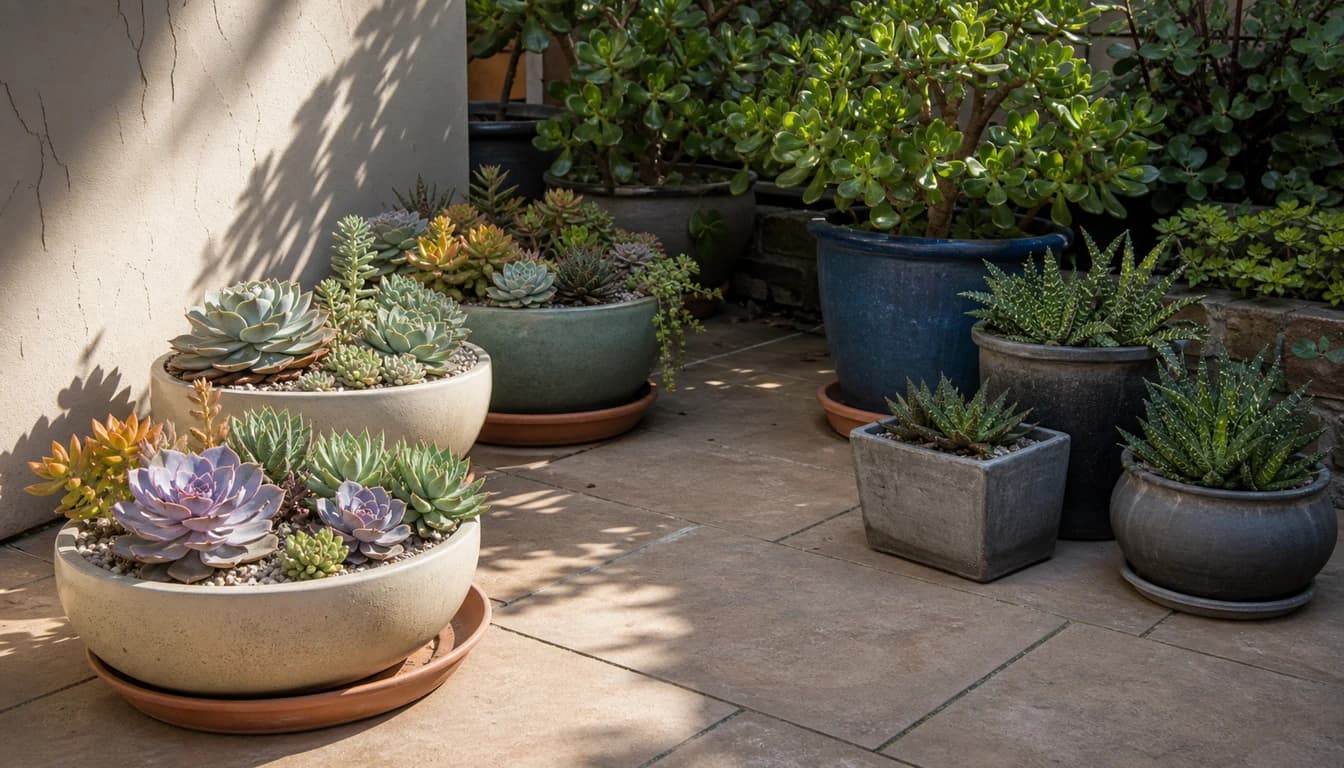
The same container behaves differently on a patio, windowsill, porch table, and winter shelf. Sun, wind, rain, reflected heat, and indoor still air all change dry-down.
Outdoor pots need rain planning. A storm can fill a shallow bowl even when you rarely water. Indoor pots need light planning because weak light slows water use and makes tight containers rot-prone.
Use low-light plant choices if the shelf cannot give bright sky. A dim room is not a low-maintenance succulent site.
Season changes matter too. If the pot moves indoors for winter, follow indoor plant care timing and reduce watering before the plant stretches or softens.
Indoor and outdoor succulent containers dry at different speeds even with the same plants.
buildSeparate the Bowl When One Plant Changes the Rules
A mixed container is temporary by nature. One plant will usually grow faster, shade the others, or need a different watering rhythm after a season.
Edit when the first plant touches its neighbors, when water stops reaching the whole root ball, or when one crown starts staying damp. Waiting until the pot looks bad usually means the roots were crowded weeks earlier.
Move the odd plant into its own container instead of forcing the whole bowl to follow it. dry-site planning helps with the bigger water-wise idea, but a container garden still has to work plant by plant.
The upgrade is often boring and correct: a wider pot, fewer species, a cleaner drain hole, or a separate home for the plant that grew at the wrong speed.
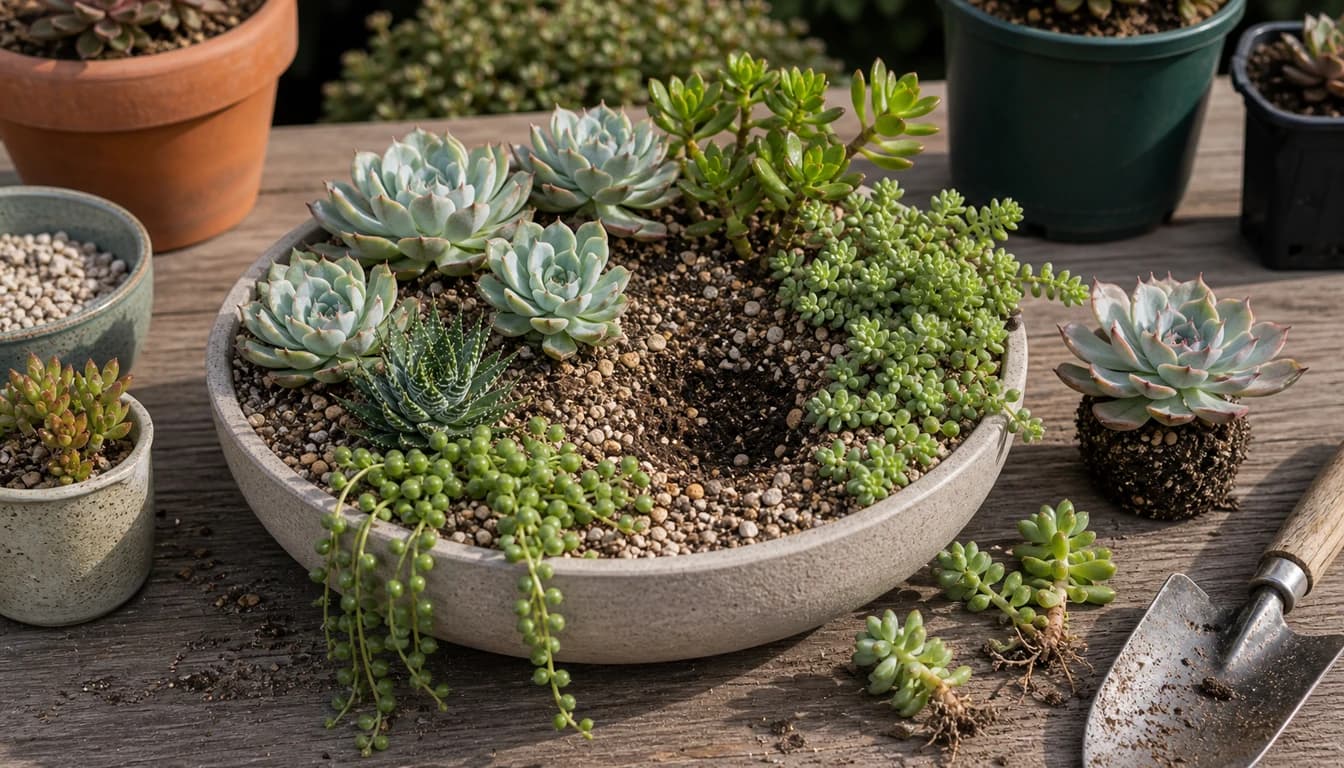
A mixed succulent bowl should be edited when growth speed or water need stops matching.
tips_and_updates
Pro Tips
- check_circleChoose the pot shape before the plant list.
- check_circleGroup succulents by shared dry-down speed, not by color alone.
- check_circleLeave visible air around crowns after top dressing.
- check_circleUse one anchor, one edge plant, and one quiet filler in the first mixed pot.
- check_circleWater by pot weight and drainage, not by surface color.
- check_circleTreat indoor and outdoor containers as different care systems.
- check_circleSeparate the bowl when one plant changes the watering rules.
quiz
Frequently Asked Questions
What makes a good succulent container garden?expand_more
A good succulent container garden has a pot that drains, plants with similar dry-down speed, visible crown space, and enough room for each plant to grow without changing the watering rules.
Can different succulents share one pot?expand_more
Yes, when they share light needs, root depth, growth speed, and watering rhythm. If one plant needs wetter soil or deeper roots, it usually belongs in a separate pot.
Should succulent containers use gravel on top?expand_more
A thin top dressing can look clean, but it should not bury crowns or hide wet soil. Leave enough open surface to water and inspect the root zone.
How often should I water a succulent container?expand_more
Water after the root zone dries, not on a fixed weekly schedule. Pot weight, drainage, light, and season matter more than the calendar.
When should I repot a succulent container garden?expand_more
Repot or edit it when plants crowd crowns, water stops moving through evenly, roots fill the pot, or one plant needs a different watering rhythm from the rest.